


Should I open or buy a Rally's franchise or open an independent sandwich shop in 2027?
Quality
Certified
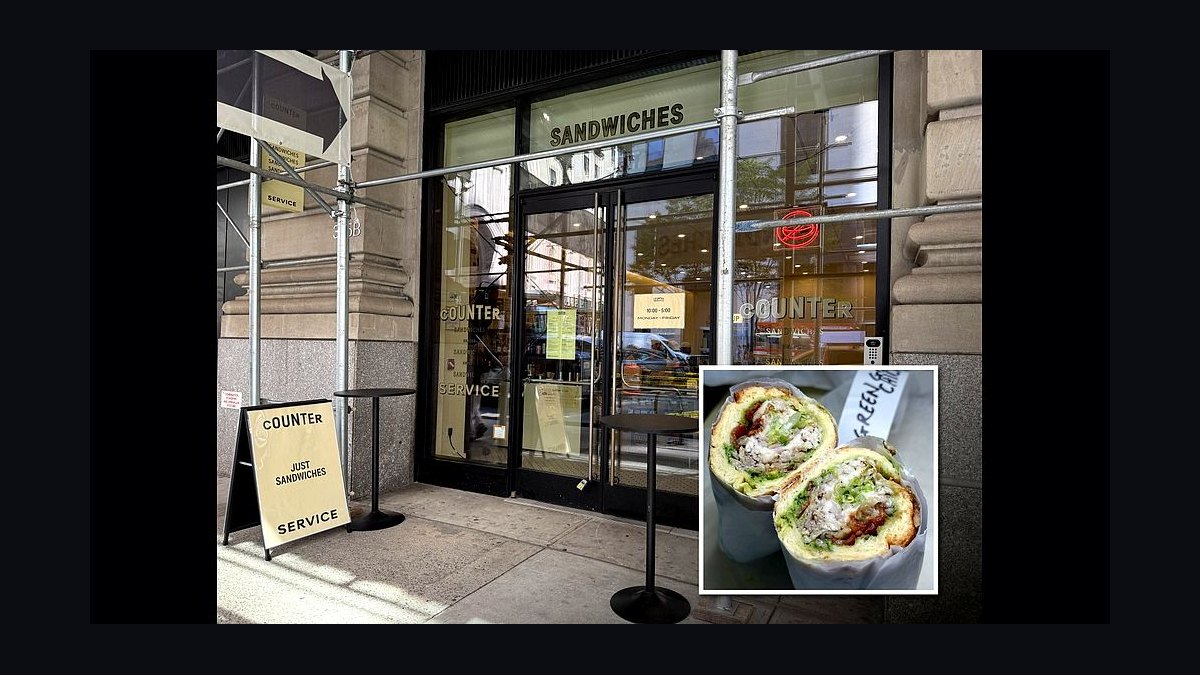
Neither path is automatically better in 2027. A Rally's franchise buys a proven double drive-thru system, national marketing, and supplier scale for roughly $700,000–$1.9 million all-in, but locks you into royalties, a fixed menu, and franchisor approvals. An independent sandwich shop often opens for $150,000–$450,000 with full control, but you build every recipe, system, and marketing asset from zero.
The two options compared
A Rally's franchise means licensing the Checkers/Rally's double drive-thru burger-and-hot-dog concept from Checkers Drive-In Restaurants. You are not inventing a menu, a build-out specification, a POS configuration, or a marketing calendar — you execute the franchisor's system to their standard. The trade-off is control. You generally cannot alter core menu items, cannot price outside approved bands in many markets, cannot pivot the brand if local demand shifts, and you pay ongoing royalties (commonly 4%–6% of gross sales for QSR concepts) plus an advertising fund contribution (often 3%–4%) for the life of the agreement. In exchange you get day-one brand recognition, a supply chain already negotiated at scale, structured training, and — critically — a Franchise Disclosure Document whose Item 19 may disclose how comparable units actually performed financially. No independent operator can hand a lender that document.
An independent sandwich shop is the opposite bet. You choose the name, the menu, the price points, the vendors, the hours, and the atmosphere. A build-your-own sub counter, a hot Italian specialty shop, or a health-forward wrap concept are all open to you. You keep 100% of the upside and owe no royalty to anyone. But you also inherit every risk a franchisor would otherwise absorb: no proven unit economics to show a loan officer, no tested recipe-to-cost ratios, no established local awareness, and no fallback playbook when a promotion underperforms or a supplier relationship collapses. Lenders and landlords price that uncertainty in. Independent restaurant loans typically face heavier scrutiny and sometimes higher rates than a recognized-brand franchise loan, because the bank is underwriting you and your concept rather than a system with a decade-long track record.
The honest comparison is not "which business is better." A well-run independent sandwich shop and a well-run Rally's franchise can both be profitable in the same trade area. The comparison is which risk profile matches your capital, your appetite for autonomy, and your tolerance for following someone else's rulebook. Franchising sells consistency and a known failure rate; independence sells upside and self-determination. In 2027, with restaurant construction costs still elevated and labor markets tight in many metros, that trade-off matters more than the brand name on the sign.
One more structural difference: a Rally's is a drive-thru-first format. Its revenue model depends on car count, arterial-road visibility, and speed of service. A sandwich shop can thrive on foot traffic, office-lunch corridors, delivery apps, or catering — channels a double drive-thru largely ignores. That single difference often determines which path your available real estate can even support.

How to decide between them
The decision usually resolves through three questions asked in sequence: how much cash and financing can you actually access, how much operational and marketing experience do you already have, and how much do you value being able to change your concept on the fly. If your available capital sits closer to $150,000–$400,000 and you cannot realistically finance $700,000 or more, the sandwich shop is the only viable door regardless of preference — Rally's total investment range puts a hard floor under that option. If you can fund either, the next filter is experience. Someone who has never run food-cost percentages, staffed a kitchen line, or negotiated a commercial lease should lean toward the franchise's built-in training and support, because those systems exist precisely to reduce first-time-operator failure. Someone who has already run a restaurant, catering operation, or food truck and knows their numbers is better positioned to capture the full upside of an independent concept.
There is also a market-fit question specific to this pairing. Rally's is a value-priced double drive-thru burger and hot dog concept, so its trade-area math depends on high car-count arterial roads, drive-thru-friendly zoning, and a customer who wants speed and price over customization. A sandwich shop's trade-area math is different — it can work in walkable urban cores, office-lunch corridors, or strip-center foot traffic where a drive-thru is not even necessary. Before you decide between the two business models, decide what kind of real estate you can actually secure in your target market, because that often eliminates one path before financing even enters the picture.
A fourth filter worth applying: your tolerance for being audited against someone else's standard. Franchise systems conduct operational reviews, mystery shops, and brand-standard inspections. If that structure motivates you, it is a feature. If it chafes, it becomes a recurring source of friction and, in extreme cases, grounds for default. Independents answer to health departments, landlords, and customers — no one else.
Concrete numbers behind each option

Franchise Disclosure Documents are the only legally required source of real investment ranges for a named franchise brand, and they are refreshed roughly annually. Treat every number here as a starting range to verify against the current FDD rather than a locked-in figure. Historically, Checkers/Rally's-style double drive-thru franchises have shown a franchise fee in roughly the $25,000–$45,000 range, with total initial investment — land or lease, build-out, equipment, signage, initial inventory, and working capital — commonly landing between $700,000 and $1.9 million depending heavily on whether you build new construction, convert an existing pad site, or retrofit a smaller footprint. Ongoing costs typically include a royalty in the mid-single digits (commonly cited around 4%–6% of gross sales) and an advertising fund contribution in the 3%–4% range. On top of that, expect local co-op marketing obligations in many territories, plus renewal and transfer fees later in the agreement's life.
An independent sandwich shop's numbers are more variable because no disclosure requirement forces standardization. Typical ranges for a modest counter-service build-out — 1,200–2,000 square feet, limited kitchen equipment, no franchise fee — run from roughly $150,000 to $450,000 depending on lease condition, local construction costs, and how much usable equipment a space already contains. That money goes to leasehold improvements, kitchen equipment (slicers, ovens, refrigeration, POS), initial inventory, signage, permits and health-department buildout requirements, and 3–6 months of working capital to cover payroll and rent before the location reaches breakeven. Because no franchisor absorbs marketing costs, budget separately and explicitly for local marketing and grand-opening promotion — a line item franchise buyers often get partially covered by an ad fund and a corporate playbook.

On margins, quick-service and fast-casual restaurants of both types generally target food cost in the 28%–33% of sales range and labor cost in a comparable band, with the sum of both — prime cost — ideally staying under roughly 60%–65% for a healthy unit. A franchise's negotiated supplier pricing can sometimes hold food cost more consistently at scale. An independent operator can sometimes beat that on food cost by sourcing locally and controlling portioning tightly, but with more month-to-month variance while systems mature.
Two cost lines independents routinely underestimate: credit-card and delivery-app fees, which can consume 2.5%–4% on card volume and 15%–30% on third-party delivery orders, and the true cost of owner time. A franchisee buys back some of that time through corporate systems; an independent owner typically works 55–70 hours a week in year one and must still find hours for marketing, bookkeeping, and vendor negotiation.
Implementation details and sequencing
If you choose the Rally's franchise path, the sequence is largely dictated by the franchisor: submit your application and financial disclosure, get approved as a candidate, receive and review the FDD (there is a mandatory 14-day waiting period before signing in the U.S.), secure territory and site approval, arrange financing (many franchisors maintain relationships with SBA-approved lenders familiar with their unit economics), sign the franchise agreement, complete required training — often several weeks at a corporate or regional location plus on-site opening support — then move through the franchisor's approved construction and equipment vendor list to build out the site. The playbook removes guesswork but also removes flexibility: you generally cannot skip steps or substitute your own vendor to save money without written approval.
If you choose the independent sandwich path, you control the sequence but own every decision inside it. Validate the concept first — test the menu, price points, and positioning with real paying customers before committing to a lease. A pop-up, farmers market stand, or ghost-kitchen soft launch is a low-risk way to do this. Then secure a location and negotiate the lease, ideally with a contingency clause tied to health department and permit approval. Design the menu around a small number of high-margin, cross-utilized ingredients so food cost stays predictable. Build the kitchen to match that menu rather than over-equipping. Hire and train staff on your own systems, since no franchisor training program exists to lean on. Finally, build local marketing — social media, local SEO, delivery-app presence, and community partnerships — from a standing start with no brand recognition subsidizing you.
Both paths converge on the same operational reality once doors open: managing food cost, labor scheduling, cash flow, and local demand week to week. The franchise gives you a tested system to run that operation against. The independent shop gives you the freedom to change that system the moment your local data says something is not working — but only if you built the discipline to track that data yourself, because no franchisor is doing it for you. In 2027, the operators who win on either path are the ones who treat the first 90 days as a measurement exercise, not a victory lap.
Related questions
How much does a Checkers or Rally's franchise cost to open?
Historically reported ranges put total initial investment roughly between $700,000 and $1.9 million, plus a franchise fee commonly in the $25,000–$45,000 range. Confirm current figures in the latest FDD before committing capital.
Is a sandwich shop better as a franchise or an independent business?
Both models work. Independent gives full menu and brand control at lower upfront cost, while an established sandwich franchise trades some control for a tested system and brand recognition.
What is a healthy profit margin for a fast-food franchise location?
Prime cost — food plus labor — commonly runs 60%–65% of sales in healthy quick-service units, leaving room for rent, utilities, royalties, and profit depending on volume and local operating costs.
Do I need restaurant experience to buy a franchise?
No franchise requires it outright, but franchisors generally prefer candidates with some management or food-service background, and the training program is designed to fill gaps for first-time operators.
How long does it take to open a franchise location from signing to opening day?
Typically several months to over a year, driven mostly by site selection, permitting, and construction timelines rather than the franchise agreement itself.
FAQ
Is Rally's a good franchise to buy in 2027? It can be, for someone with $700,000 or more in accessible capital, access to a high-traffic drive-thru-suitable site, and a preference for a tested system over full creative control. Verify current-year FDD performance data, including any Item 19 disclosures, before deciding.
Can I open an independent sandwich shop with less money than a franchise? Yes. Independent counter-service concepts commonly launch in the $150,000–$450,000 range because there is no franchise fee and build-outs can be scaled to a smaller footprint than a double drive-thru format requires.
What is the biggest risk of going independent instead of franchising? No proven unit economics to show lenders or landlords, and no tested playbook for marketing, staffing, or recipe costing. Every system has to be built and validated by you, with no franchisor safety net.
Does a Rally's franchise let me change the menu or pricing? Generally no. Franchise agreements require adherence to the approved menu and, in most markets, pricing bands set or heavily influenced by the franchisor and any co-op advertising agreements.
How much are ongoing franchise royalties for a chain like Rally's? Royalties for franchises in this category have historically run in the mid-single-digit percentage range of gross sales, plus a separate advertising fund contribution, both payable for the life of the agreement.
Should I validate my sandwich shop concept before signing a lease? Yes. Testing the menu and price points through a pop-up, market stand, or limited soft launch before committing to a lease and full build-out is the single biggest risk-reducer available to an independent operator.
Sources
- https://www.ftc.gov/business-guidance/resources/franchise-rule-compliance-guide
- https://www.sba.gov/business-guide/plan-your-business/franchise-businesses
- https://www.checkers.com/franchising/
- https://www.franchisedirect.com/foodfranchises/
- https://www.irs.gov/businesses/small-businesses-self-employed/restaurant-industry
- https://www.restaurant.org/research/reports
- https://www.investopedia.com/terms/f/franchise.asp
- https://www.score.org/resource/business-plan-template-restaurant
Related on PULSE
- How much working capital do I need before opening a restaurant?
- What is the difference between a franchise agreement and a licensing agreement?
- How do I evaluate a franchise disclosure document before signing?
- What trade-area factors matter most for a drive-thru restaurant location?
- How do I calculate food cost percentage for a new restaurant menu?
- Is it better to lease or buy commercial real estate for a first restaurant?
This page will be disappearing soon. Save it to your device for $1 — or read it free while it is here.
@Kory-White- · if Venmo asks, the last 4 of my number are 2012
This page is gone.
This one is off the shelf now. $1 keeps it on your phone for good — the whole page, pictures and diagrams included.
 franchiseShould I open or buy a Kona Ice franchise in 2027?
 franchiseShould I open or buy a Matco Tools franchise in 2027?
 franchiseShould I open or buy a Stanley Steemer franchise in 2027?
 franchiseShould I open or buy a Papa John's franchise in 2027?
 franchiseShould I open or buy a Culver's franchise in 2027?
 franchiseShould I open or buy a Planet Fitness franchise in 2027?
 franchiseShould I open or buy a Firehouse Subs franchise in 2027?
 franchiseShould I open or buy a Drybar franchise in 2027?
 franchiseShould I open or buy a Subway franchise in 2027?
 franchiseShould I open or buy a Wendy's franchise in 2027?