
gm0065
 Curated byKory White · Fractional CRO · Maryland
 PULSEKNOWLEDGE LIBRARY
Ludic dissonance describes the friction players feel when what a game *asks them to do* contradicts what it *says it means*. Critics score writing, art, and combat as separate line items; players live the contradiction hour after hour. The result is a critically acclaimed title that reviews beautifully and leaves its audience cold.
What ludic dissonance actually is, and why it decides a game's fate
The term traces to Clint Hocking's 2007 essay on *BioShock*, where he named the gap between the game's Randian argument about self-interest and a mechanical loop that quietly punished you for playing selfishly. Hocking called it ludonarrative dissonance. "Ludic dissonance" is the same idea framed from the player's side: not a formal contradiction sitting in the design document, but a psychological state — a felt incoherence that accumulates.
The distinction matters because it changes where you look for the problem. A formal contradiction is something a design lead can diagram. A felt incoherence only shows up in the body: the slight deflation after a story beat, the reluctance to launch the game again on a Tuesday, the sense that the credits arrived without anything having landed. Players rarely have vocabulary for it. They say the game felt "hollow," or "long," or "like it wanted to be a movie." Those are all reports of the same underlying condition.
Three ingredients have to be present. First, the game must make an explicit claim — through dialogue, cutscene, marketing, or tone — about what it is *about*. Second, the core loop, the verb the player performs thousands of times, must contradict or trivialize that claim. Third, the loop must be mandatory. Optional dissonance is tolerable; a player who chooses to go on a rampage in an open world owns that choice. Dissonance the game forces on you is what curdles. If any one ingredient is missing the game usually reads as merely uneven rather than dishonest.

Scale is what makes this a business problem rather than a critical one. A story beat happens once. The core loop happens perhaps two thousand times across a thirty-hour campaign. Repetition is argument — every repetition of an action teaches the player what the game genuinely values, regardless of what any character says aloud. When a protagonist grieves in a cutscene and then executes forty people before the next cutscene, the game has made its real argument forty times and its stated argument once. Players are excellent at counting, even unconsciously.
The commercial stake is real and it lands squarely on revenue. Games are increasingly sold on a long tail: post-launch content, sequels, expansions, seasonal cosmetics, subscription attach. All of those depend on the player finishing the base experience with warmth toward it. A player who abandons at hour twelve because the game stopped feeling coherent is a customer removed from every downstream monetization path at once. Critical acclaim gets you the launch window; coherence gets you the second purchase.
There is an adjacent phenomenon worth naming, because it clarifies the first by contrast. Some games have almost no narrative claim at all — a puzzle game, a racer, an abstract roguelike — and therefore cannot be dissonant. They are immune, and their immunity is not a virtue, just an absence of exposure. The moment a studio decides to say something meaningful, it has taken on the risk. This is why dissonance clusters in exactly the prestige category that also attracts the highest review scores: ambition is the entry fee.

How the friction builds, step by step, inside the player
The failure is not a single moment. It is a slow accumulation with a fairly predictable shape, and understanding the sequence is what lets a team intervene early rather than discovering the problem in launch-week sentiment.
The opening hours are almost always fine. This is the honeymoon: mechanics are novel, the narrative promise is fresh, and the player has not yet performed the core verb enough times for its meaning to settle. Reviewers frequently spend a disproportionate share of their playtime here, which is precisely why the phase deserves suspicion rather than celebration.
Then comes the first noticing. A specific beat where the story asks for one emotional register and the mechanics deliver another. The player registers it, shrugs, moves on. Nothing is broken yet. What happens next determines everything: if the game acknowledges the tension — through a character commenting, a mechanical consequence, a shift in tone — the player files it as intentional. If nothing acknowledges it, the player files it as a seam.

Seams compound. The second and third instances arrive faster in perception because the player is now primed to look for them. This is ordinary confirmation behavior and it is not something design can talk a player out of once it starts. By the fourth or fifth instance, the player has formed a theory: *the story is a wrapper*. That theory is very hard to dislodge, because every subsequent narrative beat is now read as evidence for it.
The resolution phase splits three ways. Some players adapt by mentally demoting the narrative — they stop taking the story seriously and enjoy the mechanics on their own terms. That is a survivable outcome; the game keeps a customer but loses its meaning. Some disengage: they stop playing, usually without leaving a review, which makes this the most invisible and most expensive outcome. A minority reframe the dissonance as intentional commentary, which occasionally the game has actually earned and occasionally it has not.
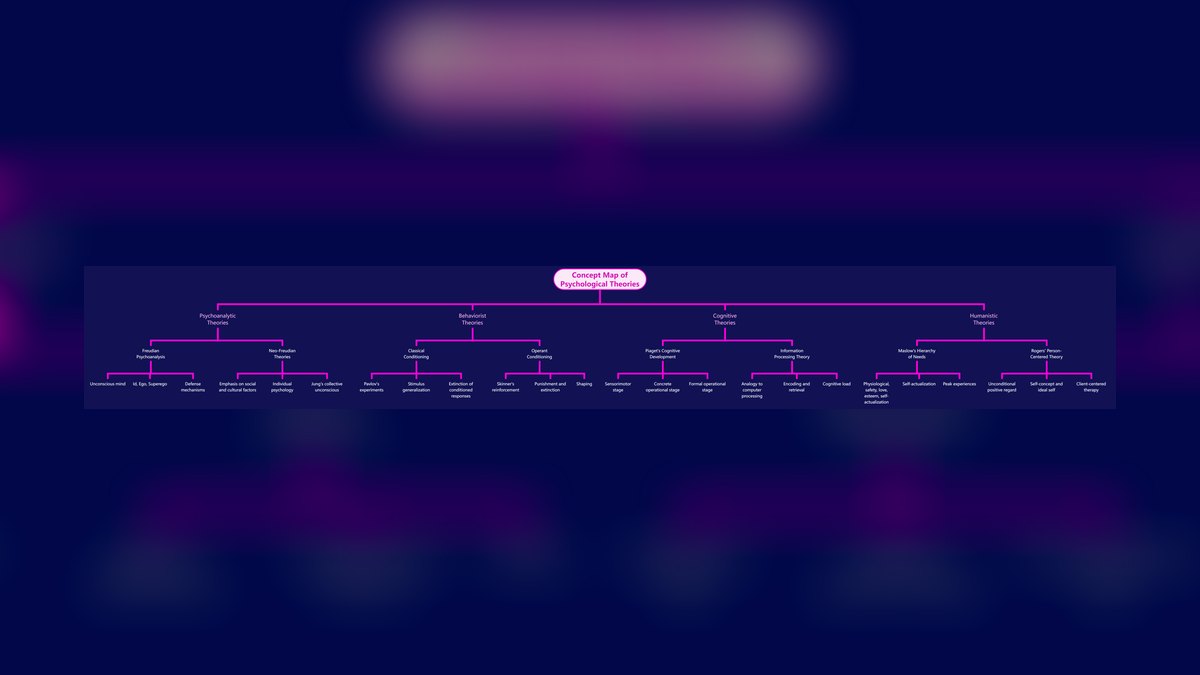
The important asymmetry: the left branch of that diagram costs nothing extra to build. Aligning the loop with the theme is a decision made early and cheaply. The right branch costs the studio real money and cannot be patched after ship, because the loop is the game.
What it costs, when it surfaces, and the ranges teams should plan around
The cheapest possible fix is a scoping decision made before vertical slice, when the core verb and the thematic claim are both still soft. Changing "the player shoots" to "the player negotiates" costs a conversation at that stage. The same change after the combat system is built costs the combat system.
Detection windows follow a rough hierarchy. Internal playtests catch systemic dissonance poorly, because the team knows the intended reading and unconsciously supplies it. External playtests with players who have never seen the pitch catch it far better — the useful signal is not "did you enjoy it" but "what do you think this game is about," asked at hour two, hour ten, and hour twenty. Divergence between those three answers is the measurement. If a tester's hour-two answer is "grief" and their hour-twenty answer is "clearing camps," you have quantified the problem without needing a single new metric.
The telemetry proxies are indirect but usable. Completion rate against a genre baseline is the blunt one; large gaps between a game's review reception and its completion rate are a standing signal worth investigating. Session-length decay is sharper: a coherent game's sessions hold or lengthen through the middle act, while a dissonant one shows sessions shortening as the player's willingness to inhabit the contradiction erodes. Drop-off clustering matters more than drop-off volume — if abandonment concentrates immediately after a major narrative beat rather than during a difficulty spike, the beat itself is the culprit, and the likely reading is that it promised something the following gameplay failed to deliver.

Remediation ranges, in order of cost:
Framing changes. Rewriting dialogue, adjusting a character's reaction, adding a line that names the contradiction. Cheap, late-viable, and surprisingly effective — much dissonance is resolved simply by having the game demonstrate it noticed. Weeks, not quarters.
Reward-system retuning. Changing what the game pays you for. If a survival game about scarcity grants experience for kills, the economy is arguing against the fiction; shifting that reward to evasion or conservation realigns it without touching a single animation. Moderate cost, mid-production viable, and the highest ratio of coherence gained to work performed.

Loop redesign. Changing the verb itself. Expensive, only viable pre-vertical-slice in practice, and the reason so many otherwise excellent games ship with the problem intact — by the time it is visible, it is unaffordable.
Framing the dissonance as the point. The most ambitious option: keep the contradiction and build the game's argument on top of it, the *Spec Ops: The Line* route. This is not a fix, it is a different game, and it requires the commitment to be present from the outset. Attempting it retroactively produces something worse than either coherent alternative, because players can tell the difference between a game that meant it and one that rationalized it in post.
One adjacent note, because the same economics appear in neighboring media. Interactive theme park attractions, escape rooms, and immersive theatre all face a structural version of this: the guest is told a story and simultaneously handed a set of actions, and if the actions don't express the story, the guest reports a vague dissatisfaction they attribute to pacing. The design fix is identical — make the verb carry the meaning — and the cost curve is the same, cheap at concept and ruinous after build.

Where teams and reviewers consistently get this wrong
The most common institutional failure is siloed development. Narrative and systems teams working in parallel with a milestone-based handoff will produce dissonance almost by default, because neither owns the intersection. The story team writes toward theme; the systems team writes toward engagement metrics; both succeed at their brief and the game fails at the thing neither was assigned.
The second failure is treating the reward economy as thematically neutral. It never is. Every currency, every unlock, every progression curve is a statement about what the game considers worth doing. A game can write a hundred pages about the futility of violence and undo all of it with a skill tree whose best nodes are combat nodes. Players don't read the pages; they read the tree, because the tree is what they interact with.
Third: mistaking narrative volume for narrative weight. Adding more cutscenes to a dissonant game increases the contradiction rather than resolving it, because it raises the stated claim without touching the enacted one. The gap widens. This is a genuinely counterintuitive result and teams walk into it repeatedly under launch pressure, when adding cinematics is one of the few things still possible.

Fourth: the review-cycle structure itself. Reviewers work under embargo, often with limited time and occasionally with guides that route them past the grind. They also evaluate analytically, in components — writing, art, sound, systems — because that is what a review is for. Component evaluation is precisely the method that cannot detect a problem which lives *between* components. This is not a failure of criticism so much as a mismatch between the tool and the defect. It is also why the review-score-versus-player-sentiment gap is so reliably a dissonance signature rather than a sign of bad faith on either side.
Fifth, and most self-inflicted: marketing that promises a register the game does not deliver. A trailer that foregrounds moral weight for a game whose loop is fundamentally power fantasy manufactures dissonance before the player has touched a controller. The mechanics might be perfectly coherent with a *different* pitch. Expectation is part of the system, and the marketing team is a design stakeholder whether or not anyone has told them so.
Sixth: assuming genre grants immunity. It does not, it only shifts the surface. A farming sim with an environmental message whose optimal strategy is monoculture and maximal extraction is exactly as dissonant as a war shooter about the horror of war. A management game about worker dignity whose efficient play involves squeezing labor is dissonant. Non-violent genres are not exempt; they simply express the contradiction through economies instead of through bodies.
A decision framework for choosing alignment, acknowledgment, or intent
Not every contradiction needs fixing, and the reflex to eliminate all friction produces bland, self-consistent games with nothing to say. The useful question is not *is there dissonance* but *is this dissonance doing work*.
Start by asking whether the contradiction is load-bearing. If the game's argument depends on the player feeling complicit — if the discomfort is the message — then the dissonance is the product and should be sharpened, not sanded. If the contradiction is incidental, a byproduct of genre convention rather than intent, it is pure cost.
Then ask whether the game acknowledges it. Acknowledgment is astonishingly cheap and does most of the work. A character who notices the hypocrisy, a mechanic that registers the body count, a tonal shift after a massacre — any of these converts a seam into a theme in the player's reading. The absence of acknowledgment is what signals to players that the game didn't mean it.

Then ask what production stage you're in, because that constrains the answer more than any aesthetic consideration. Pre-slice, redesign the verb. Mid-production, retune the rewards. Post-alpha, reframe with dialogue and pacing. Post-ship, the honest move is to learn it for the sequel rather than patch a contradiction that lives in the architecture.
A practical habit worth adopting: write the game's thematic claim as a single sentence, then write the core loop as a single sentence, and put them next to each other on one page. If a stranger reading both would not guess they belong to the same product, the problem is already visible and it is still early enough to be cheap. Teams that do this at concept and revisit it at every milestone catch nearly everything the expensive detection methods find later.
The broader principle extends past games. Any interactive product that makes a claim about its values and then structures its incentives against them will produce the same erosion — a wellness app that says it wants you to log off while optimizing for session length, a learning platform that talks about mastery while rewarding streaks. The mechanism is identical: repeated action teaches the real value, and stated values that contradict it read as marketing. Games are simply where the effect is most legible, because the loop is so explicit and the repetition count so high.
Related questions
Is ludic dissonance the same thing as ludonarrative dissonance?
They point at the same phenomenon from different sides. Hocking's ludonarrative dissonance names the structural contradiction in the design; ludic dissonance emphasizes the player's felt experience of it. In practice the terms are used interchangeably, though the second is more useful when discussing why players disengage.
Can a game be great despite obvious dissonance?
Yes, frequently. Many beloved games carry real contradictions and survive on the strength of their mechanics or writing. Dissonance is a cost, not a verdict. It becomes fatal mainly when the game's central selling point is emotional coherence, since then the flaw sits directly on the value proposition.
Why do reviewers and players disagree so often on these titles?
Reviews evaluate components under time pressure; players evaluate the accumulated whole over many more hours. A defect living between components, and only surfacing after dozens of repetitions, is close to invisible to the first method and unavoidable in the second.
Does dissonance only affect violent games?
No. Violence is the most legible case because the contradiction is vivid, but any economy that rewards behavior contrary to the stated theme produces the same effect — extraction in an ecology game, labor squeezing in a management sim about dignity, engagement optimization in a wellness app.
Can dissonance be fixed after launch?
Framing fixes can: added dialogue, tonal adjustments, tuning what the game rewards. Loop-level contradictions generally cannot, because the loop is the architecture. Studios facing that usually get more value from carrying the lesson into the sequel than from patching around it.
FAQ
Who first described this problem, and when?
Clint Hocking coined "ludonarrative dissonance" in a 2007 blog post analyzing *BioShock*, arguing the game's story and its mechanics made opposing arguments about self-interest. The concept spread through game criticism and design discourse over the following decade and remains the standard reference point.
How would a studio measure this rather than argue about it?
Ask external playtesters "what is this game about" at three separate points in the campaign and compare answers. Divergence is the measurement. Pair it with session-length decay and drop-off clustering around narrative beats rather than difficulty spikes.
Is intentional dissonance a defensible design goal?
Yes, when committed to from the start. Games that treat the contradiction as their argument, making the player's complicity the subject, can produce their strongest effect from it. What does not work is discovering the contradiction late and reframing it as intent afterward — players reliably detect the difference.
Why does adding more story make a dissonant game worse?
Because dissonance is a gap between what the game says and what it makes you do. Additional cutscenes raise the stated claim without changing the enacted one, so the gap widens. The intuitive late-stage fix is the wrong direction.
What is the single cheapest intervention available?
Acknowledgment. Have the game notice. A character remarking on the hypocrisy, a system registering consequence, a tonal shift after violence — any signal that the contradiction is seen converts it from a seam into a theme in the player's reading, at near-zero production cost.
Does this matter commercially or only critically?
Commercially. Post-launch content, sequels, and expansions all depend on the player finishing the base game with warmth toward it. A player who abandons mid-campaign is removed from every downstream purchase at once, which is why coherence shows up in revenue rather than only in discourse.
Sources
- https://clicknothing.typepad.com/click_nothing/2007/10/ludonarrative-d.html
- https://www.gdcvault.com/
- https://www.gamedeveloper.com/design
- https://www.psychologyofgames.com/
- https://www.rockpapershotgun.com/
- https://gamestudies.org/
- https://www.polygon.com/
- https://en.wikipedia.org/wiki/Ludonarrative_dissonance
Related on PULSE
- [The 10 Best Video Games from the 2000s](/knowledge/gm0063)
- [The 10 Best Video Games from the 1990s](/knowledge/gm0062)
- [The 10 Best SNES Games to Collect in 2027](/knowledge/gm0061)
- [The 10 Best Sega Genesis Games to Collect in 2027](/knowledge/gm0060)
- [The 10 Best Video Games from the 1980s](/knowledge/gm0059)
@Kory-White- · if Venmo asks, the last 4 of my number are 2012
 pulse-gamingTop 10 Gaming strategies for 2027
 editorialMy Thoughts: Top 10 Gaming Keyboards in 2027
 pulse-gamingHow do you get started with Gaming in 2027?
 pulse-gamingWhat is the best way to approach Gaming in 2027?
 pulse-gamingWhat should you know before investing in Gaming in 2027?
 pulse-gamingIs Gaming worth it in 2027?
 pulse-gamingWhat are the most common mistakes in Gaming in 2027?
 pulse-gamingHow much does an RTX 5070 Ti cost in 2027?
 pulse-gamingTop 10 best Gaming options in 2027
 pulse-gamingHow much does Gaming cost in 2027?