


What is the total development budget for a AAA open-world game in 2027?
Quality
Certified

A AAA open-world game entering full production in 2027 typically carries a total development budget between $200 million and $400 million, with marketing adding roughly as much again. Mid-tier open-world titles land near $80–150 million. Only a handful of franchise flagships exceed $500 million in combined development and launch spend.
Two ways to fund an open-world title: the single-cycle blockbuster versus the staged live-service build
The budget question for a 2027 open-world game splits almost immediately into two very different financial architectures, and the number you land on depends far more on which architecture you pick than on any per-discipline rate card.
The single-cycle blockbuster is the traditional shape. You greenlight a five- to seven-year project, staff a studio of 300–600 internal developers plus a co-development network, ship one enormous package, and recoup on unit sales plus a season pass or two. Total development spend for this shape in 2027 clusters at $200M–$400M, with the upper band reserved for franchise flagships carrying bespoke engine work, full performance capture, and simultaneous multi-platform launch. The cost curve is front-loaded and non-recoverable: you spend the entire amount before you learn whether the market wants the game. Everything hinges on a single launch window.
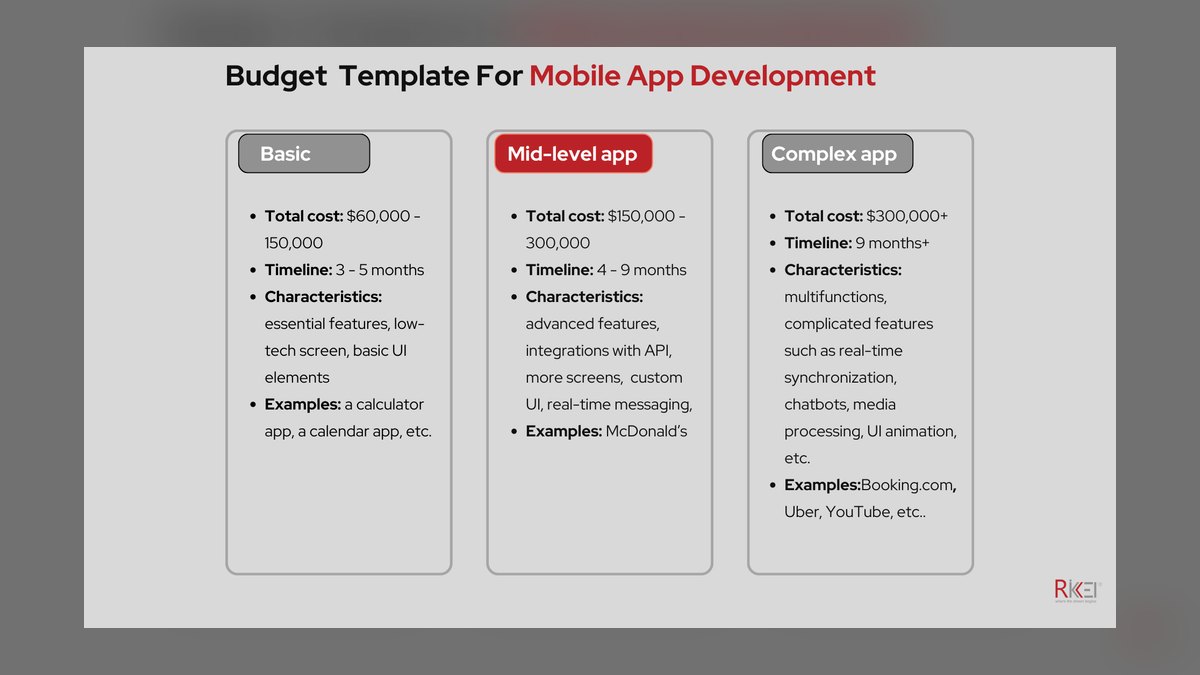
The staged live-service build spreads the same total across a longer horizon and a different risk profile. You budget a smaller launch package — a compressed map, fewer systems, a shorter critical path — at perhaps $90M–$160M, ship it, then fund seasons, expansions, and map extensions out of revenue over three to six years. Cumulative spend can eventually exceed the blockbuster's number, but each tranche after launch is conditioned on real engagement data rather than a greenlight committee's forecast. The world grows in public.
The trade-offs are sharp and they do not cancel out. The blockbuster gets a coherent authored world, a controlled review moment, and a premium price point that supports the budget arithmetically — a $70 title at 6 million units returns roughly $250M net of platform fees, which covers a $200M build. The live-service build accepts a weaker launch and a smaller day-one audience in exchange for optionality: if engagement is soft, you stop spending. That option is worth real money. On a $300M single-cycle project, being wrong costs you the full $300M. On a staged build, being wrong costs you the $120M launch package and whatever you'd committed to the first season.
There is a third posture that behaves like a hybrid and is increasingly common: the franchise-cadence build, where an established open-world IP reuses an existing engine, toolchain, and often large parts of a traversal and combat framework from the prior entry. This is where the mid-tier $80M–$150M numbers actually live for major publishers. The world is new, the technology is amortized. Ubisoft-style annualized franchises and the iterative sequels from most large publishers sit here. The savings are real but bounded — reusing tech saves engineering, not content, and content is the dominant line item in an open world.
One structural fact underlies all three: open-world cost scales with *populated, meaningful* square kilometers, not raw terrain. Procedural generation makes terrain nearly free. It does not make a hand-authored side quest, a voiced NPC, or a unique interior free. Any budget conversation that leads with map size in km² is measuring the wrong variable.
How to decide between them
The choice is not primarily creative. It is a function of four inputs: IP strength, engine readiness, studio headcount stability, and how much capital the publisher can put at risk before first revenue.
IP strength determines your launch-window ceiling. An established open-world franchise with a prior entry above 10 million units can plausibly forecast enough day-one volume to service a $250M+ single-cycle budget. A new IP cannot, and pretending otherwise is how projects die in year four. New IP in open world should almost always take the staged path or the reduced-scope path, and the budget should be sized so that a 2–3 million unit outcome is survivable rather than fatal.
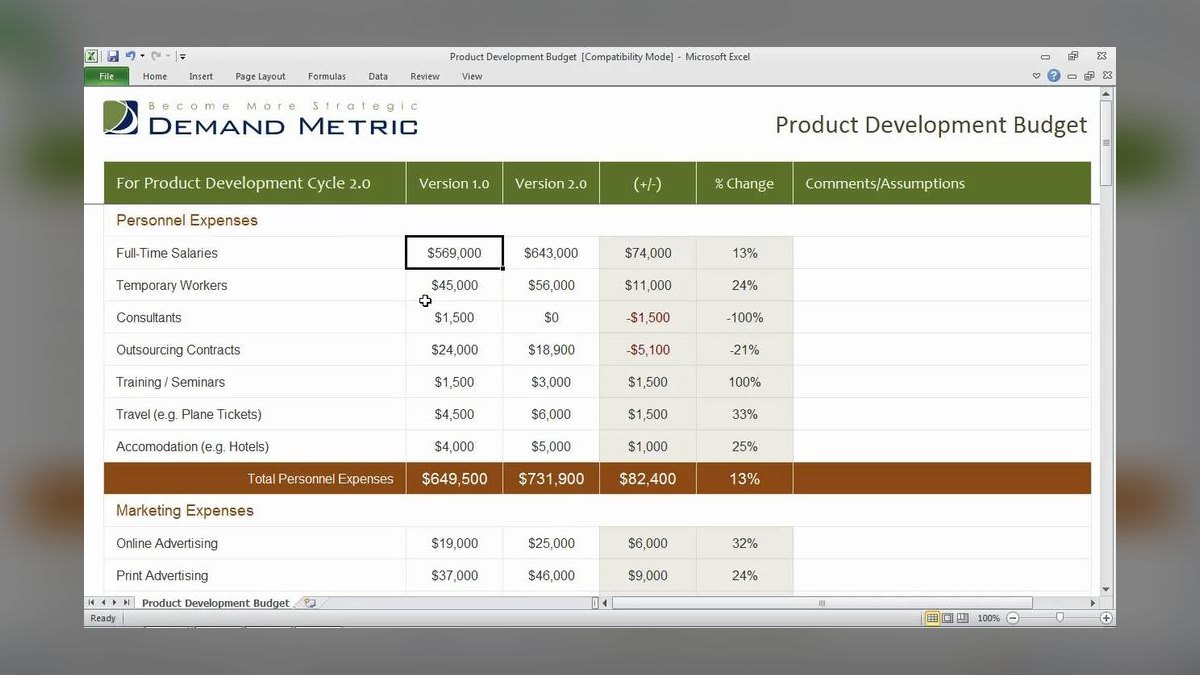
Engine readiness is the single largest swing factor in the schedule and therefore in the burn. A team building on a mature, shipped in-house engine — or on Unreal 5 with an experienced staff — can begin content production in year two. A team writing a new streaming world engine will not have stable content tooling until year three or four, and every month of pre-production burn on a 400-person org runs roughly $6M–$9M in fully loaded cost. Two years of engine delay is not a schedule problem, it is a $150M problem.
Headcount stability governs whether you can hold a large team across a long cycle without paying the ramp-down/ramp-up tax twice. Studios that must borrow capacity from co-development partners pay a coordination premium of perhaps 10–20% on outsourced work, but they buy elasticity.
Capital at risk is the honest constraint. If the publisher cannot absorb a total write-off of the development budget without material harm, the single-cycle shape is off the table regardless of how the creative pitch reads.
The decision tree above is not a formality. The most expensive failure mode in this category is a project that was scoped as a single-cycle blockbuster on new IP with an unfinished engine — that combination has produced most of the publicly known open-world write-downs of the last decade. Each individual choice is defensible; the stack of all three is not.
A practical rule for the greenlight document: write down the unit volume at which the project breaks even *before* you write down the feature list. If break-even requires selling more copies than the top-selling game in the genre's history, the budget is wrong, not the forecast.
Concrete numbers behind each option

Here is where the money actually goes on a 2027 open-world project. Loaded cost — salary plus benefits, tools, hardware, facilities, and overhead — for a developer in a major North American or Western European studio runs roughly $180,000–$250,000 per person-year. Eastern European, Canadian (post-tax-credit), and Southeast Asian studios run materially lower. That single figure drives most of the total.
Single-cycle blockbuster, $200M–$400M. A 450-person average team over five and a half years is roughly 2,475 person-years. At $110K blended loaded cost across a mixed-geography org, that's about $270M in labor alone. Labor typically represents 70–80% of total development budget on a project of this shape. The remainder splits across:
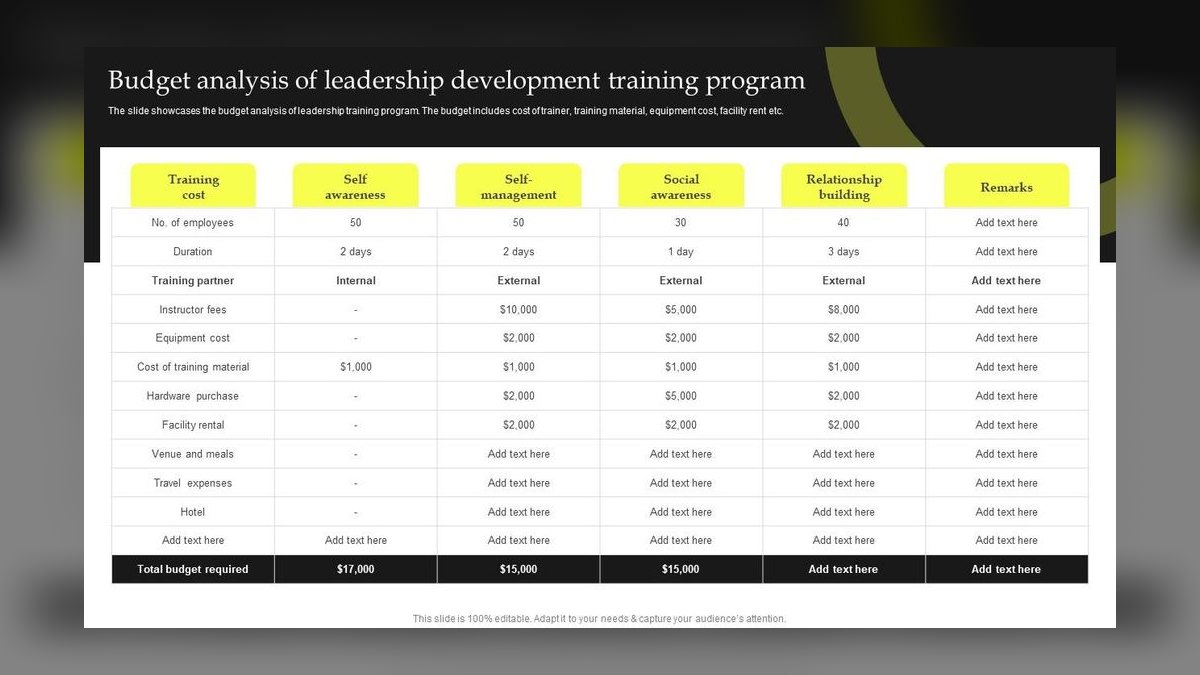
- External content and co-development: 10–18%. Environment art, animation cleanup, cinematics, and QA capacity purchased from partner studios. On a $300M project this is $30M–$54M.
- Voice, performance capture, and music: 3–6%. An open world with a fully voiced cast, multiple languages, and a licensed or orchestral score. A 2027 title with 40+ hours of narrative content and 15 localized languages will spend $10M–$20M here comfortably.
- Middleware, engine licensing, and platform fees: 2–5%. If shipping on a licensed engine, royalties are a revenue-side cost rather than a development-side one, but per-seat tooling, physics, audio middleware, and analytics stacks are real budget lines.
- Certification, compliance, and localization QA: 2–4%. Multi-platform submission cycles, accessibility compliance, and regional rating requirements.
Franchise-cadence build, $80M–$150M. The savings come almost entirely from engineering. A team of 220–320 over three and a half years is roughly 900 person-years, or $100M–$120M in labor. Engine, animation systems, and traversal are inherited. What is *not* inherited: world content, quest design, and audio. Those hold their cost. This is why franchise sequels rarely come in at half the price of the original despite reusing most of the technology — content is the bulk of the work, and content does not amortize.
Staged live-service build, $90M–$160M launch, then $25M–$60M/year. The launch package funds a smaller world and fewer systems. Post-launch, a live team of 120–250 sustains seasonal content. Over six years, cumulative spend of $250M–$450M is normal, but the spend is conditional. Critically, a live-service open world also carries ongoing infrastructure cost: server capacity, live-ops tooling, anti-cheat, and customer support that a single-player title never pays. Budget 3–8% of live revenue for that.
Marketing sits outside all of these. The 2027 rule of thumb for a AAA open-world launch is a marketing spend of 0.75x to 1.5x the development budget. A $250M development project routinely carries $200M–$350M of marketing across the launch year. When press reports a "$700M game," it is almost always a development-plus-marketing figure, and conflating the two is the most common error in public discussion of this topic.
Tax credits meaningfully change the real number. Canadian provincial credits, UK Video Games Expenditure Credit, and various regional programs can rebate a substantial share of qualifying labor. A project with a nominal $300M development budget and heavy Montreal/Quebec or UK staffing may have a net cost to the publisher materially below the headline. Any budget comparison that ignores credit structure is comparing incompatible numbers.
Implementation details and sequencing
Getting the total right depends less on the estimate and more on gate discipline. Open-world budgets do not overrun in a single decision; they overrun through a hundred small scope additions made after the point where the schedule could absorb them.
Pre-production (12–24 months, 8–15% of budget). Small team, 40–90 people. The deliverable is not a demo — it is a *vertical slice at shipping quality* plus a proven content pipeline. The pipeline matters more than the slice. If an environment artist cannot take a region from blockout to final in a measured, repeatable number of days, you cannot forecast the cost of the world, and the total budget is fiction. Exit gate: measured cost-per-square-kilometer and cost-per-quest, derived from real work, not estimates.

Ramp (6–12 months, 10–15%). Headcount scales from ~90 to full production strength. This period is systematically underestimated — new staff are net-negative for their first two to four months, and the senior developers onboarding them are also less productive. Budget the ramp as if it produces roughly half its nominal output.
Full production (24–36 months, 50–60%). Peak headcount, peak burn. This is where the $6M–$9M/month figure applies on a large org. The governing discipline is a hard content freeze date set at least twelve months before ship, because open-world content has a long tail of dependency: a quest added in month 40 still needs voice, localization, cinematics, QA, and certification.
Polish, certification, and launch (9–15 months, 15–25%). Consistently the most underestimated phase. Open worlds fail QA in ways linear games do not — emergent state combinations, streaming edge cases, save corruption at world boundaries. Reserve genuine contingency here: 15–20% of total budget held unallocated is standard practice on well-run projects, and the projects that skip it are the ones that delay.
Sequencing rules that hold the total in place. First, tie every content commitment to the measured per-unit costs from pre-production, and refuse commitments that have no measured cost. Second, front-load the technically risky systems — streaming, save, traversal — so that failure surfaces in year two when it is a $20M problem rather than year five when it is a $100M problem. Third, re-forecast the total quarterly against burn-to-date and content-complete percentage; a project that is 60% through its schedule and 35% through its content has already overrun and the only question is by how much. Fourth, treat platform launch parity as a scoping decision made in pre-production, not a late addition — retrofitting a second platform in the last year is one of the reliably expensive mistakes in this category.
The single most useful budget artifact on an open-world project is a live sheet showing cost-per-hour-of-player-content, measured monthly. An open world that costs $4M per hour of quality content and wants to ship 60 hours has told you its budget whether or not anyone has written it down.
Related questions
Why do open-world games cost more than linear AAA games?
Open worlds require content volume that scales with explorable space — quests, NPCs, interiors, systemic interactions — plus streaming technology, and a QA burden that grows combinatorially with emergent state. Linear games control the player's path and can polish a bounded set of scenarios.
Does using Unreal Engine 5 reduce the total budget?
It reduces engineering cost and shortens pre-production, often meaningfully. It does not reduce content cost, which dominates open-world budgets. Licensing is typically a revenue royalty rather than an upfront development expense, so it appears outside the development budget entirely.
How much of the budget is marketing versus development?
Marketing generally runs 0.75x to 1.5x development spend for a AAA open-world launch. Public "budget" figures reported in press frequently combine both, which is why headline numbers often appear roughly double credible development-only estimates.
What is the break-even unit volume for a $250M open-world game?
At a $70 price point and roughly 70% net to the publisher after platform fees and retail, break-even on development alone sits near 5 million units. Including a comparable marketing spend, break-even roughly doubles to around 10 million.
Can a smaller studio ship an open-world game profitably?
Yes, at reduced scope. Successful smaller open worlds constrain map size, reduce voiced content, lean on systemic rather than authored interactions, and target $10M–$40M budgets. The failure mode is attempting AAA-scale content volume on a mid-tier budget.
FAQ
What is a realistic total development budget for a AAA open-world game in 2027?
For a franchise flagship with a large internal team, new content, and multi-platform launch, $200M–$400M is the credible range for development alone. Mid-tier and franchise-cadence open worlds sit at $80M–$150M. Figures above $500M generally reflect development plus marketing combined, or projects that suffered multi-year restarts.
Why do reported game budgets vary so wildly for similar-looking titles?
Because "budget" is not a standardized term. Some figures include marketing, some include only development. Some are gross labor cost, others are net of tax credits. Some include years of cancelled pre-production. Comparing two public numbers without knowing which definition each uses produces meaningless conclusions.

What percentage of an open-world budget is salaries?
Roughly 70–80% of development spend is fully loaded labor cost. This is why headcount and schedule length — not asset purchases or middleware licenses — are the variables that actually control the total. A six-month delay on a 450-person team is a $40M+ event.
Does procedural generation lower open-world development costs?
It lowers terrain and base-layer environment cost substantially, and modern toolchains make large landmasses cheap. It does not lower the cost of the authored content that makes a world worth exploring — quests, characters, dialogue, unique locations. Those remain hand-made and remain the dominant expense.
How much contingency should an open-world budget carry?
Well-run projects hold 15–20% of the total unallocated, weighted toward the polish and certification phase. Open worlds discover expensive problems late because emergent-state bugs only appear once the full world is playable. A project with no contingency line is not a budget, it is a hope.
Is the total budget rising or stabilizing heading into 2027?
Per-project totals at the top end have continued climbing, driven by content volume expectations and longer cycles, while the industry has simultaneously moved toward fewer, larger bets and more aggressive reuse of engines and toolchains. The practical effect is a widening gap between flagship and mid-tier budgets rather than uniform inflation.
Sources
- https://www.gamesindustry.biz/
- https://www.gdcvault.com/
- https://www.unrealengine.com/en-US/blog
- https://www.matthewball.co/all
- https://www.newzoo.com/resources
- https://www.gov.uk/guidance/video-games-expenditure-credit
- https://www.investquebec.com/quebec/en/financial-products/all-our-solutions/tax-credit-for-the-production-of-multimedia-titles.html
- https://www.reuters.com/business/media-telecom/
- https://www.pwc.com/gx/en/industries/tmt/media/outlook.html
Related on PULSE
- How studios forecast break-even unit volume before greenlight
- Why content pipelines, not engines, determine game production cost
- Live-service versus premium: comparing revenue models over six years
- How tax credits change the real cost of a development studio's location
- What a vertical slice should prove before full production starts
- Estimating QA cost for systemic and emergent game design
This page will be disappearing soon. Save it to your device for $1 — or read it free while it is here.
@Kory-White- · if Venmo asks, the last 4 of my number are 2012
This page is gone.
This one is off the shelf now. $1 keeps it on your phone for good — the whole page, pictures and diagrams included.
 pulse-recentTop 10 Most Valuable Sealed Game Boy Games to Buy in 2027
 pulse-recentTop 10 Most Valuable Vintage Arcade Cabinets to Buy in 2027
 pulse-recentThe 10 Best Budget Gaming Mouse Pads Under $20 in 2027
 pulse-recentThe 10 Best Budget Gaming Consoles Under $300 in 2027
 pulse-recentTop 10 Most Expensive Limited Edition PlayStation 5 Consoles in 2027
 pulse-recentHow much does it cost to buy a sealed copy of Super Mario 64 in 2027?
 pulse-recentHow much does a gaming PC cost per month in 2027?
 pulse-recentWhat is the typical budget breakdown for an open-world game in 2027?
 pulse-recentTop 10 Gaming Controllers with the Most Hall Effect Joysticks in 2027
 pulse-recentThe 10 Best Budget Gaming Monitors Under $250 in 2027