
Best Milestone Birthday Party Venues in New York City (2027)
 Curated byKory White · Fractional CRO · Maryland
 PULSEKNOWLEDGE LIBRARY
New York City's milestone birthday venues split into three price tiers: skyline lounges with $2,000–$6,000 food-and-beverage minimums for 50–75 guests, mid-range restaurants and rooftops at $150–$350 per person, and landmark ballroom buyouts running $30,000–$75,000 for 200–400 guests. Book six to twelve months ahead for weekend dates.
What a milestone venue search actually involves in New York City
A milestone birthday — a 30th, 40th, 50th, 60th, or beyond — is not a dinner reservation with balloons. It is a small event production, and New York City venues price and contract it that way. The moment you ask for a private or semi-private space, you leave the world of restaurant bookings and enter the world of event sales: minimums, service charges, floor plans, load-in windows, and a signed contract with a deposit schedule. Understanding that shift is the single biggest thing that separates hosts who get what they wanted from hosts who feel gouged.
The city's inventory clusters into recognizable categories. Landmark ballrooms — the Rainbow Room on the 65th floor of 30 Rockefeller Plaza, the two-story Grand Ballroom at The Pierre on Fifth Avenue — deliver formal grandeur, in-house catering, and capacity in the 200–480 range. Purpose-built event spaces like The Glasshouse at 660 12th Avenue were designed from the ground up for events, which means the rigging points, power drops, freight elevators, and loading dock already exist; that floor holds roughly 1,875 reception or 600 seated. Rooftops and terraces — Tribeca Rooftop + 360° at 2 Desbrosses Street, Gallow Green atop the McKittrick Hotel in Chelsea, Battery Gardens at the southern tip of Manhattan — trade weather risk for the outdoor drama that photographs well. Skyline lounges such as The Skylark at 200 West 39th Street give you a 30th-floor view at a fraction of a ballroom budget because you are renting a section, not the building. Character venues — Brooklyn Winery in Williamsburg, Tavern on the Green inside Central Park — sell atmosphere and food identity rather than square footage. And nightclubs like Marquee at 289 10th Avenue sell a late-night dance floor with bottle-service economics.
Why the category matters more than the individual name: each category has a different cost structure, a different failure mode, and a different lead time. A ballroom will quote you per person and bundle staffing; a lounge will quote you a minimum spend and charge separately for anything beyond bar and passed food; a nightclub will quote you table minimums that scale with the night of the week and whether a resident DJ is playing. Two venues with the same "$20,000 party" headline can produce wildly different all-in numbers once service charge, tax, rentals, and overtime land.
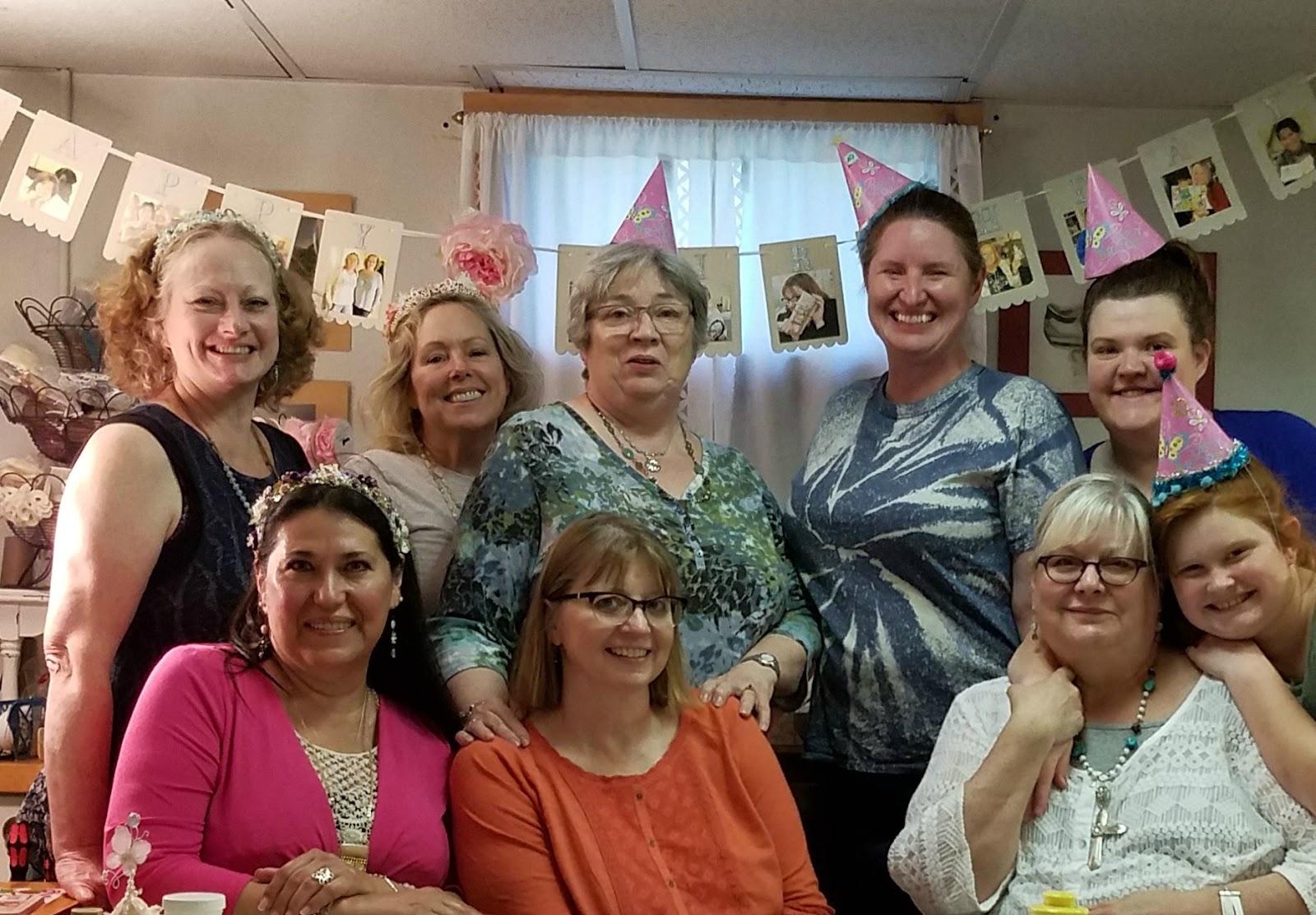
There is a second reason to think in categories: guest experience is driven by fit, not prestige. A 40-person 40th birthday inside a room built for 300 feels like a failed party even if the room is spectacular. The same 40 people in a semi-private lounge section with a terrace feels intimate and expensive. Match the room to the list first; chase the view second.
Finally, understand what the venue is actually selling. Venue revenue in this market comes overwhelmingly from food and beverage, not from rent. That is why so many spaces quote a "minimum" instead of a rental fee — they would rather commit you to a spend floor than rent you a room. Once you internalize that, negotiation becomes obvious: you have leverage on *what counts toward* the minimum, on date flexibility, and on hours, but very little leverage on the number itself during peak season.
How to run the booking process from first list to signed contract
The process below is the one experienced hosts follow, and it is deliberately sequenced so you never tour a room you cannot afford or afford a room that cannot hold your list.
Step one: lock a guest count range, not a number. Write down a realistic low and high — say 65 to 90. Venue capacity is quoted two ways, "reception" (standing, with some high-tops) and "seated" (full dinner service with a dance floor carved out). Seated capacity is typically 55–70% of reception capacity in the same room. A room advertised at 300 reception often seats about 180–220 once you add a dance floor, a bar, a gift table, and a band or DJ footprint.

Step two: set a hard all-in budget and back into the minimum. Take your total budget and divide by roughly 1.35 to get the food-and-beverage minimum you can actually sign. The gap is New York's standard event math: a service charge commonly in the 20–24% range plus New York City sales tax of 8.875%. A $20,000 minimum is realistically a $26,000–$28,000 check before you buy a single flower, cake, or photographer hour.
Step three: build a list of eight to twelve venues across two or three categories. Do not send inquiries to ten ballrooms. Send to four ballrooms, four lounges or rooftops, and three character venues, so the quotes you get back teach you what your budget actually buys.
Step four: send one structured inquiry email to all of them at once. Include date plus two alternates, guest count range, start and end time, seated versus reception, and your budget as a range. Vague inquiries get vague replies and slow response times; specific inquiries get real proposals within a few business days.

Step five: read the proposals side by side on an apples-to-apples sheet. Convert everything to one number: minimum (or per-person × guaranteed count) + service charge + tax + rentals + AV + overtime risk.
Step six: tour the top three, at the same time of day and week as your event. A rooftop at 2 p.m. on a Tuesday tells you nothing about the same rooftop at 9 p.m. on a Saturday. Look at where the bar is, how the bathrooms flow, whether there is a coat check in December, and where a band or DJ would physically stand.
Step seven: negotiate the terms you can actually move. Then sign, pay the deposit, and put the final-count deadline in your calendar.
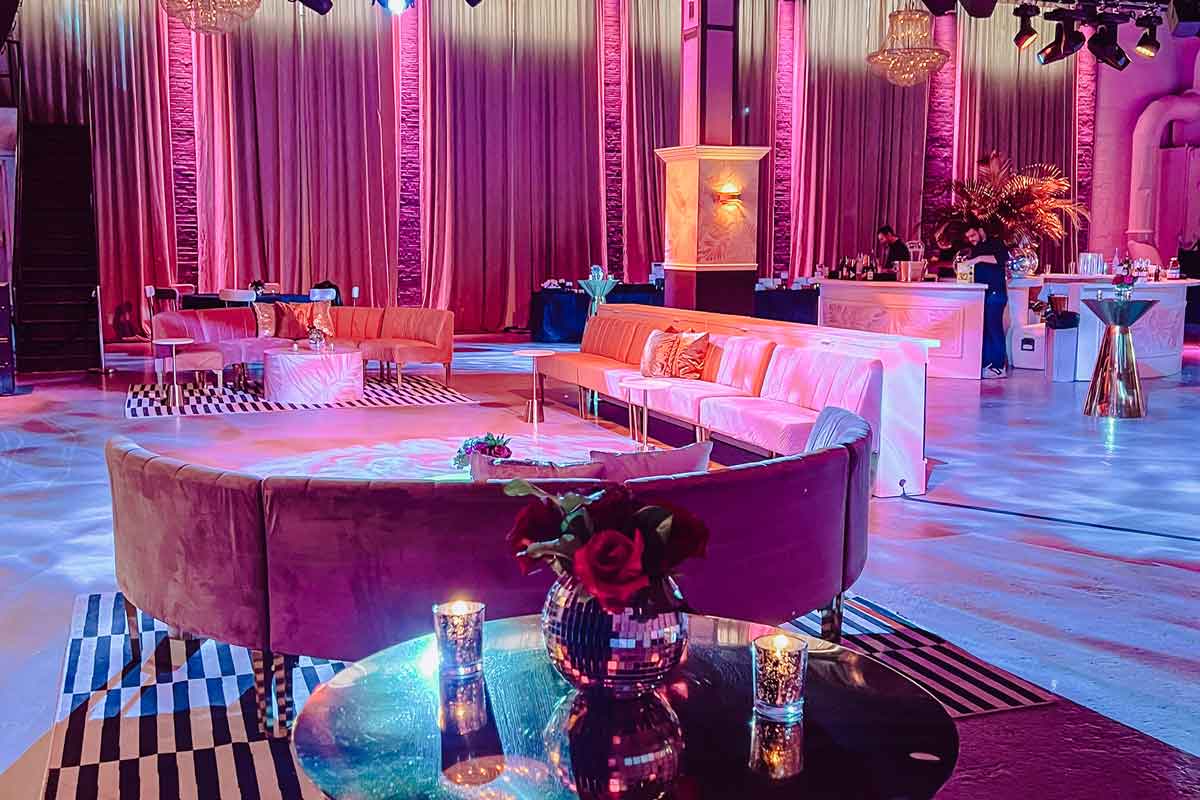
The step that hosts skip most often is step five. A proposal that reads "$175 per person" and a proposal that reads "$15,000 food-and-beverage minimum" are not comparable until you put a guest count against both. At 60 guests, the per-person deal is $10,500 in food and beverage; at 110 guests it is $19,250. The minimum-based venue costs the same $15,000 either way — which makes it a bad deal at 60 guests and a good one at 110.
Costs, timelines, and typical ranges across the city
Here is what the tiers actually look like, using the ranges venues commonly quote in this market.
Skyline lounges and semi-private sections. The Skylark, a 30th-floor lounge near Times Square with a south-facing terrace, hosts semi-private groups of roughly 50–75 with food-and-beverage minimums that commonly start in the $3,000–$6,000 range; a full buyout of about 150 runs meaningfully higher. Nightclub table packages at a venue like Marquee can start around $2,000–$5,000 in minimum spend for a semi-private area, scaling steeply on peak Saturdays. This tier is where a 30th or a low-key 40th lives comfortably.
Per-person restaurant and rooftop packages. Battery Gardens, with glass-walled rooms and a patio facing New York Harbor and the Statue of Liberty, is frequently quoted from $150–$250 per person, with capacity around 300 reception and 200 seated. Tavern on the Green in Central Park runs roughly $175–$300 per person, with the Crystal Room holding around 300. Tribeca Rooftop + 360° quotes all-inclusive packages frequently in the $200–$350 per person band plus venue fees, at roughly 400 reception and 250 seated. Brooklyn Winery in Williamsburg, a working urban winery with a barrel room, runs buyout minimums commonly in the $8,000–$20,000 range for up to about 180 reception and 120 seated. Gallow Green, the McKittrick Hotel's overgrown-railway-garden rooftop in Chelsea, buys out at roughly $10,000–$25,000 for 150–250 guests, seasonally dependent.
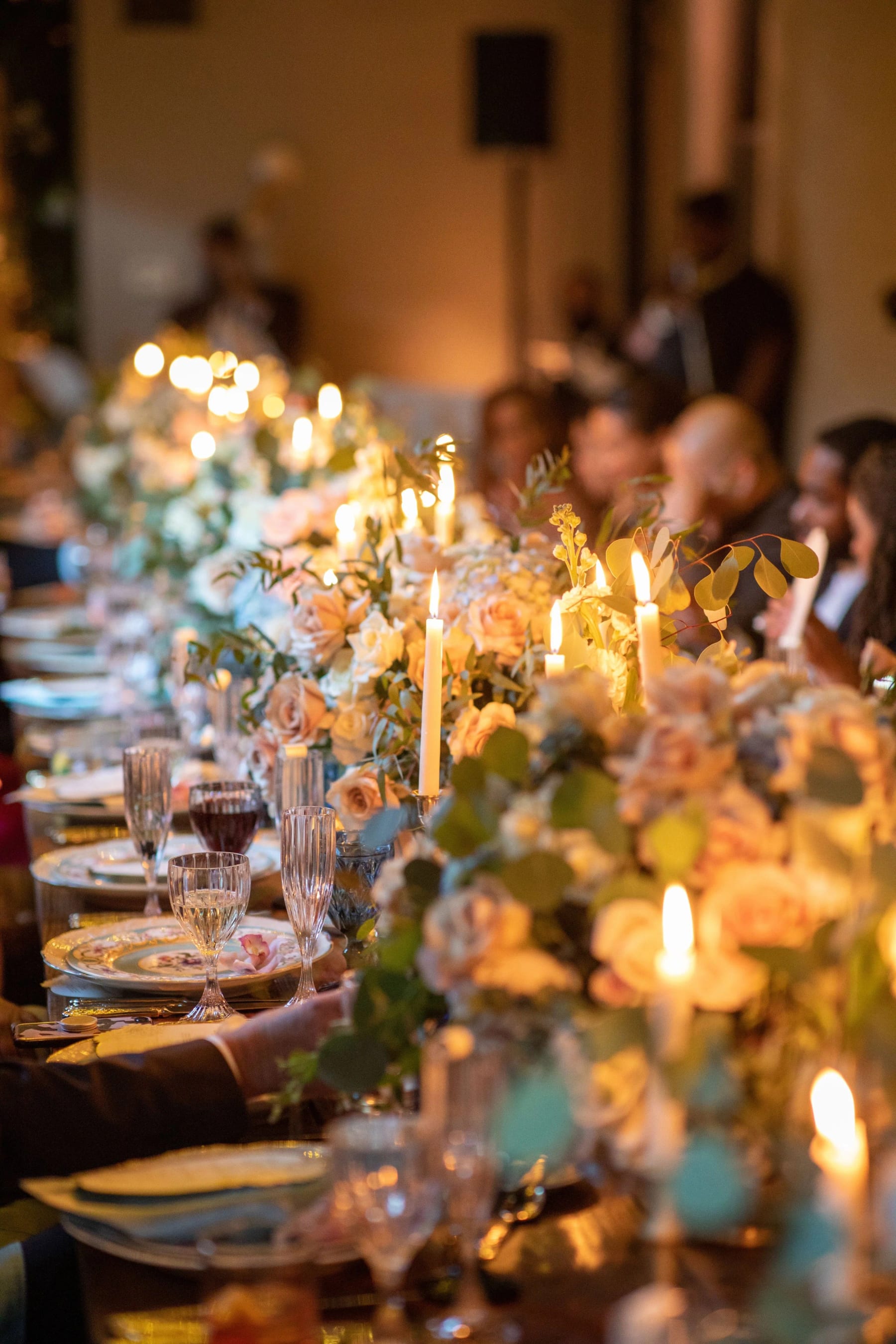
Landmark ballrooms. The Rainbow Room seats about 220 for dinner and holds up to 300 reception, with minimums commonly landing in the $30,000–$60,000+ range depending on night and season; the adjacent SixtyFive bar is the smaller sibling option. The Pierre's Grand Ballroom seats up to 480 with plated dinner packages typically starting near $300–$400 per person. The Glasshouse quotes custom, with full-floor events typically beginning in the $40,000–$75,000 range.
The costs that are not in the quote. Budget separately for a photographer ($1,500–$5,000 for four to six hours in this market), a DJ ($1,200–$3,000) or a live band ($4,000–$12,000+), florals and décor ($1,000–$8,000 depending on ambition), a cake ($10–$18 per slice from a real bakery, plus a cutting fee of roughly $3–$8 per person at venues that charge one), invitations, a coat check attendant in winter, and a 15–20% contingency. Rentals matter when a space is raw: specialty chairs, linens, and lounge furniture can add $2,000–$10,000. AV — projector, screen, uplighting, wireless mics for toasts — commonly runs $1,000–$5,000 unless the venue includes house AV.
Timelines. Peak windows in New York City are late April through June, September through mid-November, and all of December. For those dates on a Friday or Saturday, inquire nine to twelve months out for landmark ballrooms and six to nine months out for popular rooftops and lounges. Seasonal outdoor spaces fill for May–September dates roughly four to six months ahead. A weeknight or Sunday party in January or February can often be booked six to ten weeks out, sometimes with a reduced minimum — the single most effective cost lever available to a flexible host.
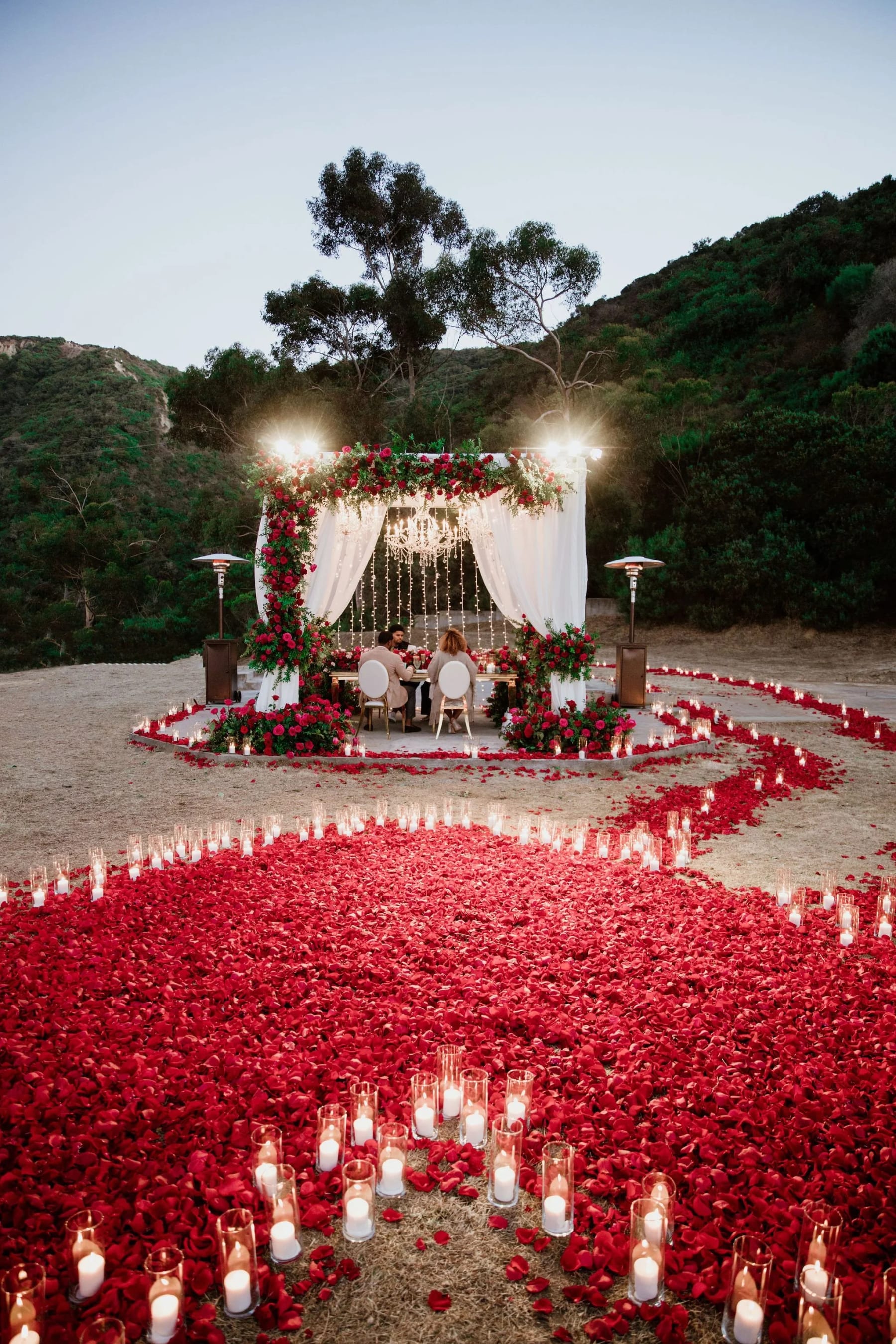
Deposit and payment structure. Expect roughly 25–50% at signing to hold the date, a second installment 30–60 days out, and full prepayment plus a guaranteed guest count 7–14 days before the event. The guarantee is the number you pay for whether or not those people show; you can usually add guests after the deadline but not subtract them.
Where hosts get it wrong
Confusing "minimum" with "total." The most common and most expensive error. A food-and-beverage minimum is a floor on food and drink only. Add the service charge (typically 20–24%, and note that in New York a service charge is not automatically a gratuity — ask explicitly whether staff are tipped from it and whether an additional gratuity is expected), then sales tax at 8.875%, then anything the venue bills outside F&B: room fee, security, coat check, cake-cutting, corkage, valet. Hosts routinely sign a $15,000 minimum and write checks totaling $22,000–$25,000.
Booking capacity instead of comfort. A room's listed maximum is a fire-code number, not a good-party number. Plan roughly 12–15 square feet per standing guest with a bar and some furniture, or 18–20 square feet per seated guest once you include a dance floor. If you have 90 guests and you are shown a room whose maximum is 100, you will be uncomfortable. Aim for 70–80% of stated capacity.
Ignoring the timeline of the night. Milestone parties have a shape: arrival and cocktails (60–75 minutes), a seated or stationed dinner (75–100 minutes), toasts and cake (20–30 minutes), then dancing. Four hours is tight for a full dinner party; five is comfortable. Contracts commonly cover four or five hours, and overtime is billed in full or half-hour blocks, frequently at $500–$2,500 per hour depending on venue tier and staffing. Decide up front whether you are buying five hours or gambling on overtime.
Forgetting that the guarantee is one-directional. If you guarantee 100 and 78 arrive, you pay for 100. Set the guarantee at your realistic-attendance number — typically 80–88% of accepted RSVPs for a weekday, higher for a weekend — not at your invite count.
Underestimating outdoor risk. A rooftop without a hard-walled indoor backup is a coin flip from April to October. Ask the specific question: "If it rains, what room do we move into, at what capacity, and by what hour do you make the call?" A venue that answers with a tent quote rather than an indoor room is telling you the backup costs extra.
Skipping the accessibility and logistics walk. Check whether the entrance, restrooms, and any elevated areas are accessible; whether there is an elevator to the event floor and how many; where a car can pull up for an elderly guest; and whether the freight elevator is available at your load-in time. A 65th-floor room with two guest elevators takes real time to move 250 people vertically — build 20–30 minutes into your arrival window.

Assuming outside vendors are welcome. Most full-service New York venues are exclusive on catering and bar. Many allow an outside cake from a licensed bakery for a per-slice fee but restrict outside décor, open flame, confetti, and anything adhered to walls. Get the vendor and décor policy in writing before you hire a designer.
Not reading the cancellation and force-majeure language. Deposits are commonly non-refundable, with a sliding scale of additional liability as the date approaches. Ask whether the date can be moved once without penalty; many venues will grant a single reschedule to a comparable date, but only if you negotiate it into the contract before signing.
Choosing the right room for your specific milestone
Work the decision in this order: guest count → format → budget → view or atmosphere. Reversing that order is how hosts fall in love with a room they cannot fill or afford.
Under 50 guests. Go semi-private. A lounge section, a private dining room, or a barrel room gives an intimate feel at a $3,000–$10,000 minimum. Do not buy out a ballroom; the room will swallow the party.
50 to 120 guests. This is the sweet spot for character venues and rooftops. Brooklyn Winery, Gallow Green, and Battery Gardens all sit comfortably here, at $8,000–$25,000 all-in for food and beverage depending on format and season. A skyline lounge buyout also lands in this range.
120 to 250 guests. Now you need real infrastructure: coat check, multiple bars, a service kitchen, and a dance floor that does not double as the dinner floor. Tribeca Rooftop, Tavern on the Green's Crystal Room, and the Rainbow Room all handle this band.
250 plus. You are in ballroom and purpose-built territory — The Pierre's Grand Ballroom at up to 480 seated, or The Glasshouse's 11th floor at up to 1,875 reception. At this scale, hire a planner; the coordination load exceeds what a host can carry while also being a guest at their own party.

Format overlays. If the party is a seated dinner with toasts, prioritize acoustics and sightlines — a two-story ballroom with a staircase and a stage beats a long narrow loft. If it is a cocktail party, prioritize circulation and bar count; one bartender per 50–60 guests keeps lines short, two per 100 if you are serving cocktails rather than beer and wine. If the point is dancing until 2 a.m., a nightclub's sound system and late license beat a restaurant's charm. If the honoree wants a view above all, a high-floor room delivers it — but accept the trade: high-floor rooms tend to have smaller dance floors and slower elevator throughput.
Season overlays. December is the hardest month to book and the most expensive, because corporate holiday parties compete for the same rooms. January, February, and August are the softest — a 50th birthday moved from early December to late January can cut the minimum by 20–35% at the same venue. Outdoor spaces are effectively unavailable November through March.
A final trade-off worth naming. Prestige rooms carry prestige minimums, and a large share of that spend goes to a view most guests stop noticing 45 minutes in. Food quality, bar speed, and enough room to move are what people remember. If your budget forces a choice, a very good party in a good room beats a stretched party in a famous one.
Related questions
What is the cheapest way to host a milestone birthday in Manhattan?
Book a weeknight or Sunday in January, February, or August, choose a semi-private lounge section rather than a buyout, and cap the bar at beer, wine, and two signature cocktails. That combination commonly lands a 50-guest party in the $3,000–$6,000 minimum range.
How many hours should I book for a milestone birthday party?
Five hours is the comfortable standard for a party with a seated dinner, toasts, and dancing. Four works for a cocktail-format party. Overtime is billed in hourly or half-hourly blocks, commonly $500–$2,500 per hour, so buying the fifth hour up front is usually cheaper than extending.
Do New York City venues let me bring my own cake?
Most allow a cake from a licensed bakery but charge a cutting-and-plating fee, typically a few dollars per guest. Outside food beyond the cake is usually prohibited because the venue holds the catering license. Confirm the policy in writing before ordering.
Should I hire a planner for a milestone birthday?
Under 100 guests in a full-service venue, a good venue event manager is usually enough. Above roughly 150 guests, or any event with multiple outside vendors, a day-of coordinator at $1,500–$4,000 pays for itself in avoided overtime and vendor chaos.
How much should I budget per guest all-in?
A realistic all-in range in New York City is $150–$250 per guest for a mid-tier rooftop or restaurant party and $350–$600+ per guest for a landmark ballroom with a plated dinner, open bar, and live music, once service charge, tax, and outside vendors are included.
FAQ
How far in advance should I book a milestone birthday venue in New York City?
For landmark rooms and popular rooftops on a Friday or Saturday in peak season, inquire nine to twelve months ahead; six to nine months is workable for most lounges and mid-tier spaces. Off-season weeknights can often be secured six to ten weeks out, sometimes at a reduced minimum.
What is a food-and-beverage minimum, and how is it different from a rental fee?
A minimum is a floor on what you must spend on food and drink; if your consumption falls short, you pay the difference. A rental fee buys the room itself and is charged on top of catering. Many New York venues use minimums instead of rent because their revenue comes from catering.
What guest counts do these venues actually handle?
Semi-private lounge sections typically hold 50–75, character venues and rooftops 120–400 reception, and grand ballrooms 220–480 seated. Purpose-built spaces go far higher. Seated capacity generally runs 55–70% of the reception number once a dance floor and bars are placed.
Are service charges and gratuity the same thing?
No. A service charge is a venue-billed percentage, commonly 20–24%, and it is not automatically distributed as a tip. Ask directly whether staff are compensated from it and whether an additional gratuity is customary, then budget accordingly on top of the minimum and the 8.875% sales tax.
Can I decorate the space myself?
Policies vary widely. Most venues permit florals, table décor, and freestanding signage but prohibit anything adhered to walls, open flame, glitter, and confetti. Some require that installation happen inside a defined load-in window with venue staff present. Get the décor rules and load-in hours in writing before hiring a designer.
What happens if it rains and my party is on a rooftop?
Ask for the specific indoor backup room, its capacity, and the cutoff hour by which the venue makes the call — typically four to eight hours before doors. If the answer is a tent rather than an interior room, treat that as an additional line item and price it before you sign.
Sources
- https://www.nyc.gov/site/finance/business/business-nys-sales-tax.page
- https://www.rainbowroom.com/
- https://www.thepierreny.com/
- https://www.mckittrickhotel.com/
- https://www.tavernonthegreen.com/
- https://www.brooklynwinery.com/
- https://www.centralparknyc.org/
- https://www1.nyc.gov/site/mopd/index.page
- https://www.ny.gov/
Related on PULSE
- [Top 10 Milestone Birthday Party Venues in the US in 2027](/knowledge/ga0042)
- [The 10 Best New Orleans Wedding Venues in 2027](/knowledge/ga0062)
- [Best 30th Birthday Party Venues in Nashville, Tennessee (2027)](/knowledge/ga0048)
- [Top 10 Bachelor Party Destinations in the Mountain West in 2027](/knowledge/ga0039)
- [Top 10 Bachelorette Party Destinations on the East Coast in 2027](/knowledge/ga0036)
- [Best Retirement Party Venues in the Washington, D.C. Area (2027)](/knowledge/ga0047)
@Kory-White- · if Venmo asks, the last 4 of my number are 2012
 pulse-aquariumsTop 10 Canister Filters 2027
 aqTop 10 Hang-On-Back Aquarium Filters 2027
 pulse-reviewsTop 10 Cabin Cruiser Boats 2027
 pulse-aquariumsTop 10 Aquarium Filters 2027
 pulse-moviesTop 10 Movies on Netflix 2027
 pulse-moviesTop 10 Movies on Max 2027
 pulse-moviesTop 10 Fantasy Movies of All Time in 2027
 pulse-moviesTop 10 Documentaries of All Time in 2027
 pulse-moviesTop 10 Superhero Movies of All Time in 2027
 pulse-moviesTop 10 Romance Movies of All Time in 2027