


How do you build a vertical SaaS for salons and spas (Boulevard / Mindbody) go-to-market motion in 2027?
Quality
Certified
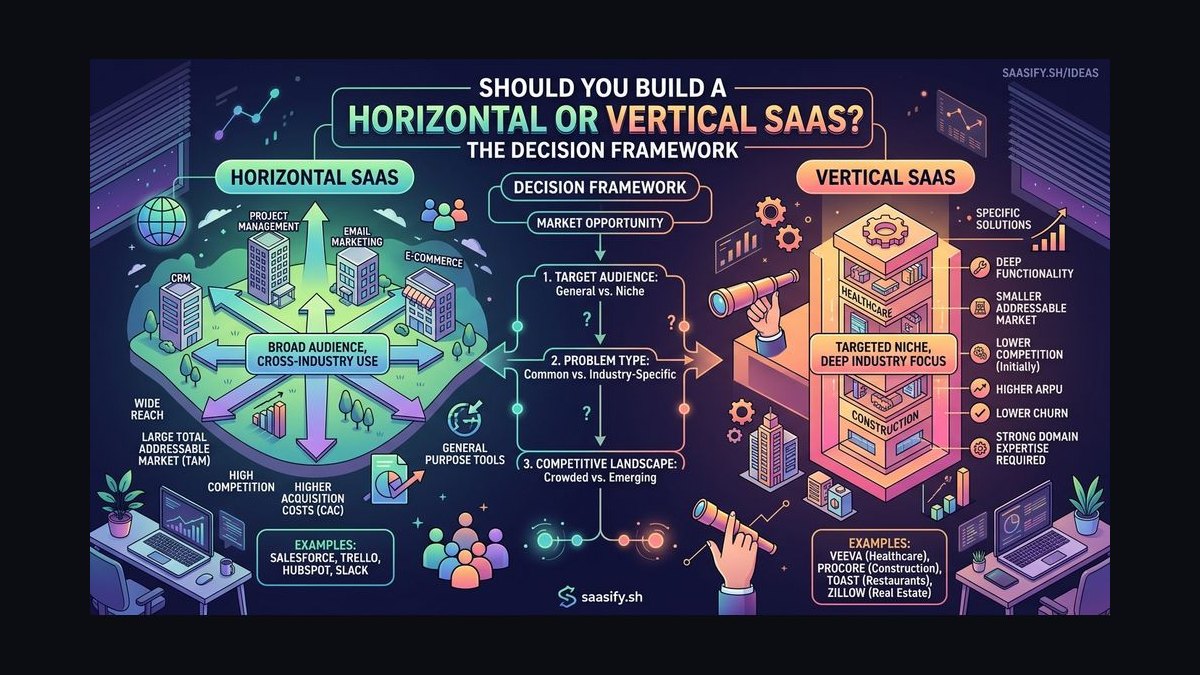
Building a vertical SaaS for salons and spas in the Boulevard and Mindbody category means selling owner-led to a four-seat committee, pricing per location plus a 2.6%–3.5% payments take-rate, and compressing the cycle with a 30-day single-chair pilot that proves booking conversion, no-show reduction, and commission accuracy before you ask for the full roster.
Segment and ICP first
The buyer for a vertical booking-and-payments platform is never one person, and treating it as one is the fastest way to stall a launch. Once a location runs three or more chairs, the software decision touches roughly four stakeholders, and each can independently kill the deal in the room. The owner or salon founder holds the signature and is usually a daily user. Their trigger is operational chaos: a paper appointment book, 25%–35% no-show rates, commission disputes on payday, or a POS contract about to auto-renew. They buy relief, not feature lists. The master stylist, spa director, or practice manager owns daily booking flow, chair utilization, and commission logic. This person's vote carries the floor; if the software makes their day harder, the deal dies in the demo no matter how much the owner likes the pitch. The bookkeeper or accountant owns commission payouts, tips, the payments take-rate, and integration into QuickBooks, Xero, or Gusto. They scrutinize the effective all-in cost once payments layer on top of subscription, and they are the seat most likely to compute your true price and object. The marketing or front-desk lead owns text-to-book, Google Reserve, Instagram booking, Yelp, loyalty, email, and SMS reminders. They judge you on conversion and on how the online booking widget feels to a real client at 11pm on a phone.
Segment before you build a motion, because the market splits cleanly into three tiers that behave differently on cycle length, ACV, and what actually drives lifetime value. SMB — a single location, booth renter, or solo stylist — runs a 14–45 day cycle at roughly $1,500–$5,000 ACV, and here the payments take-rate drives 60%–75% of LTV. Subscription is almost a loss-leader and you make your money moving the salon's card volume. Mid-market — 3-to-19-location independent groups and medspas — runs 45–120 days at $5,000–$50,000 ACV, where the spa director becomes a formal champion and the bookkeeper's integration checklist becomes a hard gate. Enterprise — chains and franchisors in the Drybar, Sport Clips, Great Clips, Hand and Stone, Massage Envy, European Wax Center, and Woodhouse Spa tier — runs a 6–12 month cycle at $50,000 to $1M+ ACV, usually with a platform fee layered on top of per-location pricing.

Nail your beachhead ICP tightly rather than chasing the whole map at once. Premium single-location hair salons in salon-dense coastal metros are the classic wedge: they feel no-show pain and clunky legacy tooling acutely, they influence peers in a tight local scene, and they convert fast on a free 30-day trial. Land that segment, earn the reference logos, then move up-market with proof in hand. The mistake most new entrants make is starting with the enterprise chain because the ACV looks exciting; the cycle is long, the committee is large, and you have no references to trade on. Start where the pain is sharpest and the decision is fastest, then climb.
The motion that fits that segment
Match the sales motion to the tier or you burn CAC. SMB wants to buy without ever talking to a rep; enterprise will not sign without a field champion and a written rollout plan. Run two motions in parallel rather than one blended average that serves neither. For SMB, lead with product-led growth: a 14-day free self-serve trial, guided in-product onboarding, and an inside SDR who follows up only on activated accounts — widget embedded, first online booking taken. This closes in 14–45 days at low touch. The economic engine here is payments: get the card reader onto the salon's counter and the take-rate compounds automatically as their revenue grows, with no additional selling required.

For mid-market and enterprise, run a field motion anchored on the master stylist or spa director as champion, with the owner as economic buyer and the bookkeeper as the technical gate. Cycles run 45–180 days. The single most effective compression tool across every tier is the 30-day single-chair or single-location pilot: you install alongside the incumbent at one chair and measure online booking conversion, no-show rate, tip and commission accuracy, average-ticket lift, and rebooking rate against live numbers. Win rate on piloted deals jumps materially versus cold demos because the master stylist has now personally felt the difference on their own floor rather than watching a slide.
Package the pricing so each committee seat sees their own value clearly. Per-location subscription runs roughly $30 to $695/month depending on tier and feature depth, with modern mid-market tools clustering in the $99–$345 range and enterprise spa and medspa platforms reaching $200–$800 per location. Per-staff add-ons run $15–$45/month per additional stylist, therapist, or technician. The payments take-rate of 2.29%–3.5% is the dominant lever; free-booking-plus-payments models monetize almost entirely here. Hardware runs $199–$899 for an iPad, card reader, receipt printer, and cash drawer, often financed or bundled at a $299 starter price to remove the SMB objection. Attach modules — gift cards, memberships, retail inventory, loyalty, marketing automation, and payroll — run roughly $29–$149/month each. The enterprise platform fee lands between $15,000 and $300,000/year for chains above roughly 25 locations.
Unit economics and benchmarks

The numbers that decide whether this business compounds are win rate, net retention, payback, and gross margin — and they vary sharply by tier. Expect win rates of roughly 28%–44%, with the low end on cold competitive deals and the high end once a pilot ships. Net revenue retention lands around 105%–122%. CAC payback runs 5–12 months when loaded with payments, faster on payments-only models and slower on subscription alone. Gross margin sits at 62%–80% depending on how much of your cost is payments interchange versus pure software. Pipeline cost runs roughly $850–$2,400 per opportunity in salon-dense metros, and inbound CPL for high-intent terms like "best salon software," "Mindbody vs Boulevard," or "salon online booking" lands around $95–$320.
Net retention above 100% comes from three motions stacked together: chair adds within an existing location, same-store retention driven by memberships and loyalty, and module attach across retail inventory, payroll, and marketing. If any one of those three stalls, NRR slips back under 100% and the model stops compounding. The payments take-rate is the quiet multiplier — as each location's card volume climbs, your revenue climbs without a single new sale, which is why payments-loaded CAC payback is so much faster than subscription-only.

Know the competitive map cold, because every single deal is a displacement — nobody in this category is greenfield. Mindbody anchors the wellness, fitness, and spa enterprise segment with a very large installed base built over two decades. Boulevard wins premium self-care brands and fast-growing chains on modern mobile-first UX. Zenoti leads enterprise spa, medspa, and chains. Mangomint and Phorest hold modern mid-market salons. Vagaro, Square Appointments, GlossGenius, and Fresha own self-serve SMB, with Fresha's free-booking-plus-payments model growing fast globally. Aesthetic Record and Symplast own the injectable and laser medspa niches where compliance depth genuinely matters.
The winning wedge in this window is modern mobile-first booking plus AI-driven retention reminders, tipping automation, waitlist and dynamic pricing, creator-led marketing integration across Instagram, TikTok, and Google Reserve, memberships, and medspa-specific compliance. You do not out-incumbency the category leaders on install base. A Boulevard-style displacement pitch is explicitly "the legacy tool is built for how salons ran 20 years ago; we're built for how they run today," and that argument wins new opens and dissatisfied switchers, not contentedly-locked-in accounts. Aim your outbound at salons opening a second location or fighting a legacy contract, not at the happy incumbent user who will never take your call.

Your channel mix at scale should roughly resemble: 30% inbound through Google, Instagram, TikTok, YouTube, beauty and wellness creator partnerships, SEO, and comparison sites like G2, Capterra, and Software Advice; 25% partner-led through beauty distributors such as SalonCentric, CosmoProf, and State Beauty Supply, plus cosmetology schools, beauty associations, payments ISOs, and accountant referral programs; 25% outbound inside and field sales in dense metros; 15% conference; and 5% existing-customer referral and chair-by-chair expansion. Conferences alone — Cosmoprof North America, IBS, ISSE Long Beach, Premiere Orlando, IECSC — can drive 18%–35% of mid-market and enterprise pipeline because this industry still buys heavily in person and trusts a booth demo more than a webinar.
Common misfires
Most salon-and-spa SaaS launches fail on the same handful of preventable mistakes. Name them early and build against them before they cost you a quarter.
Booth-renter versus commission confusion. Salon ownership models vary wildly — booth rent, commission, hybrid, and employee W-2 — often inside a single location at the same time. Software that doesn't natively handle all three loses on day-one demos because the master stylist immediately spots that payroll and commission math won't work for their floor, and no amount of roadmap talk recovers that first impression.
Payments risk on pre-booked deposits. Salons increasingly require no-show deposits and cancellation fees. Disputes over those deposits create real chargeback exposure, and if you haven't priced that risk into the take-rate and built a clean dispute queue, margin evaporates on your highest-volume accounts — the exact accounts you most wanted to keep.

Medspa compliance drift. Medspas need HIPAA-grade handling, before-and-after photo storage, consent forms, injectable inventory tracking, and controlled-substance logging. General salon SaaS that bolts on a thin medspa veneer loses to purpose-built tools every time compliance comes up. If you want the medspa segment, build the compliance depth for real; don't fake it and hope the buyer doesn't check.
Beauty-distributor channel conflict. The large distributors have their own POS and booking ambitions. A partner motion that isn't negotiated up front can stall the moment the distributor decides you're a competitor rather than a complement. Structure the referral economics and territory boundaries before you co-market anything, and put it in writing.
Ignoring the effective all-in price. The bookkeeper computes subscription plus per-staff plus take-rate plus hardware and gets to a number your headline never showed. If your subscription looks cheap but the loaded cost is opaque, you lose the trust seat and often the whole deal. Transparent, easy-to-compare pricing is itself a wedge against legacy incumbents with negotiated, hard-to-decode contracts.
Selling to the owner and skipping the floor. A founder who loves your demo will still lose the internal vote if the master stylist wasn't in the room. Always get the floor lead into the evaluation before you push for signature, or you'll win the meeting and lose the deal.
Operating model and cadence

The operating model is a hiring sequence plus a review cadence, both tuned to the payments-heavy economics of this vertical. Get the sequence wrong and you either over-hire reps before the motion is repeatable or under-invest in the onboarding that protects your take-rate.
Sequence hiring against the segments you're actually working. The first five hires are founder-led sales — the founder personally signs the first roughly 30 salons — a beauty or wellness SME (ideally an ex-spa-director or master-stylist-turned-AE for credibility), an SMB inside closer, a customer-success and onboarding manager who owns go-live and staff training, and a payments-and-risk lead who owns underwriting and chargebacks. The next five add two more inside reps, a field rep for chain accounts, a partner manager for distributors and schools, a content and social marketer, and a data or product analyst. By the first 25, layer in eight to twelve reps, a VP of Sales, a VP of Customer Success, three to four onboarding specialists, a hardware-logistics manager, a demand-gen manager, and a RevOps analyst. The category's fastest scalers went from roughly a hundred to well over a thousand salons in a few years on this shape.
Launch in three waves. Beachhead: single-location premium hair salons in a few coastal metros, inside-plus-field hybrid, free 30-day trial, targeting the first roughly 60 logos in six months. Expansion: 3-to-19-location independent groups and medspas, hiring two to three field reps plus a medspa specialist, pushing ACV from roughly $3,000 toward $25,000. Adjacent: enterprise chains and franchisors by year four, hiring reps with existing chain relationships and pursuing a handful of $100K–$1M+ logos. Each wave should be de-risked by proof from the wave before it, so you never sell up-market on promises alone.

Run a fixed operating cadence so nothing rots. Daily: booking-widget uptime, no-show alerts, and the chargeback queue. Weekly: pipeline, chair-utilization benchmarks, and pilot status. Monthly: payments take-rate by tier, module attach, and NRR cohorts. Quarterly: enterprise QBRs and chain-expansion planning. Annually: conference pipeline pull and a payments-processor RFP to keep your interchange competitive. The most underserved sub-verticals to prioritize in the expansion and adjacent waves are medspa and injectable, men's grooming, brow-and-lash studios, nail-only studios, mobile and at-home beauty, and extension specialists — each big enough to matter, each still poorly served by the horizontal incumbents.
Related questions
How is this different from horizontal appointment tools like Calendly or Acuity?
Horizontal schedulers handle a calendar but not commission splits, booth-rent versus employee payroll, tipping, retail inventory, memberships, or embedded payments. Vertical depth in those workflows — plus a beauty-native booking widget — is exactly what lets you charge more and win the master stylist's vote.
What compresses the sales cycle the most?
The 30-day single-chair pilot. It converts a subjective demo into measured proof of booking conversion, no-show reduction, and commission accuracy on the salon's own numbers, which is what moves the master stylist from skeptic to internal champion.
Should you monetize on subscription or payments?

Both, but payments is the compounding engine — often 60%–75% of SMB LTV. Keep subscription transparent and modest to win the price-sensitive owner, then grow revenue automatically as the salon's card volume rises.
How do you win against a large incumbent installed base?
Don't fight on install base. Displace on modern mobile-first UX, faster onboarding, transparent pricing, and creator-marketing integration. Target new salon opens and dissatisfied switchers rather than contentedly-locked-in accounts.
Which segment should a new entrant start with?
Premium single-location salons in a dense metro. Fast cycles, peer influence, acute no-show pain, and a clean free-trial motion make them the highest-velocity beachhead before you move up-market to groups, medspas, and chains.
FAQ
What's the right opening price for a single-location independent? A subscription of roughly $39–$99/month per location, $19–$29/month per additional staff member, and a 2.6%–2.9% payments take-rate. Free or financed hardware around a $299 starter bundle wins the price-sensitive owner and gets your card reader onto the counter.
How do you compete against a 60,000-location incumbent?
You out-modern them rather than out-incumbency them. Lead with mobile-first UX, faster onboarding, and transparent pricing. The winning pitch is "the legacy tool was built for how salons ran two decades ago; this is built for how they run today," aimed at new opens and switchers.
What's the right CAC payback target? Roughly 3–6 months when loaded with payments and 7–14 months on subscription alone. Free-booking-plus-payments models can hit the fast end because the take-rate begins compounding the moment the salon processes its first card.
How long should the pilot be? Thirty days at one chair or one location — long enough to show online-booking conversion, a measurable no-show drop, and clean commission and tip accuracy against the incumbent, but short enough to keep momentum toward a full rollout.
What's the right multi-location expansion play? After a clean single-location go-live and about 60 days of stable operation, the CSM triggers expansion with the owner, director of operations, and bookkeeper together, offering a multi-location discount, a dedicated rollout PM, and a branded online booking portal.
Which net revenue retention should you expect? Roughly 105%–122%, driven by chair adds, same-store retention reinforced by memberships and loyalty, retail-inventory attach, and payments take-rate growth as each location's revenue climbs.
Sources
- https://www.mindbodyonline.com/business
- https://www.joinblvd.com/
- https://www.zenoti.com/
- https://www.fresha.com/
- https://www.gartner.com/reviews/market/salon-and-spa-software
- https://www.capterra.com/salon-software/
- https://www.g2.com/categories/salon-and-spa-management
- https://www.forrester.com/research/
- https://www.probeauty.org/
- https://experienceispa.com/
Related on PULSE
- GTM Playbook for Day Spas in 2027
- GTM Playbook for Med Spas and Aesthetics in 2027
- GTM Playbook for Childrens Hair Salons in 2027
- GTM Playbook for Waxing and Hair Removal Salons in 2027
- GTM Playbook for Hair Salons in 2027
- How do you build a vertical SaaS for general contractors (Procore competitor space) go-to-market motion in 2027?
This page will be disappearing soon. Save it to your device for $1 — or read it free while it is here.
@Kory-White- · if Venmo asks, the last 4 of my number are 2012
This page is gone.
This one is off the shelf now. $1 keeps it on your phone for good — the whole page, pictures and diagrams included.
 gtm-playbookHow do you build a livestock management software go-to-market motion in 2027?
 gtm-playbookHow do you build a last-mile delivery software go-to-market motion in 2027?
 gtm-playbookGTM Playbook for Optometry Practices in 2027
 gtm-playbookGTM Playbook for FinTech — The Complete Operator Guide in 2027
 gtm-playbookHow do you build the GTM playbook for a DTC cosmetics brand in 2027?
 gtm-playbookGTM Playbook for DJ Services in 2027
 gtm-playbookHow do you build a renewable energy trading and ETRM software go-to-market motion in 2027?
 gtm-playbookHow do you build a K-12 EdTech go-to-market motion in 2027?
 gtm-playbookWhat is the go-to-market playbook for a partner-led (channel) motion in 2027?
 gtm-playbookHow do you choose between a direct sales and a partner-led go-to-market motion in 2027?