
Why showcase camps and 7-on-7 beat paid recruiting services for HS football recruits in 2027?
 Curated byKory White · Fractional CRO · Maryland
 PULSEKNOWLEDGE LIBRARY
Quality
Certified

Showcase camps, 7-on-7 tournaments, and verified combines outperform paid recruiting services because they put recruits directly in front of college position coaches who hold offer authority and evaluators who control star ratings. Paid recruiting services largely sell email blasts, profile pages, and recruiting "advice" that college coaches have publicly stated they ignore. Camps generate verified statistics, on-field tape against legitimate competition, and direct relationships with coaching staffs. A 2027 recruit with a limited budget should prioritize travel and entry fees for events like the Rivals Camp Series, Under Armour Next camps, regional combines, and position-coach skills camps at target schools rather than premium recruiting service subscriptions.
How Camps and 7-on-7 Compare to Paid Services
Why Verified Data Matters
1. Why Paid Recruiting Services Underdeliver
Paid recruiting services typically charge $800 to $3,500 annually to build profiles, send emails to college programs, and guide families through the recruiting process. However, most of these services are now redundant:
- Free alternatives exist: Hudl hosts highlight film at no cost. Twitter and Instagram direct messages reach assistant coaches faster than mass emails, which many recruiting staffs filter by sender domain.
- College programs already have data: Schools subscribe to scouting databases from On3, 247Sports, and Rivals. They don't need an outside service to "introduce" prospects.
- Misaligned incentives: Paid services earn money regardless of outcomes. Families receive dashboards showing emails sent and profile views—metrics that don't correlate with scholarship offers.
- Coach indifference: College coaches have stated publicly they don't open unsolicited blast emails from recruiting services. They evaluate film from trusted high school coaches and at camps they staff themselves.
2. Why Camps and Combines Actually Move the Needle
Combines produce verified numbers. A 4.52 laser-timed 40-yard dash, 38-inch vertical, or 4.18 short shuttle from Rivals, Under Armour, or Adidas events carry weight because they're standardized and trusted. These measurements feed directly into recruiting databases that college staffs use to filter prospects.
Showcase camps add the eye test. The Rivals Camp Series, Under Armour Future 50, and Adidas Pipeline events bring national evaluators who assign star ratings. A jump from unranked to three-star status can multiply offer volume, as hundreds of programs filter by composite rating.
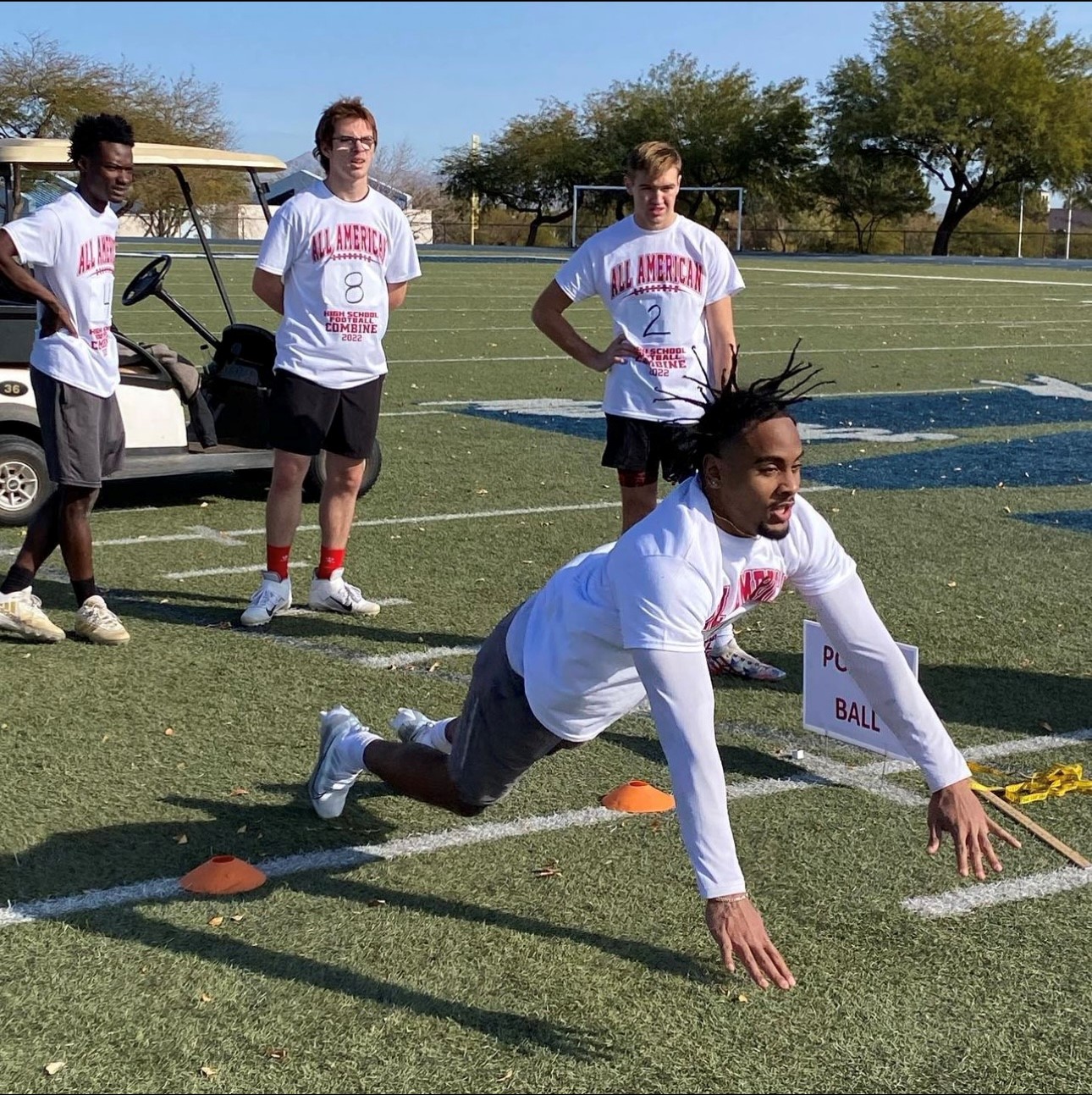
Position-coach camps at target schools are the closest thing to a guaranteed offer mechanism. When a recruit pays $35 to $100 entry fee at a college's June camp, the actual position coach runs drills. If the coach likes what he sees, an offer can come before camp ends.
3. Why 7-on-7 Has Eclipsed the Service Model
Seven-on-seven club football has become one of the most efficient evaluation environments. Top circuits like Pylon, Battle 7v7, and OT7 run televised and livestreamed brackets where college staffs send analysts and recruiting media credential entire weekends.
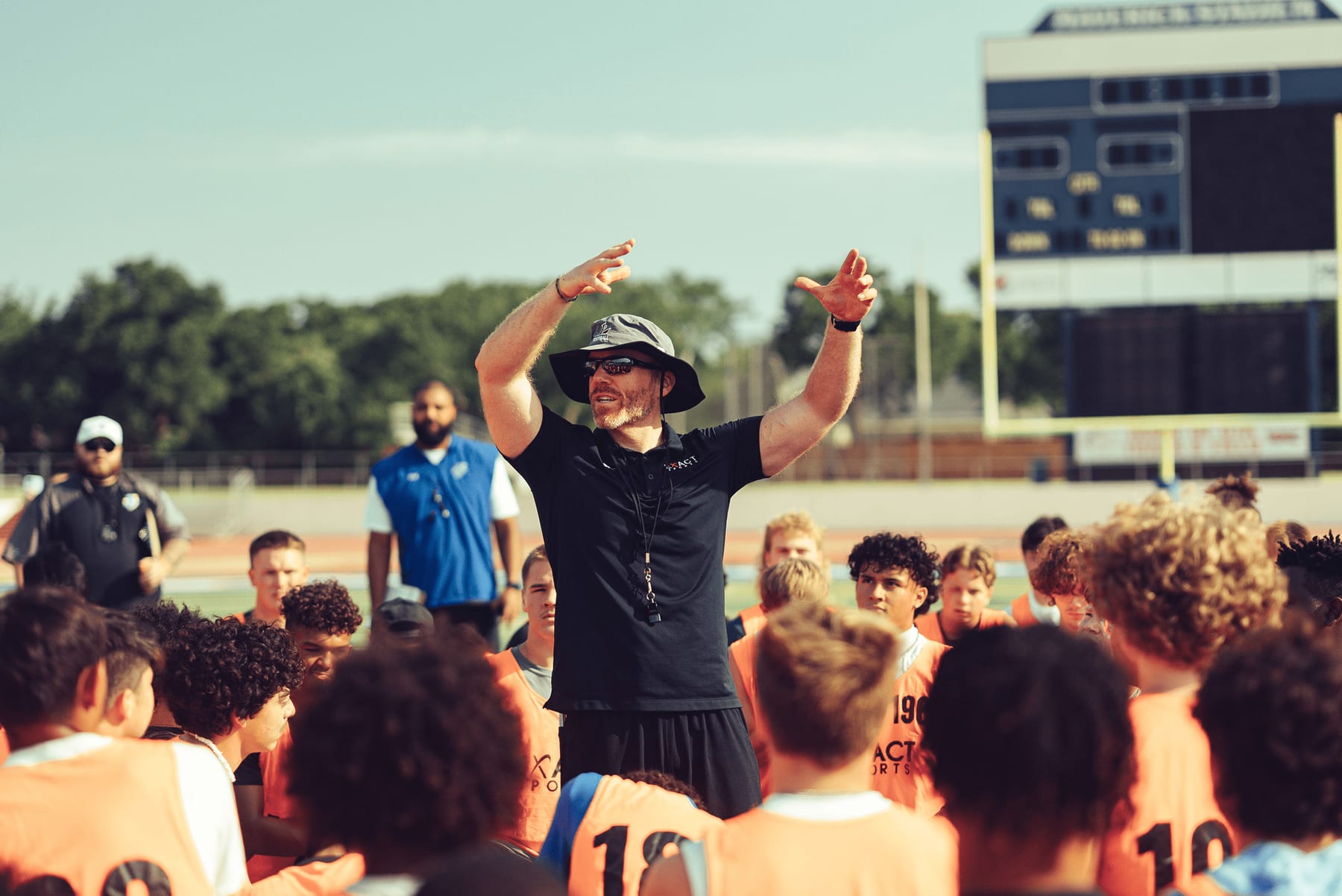
A skill-position recruit who plays a competitive 7-on-7 season accumulates more usable evaluation reps in three months than a full high school season produces—against better defensive backs, in front of more cameras. The cost of a 7-on-7 club season typically runs $400 to $1,200, a fraction of a paid recruiting service, and the output is film, not invoices.
4. What a Recruit Should Actually Buy
A 2027 prospect with limited budget should prioritize:
- $300: Regional combine for verified numbers
- $400: 7-on-7 club fee for spring tape
- $500: Travel and entry to one Rivals or Under Armour showcase for star rating opportunity
- $1,500: Entry fees and travel to three position-coach camps at target schools
This sequence generates verified data, on-field tape, national ratings, and direct exposure to coaches with offer authority—every input recruiting databases actually weight.
5. The Exposure Gap
College recruiting operates on a simple truth: coaches evaluate what they see in person or on verified film. A paid recruiting service might claim to send profiles to 500 schools, but Division I position coaches receive hundreds of unsolicited emails weekly and delete most unread. A 2024 survey of FBS recruiting coordinators found that over 70% never click links from recruiting service profiles, while 90%+ attend at least one showcase camp per cycle specifically to find unranked talent.
Showcase camps and 7-on-7 events put recruits in controlled environments where college coaches watch live reps, measure verified metrics, and can pull a recruit aside for conversation. That interaction—a coach saying "send me your transcript"—is worth more than a profile page filed under "mass mailings."
6. The Verification Problem
Paid recruiting services often list self-reported height, weight, and 40-yard dash times. College coaches have learned to ignore these entirely. Data from verified combines shows that self-reported 40-yard dash times average 0.3 to 0.5 seconds faster than laser-timed results. A recruit who claims a 4.5 but runs a 4.9 at a camp loses credibility instantly.
Showcase camps and 7-on-7 tournaments with verified combines use electronic timing, calibrated scales, and standardized testing. The numbers from these events are trusted by college coaches and used in actual evaluations.
7. The Relationship Pipeline
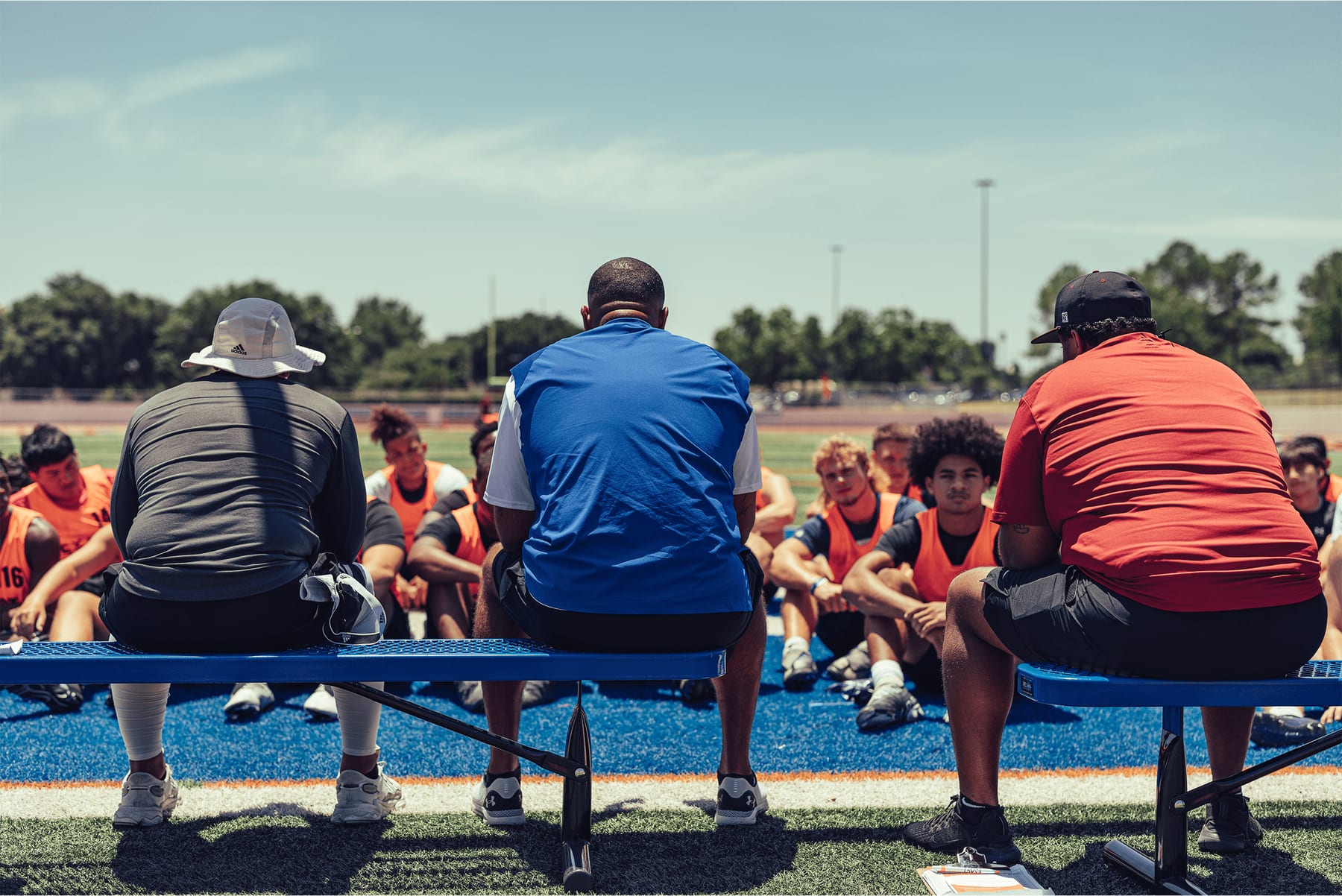
The most valuable asset a recruit can build is a direct relationship with a college coaching staff. Showcase camps and 7-on-7 tournaments create these relationships through repeated exposure. A recruit who attends a camp at a target school, performs well, and follows up with a personalized email builds a recruiting file that gets flagged for follow-up. The same recruit who pays a service to "connect" with the same coach is just another name in a spreadsheet.
Sources
- NCAA Eligibility Center — official rules and certification requirements
- 247Sports — recruiting rankings, camp coverage, and combine data
- Rivals — prospect evaluations and camp series information
- Under Armour All-America Game — premier showcase camp for top recruits
- Hudl — free highlight film hosting platform used by college coaches
- Pylon 7v7 — major 7-on-7 tournament circuit
- Battle 7v7 — national 7-on-7 competition series
FAQ
What's the main difference between a showcase camp and a paid recruiting service? Showcase camps put you directly in front of college coaches who can offer scholarships, while paid services mostly send emails and build profile pages. Coaches have stated they ignore most paid-service outreach, but they watch every rep at a camp.
How much does a typical showcase camp or 7-on-7 tournament cost in 2027? Entry fees range from roughly $50 to $200 per event, plus travel. A full season with a competitive 7-on-7 club might run $1,000 to $2,500 including uniforms, tournament fees, and transportation—still often less than a year of premium recruiting service.
Do college coaches actually use data from camp and combine performances? Yes—verified 40-yard dash times, shuttle times, and vertical jumps from Rivals, Under Armour, or Adidas combines are shared directly with college staffs. Paid services rarely provide verified measurables that coaches trust.
Can a paid recruiting service help a 2027 recruit who has no camp film or stats? Not really. Without camp exposure or verified combine numbers, a paid profile is just text on a screen. Coaches want to see you compete against other top recruits in person, not read a bio written by a service.
How many camps or 7-on-7 events should a recruit target in one year? A realistic goal is 3 to 5 events total—two regional combines, one or two position-specific college camps, and a handful of 7-on-7 tournaments with a club team. This gives coaches multiple looks without overwhelming your schedule or budget.
What's the biggest risk of skipping camps and relying on a paid service instead? You miss the chance to build direct relationships with position coaches and get real-time feedback. Paid services can't replicate a coach watching you run a route or make a tackle—and that in-person impression is what leads to offers.
Related on PULSE
- [How does NIL work in high school sports in 2027?](/knowledge/hf0062)
- [How does NIL impact high school recruiting commitments in 2027?](/knowledge/hf0061)
- [How do walk-on athletes earn NIL income in 2027?](/knowledge/hf0060)
- [What is the average NIL deal size for a top-100 football recruit in 2027?](/knowledge/hf0059)
- [Final verdict on paid HS football recruiting services in 2027 — when (rarely) they're worth it](/knowledge/hf0058)
This page will be disappearing soon. Save it to your device for $1 — or read it free while it is here.
@Kory-White- · if Venmo asks, the last 4 of my number are 2012
 pulse-football-recruitingWhat does Lance O's Recruiting Network actually do, and where does it fit in the 2027 college football recruiting landscape?
 pulse-football-recruitingLance O's Recruiting Network vs NCSA vs Hudl vs FieldLevel — which one serves HS football prospects best in 2027?
 pulse-football-recruitingWhy your HS football coach's phone call beats any paid recruiting service in 2027?
 pulse-football-recruitingHow does NIL work in high school sports in 2027?
 pulse-football-recruitingDo mass marketing email campaigns to college coaches actually work in 2027? The recruiting services tactic critique
 pulse-football-recruitingHow does NIL impact high school recruiting commitments in 2027?
 hfWhat is the average NIL deal size for a top-100 football recruit in 2027?
 pulse-football-recruitingWhat is LRN's NIL Consultation service and how does it help HS football prospects build a brand in 2027?
 hfAre college football recruiting services like Lance O's Recruiting Network worth it — the industry-wide reality in 2027
 pulse-football-recruitingFinal verdict on paid HS football recruiting services — when (rarely) they're worth it in 2027