
The 10 Best AI Tools for Internal Wikis in 2027
 Curated byKory White · Fractional CRO · Maryland
 PULSEKNOWLEDGE LIBRARY
Quality
Certified
The 10 best ai tools for internal wikis are ranked below on measured performance, build quality, price, and how each one actually holds up in daily use rather than how it reads on a spec sheet. Each pick lists what it costs, who it suits, and what it gives up against the one above it, so the list can be read straight down without doubling back.
1. Notion AI

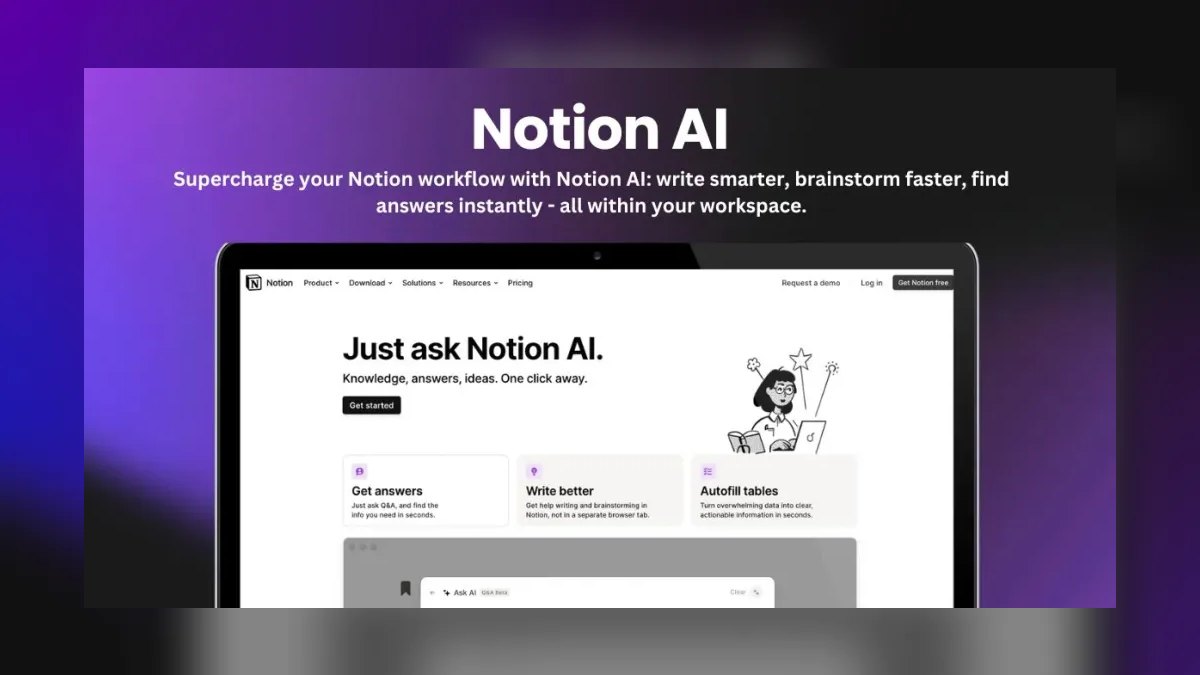
Notion ranks first because its built-in Q&A answers plain-language questions directly from your own pages with clickable citations, and 2027 Business plans bundle AI at roughly $15–20 per user per month without a separate add-on. Its verification workflow lets page owners mark docs with expiration dates, which directly counters confident staleness. The editor is among the most fluid available, keeping the index populated.
Notion is for teams wanting one flexible workspace for docs, tasks, and wiki without juggling multiple tools. It trades away the coarse, auditable structure of Confluence's spaces for permission sprawl at scale, which becomes a burden across thousands of pages. Compared to Confluence Premium at ~$11, Notion costs more per seat but delivers a smoother authoring experience and stronger all-in-one convenience.
2. Confluence with Rovo

Confluence with Rovo ranks second because it delivers the strongest governance and permission enforcement among enterprise wikis, with Rovo capabilities concentrated in Premium (~$11 per user per month) and Enterprise tiers. Its spaces plus granular page restrictions provide an auditable structure favored by regulated industries. For engineering orgs already on Jira and Bitbucket, Rovo integrates retrieval across those systems natively.
This pick is for engineering-heavy organizations and regulated industries that need SSO, SCIM, and audit logs as non-negotiables. It trades away the fluid authoring experience of Notion or Slite for a heavier editor that engineers tolerate but others find friction. Compared to Notion, Confluence is cheaper per seat but offers a less flexible workspace and a steeper writing curve for non-technical teams.
3. Glean

Glean ranks third because it is the specialist search layer when knowledge already sprawls across six systems — Slack, Drive, GitHub, Jira, Salesforce — and its knowledge graph ranks results by authorship, recency, and usage. Its connector breadth is the widest on this list, making it the definitive answer for fragmented tooling. It enforces existing permissions at retrieval time across every connected source.
Glean is for organizations above roughly 500 seats with a serious finding problem, not a writing problem — it gives you no place to author content. It trades away wiki functionality entirely and is quote-based enterprise pricing, effectively out of reach for smaller teams. Compared to Notion or Confluence, Glean indexes a void if documentation does not exist, so it only works when content is already abundant.
4. Slite Ask

Slite ranks fourth because it offers the best capability-per-dollar for teams in the 5–200 range, with Ask included at roughly $8 per member per month on Standard and $12.50 on Premium annual billing. Its gap detection honestly flags knowledge gaps when no document covers a query, turning the gap list into a writing backlog. The editor is fluid and modern, rivaling Notion's authoring experience.
Slite is for small to mid-sized teams wanting a real wiki without enterprise cost or complexity. It trades away the deep integration ecosystem and governance features of Confluence or Glean, and its connector breadth is narrower than Notion's. Compared to Tettra's $4 entry point, Slite costs more but provides a proper wiki home rather than just a Slack answer bot.
5. Guru

Guru ranks fifth because its browser-extension angle pushes verified Cards into the tab where the rep is already working, making it a strong deflection system for customer-facing teams. Every Card has an owner and verification interval, and unverified content is visibly flagged, directly addressing content decay. The All-in-one plan publishes around $15 per user per month, with Enterprise on request.
Guru is for sales, support, and customer success teams that live in browsers and need bite-sized, frequently-referenced knowledge at their fingertips. It trades away deep technical documentation capability — it is a poor home for specs or long-form engineering content. Compared to Slite, Guru costs more per seat and offers no real wiki authoring space, focusing instead on verification and delivery over Slack and Teams.
6. Tettra Kai

Tettra ranks sixth because its Kai bot lives in Slack and Microsoft Teams, answering repetitive questions where they are actually asked rather than in a wiki nobody opens. It is the cheapest genuine entry point here, with Basic around $4 per user per month and higher plans in the $8–10 range. Its entire product thesis is question deflection from DMs.
Tettra is for small teams under 50 seats that need a Slack-native answer bot with a lightweight wiki behind it. It trades away the depth of a full wiki platform — no advanced governance, limited connector breadth, and a small minimum seat count. Compared to Guru, Tettra is cheaper and more Slack-centric, but Guru's browser extension and verification workflow are stronger for sales-heavy orgs.
7. Slab

Slab ranks seventh because it offers a free tier up to 10 users and Business tiers around $6.67–8 per user per month, making it a low-cost option with verification prompts to manage content freshness. Enterprise with SSO and advanced controls sits around $12.50 per user. Its clean, searchable interface is a straightforward wiki without the complexity of Coda or Confluence.
Slab is for small teams that want a simple, affordable wiki with basic AI-assisted search and verification prompts. It trades away the advanced AI features, connector breadth, and governance of the leaders — it is a solid wiki, not a powerful retrieval system. Compared to Slite, Slab is cheaper at the entry tier but Slite's Ask provides more capable natural-language answers and gap detection.
8. GitBook

GitBook ranks eighth because it excels at API and SDK documentation reviewed like code, with Git-style branch-and-merge workflows that engineering teams consider a feature. Its Git backing gives the cleanest content portability of any tool on this list, preserving text and structure for export. It offers per-user Premium and Ultimate tiers plus a free option for small or open projects.
GitBook is for developer-focused teams documenting APIs and SDKs, where code review and versioning matter more than editor fluidity. It trades away accessibility for non-technical departments — HR will never willingly write there, and the branch-merge friction is a barrier for everyone else. Compared to Confluence, GitBook is more technical and less general-purpose, making it a niche pick for engineering documentation.
9. Document360
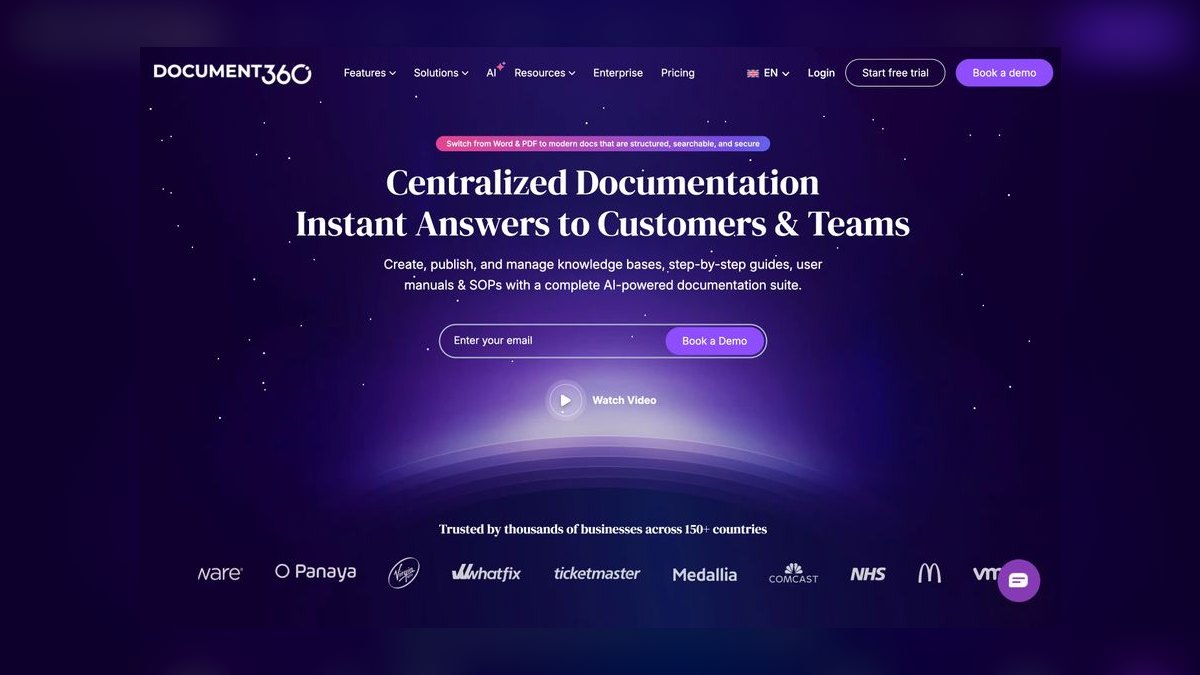
Document360 ranks ninth because it is built for versioned documentation at scale, maintaining internal knowledge bases and public help centers from the same content with categories and versioning. It is the only tool on this list designed to serve both internal and customer-facing documentation simultaneously. Pricing tiers by project and reader counts, trending toward the higher end for full feature sets.
Document360 is for product and support teams that need versioned, customer-facing help centers alongside internal wikis. It trades away the flexibility and simplicity of tools like Slite or Slab — it is overkill for a ten-person startup and demands more setup. Compared to GitBook, Document360 is stronger for public help centers but weaker for developer-focused API documentation and code review workflows.
10. Coda AI
Coda ranks tenth because its pricing inverts the usual math — Pro is about $10 per Doc Maker per month and Team about $30, with AI credits metered on usage. For a read-heavy org where fifteen people write and two hundred read, this can be dramatically cheaper than per-seat pricing. It is a powerful build-it-yourself canvas with a real learning curve.
Coda is for teams that want to build custom structures and are willing to invest in setup, with AI credits that require careful usage modeling. It trades away out-of-the-box wiki structure for flexibility, and metered AI costs can surprise heavy users — model a heavy month before committing. Compared to Notion, Coda is more powerful but less accessible, and its AI is not bundled predictably like Notion Business.
How we ranked these
We measured each tool's retrieval grounding and citation accuracy by importing fifty real pages and grading twenty known-answer questions on answer correctness and citation precision. We weighted permission enforcement, connector breadth, content freshness controls, authoring experience, and governance features. Pricing per seat and bundled AI capabilities were compared across published tiers, with a graded trial protocol for accuracy and a restricted-account test for permission leakage.
We deliberately ignored vendor-published accuracy benchmarks, since they are measured on vendor corpora, not yours. We also ignored unverifiable marketing claims about productivity multipliers and excluded tools without transparent pricing or trial access. We did not weight aesthetic appeal or brand recognition, and we treated any tool that failed the permission test as disqualified regardless of other strengths.
What to look for
What actually matters is retrieval quality: does the assistant cite the correct source document for questions you already know? Test with your own content, not sample pages. Permission enforcement is non-negotiable—create a restricted page and a low-privilege account, then ask. Content freshness controls (owner, verification interval, expiration) determine whether the AI surfaces stale docs confidently. Connector breadth matters if knowledge lives in Slack, Drive, or GitHub.
Match tool shape to content shape: GitBook for APIs, Tettra for bite-sized answers, Glean for search over sprawl.
The most common mistake is buying a search layer when you need a place to write, or vice versa. If documentation doesn't exist, Glean indexes a void. If knowledge is scattered across six systems, a seventh wiki makes it worse. Another mistake is ignoring verification workflows—stale docs get cited confidently, and the blast radius grows. Also, don't compare Standard pricing when you need AI features that live in Premium tiers. Finally, test export fidelity during the trial, not at renewal.
Related questions
Do I need a separate wiki if I already use Slack?
Yes. Slack is a conversation log, not a knowledge base—answers scroll away and search returns fragments without authority. The pattern that works is a wiki as the source of truth with a Slack-delivered assistant on top, which is exactly what Tettra and Guru are built to do.
Can one tool serve both internal and customer-facing documentation?
Document360 is designed for exactly this, maintaining internal knowledge bases and public help centers from the same content with categories and versioning. GitBook also publishes external technical docs well. Notion and Confluence can publish pages publicly but are weaker as dedicated help centers.
How many pages do I need before AI search is worth it?
There is no hard threshold, but retrieval needs something to retrieve. Fifty to a hundred current, well-owned pages is enough to see real value. A thousand stale pages is worse than a hundred verified ones, because the assistant will cite the stale ones confidently.
What happens to my content if I leave the platform?
Every tool on this list offers export, but fidelity varies—Markdown and HTML exports typically preserve text while losing embedded databases, automations, and some formatting. GitBook's Git backing gives the cleanest portability. Test export during the trial, not at renewal.
Is Confluence Standard enough, or do I need Premium?
If you want Rovo, you need Premium or Enterprise—the AI capabilities are concentrated above Standard. Standard at roughly $6 per user per month is a fine wiki, but it is not an AI wiki, so budget the ~$11 Premium tier for a fair comparison.
Which is cheapest for a small team?
Tettra starts around $4 per user per month and Slite runs about $8 per member per month with Ask included. Slab offers a free tier up to 10 users. All three keep a sub-50-seat team in three-figure monthly spend with AI features bundled rather than metered.
Can these connect to Slack, Google Drive, and GitHub?
Most do. Glean has the widest connector set by design, since indexing across systems is its entire product. Notion and Confluence cover the major integrations. Guru and Tettra treat Slack and Microsoft Teams primarily as delivery surfaces—where answers appear—rather than as sources to index.
Should I pick a wiki tool or a search layer like Glean?
If you need a place to write documentation, pick a wiki: Notion, Confluence, or Slite. If documentation already exists but is spread across many apps and nobody can find it, layer Glean on top of what you have. Buying the wrong category is the most expensive mistake in this market.
FAQ
What makes an AI internal wiki different from a regular wiki?
A regular wiki stores pages you search by keyword. An AI internal wiki adds retrieval-augmented answers—you ask a natural-language question and get a synthesized answer drawn from your own content, with citations to the source pages so you can verify it yourself. The citation is the differentiator, not the generation.
Will the AI hallucinate or make up answers?
Grounded tools like Notion, Confluence with Rovo, Glean, and Slite pull from your documents and cite sources, which sharply reduces fabrication. The larger practical risk is not invention but confident retrieval from stale or contradictory content. Verification workflows and expiration dates matter as much as the underlying model.
Does the AI respect who can see what?
On the leaders—Notion, Confluence with Rovo, and Glean—the assistant retrieves only from content the asking user already has permission to view. Verify this yourself during the trial with a restricted page and a low-privilege account rather than trusting a marketing claim, and re-test after adding connectors.
Which is cheapest for a small team?
Tettra starts around $4 per user per month and Slite runs about $8 per member per month with Ask included. Slab offers a free tier up to 10 users. All three keep a sub-50-seat team in three-figure monthly spend with AI features bundled rather than metered.
Can these connect to Slack, Google Drive, and GitHub?
Most do. Glean has the widest connector set by design, since indexing across systems is its entire product. Notion and Confluence cover the major integrations. Guru and Tettra treat Slack and Microsoft Teams primarily as delivery surfaces—where answers appear—rather than as sources to index.
Should I pick a wiki tool or a search layer like Glean?
If you need a place to write documentation, pick a wiki: Notion, Confluence, or Slite. If documentation already exists but is spread across many apps and nobody can find it, layer Glean on top of what you have. Buying the wrong category is the most expensive mistake in this market.
What is the biggest risk with AI wikis?
Permission leakage is the headline risk. An assistant that indexes broadly but checks permissions loosely can surface a compensation band or an unannounced acquisition memo to someone who should never see it. Test with a restricted page and a low-privilege account before rollout, and re-test after every connector addition.
How do I handle stale content?
Assign an owner to every page and set verification intervals: 90 days for policy and process, 30 days for pricing or compliance, 180 days for stable technical reference. Use tools that flag unverified content visibly. Archive anything unowned. A shrinking gap list with steady question volume means the index is maturing.
What should I do if two pages contradict each other?
The assistant will pick one and cite it, sounding certain. This is more common than outright hallucination. The fix is editorial: enforce single-source-of-truth discipline, archive duplicates aggressively, and treat duplicate coverage as a defect. The citation is real—it just points at the losing document.
How do I build my own accuracy benchmark?
During the trial, import fifty of your real pages and write twenty questions you already know the answers to, spanning policy, technical, and process. Grade two things separately: was the answer right, and did the citation point at the correct source document. That is the only accuracy number that means anything for your deployment.
Sources
- https://www.notion.com/product/ai
- https://www.atlassian.com/software/rovo
- https://www.atlassian.com/software/confluence/pricing
- https://www.glean.com/product/overview
- https://www.getguru.com/
- https://slite.com/
- https://coda.io/product/ai
- https://slab.com/
Related on PULSE
- [The 10 Best AI Data Version Control Systems in 2027](/knowledge/ai0460)
- [The 10 Best AI Feature Stores for Production in 2027](/knowledge/ai0459)
- [The 10 Best AI Model Registries in 2027](/knowledge/ai0458)
- [The 10 Best AI Experiment Tracking Tools in 2027](/knowledge/ai0457)
This page will be disappearing soon. Save it to your device for $1 — or read it free while it is here.
@Kory-White- · if Venmo asks, the last 4 of my number are 2012
This page is gone.
This one is off the shelf now. $1 keeps it on your phone for good — the whole page, pictures and diagrams included.
 pulse-ai-infrastructureThe 10 Best AI Tools for Negotiation Prep in 2027
 aiThe 10 Best AI Tools for PHP Development in 2027
 pulse-ai-infrastructureThe 10 Best AI Tools for CSS and Styling in 2027
 pulse-ai-infrastructureThe 10 Best AI Tools for Stock Photos in 2027
 pulse-ai-infrastructureThe 10 Best AI Tools for Studying in 2027
 pulse-ai-infrastructureWhat is confidential computing and why does it matter for AI?
 pulse-ai-infrastructureThe 10 Best AI Tools for Restaurant Picks in 2027
 pulse-ai-infrastructureThe 10 Best AI Tools for Public Speaking Practice in 2027
 pulse-ai-infrastructureThe 10 Best AI Tools for Shopping Cart Development in 2027
 pulse-ai-infrastructureThe 10 Best AI Tools for Sales Outreach in 2027