
How do you deploy AI models at the edge in 2027?
 Curated byKory White · Fractional CRO · Maryland
 PULSEKNOWLEDGE LIBRARY
Quality
Certified

To deploy AI models at the edge, quantize and compile the trained model for the target accelerator, package it in a versioned container or firmware image, validate latency and accuracy on real device data, then roll it out through a staged over-the-air pipeline with health checks and automatic rollback. Hardware choice follows the power budget.
The outcome you should expect
The first thing a team notices after moving inference from a cloud endpoint to the device is that the latency distribution changes shape, not just its average. A round trip to a regional cloud endpoint typically costs tens of milliseconds of network time before the model does any work at all, and that number swings with congestion, radio conditions, and retry behavior. On-device inference removes the network from the critical path entirely, so end-to-end response time becomes dominated by preprocessing, the forward pass, and postprocessing — three quantities you can measure, bound, and optimize. The practical consequence is a much tighter tail. Teams that used to reason about "p50 is fine, p99 is unpredictable" start reasoning about a near-deterministic budget, which is what makes closed-loop control, safety interlocks, and real-time video analytics feasible at all.
The second outcome is a bandwidth and cost profile that inverts. Streaming continuous video to a cloud inference service means paying for egress, ingest, and GPU-seconds on every frame, whether or not the frame contains anything interesting. Edge deployment flips that: the device consumes every frame locally and emits only events, embeddings, or short clips. A camera that previously uploaded a continuous stream may end up sending a few kilobytes per event. Whether that saves money depends entirely on volume — one prototype camera is cheaper to run against a cloud API, while a hundred deployed cameras almost always favor local inference, because hardware is a one-time capital cost while streaming is a recurring one that scales linearly with device count.
Third, expect a privacy and availability posture you can actually explain to a compliance reviewer. When raw video, audio, or biometric data never leaves the physical premises, a whole category of data-residency questions collapses into "the data stayed on the device." That matters in healthcare, retail, education, and industrial settings where recording people is normal but exporting their images is not. Availability improves for the same structural reason: a device with the model resident keeps working through an internet outage, a cell tower failure, or a cloud provider incident. Degraded connectivity becomes a sync problem for telemetry rather than an outage for the core function.

What you should *not* expect is a free lunch on accuracy. The compression required to fit and run a model on constrained silicon almost always costs something. A well-executed INT8 quantization of a conventional vision model typically lands within roughly one to two percentage points of the FP32 baseline, and sometimes closer, but that gap is not uniformly distributed — it concentrates on the hard cases, the small objects, the low-light frames, the underrepresented classes. Nor should you expect the operational burden to shrink. You are trading a single deployment target you fully control for a fleet of heterogeneous devices sitting in places you cannot easily reach, running firmware versions that drift, on power and thermal envelopes that vary with the weather. The engineering effort moves from serving infrastructure to fleet management, and it does not get smaller.
Finally, expect a longer time-to-first-deployment than a cloud endpoint and a shorter time-to-second. Standing up the first device — toolchain, cross-compilation, driver versions, carrier board quirks, thermal validation — commonly takes a few weeks of real engineering. Once that path exists and is scripted, adding devices is mostly configuration. Budget accordingly: the pilot is the expensive part, and organizations that judge edge AI by pilot cost per unit consistently mis-forecast the economics of the rollout.

What drives that outcome
Three variables drive nearly every edge deployment decision, and they interact: the power budget, the model's compute demand, and the required frame rate or response deadline. Fix any two and the third is largely determined. A battery-powered wildlife camera with a 1–2 watt ceiling cannot run a large transformer at thirty frames per second no matter how good the compiler is; a mains-powered industrial inspection cabinet with active cooling and a 60-watt allowance has far more freedom. Start every hardware conversation with watts, because it is the constraint you cannot engineer around.
Power sets the accelerator class. At the very bottom — roughly one watt and below — you are in microcontroller-class territory, running tiny quantized models through frameworks built for embedded targets, doing keyword spotting, gesture recognition, vibration anomaly detection, and simple classification at low resolution. In the low single-digit watt range, dedicated neural processing units and vision processing units become viable: purpose-built inference silicon that delivers single-digit to low-double-digit TOPS on INT8 workloads while staying fanless inside a sealed enclosure. That range covers most always-on camera analytics. Above roughly ten watts, GPU-based embedded modules open up, bringing general-purpose programmability, mature CUDA-adjacent tooling, and the headroom for larger detection models, multi-stream decoding, and sensor fusion. Above sixty watts you are effectively running an edge *server* rather than an edge *device*, and the design questions become rack-adjacent — airflow, PSU sizing, remote management.
Model architecture drives the second axis. Lightweight convolutional backbones designed for mobile inference are cheap and quantize gracefully; they were built with fixed-point deployment in mind. Larger detection networks cost substantially more per frame and demand real accelerator capacity for real-time work. Transformer-based vision and language models are heavier still, and — critically — are more sensitive to naive post-training quantization because of outlier activations, which is why they often need per-channel scaling, mixed precision on sensitive layers, or quantization-aware training rather than a one-shot conversion. Choosing the architecture before choosing the hardware is a common and expensive mistake; the two decisions should be made together.
The third driver is the toolchain, and it is the one teams underestimate. Every accelerator family has its own compiler and runtime: NVIDIA's TensorRT for its GPU modules, Intel's OpenVINO for its CPUs and VPUs, TensorFlow Lite for mobile and Edge TPU targets, Core ML for Apple silicon, and vendor-specific compilers for dedicated NPUs. ONNX serves as the common interchange format most of them ingest, but "supports ONNX" never means "supports every ONNX operator." The single most reliable predictor of a smooth deployment is whether your model's operator set maps cleanly onto the target's supported kernels. When it does not, unsupported layers fall back to the CPU, and a single fallback in the middle of a network can dominate total latency because every fallback forces a memory round trip between accelerator and host.
Memory bandwidth deserves its own mention, because raw TOPS ratings hide it. Advertised throughput assumes weights and activations are available when the compute units want them. In practice, many edge workloads are memory-bound rather than compute-bound, especially at batch size one, which is the normal case at the edge — a single camera produces a single frame at a time, so there is no batching to amortize weight loading. This is why a device with a high TOPS number can badly underperform its spec sheet on your model, and why the only benchmark that matters is your model, your input resolution, your batch size, on your target board.
Thermals close the loop. Sustained inference generates continuous heat, and every accelerator throttles when it exceeds its junction temperature. A benchmark run for thirty seconds on an open bench with room air is not evidence about a sealed outdoor enclosure in direct summer sun. The failure mode is insidious: the device does not crash, it simply gets slower, frame rate sags, the queue backs up, and detections start arriving late. Always validate under a sustained soak test in the actual enclosure, at the actual ambient temperature range, and instrument for clock throttling.

Benchmarks and realistic ranges
Useful numbers at the edge are always conditional, so treat every figure below as a shape rather than a promise. For real-time video, the governing constant is the frame budget: thirty frames per second gives you roughly 33 milliseconds per frame *total*, and inference is only part of it. Decode, color conversion, resize, normalization, and postprocessing — non-maximum suppression, tracking, serialization — routinely consume a third to a half of that window. Teams that budget the full 33 milliseconds for the forward pass and then discover their pipeline runs at nineteen frames per second have made an arithmetic error, not a hardware error. Budget inference at roughly half the frame period and leave the rest for everything else.
Precision conversion is where the biggest wins live. Moving from FP32 to FP16 roughly halves model size and typically delivers a solid throughput improvement on hardware with native half-precision support, at essentially no accuracy cost. Moving to INT8 halves size again — a roughly 75 percent reduction from FP32 — and is where most of the speedup on dedicated inference silicon actually comes from, since many NPUs are INT8-native and treat higher precision as an emulated fallback. Expect a small accuracy cost, commonly in the low single digits of percentage points on well-behaved vision models, and expect it to shrink toward negligible if you invest in quantization-aware training instead of post-training quantization. Sub-INT8 formats exist and can help further on supported silicon, but the accuracy risk rises sharply and the tooling maturity varies; treat INT4 as an optimization to attempt after you have a working INT8 baseline, never as the starting point.
Calibration data quality has an outsized effect that rarely appears in vendor documentation. Post-training quantization derives activation scaling factors by running a small representative sample through the network — typically on the order of a few hundred to a couple of thousand samples. If that sample is not representative of deployment conditions, the resulting scales will be wrong in exactly the situations you care about. Calibrating a night-time parking-lot detector on daytime stock imagery is a reliable way to produce a model that benchmarks beautifully and fails in the field. Pull calibration data from the deployed cameras, in the deployed lighting, at the deployed resolution.
On cost, the honest range is wide. USB-attached accelerators and M.2 NPU modules sit at the low end — tens of dollars for the module, suitable for prototyping and low-volume builds bolted onto a single-board computer. Mid-range embedded GPU modules with substantial memory run into the high hundreds or low thousands of dollars per unit, with developer kits carrying a premium over production modules. Rack-mounted edge inference cards land in a similar band. But module price is a minority of total cost of ownership. Add the carrier board, enclosure, thermal solution, power supply, cabling, mounting hardware, and — the item that dominates at scale — the labor to physically install and service each unit. A device that costs a few hundred dollars can easily carry a comparable amount in installation cost when a technician has to climb a ladder to reach it. Design for remote update from day one, because every avoided truck roll pays for a meaningful fraction of the hardware.
For timelines, a realistic plan for a first production edge deployment runs a few weeks to a couple of months from "we have a trained model" to "it runs reliably on a device in the field." The breakdown is roughly: several days to get the model exported and compiling cleanly, several more to reach acceptable latency, one to two weeks of accuracy validation against a held-out field dataset, and one to two weeks of soak testing, thermal validation, and rollout tooling. Per-model conversion effort on a path you have already walked drops dramatically — often to a day or two — which is the strongest argument for standardizing on one accelerator family per product line rather than mixing vendors.

An adjacent benchmark worth knowing: the same discipline transfers almost intact to on-device language models. The frame-rate constraint becomes a tokens-per-second constraint, the calibration set becomes a representative prompt set, and memory bandwidth becomes even more dominant because autoregressive decoding at batch size one is almost purely bandwidth-bound. Teams that build a solid edge vision pipeline find that most of the tooling, packaging, and rollout machinery carries over when they later want a small language model running locally for offline assistance or private summarization.
Risks, edge cases, and failure modes
The most common serious failure is silent accuracy degradation after quantization. The compiled model runs, returns plausible outputs, and passes a smoke test — but its recall on the rare, important class has collapsed. Aggregate accuracy hides this beautifully: a detector that finds 99 percent of the common objects and 40 percent of the rare ones can still post a strong overall number. The defense is a per-class, per-condition evaluation harness that runs automatically on every compiled artifact and compares against the FP32 baseline class by class, not in aggregate. Set explicit thresholds per class and fail the build when any of them regresses beyond tolerance.
Second is fleet fragmentation. Devices deployed over eighteen months accumulate different firmware revisions, different driver versions, different silicon steppings, and occasionally different hardware revisions sold under the same part number. A model artifact compiled against one runtime version may not load — or may load and behave differently — on another. The mitigation is to pin the full stack in an immutable, versioned artifact: model, runtime, driver expectations, and preprocessing code shipped together, with the device reporting its complete stack fingerprint in telemetry. Never ship a bare model file and assume the device-side runtime matches.

Third, thermal throttling under sustained load, which as noted above degrades rather than fails. Its evil twin is *power* throttling on battery or PoE-limited devices, where available current sags and the accelerator downclocks. Both produce the same symptom — gradually rising latency and dropped frames — and both are invisible unless you export clock speed, temperature, and dropped-frame counts as first-class telemetry alongside your model metrics.
Fourth is data drift, and it bites harder at the edge than in the cloud because you often cannot see the inputs. A camera's scene changes: a tree grows, a light fixture is replaced, a lens fogs, seasonal lighting shifts, someone repaints the wall behind the conveyor. The model degrades and nobody notices, because the only thing coming back is a count of detections, which quietly declines. Instrument the *distribution* of confidence scores, not just the detection count. A rightward or leftward shift in the confidence histogram is an early warning that arrives well before anyone reports a business problem. Where privacy policy permits, sample and retain a small, consented set of low-confidence frames for retraining — that hard-negative stream is the single most valuable data asset an edge fleet produces.
Fifth, the failed-update brick. Pushing a model or firmware update to a fleet of devices that live on rooftops, factory ceilings, or vehicle dashboards is the highest-risk routine operation in the entire system. Mandatory protections: an A/B partition scheme so the previous known-good image is always resident, a watchdog that reverts if the new image fails to check in within a defined window, staged rollout so a bad artifact reaches a handful of devices rather than all of them, and cryptographic signature verification so a device refuses to install anything unsigned. Treat rollback as the primary path that happens to be rarely taken, not as an emergency procedure you will figure out under pressure.

Sixth, and most often overlooked, is preprocessing skew. The training pipeline resized with one interpolation method, normalized with one set of channel means, and expected one channel order; the deployed C++ pipeline does something subtly different. The model still produces output, accuracy is merely mediocre rather than broken, and the bug can survive for months disguised as "the model just isn't that good." Guard against it with a golden-input test: hash a fixed input tensor through the deployed preprocessing path and assert byte-level or near-byte-level agreement with the training path. This one test catches more real bugs than any amount of additional evaluation data.
Finally, consider the security surface. A device in the field is physically accessible in a way a cloud instance is not. Model weights sitting unencrypted on a filesystem are extractable by anyone who removes the storage. If your model is genuinely proprietary, encrypt weights at rest and decrypt into memory at load, use secure boot so only signed images run, and disable debug interfaces on production units. If it is not proprietary, decide that deliberately rather than by default.
A practical rollout plan
Start with a written latency and accuracy budget before touching hardware. Write down the target frame rate or response deadline, the per-class accuracy floors, the power ceiling, the ambient temperature range, and the expected device count. These five numbers eliminate most of the hardware options immediately and prevent the common pattern of choosing a board because it was familiar and then discovering it does not fit the enclosure or the thermal envelope.

Then build the conversion path end to end on a single device before optimizing anything. Export the model to ONNX, compile it for the target, run it at FP32 or FP16, and measure. A slow but correct pipeline is a far better foundation than a fast one you cannot trust, because every subsequent optimization is validated as a delta against it. Only once the full path is proven — capture through preprocessing through inference through postprocessing through event emission — should you introduce quantization, and then measure again against the same harness.
Package the result as an immutable artifact. For Linux-class devices, a container carrying the model, runtime, and application code is the practical unit, tagged with a version that appears in telemetry. For microcontroller-class targets, the equivalent is a signed firmware image with the model embedded as a flashable blob. Either way, the rule is the same: one version string identifies the entire behavior of the device, and you can look at any unit in the fleet and know exactly what it is running.

Roll out in rings. A canary group of a handful of devices — ideally spanning your hardware revisions and deployment environments rather than sitting on one bench — runs the new artifact for a defined soak period while you compare its confidence distributions, latency percentiles, thermal readings, and error rates against the incumbent. If the metrics hold, expand to a larger fraction of the fleet, then to the remainder. Define the abort criteria in advance and wire them to an automatic halt, because the value of staged rollout evaporates if promotion is a manual judgment call made by someone who wants the deployment to succeed.
Run the loop continuously rather than treating deployment as terminal. The hard negatives your fleet collects feed the next training round; the next training round produces a new artifact; the artifact goes through the same conversion, evaluation, soak, and ring rollout. Teams that build this loop once find that model refreshes drop from a multi-week project to a routine operation, which is ultimately what separates an edge AI product from an edge AI demo.
One organizational note worth stating plainly: the skills required here straddle two disciplines that rarely sit in the same team. Model quantization and accuracy validation are machine-learning work; thermal validation, firmware signing, A/B partitions, and fleet telemetry are embedded and operations work. Deployments stall most often not on a technical obstacle but at the handoff between those groups. Assign one owner accountable for the full path from trained weights to a device reporting healthy in the field, and give them authority over both halves.
Related questions
Should I quantize before or after pruning?
Prune first, then quantize. Pruning changes which weights exist and how activations are distributed, so quantization calibration performed beforehand produces scaling factors for a network that no longer exists. Retrain briefly after pruning, then run calibration on the pruned model.
Can I run a large language model on an edge device?
Small quantized language models run on higher-end embedded modules with sufficient memory. The binding constraint is memory bandwidth, not compute, because single-request decoding cannot batch. Expect modest token rates and size the model to available RAM before anything else.
How do I choose between an NPU and an embedded GPU?
Choose an NPU when the workload is fixed, the model is a well-supported architecture, and power is tight — it will be far more efficient per watt. Choose a GPU when models change often, custom operators are likely, or you need general-purpose compute alongside inference.
Do I still need any cloud component?
Almost always, yes — for model training, artifact distribution, fleet telemetry, and aggregating events. The pattern is hybrid: inference on the device, orchestration and learning in the cloud. Pure-offline deployments are possible but forfeit centralized monitoring and update capability.
What frame rate do I actually need?
Lower than most teams assume. Many analytics use cases — occupancy, queue length, defect counting — work fine at five to ten frames per second, which relaxes the hardware requirement enormously. Derive frame rate from how fast the observed subject moves, not from the camera's maximum.
FAQ
What does it actually mean to deploy AI models at the edge?
It means running inference on hardware physically near the data source — a camera, a gateway, a robot, a phone, a factory controller — instead of sending data to a remote server. The model file, its runtime, and the application code all live on the device, so a prediction is produced locally without any network round trip. The cloud's role shifts from serving predictions to training models, distributing updates, and collecting telemetry.
Is INT8 quantization always worth the accuracy cost?
For most convolutional vision models, yes — the speed and memory gains are large and the accuracy cost is usually small enough to be within normal model-to-model variance. It is less obviously worth it for models with heavy outlier activations, for tasks with very tight accuracy requirements, or where the target hardware has strong native FP16 support and enough headroom. Measure per class against your FP32 baseline and decide with data, not by default.
Why does my model run far slower than the accelerator's TOPS rating suggests?
Usually one of three reasons: unsupported operators falling back to the CPU and forcing memory round trips, memory bandwidth saturation at batch size one, or thermal throttling under sustained load. Check the compiler's layer-by-layer report first — it will name any layers that did not map to the accelerator. Then profile the full pipeline, since preprocessing and postprocessing frequently consume more time than the forward pass.
How do I update models on devices that are hard to physically reach?
Build over-the-air updates with an A/B partition scheme, cryptographic signature verification, a watchdog that automatically reverts if the new image fails to report healthy, and staged rollout rings so a bad artifact reaches only a few devices. Ship the model, runtime, and preprocessing code as one versioned artifact rather than updating pieces independently, and make the version string visible in telemetry.
How much accuracy monitoring is possible without ground-truth labels in the field?
More than most teams use. Track the distribution of confidence scores over time, the rate of detections per hour compared to historical baselines, input-image statistics like mean brightness and sharpness, and the ratio of borderline to confident predictions. None of these prove accuracy, but a shift in any of them is a reliable early signal that something in the scene or the pipeline has changed and warrants a labeled spot check.
What is the most common mistake teams make on their first edge deployment?
Choosing hardware before profiling the model. The purchase gets made based on a headline TOPS number or vendor familiarity, and the team then spends weeks discovering that their architecture's operators do not map cleanly to that silicon or that the thermal envelope will not support sustained throughput. Profile a candidate model on an evaluation board first — the loaner kit costs far less than a fleet purchase you have to walk back.
Sources
- NVIDIA TensorRT Documentation
- Intel OpenVINO Toolkit Documentation
- TensorFlow Lite Guide
- ONNX Runtime Documentation
- PyTorch Quantization Documentation
- Apple Core ML Documentation
- MLCommons MLPerf Benchmarks
- Google Coral Documentation
- NVIDIA Jetson Developer Resources
- Eclipse Foundation IoT and Edge Native Projects
Related on PULSE
This page will be disappearing soon. Save it to your device for $1 — or read it free while it is here.
@Kory-White- · if Venmo asks, the last 4 of my number are 2012
This page is gone.
This one is off the shelf now. $1 keeps it on your phone for good — the whole page, pictures and diagrams included.
 pulse-ai-infrastructureThe 10 Best AI Tools for Summarizing Books in 2027
 pulse-ai-infrastructureThe 10 Best AI Tools for Pronunciation Coaching in 2027
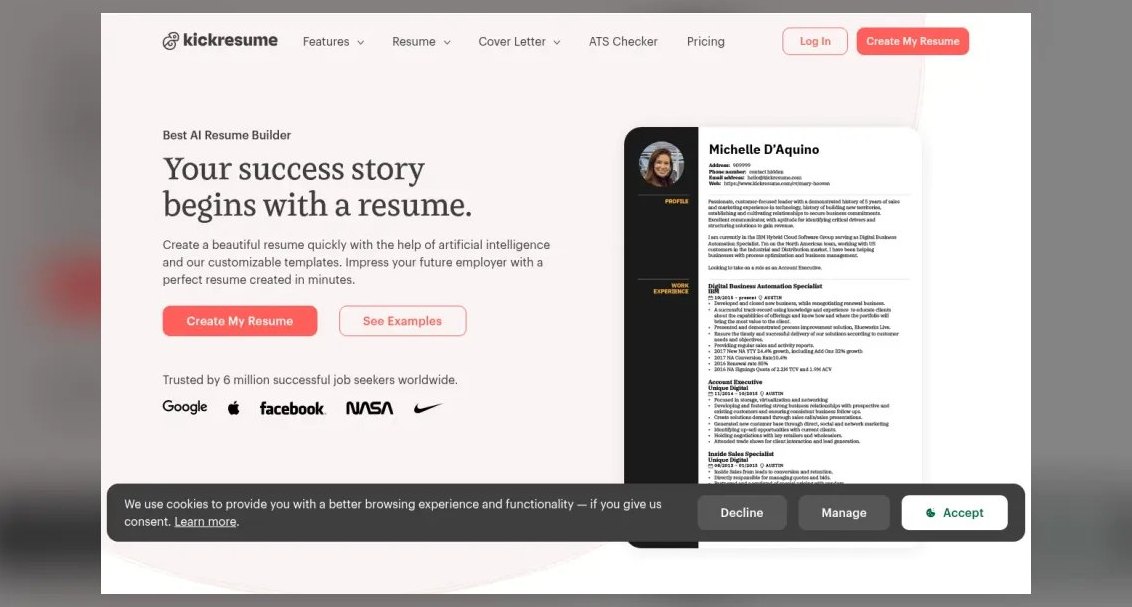 pulse-ai-infrastructureThe 10 Best AI Tools for Creating Resumes in 2027
 pulse-ai-infrastructureThe 10 Best AI Tools for Supply Chain Planning in 2027
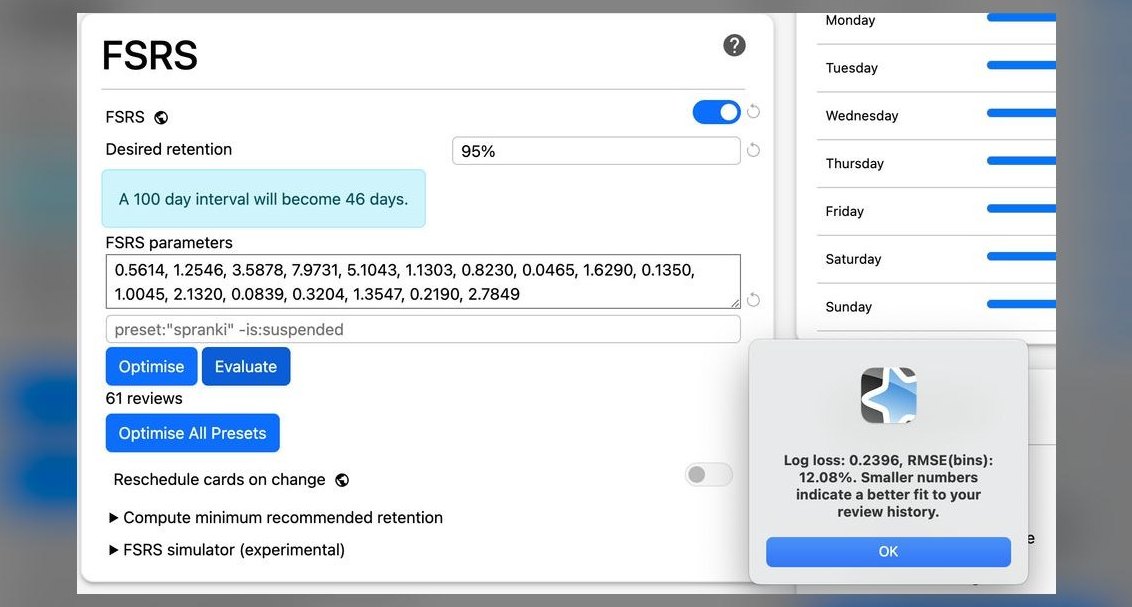 pulse-ai-infrastructureThe 10 Best AI Tools for Vocabulary Building in 2027
 pulse-ai-infrastructureThe 10 Best AI Tools for Brand Naming in 2027
 pulse-ai-infrastructureThe 10 Best Open-Source Model Hubs in 2027
 pulse-ai-infrastructureThe 10 Best AI Tools for A/B Testing in 2027
 pulse-ai-infrastructureThe 10 Best AI Tools for Home Organization in 2027
 pulse-ai-infrastructureThe 10 Best AI Tools for Audiobook Creation in 2027