


What is the best way to approach AI Infra in 2027?
Quality
Certified

The best way to approach AI infrastructure in 2027 is to treat it as a hybrid, disaggregated, and observability-driven platform rather than a single procurement decision. For most organizations, that means a layered model: dedicated or on-premises capacity for sensitive, high-utilization, and latency-critical workloads, combined with public-cloud elasticity for bursty training, experimentation, and unpredictable inference demand. Wrap both in a portable orchestration layer (containers, open model formats, hardware-agnostic scheduling) so you are never trapped by a single vendor's roadmap or pricing.
Concretely, a sound 2027 approach follows five moves. First, classify your workloads by data sensitivity, latency tolerance, and utilization pattern — these three axes determine placement more than any vendor pitch. Second, build a hardware-agnostic stack that can route work to whatever accelerator is most cost-effective for a given task, because the market is no longer NVIDIA-only. Third, invest in interconnect and memory, not just compute, since the bottleneck in most clusters is moving data to the accelerators, not the accelerators themselves. Fourth, make cost and energy first-class signals through granular tagging, chargeback, spot/preemptible scheduling with checkpointing, and carbon-aware placement. Fifth, treat security and governance as infrastructure, not paperwork — zero-trust access, model lineage, and automated safety gates baked into the pipeline.
A reader who stops here has the answer: there is no single "best" stack, but there is a best *method* — classify workloads, stay portable, optimize the whole system (network and memory included), instrument everything, and govern by default. The sections below expand each of these into practical detail.
What are the core components of a modern AI infrastructure stack in 2027?
The 2027 AI infrastructure stack is far more than a rack of GPUs. It begins with a heterogeneous compute layer that combines specialized AI accelerators — GPUs, tensor-oriented chips, and custom silicon — with conventional CPUs for preprocessing, data loading, and orchestration. The mistake many teams make is buying accelerators and treating everything else as an afterthought; in practice, a poorly sized CPU and data-loading tier will starve expensive accelerators and destroy your return on the hardware.
Networking has become the decisive bottleneck. Distributed training splits a model or a batch across many devices, and those devices must constantly exchange gradients and activations. High-bandwidth, low-latency interconnects — InfiniBand or modern Ethernet fabrics with RDMA (remote direct memory access) — are non-negotiable for serious multi-node training. Without them, even the most powerful accelerators stall waiting for data, leading to low utilization and wasted capital. When people report that their cluster "isn't as fast as the spec sheet," the cause is usually the fabric, the topology, or the collective-communication configuration, not the chips.
The storage layer has evolved into a tiered data fabric that supports multiple access patterns: fast NVMe or parallel file systems for active training sets, object storage for data lakes and archives, and streaming interfaces for online features. The goal is to keep accelerators fed. Techniques that let data move directly from storage into device memory, bypassing extra host-memory copies, matter enormously at scale because they remove a copy that otherwise throttles throughput.

The orchestration layer has matured beyond vanilla container scheduling. AI-aware schedulers understand model and data parallelism, device topology, gang scheduling (all workers for a job must start together or none should), and cost-aware placement. On top of that sits the MLOps and observability layer — model registries, experiment tracking, feature stores, and telemetry pipelines that expose utilization, memory bandwidth, network saturation, inference latency, and model-quality drift in real time. This stack is not static; it must be continuously tuned from workload telemetry, which is why a robust observability pipeline is as important as the hardware it watches. If you cannot see where the time and money go, you cannot optimize either.
How do you decide between on-premises, cloud, and edge for AI workloads?
The decision hinges on three factors: data gravity, latency requirements, and cost predictability.
For workloads involving highly sensitive data — health records, financial transactions, regulated personal data — on-premises or dedicated sovereign-cloud instances offer the control and compliance you need. This is especially true when training on data that cannot legally or contractually leave your perimeter. The trade-off is real: on-premises demands significant upfront capital and the operational muscle to manage hardware lifecycle, power, and cooling. If you lack that expertise, an owned cluster becomes a depreciating liability rather than an advantage.
For bursty, experimental, or highly variable workloads — fine-tuning a model for a short campaign, absorbing a traffic spike, or running a proof of concept — public cloud remains unmatched. You pay for elasticity and you get it. The economic catch is that sustained, high-utilization training in the cloud is often more expensive over time than owning equivalent capacity, which is why the hybrid pattern persists: predictable, always-on workloads gravitate to owned or reserved capacity, while spiky and speculative work stays elastic.
Edge deployment has grown for real-time inference in autonomous systems, industrial automation, and retail, where round-trips to a distant data center add unacceptable latency and where connectivity may be intermittent. A common and durable pattern is to train centrally, then deploy inference to a mix of edge and cloud endpoints chosen per use case by latency and cost profile.
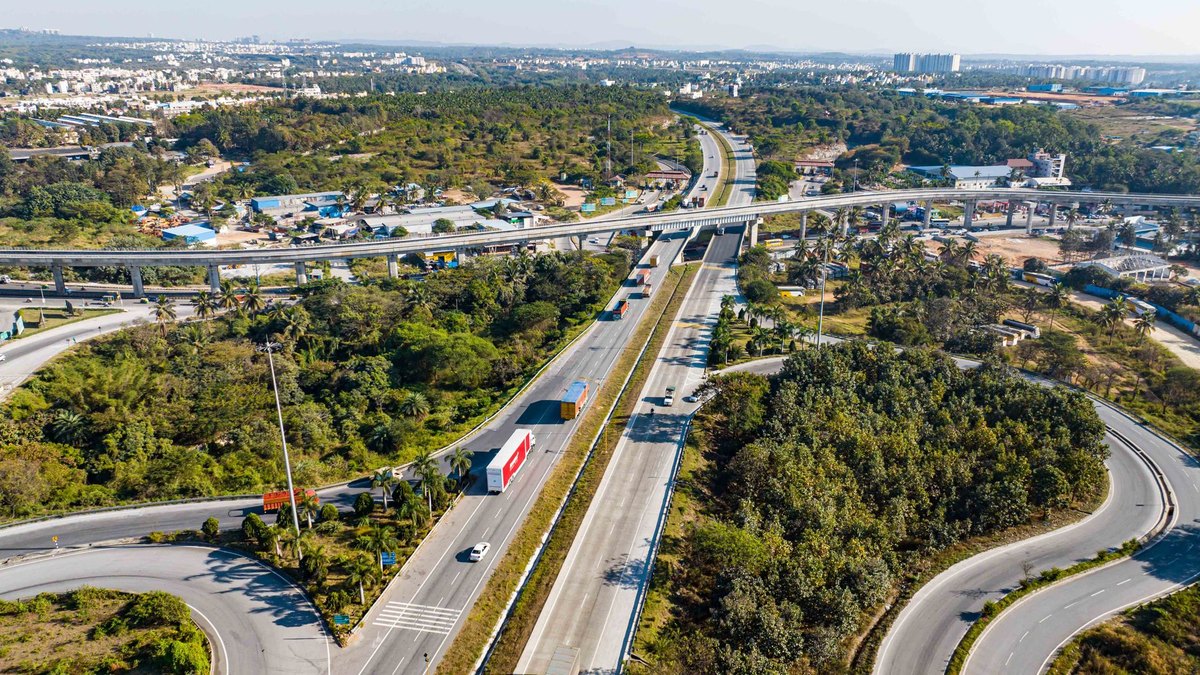
The unifying principle across all three is avoiding lock-in through portability: containerized workloads, open model formats, and orchestration that does not assume one cloud's proprietary APIs. Portability is what lets you move a workload when a vendor raises prices, a region runs out of capacity, or a compliance requirement changes. The decision tree below captures the routing logic.
What role do AI-specific hardware and chips play in 2027 infrastructure?
By 2027 the hardware landscape is more diverse than it was earlier in the decade. NVIDIA remains a dominant force with a deep software ecosystem, but AMD, Intel, cloud providers' custom silicon, and a range of specialized accelerator vendors have matured, creating genuine competition and choice. The strategic response is to build a hardware-agnostic stack that can route different tasks to different chips — for example, one class of accelerator for large-scale training and another optimized for low-power, high-throughput inference. Diversity reduces supply-chain risk (accelerator availability has been a recurring constraint) and lets you match hardware to the actual shape of your models.
The most important shift is that memory and bandwidth, not raw compute, increasingly govern real-world performance. High Bandwidth Memory has advanced generation over generation, but the practical bottleneck has moved to how you feed and connect devices. Interconnect standards such as Compute Express Link (CXL) enable memory pooling and disaggregation, letting compute, memory, and storage scale more independently. That matters because the classic failure mode is over-provisioning one resource while starving another — buying more accelerators when the real limit was memory capacity or fabric bandwidth.
Crucially, the hardware decision must be driven by your actual model architectures and workload phases. Training and inference have different profiles: training tends to be throughput-bound and benefits from large memory and fast collective communication, while inference is often latency-sensitive and tolerant of lower-precision arithmetic. Sparse or mixture-style models stress memory and routing differently than dense models. Benchmark *your* workloads on candidate hardware rather than trusting headline numbers, because peak specifications rarely survive contact with a real training run.
How should organizations manage AI infrastructure costs and efficiency in 2027?

Cost management has become a top-tier operational concern, and it is squarely a RevOps and FinOps discipline. AI workloads are spiky and expensive, so the best approach combines intelligent scheduling, granular resource tagging, and real-time cost allocation.
The largest lever is using spot or preemptible capacity for interruptible work. Non-critical training and batch jobs can run on discounted, reclaimable instances at a fraction of on-demand pricing. The catch is that this only works if your training is fault-tolerant: robust, frequent checkpointing and the ability to resume are prerequisites. Without them, a preempted job loses hours of progress and erases the savings. Treat checkpointing as an infrastructure capability, not something each team reinvents.
Efficiency also means energy. Carbon-aware and cost-aware scheduling — shifting flexible workloads to regions or times when power is cheaper or cleaner — is increasingly built into mature orchestration platforms. In parallel, model-optimization techniques belong in the infrastructure pipeline, not as afterthoughts: quantization (running at lower numerical precision), pruning, and knowledge distillation can dramatically cut the compute and memory needed for inference, improving both performance-per-watt and performance-per-dollar. The objective is not raw throughput but useful work per unit of cost and energy.
Finally, make cost visible to the people who create it. Chargeback and showback mechanisms that attribute spend to each team and project drive accountability far more effectively than a central budget scold. When a data scientist can see that an experiment cost real money, resource discipline follows naturally. Tag everything, allocate honestly, and review regularly — cost optimization is a continuous practice, not a quarterly cleanup.
What are the key security and governance considerations for AI infrastructure in 2027?
Security for AI infrastructure has expanded well beyond perimeter defense. The distinctive threats include model poisoning (corrupting training data or a pre-trained model to implant harmful behavior), data exfiltration through inference interfaces (prompting or probing a deployed model to leak sensitive training data), and supply-chain risks in third-party models and dependencies. The foundational response is a zero-trust posture applied to every component — data pipeline, feature store, model registry, and inference endpoint. Every access is authenticated, authorized, encrypted, and logged; nothing is trusted merely because it sits inside the network.

Data governance is equally central. Fine-grained access controls should separate the data used for training from the data used for evaluation, and every model should carry lineage and provenance — the ability to trace a deployed model back to its training data, code, and configuration. This is essential both for regulatory compliance under frameworks such as the EU AI Act and for basic trust and debuggability: when a model misbehaves, provenance is how you find out why. Infrastructure should include automated guardrails — safety, bias, and quality gates that a model must pass before promotion — so that governance is enforced by the pipeline rather than relying on human diligence at the worst possible moment.
For the most sensitive training and inference, confidential computing — hardware-backed enclaves that keep data encrypted even while in use — lets you process data on infrastructure you do not fully own without exposing that data to the operator. The layered picture below shows how security and governance controls interlock across the stack.
How do you build a team and operational model for AI infrastructure?
The human element is often the hardest part. A capable 2027 team is not just data scientists plus DevOps engineers. It increasingly includes a distinct AI infrastructure engineer who understands both the hardware nuances — how to profile and optimize for a specific accelerator, how collective communication behaves across a fabric — and the software stack, including distributed-training frameworks. This role bridges research and operations so that models are not only accurate but also efficient, reliable, and cost-effective in production.

Operationally, the most durable model is a platform-engineering approach: build an internal AI platform that abstracts the underlying infrastructure and offers self-service to practitioners. Data scientists should be able to launch training jobs, deploy models, and monitor performance through paved-road tooling that enforces security, cost, and quality policies automatically. The platform team owns the "paved road" — the approved libraries, hardware profiles, and pipelines — while leaving room for justified exceptions. This reduces cognitive load, accelerates time to value, and creates shared responsibility: practitioners focus on model quality; the platform team owns reliability, efficiency, and safety.
Two operational habits separate mature teams from struggling ones. The first is treating the platform as a product with users, feedback loops, and a roadmap, rather than a one-time build. The second is relentless measurement: utilization, cost per experiment, time-to-first-batch, and deployment lead time are the metrics that tell you whether the platform is actually helping. Without them, "AI infrastructure" quietly becomes a cost center nobody can defend.
FAQ
What is the difference between AI infrastructure and traditional cloud infrastructure?
Traditional cloud infrastructure targets stateless, CPU-bound applications with predictable scaling. AI infrastructure is optimized for data-intensive, massively parallel workloads that need specialized accelerators, high-bandwidth low-latency networking, and large memory pools. It also requires tight integration with MLOps components — model registries, experiment tracking, and lineage — that traditional application platforms rarely include. In short, traditional infra scales requests; AI infra scales computation over data.
How do I choose between competing AI accelerators in 2027?
Start from your software stack and your actual models, not the marketing. The most mature ecosystems reduce integration risk, but competing platforms have narrowed the gap for mainstream frameworks. Benchmark your real workloads — training throughput, inference latency, memory headroom — on candidate hardware before committing, and prefer portable frameworks and open runtimes so you can switch later. Avoid decisions that lock every future model into one vendor's toolchain.
What is the role of container orchestration in AI infrastructure in 2027?
Container orchestration remains the de facto substrate, but plain orchestration is insufficient on its own. You need AI-aware additions: gang scheduling so all workers of a distributed job start together, topology-aware placement, accelerator sharing, and integration with model-serving and training operators. Use a distribution or platform that layers these capabilities on top rather than assembling them by hand for every project.
Can small businesses afford AI infrastructure in 2027?

Yes, but the approach differs from an enterprise's. Small businesses should lean on fully managed and serverless AI services — pay-per-use inference and hosted fine-tuning — and avoid building custom clusters. Start from a concrete, ROI-bearing use case and scale only when the value is proven. Consumption-based pricing eliminates upfront capital, which is exactly what a small operator needs to experiment without risk.
How do I make my AI infrastructure future-proof?
Prioritize open standards and portability: containerized workloads, open model formats, and hardware-agnostic orchestration. Invest early in strong data and model lineage so you always know what a model was trained on. Avoid proprietary APIs and single-vendor hardware dependencies that would make migration painful. The market is moving quickly, so the most valuable property your architecture can have is the ability to change its mind cheaply.
How important is networking for AI infrastructure?
Critical, and routinely underestimated. Multi-node distributed training is bottlenecked by network bandwidth and latency during gradient exchange. High-throughput fabrics with RDMA are standard for serious clusters precisely because, without them, expensive accelerators sit idle waiting for data. When a cluster underperforms its theoretical peak, the network and its configuration are the first place to look.
How do I handle model versioning and deployment?
Use a dedicated model registry that stores every version alongside its metadata, a snapshot or reference to its training data, and its evaluation metrics. Automate deployment through pipelines that run safety and performance tests before promotion, and use progressive rollout patterns such as canary releases and A/B testing so a bad model affects a small slice of traffic before it reaches everyone. Version the data and configuration, not just the weights.
What is the role of observability in AI infrastructure?
Observability is what turns a black box into a system you can operate. It exposes accelerator utilization, memory bandwidth, network saturation, inference latency, and — crucially — model-quality signals like drift. Without it you cannot find bottlenecks, justify spend, or catch a silently degrading model. Treat the observability pipeline as core infrastructure with the same seriousness as the compute it monitors.
Sources
- NVIDIA Developer — AI and Deep Learning Documentation
- AMD ROCm Documentation
- Google Cloud — AI and ML Architecture Guidance
- AWS Well-Architected Framework — Machine Learning Lens
- Microsoft Azure — AI/ML Architecture Center
- Kubernetes — Scheduling GPUs
- CXL Consortium — Compute Express Link
- EU Artificial Intelligence Act — Official Text and Resources
- LF AI & Data Foundation
- ml-ops.org — MLOps Principles and Practices
Related on PULSE
- What is the best way to approach cloud FinOps for AI?
- How do you build a scalable MLOps governance framework?
- What are the key considerations for AI model deployment in production?
- How do you choose between public cloud and on-premises for AI?
- What is the role of platform engineering in AI operations?
People also search for: best way to approach AI infra · AI infrastructure strategy 2027 · hybrid AI infrastructure explained
Recently Added — Related
This page will be disappearing soon. Save it to your device for $1 — or read it free while it is here.
@Kory-White- · if Venmo asks, the last 4 of my number are 2012
This page is gone.
This one is off the shelf now. $1 keeps it on your phone for good — the whole page, pictures and diagrams included.
 pulse-ai-infrastructureHow do you fine-tune an open-source LLM cost-effectively in 2027?
 pulse-ai-infrastructureThe 10 Best AI Tools for Meal Planning in 2027
 pulse-ai-infrastructureThe 10 Best AI Tools for Jewelry Design in 2027
 pulse-ai-infrastructureHow do you get started with AI Infra in 2027?
 pulse-ai-infrastructureThe 10 Best AI Tools for T-Shirt and Merch Design in 2027
 pulse-ai-infrastructureThe 10 Best Confidential Computing Platforms for AI in 2027
 pulse-ai-infrastructureThe 10 Best MLOps Platforms in 2027
 pulse-ai-infrastructureThe 10 Best AI Tools for Screen Recording in 2027
 pulse-ai-infrastructureHow do you handle model rollbacks safely in production in 2027?
 pulse-ai-infrastructureThe 10 Best AI Tools for Email Marketing Campaigns in 2027