


Pick Up the Phone and Sell by Alex Goldfayn — Cliff Notes Summary
Quality
Certified

*Pick Up the Phone and Sell* by Alex Goldfayn (Wiley, 2021) argues that the planned, proactive outbound call — to existing customers, lapsed buyers, and warm prospects — is the most powerful and most neglected tool in B2B selling. Reps avoid it out of fear, not ineffectiveness. Goldfayn's fix: a protected daily call block plus six repeatable plays.
What the book is and why it still matters
Alex Goldfayn spent his consulting career inside industrial distributors, manufacturers, and B2B service firms — the unglamorous middle of the economy where a single account can order the same fittings, filters, or fasteners for twenty years and never hear a voice from their rep. What he found there is the seed of the entire book: the customer relationship most companies treat as "handled" is actually the one bleeding share, quietly, to a competitor who calls.
The argument of *Pick Up the Phone and Sell* runs against the grain of a decade of sales orthodoxy. Through the 2010s, the received wisdom was that the phone had died — that inbound marketing, marketing automation, and sequencing tools had replaced the dial. Goldfayn's contention is the inverse: as email volume exploded and reply rates collapsed, the scarcity of a live human conversation made the phone *more* valuable, not less. The phone became a contrarian advantage precisely because so few reps were willing to use it. That is the core of the arbitrage he describes — do the thing that works and that almost nobody else is willing to do.
The mechanism he keeps returning to is psychological rather than technical. Reps do not avoid the phone because calling stopped producing revenue. They avoid it because a call carries the possibility of rejection in real time, and email does not. An unanswered email is invisible; a "no thanks, we're all set" lands in your ear. Every structural recommendation in the book — the block, the scripts, the plays — exists to lower the emotional cost of dialing until the behavior becomes automatic. Goldfayn is essentially designing around a feeling.

Positioning matters for anyone deciding what to read. In the modern phone-first canon, Goldfayn sits alongside Jeb Blount's *Fanatical Prospecting* and Art Sobczak's *Smart Calling*. Blount is broader — all channels, heavily weighted toward net-new prospecting, with the phone as centerpiece. Sobczak is the craft manual for the cold conversation itself. Goldfayn is the narrowest and the most operational, and crucially, he is the one pointed at the existing customer base. That distinction is what makes this Cliff Notes summary useful to a RevOps or account-management audience rather than only to an SDR floor: most of Goldfayn's plays are aimed at people who already buy from you.
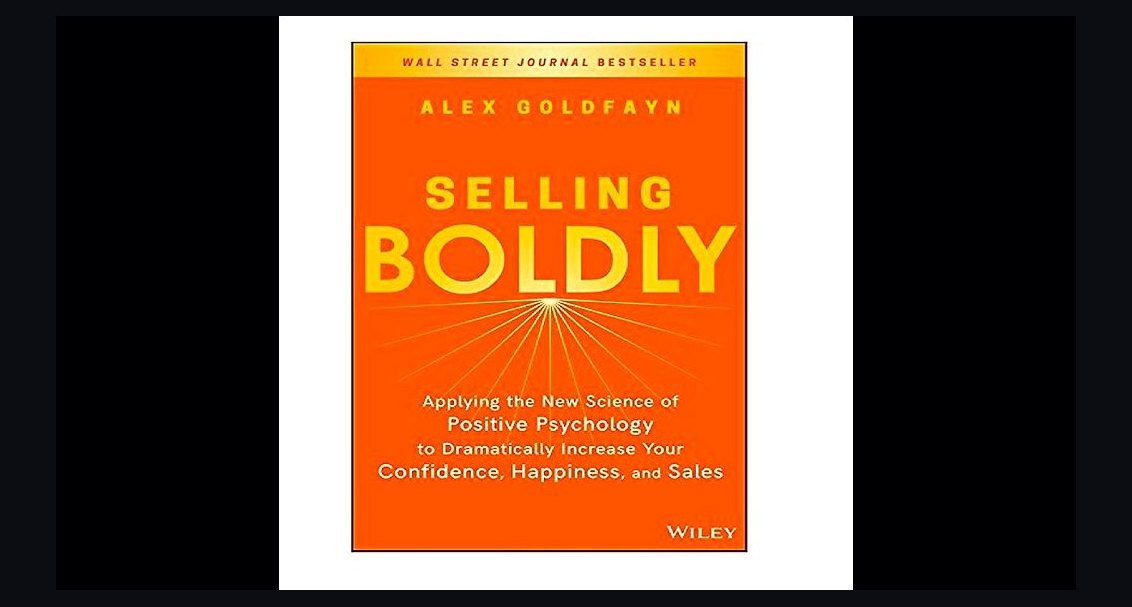
The book also belongs to a connected series. *The Revenue Growth Habit* (2015), *Selling Boldly* (2018), and *5-Minute Selling* (2020) build the proactive-communication and positive-psychology foundations; the 2021 book concentrates all of it on a single channel. Read together they repeat one idea from four angles: revenue grows when you communicate proactively and consistently with people who already know you.
Why this matters beyond the book: the same logic now shows up in modern revenue operations under different labels. Net revenue retention, land-and-expand, expansion pipeline, whitespace analysis — all of it is the "Did You Know" call wearing a dashboard. Goldfayn simply argues you do not need the dashboard to start. You need a list and forty minutes.
The step-by-step process: the block and the six plays
The operational core of the book fits on an index card, which is by design. Goldfayn's prescription has two components: a protected daily block and a small set of repeatable plays run inside it.

The block. A recurring appointment on the calendar, same time every day, dedicated to nothing but proactive outbound calls. No email during the block. No CRM updates during the block. No quoting, no order-status chasing, no Slack. Those happen after. The block is treated as a customer meeting, because functionally it is several. In practice most teams start at 30–45 minutes; the number matters less than the recurrence. The block works because it removes the daily decision of *whether and when* to call — it *is* the decision, made once, in advance. That is the most counterintuitive claim in the book: a short protected block beats an entire day nominally spent "selling" but never committing dedicated proactive time.
The plays. Six short, scriptable conversations, most aimed at customers the rep already has:
- The check-in call. No agenda. The highest-leverage call in the book precisely because it asks for nothing. Goldfayn's style opener: *"Hi Sarah, it's Mike from Acme. I had you on my mind and wanted to check in — how's everything going on your end?"* The value is being top-of-mind at the moment a need surfaces.
- The "Did You Know We Also…?" call. Goldfayn's signature play. Most customers do not know the full catalog of what their existing vendor sells, so they buy adjacent categories elsewhere — from a competitor, at no fault of the product. The call just tells them: *"Did you know we also do [adjacent category]? A lot of our customers find it easier to consolidate with us."*
- The reorder call. For consumables, MRO, supplies, and renewing services, a call placed ahead of the customer's usual reorder cadence catches the order before they shop. A call beats an automated reminder email because it secures the order *and* opens a conversation.
- The referral ask. Underused and usually botched. Goldfayn's rule is specificity — named introductions, never "anyone who might be interested": *"Who are two or three people in your network, running operations like yours, that I should be talking to?"*
- The cross-sell education call. A scheduled, agenda-driven walkthrough of an adjacent line the customer does not buy. Distinct from the quick "Did You Know" mention; this one is booked.
- The win-back call. Structured outreach to lapsed or churned accounts. Goldfayn notes these often reopen at better terms, because the rep is solving a problem the customer quietly regrets.
The scripts themselves are deliberately plain. The cold opener — *"Hi [Name], this is [Rep] with [Company]. The reason I'm calling is [one-sentence relevant reason]. Did I catch you at a bad time?"* — uses the same low-pressure framing Chris Voss popularized in *Never Split the Difference*: give the other person an easy out and they engage instead of defending. The warm reactivation leads with a specific trigger. The voicemail is four lines and ends with *"I'll try you again [day],"* which sets the expectation of follow-up — that expectation, not the message, is the point.
One adjacent workflow worth naming: the block pairs naturally with a list-building step that happens *outside* it. Reps who try to build the call list during the block lose half the time to CRM navigation. The fix most teams land on is a Friday-afternoon or Monday-morning list pull — accounts untouched in 60 days, single-category buyers, lapsed accounts by last-order date — printed or pinned so the block starts with dialing rather than searching.
Effort, cadence, and the ranges teams actually land on
Goldfayn does not sell the book as a metrics system, and this summary should not pretend he published benchmark tables. What the book does commit to is a direction: small, consistent daily volume beats sporadic heroics, and the constraint is minutes, not hours. His prior book title — *5-Minute Selling* — is itself the thesis about effort: the required investment is far smaller than reps assume, which is why the avoidance is irrational.
Practically, teams implementing this land in a few recognizable ranges. A 30–45 minute block typically produces somewhere between fifteen and forty dial attempts depending on whether the rep is manually dialing from a CRM or working a prepared list. Live-connect rates on existing customers run dramatically higher than cold prospecting rates, because the number is recognized and the relationship exists — this is the single biggest reason Goldfayn's existing-customer emphasis is easier to sustain than a pure cold-call regimen. A rep who connects with four or five current customers a day has had twenty to twenty-five real conversations in a week, which is more customer contact than many accounts receive in a year.
The timeline to signal is worth setting expectations on. Check-in calls rarely produce a same-day order; that is not their function. What they produce is presence — the customer thinks of you when the need appears three weeks later. Reorder and win-back calls, by contrast, can convert immediately, which is why most teams start with those two: they produce visible wins fast enough to keep the habit alive while the slower compounding plays accumulate. Managers rolling this out should plan for weeks, not days, before the pattern is self-sustaining, and should protect the block ruthlessly during that window, because the first thing that dies under a busy quarter is the discipline that has not yet paid.
Cost is close to zero, which is a genuine strategic point. Compared to hiring, paid demand gen, or a new tool contract, the marginal cost of a proactive call program is calendar space. That asymmetry is why the play is attractive for smaller distributors and owner-operator businesses with no marketing budget: the phone bill is already paid.
Where costs do appear is tooling, and only if you want it. Power and parallel dialers (Aircall, Dialpad, Orum) automate manual dialing and voicemail drops, routing only live connects to the rep — they compress the mechanics of the block rather than replacing it. Conversation intelligence platforms (Gong, Chorus by ZoomInfo, Clari Copilot) record and coach calls automatically, supplementing the manager listen-in Goldfayn prescribes. None of it is required to start. All of it multiplies conversations per minute, which is exactly the metric the book cares about.
A note on measurement for RevOps readers: if you instrument this, instrument the *behavior* first and the *outcome* second. Track proactive attempts and proactive conversations as distinct activity types, separate from reactive inbound handling — otherwise the CRM shows a rep "made 40 calls" and nobody can tell whether any of them were initiated by the rep. That single field split is the highest-value operational change a revenue-ops team can make in support of this book.
Where teams get it wrong
Treating the block as flexible. The most common failure is not skipping calls entirely; it is moving the block. Once it floats, it becomes the thing that gets displaced by any customer emergency — and there is always a customer emergency. The block only works as a fixed appointment because its entire function is removing the decision.
Doing admin inside the block. Reps log the last call in the CRM, notice a quote that needs updating, answer one email, and the forty minutes evaporate into six dials. Goldfayn is explicit: the block is for talking to people. Everything else waits.
Making the check-in call about something. The moment a rep manufactures a pretext — a promotion, a price change, a "just following up on my email" — the call becomes a pitch and the customer hears it. The no-agenda call works *because* it asks for nothing. Reps find that uncomfortable, so they contaminate it.
Asking for referrals vaguely. "If you know anyone who could use us, send them my way" produces almost nothing, reliably. The named ask — two or three specific people running operations like theirs — is the whole play, and skipping the specificity is skipping the play.
Managers who measure but never dial. Goldfayn is pointed about this. A manager who tracks call activity in a dashboard while never picking up a phone themselves has no credibility and no feel for what the block actually costs. Leading from the front means holding your own block and calling alongside the team, audibly, where reps can hear it.
Hiring for polish over willingness. Skill on the phone is trainable. The absence of phone aversion is much harder to coach in. A short live-dial exercise during the interview — hand the candidate a few numbers and watch what they do — reveals more than any résumé line about "excellent communication skills."
Applying B2C assumptions. Teams sometimes abandon the approach after reading about spam-labeling and assume all calling is dead. That is a category error, addressed below.
Confusing volume with churn. Quantity creates quality in Goldfayn's framing because repetition builds fluency, not because dialing is a lottery. A rep who blasts through a list without listening gets volume and no conversations. The play is short scripts *plus* actual attention.
Decision framework: which play, and when the phone is the wrong tool
Not every situation calls for a call, and being honest about that makes the phone-first strategy more credible, not less. The choice comes down to relationship temperature, the purpose of the contact, and whether the medium can carry the message.
Use the phone when the goal is to surface something the customer would never type into an email — an unspoken frustration, a project starting next quarter, a category they buy elsewhere. Use it for anything relational, anything ambiguous, and anything where a "no" needs a follow-up question. Use email for confirmations, documents, specs, quotes, and anything the customer needs to forward internally. Use SMS as a post-call bridge, not an opener — a short text after a missed call materially lifts callback rates, and it did not exist as a norm when much of the older cold-calling canon was written. Use short video (Loom, Vidyard) where a "Did You Know" play needs to *show* the adjacent product rather than describe it.
The regulatory backdrop shifted after 2021 and deserves a clear-eyed read. US carrier frameworks — A2P 10DLC for messaging, STIR/SHAKEN for call authentication — mean many outbound numbers now surface as "Spam Likely" on the recipient's screen. This makes high-volume consumer cold dialing materially harder than when the book was written. B2B desk-to-mobile calling to existing customers is far less affected, and Goldfayn's emphasis on warm and existing contacts sidesteps most of the problem by construction. Teams should still register their numbers properly and monitor their own caller-ID reputation; a flagged main line silently kills a call program and nobody notices for a month.
Two adjacent situations round out the framework. First, account management and customer success teams should recognize their quarterly business review as an industrialized version of the cross-sell education call — same purpose, more ceremony, far less frequency. Goldfayn's version is cheaper and happens twelve times as often. Second, owner-operator and field-service businesses — contractors, distributors, brokers, agencies — are the book's most natural fit, because the owner already has the relationships and no marketing engine to hide behind. For those readers this is less a sales book than an operating routine.
What holds up and what has evolved
The proactive versus reactive distinction is the most durable idea here and has aged perfectly. Reps still drown in inbound work — quotes, order status, escalations — and still under-invest in outreach they initiate themselves. If a reader takes one concept from this Cliff Notes summary, take that one: revenue growth lives in the communication you start, not the communication that lands on you.
The protected block has become more important, not less. Slack, Teams, and back-to-back video calls fragment attention in ways that barely existed when the older cold-calling classics were written. Time-blocking is now the only reliable defense.
The existing-customer focus anticipated where the industry went. Net revenue retention became the metric of the era; expansion and whitespace analysis became standard practice. Goldfayn's Check-in, Reorder, and Win-Back plays are the manual, human version of the same motion — and they remain underused even at companies with sophisticated expansion dashboards.

The rejection reframe — treat "no" as throughput rather than a verdict — is unchanged, because human psychology is unchanged. This is the through-line connecting the book to *Selling Boldly*, which applies positive psychology to selling more directly.
What *has* moved: carrier-level call labeling has raised the floor of difficulty for consumer dialing; dialer tooling has automated the mechanical parts of the block; conversation intelligence has made call coaching continuous rather than occasional; and SMS and video now function as standard complements to the voicemail the book describes. None of these contradict Goldfayn. Every one of them makes it cheaper to start more conversations, which is the only outcome the book actually optimizes for.
The honest limitation: Goldfayn's examples skew heavily toward industrial distribution, and readers in enterprise SaaS with twelve-month cycles and committee buying will need to translate. The plays still apply — a check-in call to a quiet champion is exactly as valuable in SaaS — but the reorder play maps to renewal motion rather than a purchase order, and the "Did You Know" call maps to product modules rather than adjacent SKUs.
Related questions
Should I read this or *Fanatical Prospecting* first?
Read Goldfayn first if you have an existing book of business and want faster wins; his plays work on people who already know you. Read Blount first if you are building net-new pipeline from zero. They are complementary, not competing — many teams run both.
Does this work for enterprise SaaS, or only distribution?
It works, with translation. Check-in and referral plays transfer directly. Reorder becomes renewal outreach; "Did You Know" becomes module or seat expansion. The longer sales cycle means slower attribution, so measure conversations initiated rather than same-week revenue.
How long before a daily call block shows results?

Plan on weeks. Reorder and win-back calls can convert within days, which is why teams start there. The check-in play compounds more slowly — it builds presence, and presence pays when the customer's need arrives, not when you call.
Do dialers and automation make the book obsolete?
No — they amplify it. Goldfayn optimizes for conversations started per unit of rep time. Power and parallel dialers produce more of exactly that. The discipline of the protected block still matters; the tooling only compresses the mechanics.
What is the single thing to do Monday morning?
Put a recurring 30-minute block on your calendar, same time daily, labeled so nobody schedules over it. Pull a list of customers you have not spoken to in 60 days. Run the no-agenda check-in call down the list. Repeat tomorrow.
FAQ
Is the proactive phone call really still worth it today?
For B2B, yes — arguably more so than in 2021, as inboxes saturate and a live human conversation becomes scarcer. The "phone is dead" claim mostly applied to consumer cold dialing, which carrier spam-labeling frameworks like A2P 10DLC and STIR/SHAKEN have genuinely made harder. Goldfayn's emphasis on proactive calls to existing and warm contacts sidesteps most of that problem by design, because those numbers are recognized and those relationships already exist.
What exactly is the "Did You Know" call?
It is Goldfayn's signature play and the one he is most widely credited for. The premise is that customers routinely buy adjacent categories from someone else simply because nobody told them their existing vendor carries them. The call is a short, low-pressure mention inside an ordinary conversation: *"Did you know we also do [category]?"* No pitch, no deck. It converts because it removes ignorance rather than overcoming objection.
Is the daily block really necessary, or can I just call more?
The block is the mechanism, not decoration. Goldfayn's argument is that intent alone loses to the reactive workload every time, because each day presents a fresh chance to defer the call. A fixed recurring block removes the decision entirely. Teams that skip the block and rely on "calling more" almost always drift back to reactive work within two or three weeks.
How do I handle "just send me an email"?
Goldfayn's response is to accept and redirect in one breath: *"Happy to — and so I send the right thing, can I ask one quick question first?"* For "we're all set," the parallel is *"Totally fair — when you do look again, what would have to change for us to make the shortlist?"* Both keep the conversation alive without arguing, which is the entire objection-handling strategy in the book.
Is this only for distributors and field sales?
No, though Goldfayn's consulting roots are in industrial distribution and the examples reflect it. The plays apply to SaaS account executives, professional-services partners, insurance brokers, financial advisors, agencies, and owner-operators — anyone with a book of business and a legitimate reason to stay in touch. The narrower the marketing budget, the better the fit.
Where does this fit among Goldfayn's other books?
It is the most call-specific entry in a connected series. *The Revenue Growth Habit* (2015), *Selling Boldly* (2018), and *5-Minute Selling* (2020) build the proactive-communication and positive-psychology foundations; *Pick Up the Phone and Sell* (2021) concentrates that thinking on a single channel. Read together, they argue one thing repeatedly: grow revenue by communicating proactively and consistently.
Sources
- https://www.wiley.com/en-us/Pick+Up+the+Phone+and+Sell%3A+How+Proactive+Calls+to+Customers+and+Prospects+Can+Double+Your+Sales-p-9781119814603
- https://goldfayn.com/
- https://www.wiley.com/en-us/5+Minute+Selling%3A+The+Proven%2C+Simple+System+That+Can+Double+Your+Sales-p-9781119687832
- https://www.wiley.com/en-us/Selling+Boldly%3A+Applying+the+New+Science+of+Positive+Psychology+to+Dramatically+Increase+Your+Confidence%2C+Happiness%2C+and+Sales-p-9781119436331
- https://www.wiley.com/en-us/Fanatical+Prospecting-p-9781119144755
- https://www.fcc.gov/call-authentication
- https://www.gong.io/
- https://www.zoominfo.com/
- https://www.harpercollins.com/products/never-split-the-difference-chris-voss
Related on PULSE
- Selling Boldly by Alex Goldfayn — Cliff Notes Summary
- Smart Selling on the Phone and Online — Cliff Notes Summary
- Amp It Up by Frank Slootman — Cliff Notes Summary
- Scaling Up by Verne Harnish — Cliff Notes Summary for Sales Leaders
- $100M Leads by Alex Hormozi: Summary, Key Lessons, and RevOps Takeaways
- $100M Offers by Alex Hormozi: Summary, Key Lessons, and RevOps Takeaways
This page will be disappearing soon. Save it to your device for $1 — or read it free while it is here.
@Kory-White- · if Venmo asks, the last 4 of my number are 2012
This page is gone.
This one is off the shelf now. $1 keeps it on your phone for good — the whole page, pictures and diagrams included.
 book-summarySelling Boldly by Alex Goldfayn — Cliff Notes Summary
 pulse-recentWhat are the concrete steps in Sandler Rule #7 for handling a prospect's budget objection in 2027?
 pulse-recentNever Split the Difference by Chris Voss — Top 10 Key Takeaways for Sales Leaders in 2027
 book-summaryMajor Account Sales Strategy by Neil Rackham: Summary, Key Lessons, and RevOps Takeaways
 pulse-recentBlue Ocean Strategy by W. Chan Kim and Renee Mauborgne — Top 10 Key Takeaways for Sales Leaders in 2027
 pulse-recentSelling Above and Below the Line by Skip Miller — Top 10 Key Takeaways for Sales Leaders in 2027
 pulse-recentSales EQ by Jeb Blount — Top 10 Key Takeaways for Sales Leaders in 2027
 pulse-recentWhat is the first concrete step in the Sandler Selling System for handling a prospect's initial brush-off in 2027?
 pulse-recentInsight Selling by Mike Schultz and John Doerr — Top 10 Key Takeaways for Sales Leaders in 2027
 pulse-recentSandler Rule #1: What is the first concrete step to build a prospect's trust in a sales conversation in 2027?