


The Charisma Myth by Olivia Fox Cabane — Cliff Notes Summary
Quality
Certified
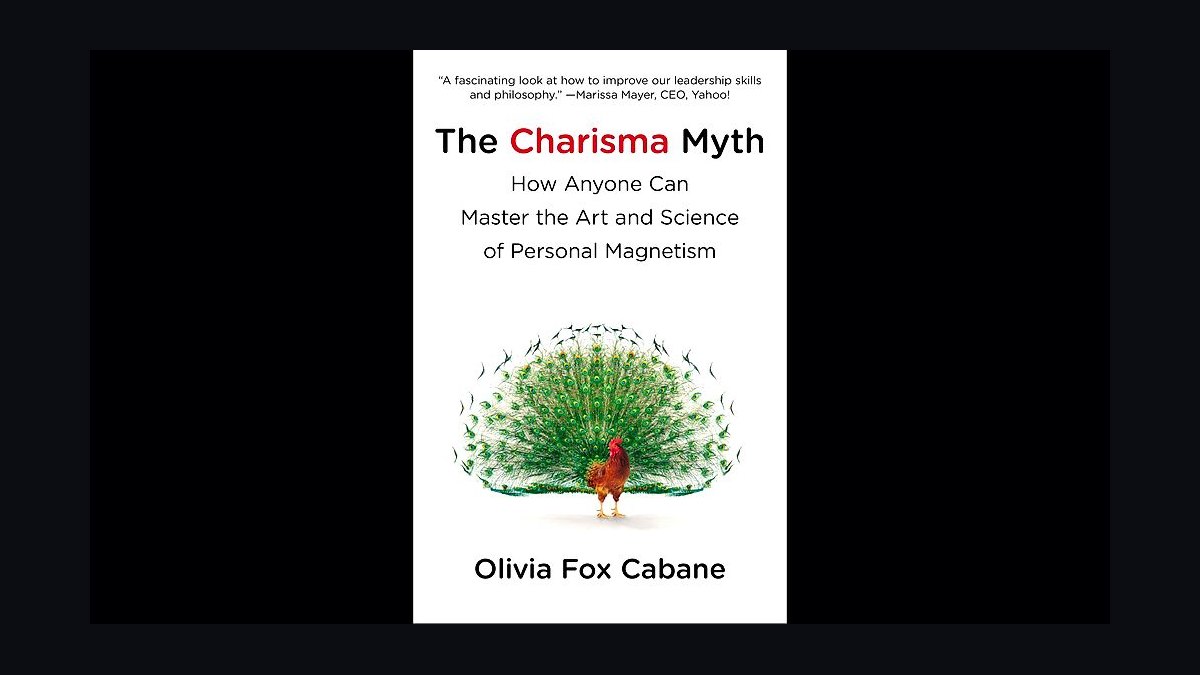
The Charisma Myth (Olivia Fox Cabane, Portfolio/Penguin, 2012) argues charisma is learnable behavior, not a birthright. It rests on three components — Presence, Power, and Warmth — and four styles: Focus, Visionary, Kindness, and Authority. Its core claim: internal mental state drives external signal, so fix the inside first.
The two competing models of charisma: trait versus trainable behavior
Every conversation about charisma eventually collapses into one of two camps, and the whole practical value of Cabane's book comes from picking the right one. Camp one is the trait model: charisma is a fixed personality endowment, distributed like height, and you either got the gene or you didn't. This is the folk model most sellers actually operate under, even the ones who would never say it out loud. It shows up as "I'm just not a people person," "our top rep is a natural," and the quiet resignation of a competent AE who has decided that the loud guy on the leaderboard has something unavailable to them. The trait model is comfortable because it excuses inaction. If charisma is a genetic lottery, there is nothing to practice and nothing to be accountable for.
Camp two is the behavior model, and it is the one Cabane spends 250 pages defending. Under this model, what an audience labels "charisma" is a bundle of observable outputs — where your eyes go, how long you pause, how your voice moves at the end of a sentence, whether your body is oriented toward or away from the person speaking, whether your face registers that you understood before your mouth confirms it. Every one of those outputs is a motor behavior. Motor behaviors are trainable. Cabane's evidence base is her own coaching practice with executive populations at business schools and large enterprises, where participants who read as flat and forgettable in week one were rated meaningfully more magnetic by peers after roughly eight to twelve weeks of deliberate drilling. She is careful to note that the change is slow and behavioral, not a switch that flips.
The distinction matters because the two models produce opposite investment decisions. Under the trait model, the correct allocation of a sales enablement budget is hiring — screen for the naturals, pay up for them, and accept that the middle of the bell curve will stay in the middle. Under the behavior model, the correct allocation is coaching — because if the observable behaviors are the entire causal mechanism, then a rep at the 40th percentile of perceived presence can be moved to the 70th with the same effort you would spend teaching them a new discovery framework. Most revenue orgs implicitly hedge, spending on hiring for "executive presence" while spending nothing on training it, which is the worst of both worlds.
Cabane's synthesis is a third position that resolves the tension: the behaviors are trainable but they cannot be performed convincingly from a mismatched internal state. Human beings detect incongruence between a person's facial micro-expressions and their spoken content extremely fast — faster than conscious processing — and the result registers as a vague, unnameable distrust rather than a specific objection. This is why "fake it till you make it" fails in high-stakes rooms while working fine in low-stakes ones. The buyer cannot articulate what was off about the call. They just decline the second meeting. So Cabane's answer to trait-versus-behavior is: train the behavior, but engineer the internal state that generates it, because the state is what makes the behavior read as genuine rather than performed.
There is a useful adjacent comparison here to how sales orgs treat objection handling. Nobody argues that objection handling is innate. Everyone accepts it's a drilled skill with scripts, role-play, and film review. Charisma gets treated as categorically different only because its outputs are subtler and its feedback loop is slower — you find out you lacked presence three weeks later when the deal goes dark, not thirty seconds later when the prospect says "too expensive." Shortening that feedback loop is arguably the single highest-leverage thing a modern revenue org can do with its call-recording stack.
The three components and the four styles, compared side by side
Cabane's first framework is the component model: Presence, Power, and Warmth. Presence is full attention on this conversation, right now, with no part of your mind rehearsing your next line or scanning the second monitor. Power is the perceived ability to affect the world — signaled by credentials, posture, decisiveness, and the willingness to say "no" or "I don't know." Warmth is genuine goodwill directed at this specific person, not diffuse pleasantness toward humanity in general.
Her strongest claim within that model is that Presence is both the rarest of the three and the one that most cheaply amplifies the other two. Plenty of senior operators radiate Power — they have the title, the résumé, the certainty. Plenty of people are pleasant. Very few are actually, undividedly there. When Presence is missing, Power reads as arrogance and Warmth reads as a technique. When Presence is present, even modest Power and Warmth land hard. For a seller this is directly diagnostic: if your call recordings show you interrupting, finishing the buyer's sentences, or answering a question they haven't finished asking, you have a Presence deficit and no amount of deck polish will compensate.
The second framework is the four-style model, and it is where the book earns its keep operationally. Focus charisma is Presence plus visible intelligence with lower expressed warmth — the person who makes you feel like the only object in the room because their attention is locked on your idea, not on you. Visionary charisma is conviction about a future the audience cannot yet see; it recruits followers by offering meaning rather than evidence. Kindness charisma is high warmth and full acceptance with the Power dial turned down; it makes people feel safe enough to be honest. Authority charisma is high Power and decisiveness, commanding a room without volume.
The critical comparison point: these are not a ranking. They are a menu, and picking the wrong item is worse than picking a weak one. Running Visionary charisma in a technical architecture review reads as hand-waving to an engineering audience that wanted specifics. Running Kindness charisma in a twenty-minute CFO briefing reads as a lack of conviction to someone who needs to know whether you can be trusted with a budget line. Running Authority charisma in a first discovery call reads as pressure, and the buyer's response is to withhold the very information the call exists to surface. Style-stage mismatch is a more common failure than low charisma overall, and it is far easier to fix, because it requires a decision rather than a skill.
Trade-offs run in both directions. Focus is efficient and credible but leaves people feeling assessed rather than liked; use it too long and champions stop volunteering political context. Visionary moves rooms but degrades badly with repetition — the third quarterly board pitch with the same inevitable future starts sounding like a jingle. Kindness surfaces truth but, run alone, generates a buyer who likes you and buys from someone else, because likability without perceived competence does not survive procurement. Authority creates fast decisions but suppresses dissent, which means you stop hearing about the risks in your own deal.
The practical version of this comparison, for a seller building a personal development plan: identify which style is your default (most people have exactly one), identify which is your weakest, and note which deal stage in your pipeline your weakest style governs. That intersection is where your winnable deals are dying. An AE who is naturally warm and struggles with Authority will have healthy discovery-to-demo conversion and terrible executive-briefing conversion, and the pipeline data will show it as a stage-three cliff that gets misdiagnosed as a pricing problem.
How to decide which style to run in a given room
Style selection is a decision, not a personality expression, and it should be made deliberately in the minutes before the meeting rather than discovered mid-call. The decision inputs are small and knowable: who is in the room, what they need to walk out believing, what they are risking, and what information you need from them.
Start with what you need from them, because that determines everything downstream. If you need disclosure — real pain, real politics, the honest story of why the last vendor failed — you need the buyer to feel unjudged, which means Kindness. If you need a decision, you need them to feel that deciding is safe, which means Authority. If you need scrutiny to survive — an engineering team pressure-testing your architecture — you need to demonstrate that you actually understand their problem, which means Focus. If you need commitment to a future that doesn't have a spreadsheet yet, you need Visionary.
Second input: the seniority and time budget of the room. Short meetings with senior people reward Authority and punish warmth-forward openings, because the executive reads meandering rapport-building as a failure to respect the clock. Long working sessions with practitioners reward Focus and punish Authority, because the practitioner has to live with the implementation and needs a partner, not a verdict.
Third input: the emotional temperature. A room that is anxious — a renewal after an outage, a champion who just got a new boss — needs Warmth first regardless of what stage the CRM says it's in. Running Authority into a frightened room reads as indifference. Cabane's roadblock framework applies to buyers as well as sellers; a buyer under physical, mental, or reputational discomfort will not process your content at all until the discomfort is acknowledged.
The decision tree above is deliberately shallow, because a deep one won't survive contact with a calendar. The single most valuable node is the last one — the in-call check. Roughly five to ten minutes in, ask yourself whether the buyer has told you anything you didn't already know from research. If they haven't, your style is wrong for the room, and the correction is almost always the same: more Presence, less Power. Stop advancing your agenda, slow the pace, pause longer after they finish speaking, and ask one question about the thing they said with the most feeling behind it.
One adjacent application worth noting: this same decision tree works for internal meetings, and most sellers never apply it there. The QBR where you need forecast forgiveness is an Authority room. The one-on-one where you need your manager to actually hear that the territory is broken is a Kindness room — you need them to feel safe admitting the plan was wrong. Sellers who run one style everywhere burn political capital internally at the same rate they burn it externally.
The numbers behind each option, and where the evidence is soft
Being specific about what is actually supported matters more here than in most business books, because The Charisma Myth sits on top of a body of social psychology that partially failed replication after publication. An honest summary distinguishes three tiers of evidence.
Tier one — well supported. The perceived-by-others effect of expanded, upright posture is robust. Observers rate people who occupy space and hold an open posture as more competent and more credible, and that judgment forms within the first few seconds of exposure. Nothing about that finding depends on any internal physiological change; it is a straightforward observer-rating effect. For a seller, the actionable version is: the posture is worth adopting because the buyer is scoring it, full stop.
Tier one also covers the speed of nonverbal judgment. Humans form trait impressions from faces and body language extremely quickly — well under a second — and those first impressions are sticky, biasing the interpretation of everything that follows. This is the empirical foundation for treating the opening ninety seconds of a call as disproportionately valuable rather than as throat-clearing before the real meeting.
Tier two — plausible but overstated in the book's framing. The frequently repeated split of communication into roughly 7 percent words, 38 percent vocal tone, and 55 percent body language comes from Albert Mehrabian's early-1970s research, which studied a narrow case: judgments of feeling and attitude when the verbal and nonverbal channels conflict. Mehrabian himself has said repeatedly that the numbers were never meant to describe communication generally. So the honest claim is directional — tone and body carry a great deal of weight when a buyer is deciding how they feel about you — not the tidy percentages that circulate in sales training decks. Cite the direction, not the arithmetic.
Tier three — failed or contested. The power-posing literature originally claimed a hormonal mechanism: two minutes of expansive posture raising testosterone and lowering cortisol, producing real risk tolerance. That specific mechanism did not survive replication attempts, and one of the original co-authors publicly stated she no longer believed the effect was real. Cabane's 2012 enthusiasm for the hormone story reads as dated. The correct move is not to throw out the posture advice but to re-found it on the tier-one observer effect: stand expanded because the room reads it, not because your bloodstream changes.
Where does that leave the numbers a seller actually cares about? Honestly: mostly unmeasured in public data, and you should be suspicious of anyone quoting a precise win-rate lift from charisma training, because deal outcomes have too many confounds to isolate a nonverbal variable in a published study. What you can measure is your own funnel. Conversation-intelligence platforms score talk-to-listen ratio, longest monologue, patience (the gap you leave after the buyer stops speaking), and question rate. Those are proxies for Presence, and they are measurable per rep, per call, week over week.
A reasonable self-experiment, and one you can actually run: baseline four weeks of your discovery calls on talk-listen ratio and patience. Then adopt the five-minute pre-call routine and the deliberate pause for four weeks. Compare discovery-to-next-meeting conversion across the two periods with volume held roughly constant. This will not be a clean study — seasonality, territory, and lead quality all move — but a swing large enough to see through that noise is a swing worth keeping. Directionally, most reps who run this find their talk share drops by ten to twenty points and their calls get longer, because buyers who feel heard keep talking. Longer discovery calls with lower rep talk share are, in nearly every published sales-analytics dataset, associated with better downstream outcomes.
The cost side is worth quantifying too, since this is a resource-allocation question. The five-minute routine across twenty calls a week is roughly one hour and forty minutes weekly, or about four percent of a selling week. Behavioral drilling — recording yourself, reviewing tape for pause length and vocal register — costs maybe another hour a week for the first quarter and then drops to near zero as the behavior automates. Against that, a single additional closed-won deal per year in most mid-market SaaS territories covers the entire time investment several times over. The math is not close; the reason people don't do it is that the cost is paid daily and the return arrives quarterly.
Implementing it: sequencing the internal work before the external drills
Most people who read this book try to implement it backwards. They start with the visible mechanics — the handshake, the eye contact, the vocal drop — because those are concrete and gradeable. Cabane's own sequencing is the reverse, and it is the sequencing that works: clear the obstacles, then engineer the state, then drill the behaviors, and only then worry about style selection per room.
Step one is removing the roadblocks, which Cabane groups into four kinds. Physical discomfort: shoes that hurt, a room five degrees too warm, low blood sugar at 4pm. Mental discomfort: dread about the meeting itself, or about the meeting after it. Negative residue: irritation carried from the previous call, traffic, an argument. Self-doubt: the persistent sense of not belonging in the room. None of these can be masked reliably, because they leak through the face faster than conscious control operates. The remedies are unglamorous and mostly logistical — eat, change the room temperature, wear things you don't notice, put a five-minute buffer between calls instead of stacking them wall to wall. A seller whose calendar has zero gaps has architecturally guaranteed that they will carry residue from every call into the next one.
Step two is the state shift itself. The routine is short: a few slow breath cycles to drop physiological arousal, a deliberate recall of two or three things you're genuinely grateful for, and then a visualization of goodwill directed at the specific person you're about to meet — not humanity in general, that person, by name, with whatever you know about their quarter and their pressures. Cabane adds compassion for yourself if you're carrying self-doubt: acknowledge that the discomfort is normal, that competent people feel it, and move on rather than fighting it. The mechanism is not mystical. Recalling a warm memory changes what your face does. Your face is what the buyer reads.

Step three is behavior drilling, and here the mechanics get specific. The pause: after the buyer finishes a sentence, wait two full beats before responding. It will feel unbearably long from the inside and read as thoughtful from the outside, and it is the single highest-return behavior in the book because it simultaneously signals Presence, prevents interruption, and reliably causes the buyer to keep talking and fill the silence with information they hadn't planned to give you. The eye contact: hold it a beat past comfortable, then break sideways rather than down. The voice: let the register fall at the end of declarative sentences instead of rising, because an upward inflection turns a statement into a request for permission. The handshake, where it still applies: full palm, matched pressure, one beat of eye contact.
Step four is style selection per room, which only works once steps one through three are automatic. Trying to consciously run Authority charisma while also managing your breathing and remembering to pause is too much simultaneous load; the result is a person who looks like they are executing a checklist, which is exactly the incongruence that destroys trust.
Two implementation warnings. First, drill one behavior at a time. Sellers who try to install the pause, the register drop, and the eye contact simultaneously produce a performance so obviously constructed that buyers get uncomfortable. Pick the pause first, run it for two weeks until it stops feeling deliberate, then add the next. Second, remote selling changes the difficulty curve. Video compresses the signal — you lose the full body, the handshake, the shared physical space, and you gain a second monitor's worth of distraction. Presence is genuinely harder to project through a small frame, which means the internal work matters more in remote selling, not less. Practical adjustments: put the video window directly under the camera so your gaze reads as eye contact, close every other application before the call rather than trusting yourself not to look, and exaggerate the pause slightly because network latency eats the first half-beat.
There's a broader organizational point here that goes beyond individual practice. If you run a sales team, the behaviors above are coachable from call recordings without any special tooling — talk share, longest monologue, and patience are the three metrics that map most directly to Presence, and every conversation-intelligence platform reports them. Building a coaching cadence around those three numbers is a more concrete enablement strategy than any amount of abstract "executive presence" workshop content, because it gives a rep a number to move rather than an adjective to embody. Pair it with the style-to-stage map so that the coaching conversation includes which style the rep should have been running, not just how much they talked.
Where Cabane fits alongside the rest of the sales-skills canon

The Charisma Myth is best understood as a prequel rather than a competitor to the tactical books, and reading it in the wrong order is why some sellers find it insubstantial. Cabane governs the state and the signal — whether the buyer wants to keep talking to you. The tactical books govern what to do once they do.
The natural pairing is with negotiation and empathy-forward frameworks, which teach labeling, mirroring, and the mechanics of making someone feel understood in words. Those techniques land poorly when delivered from an anxious or distracted state, because a label delivered without genuine attention behind it sounds like a technique being run on someone — and buyers who feel handled shut down. Cabane supplies the missing prerequisite: the internal condition that makes tactical empathy read as actual empathy.
The pairing with question-based discovery methodologies is similar. Structured questioning frameworks give you the sequence of questions that surfaces implication and need. They are silent on whether the buyer will answer honestly. That's a Warmth and Presence problem, and it is the reason two reps running an identical discovery script get wildly different information from comparable accounts. The script is not the variable.
There's also a useful connection to the vulnerability-based-trust literature that emerged around the same time. That work argues the fastest route to trust is calibrated self-disclosure — admitting the limitation, naming the risk, saying "I don't know" out loud. It sits well with Authority charisma, counterintuitively: the willingness to say "I don't know, I'll get you an answer by Tuesday" is a Power signal, not a weakness signal, because only people who are secure in their competence volunteer the edges of it. Sellers who bluff a technical answer in front of an engineering audience lose the room permanently; the ones who name the gap and then actually deliver Tuesday's answer convert credibility into trust.
Finally, worth naming what has aged. Beyond the hormone claims, the book's examples are drawn almost entirely from in-person, high-status settings — keynotes, rope lines, boardrooms — and it predates the total shift to video-first commercial work. A modern reader has to do the translation themselves. Buyer expectations have also moved: audiences now detect and penalize performed charisma faster than they did in 2012, partly because they've seen more of it. The current baseline for trust skews toward plainness and specificity over polish. That doesn't invalidate the framework; if anything it strengthens Cabane's central argument, since the whole point of engineering the internal state rather than the external performance is that the internal version is the one that survives scrutiny.
Related questions
Is charisma actually learnable or is that just marketing?
Learnable, but slowly. The observable behaviors — pause length, vocal register, posture, attention orientation — are motor habits that respond to deliberate practice over roughly eight to twelve weeks. What isn't learnable is faking the internal state, since incongruence between face and content is detected pre-consciously.
Which charisma style should a rep default to on a first discovery call?
Kindness. Discovery exists to surface real pain, real politics, and the honest account of prior vendor failure — none of which a buyer volunteers to someone who feels evaluative. Authority in discovery produces polite, useless answers. Save it for the executive briefing.
Did power posing actually work?
Partially. The hormonal mechanism failed replication and was disavowed by an original co-author. The observer-side effect held: people who stand expanded are rated as more competent and credible. Use the posture because the room scores it, not because your biochemistry changes.
Does any of this survive video calls?
Yes, but it's harder. The small frame strips body cues, the second monitor invites drift, and latency eats short pauses. Buyers still read micro-expressions through the frame. Practically, the internal state work matters more remotely, and the pause should be slightly exaggerated.
What should a sales manager coach against?
Talk-to-listen ratio, longest monologue, and patience — the gap left after the buyer stops speaking. All three are reported by standard conversation-intelligence tools and map directly to Presence. They give a rep a number to move instead of an adjective to embody.
FAQ

What are the three components of charisma in Cabane's model?
Presence, Power, and Warmth. Presence is undivided attention on this conversation. Power is perceived ability to affect outcomes, signaled through posture, decisiveness, and credentials. Warmth is genuine goodwill aimed at this specific person. Presence is the rarest and the one that makes the other two read as authentic rather than as arrogance or technique.
What are the four charisma styles and when do you use each?
Focus (presence plus visible intelligence) for technical deep-dives, Visionary (conviction about a future) for category-defining vision pitches, Kindness (warmth and acceptance) for discovery, and Authority (decisiveness and command) for short executive briefings. Style-stage mismatch causes more lost deals than low charisma overall, and it's cheaper to fix because it's a decision rather than a skill.
Is the 7/38/55 communication rule accurate?
Not as commonly cited. Mehrabian's original research examined judgments of feeling and attitude specifically when verbal and nonverbal channels conflict, and he has repeatedly said the numbers were never intended as a general model of communication. Treat the finding directionally — tone and body carry heavy weight in affective judgment — and stop quoting the percentages.
How long is the pre-call routine and what's actually in it?
About five minutes. Close everything else, run several slow breath cycles to drop arousal, recall two or three genuine points of gratitude, then visualize goodwill toward the specific person you're meeting rather than people in general. Add self-compassion if you're carrying doubt. At twenty calls a week that's under two hours, roughly four percent of a selling week.
Which single behavior gives the highest return?
The two-beat pause after the buyer finishes speaking. It signals Presence, structurally prevents interruption, and reliably causes buyers to fill the silence with context they hadn't planned to share. It feels far longer from the inside than it reads from the outside, which is exactly why almost nobody does it.
How does this compare to reading a tactical negotiation or discovery book?
It's the prerequisite, not the alternative. Tactical frameworks tell you what to say and in what order; they assume the buyer wants to keep talking to you. Cabane governs that assumption. Labeling and structured questioning delivered from a distracted or anxious state read as techniques being run on someone, and buyers who feel handled disengage.
Sources
- https://www.penguinrandomhouse.com/books/307322/the-charisma-myth-by-olivia-fox-cabane/
- https://www.goodreads.com/book/show/12868761-the-charisma-myth
- https://www.ncbi.nlm.nih.gov/pmc/articles/PMC5470479/
- https://journals.sagepub.com/doi/10.1177/0956797614553946
- https://www.ted.com/talks/amy_cuddy_your_body_language_may_shape_who_you_are
- https://hbr.org/2012/06/connect-then-lead
- https://www.apa.org/science/about/psa/2016/09/power-poses
- https://www.kaaj.com/psych/smorder.html
- https://hbr.org/2016/01/what-separates-goals-we-achieve-from-goals-we-dont
Related on PULSE
This page will be disappearing soon. Save it to your device for $1 — or read it free while it is here.
@Kory-White- · if Venmo asks, the last 4 of my number are 2012
This page is gone.
This one is off the shelf now. $1 keeps it on your phone for good — the whole page, pictures and diagrams included.
 pulse-recentWhat is the second concrete step in Strategic Selling by Miller Heiman for identifying a sales coach in 2027?
 pulse-recentStrategic Selling by Robert Miller and Stephen Heiman — Top 10 Key Takeaways for Sales Leaders in 2027
 pulse-recentThe Sales Manager’s Guide to Greatness by Kevin Davis — Top 10 Key Takeaways for Sales Leaders in 2027
 pulse-recentWhat is the step-by-step process for Strategic Selling by Miller Heiman in 2027?
 book-summaryMajor Account Sales Strategy by Neil Rackham: Summary, Key Lessons, and RevOps Takeaways
 pulse-recentThe Customer Success Professional’s Handbook by Ashvin Vaidyanathan — Top 10 Key Takeaways for Sales Leaders in 2027
 pulse-booksWhat are the most common mistakes in Book Summaries in 2027?
 pulse-recentSales EQ by Jeb Blount — Top 10 Key Takeaways for Sales Leaders in 2027
 pulse-recentSandler Rule #1: What is the first concrete step to build a prospect's trust in a sales conversation in 2027?
 pulse-recentWhat are the seven concrete steps to implement the Sandler Submarine technique from The Sandler Rules in 2027?