


What are the seven concrete steps to implement the Sandler Submarine technique from The Sandler Rules in 2027?
Quality
Certified

The Sandler Submarine is a seven-compartment sales process — Bonding and Rapport, Up-Front Contracts, Pain, Budget, Decision, Fulfillment, and Post-Sell — where each compartment seals before the next opens. Implement it by scripting entries and exits per stage, gating CRM progression on documented exit criteria, and coaching reps to disqualify early.
What the Submarine actually is and why it still matters in 2027
David Sandler's Submarine metaphor comes from World War II submarine design: a hull divided into watertight compartments, each sealed with a hatch, so a breach in one compartment does not flood the boat. Sandler applied that image to selling. A traditional seller opens every hatch at once — pitching product, guessing at budget, hoping a champion has authority, and discovering three weeks later that the prospect never had money, never had a decision process, and never had a problem urgent enough to fund. The Submarine says: seal each compartment before you flood the next one. You do not talk price before you have quantified pain. You do not present a solution before you know the decision process. And critically, you can surface at any compartment — walking away is a legitimate, even preferred, exit.
The seven compartments as taught in *The Sandler Rules* and the broader Sandler Selling System are: (1) Bonding and Rapport, (2) Up-Front Contracts, (3) Pain, (4) Budget, (5) Decision, (6) Fulfillment, and (7) Post-Sell. Note the ordering that distinguishes this from almost every other methodology: qualification (Pain, Budget, Decision) happens *before* presentation (Fulfillment), and there is a formal compartment *after* the close (Post-Sell) whose entire job is preventing buyer's remorse and the "I need to think about it" reversal.
The reason this framework has outlasted most of its 1980s contemporaries is structural, not stylistic. It maps cleanly onto pipeline hygiene problems that RevOps teams still fight in 2027: stages that mean different things to different reps, deals that sit in "Proposal" for 90 days because nobody confirmed a decision process, and forecast categories driven by rep optimism instead of documented buyer commitments. The Submarine gives you seven objective gates. Either the prospect articulated a business pain in their own words or they did not. Either you have a stated budget range or you do not. Those are auditable facts, which means they can become required CRM fields, which means they can become a forecast you actually trust.

What has changed by 2027 is context, not mechanics. Buying committees have grown — most enterprise software purchases now involve six to eleven stakeholders, and procurement or a security review inserts itself into deals that a decade ago were signed by a single VP. Buyers self-educate through most of their journey before a seller is contacted. AI-assisted research means a prospect often arrives knowing your feature list and your competitors' pricing pages. None of that breaks the Submarine; it changes the emphasis. Bonding and Rapport now has to survive a first call where the buyer already thinks they know your product. The Decision compartment now has to map a committee rather than a person. And Up-Front Contracts have to govern asynchronous interactions — a Slack Connect channel, a shared doc, a recorded demo — not just live meetings. The compartments hold. What you seal them with has to be updated.
The other thing worth naming: the Submarine is a strategy for controlling the sequence of a conversation, not a script for manipulating one. Sandler's own framing — "you have to learn to fail to win," "no mutual mystification," "the prospect's pain, not yours" — is fundamentally about reducing wasted effort on both sides. A well-run Submarine gets a "no" faster, and a fast no is worth more than a slow maybe. If you implement this as a pressure system rather than a disqualification system, you will get the worst of it: the same bloated pipeline, plus reps who sound scripted.
The step-by-step process: sealing all seven compartments

Here is the concrete implementation, compartment by compartment, with the exit criteria that let a rep open the next hatch. Treat each exit criterion as a required field or a required note in your CRM. If the criterion is not met, the deal does not advance — it either stays put or it gets closed-lost with a reason code.
Step one — Bonding and Rapport. The goal is not likeability; it is permission to ask uncomfortable questions later. Concretely: spend the first three to five minutes of a discovery call establishing that you are a peer, not a vendor. Match the prospect's pace and vocabulary. Reference something specific and verifiable about their business — a recent hire, a product launch, a change in their public pricing. Avoid the two failure modes: mirroring so obviously it reads as a technique, and skipping straight to agenda because you are behind on activity metrics. *Exit criterion:* the prospect has volunteered at least one piece of unprompted context about their situation. If they are answering in single sentences and asking no questions, you have not sealed this compartment, and everything downstream will be shallow.
Step two — Up-Front Contract. This is the single highest-leverage habit in the entire system and the one most teams under-implement. Before every interaction, you and the prospect agree out loud on five things: the purpose of the meeting, the time allotted, your agenda items, their agenda items, and the possible outcomes — explicitly including "we agree this isn't a fit and we stop." Scripted, it sounds like: "We've got 30 minutes. I'd like to understand what prompted the call and what you're trying to fix. You probably want to know how we handle X. At the end, one of three things happens: it's clearly not a fit and we part ways, we need more people involved and we schedule that, or it's worth a deeper look and we book the technical review. Does that work, and is there anything you'd add?" *Exit criterion:* verbal agreement on outcomes, captured in your follow-up email. Set a fresh Up-Front Contract for *every* touch, including the demo, the pricing conversation, and the async channel.

Step three — Pain. Sandler's Pain Funnel is a sequence that moves from surface complaint to personal consequence: tell me more about that; can you be more specific, give me an example; how long has that been a problem; what have you tried to fix it; did that work; how much do you think it's cost you; how do you feel about that. Run it. The mistake is stopping at the first answer. "Our reporting is slow" is not pain — it is a symptom. "Our reporting is slow, so I present a forecast to my board every month that I know is wrong by fifteen percent, and last quarter I had to walk one back" is pain, and it is quantified and personal. *Exit criterion:* you can write one sentence, in the prospect's words, naming a business problem, its duration, a failed prior fix, and a cost — dollars, hours, headcount, or risk. If you cannot, you have no deal. Roughly speaking, this is where most disqualification should happen; if your team is disqualifying primarily at proposal stage, your Pain compartment is leaking.
Step four — Budget. Discuss money before you present. Not to pressure — to avoid building a proposal nobody can fund. Concretely: ask what they have set aside, what they have spent on attempts to fix this before, and what the approval path for an unbudgeted expenditure looks like. If they say "we don't have a budget," that is information, not a dead end: it usually means no budget *line*, which is a different problem from no *money*. Sandler's "monkey's paw" habit — offering a wide bracket and reading the reaction — is useful here: "Projects like this typically land between X and Y depending on scope; where does that sit for you?" *Exit criterion:* a stated range or a stated funding path, plus who signs the check for that amount. Silence and "send me pricing" are not exits.
Step five — Decision. Map the process, not the person. You want: who is involved and in what role, in what order they weigh in, what criteria each one uses, whether legal/security/procurement is in the path, what has to be true by what date, and what happens if nothing changes. In 2027, add explicit questions about AI/data-governance review and vendor-security questionnaires, which routinely add two to six weeks. *Exit criterion:* a written mutual action plan with named humans and dates, confirmed by the prospect. If your champion cannot name the other five people, your champion is not your champion.

Step six — Fulfillment. Only now do you present, and you present *only* against the pain you documented and within the budget you confirmed. This is a discipline problem: reps who have been holding back a feature demo for four compartments tend to unload everything. Don't. Present three to five points, each explicitly tied to a pain statement in the prospect's own words. Anything not tied to a documented pain should be cut. *Exit criterion:* the prospect confirms each point addresses the problem they described, or names a gap you then address directly.
Step seven — Post-Sell. The compartment everyone skips. After a yes, you deliberately re-open the door: "Before we go further — is there anything that could cause this to unravel? Who's going to be unhappy about this decision? What happens if your CFO pushes back next week?" This feels counterintuitive and it is the entire point. Buyer's remorse and internal opposition are the leading causes of a verbal yes that never becomes a signature. Surfacing them while you are in the room is the only time you can help handle them. *Exit criterion:* named risks with named owners and a scheduled next step — kickoff date, PO number, signature timeline.
Costs, timelines, and what implementation realistically takes
Rolling out the Submarine is a change-management project, not a training event, and budgeting for it as a one-day workshop is the most common way teams waste the money. Plan on three cost buckets.

Training and licensing. Sandler operates through a franchised network of local training centers, so pricing varies by region and is quoted per engagement rather than published as a rate card — do not trust any specific figure you see repeated online without confirming it with a local trainer. What is consistent across sales-methodology rollouts generally: expect a materials-and-facilitation cost per seller plus ongoing reinforcement, and expect the reinforcement to cost as much over a year as the initial workshop. The book *The Sandler Rules* by David Mattson costs under twenty dollars and is a legitimate low-cost entry point — a reasonable pilot is to have the team read it, run the seven compartments internally for a quarter, and only then decide whether to buy formal training.
Internal time. The realistic labor cost is larger than the vendor invoice. Budget roughly: two days of initial workshop time per seller; two to four hours per rep per week for the first six weeks on role-play and call review; ten to twenty hours of RevOps time to rebuild stages, fields, and validation rules; and ongoing manager time — one call reviewed per rep per week, indefinitely. That manager coaching load is the variable that predicts whether it sticks. Methodology rollouts that end when the trainer leaves regress to prior behavior within about a quarter.
Tooling. You will likely want conversation-intelligence software so managers can review calls against compartment criteria without sitting in every meeting, and you will need CRM configuration work. If you already run a call-recording tool, the incremental cost is configuration, not license.
Timeline. A workable sequence: weeks one to two, design — define the seven compartments as CRM stages with written exit criteria, and get the sales leader to sign off on the exact wording. Weeks three to four, train — workshop plus daily role-play, with reps practicing Up-Front Contracts on internal calls before live ones. Weeks five to ten, supervised execution — every rep records calls, managers score against a compartment rubric, and you fix the two or three compartments that leak worst. Weeks eleven to sixteen, hardening — turn on CRM validation so stages cannot advance without exit criteria, and start reporting stage-conversion rates. Month six onward, measure.

What to expect from the numbers. Two counterintuitive early signals mean it is working. First, pipeline dollar value should *drop* — often noticeably — in the first sixty to ninety days, because reps start disqualifying deals that previously sat in the funnel. Leaders who panic at this and reverse course kill the initiative. Second, average sales cycle may lengthen slightly on the deals that survive, because the Decision compartment surfaces procurement and security steps that used to appear as last-minute surprises. The metrics that should improve are win rate on qualified opportunities, forecast accuracy, and the ratio of losses that happen early versus late. Set the review point at two full sales cycles — if your average cycle is 90 days, judge it at month six, not month two.
Where teams get the Submarine wrong
Treating it as a script instead of a sequence. The compartments are a control structure; the words are yours. Reps who memorize Sandler phrasing verbatim sound like they are reading, and sophisticated buyers in 2027 recognize sales methodology language immediately — many of them have been trained in it. Teach the exit criteria and let reps find their own language for reaching them.
Skipping the Up-Front Contract because it feels awkward. This is the most-skipped and highest-ROI compartment. Reps drop it under quota pressure because it costs ninety seconds and occasionally produces an immediate no. That immediate no is the value. If your managers are not explicitly listening for the Up-Front Contract in call reviews, it will disappear within a month.
Confusing pain with need. "We need better attribution" is a need statement, and it is worth almost nothing. Pain requires duration, a failed attempt, a cost, and a personal stake. Reps report pain has been found when they have only found interest, and pipeline fills with deals that will die at budget. Audit this directly: pull ten open opportunities and ask each rep to read the pain statement in the buyer's words. If they paraphrase instead of quote, the compartment leaked.

Presenting inside the Pain compartment. The reflex to answer a product question the moment it is asked is nearly irresistible. The Sandler counter is to deflect with a question — "What made you ask about that specifically?" — which usually surfaces pain the rep would otherwise never have heard. Practicing this is the single most useful role-play drill in the rollout.
Running Decision on one person. With six to eleven stakeholders typical in enterprise deals, a mapped decision process that names only your champion is not mapped. Ask specifically about legal, security, procurement, data governance, and whoever owns the budget line. In 2027, AI-related vendor review is a real and frequently unbudgeted stage.
Dropping Post-Sell. After a yes, everyone wants to leave the room. The compartment that prevents "I need to think about it" from resurfacing three days later is the one nobody runs. Make it a required CRM field: named risk, named owner, next date.
Implementing it as a stage-name change only. Renaming your pipeline stages to Bonding/Pain/Budget/Decision without changing exit criteria, coaching, or validation rules produces a cosmetically Sandler CRM and identical behavior. The technique lives in the gates, not the labels.
Ignoring inbound context. A buyer who arrived through six weeks of self-education does not want to be walked through discovery as if they know nothing. Compress Bonding and Rapport, acknowledge what they already know, and use Pain to find the *consequence* behind the research rather than re-establishing the basics.
Decision framework: when to run the full Submarine and when to compress
Not every deal warrants seven fully sealed compartments. Running the complete sequence on a $600/year self-serve renewal is theater. The concrete rule of thumb: sequence depth should scale with deal complexity — measured by contract value, number of stakeholders, and implementation risk.

Run the full seven when the deal involves multiple stakeholders, a formal procurement or security review, a multi-year commitment, or an implementation that changes how the buyer works. Here the compartments earn their cost by catching the failure modes — unfunded interest, unmapped committees, late-surfacing legal review — that otherwise burn a quarter.
Compress to four — Up-Front Contract, Pain, Budget/Decision merged, Post-Sell — for mid-market transactional deals with one or two stakeholders and a short cycle. You keep the gates that prevent wasted cycles and drop the ceremony.
Compress to two — Up-Front Contract and Post-Sell — for renewals, expansions, and PLG-sourced upgrades where pain is already documented from the existing relationship. Even here, do not drop the Up-Front Contract; it is what keeps a renewal conversation from drifting into an unstructured support call.
Skip it entirely for pure self-serve motions with no human seller. Attempting to layer a human sequence onto a product-led flow adds friction without adding qualification.
The other decision worth making explicitly: what happens when a compartment fails. The Submarine's answer is *surface* — end the deal, cleanly, with a reason code. Most teams instead demote the deal to "nurture," which is where pipeline goes to look alive while dying. Pick a policy and enforce it: if Pain fails, closed-lost with reason "no quantified pain"; if Budget fails, closed-lost with "no funding path"; if Decision fails, closed-lost with "no access to committee." You can always re-open. What you cannot do is forecast honestly on a pipeline full of deals that failed a gate and were never marked.
Related questions
How is the Sandler Submarine different from MEDDIC?
MEDDIC is a qualification checklist — you can verify its elements in any order, often after the fact. The Submarine is a sequenced conversation control structure where order is the point. Many teams run both: Submarine for call flow, MEDDIC fields for deal inspection.
Do I need to buy Sandler training to use the Submarine?

No. The seven compartments are documented in Sandler's published books, and a team can pilot them by defining exit criteria and coaching to them internally. Formal training buys facilitation, reinforcement cadence, and role-play structure — useful, but not a prerequisite for a pilot.
Does the Submarine work for inbound and product-led motions?
Partially. Bonding and Rapport compresses sharply when buyers arrive self-educated, and pure self-serve flows need no human sequence. Up-Front Contracts, Pain, and Post-Sell still apply to any human-assisted expansion or enterprise upgrade conversation.
What single compartment should I implement first?
Up-Front Contracts. It costs ninety seconds per meeting, requires no CRM change, produces immediate reduction in no-show and ghosted follow-ups, and it is the habit that makes the harder compartments — Pain and Budget — socially possible.
How long before the Submarine shows up in win rates?
Plan on two full sales cycles. Pipeline value drops first as disqualification improves, then win rate on remaining opportunities rises. Judging at 60 days almost always produces a false negative and a premature reversal.
FAQ
What are the seven compartments of the Sandler Submarine?
Bonding and Rapport, Up-Front Contracts, Pain, Budget, Decision, Fulfillment, and Post-Sell. Each is treated as a watertight compartment: you seal one with an explicit exit criterion before opening the next, and you can surface — walk away — from any of them. The ordering matters because qualification (Pain, Budget, Decision) deliberately precedes presentation (Fulfillment).
Who wrote The Sandler Rules and how does it relate to the Submarine?

*The Sandler Rules: 49 Timeless Selling Principles and How to Apply Them* was written by David Mattson, CEO of Sandler Training, collecting principles developed by David Sandler, who founded the system in the 1960s and 70s. The book presents the rules; the Submarine is the process diagram those rules operate inside.
What is an Up-Front Contract, exactly?
A verbal agreement made at the start of every interaction covering five things: purpose, time available, your agenda, their agenda, and the possible outcomes — including an explicit "we agree it's not a fit." It takes under two minutes, is confirmed in the follow-up email, and is reset for every subsequent touch including demos and pricing calls.
Why discuss budget before presenting the solution?
Because a presentation built without a funding path is unpaid consulting. Discussing money early lets you scope the proposal to reality, surfaces whether there is a budget line versus available funds, and identifies the approval path for unbudgeted spend. It also prevents the common failure where a great demo dies silently at finance.
What does "surfacing" mean and when should a rep do it?
Surfacing is ending the deal deliberately when a compartment fails its exit criterion — no quantified pain, no funding path, no access to the decision committee. Reps should surface immediately and log a reason code rather than moving the deal to nurture. A fast, well-reasoned no protects capacity better than a slow maybe.
Will implementing this make my pipeline look worse?
Initially, yes — and that is the expected signal. Pipeline dollar value typically falls in the first 60 to 90 days as reps disqualify deals that previously lingered. Leadership should agree on this in advance and judge results on win rate, forecast accuracy, and early-versus-late loss ratio at the two-sales-cycle mark.
Sources
- https://www.sandler.com/
- https://www.sandler.com/blog/
- https://en.wikipedia.org/wiki/Sandler_Sales
- https://www.harvardbusiness.org/
- https://hbr.org/2017/03/the-new-sales-imperative
- https://www.gartner.com/en/sales/insights/b2b-buying-journey
- https://www.salesforce.com/resources/research-reports/state-of-sales/
- https://www.mckinsey.com/capabilities/growth-marketing-and-sales/our-insights
- https://www.rainsalestraining.com/blog
Related on PULSE
- How to build exit criteria into CRM pipeline stages
- MEDDIC vs. MEDDPICC: which qualification framework fits your motion
- Writing a mutual action plan that buyers actually follow
- Why pipeline value drops after a sales methodology rollout
- Coaching call reviews: a manager rubric for discovery quality
- Disqualification reason codes and what they tell you about your funnel
This page will be disappearing soon. Save it to your device for $1 — or read it free while it is here.
@Kory-White- · if Venmo asks, the last 4 of my number are 2012
This page is gone.
This one is off the shelf now. $1 keeps it on your phone for good — the whole page, pictures and diagrams included.
 pulse-recentWhat is the first concrete step in The Sandler Rules by David Mattson for building a sales plan in 2027?
 book-summaryLittle Red Book of Selling by Jeffrey Gitomer — Cliff Notes Summary
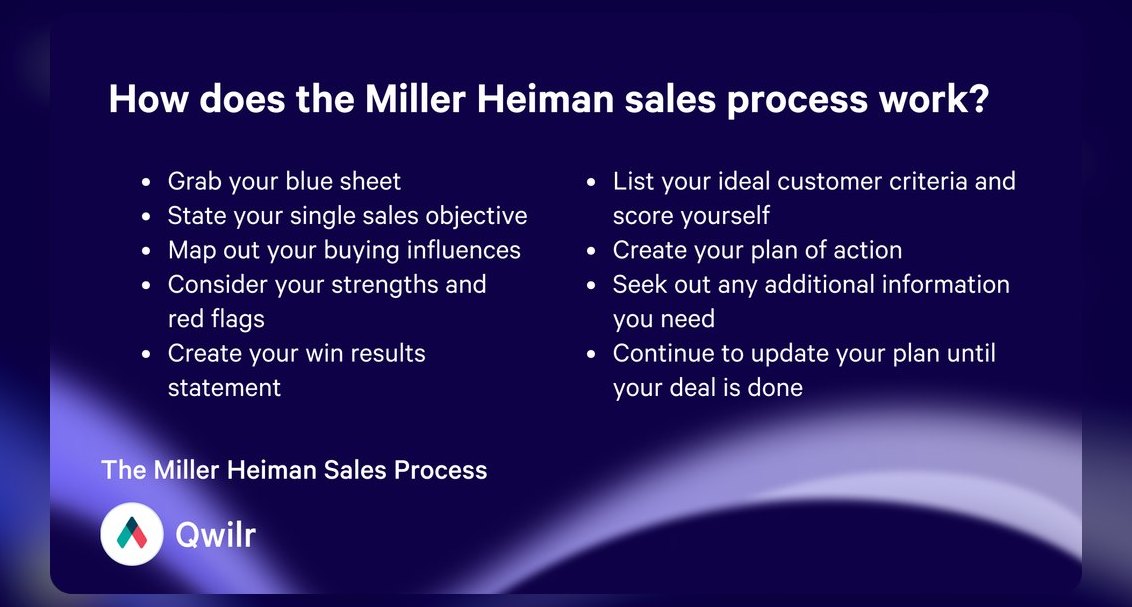 pulse-recentWhat is the step-by-step process for Strategic Selling by Miller Heiman in 2027?
 pulse-recentSelling Above and Below the Line by Skip Miller — Top 10 Key Takeaways for Sales Leaders in 2027
 pulse-recentSnap Selling by Jill Konrath — Top 10 Key Takeaways for Sales Leaders in 2027
 pulse-recentHow do you implement the Sandler Rules by David Mattson in your first 30 days as a new sales manager in 2027?
 pulse-recentWhat are the concrete steps to implement the Sandler Rules for Sales Leaders by David Mattson in 2027?
 pulse-recentInsight Selling by Mike Schultz and John Doerr — Top 10 Key Takeaways for Sales Leaders in 2027
 pulse-recentWhat is the most actionable step in The Sandler Rules for Sales Leaders by David Mattson to improve discovery in 2027?
 pulse-recentGetting to Yes by Roger Fisher and William Ury — Top 10 Key Takeaways for Sales Leaders in 2027