


What is the second concrete step in Strategic Selling by Miller Heiman for identifying a sales coach in 2027?
Quality
Certified

The second concrete step is testing each candidate against the coach criteria — verifying the person gives you reliable information, is credible with the buying organization, and personally wants your solution to win. In Strategic Selling, identifying a coach means nominating candidates first, then validating all three conditions with evidence before you rely on them.
Coach candidate nomination versus coach validation
Practitioners routinely collapse the two halves of Miller Heiman's coach work into a single mental move — "who likes me here?" — and that collapse is exactly what the Strategic Selling method is built to prevent. The Blue Sheet, the method's core planning worksheet, separates the four Buying Influences (Economic Buyer, User Buyer, Technical Buyer, Coach) and then treats the Coach differently from the other three. The other three exist because of the org chart and the purchasing process; you do not choose them, you discover them. The Coach is the only one you develop. That asymmetry is why the identification work has a distinct first and second step rather than being a single lookup.
The first step is nomination — building a candidate list. You sweep three pools: people inside the buying organization, people inside your own organization who have standing with the account, and people outside both (a shared consultant, a former colleague now employed there, a partner-channel contact, an implementation vendor already working the account). Nomination is deliberately generous. You are not judging yet; you are widening the field so that step two has something to test. A typical enterprise pursuit yields four to nine plausible names at this stage, and it is normal for several of them to be people you have never spoken with directly.

The second step — the one this question asks about — is validation. You take each nominated name and test it against the three coach criteria the method specifies, and you demand evidence for each. Miller Heiman's phrasing across editions is consistent on the substance: a genuine Coach (a) is credible to you, meaning you trust the information they give and can verify it; (b) is credible to the buying organization, meaning their read on the account carries weight internally; and (c) has a personal stake in your solution winning. A name that satisfies two of three is not a Coach. It is a friendly contact, and treating a friendly contact as a Coach is one of the most expensive misclassifications in the method, because everything downstream — your Red Flags, your position assessment, your Best Action Plan — inherits the bad information.
The distinction between the two steps matters operationally, not just semantically. Nomination is cheap and fast; you can do it alone at a desk in fifteen minutes with a CRM export and an org chart. Validation is expensive; it costs calls, questions, and calendar time, and it is the step reps skip when the quarter is closing. The predictable result is a Blue Sheet with a name in the Coach box and no evidence behind it — which reads as green on the strategy review and is functionally a blank.
The three validation tests and what evidence each one requires

Validation is not a gut check. Each of the three criteria has a specific class of evidence that satisfies it, and each has a specific failure signature when the evidence is absent.
Test one: are they credible to you? The question behind this test is whether the information they give you survives contact with reality. The operational method is verification by triangulation. Ask your candidate a question whose answer you can independently check — the current stage of the procurement process, who signs above a given dollar threshold, whether a competitor has been on site, when the budget cycle closes. Then check it against a second source: another contact, a public filing, a job posting, a press release, a partner. If the two agree, you have one point of evidence. Run this two or three times across separate conversations and you have a pattern. If the candidate's answers repeatedly resolve as accurate, they are credible to you. If their answers are vague, always optimistic, or contradicted by other sources, they are not — and no amount of personal warmth substitutes.
The common failure signature here is the enthusiastic informant who tells you what you want to hear. They are pleasant, responsive, and consistently wrong about timing. In practice, this candidate's forecasts slip repeatedly while their tone stays confident. Two failed verifications in a row is enough to move them off the Coach line.

Test two: are they credible to the buying organization? This is the test most often failed and least often checked. Your candidate can be scrupulously honest with you and still carry no weight internally. The evidence you want is observable behavior from other people in the account: does the Economic Buyer cite this person by name? Do others defer to them in a meeting? Are they included in the internal circulation of documents that matter — the requirements list, the vendor scorecard, the budget draft? Do they know things before the org chart says they should?
There is a useful proxy test. Ask the candidate to do something small that requires internal standing — arrange a fifteen-minute introduction, get a copy of the evaluation criteria, confirm the actual decision date with the Economic Buyer's assistant. If they can do it inside a few days, they have standing. If the request quietly dies, they do not, regardless of title. A senior title with no internal credibility is a specific and common trap: the long-tenured director everyone likes and nobody consults.
Test three: do they personally want you to win? Strategic Selling is explicit that a Coach's motivation is self-interested, not altruistic. The Coach helps you because your win produces a result they want — a metric they own improves, a project they champion gets funded, a risk they carry gets retired, their internal position strengthens because they backed the right vendor. The evidence for this test is a stated Win, in their words, that you can connect to your solution.
Concretely, this means you can complete the sentence: "If we win, [name] gets [specific outcome], which matters to them because [specific personal or professional consequence]." If you cannot fill in both brackets with something the person actually said, the test is unsatisfied. "They seem to like our product" does not fill either bracket. Note the distinction from a Champion in other methodologies: the Coach need not advocate publicly and need not be a Buying Influence at all. What they must have is a personal reason your win is better for them than the alternative.
How to decide when a candidate passes

Run the three tests in a fixed order, because the cheapest test should disqualify first. Credibility-to-you is testable from information you already have or can verify in a day. Internal credibility takes a week and a small favor. Personal stake requires a real conversation. Ordering the tests this way avoids spending your best discovery time on a candidate who will fail on verification anyway.
Scoring should be explicit rather than impressionistic. A workable convention: score each criterion 0 (no evidence), 1 (weak or single-source evidence), or 2 (verified with independent evidence). A candidate needs a 2 on all three to be entered as your Coach on the Blue Sheet. A 2/2/1 is a provisional coach — you may use their information but you flag the weak leg and keep testing. Anything with a 0 in any column is not a Coach and should be relabeled honestly as a contact, an informant, or a Buying Influence you happen to get along with.
The loop back to the nomination pool is the part reps skip. Failing a candidate is not a dead end; it is the expected outcome for most names on the list, and it is why step one deliberately over-nominates. A pursuit that validates one Coach out of six candidates has run the process correctly.

One decision rule is worth stating plainly: when the strongest candidate fails only the third test, develop rather than discard. A credible, well-connected person with no personal stake is a Coach you have not yet built. The work is discovery — find the outcome they want and connect your solution to it. When a candidate fails the first test, do the opposite: discard quickly. You cannot develop accuracy.
The numbers behind validation, and what skipping it costs
Time is the honest currency here. Nomination costs roughly fifteen to thirty minutes of desk work. Validation, done properly across three to six candidates, costs several hours of real contact time spread over one to three weeks — typically two to four verification questions per candidate embedded in conversations you were having anyway, one small-favor request, and one motivation conversation. In a long enterprise cycle, that is a small fraction of total effort. In a compressed cycle it feels enormous, which is precisely why it gets cut.
Set thresholds in advance so the decision is not made under deadline pressure. Reasonable working rules: two independent confirmations before you score credibility-to-you as verified; one completed small-favor request before you score internal credibility as verified; one explicitly stated personal outcome before you score the Win as verified. Cap the validation window — if a candidate has not produced evidence within about two weeks of active pursuit, score them 0 and move to the next name rather than letting an unresolved candidate occupy the Coach slot indefinitely.

Re-validation deserves its own cadence. Coach status decays. Reorganizations, role changes, new executives, changed compensation plans, and shifted project priorities all break the third test in particular — the person's Win changes and their interest in your outcome evaporates without any announcement. A practical cadence is re-testing at every stage gate in your pipeline, or at minimum quarterly on long cycles, plus an immediate re-test on any trigger event: a leadership change above your Coach, a budget reset, a reorganization, or an acquisition. The cheap version of re-validation is a single verification question per cycle — ask something checkable and see whether it holds.
The cost of skipping validation shows up in a recognizable pattern rather than a single dramatic failure. You get a forecast that stays at a high probability for several consecutive periods and then collapses at the end. You get surprised by a decision criterion nobody mentioned. You learn about a competitor's position after the shortlist is set. You discover the Economic Buyer was someone other than the person your contact named. Each of these traces back to information you accepted without verifying because the source felt friendly. Strategic Selling's Red Flag convention exists for exactly this: an unverified Coach is a Red Flag, and a Blue Sheet that shows no Red Flags on a deal you have not validated is not a clean sheet — it is an unread one.
There is also an opportunity cost worth naming. Every hour spent cultivating a false Coach is an hour not spent finding the real one. The candidate who fails the internal-credibility test is often pleasant to work with, which makes them sticky. Reps keep meeting the friendly powerless contact because those meetings are easy, while the person who actually shapes the decision goes uncontacted for months. Explicit scoring is the countermeasure — it forces the comparison you would otherwise avoid making.
Running the second step inside your existing sales process

Validation works best embedded in calls you already have rather than staged as a separate exercise. Three mechanics make that practical.
Embed verification questions. Rather than scheduling an interrogation, plant one checkable question per conversation. "Who else signs off once it clears your level?" "Has anyone else been in for a demo this quarter?" "When does the budget lock?" Then verify each answer independently before the next call. Over three conversations, this produces the evidence base for test one at effectively zero incremental cost.
Use the small-favor request deliberately. The favor should be genuinely useful to you and genuinely small for them — a document, an introduction, a confirmed date. It functions simultaneously as a test of internal standing and as a step forward in the deal. If it lands, you have both the evidence and the artifact. If it stalls, you have learned the more valuable thing.
Make the motivation conversation explicit. The third test cannot be inferred. At some point you have to ask directly what a successful outcome would mean for them personally — what changes in their work, what they are measured on, what problem stops being theirs. Reps skip this because it feels intrusive. It is the single highest-information question in the sequence, and the answer determines whether you have a Coach or a well-informed bystander.

Two documentation habits keep the work durable. First, record the evidence, not just the verdict — the Blue Sheet Coach line should carry a short note of what was verified and when, so a manager reviewing the deal can distinguish a tested Coach from an asserted one. Second, log failed candidates with the reason they failed. Six months later, when the org changes, a candidate who failed only on personal stake may now pass, and you will not remember which one that was.
A final sequencing note specific to 2027-era deal environments: buying groups have grown and more of the evaluation happens in channels you cannot observe — internal chat threads, procurement portals, async document review. That makes test two, internal credibility, both harder to observe and more valuable. The small-favor test is the most reliable instrument you have for it precisely because it does not depend on watching a meeting. Weight it accordingly, and be suspicious of any candidate whose evidence for internal standing consists entirely of their own description of their influence.
Related questions
Can a Coach also be a Buying Influence?
Yes. A Coach may simultaneously be the Economic, User, or Technical Buyer, and often is. The role is functional, not exclusive — it describes someone who guides you through the sale, regardless of what other position they hold in the decision.
How many Coaches should one opportunity have?
One validated Coach is the minimum the method requires. Two or three across different parts of the organization is stronger, because it lets you cross-check information. More than that usually signals nomination without validation — many names, little evidence behind any of them.
What is the difference between a Coach and a Champion?

A Champion advocates for you publicly and internally. A Coach guides you privately and need not advocate at all. Strategic Selling's Coach is defined by information and access, not by public sponsorship — the two roles overlap but are not interchangeable.
What if no candidate passes all three tests?
Treat it as a Red Flag on the Blue Sheet, not a reason to proceed anyway. Either widen the nomination pool to third parties and internal contacts, or invest in developing the strongest near-miss candidate — usually one lacking a clear personal Win.
Does the second step change for renewals or expansions?
The tests are identical, but evidence is easier to gather because you have deployment history. Verification questions can reference actual usage data, and internal credibility is observable from who was involved in the last implementation.
FAQ
Is the second step nomination or validation?
Validation. The first step builds a candidate list from inside the buying organization, inside your own company, and outside both. The second concrete step is testing each of those candidates against the three coach criteria and requiring evidence for each before entering anyone as your Coach.
What exactly are the three criteria a candidate must satisfy?

The candidate must be credible to you — you can verify their information; credible to the buying organization — their read carries weight internally; and personally invested in your solution winning — there is a specific outcome they want that your win produces. All three, not two of three.
How do I test internal credibility without guessing?
Make a small, specific request that requires standing to fulfill: an introduction, a copy of the evaluation criteria, a confirmed decision date. If it lands within a few days, they have internal credibility. If it quietly dies, they do not, whatever their title says.
How long should validating a candidate take?
Plan on one to three weeks of embedded effort — two to four verification questions across normal conversations, one small-favor request, and one direct motivation conversation. Cap the window: if there is no evidence after roughly two weeks of active pursuit, score the candidate zero and move on.
What happens if I skip this step?
You end up with a name on the Blue Sheet and no evidence behind it. The typical consequence is a deal that forecasts high for several periods and collapses late, because bad information from an unvalidated source propagated into every downstream judgment about position and next action.
Does a validated Coach stay validated?
No. Coach status decays with reorganizations, role changes, new leadership, and shifted priorities — the personal-stake test breaks most often and most silently. Re-test at each stage gate, quarterly at minimum on long cycles, and immediately after any trigger event in the account.
Sources
- https://millerheimangroup.com/
- https://www.korn ferry.com/capabilities/sales-performance
- https://www.hbs.edu/faculty/Pages/browse.aspx
- https://hbr.org/2012/07/the-end-of-solution-sales
- https://hbr.org/2017/03/the-new-sales-imperative
- https://www.gartner.com/en/sales
- https://www.forrester.com/research/
- https://www.mheducation.com/
- https://www.salesforce.com/resources/articles/sales-methodology/
Related on PULSE
- How the Blue Sheet organizes the four Buying Influences in Strategic Selling
- Identifying the Economic Buyer when the org chart is misleading
- Red Flags in Strategic Selling: what they mean and how to clear them
- Coach versus Champion: which methodology means what
- Building a Win-Results statement for each Buying Influence
- Re-validating account roles after a reorganization
This page will be disappearing soon. Save it to your device for $1 — or read it free while it is here.
@Kory-White- · if Venmo asks, the last 4 of my number are 2012
This page is gone.
This one is off the shelf now. $1 keeps it on your phone for good — the whole page, pictures and diagrams included.
 pulse-recentCoaching Salespeople into Sales Champions by Keith Rosen — Top 10 Key Takeaways for Sales Leaders in 2027
 pulse-recentObviously Awesome by April Dunford — Top 10 Key Takeaways for Sales Leaders in 2027
 pulse-recentFanatical Prospecting by Jeb Blount — Top 10 Key Takeaways for Sales Leaders in 2027
 pulse-recentThe Customer Success Professional’s Handbook by Ashvin Vaidyanathan — Top 10 Key Takeaways for Sales Leaders in 2027
 pulse-booksWhat are the most common mistakes in Book Summaries in 2027?
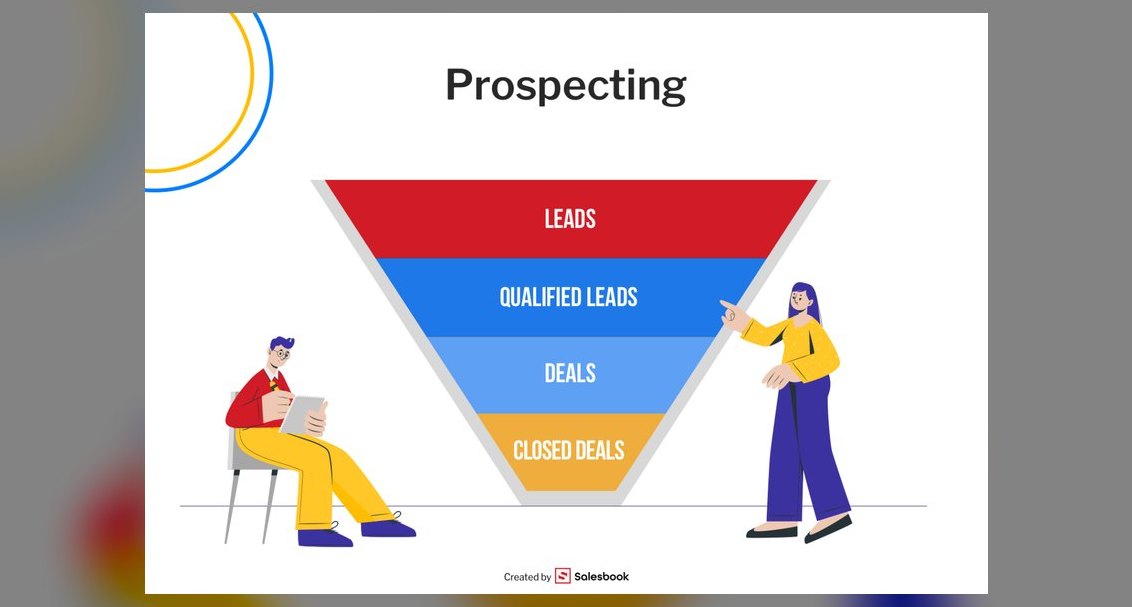 pulse-recentHigh-Profit Prospecting by Mark Hunter — Top 10 Key Takeaways for Sales Leaders in 2027
 pulse-recentThe Challenger Customer by Brent Adamson — Top 10 Key Takeaways for Sales Leaders in 2027
 pulse-recentWhat is the first concrete step in SPIN Selling by Neil Rackham for structuring a discovery call in 2027?
 book-summaryWhat factors drive the price of Book Summaries up or down in 2027?
 pulse-recentHyper Sales Growth by Jack Daly — Top 10 Key Takeaways for Sales Leaders in 2027