


More Sales Less Time — Cliff Notes Summary
Quality
Certified

Jill Konrath's *More Sales, Less Time* (Portfolio/Penguin, 2016) argues sellers don't need more tactics — they need an hour back. Kill notifications, batch email, time-block around Pipeline, Planning, and Producing, and engineer habits instead of leaning on willpower. Trigger events supply the leverage. The payoff is focus, not hustle.
The outcome you should expect from reading it
The book makes one explicit, measurable promise, and it's worth stating plainly before anything else: reclaim a minimum of sixty focused minutes per day. Not four hours. Not a transformed life. One hour, clawed back from email micro-checking, social-media drift, and reactive internal chatter, then redirected into research, pre-call preparation, account strategy, and actual customer conversations. Konrath's claim is that this hour is not a one-to-one trade. An hour of prepared, undistracted selling outperforms two hours of fragmented reactive work, because deals are won by the quality of a small number of conversations rather than the volume of low-grade activity surrounding them.
If you're evaluating whether to read it, calibrate on that. This is not a comprehensive sales methodology like SPIN or Challenger. It does not teach discovery questioning, negotiation, or multi-threading an enterprise account. It is a productivity book written specifically for quota-carrying sellers, and it should be judged on that narrow brief. On that brief it holds up well — arguably better in 2027 than in 2016, because the volume of AI-generated inbound, auto-summarized meeting notes, and notification-emitting revenue tooling has grown while the number of hours in a selling day has not.
The practical outcome, for a rep who actually implements it, tends to show up in three layers with different timelines. The first layer is subjective: the frantic feeling drops within one to two weeks of killing notifications and batching email. That's not a pipeline result, but it's the signal that the environmental changes took. The second layer is behavioral: within three to four weeks, a rep who has genuinely time-blocked will see prospecting blocks surviving on the calendar rather than being eaten by internal meetings and one-off requests. This is the measurable leading indicator, and it's the one a manager should inspect. The third layer is pipeline: new opportunities created, which lags the behavior change by roughly the length of your outbound-to-meeting cycle. For most B2B teams that's four to eight weeks before the reclaimed hour shows up as sourced pipeline.

What you should *not* expect is a systems fix. Konrath's remedies are individual and manual — calendar discipline, notification bans, habit design. She deliberately avoids prescribing software beyond a couple of email-triage tools, which is why the book has aged well: nothing in it depends on a 2016 tech stack. The corollary is that if a rep's calendar is genuinely owned by someone else — mandatory daily standups, a manager who pings for CRM hygiene at 10am, a sales-engineering queue with no SLA — the book gives that rep language for the problem but not authority to fix it. That's a management read, not an individual-contributor read, and it's the single most common reason implementations stall.
One more honest expectation to set: the book is short and repetitive by design. Konrath writes in tight chapters, many of them two or three pages, because she's writing for someone who reads on a plane between meetings. Readers who want dense research exposition will find it thin. Readers who want a field guide they can act on Monday will find the density about right. Treat the reading itself as a one-evening job and put the effort into the implementation instead.
What actually drives the outcome
Four mechanisms do the work in this book. Understanding which one is failing for you is more useful than re-reading the whole thing.

The willpower budget. Konrath leans on the ego-depletion line of research associated with Roy Baumeister to argue that self-control behaves like a finite daily resource. Every time a rep suppresses the urge to check Slack, refresh LinkedIn, or open a notification badge, they spend from that budget. By early afternoon it's depleted, which is why cold calls feel impossible after lunch even though nothing about the calls changed. Her conclusion is the important part and it survives regardless of how the underlying research has been debated since: don't spend willpower — remove the temptation. Turn the notification off rather than resisting it. Put the phone in a drawer rather than face-down on the desk. Close every browser tab not tied to the current task. The design goal is a workspace where the right action requires no decision.
The switching cost. Toggling between a proposal, a Slack thread, and a CRM record carries a real attention tax; every reload of context costs minutes of ramp before you're back at full depth. Konrath's answer is single-tasking inside bounded intervals — she popularizes the 52-minutes-on, 17-minutes-off cadence surfaced in DeskTime's productivity analysis of top performers. The specific numbers matter less than the structure: a fixed sprint with a hard, screen-free stop. The break is not a reward, it's the mechanism; skipping it degrades the following sprint.
The 3P split. Every seller activity collapses into three buckets — Pipeline (prospecting, outbound, referral asks, trigger monitoring), Planning (pre-call research, account strategy, deal reviews, post-mortems, product learning), and Producing (discovery calls, demos, proposals, negotiation, closing, CS handoff). Konrath's observation is that crazy-busy reps have no idea how their week splits across the three, which is precisely why they feel busy while the forecast slides. Everything that isn't one of the three P's is overhead, and overhead is what expands to fill an unprotected calendar.
Trigger events. This is the leverage mechanism and the part most directly transferable to a RevOps function. A trigger event is any change that re-orders a company's priorities and opens a window: a new executive hire, a funding round, an earnings miss, a layoff, an acquisition, a new regulation, a product launch, an expansion into a new region. Each one rewires what a buyer cares about for a period of roughly sixty to ninety days. Outreach timed inside that window converts at a multiple of cold outreach to a stable account, because you're not creating a need — you're arriving while one is being created for you. Konrath's framing predates modern intent tooling, but the underlying instruction ("buy attention, not lists") is what makes it durable.
The four mechanisms are sequenced, not parallel. Removing temptation is what makes time-blocking survivable; time-blocking is what creates the hour; trigger events are what make that hour worth more than the hour it replaced. Skip the first step and the rest is willpower theatre that fails in week three.
Benchmarks and realistic ranges
Konrath is more numerate than most productivity authors, and the numbers she cites are worth separating into ones you can rely on and ones you should treat as directional.
Reliable and actionable. The one-hour-per-day reclaim target is the book's own contract and it's a reasonable planning number — 60 minutes, five days a week, is roughly 250 hours a year, or about six additional selling weeks. The 90-minute prospecting block, four times per week is her signature calendar prescription for a quota carrier: six hours of protected Pipeline time weekly, scheduled first thing in the morning before the day can be taken from you. The 52/17 sprint cadence gives you three sprints inside a morning. Batching email to three or four passes per day rather than continuous monitoring is the highest-yield single change in the book, and unlike most of her advice it's binary — you either turned notifications off or you didn't.

Directional, cite carefully. The book references figures on how often knowledge workers check email and on attention costs from multitasking. Konrath herself sources the IQ-drop claim to a small HP-funded study by Glenn Wilson, and Wilson has publicly said the finding was overstated in popular coverage — so use the direction (constant interruption meaningfully degrades cognitive performance) and don't quote the number in a QBR deck. Likewise the productivity-tax range often attached to task switching varies widely by study design and task type. The honest version: switching is expensive, the exact percentage is contested, and the prescription doesn't change either way.
Trigger-event conversion. Konrath's case for outreach inside a 48-to-72-hour window after a trigger rests on vendor and analyst data of the era rather than peer-reviewed work. Treat the specific multiple as a vendor claim, not a benchmark, and measure your own. The correct move is to instrument it: tag outbound sequences that were trigger-initiated versus list-initiated, and compare reply rate and meeting-booked rate over a quarter. Most teams that run this test do find a meaningful lift, but the size is yours to discover, and publishing someone else's multiple as your forecast assumption is how planning goes wrong.
Deal-size asymmetry. One of Konrath's sharpest points needs no external citation because you can verify it in your own CRM in twenty minutes: a large deal does not consume proportionally more selling hours than a small one. Pull your closed-won set for the last four quarters, bucket by ACV, and compare median activity count and days-in-stage per bucket. If your large deals take, say, 1.5x the touches for 5x the revenue, the strategic conclusion writes itself — the reclaimed hour belongs in the larger segment, not spread evenly across the long tail. This is the most defensible quantitative exercise the book prompts, and it's the one worth doing before you change anything else.
Implementation timelines. Set expectations at: notification and batching changes take effect immediately and feel different within a week; calendar-block survival stabilizes around three to four weeks once the team norms adjust; sourced-pipeline movement appears one full outbound cycle later, commonly four to eight weeks. Anyone promising quota impact inside a month is selling something the book doesn't claim.
Risks, edge cases, and failure modes
The calendar-ownership problem. The book's central assumption is that the reader controls their own calendar. Many quota carriers do not. If a rep sits in a pod with a mandatory 9:00 standup, a 10:30 pipeline scrub, and an on-demand sales-engineering queue, the 90-minute morning prospecting block has nowhere to live. Handing this book to that rep produces frustration, not output. The correct application is manager-first: protect the block at the team level, move internal meetings to a single afternoon corridor, and give the block the same status as a customer meeting. This is the number-one failure mode and it is organizational, not personal.
Batched email versus real response-time expectations. Three-to-four-passes-per-day works cleanly for outbound prospecting motions. It breaks in inbound-led, high-velocity, or PLG contexts where speed-to-lead is a genuine conversion driver and a fifteen-minute delay measurably reduces connect rates. The fix is not to abandon batching but to carve out the exception explicitly: route genuine inbound leads to a separate, alerting channel with an owner and an SLA, and batch everything else. If a rep batches the inbound queue because the book said to batch, the book has cost them money.
Trigger events go stale and get crowded. Two failure modes here. First, staleness: a funding announcement you act on in week five is not a trigger, it's news. The window is short and the operational requirement is a monitoring cadence you actually check daily. Second, crowding: a well-publicized Series B means every vendor in the category is landing in that inbox during the same 72 hours. Trigger timing gets you considered; it does not differentiate your message. If your trigger-initiated outreach says nothing more than "congrats on the round," you've spent the leverage on a template everyone else also sent.

Gamification decay. Konrath describes inventing a personal game with an avatar that leveled up as she held her blocks, and it's a genuinely useful trick for converting an abstract habit into a visible loop. The honest caveat is that novelty-driven habit scaffolds decay — the tracker that thrilled you in week one is background noise by week six. Plan for the handoff: use the tracker to survive the first month, then rely on the environmental changes (notifications off, blocks recurring, phone out of reach) which don't require ongoing motivation.
Time-blocking as avoidance. A subtler trap. Planning is one of the three P's and it is legitimately valuable, but it is also the most comfortable of the three. Reps who dislike prospecting will happily fill four hours with "account research" and report a fully blocked, highly productive week with no new conversations initiated. If you're inspecting this, inspect the Pipeline bucket specifically and inspect outputs (dials, sequences launched, meetings booked), not calendar coverage.
The pursue-larger-deals advice cuts both ways. Concentrating hours on larger accounts is sound when your segment genuinely supports it. Applied blindly it produces a rep with four enterprise pursuits, no velocity business, and nothing closing in the quarter. The trade-off is variance: bigger deals mean fewer shots, longer cycles, and a lumpier forecast. Reps early in a ramp, or on a monthly quota, usually need the volume tier to build a baseline before they can afford the concentration.
What the book doesn't cover. No guidance on territory design, comp plan structure, CRM data model, or handoff SLAs — all of which cause more wasted seller time at scale than individual habits do. If your reps are losing six hours a week to duplicate account records and a broken routing rule, that is a systems problem and no amount of time-blocking fixes it. Read the book as one layer of a stack, not as the whole answer.
A practical rollout plan

Here's how to actually put the book to work, whether you're a single rep or a manager rolling it across a team.
Week zero — measure before you change anything. Run a time audit for five working days. Log where every 30-minute block went and tag each one Pipeline, Planning, Producing, or Overhead. Do it honestly, including the twelve-minute Slack detours. Most reps who run this are genuinely surprised: the Pipeline bucket is usually far smaller than they'd have guessed, and Overhead is far larger. This baseline is what makes everything after it measurable, and skipping it is why most implementations can't tell whether they worked.
Week one — remove temptation. Turn off every email, Slack, and mobile notification for the workday. Not "important only" — off. Set email to three or four fixed passes: early morning, post-lunch, mid-afternoon, end of day. Carve out the inbound-lead exception explicitly with its own alerting channel if speed-to-lead matters in your motion. Physically remove the phone during blocks. This week has no calendar work in it at all; the environmental change is the prerequisite for the calendar change surviving.
Week two — put the big rocks down first. Schedule the 90-minute Pipeline block four mornings a week as a recurring, protected calendar event with the same decline-authority as a customer meeting. Schedule the hardest task of the day into the first block — the ugly-task-first rule. Add a shorter Planning block, and leave Producing time flexible around actual customer availability. Run the 52/17 cadence inside each block with a real screen-free break.
Week three — add the trigger layer. Build a monitoring routine you check once daily: executive-hire alerts, funding announcements, earnings commentary, layoffs, regulatory changes, and product launches across your named accounts. Whatever tooling you have — Sales Navigator alerts, a funding-news feed, intent signals — the discipline is the daily check and the 48-to-72-hour response window, not the vendor. Tag every trigger-initiated touch in your CRM so you can measure lift against list-based outreach later.

Week four onward — review the reps. Five minutes of structured notes after every meaningful call: what worked, what didn't, what to test next. Once a week, review one recorded call end to end. This is the deliberate-practice loop, and it's the difference between doing a hundred calls and improving over a hundred calls. Re-run the week-zero time audit at day thirty and compare bucket ratios against baseline.
The manager's version. If you're rolling this across a team, three things determine whether it sticks. Move internal meetings into a single afternoon corridor so mornings are clean. Inspect the Pipeline block's *outputs*, not its presence on the calendar. And go first — a manager who pings reps at 10:15 for a CRM update has revoked the block regardless of what the calendar says.
Where this book sits in a reading strategy. Pair it with *Deep Work* for the underlying philosophy of focus, *Atomic Habits* for deeper habit-design mechanics, and Konrath's own *SNAP Selling* for the offer-simplicity thread she carries into this book — complexity kills deals, and a simpler offer closes faster, which is itself a time argument. Read *More Sales, Less Time* first, because it's the only one of the four written for someone whose calendar belongs to somebody else.
Related questions
Is this book still useful given modern AI sales tooling?
More so. AI adds auto-drafted emails, generated meeting summaries, and additional notification surfaces on top of existing CRM overhead. The tooling produces more inputs to triage, not fewer. The discipline of deciding what *not* to process is the part no tool performs for you.
Does it apply to field reps or only inside sales?
Both. Field reps face more fragmentation, not less — travel, on-site waiting, and unpredictable meeting overruns. The 3P split is role-agnostic; only the block placement changes. Field sellers typically anchor Pipeline blocks to early morning before travel, and Planning to transit time.
What's the single highest-yield change from the book?

Turning off notifications and batching email to three or four fixed passes. It's binary, it takes ten minutes, and it removes the willpower cost that otherwise defeats every calendar change downstream. Everything else in the book depends on this one holding.
How does it compare to Konrath's earlier books?
*SNAP Selling* and *Agile Selling* address what to say and how to ramp fast. *More Sales, Less Time* addresses when you'll have time to do either. It's the operating layer beneath her methodology work rather than a replacement for it.
Can a manager mandate this across a team?
Partially. A manager can protect blocks, consolidate internal meetings, and inspect Pipeline outputs. A manager cannot mandate the individual habit work. Treat the organizational half as your responsibility and the personal half as coaching.
FAQ
Does the book address CRM overload directly?
Yes, though not with tooling advice. Konrath's position is that CRM admin frequently functions as productive-looking avoidance — it feels like work while requiring none of the emotional exposure that prospecting does. Her remedy is structural: batch CRM updates into a defined block rather than letting them interleave with selling time, and prune anything you're entering that nobody actually reads. Note the limit — if your CRM genuinely requires excessive manual entry, that's a systems problem to fix in the process, not a habit to schedule around.
How long before results show up?
Three separate timelines. The frantic feeling drops within one to two weeks of killing notifications. Calendar blocks stabilize and stop getting eaten around week three or four once colleagues adjust. Sourced pipeline moves one full outbound cycle after that — commonly four to eight weeks in B2B. Konrath is explicit that willpower fades quickly, which is why the book invests in habit engineering rather than promising a fast win.
Does it include templates or worksheets?
It includes a time-audit exercise, sample weekly calendar layouts, and lists of common time-wasting patterns to eliminate. It deliberately avoids endorsing specific software beyond a couple of email-triage mentions, which is why the material has aged well — nothing in it depends on a particular CRM, email client, or 2016-era tool remaining in business.
What's the biggest mistake it corrects?
Confusing activity with progress. Clearing an inbox, updating records, and attending internal meetings all feel like work and rarely advance a deal. The correction is ruthless prioritization: protect time for the small number of activities that create and advance pipeline, and treat everything else as secondary. That reordering is uncomfortable precisely because the low-value work is the comfortable work.
Is the research in it solid?
Mixed, and worth reading with some skepticism. The habit and deliberate-practice material rests on well-known work. The frequently-quoted email-and-IQ figure comes from a small vendor-funded study whose own author has said popular coverage overstated it, and some conversion multiples trace to vendor data rather than independent research. The prescriptions hold up regardless — but measure the trigger-event lift on your own pipeline rather than quoting someone else's number.
Who should skip it?
Anyone looking for discovery, negotiation, or enterprise account-strategy technique — that's not this book's brief. Also anyone whose seller time is being consumed by broken routing, duplicate records, or undefined handoff SLAs. Those are RevOps problems, and no amount of individual time-blocking will fix a process defect at that layer.
Sources
- Penguin Random House — *More Sales, Less Time* official page
- JillKonrath.com — author's official site
- Goodreads — *More Sales, Less Time* reader reviews
- DeskTime — "The secret of the 10% most productive people" (52/17 study)
- The Telegraph — Glenn Wilson on the misreported "infomania" IQ finding
- American Psychological Association — "Multitasking: Switching costs"
- Charles Duhigg — *The Power of Habit* official site
- BJ Fogg — Behavior Model
- James Clear — *Atomic Habits*
- Cal Newport — *Deep Work*
Related on PULSE
- The Advantage by Patrick Lencioni — Cliff Notes Summary for Sales Leaders
- Major Account Sales Strategy by Neil Rackham: Summary, Key Lessons, and RevOps Takeaways
- Demand-Side Sales 101 by Bob Moesta: Summary, Key Lessons, and RevOps Takeaways
- Cracking the Sales Management Code by Jason Jordan and Michelle Vazzana: Summary, Key Lessons, and RevOps Takeaways
- Founding Sales by Pete Kazanjy: Summary, Key Lessons, and RevOps Takeaways
- Elite Sales Strategies — Cliff Notes Summary
This page will be disappearing soon. Save it to your device for $1 — or read it free while it is here.
@Kory-White- · if Venmo asks, the last 4 of my number are 2012
This page is gone.
This one is off the shelf now. $1 keeps it on your phone for good — the whole page, pictures and diagrams included.
 pulse-booksWhat are the most common mistakes in Book Summaries in 2027?
 pulse-recentStrategic Selling by Robert Miller and Stephen Heiman — Top 10 Key Takeaways for Sales Leaders in 2027
 pulse-recentSandler Rule #1: What is the first concrete step to build a prospect's trust in a sales conversation in 2027?
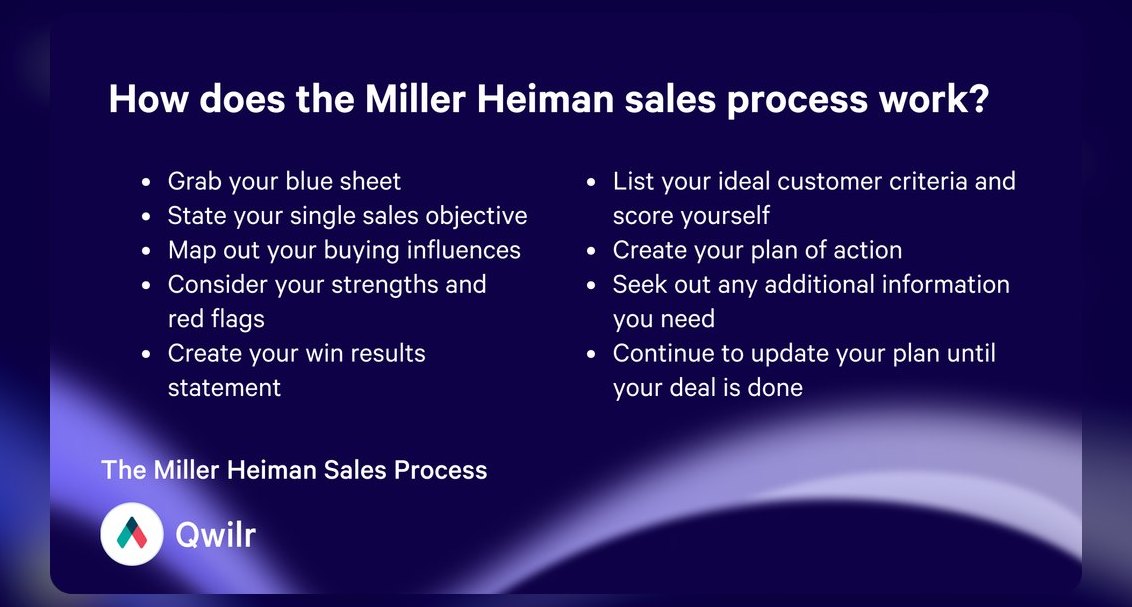 pulse-recentWhat is the step-by-step process for Strategic Selling by Miller Heiman in 2027?
 pulse-recentWhat is the first concrete step in Sandler Rule #4 for a sales leader to implement in 2027?
 pulse-recentThe Challenger Customer by Brent Adamson — Top 10 Key Takeaways for Sales Leaders in 2027
 pulse-recentThe Greatest Salesman in the World by Og Mandino — Top 10 Key Takeaways for Sales Leaders in 2027
 pulse-recentThe Collaborative Sale by Keith Eades — Top 10 Key Takeaways for Sales Leaders in 2027
 pulse-recentHow do you implement the Sandler Rules by David Mattson in your first 30 days as a new sales manager in 2027?
 pulse-recentHyper Sales Growth by Jack Daly — Top 10 Key Takeaways for Sales Leaders in 2027