
Major Account Sales Strategy by Neil Rackham: Summary, Key Lessons, and RevOps Takeaways
 Curated byKory White · Fractional CRO · Maryland
 PULSEKNOWLEDGE LIBRARY
Quality
Certified

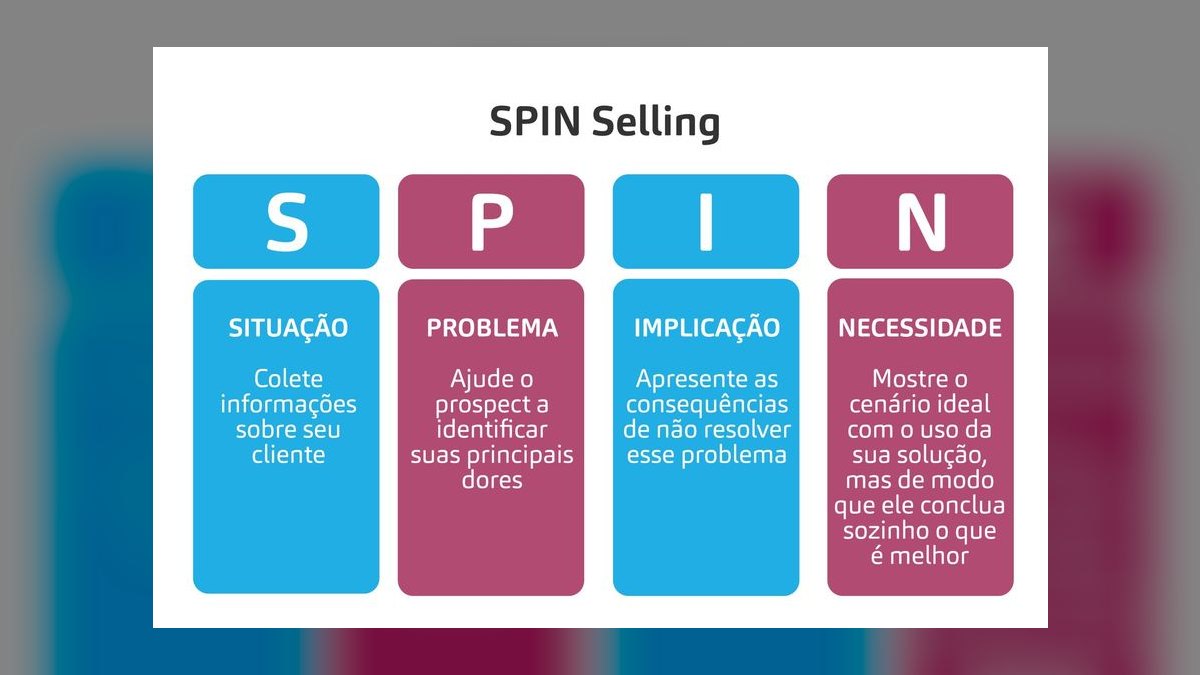
*Major Account Sales Strategy* (Neil Rackham, 1989) is the strategic companion to SPIN Selling: where SPIN teaches the single call, this teaches the multi-month, multi-stakeholder account. Its core claim is that complex purchases move through predictable phases — Recognition of Needs, Evaluation of Options, Resolution of Concerns, Implementation — and the strategy that wins one phase actively loses another.
What it is and why it matters
Neil Rackham wrote *Major Account Sales Strategy* four years after *SPIN Selling*, and the two books are best understood as a pair operating at different altitudes. SPIN is a book about a conversation: how to sequence Situation, Problem, Implication, and Need-payoff questions inside a single meeting so that the buyer, not the seller, articulates the value. *Major Account Sales Strategy* is a book about a campaign — how twelve of those conversations, spread across nine months and seven stakeholders, add up to a signature or to nothing at all. The distinction matters more than it sounds. Most sales enablement content, then and now, is call-level content: objection handling, discovery frameworks, demo choreography. Very little of it addresses the sequencing problem, which is where large deals actually die.
The reframe that carries the whole book is this: selling strategy must match where the customer is in their decision, not where the rep wishes they were. A rep who treats every meeting as a closing opportunity generates resistance in proportion to how early they push. A rep who keeps asking diagnostic questions after the buyer has already chosen a vendor and is quietly panicking about implementation risk reads as evasive. Both reps are running competent tactics at the wrong moment, and both lose to a competitor whose tactics are worse but whose timing is right.
For a RevOps function specifically, this is the intellectual foundation of the stage-gated pipeline. Almost every CRM ships with default stages that describe seller activity — Prospecting, Qualification, Proposal Sent, Negotiation, Closed Won. Every one of those labels describes something the *rep* did. None describes anything the *buyer* believes. That is why forecast calls degenerate into rep-opinion polls: the stage field carries no information about buyer psychology, so the only available signal is a gut feeling, and gut feelings compound into the 25–40% slip rates most enterprise teams live with. Rackham's phases give you stage definitions that are falsifiable. "Has the buyer written down criteria we influenced?" is a question a manager can inspect. "Is this a Proposal Sent?" is a question about whether someone clicked send.
There is a second reason the book matters to a revenue operations audience: it is one of the few sales texts with a real research spine underneath it. Rackham's Huthwaite work observed thousands of live sales calls and coded seller behavior against outcomes, which is why the conclusions read as counterintuitive rather than motivational. The finding that closing techniques *reduce* success rates in large deals — while improving them in small, one-call transactions — is not a slogan. It falls out of the data, and it explains why the training your SDR team gets should not be the training your enterprise team gets. Deal size changes the physics.
The book also travels outside pure B2B software. The same phase logic explains industrial equipment sales, professional services engagements, construction bids, and hospital capital purchases — anywhere a group of people with different incentives must reach consensus on a decision none of them will personally live with alone. If you run RevOps for a services firm rather than a SaaS company, the mapping is arguably cleaner, because services buyers spend longer in Resolution of Concerns and the fear is more legible.
The step-by-step process
Here is how the four phases actually run, and what a seller should be doing inside each one.
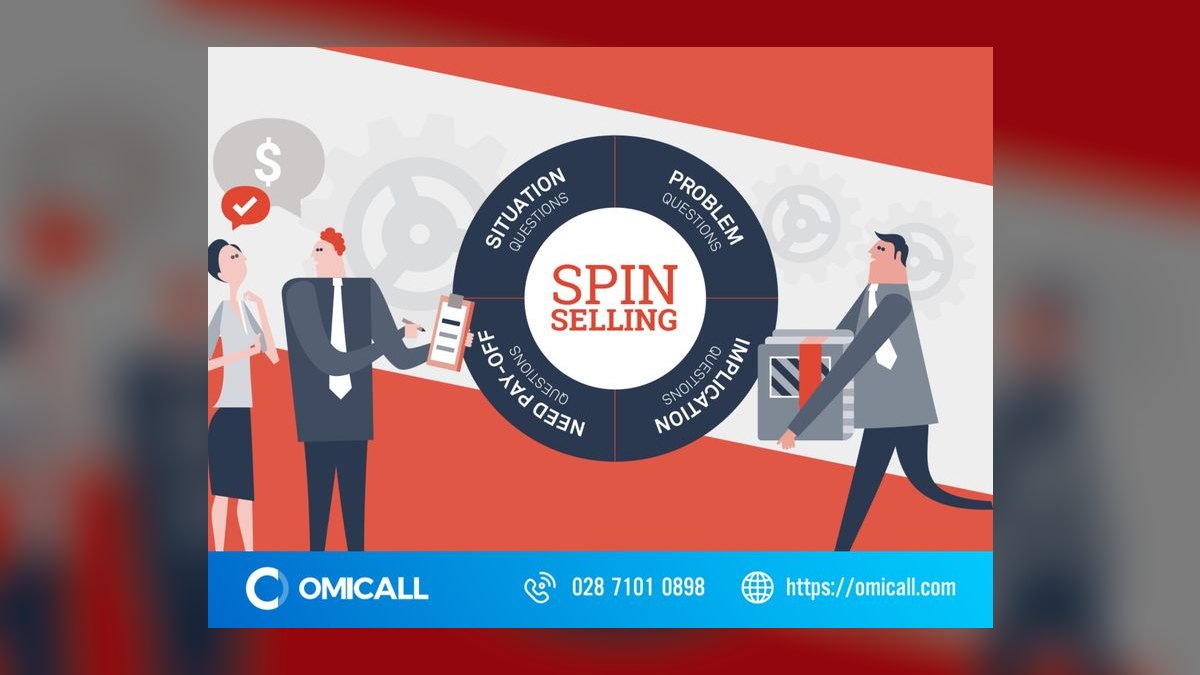
Recognition of Needs. The buyer is not shopping. The status quo is imperfect but tolerable, and no budget line exists. Movement out of this phase requires dissatisfaction to cross a threshold where inaction becomes the risky option. The seller's job is not to pitch — it is to make the cost of the current state visible and specific. This is where SPIN's Implication questions do their work: not "are you frustrated with your reporting?" but "when the board asks for pipeline coverage by segment, how long does that take and who builds it?" The failure mode is the rep who hears a mild complaint and books a demo. You have converted a Recognition-phase conversation into an Evaluation-phase artifact before the buyer has any reason to evaluate anything, and the demo lands flat because there is no problem for it to solve yet.
Evaluation of Options. The buyer now accepts that something must change and begins comparing. Critically, the buyer is *building the comparison criteria in real time* — and those criteria are soft early and rigid late. This is the highest-leverage phase in the entire cycle and the one where most reps are most passive, because it often coincides with a quiet period where the buyer is doing internal work. The seller's job is to be in the room while the scorecard is being written. Rackham separates differentiators the customer already values from differentiators you must build value around, and the second category is where the real work lives: if you are better at something the buyer does not yet care about, you must make them care *before* the requirements doc is circulated, not after.
Resolution of Concerns. The buyer has a preference and is now frightened. The fear is rarely about your product's features; it is about consequences — implementation disruption, career risk, the last vendor who overpromised, integration with the system nobody wants to touch. Fear peaks here and it peaks late, which is exactly when most sales processes apply the most pressure. This is the phase that generates the classic pathology: a deal that looked 90% closed goes silent, the rep responds with discounting and urgency, and the discount confirms the buyer's suspicion that something is wrong. The correct move is the opposite of pressure — surface the concern explicitly, name it, and de-risk it structurally (pilot scope, phased rollout, reference call with a peer who survived the same migration, contractual off-ramp).

Implementation. The signature is a milestone, not an ending. Value is realized or it is not, and the next purchase decision is being formed by what happens in the first ninety days. Rackham gives this phase the least page-count, which is the book's clearest dated edge — in a net-revenue-retention world it deserves half the book.
Account entry: Receptivity, Dissatisfaction, Power
The framework most ahead of its time is Rackham's account-entry model. To penetrate a complex organization you navigate three distinct "focuses," and confusing them is the single most common cause of a friendly-looking deal that never closes.
Focus of Receptivity is the person who will take your call. They are accessible, often curious, frequently junior, and almost never the decider. Receptivity is a real asset — it is how you get in — but it is a weak signal on its own. A prospect who meets with you may simply be polite, benchmarking, or gathering intel for a decision that was already made.

Focus of Dissatisfaction is the person who feels the pain the status quo creates. They have a self-interested reason to engage and, crucially, a reason to introduce you upward. Without dissatisfaction somewhere in the account, you have no motive force; you have a pleasant relationship and a deal that never gets funded.
Focus of Power is whoever can approve and fund. Power is not title — it is budget access, influence over the evaluation committee, or veto rights. The org chart tells you about reporting lines, not about who can kill a purchase, and in most enterprises at least one person with veto power sits outside the sponsoring department entirely: security, legal, procurement, or the platform owner whose roadmap your integration disturbs.
The strategy is directional: enter through receptivity, build through dissatisfaction, earn your way to power. The characteristic failure is camping at receptivity — maintaining a warm, responsive, entirely powerless contact and mistaking their responsiveness for pipeline progress. Every forecast has some of these. They are the deals that stay at 60% for two quarters.

Operationally, this converts into qualification fields that are worth more than BANT. Score each named contact on the three dimensions and the account map tells you something immediately: high receptivity plus low dissatisfaction is a nice-to-meet, not an opportunity. High dissatisfaction plus no power is a coach — valuable, but they need to be armed and routed upward, not sold to. Power without dissatisfaction is a signature waiting for someone else to justify it. Track the three separately in the CRM and forbid reps from collapsing them into a single "champion" checkbox, because that checkbox is where wishful thinking hides.
The adjacent discipline here is account-based marketing, which arrived thirty years later and rediscovered the same map with better tooling. ABM's contact-coverage metrics — how many personas in the buying group have engaged, how deep the engagement goes, whether engagement is spreading upward — are Rackham's three focuses instrumented. If you already run an ABM motion, you can wire this framework in without new fields: coverage is receptivity, intent and pain-topic consumption approximates dissatisfaction, and title-plus-budget-authority mapping is power.
Costs, timelines, and typical ranges
Adopting this as an operating model is not a training purchase; it is a process change, and it is worth being honest about the effort.
Redefining stages is the cheapest and highest-return step. Rewriting five to seven pipeline stages so they describe buyer state rather than seller activity is roughly a one- to two-week exercise for a RevOps analyst: draft definitions, socialize with two or three frontline managers, write exit criteria, update the CRM picklist, and migrate open deals. The migration is the part that surprises people — every open opportunity has to be re-staged by hand or by rule, and the first pass will look like your pipeline shrank, because deals that were sitting in "Proposal Sent" fall back to "Criteria Development" once you apply a real test. That apparent shrinkage is the point. It is not a loss of pipeline; it is the discovery that the pipeline was mismeasured.

Exit criteria are where the discipline lives. Each stage needs one or two verifiable artifacts, not a vibe. Recognition exits when the buyer has stated a cost of inaction in their own words and someone has agreed to sponsor a look. Evaluation exits when you have seen or influenced written criteria and know who else is on the list. Resolution exits when named concerns have named owners and mitigations. If a stage cannot produce an artifact, it is not a stage — it is a feeling with a percentage attached.
Cycle-time expectations vary enormously by deal size and industry, so treat any single number with suspicion. What is stable is the *shape*: in genuinely major accounts, Recognition and Evaluation usually consume the majority of elapsed calendar time while producing the least seller-visible activity, and Resolution of Concerns compresses into a comparatively short but high-variance window at the end. That variance is where forecast slip is born. A team that measures time-in-stage will typically find its longest average dwell in Evaluation and its highest slip rate in Resolution — and those two facts together diagnose most enterprise forecast problems without any further analysis.
Enablement cost is real. Reps have to unlearn habits that were rewarded in smaller deals — closing pressure, feature-led discovery, single-threading with whoever answers. Expect a full quarter before behavior changes and two before the pipeline data is trustworthy enough to forecast on. Budget manager time, not just rep time: deal inspection is the mechanism that makes the model stick, and if managers keep asking "when will it close?" instead of "what phase is the buyer in and what's your evidence?", the stage definitions decay into relabeled activity within a quarter.

Tooling is mostly optional. You need custom fields for the three focuses, a stage-history report, and time-in-stage tracking — all native in Salesforce or HubSpot. Conversation intelligence helps if you already run it, because phase mismatches are audible: you can literally hear a rep closing during Recognition. Intent data helps at the top. Neither is a prerequisite, and buying tools before fixing definitions produces expensive dashboards measuring meaningless stages.
Where teams get it wrong
Relabeling activity stages with phase names. The most common failure is cosmetic adoption — renaming "Discovery" to "Recognition of Needs" while the exit criterion remains "rep had a call." Nothing improves, and now the team is cynical about the framework. The test is whether the stage change requires evidence from the buyer's side of the table.
Skipping Evaluation because it's quiet. Reps go dark during the buyer's internal comparison period because there is nothing obvious to do, then re-engage when the RFP arrives. By then the criteria are set, and if a competitor shaped them, you are competing on price against a scorecard built for someone else. The discipline is to treat quiet periods as the highest-priority coaching moment, not a lull.

Pushing harder when a deal stalls late. A stall in Resolution of Concerns looks identical to a stall from disinterest, and the default reflex — discount, urgency, executive escalation — treats it as the latter. Discounting a frightened buyer reads as desperation and confirms their risk assessment. Ask what would have to be true for this to fail, and then build the answer into the deal structure.
Mistaking a champion for power. Related to camping at receptivity: a genuinely enthusiastic mid-level advocate can carry a deal a long way and still be unable to fund it. The diagnostic question is not "do they support us?" but "have they successfully sponsored a purchase of this size before?"
Single-threading in a committee purchase. Modern major-account buying groups routinely run seven to ten stakeholders with different, sometimes opposed, definitions of success. One contact cannot represent all of them, and the one who tries usually represents only their own function. Every additional genuine relationship reduces the blast radius when someone leaves — and in enterprise accounts, someone always leaves.

Applying this model to transactional deals. Rackham's own research is explicit that large-deal behavior and small-deal behavior diverge. Bolting a four-phase, multithreaded, criteria-shaping process onto a two-week SMB motion adds friction and kills velocity. Segment the process. A RevOps org that runs one pipeline definition across a $6K self-serve motion and a $600K enterprise motion is guaranteed to be wrong on at least one of them.
Treating Implementation as someone else's problem. The handoff to CS is where the book is thinnest and where most modern revenue leaks. If expansion is in your number, the last phase deserves the same stage rigor as the first four.
Decision framework: when to choose what
The practical question is not "is Rackham right?" but "which phase is this deal actually in, and what does that permit me to do?" Phase misdiagnosis is the root cause of most stuck deals, and it is diagnosable from evidence rather than opinion.

Use the same logic to decide when the whole model applies. Deal size and stakeholder count are the two variables. Below roughly a handful of stakeholders and a short cycle, the overhead outweighs the benefit and a lean process wins on velocity. Above that — long cycles, committee decisions, meaningful switching cost — the phase model earns its keep, and the bigger the deal, the more the timing question dominates the tactics question.
Choosing what to pair it with is the other decision. *Major Account Sales Strategy* is a diagnosis-and-timing framework; it is deliberately light on the "what do you say" layer. SPIN fills that at the call level. Miller Heiman's Strategic Selling contributes a more granular stakeholder taxonomy and a formal blue-sheet discipline that some teams prefer for account planning. The Challenger Sale argues a different opening move — lead with a commercial insight to *create* dissatisfaction rather than uncover it — which is less a contradiction than an aggressive interpretation of the Recognition phase. MEDDIC and its variants are complementary rather than competing: they inspect qualification completeness, while Rackham inspects buyer psychology. Running MEDDIC fields alongside phase-based stages is a common and coherent combination, because one tells you whether you know enough and the other tells you whether you are behaving correctly for the moment.
What to update for the present decade: the linearity. Buying committees now do substantial evaluation before any seller is contacted, loop backward when a new stakeholder joins, and form criteria from research you never see. The phases still exist and still govern behavior, but a given account can be in Recognition with the CFO and Resolution with the operational owner simultaneously. The practical adaptation is to assign phase *per stakeholder*, not per opportunity, and let the deal-level stage reflect the least-advanced person whose approval you need. That one change modernizes the model more than anything else.
Related questions
Is this book the same as SPIN Selling?
No. SPIN Selling covers the single sales call — question sequencing inside one conversation. *Major Account Sales Strategy* covers the campaign above it: sequencing many calls across many stakeholders over months. SPIN is the micro layer; this is the macro layer. They were designed to be read together.
Do the four phases still apply to self-serve buying?
The psychology does; the visibility does not. Buyers now move through Recognition and much of Evaluation before contacting a seller, so a rep often arrives mid-cycle. The adaptation is to detect phase from behavioral signals rather than assume you were present for the earlier ones.
Which CRM stages should replace activity-based ones?
Use buyer-state stages with evidence-based exit criteria: Needs Recognition, Criteria Development, Concern Resolution, Implementation, plus whatever pre-engagement stage suits your motion. The rule is that each stage must be provable from something the buyer said or produced, never from a seller action.
How does this compare to MEDDIC?
They answer different questions. MEDDIC audits whether you have sufficient qualification information — metrics, economic buyer, decision criteria, pain, champion. Rackham tells you what behavior is appropriate right now. Most teams that run both use MEDDIC as the inspection checklist and phases as the stage definitions.
Is it worth reading for a RevOps role rather than a selling role?
Yes, arguably more. The book's value to RevOps is structural: it supplies a defensible logic for stage definitions, exit criteria, deal inspection questions, and multithreading metrics — the exact artifacts RevOps owns and that most orgs invent arbitrarily.
FAQ
Is Major Account Sales Strategy still relevant for modern B2B sales?
Yes, with translation. The buying psychology — dissatisfaction preceding evaluation, criteria hardening mid-cycle, fear peaking late — is durable and still explains deal behavior better than most contemporary frameworks. What needs updating is the mechanics: the book assumes a seller-led, largely linear process, while today's buyers research independently, run parallel evaluations, and involve far more people.
What exactly is the buying-cycle model?
Four phases: Recognition of Needs, Evaluation of Options, Resolution of Concerns, and Implementation. The insight is not the list but the prescription attached to it — each phase rewards a different seller behavior, and applying the right behavior at the wrong time is worse than doing less. Amplify problems early, shape criteria in the middle, reduce fear near the close.
How do I know which phase a deal is in?
Ask what the buyer has produced, not what the rep has done. No stated cost of inaction means Recognition. Criteria forming or unseen means Evaluation. A preferred vendor plus new silence, new stakeholders, or sudden procedural questions means Resolution of Concerns — that pattern is nearly diagnostic on its own.
Does the book cover multithreading?
Yes, under the account-entry framework of Receptivity, Dissatisfaction, and Power. It is an early and still-useful multithreading playbook: enter through whoever will engage, build through whoever feels the pain, earn access to whoever can fund it. Modern ABM coverage metrics are essentially this model with better instrumentation.
What are its weaknesses for a revenue operations leader?
Three: it predates digital and self-serve buying, so early phases are now partly invisible; it assumes smaller buying groups than today's committees; and Implementation is underdeveloped relative to how much modern revenue comes from expansion and retention. The frameworks need porting to your own CRM, stage definitions, and inspection cadence.
Where should I start if I want to apply it this quarter?
Rewrite stage definitions and exit criteria first — it is cheap, it changes forecast quality immediately, and it forces the rest of the model into the open. Add the three account-entry fields second. Leave training last, because reps adopt what managers inspect, and managers cannot inspect stages that describe seller activity.
Sources
- https://en.wikipedia.org/wiki/Neil_Rackham
- https://en.wikipedia.org/wiki/SPIN_selling
- https://www.mheducation.com/
- https://hbr.org/2012/07/the-end-of-solution-sales
- https://hbr.org/2017/03/the-new-sales-imperative
- https://www.gartner.com/en/sales/insights/b2b-buying-journey
- https://www.mhiglobal.com/
- https://www.challengerinc.com/
- https://www.salesforce.com/resources/articles/sales-process/
Related on PULSE
- SPIN Selling by Neil Rackham: Summary, Key Lessons, and RevOps Takeaways
- Hope Is Not a Strategy by Rick Page: Summary, Key Lessons, and RevOps Takeaways
- SPIN Selling by Neil Rackham — Cliff Notes Summary
- Demand-Side Sales 101 by Bob Moesta: Summary, Key Lessons, and RevOps Takeaways
- Blue Ocean Strategy by W. Chan Kim & Renée Mauborgne — Cliff Notes Summary
This page will be disappearing soon. Save it to your device for $1 — or read it free while it is here.
@Kory-White- · if Venmo asks, the last 4 of my number are 2012
This page is gone.
This one is off the shelf now. $1 keeps it on your phone for good — the whole page, pictures and diagrams included.
 book-summaryStrategic Selling by Robert Miller & Stephen Heiman — Cliff Notes Summary
 book-summaryThe Challenger Sale by Matthew Dixon & Brent Adamson — Cliff Notes Summary
 pulse-recentHow do you know when it's time to walk away from a negotiation in 2027?
 book-summarySelling Disruption by Mark S.A. Smith — Cliff Notes Summary
 book-summaryPre-Suasion by Robert Cialdini — Cliff Notes Summary & Key Takeaways
 pulse-recentHow does *The Sandler Rules* define the first concrete step for a sales leader to implement the system with their team in 2027?
 book-summaryObviously Awesome by April Dunford — Cliff Notes Summary for Sellers
 book-summarySam Walton Made in America by Sam Walton — Cliff Notes Summary for Sellers
 pulse-recentFounding Sales by Peter Kazanjy — Top 10 Key Takeaways for Sales Leaders in 2027
 book-summaryTraction by Gino Wickman — Cliff Notes Summary for Sales Leaders