


SPIN Selling by Neil Rackham — Cliff Notes Summary
Quality
Certified

SPIN Selling by Neil Rackham distills 35,000 observed sales calls into four question types — Situation, Problem, Implication, Need-payoff — that top performers use in large B2B deals. Its core finding: closing pressure and feature dumping help small sales but hurt large ones, where buyer-stated explicit needs predict wins.
Two ways to read this book: the Cliff Notes shortcut versus the full 200-page study
Most people arrive at SPIN Selling with one of two goals, and the right approach differs sharply between them. Understanding which one you're in saves either a weekend or a career's worth of misapplied technique.
Option A — the Cliff Notes route. You want the framework, the four question types, the Advance-versus-Continuation distinction, and the features/advantages/benefits hierarchy. You can absorb all of that in about 25 minutes of reading a good summary, and you will not be meaningfully wrong about what the book says. The acronym is genuinely the payload. Rackham himself structured the book so that Chapter 4 — the SPIN strategy chapter — carries most of the operational weight, with Chapters 1 through 3 building the research case for why the sequence matters and Chapters 5 through 8 handling application. If you are a RevOps leader deciding whether to fund SPIN-based training, a summary gives you enough to evaluate the pitch, write the enablement brief, and check whether a vendor's curriculum is faithful to the source or a loose paraphrase.
Option B — the full read. You want to actually change your own questioning behavior on live calls. Here the summary route fails, and it fails predictably. The reason is that the book's persuasive force comes from the data, not the acronym. Almost every rep who hears "ask implication questions" agrees intellectually and then does not change a single call, because the intellectual agreement never displaces the muscle memory of pitching. The full text spends chapter after chapter demonstrating — with call-outcome comparisons between top and average performers — that the behaviors you feel good about are the ones suppressing your win rate. That discomfort is the mechanism. A Cliff Notes summary can tell you closing techniques correlate negatively with success in large sales; only the sustained argument makes you stop using them.
The trade-off in plain terms. The summary costs 25 minutes and gives you vocabulary plus a diagnostic lens for coaching others. The full read costs roughly 5 to 7 hours and gives you the conviction required to change your own behavior. There is a third option worth naming: read the summary first to decide whether the topic is live for your team, then read the full book only if you personally sell or coach. Managers who buy the book for a 12-person team and never read it themselves get compliance theater — reps quoting the acronym in pipeline reviews while their calls stay unchanged.

A related fork: SPIN Selling versus The SPIN Selling Fieldbook. The 1988 original is the argument. The 1996 Fieldbook is the drill manual — exercises, planning sheets, and self-scoring worksheets. If your goal is behavior change rather than understanding, the Fieldbook is arguably the higher-leverage purchase, because it forces written call planning, which is where the sequence actually gets installed. Many teams buy only the original and then wonder why nothing changed.
The research that separates this book from every other sales title
The reason SPIN Selling outlasted its 1980s contemporaries is methodological, and this is the part most summaries under-weight. Rackham's firm, Huthwaite International, sent trained observers into live sales calls — roughly 35,000 of them, across a dozen countries, over more than a decade — and coded seller and buyer behaviors against a standardized scheme rather than relying on post-hoc interviews or trainer intuition. Observers counted question types, statement types, objections raised, and closing attempts, then correlated those counts against the actual outcome of each call.
That design matters because it inverts the usual sales-book epistemology. The typical title reverse-engineers one successful career into a philosophy. Rackham started with outcomes and worked backward to behaviors, which means his conclusions could — and repeatedly did — contradict what the successful sellers themselves believed they were doing. Top performers in the study were often unable to describe their own questioning pattern accurately. They knew they asked a lot of questions; they did not know they asked implication questions at a materially higher rate than their peers.
Three findings that only a study of this design could produce. First, the open-versus-closed question distinction that dominated 1970s training turned out to carry little predictive weight. What separated performers was the *content* of the question — whether it surfaced a difficulty or magnified a consequence — not its grammatical shape. Second, closing behavior split by deal size: in small, single-call transactions more closing attempts tracked with higher success, while in large multi-call deals the relationship reversed. Third, top performers faced fewer objections rather than handling them better, which reframed objection handling from a skill to a symptom of bad sequencing.
The honest limitation. The underlying data is proprietary to Huthwaite, was collected largely in the 1970s and 1980s, and predates the internet, SaaS, and multi-stakeholder buying committees of the current scale. It has not been independently replicated at that size by an academic body. The right posture is neither reverence nor dismissal: treat it as an unusually well-instrumented field study whose central mechanism — buyers persuade themselves through their own stated conclusions — has held up under decades of practitioner use, while its specific magnitudes should not be quoted as if they were laboratory constants.
Choosing your path through the material

Which route you take depends less on how much you like reading and more on what you're accountable for. The decision tree below maps the common entry points to the material that actually serves them.
Reading the tree. The split at the top is between consumers of the framework and practitioners of it. Consumers — enablement leads, RevOps managers, founders vetting a sales trainer — need the vocabulary and the diagnostic, not the conviction. Practitioners need the conviction, and the branch below them routes by failure mode.
If your deals stall after the demo, your problem is almost certainly the needs chapter and the benefits chapter. You are presenting capability against implicit needs — problems the buyer mentioned but never committed to solving. Rackham's distinction is that an implicit need is a stated difficulty ("data entry eats hours every week") while an explicit need is a stated intention to act ("we need to eliminate manual data entry this year"). In large deals only the second predicts a close. Stalls after demo are the signature of presenting to the first while believing you heard the second.
If your deals die early, in the first or second call, your problem is the SPIN strategy chapter and the objections chapter. You are almost certainly over-indexing on situation questions — asking the buyer things you could have researched — and burning credibility before you ever reach a problem question. Rackham's counterintuitive result here is that top performers ask *fewer* situation questions than average performers, because every unnecessary fact-finding question spends buyer patience without producing a need.
A note on what the tree deliberately excludes. There is no branch for "read it because it's a classic." Reading the book as a cultural artifact is fine, but it is not a strategy for changing outcomes, and treating it that way is how teams end up with a shelf of unread methodology books and a pipeline full of continuations.
The numbers, mechanisms, and time commitments behind each path
Here is what each route actually costs and produces, stated as concretely as the source supports.
The summary route. Roughly 20 to 30 minutes. You come away able to name the four question types, distinguish an Advance from a Continuation, and state the features/advantages/benefits hierarchy. That is enough to run a coaching conversation and enough to spot a training vendor who has renamed SPIN without adding anything. It is not enough to change your own calls, and you should not expect it to be.
The full book. SPIN Selling runs a little over 200 pages in most editions, which is 5 to 7 hours for a typical reader who is taking notes. Chapters 1 through 3 build the research case and the needs taxonomy. Chapter 4 carries the questioning sequence. Chapters 5 through 8 handle capability demonstration, objection prevention, call openings, and adoption. If you are time-constrained, the highest-density path is Chapters 3, 4, and 5 in that order — needs, questions, then benefits — because those three chapters contain the causal chain the rest of the book supports.

The behavior-change timeline. Rackham is explicit that skill acquisition here is slow and initially costs performance. Reps attempting the sequence for the first time typically get *worse* before improving, because conscious application of a new questioning pattern makes calls stilted while the old pitching reflex is being suppressed. His practical advice is to work on one question type at a time — a full week or more per type — rather than attempting all four simultaneously. Practitioners commonly report a several-month arc from clumsy to natural. Budget for the dip, and warn managers about it in advance, or the first bad month will kill the initiative.
The value equation, and why price timing matters. Rackham frames buyer decision-making as a balance: the perceived seriousness of the problem weighed against the cost of the solution. The operational implication is directional and worth stating precisely — the size of the problem the buyer has *articulated* must exceed the price you are about to name. A large-ticket solution presented against a problem the buyer described as a minor annoyance loses, not because the price is wrong but because the sequence was. Implication questions exist specifically to grow the perceived size of the problem before the cost side of the equation is introduced.
Call outcomes, and why the middle two get confused. The four outcomes are Order, Advance, Continuation, and No-Sale. An Order is a signature. An Advance is a specific action the buyer commits to that moves the deal — an introduction to an economic buyer, a scheduled technical validation, a proof-of-concept kickoff with a date. A Continuation is a call that ends warmly with nothing specific: "send me the deck," "let's touch base next quarter." A No-Sale is an explicit refusal. The expensive confusion is between Advance and Continuation, because Continuations feel like progress and inflate forecasts. Rackham's prescription is to measure Advances per call as a leading indicator rather than Orders per quarter as a lagging one.
Statement types and their differing effects. Features are facts about the product; in large sales their effect on outcomes is essentially neutral. Advantages describe how a feature could help generally; they perform reasonably in early calls but tend to *generate* objections when they land on a need the buyer never expressed, because the buyer's natural response is to explain why it doesn't apply to them. Benefits — a capability tied to a need the buyer has explicitly stated — are the only category that performs strongly across deal sizes. The discipline that follows is unambiguous: benefits cannot exist before explicit needs exist, so a demo that opens with capability is by definition delivering advantages, whatever the deck calls them.
Objection counts as a diagnostic. Rackham's finding that top performers face fewer objections rather than handling them more skillfully converts objection volume into a measurable signal about sequencing. If your reps are averaging several objections per discovery call, the intervention is not objection-handling training. It is moving benefit statements later and need development earlier. This is one of the few places in the book where a manager can instrument the fix cheaply — call recordings, count objections, compare across the team.
Installing the sequence: order of operations for an individual or a team

Knowing the framework and running it are different projects. This section covers the actual sequencing, both within a single call and across a rollout.
Within the call. The opening should be short and functional: state your purpose, establish why you're credible on this problem, and get permission to ask questions. Rackham found that rapport-building tactics — small talk, commenting on the office, the standard warm-up moves — showed no measurable correlation with success in large sales. That does not mean be cold; it means don't spend the buyer's first five minutes on it.
Situation questions come next and should be minimized. Anything discoverable from the company's website, filings, job postings, or your own CRM should not be asked. Every situation question you ask that the buyer feels you should have known costs credibility. Problem questions are where the call actually starts working: they surface difficulties, dissatisfactions, and constraints. Ask several. Each is a probe, and most will find nothing.
When a difficulty surfaces, implication questions expand it — asking what that difficulty causes downstream, who else it affects, what it costs in time or money or attrition. This is the highest-skill part of the sequence and the part reps skip most often. A rep who hears a difficulty and immediately asks a need-payoff question ("so would it help if you could fix that?") produces an obviously leading question that the buyer reads as a pitch. The implication chain is what earns the need-payoff question.
Need-payoff questions then invite the buyer to state the value of solving it. The mechanism is that the *buyer* articulates the business case, in their own words, which they can then repeat internally to people you will never meet. This is the practical reason the sequence matters in committee-based buying: your champion needs sentences they believe, not slides you wrote.
Across a team rollout. Start with call planning in writing. Before important meetings, pre-write three problem questions, three implication questions, and three need-payoff questions specific to that account. This single practice does more than any classroom session, because it forces the rep to think about the buyer's problem structure in advance rather than improvising.
Second, instrument review. Record calls and count question types by category. The count is the coaching artifact — a rep who sees that 80 percent of their questions were situation questions learns more from that number than from any amount of feedback. Modern conversation-intelligence tooling automates the coding that Rackham's observers did by hand, which makes this dramatically cheaper than it was in 1988.
Third, change the pipeline metric. If your pipeline review asks "what's the status," you will get continuations dressed as progress. If it asks "what's the specific next commitment and when is it on the calendar," you get Advances or you get an honest disqualification. This is the highest-leverage managerial change in the whole book and it costs nothing.

Adapting to modern buying. Two adjustments are necessary. Buyers now arrive having done substantial independent research, so situation questions must be layered on top of what they already know rather than used to build a picture from scratch — asking basics signals you did none of your own homework. And enterprise decisions now involve many stakeholders, which means the SPIN sequence is not run once; it is re-run, at least partially, with each new person who joins the evaluation, because the finance lead's implicit needs are not the operations lead's. Buyers have also seen the pattern before, so a mechanical implication chain can read as manipulation; the better modern form blends implication questions with genuine insight about what similar organizations found, which gives the buyer something in exchange for their candor.
Where the book stays silent. Rackham does not address digital channels, sequences, CRM hygiene, pricing strategy, or procurement navigation. Treating SPIN as a complete sales methodology is a category error — it is a discovery and needs-development framework, and it composes with qualification frameworks rather than replacing them. Pair it accordingly, and don't let a vendor sell you SPIN as though it covers the whole cycle.
Related questions
Is SPIN Selling worth reading if I already use MEDDIC?
Yes, because they solve different problems. MEDDIC is a qualification checklist — what you must know to forecast a deal. SPIN is a questioning method — how you get a buyer to articulate the pain that MEDDIC asks you to identify. They compose cleanly rather than competing.
Does SPIN Selling work for transactional or SMB sales?
Poorly, and Rackham says so directly. His data showed that in small, single-call transactions, closing techniques and feature presentation performed *better* than the SPIN sequence. Reserve it for deals with multiple stakeholders, multiple calls, and enough price that buyer risk is real.
How is the SPIN Selling Fieldbook different from the original?
The 1988 original argues the case with research; the 1996 Fieldbook drills it with exercises, planning templates, and self-assessment worksheets. If you already accept the premise and want behavior change, the Fieldbook is the more useful purchase of the two.
Should I follow the four question types in strict order?
Follow the logical order, not a rigid script. Situation before problem, problem before implication, implication before need-payoff — that dependency is real. But real calls loop: you may run the whole chain on one difficulty, then return to problem questions for another.
What's the fastest way to teach SPIN to a new rep?
Written call planning plus recorded-call scoring. Have them pre-write three problem, three implication, and three need-payoff questions per meeting, then count actual question types on the recording. The gap between planned and actual is the entire coaching conversation.
FAQ

Is a Cliff Notes summary of SPIN Selling enough, or do I need the full book?
A summary is sufficient if your job is to evaluate training, coach vocabulary, or decide whether the framework fits your motion — about 25 minutes gets you the four question types, the Advance/Continuation distinction, and the features-advantages-benefits hierarchy. It is not sufficient if you personally run discovery calls, because the book's behavior-changing force comes from the accumulated evidence that your instincts are wrong, and no summary can deliver that discomfort.
Why does Rackham say closing techniques hurt large deals?
Because large purchases carry real risk for the buyer and typically require internal consensus, pressure to decide reads as manipulation and triggers defensiveness. His data showed the relationship between closing attempts and success reversing by deal size — helpful in small transactions, harmful in large ones. The replacement is asking for a specific, achievable next commitment rather than pushing for a premature decision.
What is the single most-skipped part of the SPIN sequence?
Implication questions. Reps comfortably ask about problems and then jump to a need-payoff question, which lands as a thinly disguised pitch because the buyer hasn't yet felt the problem's full cost. Implication questions are the work of expanding a stated difficulty into its downstream consequences, and skipping them is why the sequence so often produces polite interest and no urgency.
How long before a rep gets good at this?
Expect months of deliberate practice, not weeks, and expect an initial decline. Rackham warns that reps consciously applying a new questioning pattern sound stilted at first while the old pitching reflex is being suppressed. Working one question type at a time — roughly a week per type before adding the next — is his recommended pace, and telling managers about the dip in advance prevents the initiative dying after one bad month.
Does the book give scripts I can hand to reps?
No, deliberately. Rackham's position is that scripts fail in complex sales because each buyer's situation differs, so the book teaches a questioning logic to adapt rather than lines to deliver. The closest thing to a template is written pre-call planning — drafting problem, implication, and need-payoff questions for the specific account before the meeting.
How do I know if my team is actually using SPIN or just saying they are?
Count two things from call recordings: the ratio of situation questions to problem and implication questions, and the number of calls ending in a dated Advance versus a vague Continuation. Both are cheap to measure and hard to fake. Vocabulary in pipeline reviews proves nothing; question distribution on live calls proves everything.
Sources
- https://www.mheducation.com/highered/product/spin-selling-rackham/M9780070511132.html
- https://www.huthwaiteinternational.com/
- https://www.penguinrandomhouse.com/books/32441/spin-selling-by-neil-rackham/
- https://hbr.org/1998/07/rethinking-the-sales-force
- https://www.gartner.com/en/sales/insights/b2b-buying-journey
- https://www.forrester.com/blogs/category/b2b-sales/
- https://www.goodreads.com/book/show/24290.SPIN_Selling
- https://www.worldcat.org/title/spin-selling/oclc/17441462
Related on PULSE
- SPIN Selling by Neil Rackham: Summary, Key Lessons, and RevOps Takeaways
- The SPIN Selling Fieldbook — Cliff Notes Summary
- Major Account Sales Strategy by Neil Rackham: Summary, Key Lessons, and RevOps Takeaways
- SPIN Selling — Cliff Notes Summary
- Selling the Invisible by Harry Beckwith — Cliff Notes Summary
Recently Added — Related
This page will be disappearing soon. Save it to your device for $1 — or read it free while it is here.
@Kory-White- · if Venmo asks, the last 4 of my number are 2012
This page is gone.
This one is off the shelf now. $1 keeps it on your phone for good — the whole page, pictures and diagrams included.
 book-summarySPIN Selling by Neil Rackham: Summary, Key Lessons, and RevOps Takeaways
 book-summarySPIN Selling by Neil Rackham — Cliff Notes & Chapter-by-Chapter Summary
 pulse-recentSnap Selling by Jill Konrath — Top 10 Key Takeaways for Sales Leaders in 2027
 pulse-recentWhat are the concrete steps in Sandler Rule #7 for handling a prospect's budget objection in 2027?
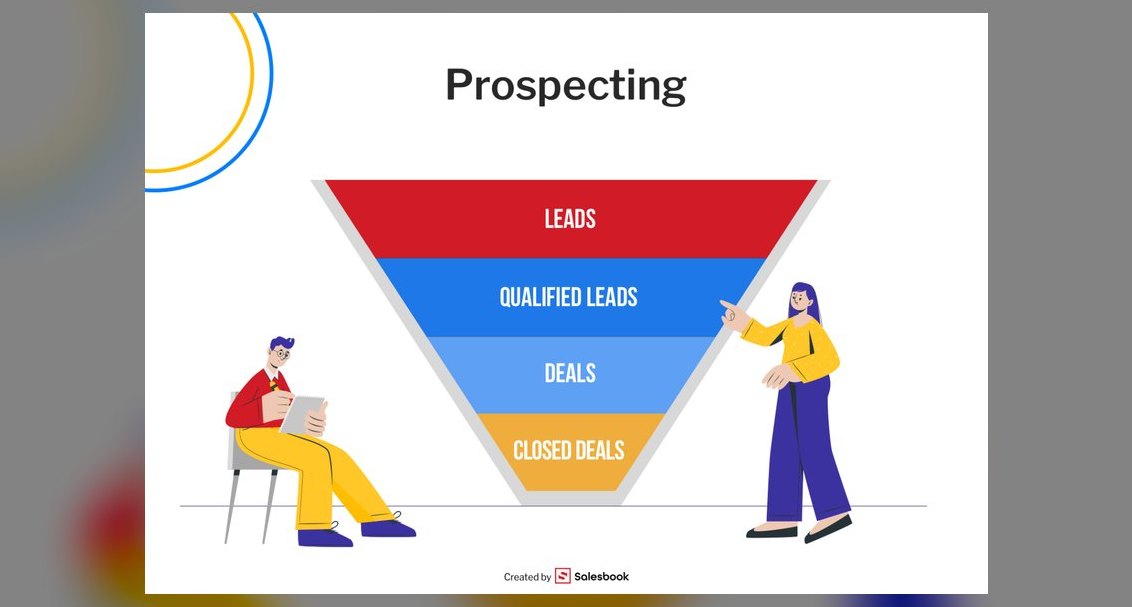 pulse-recentHigh-Profit Prospecting by Mark Hunter — Top 10 Key Takeaways for Sales Leaders in 2027
 book-summaryMajor Account Sales Strategy by Neil Rackham: Summary, Key Lessons, and RevOps Takeaways
 pulse-recentWhat is the most actionable step in The Sandler Rules for Sales Leaders by David Mattson to improve discovery in 2027?
 pulse-recentSPIN Selling by Neil Rackham — Top 10 Key Takeaways for Sales Leaders in 2027
 pulse-recentCoaching Salespeople into Sales Champions by Keith Rosen — Top 10 Key Takeaways for Sales Leaders in 2027
 pulse-recentStrategic Selling by Robert Miller and Stephen Heiman — Top 10 Key Takeaways for Sales Leaders in 2027