


Selling Disruption by Mark S.A. Smith — Cliff Notes Summary
Quality
Certified
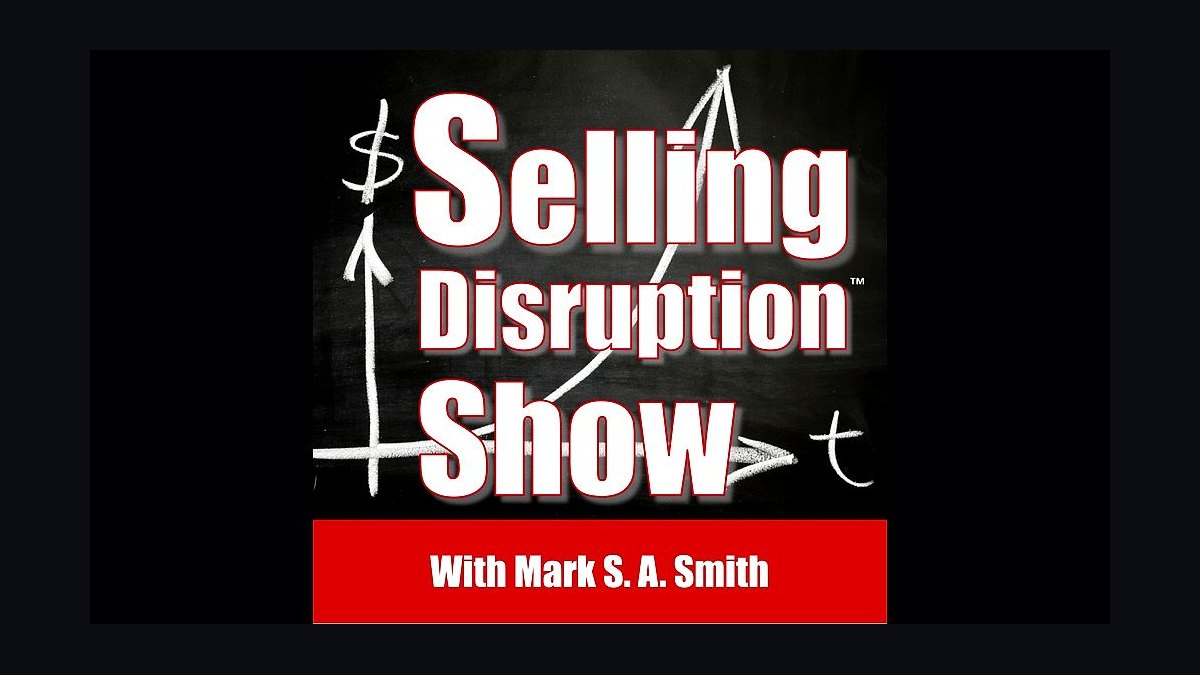
*Selling Disruption* (2017) by Mark S.A. Smith is a field manual for selling products buyers have no budget line for. Its core argument: familiar-product discovery fails when the buyer cannot name the problem. Smith supplies a seven-step process, a five-segment buyer map, and a co-filled Disruption Risk Calculator to make novel offers purchasable.
What the book is and why it still matters
Mark S.A. Smith spent decades as a tech-sales consultant working with vendors in the enterprise hardware and channel world, and *Selling Disruption: A Disruptive Selling Method for the Disruptive Economy* is the distillation of that practice into a rep-usable system. Published in 2017 through Outskirts Press, it landed in a strange gap in the sales canon. On one side sat the strategy books — Everett Rogers on diffusion, Geoffrey Moore on the chasm, Clayton Christensen on incumbent disruption — all of which explain *why* markets adopt novelty in waves. On the other side sat the execution books — SPIN, Solution Selling, Sandler, Challenger, MEDDPICC — all of which assume the buyer already recognizes the problem category and has money allocated to it somewhere. Nobody had written the bridge.
That gap is the book's whole reason for existing. Smith's structural claim is blunt: almost every sales methodology in wide use was built to sell *familiar* products into *known* budget categories. SPIN's implication questions presuppose a pain the buyer can articulate. Solution Selling's pain chain presupposes a chain the buyer has already felt. Challenger's commercial insight comes closest — it explicitly teaches reframing — but even Challenger assumes the buyer has a budget category to reallocate within. A genuinely disruptive product breaks all of those assumptions at once. There is no budget line. There is no peer reference to point at. There is often no internal champion, because nobody owns a category that does not exist yet. And critically, the buyer frequently lacks the *vocabulary* to describe what you sell, which means every discovery question you ask returns a null answer.
Smith's framing — disruption requires different selling, because old playbooks fail — sounds obvious until you watch it happen. Think about what it was like to sell cloud infrastructure in 2008, SaaS CRM in 2003, smartphones into enterprise fleets in 2007, or large language model platforms into regulated enterprises in 2023. In each case the rep walked into a room where the correct answer to "what's your budget for this?" was zero, and the correct answer to "who else in your industry uses it?" was nobody. A rep trained only on familiar-product motions reads those answers as disqualification signals and moves on. Smith's argument is that they are *entry* signals — they mean you found a real disruption, and the job now is a different job.
The relevance argument is stronger in 2026 than it was at publication. Enterprise AI is the most disruptive purchasing category since cloud, and it exhibits every symptom Smith describes. Buyers are being asked to fund something that does not map to an existing cost center, that has no five-year vendor track record, and whose value case depends on workflow changes the buyer has not yet designed. The people selling those platforms have largely rediscovered Smith's playbook from first principles without knowing his name for it. That is the strongest possible endorsement of a framework — it gets reinvented because it is structurally correct.

The book's adjacent value is that it is not only for sellers. Product marketers use the buyer-segmentation chapter to decide which proof assets to build first. Founders use the cost-of-inaction script to pressure-test whether their category is real or merely interesting. Customer success leaders use the last two steps as a churn-prevention design, because the failure mode Smith names — customers reverting to old behavior under stress — is the same failure mode that shows up as a surprise non-renewal eighteen months later.
The five buyer types and the disruption-tolerant filter
Smith maps the buying population onto Rogers' diffusion curve: Innovators at roughly 2.5 percent of a market, Early Adopters at about 13.5 percent, Early Majority and Late Majority at roughly 34 percent each, and Laggards at around 16 percent. Those percentages are borrowed, not invented, and Smith is explicit that the numbers are a shape rather than a forecast. What Smith adds — and this is the genuinely useful contribution — is a behavioral signature for each segment written at the resolution a rep can actually use on a Tuesday afternoon.
Innovators buy on technology curiosity. They will run a pilot with no ROI math at all, they tolerate breakage, and they treat being early as its own reward. On a first call they ask how it works, not what it costs. Early Adopters buy on competitive advantage. They want to be first *in their industry*, which is a different motivation from being first in general, and they will accept meaningful risk if the upside is asymmetric. They ask who else in their sector is looking at this — and the honest answer "nobody yet, that's the point" often closes them rather than losing them.

The Early Majority is where the shape of the sale changes completely. This segment buys on proven ROI demonstrated by peers. They want references, case studies, and named logos, and they will not move without them. Ask an Early Majority buyer to co-create a vision and they will politely wait for you to send the customer list instead. The Late Majority buys on fear of falling behind and requires the product to feel standardized and safe; they are effectively buying insurance against being last. Laggards move only when the old way breaks outright or becomes non-compliant — they cannot be sold on disruption at all, only on the absence of an alternative.
Smith's operational instruction follows directly: find Innovators first, and do not spend your quarter trying to convert Laggards. That sounds like common sense until you audit a real pipeline and find three enterprise deals that have been "close" for two quarters, all of them with Late Majority buyers who are waiting for a reference you cannot yet produce. Those deals are not slow; they are structurally unclosable at the current stage of your category.
This produces one of the book's most portable artifacts: the disruption-tolerant ICP filter. The standard ICP filter is demographic — industry, headcount, revenue band, tech stack, title. Smith's point is that demographics are necessary but wildly insufficient for a disruptive offer, because disruption tolerance is a *behavioral* property that varies enormously between two identically-sized companies in the same vertical. He suggests scoring on observable behaviors instead: does this buyer attend vendor-neutral conferences, do they publish thought leadership, do they have prior pilot scars from other new categories, do they respond at all to cold outreach about unfamiliar categories, have they hired for a role that did not exist three years ago.
In practice this is layered on top of the demographic filter, not substituted for it. A workable version looks like a small additive score — a handful of binary behavioral signals, each worth a point — applied to accounts that already pass the firmographic screen. Accounts scoring high go into the disruption motion. Accounts scoring low are not disqualified forever; they are simply the wrong segment for *this* stage of the category and get parked for the reference-driven motion that becomes possible later. The neighboring discipline here is demand-gen segmentation: the same behavioral signals that identify a disruption-tolerant buyer also identify which content assets are worth building, because Innovators want architecture documentation while the Early Majority wants a case study PDF.
The seven-step process, walked end to end

The process is the spine of the book, and it is worth noting up front that step one has nothing to do with the buyer.
Build disruption confidence in the seller. Smith argues that reps subconsciously avoid disruption pitches because they do not believe the buyer will believe them, and that this shows up as a specific tell: the moment a prospect pushes back, the rep retreats to familiar-product framing and starts comparing the disruptive product to the nearest known category. That retreat kills the deal, because you have just re-anchored yourself against an incumbent you cannot beat on the incumbent's own axes. The fix is structured enablement — the rep must internalize the cost of inaction, the technical proof, and the earliest customer outcomes before they can credibly disrupt anyone. This is why disruption selling breaks when a company hires reps faster than it can enable them.
Find disruption-tolerant buyers. This is the ICP filter above, applied as a sourcing constraint rather than a qualification afterthought. The distinction matters: filtering after outbound wastes the outbound.
Disrupt the status quo by surfacing the cost of inaction. Familiar-product discovery asks what your pain is. Disruption discovery asks what it costs you *not* to change — because the buyer does not yet experience the pain your product removes. Smith's three-question script runs: what is the trajectory of your current approach if nothing changes for three years, what is your competitor's most aggressive plausible move in that same window, and what does it cost you if they get there first. The purpose is not to manufacture urgency but to make the status quo itself feel like the risky option, which is the only frame in which a disruptive alternative looks conservative.

Co-create the disruption vision. This is the sharpest break from traditional selling. A prescribed vision triggers buyer antibodies — the vendor does not understand my business — while a co-created vision triggers ownership. The mechanic is a structured workshop, typically a half-day, mixing the buyer's team with the vendor's, working on a whiteboard, producing named owners and a shared written artifact the champion can defend internally when you are not in the room. Modern enterprise AI teams run exactly this and call it a value engineering session.
Manage disruption risk. Covered in depth below; this is where most stalled deals actually die.
Implement the disruption. Smith's position is that closed-won is the midpoint, not the finish line, because adoption failure is the primary source of churn *and* the primary reason you never get the reference customer you needed for the Early Majority. He prescribes a named adoption owner on the vendor side, a thirty-sixty-ninety milestone plan, and a mandatory executive check-in around day forty-five — early enough to correct, late enough that real usage data exists.
Sustain the disruption. Customer teams revert to old behaviors under stress unless the vendor maintains a change-management cadence: quarterly reviews, expansion playbooks, and internal evangelism material the champion uses to defend the change inside their own organization. This is customer success methodology, written before the CS tooling category matured.
The Disruption Risk Calculator in practice
Smith devotes a full chapter to the Risk Calculator, and it is the artifact practitioners steal most often. The insight behind it is that disruption deals rarely die from disagreement about value. They die from unresolved, unspoken risk sitting inside the buying committee — and because nobody names the risk out loud, the rep never gets a chance to mitigate it. The deal simply goes quiet.

The calculator makes the risk explicit across six dimensions. Technical risk asks whether the thing actually works in this environment. Integration risk asks whether it fits the existing stack. Adoption risk asks whether the team will really use it. Vendor risk asks whether you will still exist in three years — a question that is entirely reasonable to ask a young company in a young category, and one reps take personally when they should not. Career risk asks what happens to the champion personally if this fails, which is the dimension most sellers never surface and the one that most often kills deals. Opportunity-cost risk asks what else on the roadmap will not get done because this consumed the capacity.
Each dimension is scored on a one-to-five scale and paired with a named mitigation and a named owner. A workable assignment pattern puts technical risk on the vendor solutions engineer with pilot success criteria defined in advance, integration risk on the customer's IT lead with a reference architecture, adoption risk on the customer's enablement or L&D function with a training plan, vendor risk on the vendor's account team with financial disclosure and a roadmap briefing, career risk on the champion paired with a named executive sponsor, and opportunity-cost risk on the customer's PMO with an explicit prioritization comparison.
The critical mechanic — and the part teams get wrong when they copy the template — is that the calculator is *co-filled*, never delivered. If you show up with a completed risk register, you have written a marketing document. If you fill it in together on a call, the champion now owns the mitigations, understands the reasoning behind each one, and can defend the deal to procurement and finance without you in the room. The act of co-filling is itself the de-risking. The output is a single page, which matters, because the champion is going to forward it to people who will not read four pages.
Smith reports from his consulting practice that deals with a completed risk calculator close substantially more often than deals without one — his claim is roughly double. Treat that as practitioner observation from one consultancy rather than controlled research; the mechanism is plausible and the artifact is cheap enough that the cost of testing it yourself is a single call. The adjacent use case worth noting: the same six dimensions work as a renewal-risk instrument. Re-scoring a customer at month nine on the identical grid surfaces adoption and opportunity-cost decay before it becomes a non-renewal.
Timelines, effort, and where the ranges actually land

The book is deliberately light on universal numbers, and that restraint is correct — cycle length varies enormously by deal size and industry. What it does commit to are effort shapes, and those are useful for planning.
Learning the framework is a matter of weeks; becoming fluent takes months. Smith's recommendation is to practice on low-stakes prospects first, because the mindset shift from selling features to selling disruption is not an information problem, it is a reflex problem. The reflex you are unlearning — retreat to comparison when challenged — has been reinforced by every quarter you have ever closed.
The vision workshop is the one hard-scheduled block: two to four hours, mixed teams, whiteboard, written output. Anything shorter turns into a demo with extra chairs. The implementation cadence is likewise concrete — thirty-sixty-ninety day milestones with an executive check-in at day forty-five, then a sustained quarterly review rhythm.
Everything else you should measure rather than assume. The honest planning guidance is that disruptive deals run longer than familiar-product deals in the same segment, because you are funding a budget line that does not exist and educating a committee that has no prior model. Build your forecast from your own closed-won history rather than from a book, a vendor benchmark, or a peer's anecdote, and expect the first cohort of deals in a new category to be your slowest — they are also the ones that produce the references that make the next cohort fast.
The genuine hidden cost is enablement, not selling time. Step one implies that a rep who has not internalized the technical proof and the earliest customer outcomes will underperform regardless of talent, which means ramp for a disruptive product is meaningfully longer than for a familiar one. Teams that scale headcount ahead of enablement capacity get exactly what Smith predicts: reps who pitch the disruptive product as a cheaper version of the incumbent, because that is the only frame they can defend under pressure. The upstream implication for RevOps is that hiring plans for category-creating products should be paced against enablement throughput, not against pipeline coverage targets.
Where teams get this wrong

Running the disruption motion on the wrong segment. The single most common failure. A rep applies co-created vision workshops and cost-of-inaction scripts to an Early Majority buyer, who wanted a reference list, and the deal stalls in a way that looks like a value problem but is a segmentation problem.
Delivering the risk calculator instead of co-filling it. Turns a de-risking mechanic into a slide. The document is not the point; the joint act of filling it in is the point.
Skipping career risk because it feels awkward. It is the dimension champions think about most and mention least. Not surfacing it does not remove it — it just moves it somewhere you cannot mitigate.
Treating closed-won as done. For disruptive products, adoption failure destroys the reference you need to unlock the next segment. Losing a marquee logo to non-adoption costs far more than the ARR, because it costs the proof asset.
Prescribing the vision. Arriving with the finished future-state deck feels efficient and produces polite agreement followed by silence. Buyer ownership is not a nice-to-have here; it is the mechanism.
Confusing novelty with disruption. A faster, cheaper version of an existing product is not disruptive, and running this playbook on it wastes cycles. If the buyer has a budget line, run your normal motion.
Underweighting product-led discovery. This is where the book itself has aged. Smith assumes the rep is the first touchpoint. In modern product-led categories the *product* is the disruption-discovery vehicle — a free tier gets adopted bottom-up, and the rep arrives after the disruption has already happened inside the account. The seven steps still apply, but steps two and three often run on usage telemetry rather than cold outreach. The same goes for community-led motions: the disruption-tolerant buyers Smith wants you to find are frequently sitting in a public Slack or Discord, self-identifying by asking questions about a category that barely exists.
Choosing your motion: a decision framework

The practical question is not whether Smith's framework is good but whether it applies to the deal in front of you. The test is mechanical: does the buyer have an existing budget line for this, and can they articulate the problem without your help? Two yeses means run your familiar-product motion — Challenger, MEDDPICC, whatever your team already executes well — because the disruption overhead buys you nothing. Two noes means you are in Smith's territory and the segmentation question comes next.
Where this sits in the wider canon is worth stating, because it explains what the book does and does not cover. Rogers supplied the adoption curve in 1962. Moore turned it into market strategy in 1991 with *Crossing the Chasm*. Christensen explained in 1997 why incumbent organizations resist disruption from the inside. Smith's contribution is the translation layer — taking that strategic scaffolding and rendering it as scripts, workshops, and a one-page risk register a quota-carrying rep can execute this week. Downstream, the category-design literature — *Play Bigger* in 2016, April Dunford's *Obviously Awesome* in 2019 — handles the positioning and category-naming work that runs in parallel. Reading Smith without the positioning books leaves you executing a sound process on a category you have not named well; reading the positioning books without Smith leaves you with a beautiful narrative and no motion to run it through.
Monday-morning version: build a disruption-tolerant behavioral filter on top of your existing ICP, run the three-question cost-of-inaction script on your next five discovery calls, and co-fill a six-dimension risk register with your most advanced disruptive deal. If the champion cannot name their own career risk out loud, you have found the thing that is going to stall the deal.
Related questions
How is this different from Challenger Sale?

Challenger teaches commercial teaching, tailoring, and taking control within a recognized problem category. Smith addresses the case where no category exists — no budget line, no vocabulary, no peer reference. They compose well: use Challenger's insight delivery inside Smith's co-created vision workshop rather than choosing between them.
Does it apply outside technology sales?
Yes. The defining condition is a buyer with no existing budget line, which occurs in medical devices, sustainable materials, novel financial products, and new service models. Smith's examples are drawn from enterprise technology, but nothing in the seven steps is technology-specific.
What is the single most reusable artifact?
The six-dimension Disruption Risk Calculator, co-filled with the champion and kept to one page. It costs one call to produce, gives the champion something defensible in your absence, and doubles as a renewal-risk instrument when re-scored later in the lifecycle.
Should I read Crossing the Chasm first?
Not necessarily. Moore gives you the market-strategy view and Smith gives you the rep-level execution. If you carry a quota, start with Smith and read Moore afterward for the strategic scaffolding. If you set go-to-market strategy, reverse the order.
How does this fit a product-led motion?
Steps two and three change vehicle. Usage telemetry and community activity identify disruption-tolerant buyers instead of cold outreach, and the product itself surfaces the cost of inaction. Steps four through seven — vision, risk, implementation, sustainment — run essentially unchanged at the enterprise expansion stage.
FAQ
What exactly is the Disruption Risk Calculator?
A six-dimension scoring grid covering technical, integration, adoption, vendor, career, and opportunity-cost risk. Each dimension gets a one-to-five score, a named mitigation, and a named owner. It is filled in jointly with the buyer during the sales cycle and becomes the one-page document the champion carries into procurement and finance conversations you are not part of.

How does Smith's buyer segmentation differ from Moore's?
The segments are the same five Rogers categories Moore uses. The difference is resolution and audience. Moore writes for the person setting market strategy; Smith writes for the person on the call, adding behavioral cues for what each segment says on a first conversation, asks for in an RFP, and agrees to in a pilot agreement.
Is the seven-step process meant to run in strict order?
Mostly. Steps one and two are prerequisites — attempting step three without rep confidence or the right buyer wastes the call. Step five commonly loops back to step four when a risk dimension surfaces an unaddressed stakeholder. Steps six and seven are sequential by nature, since sustainment requires something implemented to sustain.
Is the book still useful in the AI era?
Arguably more so. Enterprise AI platforms are textbook disruptive purchases — no budget line, no long vendor track record, and value that depends on workflow changes the buyer has not yet designed. Sellers in that category have largely rebuilt Smith's playbook independently, which is decent evidence the underlying structure is right.
What is the book's weakest section for a modern team?
The assumption that the rep is the first touchpoint. Product-led and community-led discovery mean disruption often enters an account bottom-up, before any seller is involved. The seven steps survive that shift, but the sourcing mechanics in step two need rewriting against usage data rather than outbound activity.
How long before a team sees results from adopting it?
Weeks to learn the framework, months to become fluent, and a full sales cycle before the closed-won evidence arrives. The fastest visible signal is qualitative: discovery calls with disruption-tolerant buyers get longer and more specific once reps stop asking about pain and start asking about trajectory.
Sources
- https://www.hbs.edu/faculty/Pages/profile.aspx?facId=6420
- https://www.claytonchristensen.com/books/the-innovators-dilemma/
- https://hbr.org/2015/12/what-is-disruptive-innovation
- https://www.harpercollins.com/products/crossing-the-chasm-3rd-edition-geoffrey-a-moore
- https://en.wikipedia.org/wiki/Diffusion_of_innovations
- https://www.aprildunford.com/obviously-awesome
- https://www.gartner.com/en/research/methodologies/gartner-hype-cycle
- https://www.bvp.com/atlas
- https://openviewpartners.com/product-led-growth/
- https://www.outskirtspress.com/
Related on PULSE
- Sell with a Story by Paul Smith — Cliff Notes Summary
- The Sales Acceleration Formula by Mark Roberge — Cliff Notes Summary
- High-Profit Prospecting by Mark Hunter — Cliff Notes Summary & Key Takeaways
- Selling the Invisible by Harry Beckwith — Cliff Notes Summary
- Secrets of Question-Based Selling by Thomas Freese: Summary, Key Lessons, and RevOps Takeaways
This page will be disappearing soon. Save it to your device for $1 — or read it free while it is here.
@Kory-White- · if Venmo asks, the last 4 of my number are 2012
This page is gone.
This one is off the shelf now. $1 keeps it on your phone for good — the whole page, pictures and diagrams included.
 pulse-booksRework by Jason Fried and David Heinemeier Hansson — Cliff Notes Summary
 pulse-recentWhat are the first three concrete steps in Sandler Rule #1 for a new sales rep in 2027?
 pulse-recentCrossing the Chasm by Geoffrey Moore — Top 10 Key Takeaways for Sales Leaders in 2027
 pulse-recentStart with No by Jim Camp — Top 10 Key Takeaways for Sales Leaders in 2027
 pulse-recentSandler Rule #1: What is the first concrete step to build a prospect's trust in a sales conversation in 2027?
 pulse-recentThe Challenger Customer by Brent Adamson — Top 10 Key Takeaways for Sales Leaders in 2027
 pulse-recentTraction by Gabriel Weinberg and Justin Mares — Top 10 Key Takeaways for Sales Leaders in 2027
 pulse-recentSales Engagement by Manny Medina — Top 10 Key Takeaways for Sales Leaders in 2027
 pulse-recentBlue Ocean Strategy by W. Chan Kim and Renee Mauborgne — Top 10 Key Takeaways for Sales Leaders in 2027
 book-summaryLittle Red Book of Selling by Jeffrey Gitomer — Cliff Notes Summary