
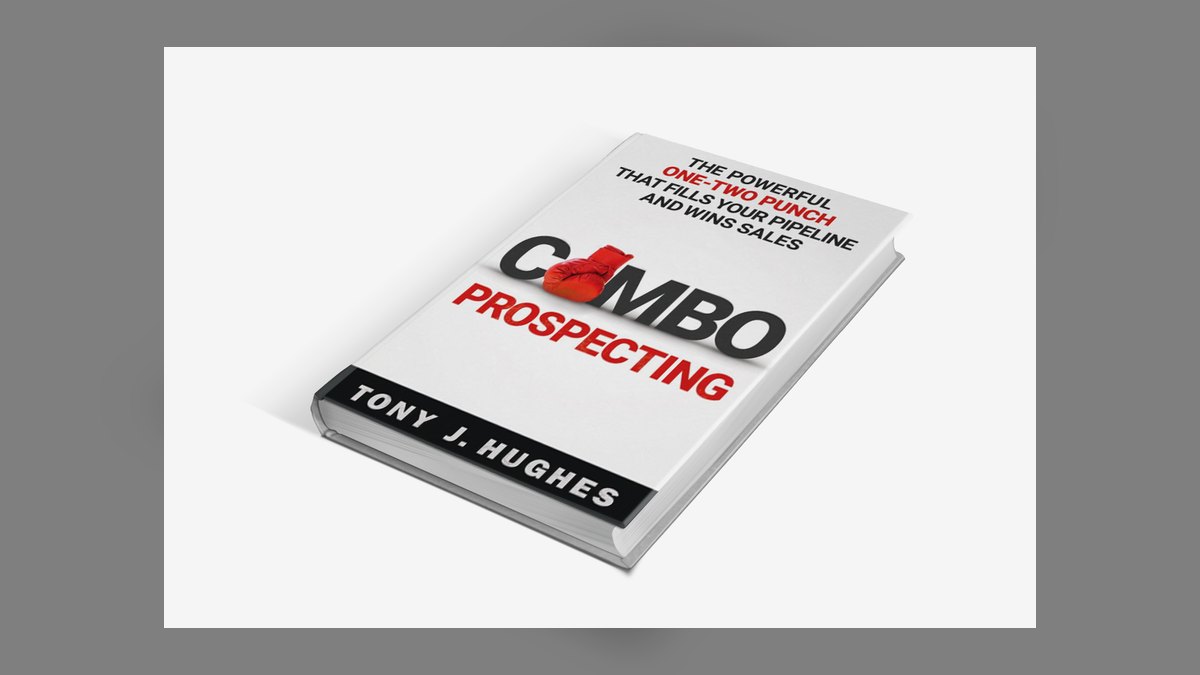
Combo Prospecting by Tony Hughes — Top 10 Key Takeaways for Sales Leaders in 2027
 Curated byKory White · Fractional CRO · Maryland
 PULSEKNOWLEDGE LIBRARY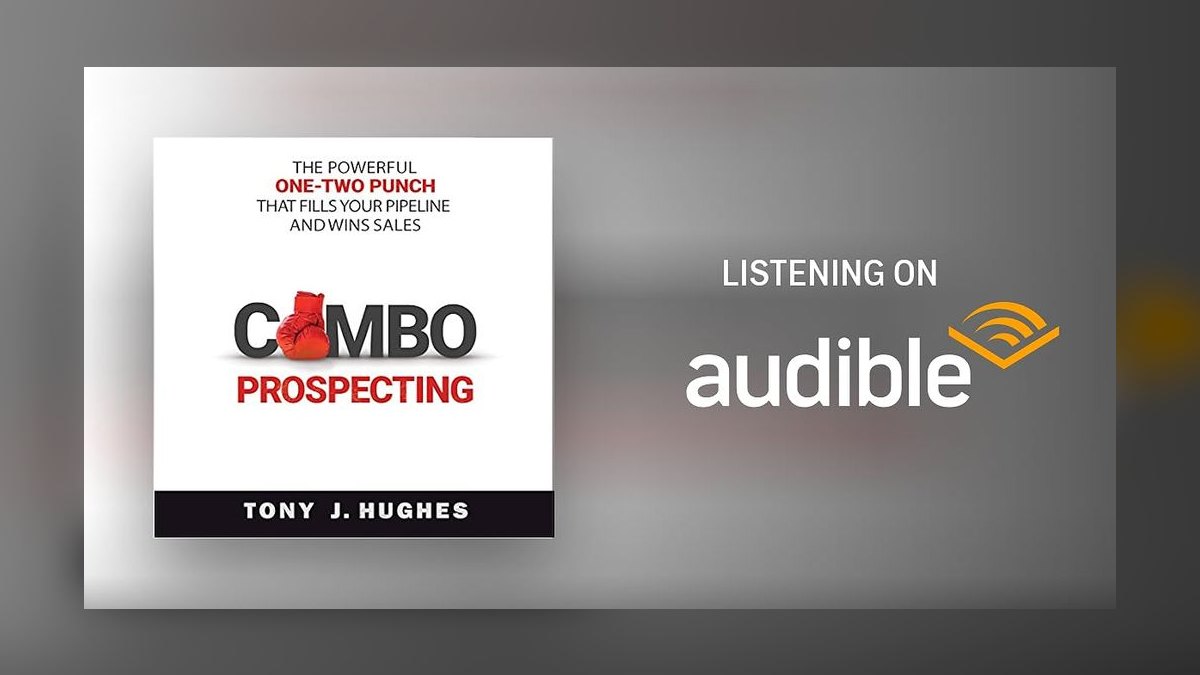
Tony Hughes's *Combo Prospecting* argues that sales leaders in 2027 win by blending three channels — voice, digital/social, and in-person — into one coordinated outreach strategy instead of relying on any single tactic alone. The Takeaways center on trigger-event timing, personal branding on LinkedIn, disciplined phone cadence, and treating Prospecting as a Leaders-driven system, not an individual rep's improvisation.
What it is and why it matters
Tony Hughes wrote *Combo Prospecting* to answer a problem every sales floor has lived through: reps who are excellent on the phone often ignore social, and reps who are fluent on LinkedIn often avoid the phone. Hughes's core Takeaways for Leaders is that neither channel wins alone anymore — buyers now research vendors digitally long before any call happens, but a well-timed voice conversation still closes gaps that a message thread cannot. The book's central strategy is "combo" outreach: a rep identifies a trigger event (a funding round, a leadership change, a public complaint about a competitor, a job posting that signals growth), engages the prospect first through a relevant digital touch — usually a LinkedIn comment, share, or short message referencing that trigger — and then follows with a phone call within a tight window while the context is still fresh.
For sales Leaders specifically, the book reframes Prospecting as a management discipline rather than a personality trait. Hughes is explicit that "hunter" reps who happen to be naturally social are not a scalable hiring strategy; a repeatable strategy has to be taught, measured, and coached like any other sales motion. That distinction matters because most sales organizations still treat prospecting skill as something reps either have or don't, which means pipeline generation lives or dies with whichever individuals happen to be good at cold outreach. Combo Prospecting's Takeaways push leaders toward building a system: shared trigger-event sources, a standard sequence of touches, and a common vocabulary for what "warm" versus "cold" outreach actually means on a given account.
The "why it matters" piece is about defensibility. Purely digital outreach is easy to automate and therefore easy for buyers to ignore — inboxes and LinkedIn DMs are saturated with templated sequences. Purely voice-based cold calling has a documented low connect-and-conversion rate when there's no context behind the call. Hughes's argument, and the reason this book still gets cited by RevOps and enablement teams years after publication, is that the combination is what's hard to automate and therefore what still earns attention: a call that clearly references something the rep noticed about the prospect's business, delivered right after a relevant digital touch, reads as human and researched rather than as a script.
The step-by-step process
Combo Prospecting lays out a repeatable sequence rather than a loose set of tips, and it's this sequence that sales Leaders are expected to operationalize across a team.

The sequence starts with trigger identification — Hughes is specific that generic "just checking in" outreach is the weakest version of prospecting because it gives the prospect no reason to respond. A trigger can be a company announcement, a prospect's own LinkedIn post, a market shift affecting their industry, or even a mutual connection. Step two is the digital touch: engaging with something the prospect has posted or shared, which does two things — it puts the rep's name in front of the prospect passively, and it gives the rep a legitimate, specific reason to reach out that isn't "I'd love 15 minutes of your time."
Step three is the personalized message, which Hughes insists must reference the actual trigger by name rather than using a templated opener with a mail-merge field. Step four — and this is the step most digital-only sellers skip — is the phone call, ideally placed within 24 to 48 hours of the digital touch so the prospect still has some memory of the interaction if they saw it. If the call connects, the rep moves into discovery anchored to the trigger itself, which naturally produces a more relevant conversation than a generic pitch. If the call doesn't connect, Hughes's process calls for a same-day voicemail and email rather than letting the thread go cold, followed by a second combo cycle built around a new angle or trigger rather than simply repeating the same message.

For Leaders, the operational takeaway is that this sequence should be visible in the CRM as a defined cadence — trigger source logged, digital touch timestamped, call attempt logged, outcome logged — so that coaching can identify exactly where reps are dropping the sequence rather than guessing why pipeline is thin.
Costs, timelines, and typical ranges
Combo Prospecting is not primarily a tooling book, but its strategy has real cost and time implications that Leaders need to budget for when they roll it out across a team. The digital research step — finding a genuine trigger event and crafting a message that references it specifically — typically takes a rep 5 to 10 minutes per prospect when done properly, compared to seconds for a templated mail-merge send. Multiplied across a book of 50 to 150 target accounts, that's a meaningful time investment, which is why Hughes argues leaders must be selective about target account count rather than pushing reps toward high-volume, low-context outreach.

On tooling, most teams layering combo prospecting onto their stack are already paying for a sales engagement platform (in the $50–$150 per seat, per month range) plus LinkedIn Sales Navigator (roughly $99–$170 per seat, per month depending on tier and volume discount), and a trigger-event or intent data source if the team wants to systematize trigger discovery rather than leaving it to individual rep diligence — those intent tools generally run from a few thousand dollars a year for a small team up into six figures annually for enterprise-wide deployments with multiple data sources layered in.
Timeline-wise, Hughes's own framing suggests results from a disciplined combo cadence typically show up in pipeline metrics within one to two full quarters, not weeks — because the approach depends on reps building the habit of trigger-spotting and because sales cycles for anything beyond transactional deals rarely close inside a single quarter of outbound effort. Leaders rolling this out should expect a ramp period of 4 to 8 weeks where connect rates and reply rates may look flat or even dip slightly as reps unlearn templated sequences and relearn a more research-intensive motion, followed by measurable lift in meeting-booked rates once the habit sets in. Organizations that skip the ramp expectation and judge the strategy after two weeks are the most common source of leaders abandoning combo prospecting prematurely.

Where teams get it wrong
The most common failure mode Hughes calls out, and the one sales Leaders repeat most often, is doing the digital touch and the phone call in the wrong order or letting too much time pass between them — a LinkedIn view today followed by a cold call three weeks later has lost virtually all of its "combo" advantage because the trigger event is stale and the prospect has no memory of the digital interaction. The whole strategy depends on tight sequencing, and teams that treat the digital and voice channels as separate cadences run by separate tools (marketing automation on one side, a dialer on the other, with no shared trigger calendar) consistently underperform teams that force the two channels into a single, rep-owned sequence.
A second frequent mistake is treating the trigger event as optional flavor text rather than the actual reason for the outreach. Reps under quota pressure often revert to generic openers ("wanted to reconnect," "checking in on your priorities for the quarter") because those templates are faster to produce than genuine trigger research, but Hughes's Takeaways are explicit that this generic mode is exactly the noise combo prospecting is designed to cut through — reverting to it defeats the purpose and produces the same low reply rates as any other templated sequence.

Third, Leaders often mis-measure the strategy by tracking activity volume (calls dialed, messages sent) instead of sequence completion and trigger relevance. A rep who fires off 40 templated LinkedIn connection requests a day looks busy on an activity dashboard but is not executing combo prospecting at all — Hughes's model only works when each outreach is tied to a specific, verifiable trigger, which naturally caps volume per rep per day. Leaders who set volume-based KPIs without a quality gate end up incentivizing exactly the behavior the book argues against.
Fourth, many organizations under-invest in the coaching layer. Combo prospecting is a learnable skill, but it requires managers to review actual message content and call recordings against the trigger the rep claims to be using — not just check whether the CRM shows activity logged. Teams that skip this review step tend to see reps drift back to generic outreach within a few weeks of any initial training, because the harder, more research-intensive version of the motion has no reinforcement mechanism holding it in place.

Decision framework: when to choose what
Not every account or every deal stage calls for the same balance of channels, and Hughes's framework — extended here for how sales Leaders should apply it in practice — depends on deal size, account familiarity, and how much signal is available about the prospect.
For high-value enterprise accounts, Hughes argues the full three-channel version is worth the time investment: a trigger-anchored digital touch, a well-timed call, and — where the deal size justifies it — an in-person element, whether that's a conference introduction, a mutual-connection facilitated meeting, or an executive-to-executive outreach that runs parallel to the rep's own sequence. For mid-market and smaller accounts, Leaders should expect reps to run the lighter two-channel version (digital plus voice) without the in-person layer, since the time cost of arranging in-person contact rarely pays back on smaller deal sizes.

The framework also has a gate before any outreach begins: if no verifiable trigger exists yet, Hughes's guidance is to hold off and spend a short research window (roughly one to two weeks of light monitoring — following the account and key stakeholders, watching for news) rather than defaulting to a generic cold touch just to hit an activity number. This is the piece of the decision framework Leaders most often override under pipeline pressure, and it's precisely the override Hughes's Takeaways warn against, because it re-introduces the generic, low-response outreach the whole strategy exists to replace.
Related questions
Is Combo Prospecting still relevant for outbound teams in 2027?
Yes — the core mechanism (pairing a digital trigger touch with a timely call) has only gotten more relevant as generic AI-written outreach has flooded inboxes, making genuinely researched, human-referenced messages stand out more, not less.
How is Combo Prospecting different from account-based marketing?
ABM is primarily a marketing-led, multi-stakeholder targeting strategy; Combo Prospecting is a rep-level execution tactic for individual outreach sequencing, though the two complement each other well on enterprise accounts.
Does Combo Prospecting replace cold calling entirely?
No — it repositions cold calling as one step in a sequence rather than eliminating it; Hughes's strategy still depends on a live phone conversation to convert digital interest into a meeting.
What CRM fields should track a combo sequence?
Trigger source and date, digital touch type and timestamp, call attempt outcomes, and time elapsed between digital touch and first call attempt — these let managers coach the sequence, not just count activities.
FAQ
Who is Tony Hughes and why does his book matter to sales leaders? Tony Hughes is a sales strategist and author whose *Combo Prospecting* has become a reference point for RevOps and sales enablement teams designing modern outbound cadences; his Takeaways are cited because they translate into a concrete, teachable sequence rather than abstract advice.
What's the single biggest Takeaway from Combo Prospecting for Leaders building a 2027 strategy? That prospecting effectiveness comes from sequencing channels around a genuine trigger event, not from picking one channel (phone, email, or social) and running it in isolation.
How long does it take to see results after adopting a combo prospecting strategy? Most teams see a ramp period of four to eight weeks before meeting-booked rates improve meaningfully, with fuller pipeline impact typically visible over one to two quarters.
Can combo prospecting work for SMB or transactional sales, or only enterprise? It scales down — SMB and transactional teams typically run a lighter two-channel version (digital plus voice) without the in-person element enterprise deals can justify.
What's the most common reason teams abandon this strategy too early? Judging results before the ramp period completes, or measuring activity volume instead of sequence completion and trigger relevance, both of which mask early signs of a properly working cadence.
Does this strategy require new tools, or can it run on an existing stack? Most teams execute it with tools they already have — a CRM, a sales engagement platform, and LinkedIn Sales Navigator — the change is procedural (sequencing and trigger discipline), not a wholesale tooling overhaul.
Sources
- https://www.linkedin.com/in/tonyjhughes/
- https://www.salesiq.global/
- https://blog.hubspot.com/sales/prospecting
- https://www.gartner.com/en/sales
- https://www.forbes.com/sales/
- https://www.salesforce.com/resources/articles/sales-prospecting/
- https://www.linkedin.com/business/sales/blog
Related on PULSE
- How should sales leaders structure a trigger-event based outbound cadence?
- What's the right mix of phone, email, and social touches in enterprise sales?
- How do you coach reps out of generic, templated cold outreach?
- What metrics should replace raw activity volume in prospecting dashboards?
- How does account-based marketing complement individual rep prospecting?
 pulse-recentThe Greatest Salesman in the World by Og Mandino — Top 10 Key Takeaways for Sales Leaders in 2027
 pulse-recentSmart Calling by Art Sobczak — Top 10 Key Takeaways for Sales Leaders in 2027
 pulse-recentINKED by Jeb Blount — Top 10 Key Takeaways for Sales Leaders in 2027
 pulse-recentThe Sales Manager’s Guide to Greatness by Kevin Davis — Top 10 Key Takeaways for Sales Leaders in 2027
 pulse-recentHyper Sales Growth by Jack Daly — Top 10 Key Takeaways for Sales Leaders in 2027
 pulse-recentThe Qualified Sales Leader by John McMahon — Top 10 Key Takeaways for Sales Leaders in 2027
 pulse-recentAmp It Up by Frank Slootman — Top 10 Key Takeaways for Sales Leaders in 2027
 pulse-recentFrom Impossible to Inevitable by Aaron Ross and Jason Lemkin — Top 10 Key Takeaways for Sales Leaders in 2027
 pulse-recentSales Management Simplified by Mike Weinberg — Top 10 Key Takeaways for Sales Leaders in 2027
 pulse-recentThe SaaS Sales Method by Fernando Pizarro — Top 10 Key Takeaways for Sales Leaders in 2027