
The Qualified Sales Leader by John McMahon — Top 10 Key Takeaways for Sales Leaders in 2027
 Curated byKory White · Fractional CRO · Maryland
 PULSEKNOWLEDGE LIBRARY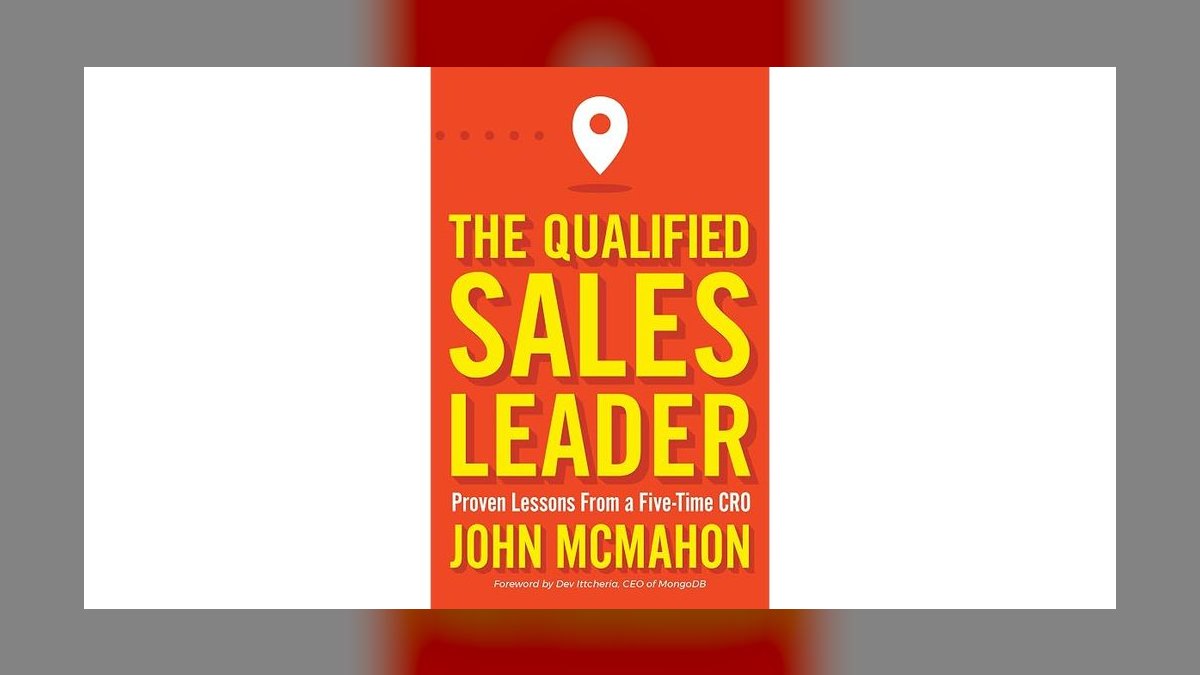
John McMahon's *The Qualified Sales Leader* distills five CRO tenures into ten leadership takeaways: qualify relentlessly with MEDDPICC, secure economic-buyer access early, build and test a real champion, map the decision and paper process before forecasting a deal, hire leaders who've operated at your company's stage, and coach reps on the "three whys" — why act, why now, why you — so pipeline reflects reality, not hope.
What The Qualified Sales Leader is and why it matters
John McMahon spent his career as a five-time Chief Revenue Officer or VP of Sales at PTC, GeoTel Communications, Concord Communications, Applix (as CEO), BladeLogic, and Business Objects, and he served on the boards of Snowflake, HubSpot, and other companies that later became public. Peers reportedly nicknamed him "the Rainmaker's Rainmaker" because so many CROs who worked under him went on to run their own revenue organizations. The book, co-written with T. Lattimore Guinn, is not a motivational sales book — it is an operating manual built around one repeated claim: most sales organizations fail not because reps lack effort, but because leaders never taught them how to qualify a deal, so pipeline is full of opportunities that were never truly winnable.
The central contribution is MEDDPICC, an extension of the original MEDDIC framework McMahon helped develop in the 1990s at PTC alongside colleagues Jack Napoli and Dick Dunkel. MEDDPICC stands for Metrics, Economic Buyer, Decision Criteria, Decision Process, Paper Process, Identify Pain, Champion, and Competition. Each letter is a qualification checkpoint a rep must be able to answer with evidence, not assumption, before a deal is allowed into a serious forecast category. McMahon argues that a sales leader's real job is enforcing this discipline in every deal review — not motivating reps, not running contests, but asking the uncomfortable diagnostic questions that expose whether a deal is qualified or fictional.
This matters for sales leadership specifically because the book reframes what "leadership" means in a sales organization. McMahon draws a hard line between a sales manager — someone who administers activity, tracks CRM fields, and runs forecast roll-ups — and a qualified sales leader, who can personally sit in a client meeting, diagnose why a deal is stalled, coach a rep through a champion-building conversation, and rebuild a broken deal in real time. The "strategy" a leader brings to a team, in McMahon's framing, is not a slide deck of goals; it is the transferable, teachable qualification methodology that turns unpredictable selling into a repeatable, forecastable motion. For a leader operating in any RevOps or CRO seat in 2027 and beyond, the durable takeaway is that qualification discipline, not headcount or tooling, is the highest-leverage lever available.
The step-by-step process McMahon prescribes for qualifying a deal (mermaid)
McMahon lays out qualification as a sequence a rep and their leader walk together on every material opportunity, not as a form filled out once at deal creation. The sequence below reflects how MEDDPICC checkpoints are meant to be applied in order, with the leader auditing each stage rather than trusting a self-reported CRM field.

The order matters because each step depends on the one before it. A rep cannot credibly claim Decision Criteria until pain and metrics are established, because criteria without a quantified pain point is just a feature checklist a competitor can match. Likewise, McMahon insists a champion cannot be validated until the rep knows the real decision process — a champion who cannot describe who signs off, and in what order, is not a champion, just a friendly contact. The step most leaders skip, in his account, is Paper Process: legal review, security questionnaires, and procurement approval routinely add 30 to 90 days to an enterprise deal cycle, and reps who never ask about it get blindsided in the final stretch of a quarter. McMahon also describes "negative reverse selling," a technique credited to Jack Napoli, where a rep deliberately downplays urgency or fit so the prospect argues themselves into the need — a way of testing whether pain is real rather than performed for the salesperson's benefit.
Costs, timelines, and typical ranges for applying these takeaways
McMahon is specific that qualification discipline is not free to install, and he gives leaders realistic expectations rather than a quick fix. Rolling out MEDDPICC across an existing sales team typically takes one to two full quarters before it shows up cleanly in forecast accuracy, because reps have to unlearn habits of reporting optimistic stage progression and leaders have to retrain themselves to ask diagnostic questions in every deal review instead of just checking CRM hygiene. Early-stage adoption often produces a temporary forecast dip — pipeline that looked healthy under the old rules gets reclassified downward once metrics and economic-buyer access are actually verified, which McMahon frames as a feature, not a bug: it is the organization seeing its true pipeline for the first time.

On hiring, the book argues sales leaders should be matched to company stage, echoing a distinction popularized in Geoffrey Moore's work between "pioneers," "settlers," and "town planners." A leader who scaled a team from $10 million to $50 million in ARR is not automatically the right hire to take a team from $2 million to $10 million, and vice versa — the muscle memory, cadence, and qualification rigor required at each stage differ enough that McMahon treats stage-fit as a harder filter than industry background. Recruiting cycles for a VP of Sales or CRO who fits stage, in his experience, commonly run 3 to 6 months given how much reference-checking he recommends: he advocates calling former peers and former reports, not just people the candidate supplies, to surface how a leader actually behaves under quota pressure.
On deal cycle impact, McMahon's enterprise B2B experience suggests that rigorously qualified deals — ones that clear every MEDDPICC checkpoint — close at meaningfully higher win rates than the broader pipeline average, though he is careful not to promise a universal percentage because win rate depends heavily on segment, deal size, and competitive density. The more durable, portable number from the book is directional: teams that adopt full qualification discipline typically see forecast accuracy (the percentage of Commit deals that actually close in the committed quarter) improve from the industry-typical 60-70% range toward the 90%-plus range within two to three quarters, because unqualified deals stop leaking into the forecast in the first place.

Where sales teams get it wrong
The most common failure McMahon documents is single-threading: a rep builds one relationship, often a friendly technical champion, and never gets access to the economic buyer or the other people in the decision process. Deals like this feel healthy right up until the champion is overruled, reassigned, or leaves the company, at which point the deal collapses with no warning because the rep had no other line into the account. McMahon treats "multi-threading" — deliberately building relationships across the buying committee — as a qualification requirement, not a nice-to-have.
A second recurring mistake is confusing activity with progress: reps and even leaders track meeting counts, email opens, and stage advancement in the CRM as proxies for deal health, when none of those actually confirm that Metrics, Decision Criteria, or Paper Process have been established. McMahon is blunt that a beautifully updated CRM with a stalled or fictional deal underneath it is worse than an honestly messy one, because it creates false confidence in a forecast that leadership then repeats to the board or investors.

A third mistake is promoting a team's best individual rep into a sales leader role without verifying they can teach qualification, coach a champion-building conversation, or run a deal-review that surfaces real gaps rather than rubber-stamping a rep's self-assessment. McMahon separates "sales manager" behavior — administering the pipeline, running forecast calls, tracking activity — from "sales leader" behavior — personally diagnosing and rescuing stalled deals, coaching a rep through a specific MEDDPICC gap in real time, and holding the line on qualification even when it means pulling a deal out of a quarter's forecast. Leaders who never developed the second skill set tend to manage optimistically rather than diagnostically, which is precisely the pattern that produces late-quarter forecast misses.
A fourth mistake specific to hiring is over-indexing on a candidate's logo history rather than their fit to the company's current stage and go-to-market motion; McMahon's stage-fit framework exists specifically because "great pedigree, wrong stage" is one of the most expensive and slow-to-detect hiring errors a board or CEO can make.

Decision framework: when to apply which takeaway (mermaid)
Not every takeaway is equally relevant in every situation a sales leader faces. The decision framework below reflects how McMahon sequences his prescriptions depending on whether the problem is an individual deal, a forecast-wide accuracy problem, or a leadership hiring decision.
The practical rule McMahon returns to repeatedly is that qualification problems should be fixed at the root cause closest to where they appear: a single wobbly deal needs a MEDDPICC audit, not a team-wide retraining; a chronic forecast-accuracy problem needs the leader to audit how deals enter Commit in the first place, not more pressure on reps to "close harder"; and a leadership hiring miss needs a stage-fit and reference-check correction, not a new sales methodology rollout. Treating symptoms — adding more pipeline, adding more headcount, adding more contests — without fixing which of these three root causes is active tends to produce the same forecast misses again the following quarter.
Related questions
What is MEDDPICC and how does it differ from MEDDIC?
MEDDPICC adds Paper Process and Competition to the original MEDDIC framework (Metrics, Economic Buyer, Decision Criteria, Decision Process, Identify Pain, Champion). McMahon co-developed the original at PTC; the extended version accounts for procurement/legal steps and competitive positioning that MEDDIC alone didn't cover.
What companies has John McMahon led sales at?
McMahon served as CRO or VP of Sales at PTC, GeoTel Communications, Concord Communications, BladeLogic, and Business Objects, and as CEO of Applix. He has also sat on boards including Snowflake and HubSpot.
What is a "champion" in McMahon's framework?
A champion is an internal contact with real influence who actively sells on your behalf inside their own organization. McMahon insists champions must be tested, not assumed — a friendly contact who can't describe the decision process isn't a validated champion.
Why does McMahon separate "sales manager" from "sales leader"?
A sales manager administers pipeline, activity, and forecast roll-ups. A sales leader personally diagnoses and rescues stalled deals and coaches reps through specific qualification gaps — a hands-on, teachable skill McMahon treats as the core of the CRO job.
FAQ
What is the main argument of The Qualified Sales Leader? That most forecast and revenue misses trace back to inadequate deal qualification, not lack of effort, and that a sales leader's core job is enforcing a qualification framework like MEDDPICC in every deal review rather than just tracking activity.
Is MEDDPICC still relevant for sales leaders in 2027? Yes — the framework's checkpoints (confirming metrics, economic-buyer access, decision process, and a tested champion) address structural buying-committee dynamics in B2B sales that haven't changed, even as tools and channels have evolved.
Who should read The Qualified Sales Leader? CROs, VPs of Sales, front-line sales managers, and RevOps leaders responsible for forecast accuracy. McMahon writes from an enterprise B2B and SaaS background, so the lessons apply most directly to complex, multi-stakeholder deal cycles.
What is the "three whys" concept from the book? Why do anything (the cost of the status quo), why now (the compelling event forcing action), and why your company (differentiation versus alternatives, including doing nothing). A deal lacking clear answers to all three is a qualification red flag.
How long does it take to see results from applying these takeaways? McMahon's experience suggests one to two quarters before qualification discipline shows up in forecast accuracy, often with an initial pipeline dip as previously "healthy" but unqualified deals are honestly reclassified.
Does the book cover sales leader hiring, or only deal qualification? Both. Roughly half the book's takeaways concern qualifying deals via MEDDPICC; the other half concern qualifying sales leaders themselves — matching hires to company stage and reference-checking behavior under pressure, not just résumé pedigree.
Sources
- https://www.amazon.com/Qualified-Sales-Leader-Proven-Lessons/dp/0578850004
- https://www.linkedin.com/in/jmcmahon66/
- https://hbr.org/topic/subject/sales
- https://www.gartner.com/en/sales
- https://www.forrester.com/blogs/category/sales/
- https://www.saastr.com/
- https://www.salesforce.com/resources/articles/sales-process/
Related on PULSE
- What is MEDDIC and how do sales teams use it to qualify deals?
- How do you build and validate a champion in an enterprise sales deal?
- What's the difference between a sales manager and a sales leader?
- How should you structure a sales forecast review to catch unqualified deals?
- What should you look for when hiring a VP of Sales for your company's stage?
- What is negative reverse selling and when should reps use it?
 pulse-recentCombo Prospecting by Tony Hughes — Top 10 Key Takeaways for Sales Leaders in 2027
 pulse-recentThe Greatest Salesman in the World by Og Mandino — Top 10 Key Takeaways for Sales Leaders in 2027
 pulse-recentSmart Calling by Art Sobczak — Top 10 Key Takeaways for Sales Leaders in 2027
 pulse-recentINKED by Jeb Blount — Top 10 Key Takeaways for Sales Leaders in 2027
 pulse-recentThe Sales Manager’s Guide to Greatness by Kevin Davis — Top 10 Key Takeaways for Sales Leaders in 2027
 pulse-recentHyper Sales Growth by Jack Daly — Top 10 Key Takeaways for Sales Leaders in 2027
 pulse-recentAmp It Up by Frank Slootman — Top 10 Key Takeaways for Sales Leaders in 2027
 pulse-recentFrom Impossible to Inevitable by Aaron Ross and Jason Lemkin — Top 10 Key Takeaways for Sales Leaders in 2027
 pulse-recentSales Management Simplified by Mike Weinberg — Top 10 Key Takeaways for Sales Leaders in 2027
 pulse-recentThe SaaS Sales Method by Fernando Pizarro — Top 10 Key Takeaways for Sales Leaders in 2027