 Pulse Reviews and Analysis
The 10 Best Vintage Guitars to Collect in 2027
 Curated by Kory White · Fractional CRO, CRO Syndicate
Direct Answer
The best vintage guitar to collect in 2027 is the 1959 Gibson Les Paul Standard "Burst" — the most coveted electric guitar ever made, with clean non-celebrity examples trading from roughly $200,000 to over $500,000. For players and collectors who want a genuine pre-1966 Fender icon without six figures, the 1965 Fender Telecaster is the clear value, with honest examples in the $9,000 to $13,000 range.
This list is for serious vintage buyers, investor-collectors, and well-funded players who want documented, original instruments — not reissues or relics. The vintage guitar market rewards originality above all: an unmodified instrument with original finish, frets, solder, and parts can be worth multiples of a refinished or routed sibling.
Prices below reflect early-2027 dealer and auction markets, where the rarest Gibson electrics reach $350,000 to over $1 million, prewar Martins and golden-era Fenders land in the $50,000 to $400,000 band, and accessible blue-chips like the mid-60s Telecaster start near $9,000.
How We Ranked the Top 10
Each guitar was scored on six weighted criteria, using Reverb Price Guide data, Vintage Guitar magazine values, Carter Vintage and True Vintage Guitar listings, and documented auction results from Christie's, Skinner, and Westport Auction:
- Rarity and original production numbers (25%) — how few were made and survive original.
- Tone, playability, and player demand (20%) — the instruments musicians actually chase.
- Originality sensitivity (15%) — how much refins and part swaps cut value.
- Auction and dealer comps with trend (15%) — verified prices, not asking-only figures.
- Cultural and historical significance (15%) — the models that shaped popular music.
- Authentication and fake exposure (10%) — counterfeits and "frankenstein" builds lower the score.
Only models with documented sale comps made the list. Celebrity-owned provenance examples (which can multiply value many times over) were excluded so the figures reflect ordinary collector-grade instruments.
1. 1959 Gibson Les Paul Standard "Burst" 🏆 BEST OVERALL

Era/Set: 1958–1960 Gibson (1959 most prized) | Typical price: ~$200,000–$500,000+ | Best for: the cornerstone of any electric-guitar collection
The 1959 'Burst is the most coveted solid-body ever built, and the holy grail of vintage electrics. A clean original recently sold for $216,000 at Westport Auction, while specialist dealers ask $400,000 to over $800,000 for the finest unfaded examples, and a celebrity 'Burst like Peter Green's or Gary Moore's has exceeded $1 million.
Only about 1,700 sunburst Standards were made across 1958–1960, and originality is everything: original PAF humbuckers, frets, and finish drive the price. Played by Jimmy Page, Billy Gibbons, and Duane Allman, its mythology is unmatched, and demand has compounded for decades.
Pros:
- The most coveted electric guitar ever, with celebrity examples over $1 million
- Genuine scarcity — roughly 1,700 sunburst Standards made in 1958–1960
- Original PAF humbuckers deliver the tone collectors chase
- Deepest, most liquid market at the top of the vintage hobby
Cons:
- A six-figure entry that excludes most buyers.
- Originality is paramount, and refins or part swaps slash value.
Verdict: The holy grail of vintage guitars — if you buy one trophy, make it a real '59 'Burst.
2. 1958 Gibson Explorer (Korina)
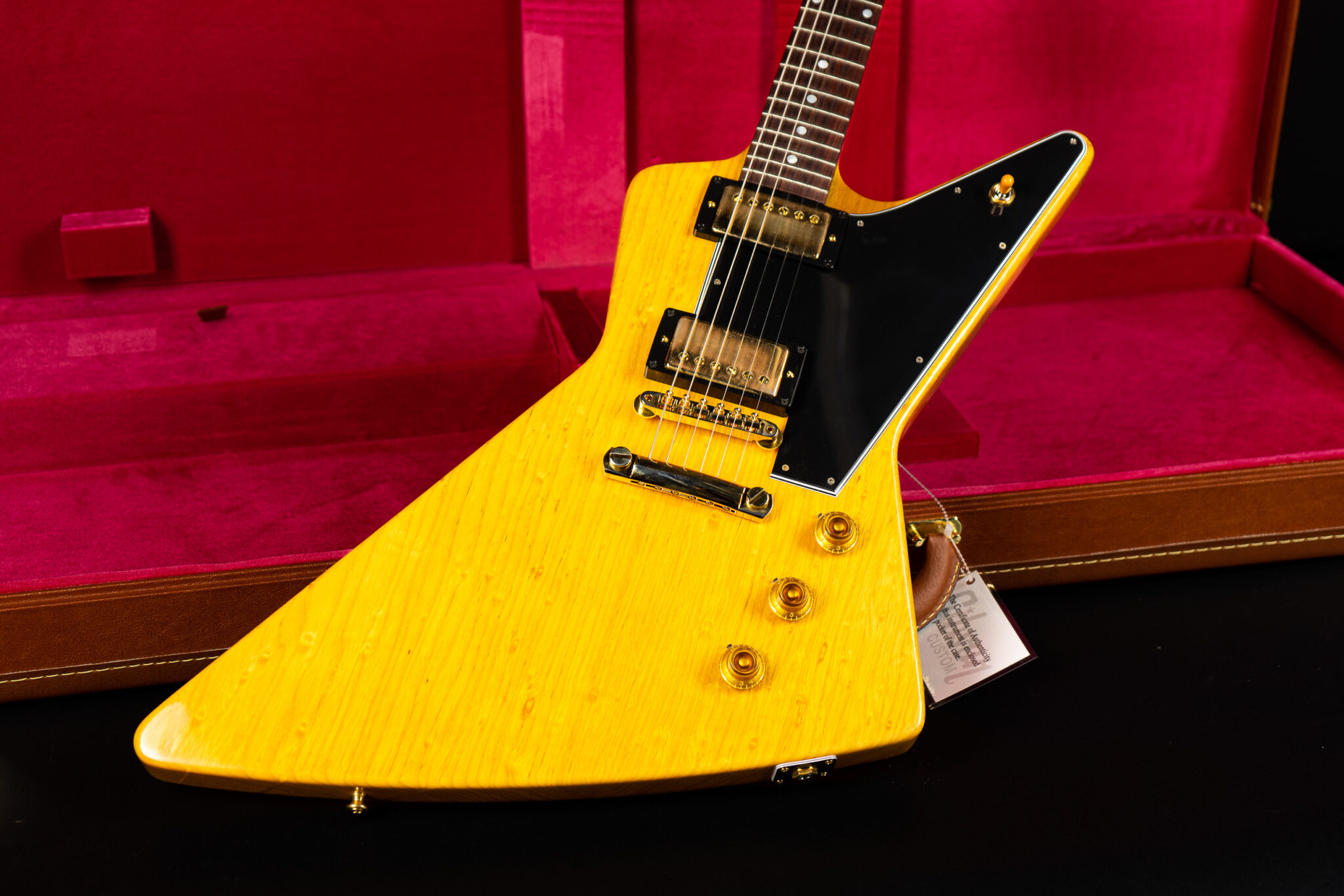
Era/Set: 1958 Gibson (korina) | Typical price: ~$350,000–$1,100,000 | Best for: the ultimate rarity trophy
Only about 19 Explorers were shipped in 1958, making it one of the rarest production guitars Gibson ever built. A London dealer reported selling one for $1,100,000, the highest price ever paid for a non-artist guitar, while an Explorer brought $611,000 at Skinner in 2006 and a clean example today is estimated at $350,000 to $450,000.
Its korina body and angular shape were commercially radical for 1958 and barely sold then, which is exactly why so few exist now. This is a museum-tier rarity, not a player's instrument, and authentication is critical at this level.
Pros:
- Only about 19 made in 1958 — extreme production scarcity
- A reported $1.1 million sale, a record for a non-artist guitar
- Korina body and futuristic shape make it instantly iconic
- Almost never trades, so any sale is a hobby event
Cons:
- Effectively unobtainable, with very few authentic originals in existence.
- High fake and "parts" risk demands expert authentication.
Verdict: The rarest Gibson electric — a seven-figure-capable trophy that almost never surfaces.
3. Prewar Martin D-45 (1937–1942)
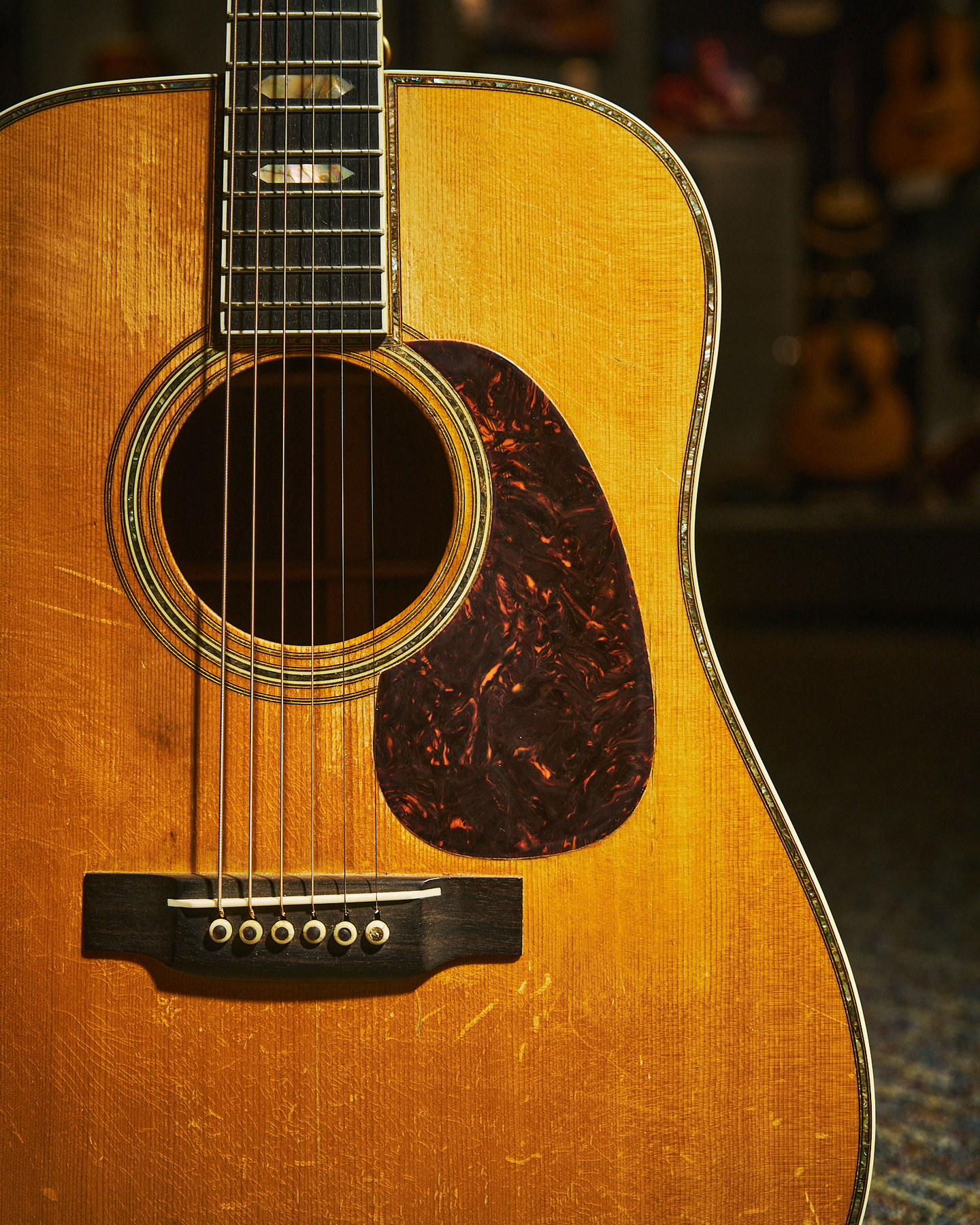
Era/Set: 1937–1942 Martin (prewar) | Typical price: ~$175,000–$400,000 | Best for: the acoustic equivalent of a 'Burst
Only about 91 prewar D-45s were built before production halted in 1942, making Martin's flagship dreadnought the most coveted vintage acoustic. Values run $175,000 to $350,000 by condition, with a 1942 example selling on eBay for $255,100 and a snowflake 1938 forward-X model changing hands privately for $400,000.
The combination of Brazilian rosewood, abalone trim, and prewar bracing produces a tone modern builders chase but cannot replicate. As with electrics, originality of the bracing, top, and finish drives the spread, and repairs must be documented.
Pros:
- Only about 91 prewar examples ever built — acoustic-grail scarcity
- Documented sales from $255,100 to $400,000 confirm blue-chip status
- Brazilian rosewood and prewar bracing deliver legendary tone
- The defining vintage acoustic, complementing an electric collection
Cons:
- Top cracks and brace repairs are common and affect value heavily.
- Brazilian rosewood raises legal and shipping complications across borders.
Verdict: The acoustic 'Burst — Martin's rarest flagship and the top vintage flat-top.
4. 1954 Fender Stratocaster
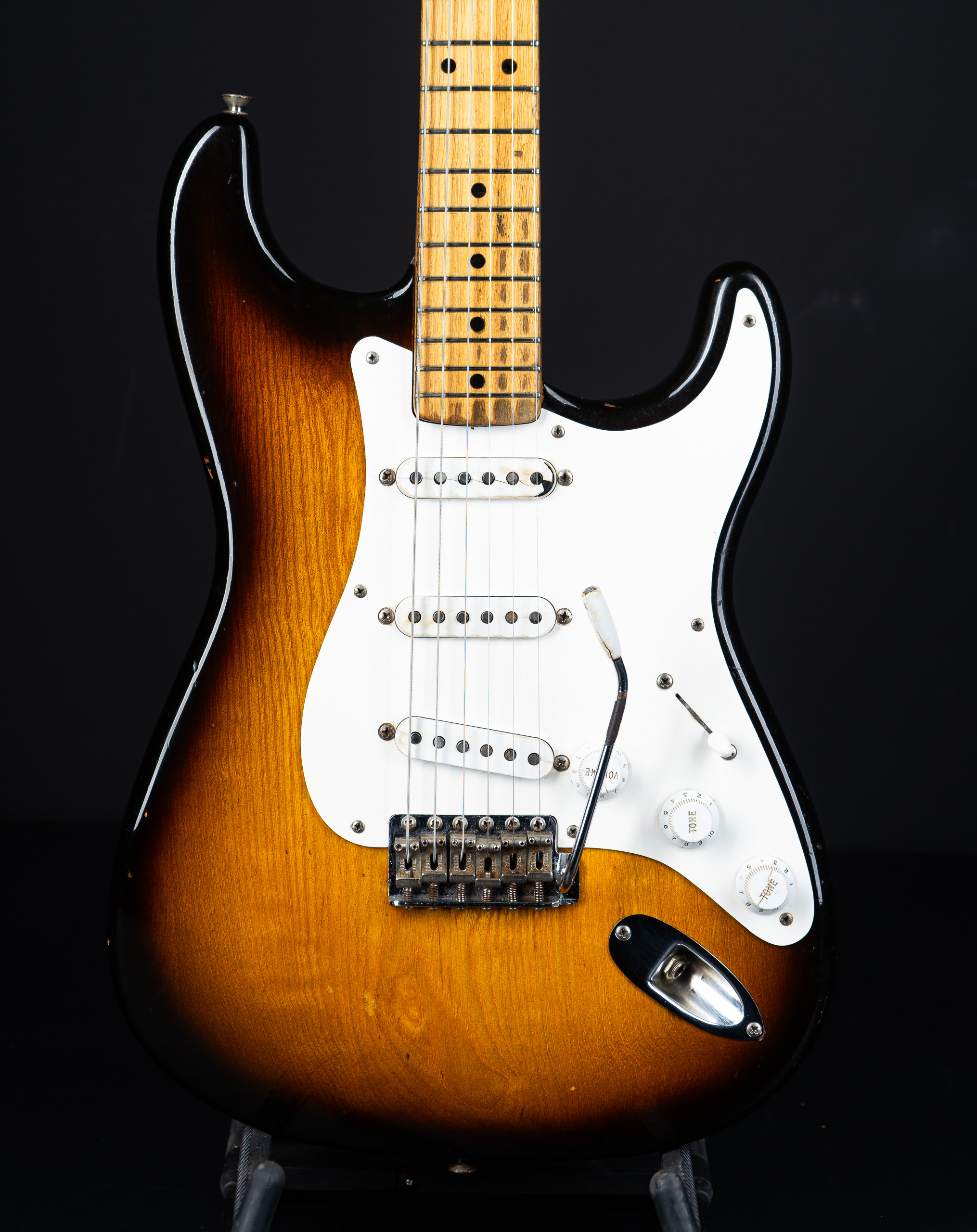
Era/Set: 1954 Fender (first year) | Typical price: ~$50,000–$100,000+ | Best for: the first-year Fender icon
The 1954 Stratocaster is the first year of the most influential electric design ever, and first-year examples carry a premium. Clean originals trade from roughly $50,000 to $70,000 at auction and can exceed $100,000 in excellent condition, with the earliest known example (serial 0100, April 1954) priced at $250,000.
The two-tone sunburst, small headstock, and original single-coils define the model that shaped rock, blues, and surf. Watch for refinishes and replaced pickups, which are common on heavily played first-year Strats and cut value substantially.
Pros:
- First-year Stratocaster — the most influential electric design ever
- Clean originals from $50,000 to over $100,000, with rare examples far higher
- Original single-coils and two-tone sunburst define the model's tone and look
- Broad player and collector demand keeps it liquid
Cons:
- Many survivors are refinished or have replaced electronics.
- First-year quirks require expert dating to confirm a true 1954.
Verdict: The first-year Strat — a foundational Fender that anchors any collection.
5. 1958 Gibson Flying V (Korina)
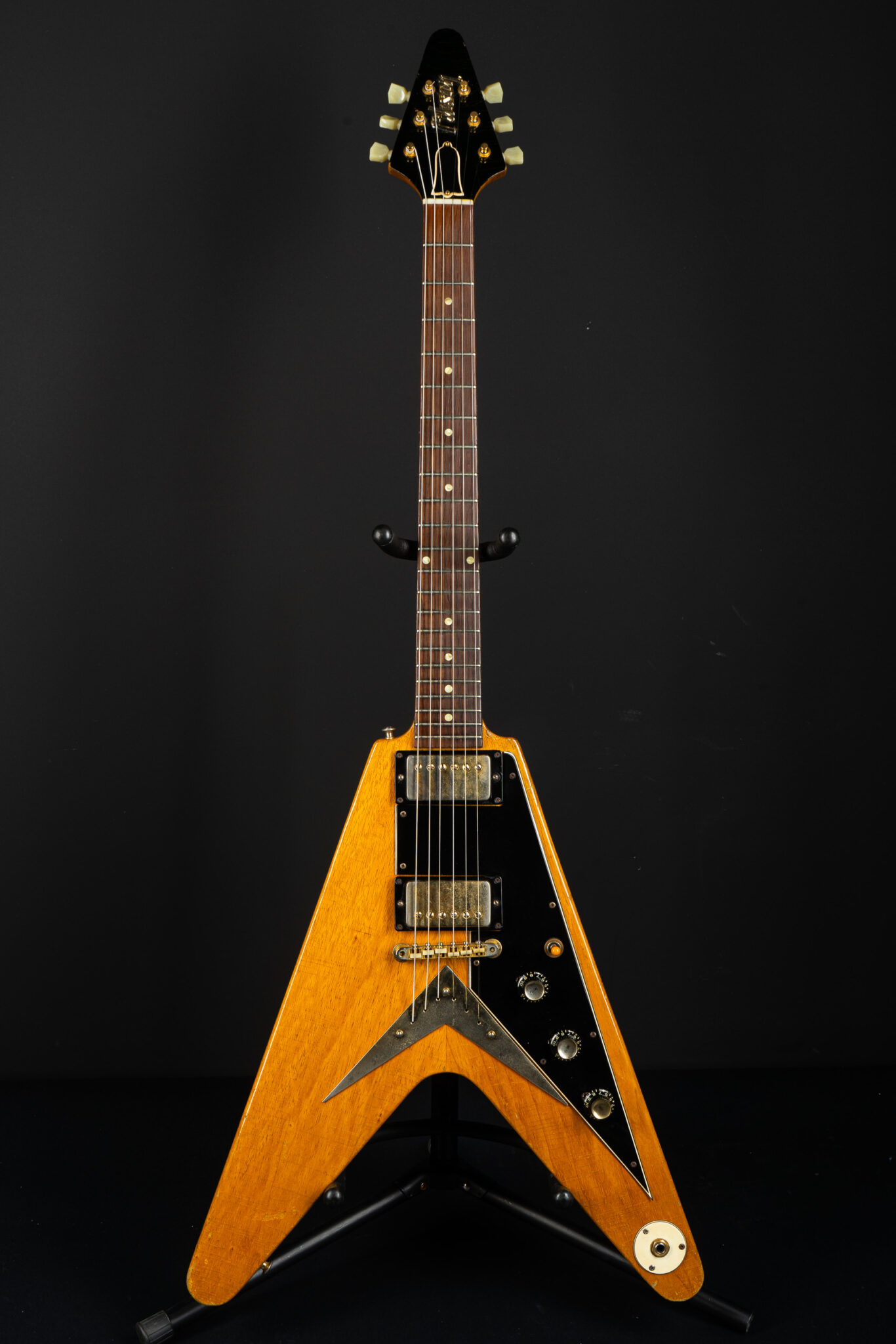
Era/Set: 1958–1959 Gibson (korina) | Typical price: ~$200,000–$400,000+ | Best for: the radical-shape rarity beside the Explorer
The korina Flying V is the Explorer's sibling in rarity and shock value. Gibson made only about 98 in the 1950s, and a clean example runs $200,000 to $250,000, with Joe Bonamassa's mint piece reportedly costing over $400,000. Like the Explorer, it flopped commercially in 1958 and was discontinued, which created its modern scarcity.
The korina body, gold hardware, and string-through-V tail are unmistakable. It is more playable than the Explorer for most owners, and demand from blues and rock collectors keeps the market firm despite the high entry price.
Pros:
- Only about 98 made in the 1950s — among Gibson's rarest electrics
- Clean examples $200,000–$250,000, with mint pieces over $400,000
- Korina body and radical V shape are instantly recognizable
- More playable than the Explorer, broadening collector appeal
Cons:
- Extremely scarce, so finding an original takes patience and capital.
- High counterfeit and reissue-confusion risk.
Verdict: The Explorer's equally rare sibling — a six-figure korina icon.
6. 1952 Gibson Les Paul Goldtop
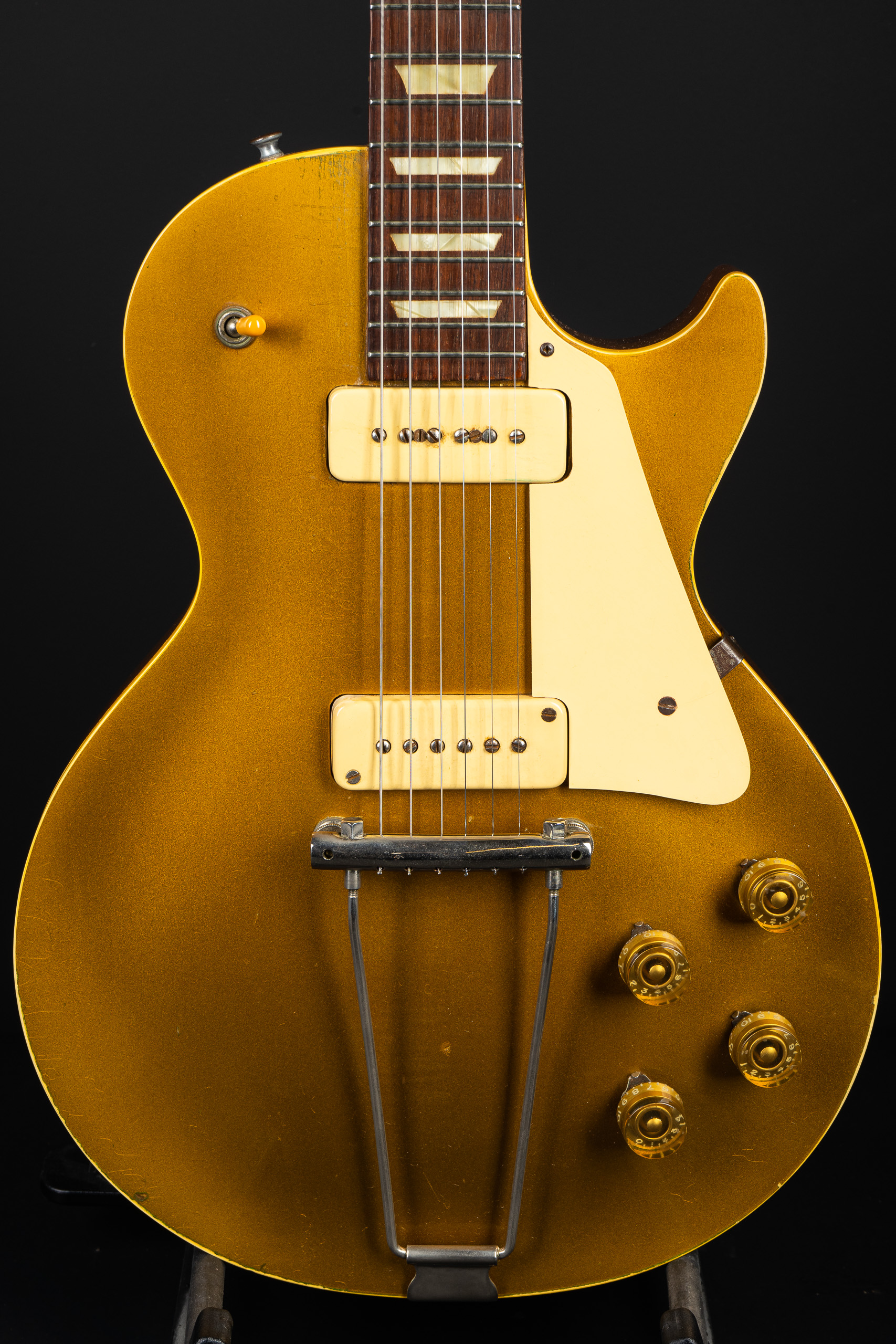
Era/Set: 1952–1953 Gibson (trapeze tailpiece) | Typical price: ~$25,000–$70,000 | Best for: a first-generation Les Paul at a relative discount
The 1952 Goldtop is the first production Les Paul, and it offers golden-era pedigree at a fraction of a 'Burst. Clean examples trade roughly $25,000 to $70,000 depending on originality, versus the hundreds of thousands a sunburst Standard commands. The early trapeze tailpiece and P-90 pickups give it a distinct voice from the later humbucker Standards, and some players prefer it.
For collectors who want a real 1950s Les Paul without 'Burst money, this is the entry point. Verify the tailpiece, finish, and pickups, as modifications are common on these early models.
Pros:
- The first production Les Paul — genuine 1950s pedigree
- $25,000–$70,000, far below the 'Burst Standards
- P-90 pickups and trapeze tailpiece give a distinctive early voice
- Strong upgrade path for collectors building toward a 'Burst
Cons:
- The trapeze tailpiece is less practical and divides players.
- Frequently modified, so finding a fully original example takes effort.
Verdict: A first-generation Les Paul at a relative bargain — the smart route into golden-era Gibson.
7. Pre-CBS 1962 Fender Stratocaster

Era/Set: 1962 Fender (pre-CBS, slab board) | Typical price: ~$30,000–$60,000+ | Best for: the pre-CBS sweet spot
Pre-CBS Strats — those made before Fender's 1965 sale to CBS — are the gold standard for the model, and 1962 is a prized year. Clean original examples trade roughly $30,000 to $60,000, with custom-color finishes commanding far more. The early-1962 "slab" rosewood fingerboard is preferred by collectors over the later "veneer" board, so confirm which one you are buying.
Standard sunburst examples are the most attainable; rare factory custom colors like Lake Placid Blue or Fiesta Red can multiply the price. Originality of the finish and electronics is, again, decisive.
Pros:
- Pre-CBS pedigree — the gold-standard era for Stratocasters
- Clean originals $30,000–$60,000, more attainable than a 1954
- Preferred slab-board feel and pre-CBS build quality
- Custom-color upside for collectors who chase rare finishes
Cons:
- Slab vs veneer board and refins require careful verification.
- Custom-color fakes ("refins to rare colors") are a known trap.
Verdict: The pre-CBS sweet spot — top-tier Strat quality below first-year prices.
8. 1959 Gibson ES-335 Dot Neck

Era/Set: 1958–1962 Gibson (dot-neck) | Typical price: ~$30,000–$60,000+ | Best for: the semi-hollow icon with PAFs
The dot-neck ES-335 introduced the semi-hollow design and remains one of the most musical vintage Gibsons. Original 1959 examples with PAF humbuckers, dot inlays, and a stop tailpiece trade in the $30,000 to $60,000 range, with blonde finishes commanding a steep premium over sunburst.
Played by everyone from Chuck Berry to Larry Carlton, it combines hollow-body warmth with solid-body sustain. Earlier dot-neck years (1958–1960) are preferred over the later block-inlay models. Confirm the PAF pickups and original finish, as both heavily influence value.
Pros:
- First semi-hollow design — a uniquely versatile vintage Gibson
- PAF-equipped dot-necks $30,000–$60,000, with blondes far higher
- Beloved across blues, jazz, and rock for its tonal range
- Dot-neck years (1958–1960) carry the strongest collector demand
Cons:
- Blonde and custom finishes command large, sometimes prohibitive premiums.
- Later block-inlay models are often confused with the prized dot-necks.
Verdict: The semi-hollow grail — PAF tone and versatility in a sub-six-figure package.
9. 1965 Fender Telecaster 💎 BEST VALUE
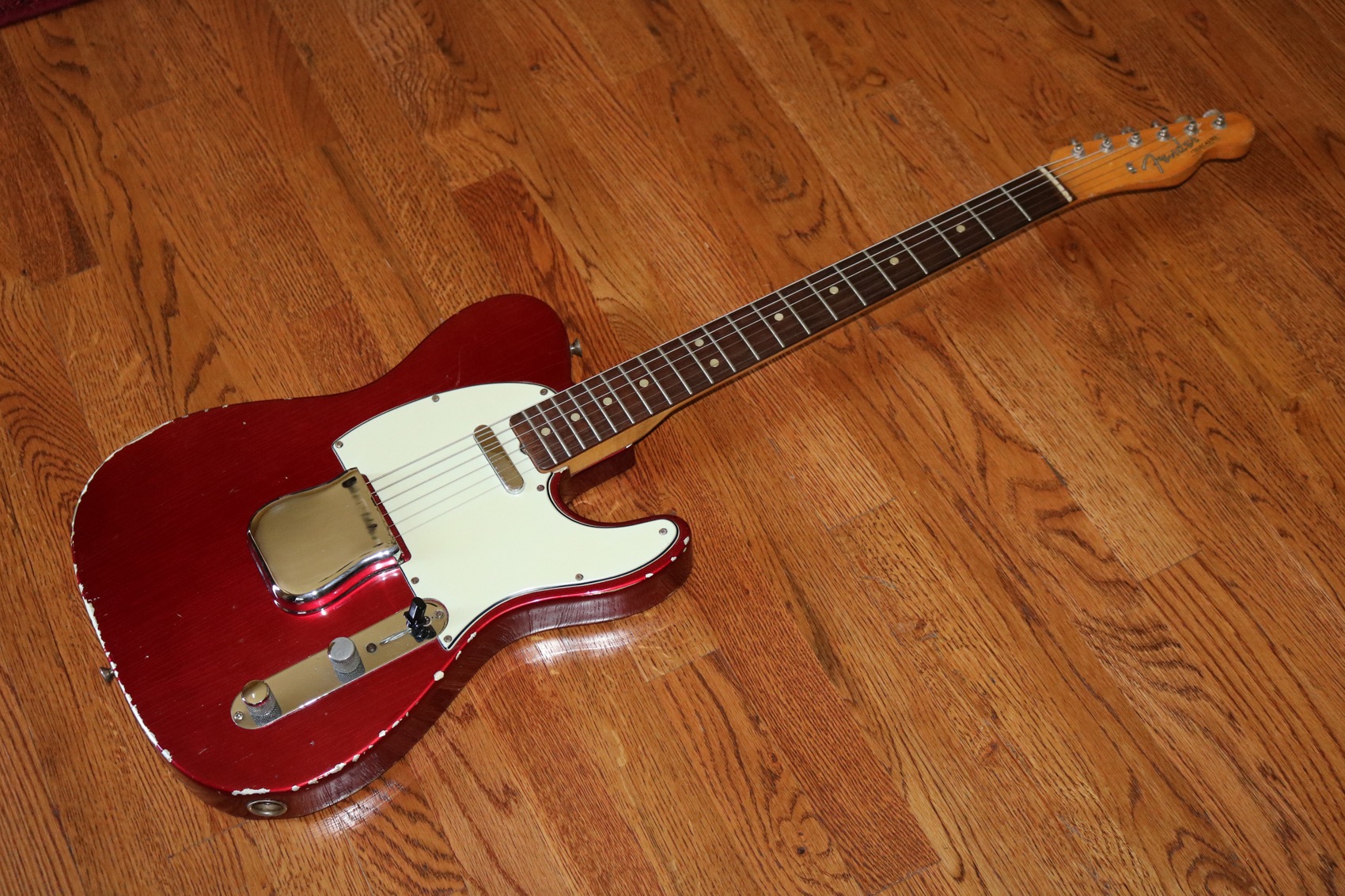
Era/Set: 1965 Fender (transition year) | Typical price: ~$9,000–$13,000 | Best for: the most attainable real vintage Fender
The 1965 Telecaster is the value champion of vintage Fenders. Honest original examples trade roughly $9,000 to $13,000, with refinished or partly modified ones available even lower near $8,100. As a transition-year guitar (Fender's CBS sale happened in 1965), it sits just below the pre-CBS premium while delivering the same legendary Tele bite and a fully vintage build.
For a player who wants a real 1960s Fender to gig and hold, nothing here offers more instrument per dollar. Confirm the neck date and originality to land a clean example.
Pros:
- $9,000–$13,000 — the most attainable genuine vintage Fender here
- Classic Telecaster tone and 1960s build at a player-friendly price
- Transition-year status keeps it just below pre-CBS premiums
- Highly giggable, so it earns its keep as more than a wall piece
Cons:
- Many survivors are refinished or have replaced parts.
- Lacks the pre-CBS premium that drives faster appreciation.
Verdict: The best value in vintage Fender — a real 1960s Tele under $13,000.
10. 1952 Fender Telecaster (Blackguard)
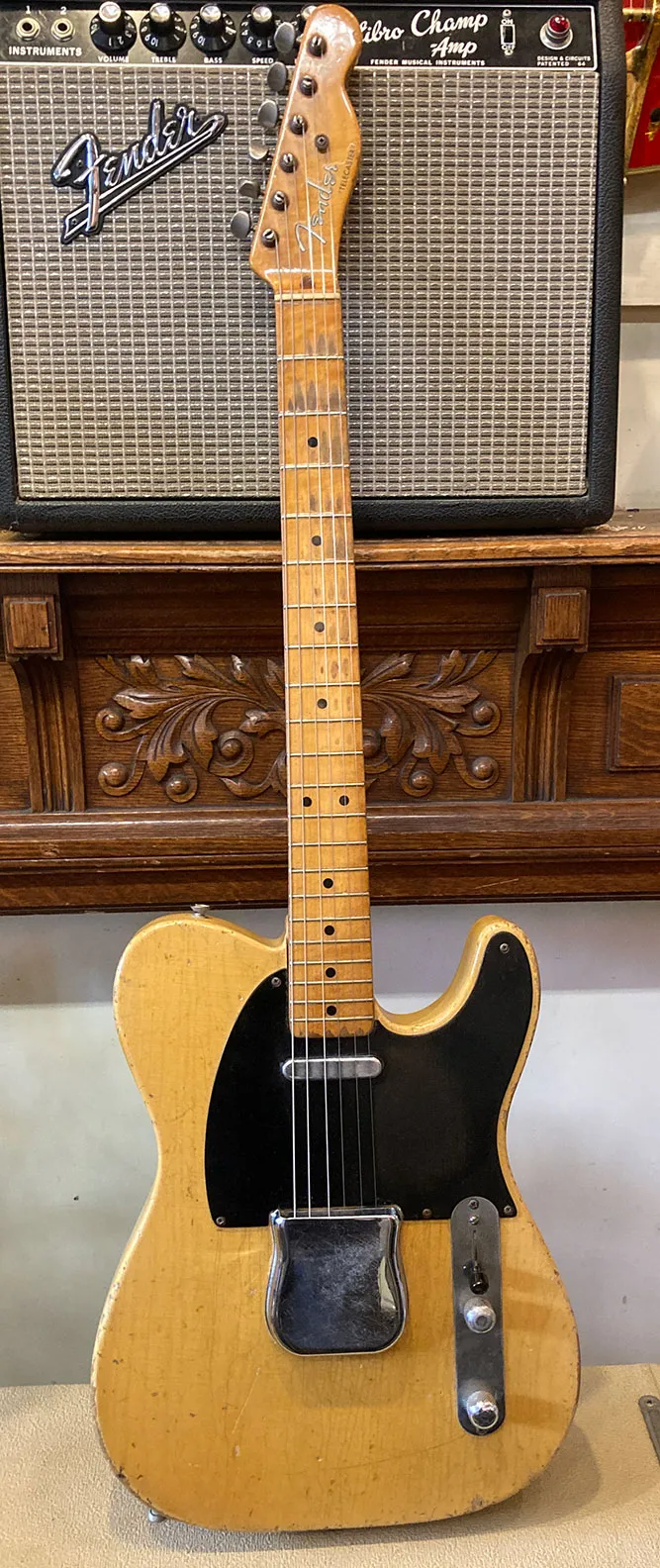
Era/Set: 1950–1954 Fender (blackguard) | Typical price: ~$30,000–$50,000+ | Best for: the first solid-body production icon
The blackguard Telecaster is the first mass-produced solid-body electric, and the 1952 example is a foundational collectible. Clean originals trade roughly $30,000 to $50,000, with the earliest and most original pieces commanding more. Its butterscotch-blonde ash body, black pickguard, and bright single-coils launched the modern electric era and influenced every solid-body that followed.
Earlier blackguards (1950–1952) are the most prized. As with all vintage Fenders, refins, replaced pickups, and shaved necks are common pitfalls that cut value sharply, so insist on documented originality.
Pros:
- The first mass-produced solid-body electric — historic significance
- Clean blackguards $30,000–$50,000, with early pieces higher
- Butterscotch ash body and bright single-coils define the Tele sound
- Foundational to every solid-body electric that followed
Cons:
- Refinished and modified examples are widespread.
- Neck shaving and pickup swaps are common, hidden value-killers.
Verdict: The original solid-body electric — a historic Fender cornerstone.
Which One Is Right for You?
What to Look For
- Originality is the whole game — original finish, frets, solder joints, pickups, and pots can mean a multiple in value; a refinished or routed guitar is worth a fraction of an untouched one.
- Verify dating across multiple points — neck dates, pot codes, pickup stamps, and serial numbers should all agree; mismatches signal a swapped or "married" instrument.
- Beware "frankenstein" builds — high-value models are assembled from period parts and passed as original; insist on documentation and expert appraisal.
- Watch finish refinishes and custom-color fakes — a refin to a rare factory color is a classic scam; a finish that looks too perfect for its age deserves scrutiny.
- Buy from established vintage dealers or major auction houses — Carter Vintage, Christie's, Skinner, and Westport offer provenance and guarantees that protect six-figure purchases.
What matters less than the hype: chasing only the priciest grails. The 1965 Telecaster, 1952 Goldtop, and pre-CBS Strat deliver real vintage pedigree and playability at a fraction of a 'Burst or Explorer, and originality discipline beats name-chasing every time.
FAQ
What is the most valuable vintage guitar to collect? The 1959 Gibson Les Paul Standard "Burst" is the most coveted, with clean non-celebrity examples from $200,000 to over $500,000 and celebrity pieces topping $1 million. The 1958 korina Explorer is even rarer, with a reported $1.1 million sale.
Why does originality matter so much? Vintage value is built on untouched condition. Original finish, frets, solder, and electronics can make a guitar worth several times a refinished or modified sibling. Always confirm originality before paying a premium.
Which vintage guitar is the best value? The 1965 Fender Telecaster, trading roughly $9,000 to $13,000, offers the most genuine vintage Fender per dollar. The 1952 Gibson Goldtop, at $25,000 to $70,000, is the value route into a real 1950s Les Paul.
Are vintage guitars a good investment? Blue-chip models have appreciated strongly over decades because supply is fixed and demand from players and collectors is global. The risks are originality fraud, condition issues, market swings, and liquidity at the top end — buy documented, original instruments from trusted sources.
How do I avoid fakes and parts guitars? Cross-check neck dates, pot codes, pickup stamps, and serials, and buy from established dealers or major auction houses that guarantee authenticity. An independent vintage appraisal is essential for any five- or six-figure purchase.
Is a refinished vintage guitar worth buying? A refinished example can be a more affordable way to own a historic model and play it without worry, but it will always trade well below an all-original equivalent. Buy refins to play, not as top-tier investments.
Bottom Line
The 1959 Gibson Les Paul Standard "Burst" is the best vintage guitar to collect — the most coveted electric ever made, with clean examples from $200,000 to over $500,000 and celebrity pieces past $1 million. The smartest value is the 1965 Fender Telecaster at $9,000 to $13,000, a real 1960s Fender that plays and holds.
Between them sit eight more documented icons, from the seven-figure-capable 1958 Explorer and prewar Martin D-45 to the attainable 1952 Goldtop and pre-CBS Strat — a complete map of vintage guitar collecting at every budget.
Sources
- Reverb Price Guide — Gibson Les Paul Standard "Burst" 1958–1960
- Antiques and the Arts — 1959 Les Paul Burst Takes $216,000 at Westport
- Ultimate Guitar — 1958 Gibson Explorer, Most Expensive Guitar
- Bluegrass Today — 1942 Martin D-45 at $255,100
- True Vintage Guitar — 1954 Fender Stratocaster Value
- Guitar World — Joe Bonamassa's 1958 Korina Flying V
- Reverb Price Guide — Fender Telecaster 1965
*Vintage guitars review — vintage guitars reviews, ratings, best vintage guitars to collect 2027, and a review of the top vintage guitar picks for collectors.*