

My Thoughts: Should I open a car wrap business in 2027
 Curated byKory White · Fractional CRO · Maryland
Quality
Certified

Only open a car wrap business in 2027 if you can install competently yourself, hold roughly $60,000–$100,000 in combined startup and working capital, and have a climate-controlled bay in a metro with real vehicle density. Without hands-on skill and cash reserves, the economics collapse fast. My Thoughts: it is a craft business first, a business second.
What a car wrap business actually is, and why the distinction decides everything
A car wrap business is not one business model. It is at least three, and conflating them is the single most common reason people who open one in 2027 will be gone by 2029.
Model one: install-only. You buy no printer. You take in retail color-change work — gloss, satin, matte, and chrome-delete jobs on customer-owned vehicles — using pre-manufactured cast films sold by the roll. Your capital goes into a bay, hand tools, a heat source, a plotter for cutting, film inventory, and insurance. Any printed commercial work you win gets sent to a trade printer, comes back on a roll, and you install it. This is the lowest-capital entry and the highest gross-margin-per-labor-hour, because color-change film is a commodity you mark up modestly while charging for skill.
Model two: print-and-install. You add a wide-format latex or eco-solvent printer, a laminator, and a RIP workstation. Now you can serve commercial fleets and one-off printed graphics directly, capture the print margin, and control turnaround. You also add tens of thousands in equipment, a maintenance regime, ink and media consumables, color-management competence, and a machine that depreciates whether or not it runs.
Model three: wrap as an attachment. You are actually a detailing, paint protection film (PPF), ceramic coating, or tint shop, and wrap is one more service on the menu. Your customer acquisition is already paid for. Wrap becomes an upsell against an existing book rather than a business you have to feed from zero.

Why the distinction matters: the failure stories almost always come from someone who wanted model one, bought equipment for model two, and had the demand base of model three — meaning none. The printer is bought before there is any print demand. The bay is signed before there is a booking calendar. The film inventory is stocked in colors nobody in that market orders.
The word open is doing a lot of work in the question. Opening a shop — signing a lease, buying equipment, hanging a sign — is the easy half and the expensive half. The hard half is demand generation for a service that is (a) discretionary, (b) high-ticket, (c) largely bought on visual proof, and (d) delivered by hand, one vehicle at a time, with no economies of scale until you can hire installers who do not need you standing over them.
There is a second structural fact worth internalizing: wrap revenue is labor-throughput-bound. A full color-change wrap on a sedan is commonly a one-to-three-day job for one to two installers, depending on the vehicle's complexity, the film, and how much disassembly (mirrors, handles, badges, bumper covers) you do. A shop with two bays and two installers has a hard ceiling on annual revenue that no amount of marketing changes. You cannot scale by selling more; you scale by adding trained hands, and trained hands are the scarce input. Any business plan that projects revenue growth without a corresponding installer-headcount line is fiction.
That ceiling is why margin discipline matters more here than in most small businesses. If you cannot sell more hours, the only levers are price per hour, waste per job, and rework rate. Rework — a panel that has to be pulled and redone, a failed edge that comes back under warranty — is the silent margin killer, because it consumes the one input you cannot buy more of.

Finally, the market context. Vehicle wrapping has grown steadily as color-change became mainstream rather than a motorsport or commercial-only practice, and as commercial fleets across trades — HVAC, plumbing, pest control, mobile services, last-mile delivery contractors — treated vehicle graphics as standard marketing spend. Electric vehicles added a genuine tailwind: owners of newer EVs skew toward customization, and wrap is the low-commitment way to change a car's appearance without repainting. That demand is real. But real demand in a category does not mean available demand in your ZIP code, and it certainly does not mean available demand at your price.
The step-by-step process from decision to first paid wrap
Here is the sequence I would actually run, in order, with no step skipped. The ordering matters more than the content: almost every step exists to kill the idea cheaply before the next one costs real money.
Step 1 — Learn to install, on someone else's dime. Before anything, work as an installer, or take a certified installation course from a major film manufacturer's training program and then get real vehicles under your hands. Manufacturer certification programs exist specifically because installation quality determines whether the film's warranty is honored. Certification also matters commercially: it is a differentiator on your listing and a requirement for some commercial and dealer accounts. If you cannot pass the practical, that is the answer — spend twelve months employed at a competitor before you invest a dollar.
Step 2 — Count your market, don't feel it. Within a 25-minute drive, list every shop offering color change or commercial wraps. Note their review counts, review recency, star ratings, and photo quality. A market with several shops holding 4.6+ stars and heavy review volume is a market where you need a wedge — mobile install, EV specialization, fleet-only, PPF-bundled, or a specific vehicle niche. Separately, use publicly available registration and demographic data (Census American Community Survey for income and household vehicle counts; state DMV registration summaries where published) to sanity-check whether the vehicle base supports the ticket you intend to charge.

Step 3 — Validate commercial demand by phone. Call ten local fleet operators and small businesses with vehicles. Ask what they last paid for graphics, who did the work, what went wrong, and when their vehicles cycle. Ten conversations tell you more about your realistic pipeline than any market report.
Step 4 — Price your bay before you sign it. Cast wrap film wants a controlled environment: a clean, well-lit, heated and cooled space, ideally with reasonable humidity control and minimal airborne dust. Cold installs and dusty air produce contamination, tunneling, and adhesion failures — all of which come back as free redos. Get real quotes for 1,500–2,500 sq ft of light-industrial space with a bay door and adequate power before you commit to a revenue model.
Step 5 — Decide print vs. outsource explicitly, in writing. For the first twelve months, outsourcing printed graphics to a trade printer is almost always correct. You pay a per-square-foot or per-linear-foot markup, which raises variable cost on printed jobs, but you avoid a five-figure capital hit, ink and maintenance obligations, and a color-management learning curve while you are also learning to run a business.
Step 6 — Buy tools and a starting inventory, not a showroom. Hand tools, quality squeegees, knifeless tape, heat guns, an infrared thermometer, a plotter for cut graphics, lighting, a lift or good creepers, and a modest inventory of the two or three colors your market actually buys.

Step 7 — Build the proof asset before you open. Wrap your own vehicle and a friend's. Shoot proper before/after content: clean lighting, walk-arounds, edge and door-jamb detail, time-lapse of a difficult panel. This portfolio is your entire top-of-funnel on day one.
Step 8 — Launch listings and take deposits. Google Business Profile with real photos and correct categories, Instagram and TikTok with install content, and a simple site with pricing ranges. Quote in ranges, require a deposit, and schedule.
Costs, timelines, and the ranges that hold up
Treat every number below as a planning range to be replaced with local quotes. Regional rent, wages, and insurance swing these substantially.
Startup capital, install-only: roughly $25,000–$45,000 all-in for a small commercial bay. That covers first and last month plus deposit on the space, basic buildout (lighting, power, cleanup, a wash area), a plotter, hand tools and heat guns, a starting film inventory, business formation and licensing, general liability and garage-keepers coverage, signage, and a modest launch marketing budget.
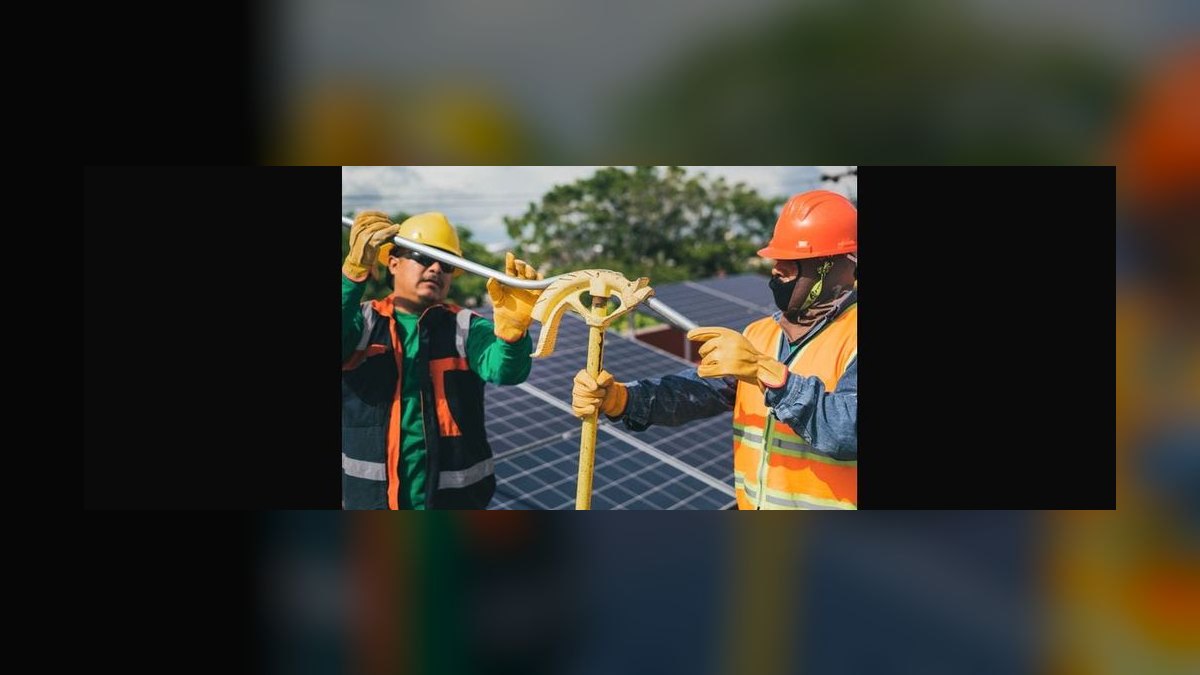
Startup capital, print-and-install: roughly $60,000–$110,000, adding a wide-format printer and laminator, RIP software, a color-managed workstation, ink and media stock, and the electrical and ventilation work the printer requires.
Working capital, separate from the above: at minimum three to six months of fixed overhead in cash. If your fixed nut is $6,000–$9,000 monthly (rent, insurance, utilities, software, loan service, your own draw at subsistence level), that is $20,000–$50,000 you do not spend on equipment. This is the line most people delete from the plan, and deleting it is how a shop with a full calendar still fails.
So the honest combined answer: $45,000–$95,000 for install-only including reserves, and $90,000–$160,000 for print-and-install including reserves. Anyone quoting a five-figure number under $20,000 is describing a mobile or garage side operation, not a shop you open with a lease.
Recurring fixed costs, monthly:
- Light-industrial bay, 1,500–2,500 sq ft: $1,800–$6,000+, wildly market-dependent
- Utilities and climate control: $300–$900
- Insurance (general liability + garage-keepers, which covers customer vehicles in your care): $150–$400/month equivalent
- Software, listings, accounting: $150–$400
- Equipment financing, if any: whatever you signed

Job economics. A full color-change wrap on a standard sedan or crossover typically consumes 60–75 feet of 60-inch film with waste, and a large SUV or truck more. Premium cast wrap film — the 3M 2080 series, Avery Dennison Supreme Wrapping Film, Oracal's 970RA cast line, and cast offerings from Inozetek and similar brands — is sold by the roll, and roll pricing is the largest single variable cost per job. Note that these are all *cast* films; the economy calendered products (Oracal's 651 and 751 series, for example) are sign vinyl, not vehicle wrap film, and using them on compound curves is how people produce failures. Do not confuse price tier with film construction.
Labor is the other half. A full wrap is commonly 20–40 labor hours depending on vehicle complexity and how much disassembly you do. At a loaded installer cost in the $25–$40/hour range in most US markets, that is $500–$1,600 of labor per vehicle.
Put together, on a retail full wrap priced in the $3,000–$5,500 range for a typical sedan-to-midsize-SUV in gloss or satin, expect roughly $500–$1,200 in film, $500–$1,600 in labor, and a few hundred in allocated overhead — landing gross margin per job somewhere in the 45–65% band when the job goes right, and much lower when it does not.
The high-margin work is partial. Chrome delete, roof wraps, hood and mirror accents, and small commercial lettering consume a fraction of a roll and a fraction of a day. These jobs carry the best margin per hour in the shop and are the fastest way to fill calendar gaps. A shop that only chases full wraps leaves its best economics on the table.

Timeline expectations. Plan for six to fourteen months to consistent monthly breakeven in a decent market with real installation skill. Ramp is driven almost entirely by portfolio and reviews, not by advertising spend. The first ten jobs build the content that books the next fifty. Budget accordingly: the reserve exists to survive the period in which your marketing is your finished work, and you do not yet have much finished work.
Realistic revenue. An owner-operator with one bay and one helper, running near-capacity, is a $180,000–$300,000 annual revenue business in most markets. Two productive installers plus the owner selling and finishing pushes toward $300,000–$600,000. Owner take-home in year one, after everything, commonly lands in the $40,000–$90,000 range — real money for a first year, and well below what the internet promises.
Where owners get it wrong
They buy the printer first. Equipment is the most satisfying purchase and the least urgent one. A wide-format printer is a fixed cost that must be fed with volume you have not yet won, and it loses a substantial share of its value in the first three years regardless of utilization. Outsource print until printed work is a booked, recurring line on your P&L.
They price against the cheapest quote in town. There is always someone quoting a full wrap at a price that cannot cover competent labor and premium cast film. Matching them means either cutting labor hours (rushed edges, no disassembly, no post-heat) or cutting film quality below what the application requires. Both produce failures inside a couple of years, and warranty callbacks on work you underpriced are pure loss. Compete on certification, warranty coverage, portfolio, and turnaround.

They take the big fleet contract too early. Fleet work looks like salvation and is frequently a cash-flow trap. Fleet buyers negotiate hard per-unit pricing and commonly pay on net-30 to net-90 terms. You front all the film and all the labor and wait. A large multi-vehicle order can consume every dollar of working capital before the first invoice clears. Cap fleet at a minority of revenue early, structure staged payments — a meaningful deposit, a midpoint draw, balance on completion — and walk from any deal that will not deposit.
They skip certification and warranty alignment. Manufacturer installer certification is not a vanity credential. Film warranties are conditioned on proper application, and improper installation is a documented exclusion. Selling a "warrantied" wrap you cannot actually warranty is a liability you will discover at the worst possible moment.
They treat the bay as optional. Cast film has a working temperature window. Cold surfaces, humid air, and airborne contamination produce adhesion failure, lifting at recesses and door handles, and visible debris under the film. Every one of those is a free redo. The bay is not overhead; it is quality control.
They underinsure. You will have customer vehicles — sometimes very expensive ones — in your care, custody, and control for days at a time. General liability does not cover damage to those vehicles. Garage-keepers coverage does. One heat-gun incident on a high-value vehicle without that coverage ends the business.
They will not do content. Wrap buying is visual and largely discovery-driven through social platforms and local search. A shop owner who will not consistently publish install footage and finished walk-arounds is choosing to compete without the primary channel the category runs on.
They ignore rework rate. Track it from job one: what percentage of jobs required an unbilled return visit, and why. A rising rework rate is the earliest signal that you are quoting too tight, rushing installs, or working outside the film's conditions.
Decision framework: when to open, when to wait, when to walk
Run yourself against four gates, in order. Any failed gate means you are not ready to open — it does not mean never, it means not yet.
Gate 1 — Skill. Can you personally complete a full wrap to a standard you would let a stranger inspect, including recesses, bumpers, handles, and jambs? If no, the only correct move is employment at a competitor for twelve months. Hiring an installer to cover a skill you lack means your entire quality standard, pricing, and hiring judgment rests on someone who can leave.

Gate 2 — Market. Does your 25-minute radius contain enough vehicle base and commercial fleets to fill two bays, and is there a wedge that differentiates you from established shops? If the market is saturated with well-reviewed incumbents and you have no wedge, either find a niche or find a market.
Gate 3 — Capital. Do you have startup capital *plus* three to six months of fixed overhead in reserve, without borrowing against your home? If you have startup capital but no reserve, delay and save. Undercapitalization does not kill you in month one; it kills you in month seven, when the calendar is finally full and the receivables have not landed.
Gate 4 — Temperament. Are you willing to publish content weekly, quote transparently, hold price against cheaper competitors, and spend most of your day on your feet doing physical work in a bay? This is a trade business. The owner who wants to run it from a laptop is describing a company that does not exist at this size.
If all four gates pass, open — install-only, one bay, outsourced print, tight film inventory, staged fleet terms. If Gate 1 fails, go work for someone. If Gate 2 fails, change the niche or the geography. If Gate 3 fails, wait and accumulate. If Gate 4 fails, this is the wrong business regardless of the other three.
Related questions
Is install-only really better than buying a printer?
For the first year, yes in almost every case. Outsourced print raises variable cost per printed job but eliminates a large capital hit, ink and maintenance obligations, and a color-management learning curve. Buy the printer once printed work is recurring, booked revenue.
How much does the local market actually change the outcome?
Enormously. Dense metros with high vehicle values support more inquiries and higher tickets but carry far higher rent and wages. Smaller markets have cheap rent and thin volume, pushing you toward commercial fleet work to fill the calendar.
Can I run this from a home garage?
You can start mobile or garage-based at lower cost, but you inherit temperature, humidity, dust, and space constraints that drive rework. Many owners start there deliberately, then lease a bay once booking volume justifies the fixed cost.
What is the fastest path to profitable jobs?
Partial work — chrome delete, roofs, hoods, mirrors, and small commercial lettering. These consume little film and little time, carry strong margin per hour, and fill gaps between multi-day full wraps while your reputation builds.
Does certification actually matter to customers?
To retail customers, sometimes. To film warranties and to commercial and dealer accounts, consistently. Certification is what lets you sell a warrantied install rather than hoping nothing lifts.
FAQ
What does it realistically cost to open a car wrap business in 2027?
Plan on roughly $45,000–$95,000 for an install-only shop including three to six months of operating reserve, and $90,000–$160,000 if you add in-house printing. Sub-$20,000 figures describe a mobile or garage operation, not a leased shop. Get local quotes for rent, insurance, and film before finalizing any number.
How long until the business breaks even?
Six to fourteen months to consistent monthly breakeven is a reasonable planning range for a skilled owner-operator in a decent market. Ramp is driven by portfolio and reviews more than by ad spend, which is exactly why the operating reserve matters — it funds the months in which your finished work is still your only marketing.
Do I need to be able to install the wraps myself?
Practically, yes. Installation quality determines rework rate, warranty exposure, review scores, and your ability to judge and train hires. An owner who cannot install has no independent standard for quality and is fully dependent on employees who can leave. If you cannot pass a practical test, work as an employed installer first.
Should I chase fleet contracts early?
No. Fleet work is negotiated hard on per-unit price and typically paid on extended terms, so you front film and labor for weeks or months. Keep fleet under roughly 30% of revenue in the first 18 months, require a deposit and staged payments, and build a base of retail clients who pay on completion.
Which films should a new shop stock?
Premium cast wrap films — the 3M 2080 series, Avery Dennison Supreme Wrapping Film, Oracal 970RA, and cast lines from brands like Inozetek — are the correct construction for vehicle work. Calendered sign vinyl such as Oracal's 651 and 751 is not wrap film and will fail on compound curves. Stock the two or three colors your market actually orders, not a rainbow.
What is the single biggest reason new wrap shops close?
Undercapitalization compounded by underpricing. Owners open with startup money but no operating reserve, then discount against the cheapest quote in town to fill the calendar. The result is full bays, thin or negative margins, and no cash cushion when a fleet invoice runs late or a job needs a redo.
Sources
- https://www.sba.gov/business-guide — SBA business planning, licensing, and startup cost guidance
- https://www.3m.com/3M/en_US/graphics-signage-us/ — 3M commercial graphics, wrap film product data and installer training
- https://graphics.averydennison.com/ — Avery Dennison Graphics Solutions, Supreme Wrapping Film specifications
- https://www.orafol.com/en/americas/ — ORAFOL/Oracal film product lines, including cast 970RA and calendered 651/751
- https://www.bls.gov/ooh/ — Bureau of Labor Statistics Occupational Outlook Handbook, automotive and coating worker wage data
- https://data.census.gov/ — U.S. Census Bureau American Community Survey, household income and vehicle data by geography
- https://www.sema.org/ — Specialty Equipment Market Association, automotive aftermarket and accessory market research
- https://www.iwfa.com/ — International Window Film Association, vehicle film standards and training resources
- https://www.irs.gov/businesses/small-businesses-self-employed — IRS small business tax, depreciation, and entity guidance
Related on PULSE
- What Service Fees Should a Car Detailing Business Charge?
- Should I open or buy a Meineke Car Care franchise in 2027?
- Should I open or buy a Club Car Wash franchise in 2027?
- How Do I Get My Car Wash Staff to Sell Unlimited Membership Plans?
- How Many Attendants Should I Schedule Each Day at My Car Wash?
- How Many Salespeople Do I Need to Hire for My Car Dealership?
This page will be disappearing soon. Save it to your device for $1 — or read it free while it is here.
@Kory-White- · if Venmo asks, the last 4 of my number are 2012
This page is gone.
This one is off the shelf now. $1 keeps it on your phone for good — the whole page, pictures and diagrams included.
 editorialMy Thoughts: Top 10 Buying Committee Personas That Ignore Cold Emails in 2027
 editorialMy Thoughts: The Go-Giver by Bob Burg and John David Mann — Cliff Notes Summary
 editorialMy Thoughts: Top 10 All-Inclusive Resorts in Malaysia in 2027
 editorialMy Thoughts: Top 10 Camera Sliders — Best Overall + Best Value in 2027
 editorialMy Thoughts: Best Used Hybrid SUVs Under $50,000 in 2027 (Ranked)
 editorialMy Thoughts: What are the first steps to take if my dog eats something toxic
 editorialMy Thoughts: Top 10 Safest Suburbs in the Northeast in 2027
 editorialMy Thoughts: Top 10 8K Cameras — Best Overall + Best Value in 2027
 editorialMy Thoughts: Hope Is Not a Strategy by Rick Page: Summary, Key Lessons, and RevOps Takeaways
 editorialMy Thoughts: What question do you ask a champion to ensure they have the internal credibility to sell your solution for you