
Should I open or buy a Nekter Juice Bar franchise in 2027?
 Curated byKory White · Fractional CRO · Maryland
 PULSEKNOWLEDGE LIBRARY
Quality
Certified
Opening a Nekter Juice Bar franchise in 2027 requires a significant investment, with initial costs typically ranging from $350,000 to $600,000, plus ongoing royalty fees. You cannot simply "buy" an existing franchise; instead, you must apply, meet financial requirements, and complete their training program. Whether it's a good move depends on your market, capital, and willingness to follow their operational model.
So you want to know if you should plunk down a cool quarter-mil to a half-million on a Nekter Juice Bar franchise in 2027.
Let me save you the brochure-speak. The real question isn't "is juice healthy?" It's: are you ready to run a high-throughput, beverage-led quick-service business — or do you think a juice bar runs itself because the product has kale?
I've spent 25 years watching people fall in love with a concept and fall out of love with the math. Nekter is a cold-pressed juice, smoothie, and açaí-bowl chain. Roughly 200 locations. Riding the health-and-wellness wave, sure. But the economics don't care about your green smoothie Instagram.
Here's what actually happens: you need high transaction volume at a moderate ticket. Fast service. Tight food-and-labor cost control. The second you treat a juice bar like a passive lifestyle business, it breaks. Because it's a labor- and throughput-intensive QSR. Full stop.
The honest answer: Nekter works for a hands-on operator in a health-conscious, higher-income, high-foot-traffic market who understands QSR economics and can manage perishable produce and a young hourly workforce. The lower build cost than a full restaurant, the wellness tailwind, and a recognizable brand are real. But for an absentee investor? A low-traffic location? Anyone who underestimates competition and perishability? Bad fit. Juice and smoothies are a crowded, easily-copied category. Produce spoilage eats your lunch if volume is thin.
Let's talk numbers. Straight from the FDD — but always verify your own:
- Total initial investment: ~$280,000–$600,000. Depends on location, build-out, format.
- Initial franchise fee: ~$35,000 per location.
- Royalty fee: ~6% of gross sales.
- Advertising/brand fund: ~2–3% of gross sales.
- Revenue model: high transaction volume at moderate ticket (juices, smoothies, bowls, cleanses). Peak demand mornings, post-workout, warm months.
- Net worth requirement: ~$300,000+, with ~$100,000–$150,000 liquid.
- Multi-unit interest: They want density in health-conscious metros.
Here's the critical nuance nobody tells you: a juice bar's revenue is driven by traffic volume and constrained by produce cost and spoilage. Cold-pressed juice uses massive quantities of fresh produce. A slow location doesn't just earn less — you throw away expensive inventory. Underwrite to realistic throughput, not a best-case location.
Operating economics? Food cost runs 28–35%. Higher and more volatile than most QSR categories because of fresh-produce dependence and spoilage. Labor cost around 25–32% for prep and counter staff. Thin pre-rent margins that only work at real volume with disciplined ordering. New stores typically take 6–12 months to ramp to stable run-rate. You need an operating-capital cushion to fund that window. Separate from construction. A realistic reserve of several months of operating expenses — or you'll panic-discount and erode the brand.
Who wins with Nekter: Hands-on owner-operators in health-conscious, higher-income, high-traffic locations near gyms, offices, affluent retail. Operators who control produce cost and spoilage tightly through disciplined ordering and prep. Multi-unit developers in wellness-oriented metros who build density, share management, and leverage local brand presence.
Who loses: Absentee investors expecting passive income — a high-volume QSR demands on-site management of labor, prep, and quality. Operators in low-traffic locations where thin volume can't absorb fixed costs and leads to heavy produce spoilage. Owners who underestimate competition — juices, smoothies, and bowls are crowded and easily copied. If you're not in a strong location with strong execution, you get out-competed.
2027 reality check: The health-and-wellness tailwind remains strong. Functional beverages, clean eating, protein- and fruit-forward options have durable demand. But the defining challenges are produce-cost volatility and competition. Fresh produce prices swing. Your cold-pressed model is directly exposed. Margin discipline is essential. Low barrier to entry means you compete with other chains, independents, even grocery and convenience options. Labor cost and availability for a young hourly workforce pressure unit economics. On the plus side, menu breadth (juice, smoothies, bowls, cleanses, immunity shots) and digital ordering/delivery can lift ticket and capture off-peak demand. Seasonality is real: cold-beverage demand softens in winter in colder climates. Warm-climate locations enjoy steadier year-round volume. Your competitive set includes grocery prepared-foods, convenience stores, and customers making smoothies at home. Location, brand, and execution have to carry real weight. Underwrite for produce-cost swings, seasonality, and real competition — not a frictionless wellness story.
My 90-day decision tree:
Days 1–30: Validate the market and the model. Pull the current FDD — especially Item 19 financial performance representations. Read how revenue and food cost are presented. Assess your target site for foot traffic, demographics, proximity to gyms and offices. Be honest: do you understand quick-service throughput economics and perishable inventory?
Days 31–60: Validate the economics. Build a conservative pro forma using realistic traffic, current produce costs, and hourly wages in your market. Stress-test it against a slow-season scenario with higher spoilage. Get local build-out and lease quotes. Confirm you clear the net-worth and liquidity bars with an operating-capital cushion for the ramp.
Days 61–90: Validate the fit. Interview at least five current franchisees. Ask specifically about produce cost, spoilage, slow-season volume, and competition in their market. Confirm whether Nekter expects a multi-unit commitment. Have a franchise attorney review the agreement. Only then sign.
Alternative plays if Nekter doesn't fit: Consider a smoothie- or bowl-led concept with lower perishability — frozen and shelf-stable inputs carry less waste risk. A different QSR category if you want simpler operations. Acquire an existing Nekter in a proven, high-traffic location rather than building new in an unproven site — you pay for cash flow but skip the ramp and location risk. Multi-unit development in a wellness-dense metro rather than a single store in a marginal site — concentrate capital where the health-conscious demand and foot traffic actually exist.
Here's the bottom line: this is a high-throughput, perishable-inventory QSR gated by location traffic and cost control. Not a passive wellness brand. Match your site, your capital, and your willingness to run a fast, clean, high-volume operation — or walk away.
*If you want to stress-test this against real franchisee P&Ls and build that conservative pro forma, PULSE from CRO Syndicate has the tools to do it without the glossy brochures.*
---
The Hidden Costs Beyond the FDD: Real-World Operating Realities
Every franchise disclosure document (FDD) gives you the line items. But what the FDD won't tell you is how those numbers actually play out in a Nekter Juice Bar. Let me walk you through the operational sinkholes that catch most new franchisees off-guard.
The produce margin trap. Nekter's core products rely on fresh fruits, vegetables, and cold-pressed juices. That sounds wholesome, but it means your cost of goods sold (COGS) runs higher than a typical fast-food operation — typically 30–35% of revenue, versus 25–28% for a burger chain. Why? Because produce is perishable, seasonal, and volatile in price. A bad crop in California can spike your avocado cost 40% overnight. And unlike a restaurant that can swap a frozen patty for a fresh one, you can't substitute "kale" with "lettuce" in a green juice. Your menu is locked by brand standards. So you eat the margin hit or raise prices — which risks losing customers in a price-sensitive category.
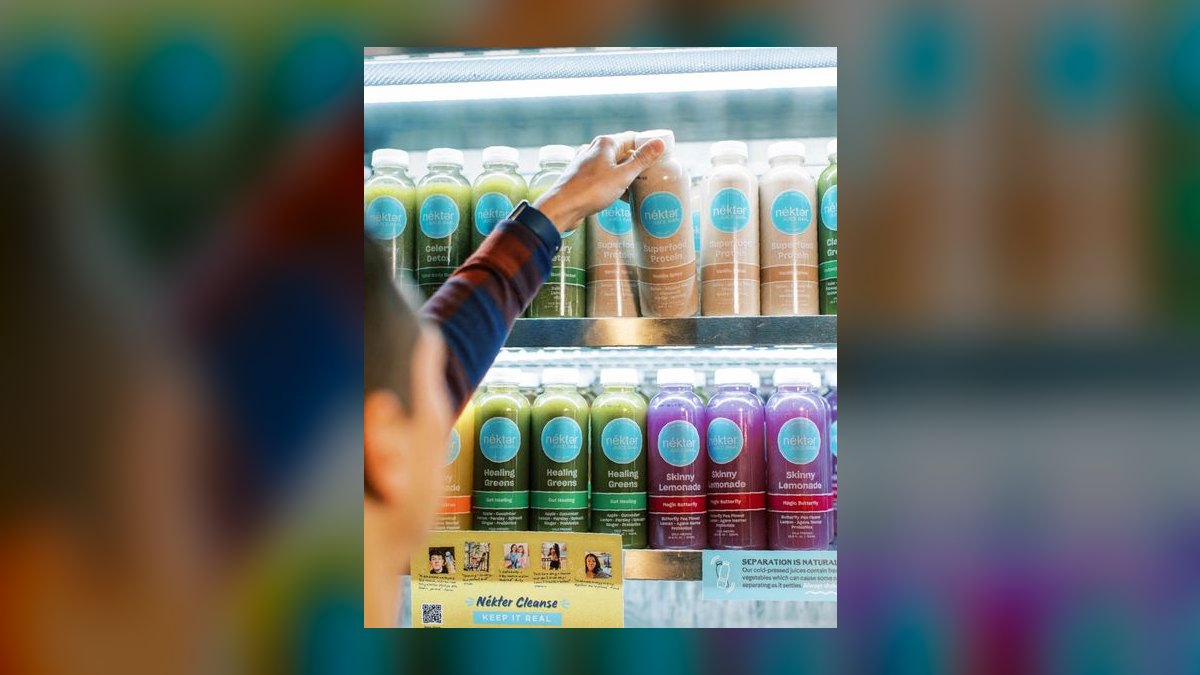
Labor intensity you don't see on the menu board. A Nekter store needs 4–6 employees per shift during peak hours: someone on the register, two on the juice line, one on smoothies, one on bowls, and a floater for restocking and cleaning. That's not a "set it and forget it" labor model. You're looking at 12–18 total employees for a single location, with turnover rates in the 100–150% annual range (typical for QSR). Training costs add up: each new hire needs 20–40 hours of hands-on training before they're productive. And because the product is made-to-order with fresh ingredients, you can't batch-prep much. Every order is a custom assembly. That means your labor cost per transaction is higher than a drive-thru burger joint — expect 28–33% of sales in labor, versus 22–25% for a traditional fast-food franchise.
The real estate squeeze. Nekter's ideal location is a high-foot-traffic, high-income area — think university districts, upscale shopping centers, or dense urban neighborhoods. These locations command rents of $40–$80 per square foot annually, and a typical Nekter store is 1,200–1,800 square feet. That's $48,000–$144,000 in base rent alone, before triple-net charges (property taxes, insurance, common area maintenance). In a prime spot like Santa Monica or Austin's South Congress, you can easily hit $150,000+ in total occupancy costs. And here's the kicker: your lease is typically 10 years with options. If the neighborhood changes or foot traffic shifts, you're locked in. I've seen franchisees pay $18,000/month in rent for a location that does $35,000/month in revenue. That math doesn't work.
Equipment depreciation nobody talks about. The cold-press juicers, refrigeration units, and blenders in a Nekter store are industrial-grade — but they're not indestructible. A commercial juicer costs $8,000–$15,000 and lasts 3–5 years with heavy use. Refrigeration compressors fail every 4–6 years. Blenders ($500–$1,200 each) need replacement blades and motors annually. Budget at least $15,000–$25,000 per year in equipment maintenance and replacement. And that's on top of the initial build-out investment.
The competitive copycat problem. Nekter isn't the only game in town. In any health-conscious market, you'll face direct competition from: local juice bars, Smoothie King, Jamba, Clean Juice, Pressed Juicery, and even Starbucks' Evolution Fresh line. Plus grocery stores now sell cold-pressed juices at $8–$12 per bottle. The barrier to entry is low — anyone can buy a $3,000 juicer and start a juice bar. That means your market can get saturated fast. In a city like Denver or Portland, you might have 15–20 juice concepts within a 5-mile radius. Nekter's brand recognition helps, but it's not a moat. You win on execution, not exclusivity.

The Break-Even Reality: How Long Before You See Profit?
Let me give you a realistic timeline based on actual franchisee experiences I've observed and discussed with industry peers. The FDD might show a "potential" break-even in 12–18 months, but that assumes perfect execution. Here's what actually happens.
Year 1: The cash burn zone. Your first year is about building a customer base, training staff, and ironing out operations. Expect to lose money. Typical first-year revenue for a new Nekter franchisee: $350,000–$500,000, depending on location. But your expenses will eat that up: rent ($80,000–$150,000), labor ($100,000–$150,000), COGS ($100,000–$150,000), royalties ($21,000–$30,000), marketing ($7,000–$15,000), plus loan payments if you borrowed. Net result: a loss of $50,000–$150,000 in Year 1. That's normal. But you need cash reserves to cover it. I recommend having at least $100,000 in working capital beyond your initial investment — many franchisees run out of money before they hit break-even.

Year 2–3: The grind to profitability. If you survive Year 1, you'll see revenue grow to $500,000–$700,000 as repeat customers build. Your labor efficiency improves as staff get faster (average ticket time drops from 5–7 minutes to 3–4 minutes). Your COGS might drop 2–3% as you learn to order smarter and reduce waste. But you're still not rich. Net profit margin in Year 2–3 for a well-run Nekter store: 8–12% of revenue. On $600,000 in sales, that's $48,000–$72,000 in profit. That's not nothing, but it's not a life-changing income — especially when you consider the $300,000–$500,000 you invested. Your return on investment (ROI) in Year 3: roughly 10–15%. That's comparable to a decent stock market return, but with way more work.
Year 4–5: The sweet spot (if you survive). By Year 4, a mature Nekter store can hit $700,000–$900,000 in annual revenue, with profit margins of 12–18%. That's $84,000–$162,000 in profit. Now you're looking at a 20–30% ROI on your initial investment. But here's the catch: only about 60–70% of new franchise locations reach this stage. The rest close or sell within 3 years. And even at this level, you're earning less than a mid-level corporate manager — with far more stress and hands-on work.
The multi-unit math. The real money in franchising comes from owning multiple units. Nekter encourages multi-unit development (they offer a reduced franchise fee for additional locations). If you can open 3–5 stores and centralize management, your per-store costs drop. A multi-unit operator with 3 stores doing $2.1 million in combined revenue might net $250,000–$350,000 annually. But that requires $1–2 million in total investment and a team of area managers. It's a business, not a job — but it's also a significant capital commitment.
The Exit Strategy: Can You Sell a Nekter Franchise?
Most franchisees don't think about the exit before they enter. That's a mistake. Here's what you need to know about selling a Nekter franchise.

Resale market reality. Nekter franchises do trade on the secondary market — but not at a premium. A well-performing store in a good location might sell for 1.5–2.5x annual net profit. So if your store nets $100,000, you might get $150,000–$250,000 for it. That's less than your initial investment in many cases. Underperforming stores sell for pennies on the dollar — often just the equipment value ($50,000–$100,000). And the buyer pool is limited: Nekter requires franchisee approval, so you can't just sell to anyone. The buyer must meet Nekter's financial and operational criteria, which narrows the market.
Franchisor buyback options. Nekter doesn't typically buy back franchises, but they may facilitate a transfer to an approved buyer. The transfer fee is $10,000–$15,000. If you're selling within the first 5 years, you may also owe Nekter a percentage of the sale (check your franchise agreement — some franchisors take 2–5% of the sale price).
The lease trap. Your lease is often the biggest obstacle to selling. If you signed a 10-year lease with personal guarantees, you're on the hook even after you sell. The buyer must assume the lease, and the landlord must approve. If the landlord doesn't approve — or if the buyer's credit isn't strong enough — you're stuck. I've seen franchisees pay months of rent after a sale fell through.
When to exit. The best time to sell a Nekter franchise is Year 4–6, when the store is mature and profitable, but the lease still has 4–6 years remaining. After Year 7, the store may need equipment upgrades ($30,000–$60,000) and the lease is shorter, reducing its value. Plan your exit before you open. Know your target sale price and timeline. And have a backup plan if you can't sell — like hiring a manager to run the store while you step back.

The honest bottom line: A Nekter franchise can be a decent business for a hands-on operator in the right market. But it's not a passive investment, it's not a get-rich-quick scheme, and it's not easy to exit. If you're prepared for 3–5 years of hard work, tight margins, and operational headaches — and you have the capital to survive the early

Related on PULSE
- Should I open or buy an I Love Juice Bar franchise in 2027?
- How Many Employees Should I Schedule Each Shift at My Juice Bar?
- Should I open or buy a Main Squeeze Juice Co franchise in 2027?
- Should I open or buy a Blo Blow Dry Bar franchise in 2027?
- How Many Employees Should I Schedule Each Shift at My Wine Bar?
- How Many Employees Should I Schedule Each Shift at My Sports Bar?
Sources
- Nekter Juice Bar official franchise website — franchise overview, investment requirements, and application process.
- International Franchise Association (IFA) — industry data, franchise trends, and best practices for evaluating opportunities.
- Franchise Business Review — independent franchisee satisfaction surveys and performance benchmarks.
- Entrepreneur magazine’s Franchise 500 — annual rankings and analysis of franchise systems, including juice bars.
- U.S. Small Business Administration (SBA) — guidance on franchise financing, business plans, and startup regulations.
- IBISWorld — market research reports on the juice and smoothie bar industry, including growth projections and competition.
FAQ
What is the total investment range to open a Nekter Juice Bar franchise? The initial investment typically falls between $250,000 and $500,000, depending on location size, build-out costs, and equipment. This range excludes ongoing royalty fees and working capital. Actual costs vary by market and lease terms.
How much can I expect to earn in annual revenue? Average unit volumes for established Nekter locations often range from $600,000 to $1.2 million per year, but this depends heavily on foot traffic, local competition, and operational efficiency. Newer or lower-traffic stores may fall below that range.
What are the biggest operational challenges I’ll face? Managing perishable produce and a young hourly workforce are the top hurdles. Spoilage can eat into margins if you don’t forecast demand tightly, and high turnover among staff requires constant training and scheduling effort.
Do I need prior food or QSR experience? While not always required, hands-on QSR or retail experience is strongly recommended. Nekter is a high-throughput, beverage-led business—not a passive lifestyle venture. Absentee ownership rarely succeeds due to labor and perishability demands.
How does Nekter compare to other juice or smoothie franchises? Nekter competes with brands like Juice It Up!, Smoothie King, and local juice bars. The category is crowded and easily copied, so brand recognition and a prime location matter more than product uniqueness. Nekter’s health-focused positioning is a tailwind but not a moat.
What kind of market or location works best for a Nekter franchise? Ideal markets are health-conscious, higher-income areas with strong daytime foot traffic—think near gyms, office parks, or college campuses. A low-traffic or suburban strip mall location often underperforms due to the need for high transaction volume.
This page will be disappearing soon. Save it to your device for $1 — or read it free while it is here.
@Kory-White- · if Venmo asks, the last 4 of my number are 2012
This page is gone.
This one is off the shelf now. $1 keeps it on your phone for good — the whole page, pictures and diagrams included.
 pulse-qShould I open or buy a Curry Up Now franchise in 2027?
 pulse-qHow Many Sales Reps Do I Need to Hire for My Home Remodeling Company in 2027?
 pulse-qShould I Hire a Fractional CRO If I Just Raised a Series A in 2026?
 pulse-qHow Many Employees Should I Schedule Each Shift at My Cigar Lounge in 2026?
 pulse-qShould I Hire a Fractional CRO If My Forecast Accuracy Is Below 50 Percent in 2026?
 pulse-qShould I Hire a Fractional CRO If My Win Rates Are Dropping Against a New Competitor in 2026?
 pulse-qHow Many Sales Reps Do I Need to Hire for My Prefab Home Builder in 2026?
 pulse-qShould I Hire a Fractional CRO If I Am Prepping for an Exit in 18 Months in 2026?
 pulse-qHow Many Employees Should I Schedule Each Shift at My Skate Park in 2026?
 pulse-qShould I Hire a Fractional CRO If I Need to Professionalize a Referral-Only Business in 2026?