 Pulse Reviews and Analysis
Should I open or buy a Golden Corral franchise in 2027?
 Curated by Kory White · Fractional CRO, CRO Syndicate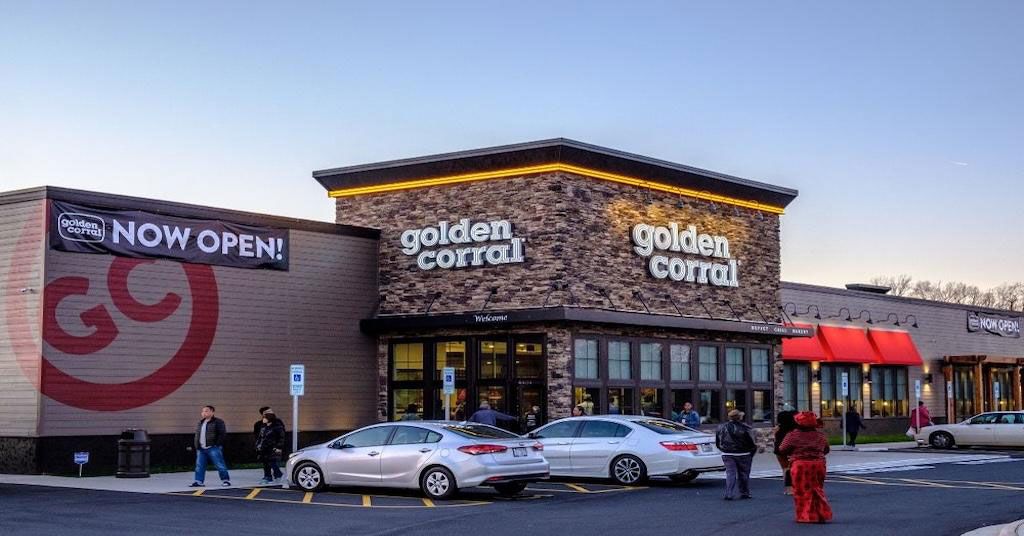
Should You Open a Golden Corral Franchise in 2027? My Take After 25 Years in the C-Suite
I've been in the restaurant franchise game long enough to know that when someone asks me "Should I buy a Golden Corral?" — they're usually hoping I'll say "hell yes" or "hell no." The truth, as with most things in this business, is somewhere in the middle. But let me be blunt: this is not a franchise for the faint of wallet or the novice operator.
The Hook That Grabbed Me
Golden Corral is America's largest grill-buffet chain, founded in 1973 and franchising since the 1980s. That's a hell of a track record. But here's what I've learned watching the buffet segment over two decades: the brand recognition is real, the revenue potential is real, and the structural headwinds are equally real.
If you're thinking about 2027, you need to understand the full picture — not the glossy brochure version.
The Numbers That Made Me Raise an Eyebrow
Let's talk money, because that's where most people get tripped up. According to the 2026 FDD, here's what you're looking at:
| Line Item | Low | High | Notes |
|---|---|---|---|
| Franchise fee | $50,000 | $50,000 | Non-negotiable, per FDD |
| Building / real estate / site | $1,500,000 | $5,000,000 | You're buying a small warehouse |
| Equipment & buffet build-out | $500,000 | $1,200,000 | Buffet lines, grill, bakery, kitchen |
| Signage & decor | $80,000 | $250,000 | You want people to find you |
| Initial inventory | $60,000 | $140,000 | Food and supplies |
| Initial marketing | $40,000 | $120,000 | Grand opening |
| Training & travel | $25,000 | $70,000 | You + key management |
| Working capital | $150,000 | $500,000 | Ramp-up runway |
| Total Item 7 | ~$2,400,000 | ~$7,400,000 | Per 2026 FDD — one of the highest in franchising |
And don't forget the ongoing costs: royalty around 4% of gross and marketing fee about 2% of gross. That's 6% off the top before you've paid for food, labor, or the mortgage.
The Real Estate Reality That Changed My Perspective
Here's what I tell every operator who calls me about this: the building is the real investment. That $2.4M-$7.4M Item 7 figure dwarfs most franchises because you're not just buying a restaurant license — you're buying a 10,000-12,000+ sq ft freestanding structure on a large pad site.
Most franchisees end up owning or building-to-suit rather than leasing.
This means you're making two investments at once: a restaurant business and a commercial real-estate holding. The smartest operators I know treat the real estate as a separate asset — financing the building through a real-estate loan (land and structure as collateral) and the operating business through conventional restaurant lending.
Some even hold the property in a separate entity that leases back to the operating company. This isolates real-estate value, improves tax treatment via depreciation, and means that even if the buffet segment's structural headwinds worsen, you still own an appreciating, repurposable commercial asset.
But here's the flip side: that heavy real-estate commitment makes a Golden Corral far harder to exit than an asset-light franchise. You're selling or repositioning a large, special-purpose building, not just transferring a license. Model the real-estate exit as carefully as the operating returns — because in a high-capital, headwind-facing segment, the building is both the biggest risk and the biggest source of residual value.

👉 Quick Call with Kory White, Fractional CRO · See Kory on LinkedIn · CRO Syndicate
Who Actually Wins With This Business
After 25 years, I've seen the pattern. The winners are:
- Capital required: $2.4M-$7.4M, with $1,000,000+ liquid and strong financing.
- Time commitment: full-time, large-restaurant operation; multi-unit experience strongly preferred.
- Skills: large-format restaurant operations, real estate, and labor management.
- Geographic fit: buffet-receptive markets — suburban, value-oriented, family-and-senior demographics.
- Lifestyle fit: experienced, well-capitalized multi-unit restaurant operator.
These are not first-timers. These are people who've already run large restaurants, know how to manage 100+ employees, and understand the brutal math of buffet margins.
Who Loses Their Shirt
And the losers? I've seen this too:
- Under-capitalized or first-time operators — the capital and complexity are too high.
- Operators in markets where buffets are declining or out of favor.
- Those who can't manage large real estate and heavy labor.
- Buyers who underestimate buffet food-and-labor margins.
- Those uncomfortable with the buffet segment's structural headwinds.
The 90-Day Decision Tree I Use With Clients
If you're serious about 2027, here's my timeline:
- Day 1-30: Read the 2026 FDD and Item 19 carefully; scrutinize the very high investment and buffet-margin economics.
- Day 31-60: Interview many operators; ask about real profitability, food and labor costs, real-estate burden, and the buffet segment's trajectory.
- Day 61-90: Validate a genuinely buffet-receptive market and secure suitable large-format real estate.
- Day 91-180: Build the large-format restaurant.
- Day 181-210: Open and staff the large operation heavily.
- Manage food and labor margins rigorously — the make-or-break of the buffet model.
- Assess multi-unit expansion only after proving single-unit profitability.
The Revenue Reality
Mature units gross $3M-$6M+ — that's serious revenue. But here's the math that keeps me up at night: the buffet format carries high food and labor costs, so margins are thinner than quick-service, and the large real estate ties up significant capital. Golden Corral's edge is brand recognition as the largest grill-buffet chain, high revenue potential, and a loyal value-seeking family and senior customer base.
But the trade-offs are very high capital (among the highest in franchising due to the large building), heavy real-estate and labor requirements, thin buffet margins (all-you-can-eat food cost plus staffing a large operation), and a buffet segment facing structural headwinds (the buffet category contracted significantly during and after the pandemic, with labor costs, food costs, and changing dining habits pressuring the all-you-can-eat model).
My Take on Alternatives
If the numbers scare you (and they should), consider:
- Other QSR/fast-casual franchises — far lower capital, better-trending segments.
- Cicis or other buffet concepts — adjacent buffet models (validate the segment carefully).
- Family-dining franchises (Denny's, IHOP-style) — table-service family dining.
- Independent buffet or family restaurant — full control, no brand.
- Lower-capital, higher-growth restaurant franchises — adjacent, better-trending models.
The Bottom Line
Golden Corral is the leading large-format grill buffet, and for the right operator — well-capitalized, experienced, in a buffet-friendly market — it can be a powerhouse. But for everyone else? It's a high-stakes gamble in a segment that's fighting structural headwinds.
Know your capital, know your market, and know your exit strategy before you sign anything.
*If you want to dig deeper into franchise economics or model your own numbers, the PULSE / CRO Syndicate has resources that can help you avoid the mistakes I've seen too many operators make.*
*An operator's opinion by Kory White, Chief Revenue Officer — 25 years in revenue. More at PULSE · CRO Syndicate*