


Should I open or buy a Heyday Skincare franchise in 2027?
Quality
Certified

Buying an existing Heyday Skincare studio with a proven membership base is usually the lower-risk path in 2027; opening new makes sense only if you have $400,000–$800,000+ in capital, a strong esthetician pipeline, and an affluent trade area. Either way, esthetician retention — not real estate — decides your return.
The outcome you should expect
Set your expectations against the model's actual shape rather than the glossy version. A Heyday Skincare studio is a 1,500–2,500 square foot "facial bar" built on personalized, professional facials sold primarily through monthly memberships, plus a skincare-product retail attach. That is a services business with an inventory sidecar, not a spa and not a med-spa. The revenue curve looks nothing like a food franchise's: instead of opening strong and settling, a membership studio opens soft and compounds. Your first 90 days will be uncomfortable, and if you have modeled a straight line from opening day to maturity, you will run out of working capital before the model has had a chance to work.
If you open new, plan on a build period of roughly six to twelve months from signing to your first paying client — site selection, lease negotiation, permitting, build-out, hiring, and training all sit in that window, and permitting is the variable that most often blows the schedule in dense urban markets. Then plan on twelve to twenty-four months of membership accumulation before the studio behaves like a mature unit. Mature studios in this category gross roughly $600,000 to $1.3 million or more annually, with owner earnings commonly landing between $70,000 and $200,000 per studio. Note the gap between those two ranges: the difference between a $70,000 year and a $200,000 year is almost entirely membership density and product attach, not revenue alone.
If you buy an existing studio, you are buying a substantially different risk profile. You inherit a membership roll, a trained esthetician team, a finished build-out, and a lease with known terms — all of which erase the three most expensive unknowns in the open-new path. You will typically pay a multiple of seller's discretionary earnings for that certainty, and you will also inherit the seller's problems: churned members who still show on the roll, a lease with two years left and a landlord who knows you cannot move, an esthetician team loyal to the departing owner. The premium is real, and in most cases it is worth paying — but only after you have verified that the membership base you are buying is actually active.
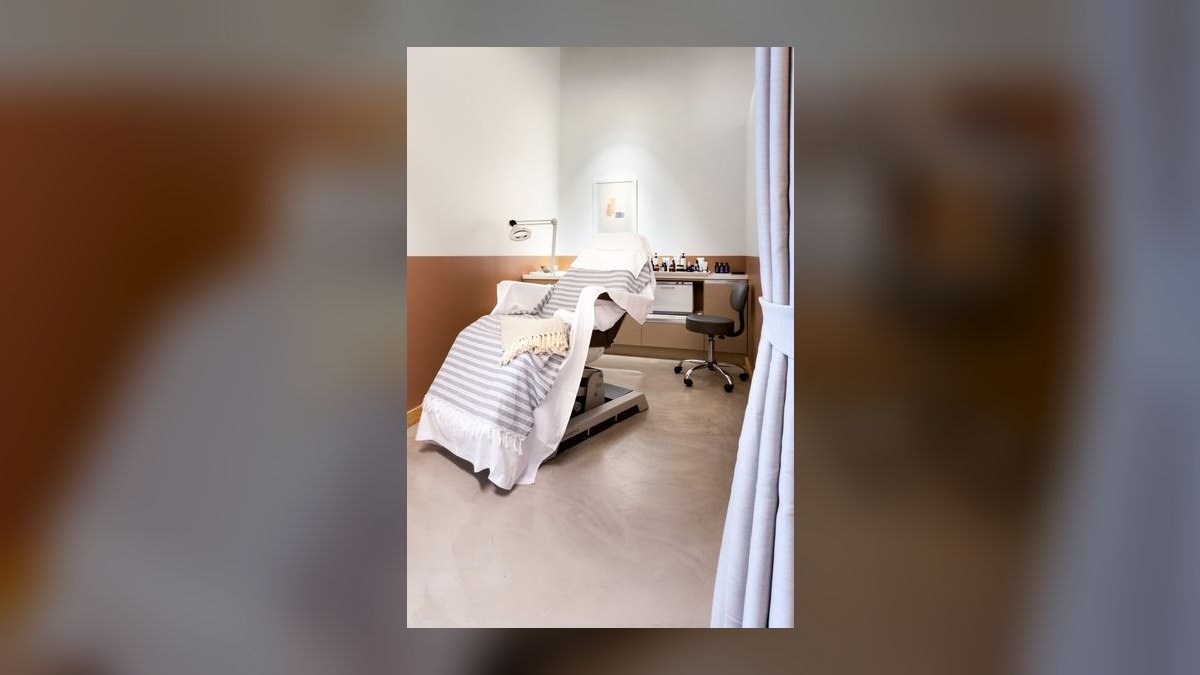
A concrete way to frame the decision: if your liquid capital is under roughly $200,000 and you have never managed licensed service providers, buying an established unit is the defensible choice. If you have the capital, a specific trade area you know intimately, and a realistic plan to recruit two to three estheticians before opening day, building new gives you site control and a cleaner cost basis. The worst outcome is opening new with buyer-level capital — that is the failure pattern, and it recurs constantly across membership-model beauty and wellness brands.
What drives that outcome
Four levers determine whether a Heyday Skincare franchise clears $200,000 in owner earnings or stalls near breakeven, and they are not equally weighted.
Esthetician recruiting and retention is lever one, and it dominates. Every dollar of facial revenue passes through a licensed pair of hands. The U.S. Bureau of Labor Statistics projects skincare specialist employment to grow much faster than the average occupation, which is good for demand and bad for you as an employer — it means every studio, med-spa, and day spa in your market is bidding for the same license holders. Studios that perform keep annual esthetician turnover meaningfully below the category norm by paying a real base plus service and retail commission, not commission alone. Budget a competitive full-time package for your market, and add a premium in high-cost metros like New York, Los Angeles, or San Francisco. Then budget for the ramp: a new esthetician typically needs several weeks to reach full book productivity, during which you pay wages against partial revenue. Franchisees routinely underestimate this by half.
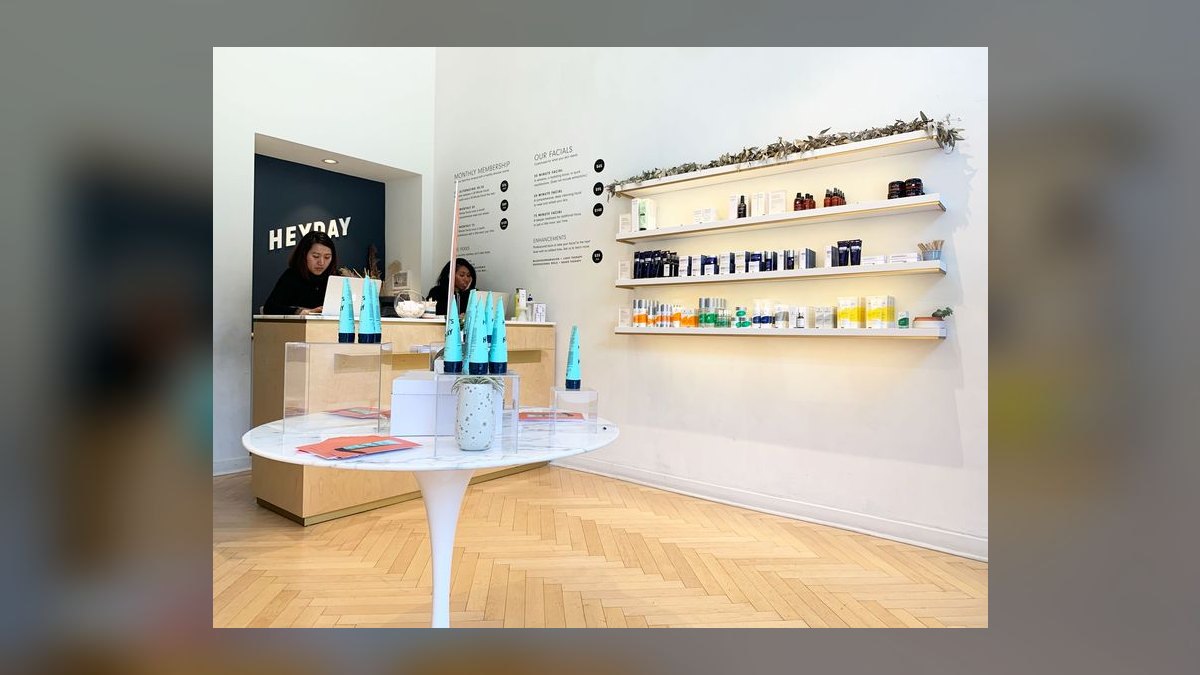
Membership density is lever two. The economics only work when a large share of your treatment hours are pre-sold to recurring members. A member who visits monthly generates roughly twelve service transactions a year plus repeat product purchases; a walk-in generates one and a maybe. Your conversion mechanism is the post-facial consultation, which means membership growth is a training problem disguised as a sales problem. Track membership count weekly, conversion rate of first-time guests to members, and monthly churn. If churn creeps above single digits monthly, your studio is a leaky bucket and no amount of marketing spend will fill it.
Product retail attach is lever three, and it is where margin hides. Facial revenue carries heavy labor cost; product revenue does not. Estheticians who recommend a personalized regimen during the treatment convert at dramatically higher rates than any retail display, because the recommendation is diagnostic rather than promotional. A studio with a weak attach rate and a studio with a strong one can post identical top-line revenue and differ by tens of thousands in owner earnings.
Occupancy and royalty load is lever four, and it is fixed the day you sign. A royalty near 7% of gross plus a marketing fee comes off the top regardless of performance. Rent for a studio of this footprint in a qualifying trade area commonly runs in the range of $8,000 to $15,000 per month. Together those are non-negotiable claims on revenue, which is precisely why membership density matters — fixed costs against recurring revenue is a good structure; fixed costs against episodic revenue is a trap.
Benchmarks and realistic ranges

Work from the 2026 Franchise Disclosure Document, not from anyone's summary of it — including this one. The figures below are the ranges the brand's own disclosure and category comparables support, and your job during due diligence is to confirm each one against Item 5, Item 6, Item 7, and Item 19 as they read in the FDD you are actually given.
The initial franchise fee runs roughly $40,000 to $50,000. Total initial investment under Item 7 runs roughly $400,000 to $800,000 on the disclosed range, though it is worth stress-testing the top end: summing the high side of every individual line item — franchise fee, build-out and leasehold, treatment-room equipment, signage and decor, opening inventory, initial marketing, training and travel, and working capital — lands closer to $900,000 than to $800,000. Item 7 ranges are typically built as a realistic composite rather than a worst-case-across-every-line total, which is defensible, but you should underwrite to the arithmetic sum, not the headline. If every line runs hot in your market simultaneously — expensive metro, difficult permitting, long hiring ramp — that is the number you will actually spend.
Component ranges to plan against: build-out and leasehold improvements are the largest single item, commonly $200,000 to $420,000 for a studio fit-out, with local construction costs and permitting timelines driving most of the variance. Treatment rooms and facial equipment run roughly $70,000 to $160,000. Signage and decor, $20,000 to $55,000. Opening skincare inventory, $25,000 to $60,000. Pre-opening and launch marketing to build the initial membership base, $15,000 to $40,000. Operator and esthetician training plus travel, $10,000 to $28,000. Working capital through ramp, $30,000 to $85,000 — and this is the line most often underfunded, because it is the line that funds payroll before memberships exist.

Liquidity requirements typically land around $130,000 to $220,000, with net worth requirements above that. Ongoing fees: royalty near 7% of gross sales plus a marketing fund contribution. Mature-unit gross revenue of $600,000 to $1.3 million or more, with owner earnings of $70,000 to $200,000.
A rough operating structure at, say, $850,000 in gross revenue: esthetician and front-desk labor consuming a large share — think high-30s as a percentage of gross once you include payroll taxes and benefits; occupancy in the low-to-mid teens; royalty plus marketing fee near 9% combined; product cost of goods plus remaining operating expenses in the high teens. What is left is owner earnings, and in that structure it lands somewhere near the upper-middle of the $70,000–$200,000 band. Move labor up four points and occupancy up three, and you have erased roughly $60,000 of that. This is a business of narrow, controllable margins — which is exactly why the four levers above matter more than the brand on the door.
If you are evaluating an acquisition rather than a build, the benchmarks shift. Ask for trailing twelve months of membership count by month, not just revenue — a flat revenue line can hide a shrinking membership base propped up by price increases. Ask for the active-versus-nominal membership split, monthly churn, first-visit-to-member conversion rate, retail attach rate per service ticket, esthetician roster with tenure dates, and the full lease with all amendments. Reconcile the seller's numbers to the point-of-sale system and to bank deposits, not to a spreadsheet they prepared.
Risks, edge cases, and failure modes

The labor bottleneck is the primary failure mode. Operators with capital, a good site, and competent marketing still fail when they cannot staff. If you cannot recruit and retain licensed estheticians in your specific market, the model does not function — a booked-out membership base with nobody to deliver the service converts directly into cancellations and churn. Before you sign anything, run a live test: post an esthetician role in your target market and count qualified applicants over two weeks. If that pipeline is thin, you have your answer, and it cost you nothing.
Working capital exhaustion during ramp is the second. The membership model's compounding curve means low revenue in months one through six against full fixed costs. Franchisees who fund only to the disclosed working capital line and hit a slow permitting cycle or a hiring delay arrive at opening day already short. Carry a genuine reserve beyond the disclosed figure.
The location trap is subtler than most advice suggests. Conventional franchise wisdom says maximize foot traffic. Heyday Skincare is appointment-based — clients book ahead, they do not wander in from a mall concourse. Paying tourist-corridor or mall rent for traffic that does not convert to bookings inflates your largest fixed cost with no revenue offset. The trade area that actually works is a neighborhood retail corridor in an affluent, self-care-conscious urban or suburban market with meaningful residential density and a high median household income within a short radius. Convenience to where members live or work beats raw pedestrian volume every time, because a monthly member's decision is about the ten-minute drive, not the impulse.
Lease structure is a slow-motion risk. A ten-year term with annual escalators in a neighborhood mid-gentrification can strand you. Negotiate a shorter initial term with renewal options, push back on escalator size, and get a co-tenancy provision if you are in a center where anchor departures would gut your traffic. Also confirm the lease permits your specific use and the plumbing and electrical loads treatment rooms require — discovering a use restriction after signing is expensive and entirely avoidable.

Competitive density is a real constraint. You are competing with other facial-bar concepts, med-spas offering injectables alongside facials, traditional day spas, and increasingly capable at-home device and product routines. Med-spas in particular can subsidize facial pricing against high-margin injectable revenue in a way a pure skincare studio cannot. Map every competitor within your radius and price accordingly before you commit.
Acquisition-specific risks. When buying, the membership roll is the asset and it is also the thing most easily misrepresented. Verify active payment status, not just names on a list. Interview the esthetician team before closing — if two of three plan to leave with the seller, you are buying a lease and some equipment at a service-business multiple. Confirm the franchisor will approve the transfer and disclose transfer fees, remodel obligations triggered by transfer, and remaining term on the franchise agreement. A studio with three years left on a ten-year agreement carries a renewal negotiation you should price in.
System-health checks that apply to either path. Ask the franchisor about corporate-store versus franchisee-store performance. A healthy, de-risked system shows corporate units outperforming franchisee units by a modest margin. A wide gap means the model has been proven under conditions franchisees cannot replicate. Ask for the count of units opened, closed, transferred, and terminated over the last three years — Item 20 gives you this, and closures and non-renewals tell you more than any success story. Then interview franchisees the franchisor did not select for you, including at least two who exited.
A practical rollout plan

Run this as a gated process where each phase can kill the deal cheaply.
Weeks 1–3: document review. Read the full 2026 FDD, with particular attention to Item 5 (initial fees), Item 6 (ongoing fees), Item 7 (initial investment), Item 19 (financial performance representations), and Item 20 (outlet and franchisee information). Build your own model from Item 7's line items summed at the high end, not from the headline range. If Item 19 is thin or presents only top-performing units, weight franchisee interviews far more heavily.
Weeks 3–6: franchisee validation. Call at least eight to ten existing franchisees, selected from the Item 20 list yourself. Ask specifically about: esthetician recruiting difficulty and current turnover, months to reach breakeven, actual total investment versus the disclosed range, current membership count and churn, retail attach rate, and net owner earnings after paying themselves a manager's wage. Call every franchisee who left the system in the past two years — their phone numbers are in Item 20 and their answers are the most valuable in the process.
Weeks 4–7 (parallel): market and labor validation. Pull demographics for your candidate trade areas. Map competing facial studios, med-spas, and day spas. Run the live esthetician recruiting test described above. If the labor pipeline fails, stop here — you have spent six weeks instead of $600,000.
Weeks 6–10: choose the path. With franchisee data and labor data in hand, decide open versus buy. If resale inventory exists in your market, run acquisition due diligence in parallel: trailing membership data, POS reconciliation, staff interviews, lease review, franchisor transfer approval.
Weeks 8–16: site and lease, or purchase agreement. For a build, secure a site in the validated corridor with a shorter initial term and renewal options. For a buy, negotiate structure — an earnout tied to membership retention post-close protects you against a roll that evaporates.
Weeks 12–30: build, hire, and train. Start esthetician recruiting well before construction completes. Target two to three fully trained estheticians in place before opening, with overlapping coverage budgeted for roughly three months so a single resignation does not close treatment rooms.

Weeks 26–34: open and convert. Launch with a membership-first offer. Track first-visit-to-member conversion daily from day one, and make the post-treatment regimen consultation a non-negotiable part of every service.
Months 9–24: compound. Drive membership density, then product attach, then consider a second unit — but only after unit one holds stable membership growth and sub-target churn for two consecutive quarters.
Related questions
Is buying an existing Heyday studio cheaper than opening one?
Rarely cheaper in total dollars — you pay a multiple of earnings on top of asset value. It is cheaper in risk: no permitting delay, no build overrun, no zero-member ramp. Budget a premium for certainty, and verify the membership roll is genuinely active before agreeing to any multiple.
How long until a new Heyday Skincare franchise breaks even?
Plan on twelve to twenty-four months of membership accumulation before the unit behaves like a mature studio, on top of six to twelve months from signing to opening. Breakeven timing tracks membership density more than marketing spend. Fund working capital for the slow half of that range.
Do I need skincare experience to own one?
No esthetics license or skincare background is required for the owner role — the franchisor trains on operations and protocols. What is required is the ability to recruit, manage, and retain licensed estheticians and to run membership sales, payroll, and local marketing. Those management skills are the actual qualification.
What single metric should I watch weekly?

Net membership change: new members minus cancellations. Revenue lags it, and it is the earliest reliable signal that either your conversion process or your service quality has slipped. Pair it with retail attach rate per ticket for a two-number weekly dashboard.
Can this be run semi-absentee?
Treat it as a full-time, owner-operated business, at least through the first unit's ramp. The levers that produce returns — esthetician retention and membership conversion — are both people-management problems that degrade quickly without an on-site owner. Multi-unit ownership becomes realistic only after unit one is stable.
FAQ
What is the total investment range for a Heyday Skincare franchise?
The 2026 FDD puts total initial investment at roughly $400,000 to $800,000, including a franchise fee of $40,000 to $50,000 plus build-out, treatment equipment, signage, opening inventory, launch marketing, training, and working capital. Underwrite conservatively: summing the high end of every individual Item 7 line lands closer to $900,000, so a difficult metro with expensive construction and a long hiring ramp can exceed the headline range. Confirm the current figures in the FDD you receive.
How much can a Heyday franchise owner actually earn?
Mature studios commonly gross $600,000 to $1.3 million or more annually, with owner earnings typically between $70,000 and $200,000 per studio. The spread inside that band is driven almost entirely by membership density, esthetician retention, and product retail attach rather than by top-line revenue alone. Validate against Item 19 and against franchisee interviews, and ask specifically for earnings after the owner pays themselves a manager's wage.
What are the ongoing fees?

A royalty of roughly 7% of gross sales plus a marketing fund contribution, commonly around 2%. Combined, that is close to 9% off the top before any of your own costs. Because these are gross-based and fixed regardless of profitability, they compress margin hardest in a slow ramp — which is another reason working capital, not marketing budget, is the line to overfund at opening.
Why does the membership model matter so much here?
Monthly facial memberships convert episodic, weather-and-mood-driven spa demand into predictable recurring revenue with high visit frequency. That predictability is what makes fixed occupancy and royalty costs survivable, and it makes each client materially more valuable than a one-off booking because the same relationship also carries repeat product purchases. A studio without membership density is carrying a membership studio's cost structure on à-la-carte revenue.
How long does it take from signing to opening?
Typically six to twelve months, depending on site selection, lease negotiation, permitting, construction, and staff training. Permitting in dense urban markets is the most common source of overrun. Because you begin paying rent before you begin earning revenue, every month of delay draws directly on working capital — build the delay into your funding plan rather than assuming the fast end of the range.
What is the single biggest risk?
Esthetician recruiting and retention. Skincare specialist demand is growing faster than average, so every med-spa and day spa in your market competes for the same licensed talent. Operators with strong sites and adequate capital still fail when they cannot staff treatment rooms, because unstaffed rooms mean cancelled member appointments and accelerating churn. Test your local hiring pipeline before you commit capital.
Sources
- https://www.heydayskincare.com/ — brand positioning, service model, and membership structure.
- https://www.bls.gov/ooh/personal-care-and-service/skincare-specialists.htm — U.S. Bureau of Labor Statistics outlook, wages, and employment growth for skincare specialists.
- https://www.ftc.gov/business-guidance/resources/franchise-rule-compliance-guide — FTC guidance on Franchise Disclosure Documents and required Items.
- https://www.franchise.org/ — International Franchise Association: industry data, legal framework, and franchisee resources.
- https://www.sba.gov/ — U.S. Small Business Administration: franchise financing, SBA loan programs, and startup planning.
- https://www.entrepreneur.com/franchises — franchise rankings, brand profiles, and category analysis.
- https://franchisebusinessreview.com/ — independent franchisee satisfaction research and performance benchmarking.
- https://www.statista.com/ — skincare and personal care market size and consumer spending data.
Related on PULSE
- Should I open or buy a FACE FOUNDRIÉ franchise in 2027?
- Should I open or buy a MiniLuxe franchise in 2027?
- Should I open or buy a Glo Sun Spa franchise in 2027?
- Should I open or buy a Zoom Tan franchise in 2027?
- Should I open or buy a The Junkluggers franchise in 2027?
- Should I open or buy an Image360 franchise in 2027?
This page will be disappearing soon. Save it to your device for $1 — or read it free while it is here.
@Kory-White- · if Venmo asks, the last 4 of my number are 2012
This page is gone.
This one is off the shelf now. $1 keeps it on your phone for good — the whole page, pictures and diagrams included.
 pulse-qHow Many Employees Should I Schedule Each Shift at My Florist Shop in 2027?
 pulse-qShould I open or buy a Shine Window Care franchise in 2027?
 pulse-qShould I open or buy a Pancheros Mexican Grill franchise in 2027?
 pulse-qShould I open or buy a You’ve Got Maids franchise in 2027?
 pulse-qHow Do I Score My Sales Reps Across Multiple KPIs in 2026?
 pulse-qShould I open or buy a Spiffy franchise in 2027?
 pulse-qHow Many Sales Reps Do I Need to Hire for My Cold Storage Warehouse in 2027?
 pulse-qHow Many Employees Should I Schedule Each Shift at My Ice Rink in 2026?
 pulse-qHow Many Sales Reps Do I Need to Hire for My VoIP Company in 2026?
 pulse-qShould I open or buy a The Learning Experience franchise in 2027?