


Should I open or buy an Archadeck Outdoor Living franchise in 2027?
Quality
Certified

Open a new Archadeck Outdoor Living franchise if you want the lower entry price and can survive 12-18 months building a pipeline; buy an existing unit if you have more capital and want revenue on day one. Both are home-based design-build businesses where subcontractors build and you sell, design, and manage.
New territory versus an existing unit: what you are actually choosing between
The two paths into Archadeck Outdoor Living look similar on a brochure and behave nothing alike in practice. Opening a new territory means paying the franchise fee — roughly $50,000 in the Archadeck system — plus the rest of the Item 7 line items, landing you somewhere in the neighborhood of $100,000 to $200,000 all-in. You get an unworked map: no customer list, no subcontractor bench, no local reviews, no referral flow. Every dollar of revenue in year one has to be manufactured out of marketing spend and your own selling.
Buying an existing unit means buying a resale from a departing franchisee. You are paying for cash flow, not for potential. Home-services resales in this general category typically transact at a multiple of seller's discretionary earnings — often in the 2x to 3.5x range depending on how much of the business walks out the door with the seller. On a unit clearing $180,000 in owner earnings, that implies a purchase price in the $360,000 to $630,000 band before working capital, plus a transfer fee paid to the franchisor. So the resale can cost two to four times what a fresh territory costs.
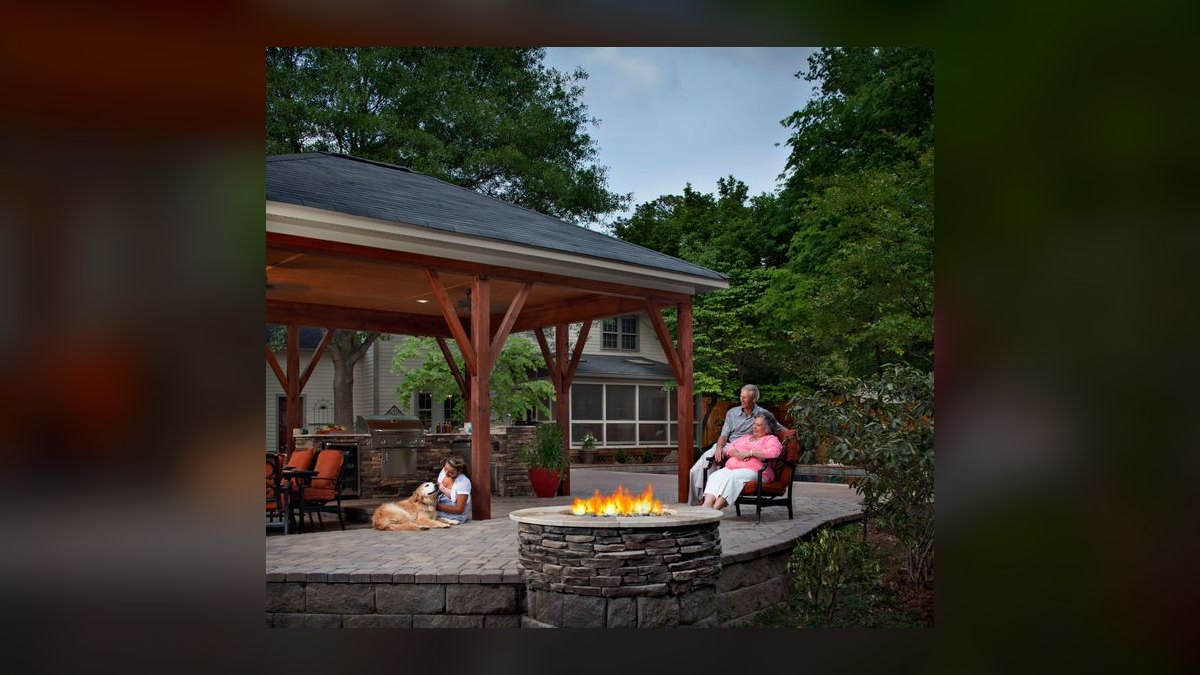
What that premium buys is specific and worth naming. You inherit a subcontractor network that has already been culled — the seller found the framing crews who show up and the paver installer who does not leave ruts in the lawn. You inherit a Google Business Profile with real reviews attached, which in the outdoor living category is the single hardest asset to fake. You inherit a backlog: signed contracts with deposits collected, which in a seasonal business can mean you take over in February with $200,000 already sold for spring installation. And you inherit a design portfolio of completed local projects, which is what actually closes a $60,000 deck sale in a suburban neighborhood where the prospect wants to see work that looks like their street.
What the premium does not buy is the seller's selling ability. This is where resale buyers get hurt. If the departing franchisee was personally the closer — sitting at kitchen tables, running the design software, building the trust — then a meaningful portion of what you bought leaves when they do. Ask directly during diligence: who runs the first appointment, who prices the job, who signs the contract. If the answer is "the owner, on every job," you are buying a network and a name, not a machine.
The new-territory path has its own asymmetry. You choose the market. A resale is a market you inherit, whether or not it has the homeowner density, home values, and lot sizes that support $30,000 to $80,000 outdoor projects. When you open new, you can go find the suburb with 1970s-1990s housing stock where original decks are hitting replacement age, with median home values high enough that a $50,000 backyard is a reasonable percentage of the asset. That siting decision is worth more than most franchise support.

There is a third option that operators keep forgetting: staying independent. You can build decks and outdoor kitchens under your own name with no franchise fee and no 5-6% royalty. That saves real money — on $1 million of revenue, the royalty and brand fund together run $70,000 to $90,000 a year. What you give up is the design software, the national brand recognition that shortens the trust conversation, the estimating and job-costing systems, the vendor relationships, and the peer network of operators who have already solved the problem you are about to hit. For an operator who has never built a design-build business before, that $80,000 a year is a tuition payment. For a seasoned contractor with a book of business, it may be pure cost.
How to decide between them
Run the decision in a fixed order, because the answer changes depending on which constraint binds first.
Start with liquid capital, not total net worth. If you have $60,000 to $100,000 liquid and can qualify for an SBA 7(a) loan in the $75,000 to $150,000 range, a new territory is the realistic path. Resales generally require a larger down payment — SBA lenders typically want 10% to 25% down on a business acquisition, so a $500,000 resale means $50,000 to $125,000 of your own money at closing, plus working capital on top of that. Buyers routinely underestimate the working capital line and close with nothing left to market with, which in this business is the fastest way to fail with a profitable asset.
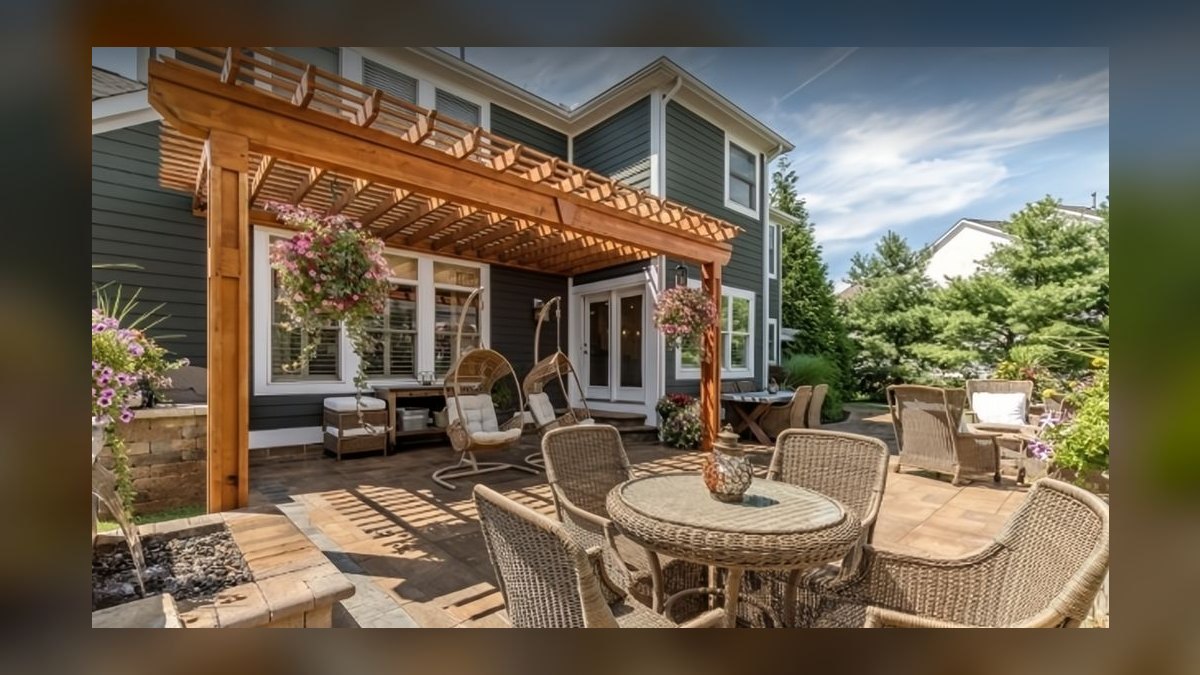
Second, be honest about your runway. A new territory realistically produces its first signed contracts within 60 to 120 days of launch and its first meaningful revenue quarter somewhere in months 6 through 12, depending on when in the season you open. If you open in October in Minnesota, you are selling into a spring install calendar and your first real cash arrives seven months out. If your household needs income within six months, a resale with an existing backlog is the safer structure — not because it is a better business, but because you cannot outrun a personal cash-flow cliff.
Third, assess your own skill stack against what each path demands. A new territory demands lead generation and cold-start selling. A resale demands operational takeover: managing crews you did not hire, honoring contracts you did not price, and holding onto a reputation you did not build. These are different jobs. An operator with a marketing and sales background usually does better opening new; an operator with a project-management and operations background usually does better buying.
Fourth, validate the territory itself, and do it the same way regardless of path. Pull owner-occupied housing counts, median home value, and housing age for the ZIP codes in the territory. Count the existing competitors — independent deck builders, hardscape contractors, other outdoor living franchises — and read their reviews to see where they are failing. Call three local building departments and ask about deck and structure permit volume over the last three years; that number is your addressable demand and it is public.
Fifth, interview operators on both sides. Talk to at least eight current Archadeck franchisees, and make sure some opened cold and some bought resales. Ask each one the same five questions: what did month 13 look like, how many subcontractor crews did you fire before you found the keepers, what did you actually spend on marketing in year one versus what you planned, what percentage of your revenue comes from repeat and referral now, and what is your net after you pay yourself. The gap between planned and actual marketing spend is where the honest answers live.
The numbers behind each option

Here is the new-territory build, using the ranges that show up in the Archadeck Item 7 disclosure and typical home-services startup budgets. The franchise fee is about $50,000. Vehicle and equipment — a truck or van, basic tools, tablet, measuring and design tech — runs $15,000 to $45,000. Home-office setup runs $5,000 to $20,000. Initial marketing is the line people cut and should not: $25,000 to $60,000, because in a cold territory nobody knows you exist. Training and travel adds $10,000 to $28,000. Licensing, bonding, and insurance runs $8,000 to $25,000. Working capital sits at $25,000 to $70,000. Total: roughly $100,000 to $200,000.
Now the operating model on a real job. Take a $50,000 outdoor kitchen and pergola. Materials land around 30% to 35% of contract value, call it $16,500. Subcontracted trade labor runs another 28% to 32%, call it $15,000. Those two together are your direct cost — roughly $31,500 — and what remains is gross margin of about $18,500, or 37%. That $18,500 is what pays your royalty, your marketing fee, your insurance, your truck, your software, and eventually you. The margin is what is left after subs and materials, not a pool the subs get paid out of.

Scale that to a year. A unit doing $1,000,000 in installed revenue looks roughly like this: materials at 33% is $330,000, subcontractor labor at 30% is $300,000, marketing at 8% to 10% is $80,000 to $100,000, royalty and brand fund at 6% to 9% combined is $60,000 to $90,000, and other operating expense — insurance, vehicle, software, admin, permits — is $60,000 to $90,000. What lands at the bottom is $340,000 of gross margin less roughly $200,000 to $280,000 of overhead, leaving $100,000 to $180,000 in owner earnings. Mature units in this system gross considerably more — $700,000 to $2,500,000 is the range operators describe — and the top of that band is where owner income pushes past $250,000, because marketing and admin do not scale linearly with revenue.
Year one on a new territory does not look like that. A realistic first-year ramp is $300,000 to $700,000 in installed revenue, and at $400,000 with $60,000 of marketing spend that has not yet compounded into referrals, owner earnings can easily be zero to $40,000. That is the number to plan around. Anyone modeling $150,000 of first-year owner income on a cold start is modeling a fantasy.
The resale math runs differently. Suppose you buy a unit doing $1.2 million with $185,000 in seller's discretionary earnings. At a 2.75x multiple you pay roughly $509,000. With 20% down that is about $102,000 of your cash plus a transfer fee and $50,000 to $75,000 of working capital, so call it $175,000 to $190,000 at closing — not far off the top end of a new-territory build. The difference is the $407,000 of debt. On a ten-year SBA note in the 9% to 11% range, that is roughly $5,200 to $5,700 a month, or $62,000 to $68,000 a year of debt service. Your $185,000 of SDE becomes about $120,000 after debt, and only if the business holds its revenue through the transition. Model a 15% to 25% revenue dip in the first year post-transfer — that is normal on any owner-operated resale — and the picture gets tight.

Compare that to a new territory funded with a $125,000 SBA loan: about $1,600 to $1,750 a month, or $20,000 a year in debt service. That $45,000 annual difference is the real cost of buying a head start. Whether it is worth it comes down to how many years of ramp you are skipping.
Two more numbers matter. Average project size in this model runs $15,000 to $100,000-plus, which means your job count is low and every single lost sale hurts disproportionately — losing four jobs a year is losing $200,000 of revenue. And close rate: a design-build operator with a decent process typically closes 25% to 40% of qualified in-home appointments. At a 30% close rate and a $45,000 average ticket, hitting $1,000,000 means about 22 sold jobs, which means about 74 qualified appointments, which means you need enough marketing to generate roughly 120 to 150 raw leads. Back-solving that lead requirement from your revenue target is the most useful spreadsheet you will build before signing anything.
Sequencing the first year, whichever path you pick
The order of operations matters more than the effort you put into any one step, because in a seasonal business the calendar is unforgiving. Getting the sequence wrong by three months can cost you an entire selling season.
Days 1 through 20: read the Franchise Disclosure Document cover to cover, with real attention to Item 7 (investment), Item 19 (financial performance representations, including whether the numbers are gross revenue or net), Item 12 (territory rights and whether they are protected), and Item 20 (unit counts, including transfers, terminations, and non-renewals over the last three years). The turnover table in Item 20 is the most honest page in the document. If you are looking at a resale, get the last three years of tax returns and a monthly P&L, not just a summary.

Days 21 through 40: interview eight or more current operators, plus at least two former operators if you can find them. Franchisors provide the current list; the FDD provides names of those who left. The people who left will tell you what the sales presentation will not.
Days 41 through 60: validate the market. Housing stock age, owner-occupancy rate, median home value, permit volume, competitor density and review quality. If you are buying a resale, this step still applies — you can inherit a business in a market that is quietly deteriorating.
Days 61 through 90: complete training and start building the subcontractor bench before you need it. Plan to interview far more crews than you keep. Three framing crews, two or three hardscape and paver installers, and two outdoor-kitchen or specialty trades is a functional starting bench. Pay them on time, every time, without exception — in a market where contractors chronically pay late, prompt payment is the cheapest competitive advantage available and it will get your jobs scheduled ahead of someone else's.
Days 91 through 120: launch and drive leads. Marketing spend front-loads here and it should. Local service ads, a Google Business Profile aggressively fed with project photos, yard signs on every job, and direct outreach to realtors, landscape designers, and pool builders who see the same customer earlier in the buying cycle than you do.
The seasonal rhythm is the part first-year operators consistently mishandle. In most of the country the install season runs April through October. November through March is slow on installation but should be your heaviest selling period — you are booking spring work and collecting deposits, typically around 50% at signing, which is what funds you through winter. Operators who treat the off-season as downtime start March with an empty calendar and never recover the year. Set aside 15% to 20% of gross revenue from May through September into a dedicated reserve; on $500,000 of peak-season revenue that is $75,000 to $100,000, enough to carry salary, royalties, and marketing through February.
Scaling works by adding subcontractor capacity, not fixed cost. Going from $1 million to $1.8 million does not require a second building or a payroll of installers; it requires one more project manager or a salesperson, and more crews. That is the structural reason this model produces the owner-earnings percentages it does — and also the reason your ceiling is set by how many crews you can actually keep busy and quality-controlled at once. Most operators find that ceiling around three to five simultaneous active jobs before quality starts slipping, which is a real constraint on how fast you can grow.
Related questions
Can I run an Archadeck franchise part-time while keeping a job?
No. The model requires daytime availability for in-home design appointments, site visits, and subcontractor coordination — all of which happen during business hours. Operators who tried it describe missed appointments and crew scheduling failures. Plan on full-time commitment from launch.
Do I need a contractor's license to own one?
It depends entirely on your state and municipality. Some jurisdictions require the business entity to hold a general contractor or home improvement license; others allow you to operate through licensed subcontractors. Verify with your state licensing board before signing anything — requirements vary widely and change.
How long is the franchise agreement term?

Home-services franchise agreements in this category commonly run ten years with renewal options, though terms vary. Confirm the exact term, renewal conditions, renewal fees, and transfer rights in the current FDD — these directly affect your ability to sell the business later.
What happens if I want to sell my territory in five years?
You can typically sell, but the franchisor holds transfer approval rights, charges a transfer fee, and may hold a right of first refusal. Your sale price will track your documented earnings, so keep clean books from day one — buyers pay for provable cash flow.
Is a warm-climate territory meaningfully better?
Yes, materially. Longer install seasons in the South and Southwest smooth cash flow and raise annual capacity. Northern territories can still perform well but require disciplined off-season selling and larger cash reserves to bridge the winter revenue gap.
FAQ
What is the total investment to open a new Archadeck Outdoor Living franchise?
The total initial investment falls roughly in the $100,000 to $200,000 range, including a franchise fee around $50,000. Because the model is home-based with no showroom, no retail lease, and no inventory, the largest discretionary line is initial marketing at $25,000 to $60,000 — the item you should not cut.
How much do owners actually earn?
Owner income varies enormously by market maturity and volume. Units grossing $700,000 to $2,500,000-plus produce owner earnings commonly described in the $100,000 to $250,000-plus band. First-year cold starts are a different story — plan for $300,000 to $700,000 in revenue and near-breakeven owner income while you build the pipeline.

Do I need construction experience?
No, and most successful operators do not have it. Subcontracted trade crews perform all construction. Your job is selling, designing with the system's software, and project managing. Sales ability and organizational discipline matter far more than knowing how to frame a joist — though you do need enough technical literacy to evaluate crew workmanship.
Is buying an existing unit safer than opening new?
Safer on cash flow, riskier on price. A resale gives you an existing subcontractor bench, local reviews, and a signed backlog, but you pay a multiple of earnings and take on significantly more debt service. The core diligence question is whether revenue is owner-dependent — if the seller personally closed every sale, much of what you bought leaves at closing.
What are the ongoing fees?
Royalty runs approximately 5% to 6% of gross sales, plus a separate brand or marketing fund contribution. Combined, budget 6% to 9% of revenue. On $1,000,000 of installed work that is $60,000 to $90,000 annually — the number to weigh against building an independent brand with no franchise support.
How bad is the seasonality really?
Real, but manageable with discipline. Most territories install April through October and sell November through March. The operators who survive treat winter as their heaviest selling season, collect roughly 50% deposits on spring jobs, and reserve 15% to 20% of peak-season revenue. The ones who treat winter as downtime start spring with an empty calendar.
Sources
- https://www.archadeck.com/ — brand overview, service categories, and franchise information.
- https://www.franchise.org/ — International Franchise Association: industry data, FDD guidance, and franchising regulation basics.
- https://www.ftc.gov/business-guidance/resources/franchise-rule-compliance-guide — FTC guidance on the Franchise Rule and what an FDD must disclose.
- https://www.sba.gov/funding-programs/loans/7a-loans — SBA 7(a) loan program terms, eligibility, and use for business acquisition.
- https://www.franchisebusinessreview.com/ — independent franchisee satisfaction research and benchmarking.
- https://www.census.gov/construction/bps/ — U.S. Census Building Permits Survey, for validating local residential construction activity.
- https://www.nahb.org/ — National Association of Home Builders: remodeling market data and residential construction trends.
- https://www.jchs.harvard.edu/ — Harvard Joint Center for Housing Studies: home improvement and remodeling market research.
- https://www.bbb.org/ — Better Business Bureau: complaint history and accreditation records for franchise brands.
Related on PULSE
- Should I open or buy an Outdoor Lighting Perspectives franchise in 2027?
- Should I open or buy a The Junkluggers franchise in 2027?
- Should I open or buy a Pak Mail franchise in 2027?
- Should I open or buy a PostNet franchise in 2027?
- How Many Employees Should I Schedule Each Shift at My Outdoor and Camping Store?
This page will be disappearing soon. Save it to your device for $1 — or read it free while it is here.
@Kory-White- · if Venmo asks, the last 4 of my number are 2012
This page is gone.
This one is off the shelf now. $1 keeps it on your phone for good — the whole page, pictures and diagrams included.
 pulse-qHow Many Sales Reps Do I Need to Hire for My Calibration Services Company in 2027?
 pulse-qHow Do I Get My Dealership Service Advisors to Sell Maintenance Plans in 2027?
 pulse-qShould I open or buy a West Shore Home franchise in 2027?
 pulse-qDo I Need a Fractional CRO for My E-Commerce Business in 2026?
 pulse-qShould I Hire a Fractional CRO If My Comp Plan Is Driving the Wrong Behavior in 2026?
 pulse-qWhen Should a Startup Hire a Fractional CRO in 2027?
 pulse-qShould I open or buy a Young Rembrandts franchise in 2027?
 pulse-qShould I open or buy a Floor Coverings International franchise in 2027?
 pulse-qFractional CRO vs Sales Consultant: What Is the Difference?
 pulse-qHow Many Employees Should I Schedule Each Shift at My Gastropub in 2027?