
Should I open or buy a Glo Tanning franchise in 2027?
 Curated byKory White · Fractional CRO · Maryland
 PULSEKNOWLEDGE LIBRARY
Quality
Certified

Open a new Glo Tanning franchise if you have $700,000 to $1,500,000 in total capital and want to control site selection; buy an existing location if you want immediate membership revenue and proven unit economics. Buying costs more upfront but removes the 6-to-12-month ramp. Under-capitalized buyers should choose neither.
Opening new versus buying an existing location
The two paths diverge on almost every dimension that matters, and the choice is less about preference than about which risk you are equipped to absorb.
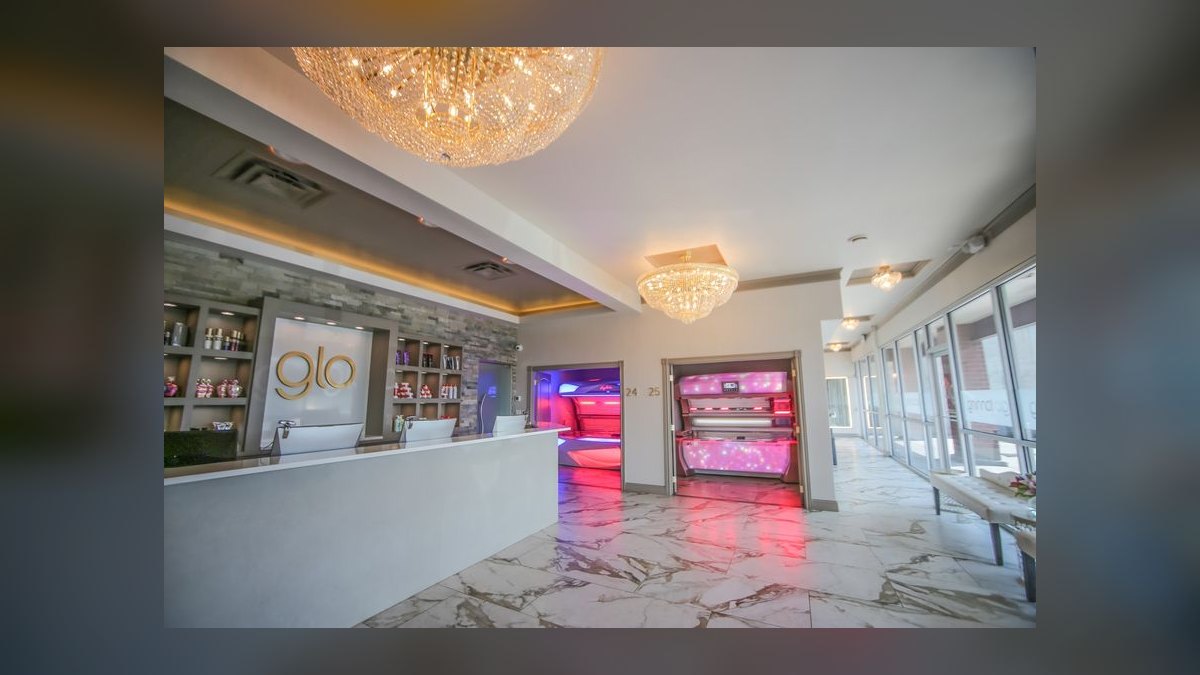
Opening new means signing a franchise agreement, paying the roughly $45,000 franchise fee, selecting a site, negotiating a lease, building out 3,000 to 5,000 square feet of upscale salon space, installing UV beds, spray-tan booths and red-light therapy panels, and then pre-selling memberships into an empty building. The total Item 7 investment per the 2026 FDD runs roughly $700,000 to $1,500,000. Your timeline from signing to opening is typically 6 to 12 months, driven by site selection, lease negotiation, permitting, buildout and equipment delivery. On day one you have zero members and full fixed costs.
Buying an existing location means acquiring a going concern — a member roster, trained staff, an installed equipment base, an assigned lease, and a track record you can actually diligence. You will pay the seller a multiple of earnings on top of a transfer fee to the franchisor, and you inherit whatever condition the equipment is in. If a location clears $250,000 in owner earnings and trades at a typical small-business multiple, the purchase price alone can exceed the cost of building new — but you skip the ramp entirely and the bank underwrites against real cash flow rather than a projection.
The critical asymmetry: a new build has known costs and unknown revenue. A resale has known revenue and unknown costs — specifically deferred capital expenditure. A seller who has not replaced UV beds in five years is handing you a $150,000-plus bill disguised as a clean P&L. That single dynamic explains most of the disappointment in franchise resales generally, and it is acute in an equipment-heavy concept like this one.
There is a third option worth naming honestly: neither. If you cannot put $250,000 to $400,000 in liquid capital behind the deal, and if your market is not receptive to upscale tanning and wellness, the right answer is to walk. This is not a low-capital entry business.
How to decide between them
The decision reduces to four gates, and you should run them in order rather than in parallel — each one can end the process and save you the cost of the next.
Gate one: capital. Do you have $250,000 to $400,000 liquid plus the borrowing capacity to reach $700,000 to $1,500,000 total? SBA 7(a) financing is commonly used for franchise acquisitions, but lenders typically want meaningful equity injection and personal guarantees. If the answer is no, stop here. Under-capitalization is the single most reliable predictor of failure in an equipment-heavy build — you run out of working capital during the membership ramp, cut marketing at exactly the wrong moment, and never reach break-even member count.
Gate two: market. Is your target trade area receptive to tanning and wellness? Look at competitor density (Palm Beach Tan, Sun Tan City, independents), household income, and whether the local climate creates a tanning season. Northern markets with harsh winters produce strong winter demand and a summer trough; year-round warm markets have flatter, lower seasonality. Neither is disqualifying, but they demand different cash management.
Gate three: role. Do you want to operate or to own? The self-service equipment model genuinely supports semi-absentee ownership, but only if you hire a competent general manager at $55,000 to $75,000 plus bonus. If you intend to be absentee and have not budgeted that salary, your economics are wrong.
Gate four: new versus resale. Only now does this question matter. Choose a resale if you can find one in a good trade area with clean equipment records and verifiable member counts. Choose new construction if no acceptable resale exists, if you want a specific site, or if every available resale is priced as though its equipment is new when it is not.
Concrete numbers behind each option
Both paths ultimately land on the same revenue engine, so start with what a mature Glo location actually produces, then work backward into what each entry route costs.
Mature unit economics. Mature salons gross roughly $600,000 to $1,400,000 annually, with owners clearing approximately $120,000 to $340,000. On a $1,000,000 revenue location, a representative cost structure runs labor near 20 percent ($200,000), rent and utilities near 20 percent ($200,000), royalty of about 6 percent plus a marketing fee of roughly 2 percent ($80,000 combined), and equipment amortization plus other operating expense around 22 percent ($220,000) — leaving roughly $300,000 in owner earnings. These are structural ratios, not guarantees; validate against Item 19 and operator calls.
The membership math underneath it. Tiered plans typically span about $29 per month for basic UV access to about $89 per month for unlimited premium beds plus red-light therapy. After discounts, promotions and churn, blended revenue per member commonly lands between $45 and $55 per month. A location with 400 to 600 active members therefore generates roughly $18,000 to $33,000 in monthly recurring revenue before retail sales and single-visit walk-ins. Break-even — covering rent, royalties, utilities, insurance and minimum staffing — typically requires roughly 250 to 350 active members. A location at 500 members plausibly generates $15,000 to $25,000 in monthly net operating income absent major repairs or lease escalation.

Red-light therapy is where the margin actually expands. Many locations report that 20 to 35 percent of members select the top tier specifically for red-light access, a service that carries no consumables, no lotion cost and no UV bulb replacement after the initial equipment outlay.
Cost of opening new. Against a total Item 7 range of roughly $700,000 to $1,500,000, the components break down approximately as: franchise fee $45,000; buildout and leasehold improvements $300,000 to $650,000; equipment covering UV beds, spray booths and red-light panels $250,000 to $550,000; signage and decor $25,000 to $70,000; initial inventory of lotions and supplies $10,000 to $28,000; initial marketing and membership pre-sale $25,000 to $60,000; training and travel $10,000 to $30,000; and working capital for the first three to six months of $50,000 to $130,000.
That working capital line is the one people shave and the one that kills deals. If you open with 80 members and need 300 to break even, you are funding a deficit for months. Budget the top of that range, not the bottom.
Cost of buying existing. A resale price is negotiated, not published, so model it rather than guessing at it. Anchor on seller's discretionary earnings, then adjust for three things the seller will not volunteer:

- Equipment age. Subtract the replacement cost you will incur within 24 months. Ask for purchase invoices and bulb-replacement logs on every bed.
- Member quality. A roster of 500 includes some share of delinquent and frozen accounts. Ask for a payment-status breakdown, not a headcount, and look at 12-month cohort retention rather than a snapshot.
- Lease term. A location with 18 months remaining on its lease and no renewal option is not the same asset as one with seven years and two options. Renewal at market can move rent materially.
Add the franchisor's transfer fee and any required remodel-to-current-standards obligation triggered by the transfer — franchisors frequently require a resale unit to be brought to current image standards, which can add six figures to what looks like a turnkey purchase. Confirm this in the FDD and in the franchise agreement being assigned to you before you sign anything.
The equipment lifecycle nobody prices correctly
This is the single most underestimated line item in either path, and it is the reason a resale can be far more expensive than its asking price suggests.
UV bed replacement cycles. High-pressure UV beds typically last 5 to 7 years before acrylic shields cloud, lamps lose intensity and electronics begin failing. Brand image standards generally force replacement or major refurbishment around the six-year mark. A single high-end bed costs roughly $18,000 to $35,000 to replace. An eight-bed location therefore faces a $144,000 to $280,000 capital event in year six. Franchisees who do not sink funds for this arrive at year six with dim beds, rising churn, and no capital to fix it — which is precisely when they list the business, which is precisely the business you should not buy at full price.
Red-light therapy. LED panels are more durable, commonly rated 10-plus years, but control boards and power supplies fail and run roughly $500 to $2,000 per panel to replace. The larger pressure is competitive rather than mechanical: red-light technology improves quickly, and a 2027-era panel markets better than a 2021 one. Operators who refresh every four to five years should budget an incremental $15,000 to $30,000 per location per cycle.
Spray-tan booths. Booths themselves last roughly 7 to 10 years, with daily cleaning, quarterly nozzle replacement and annual compressor servicing. The real cost is solution: a gallon of high-quality spray solution runs approximately $40 to $80 and covers roughly 15 to 20 sessions. At 30 spray sessions per day, that is $60 to $160 daily in consumables, or $1,800 to $4,800 monthly. Spray-tan revenue is not pure margin, and any pro forma that treats it as such is wrong.
How to use this in diligence. Build a 10-year capital schedule before you sign anything, for either path. Assign each bed, booth and panel a purchase date and an expected replacement date, then fund a monthly reserve against it. On a new build, that reserve is a discipline. On a resale, it is a negotiating instrument — a seller with five-year-old beds is asking you to pre-pay for equipment you must immediately replace, and the purchase price should reflect that.
Staffing: what "low staffing" actually costs
The concept genuinely runs lean relative to service-heavy businesses, because customers check in at a kiosk or app and operate equipment themselves. But "low staffing" is not "no staffing," and the gap between the brochure and the schedule is where new owners get surprised.

A typical location operates seven days a week, roughly 10 to 12 hours daily. Covering that with humane schedules requires approximately one full-time manager at 40 to 50 hours weekly, two to three part-time front desk associates at 20 to 30 hours each, and a cleaning and maintenance person at 10 to 15 hours. Fully loaded — wages, payroll taxes, workers' compensation, any benefits — that typically lands at $4,000 to $7,000 monthly in moderate-minimum-wage markets, and $9,000 to $12,000 monthly in high-cost states like California or New York.
The self-service model has a specific failure mode worth designing around. Everything works beautifully until something breaks. When a bed will not start, a spray booth jams, or a red-light panel flickers, a staff member has to intervene immediately. If your single on-shift associate is mid-conversation with a member about billing, you have a service failure and a member who now remembers waiting. Locations run with one person per shift consistently show worse retention for exactly this reason. Staff to the failure case, not the average case.
Manager quality is the other lever. Expect $45,000 to $65,000 annually for a competent location manager handling membership sales, scheduling, maintenance coordination and local marketing; $55,000 to $75,000 plus performance bonus for a general manager capable of running a genuinely absentee location. Owners who underestimate this line end up working 50-plus hours themselves — which is a legitimate choice, but it should be a choice, not a surprise. Tie a meaningful share of manager compensation to net member growth rather than gross sign-ups, so nobody is rewarded for churning members through discount promotions.
Membership retention is the whole business
Every membership model leaks. Tanning benchmarks generally show monthly churn between 5 and 8 percent in the first year, settling toward 3 to 5 percent after roughly 18 months as the base matures. At 500 members and 5 percent monthly churn, you lose 25 members a month and must acquire 25 just to stand still. At 8 percent, you are replacing 40.

Seasonality compounds this. In northern markets, expect churn to spike 10 to 15 percent in summer months when people tan outdoors. Plan for it: annual prepaid plans, summer pauses instead of cancellations, and a red-light-forward summer marketing push that repositions the membership as year-round wellness rather than seasonal tanning. The wellness crossover is not just a growth story — it is the seasonality hedge.
Three operational habits separate strong retention from weak:
- Instrument cohort retention, not headcount. Track what percentage of each month's new members remain at 3, 6 and 12 months. A flat headcount can hide a hollow base being refilled by ever-cheaper promotions.
- Watch failed payments as a leading indicator. Card declines precede cancellations. A dunning process that recovers even a modest share of declines pays for itself many times over at $45 to $55 per member per month.
- Sell the upgrade, not the discount. Moving a member from a $29 basic tier to a $89 red-light tier is worth far more than acquiring a new discounted member, and costs almost nothing in incremental equipment expense.
Regulatory and perception factors you must underwrite
UV tanning carries genuine health scrutiny and regulation. Many jurisdictions impose age restrictions on UV tanning, mandate specific health warnings and consent procedures, and require equipment compliance with federal performance standards. These rules vary by state and sometimes by municipality, so verify your specific market with the state health or cosmetology board before you sign a lease — not after.

Beyond compliance, there is a demand-side perception question. Public health messaging about UV exposure is persistent and unlikely to reverse. Underwriting a business whose core service faces that headwind requires you to believe one of two things: that demand is durable regardless, or that diversification insulates you. The second is the more defensible position, and it is exactly what spray tanning and red-light therapy provide. Red-light is a wellness and recovery modality with an entirely different consumer framing, riding the same trend that supports recovery-focused concepts. A location where a meaningful share of revenue comes from non-UV services is structurally more resilient than one that is purely UV.
Practical implication for both paths: when opening new, weight the equipment mix toward red-light and spray more than a purely UV-optimized build would suggest, and market the wellness positioning from pre-opening. When buying, ask the seller for a revenue split by service type. A resale that is 90 percent UV revenue is a different risk than one at 60 percent UV, 40 percent spray and red-light, even at identical gross sales.
Implementation sequencing from decision to stabilized unit
Whichever path you choose, the sequence below runs roughly 6 to 12 months from serious inquiry to open doors on a new build, and considerably less on a resale where buildout is already done.
Weeks 1 to 4 — document diligence. Read the current FDD end to end, with particular attention to Item 7 (investment), Item 19 (financial performance representations, if provided), Item 20 (outlet and franchisee turnover — count closures and transfers, not just openings), and the transfer and remodel provisions. Do not rely on a summary; read the actual document, and have a franchise attorney read it too.
Weeks 5 to 8 — operator validation. Call existing franchisees from the Item 20 list, including at least a few who have left the system. Ask specifically about: months to break-even member count, actual blended revenue per member, first-year churn, real labor cost as a percentage of revenue, unplanned equipment expense, and whether the franchisor's marketing spend produced measurable member acquisition. Ask what they would do differently. Fifteen calls is not excessive.

Weeks 9 to 10 — market validation. Map competitors in your trade area, drive them at peak hours, buy memberships to see the sales process, and assess whether the market is underserved or already saturated. Confirm local UV regulations.
Weeks 11 to 18 — site and lease, or resale negotiation. For a new build, secure a site and negotiate the lease with a tenant rep who understands that your equipment load has real power and HVAC implications. For a resale, complete financial diligence, build the equipment capital schedule, and price accordingly.
Weeks 19 to 26 — build and equip. Permitting, buildout, equipment delivery and installation, staff hiring and training. Delays here are the norm; hold contingency.
Weeks 23 to 26 — pre-sell memberships. Begin selling founding memberships four to eight weeks before opening. Opening with 100-plus members already on autopay changes your entire cash trajectory versus opening at zero. This is the highest-leverage marketing spend in the whole project.
Months 7 to 18 — build to break-even and past it. Push toward 250 to 350 members to cover fixed costs, then toward 500-plus where the model produces real earnings. Only after a first unit is stabilized and staffed with a manager who can run it without you should you evaluate a second location.
Alternative concepts to compare against
Do not evaluate this in isolation. Run the same four gates against adjacent options before committing capital.
Established tanning chains such as Palm Beach Tan and Sun Tan City offer longer operating histories and more mature systems, at the cost of less white space in developed markets. Recovery and wellness concepts occupy the red-light and contrast-therapy space directly, without UV exposure or its regulatory overhead. Sugaring and spray-tan concepts capture the sunless side of the demand curve with meaningfully lower equipment intensity. And an independent tanning-and-wellness salon gives you complete control, no royalty and no marketing fee — at the cost of brand recognition, buying power, site-selection support, and a proven operating playbook, which for a first-time owner is a substantial trade.
The honest framing: the roughly 8 percent combined royalty and marketing fee is the price of the system. If you have deep industry experience and a strong local brand, that fee buys you less. If you are new to the category, it buys you a great deal.
Related questions
Can I finance a Glo Tanning franchise with an SBA loan?
Franchise acquisitions are commonly financed through SBA 7(a) loans. Lenders typically require a meaningful equity injection, personal guarantees, and often collateral. Confirm the brand appears in the SBA Franchise Directory, since directory listing affects eligibility processing.
How long until a new location breaks even?
Break-even generally requires roughly 250 to 350 active members. Depending on pre-sale success and local marketing, reaching that count commonly takes several months to over a year post-opening. Fund working capital for the full ramp, not an optimistic one.
Is semi-absentee ownership realistic here?
Yes, structurally — self-service equipment and recurring memberships reduce daily involvement. But it requires a general manager at $55,000 to $75,000 plus bonus. Semi-absentee is a staffing expense, not a free feature of the model.
What should I ask an existing franchisee first?
Ask how many months it took to reach break-even member count, what their actual first-year churn was, and what unplanned equipment expense they have absorbed. Those three answers predict more than any projection.
Does multi-unit ownership make sense?
Potentially, given the low-staff recurring model. But each unit carries $700,000 to $1,500,000 in investment. Stabilize the first location past 500 members with a manager running it before signing a development agreement.
FAQ
What is the total investment range for a new Glo Tanning franchise?
Per the 2026 FDD, total Item 7 investment runs roughly $700,000 to $1,500,000. That includes a franchise fee of about $45,000, buildout of $300,000 to $650,000, equipment of $250,000 to $550,000, and the remaining startup categories including signage, inventory, initial marketing, training and working capital. Always verify against the current FDD, since figures are revised annually.
What are the ongoing fees?
Expect a royalty of approximately 6 percent of gross sales plus a marketing fee in the range of 1 to 2 percent. Combined, roughly 8 percent of gross revenue leaves the business before your own operating costs. Confirm exact percentages, calculation basis and any minimum-royalty provisions in the current FDD and in the franchise agreement you are actually signing.
How much do owners typically earn?
Mature locations gross roughly $600,000 to $1,400,000 with owners clearing approximately $120,000 to $340,000, driven by low staffing and recurring membership revenue. Results vary widely by market, member count and management quality, and this is a comparatively young system. Review Item 19 and validate the range against a dozen or more operator conversations before relying on it.
Is buying an existing location safer than opening new?
It removes revenue uncertainty but introduces capital-expenditure uncertainty. A resale with five-year-old UV beds carries a $144,000 to $280,000 replacement obligation within a year or two, and a transfer may trigger a remodel-to-current-standards requirement. Safer only if you audit equipment age, cohort retention, lease terms and transfer obligations before pricing the deal.
How do UV regulations affect the business?
UV tanning faces health scrutiny, and many jurisdictions impose age restrictions, warning and consent requirements, and equipment standards. Rules vary by state and sometimes by city, so verify with your state health or cosmetology board before signing a lease. Spray tanning and red-light therapy diversify revenue away from UV and materially reduce this exposure.
Why does red-light therapy matter to the economics?
It expands the addressable market beyond tanners to wellness consumers, and it carries no consumables — no lotion, no bulb replacement — so upgrade revenue drops almost entirely to margin. It also hedges summer seasonality by repositioning the membership as year-round wellness. Locations with a healthy non-UV revenue share are structurally more resilient than UV-only ones.
Sources
- https://www.sba.gov/funding-programs/loans/7a-loans — SBA 7(a) loan program terms and eligibility for franchise financing
- https://www.ftc.gov/business-guidance/resources/consumers-guide-buying-franchise — FTC guidance on Franchise Disclosure Documents and pre-purchase diligence
- https://www.franchise.org/ — International Franchise Association, industry data and franchising standards
- https://www.franchisebusinessreview.com/ — independent franchisee satisfaction surveys and performance benchmarks
- https://www.fda.gov/radiation-emitting-products/tanning/tanning-products — FDA regulation and performance standards for UV tanning equipment
- https://www.cancer.org/cancer/risk-prevention/sun-and-uv/indoor-tanning.html — American Cancer Society on indoor tanning health considerations
- https://www.bbb.org/ — Better Business Bureau company reputation and complaint records
- https://www.bls.gov/oes/current/oes_nat.htm — Bureau of Labor Statistics wage data for personal care and front-desk roles
Related on PULSE
- Should I open or buy a Glo Sun Spa franchise in 2027?
- How Many Employees Should I Schedule Each Shift at My Tanning Salon?
- Should I open or buy a The Junkluggers franchise in 2027?
- Should I open or buy a Pak Mail franchise in 2027?
- Should I open or buy a PostNet franchise in 2027?
- Should I open or buy a Fish Window Cleaning franchise in 2027?
This page will be disappearing soon. Save it to your device for $1 — or read it free while it is here.
@Kory-White- · if Venmo asks, the last 4 of my number are 2012
This page is gone.
This one is off the shelf now. $1 keeps it on your phone for good — the whole page, pictures and diagrams included.
 pulse-qShould I Hire a Fractional CRO If My Revenue Is Seasonal and Unpredictable in 2026?
 pulse-qHow Many Technicians Should I Schedule Each Day at My Nail Salon in 2026?
 pulse-qShould I open or buy a Bath Planet franchise in 2027?
 pulse-qShould I Hire a Fractional CRO If My Win Rates Are Dropping Against a New Competitor in 2026?
 pulse-qHow Do I Get My Optical Staff to Sell Premium Lenses and Coatings in 2026?
 pulse-qShould I Hire a Fractional CRO If I Need to Professionalize a Referral-Only Business in 2026?
 pulse-qHow Many Employees Should I Schedule Each Shift at My Cocktail Lounge in 2026?
 pulse-qHow Many Sales Reps Do I Need to Hire for My Garage Door Company in 2027?
 pulse-qHow Many Sales Reps Do I Need to Hire for My Smart Home Integration Company in 2027?
 pulse-qShould I open or buy a Bloomin' Blinds franchise in 2027?