 Pulse Reviews and Analysis
Should I open or buy a Hunt Brothers Pizza franchise in 2027?
 Curated by Kory White · Fractional CRO, CRO Syndicate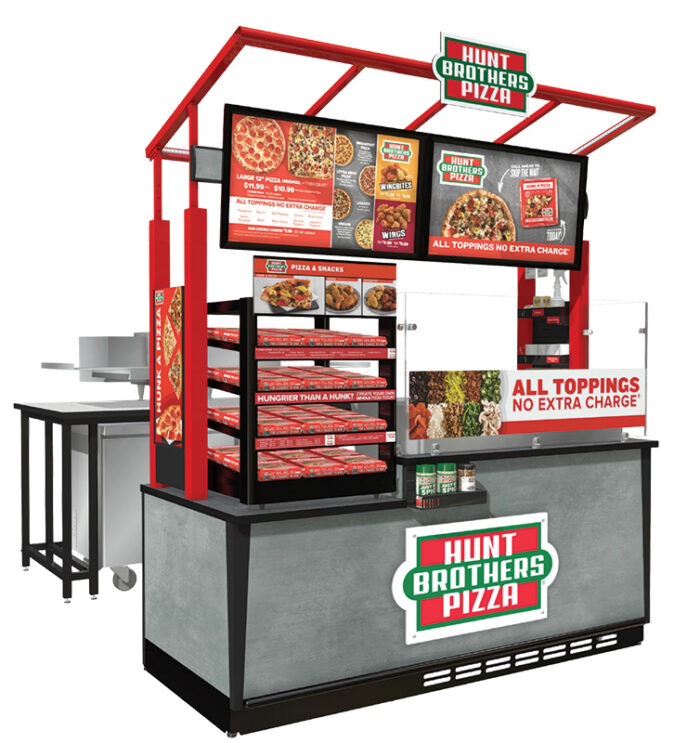
You've heard the pitch: "Open a pizza franchise for $20,000—no franchise fee, no royalties!" And your first thought is probably, "Great, I'll quit my job, slap a sign on a strip mall, and retire on pepperoni profits." I've been in revenue strategy for 25 years, and I'm here to bust that myth hard.
Let me tell you the truth about Hunt Brothers Pizza—because everyone says it's a cheap pizza franchise, but the reality is far more specific, and far more profitable if you play it right.
Claim #1: "Hunt Brothers Pizza is a cheap way to start a pizzeria."
Reality: *False.* Hunt Brothers Pizza is not a standalone restaurant franchise—it's a *convenience-store in-store pizza program*. Founded in 1991, it's one of the largest c-store pizza programs in the U.S., but it's a licensed foodservice concept installed inside an existing convenience store, travel center, or similar retail location.
You're not opening a pizzeria; you're adding a branded made-to-order pizza counter with build-your-own and "Just Rite" pizzas, wings, and breadsticks as a profit center within your existing store.
The investment is indeed low—$20,000 to $150,000 depending on equipment and buildout—but that's because you already own the store. The economics are incremental: added revenue and margin on an existing operation. You're not renting a new space, hiring a new manager, or buying a new building.
If you want a standalone pizzeria, go look at Marco's or Hungry Howie's (both in the library). Hunt Brothers is for existing c-store operators adding hot foodservice.
Claim #2: "No franchise fee and no royalty means I'm keeping all the profit."
Reality: *Mostly true, but here's the catch.* Hunt Brothers indeed charges no franchise fee and no royalty—they earn through food and supply sales. Your ongoing cost is buying ingredients, not paying a percentage of revenue. That's a distinctive, appealing structure that avoids the typical 4-8% royalty drag.
But you're still buying their dough, toppings, and packaging. Your total investment is ~$20,000 to ~$150,000, broken down as:
- Pizza equipment & oven: $12,000–$90,000
- Buildout / counter: $3,000–$45,000
- Signage & branding: $2,000–$15,000
- Initial inventory: $2,000–$8,000
- Training: $0–$5,000
- Working capital: $3,000–$18,000
And the revenue? A Hunt Brothers program adds incremental foodservice revenue—often $100,000–$500,000+ in added annual pizza sales depending on store traffic, at strong food margins (hot pizza outperforms packaged-goods margin). But here's the math: if you do $250,000 in added pizza sales, you subtract food/supply cost (about 50% = $125,000), added labor (22% = $55,000), and utilities/other (10% = $25,000), leaving you with incremental store profit of ~$45,000.
That's solid, but only if your store already has traffic. If traffic is low, you get limited incremental return.
Claim #3: "This is an easy side hustle—I can just add pizza and watch the money roll in."
Reality: *False.* This is a hot-food profit center that requires convenience-store operations and foodservice execution skills. You need to manage added labor, food safety, and quality—and you need a store with strong existing traffic. The winners are existing c-store and travel-center operators who want a branded hot-pizza profit center with no royalty drag.
The losers are:
- Those wanting a standalone pizzeria
- Low-traffic stores that can't support foodservice volume
- Operators who can't execute hot-food quality/safety
- Retailers unwilling to manage added labor/food-safety
- Those expecting classic franchise territory/exclusivity
Claim #4: "2027 is a bad time for c-store foodservice."
Reality: *False.* C-store foodservice is a major growth area—retailers are adding hot food for margin and traffic. In-store programs like Hunt Brothers, Champs, and Chester's are low-capital add-ons. Hunt Brothers' supply-based model avoids franchise fees/royalties, and hot pizza foodservice outperforms packaged-goods margin.
The competition includes Champs Chicken, Chester's, Krispy Krunchy Chicken, and other c-store programs. If you're an existing operator with a high-traffic store, this is a smart play.
Claim #5: "I can just sign up and start selling pizza tomorrow."
Reality: *No.* Here's the 90-day decision tree:
- Assess your existing store's traffic and foodservice potential—this is an add-on, not a standalone.
- Contact Hunt Brothers Pizza for equipment, supply terms, and the no-royalty structure.
- Model incremental pizza profit against added labor, food/supply, and equipment cost.
- Confirm equipment, ventilation, and food-safety readiness.
- Install the program and branding; train staff.
- Launch and drive pizza sales within the store.
- Roll the program to additional stores if it boosts profit and traffic.
Alternative plays if this doesn't fit:
- Champs Chicken (c-store chicken program)
- Chester's Chicken / Krispy Krunchy Chicken (c-store chicken programs)
- Standalone pizza franchise (Marco's, Hungry Howie's) if you want a pizzeria
- Uncle Maddio's / fast-casual pizza for standalone pizza
- Independent c-store pizza program for full control
- Other in-store foodservice programs for adjacent models
Bottom line: Add a Hunt Brothers Pizza program if you're an existing convenience-store or travel-center operator who wants a low-capital, branded hot-pizza profit center with a distinctive no-franchise-fee, no-royalty model that boosts margin and store traffic—not if you want a standalone pizzeria.
As an in-store program ($20K–$150K, no royalty), it's an accessible add-on evaluated on incremental store profit, with strong hot-food margins and no royalty drag.
The punchline: Everyone says "cheap pizza franchise," but the truth is this is a c-store profit center for operators who already own the store. If that's you, it's a no-brainer. If not, you're just buying a pizza oven with nowhere to put it.
*For deeper dives into revenue models like this, check out PULSE or CRO Syndicate—we break down the numbers so you don't have to guess.*
*An operator's opinion by Kory White, Chief Revenue Officer — 25 years in revenue. More at PULSE · CRO Syndicate*