
Should I open or buy a HTeaO franchise in 2027?
 Curated byKory White · Fractional CRO · Maryland
 PULSEKNOWLEDGE LIBRARY
Quality
Certified
Open an HTeaO franchise in 2027 only if you can fund $700,000–$1,500,000, secure a high-traffic Sunbelt drive-thru pad site, and operate full-time for 18–24 months to breakeven. The tea-only model's ~22% COGS produces strong margins, but regional concentration and site quality decide the outcome, not the brand.
What an HTeaO franchise actually is and why the model matters
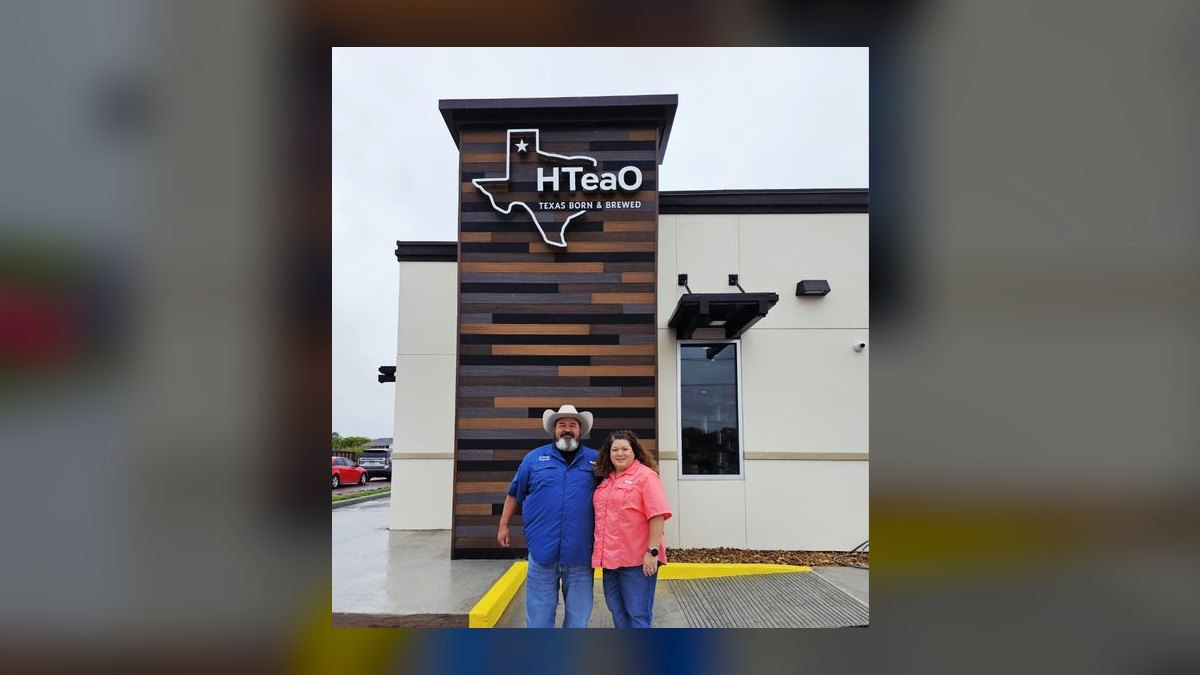
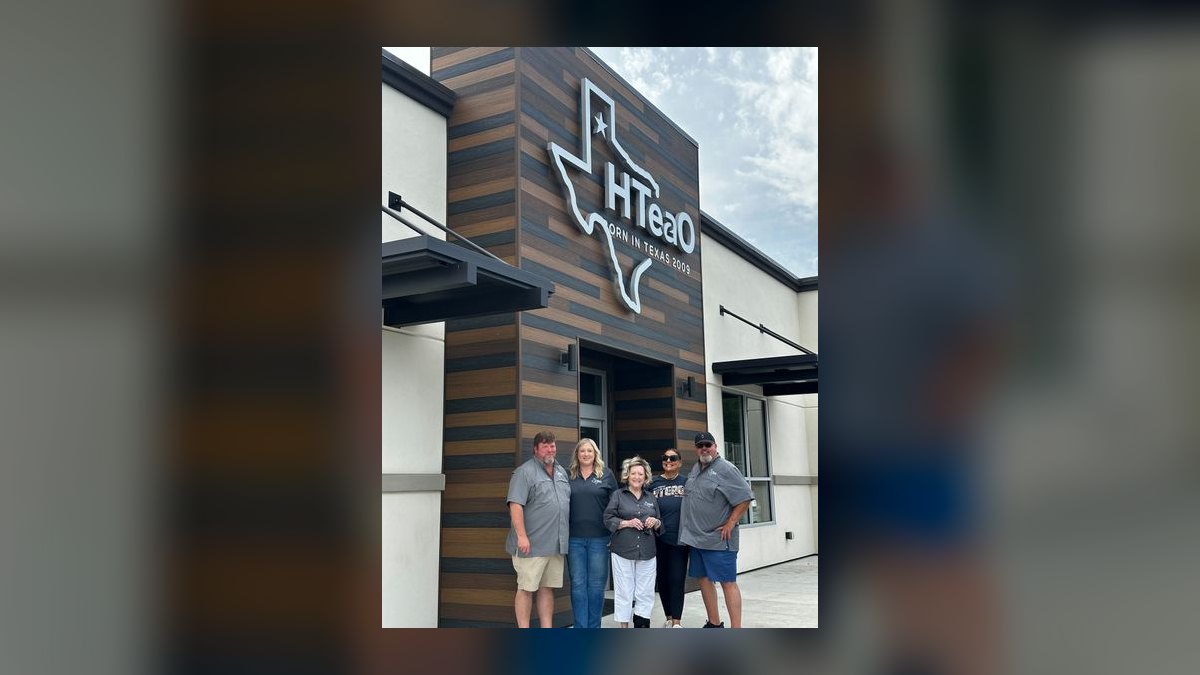
HTeaO is a drive-thru iced-tea concept that started in Texas in 2009 and sells roughly 30-plus fresh-brewed tea flavors alongside flavored waters and purified water and ice. There is no coffee program, no espresso bar, no food line, and no kitchen. That single design decision drives almost every economic difference between this franchise and the coffee drive-thrus it sits next to.
Start with cost of goods. Tea leaves, filtered water, sugar, flavor syrups, cups, lids, and straws land the blended COGS around 20–24% of revenue in a well-run unit. A coffee-forward drive-thru typically runs 30–35% because green coffee, dairy, and syrup-heavy builds are expensive and volatile. Eight to twelve points of gross margin, on a store doing $900,000, is $72,000–$108,000 a year of pure spread that never touches your labor schedule. That is the core of the investment thesis, and it is the thing you should verify against Item 19 of the current Franchise Disclosure Document before anything else.
Labor is the second structural difference. You are not hiring baristas. You are hiring people who can brew batches on a schedule, hold temperature and dilution standards, take an order, and move a car through a window in under 90 seconds. Training a new hire to competence takes days, not weeks. Practical staffing in a busy unit is three to four people per shift — a shift lead, someone on brew and stock, and one or two on order-taking and window. That keeps labor in the 25–30% band and makes turnover survivable, which matters enormously in a hourly-wage market where a coffee chain loses a trained barista and loses two weeks of productivity with them.
The third thing that matters is transaction behavior. Average ticket sits in the $4–$6 range because there is no food attachment and no $7 seasonal latte to anchor the check. You make money on frequency, not on ticket size. A mature unit runs 400–800 tickets a day, with peak summer days pushing past 1,000. That means throughput is your revenue lever. Every 10 seconds you shave off service time in a lunch rush is measurable revenue, and every configuration flaw in your drive-thru lane — a tight turn, an awkward order point, insufficient stacking — is a permanent tax on the store.
Why this matters for a 2027 decision specifically: the drive-thru beverage category has been the most durable segment in restaurant retail, and the tea-only positioning is genuinely differentiated in a field crowded with coffee. But differentiation is not the same as demand. In Texas, Oklahoma, and the broader Sunbelt, iced tea is a year-round habit beverage, not a summer novelty. That is the entire reason the concept works where it works. The question you are really answering is not "is HTeaO a good brand" — it is "does my specific market drink iced tea in February, and can I get a great pad site there."
The step-by-step process from inquiry to open
Treat this as a 12-to-18-month project, not a 90-day one. Franchisees who compress the timeline almost always do it by accepting a weaker site, which is the single most expensive mistake available to you.
Days 1–30 — Document work. Request and read the current FDD end to end. Item 5 and Item 6 give you the franchise fee (approximately $40,000) and the ongoing royalty (around 6%) plus the ad/brand fund contribution (roughly 2–3%). Item 7 gives the total investment range of $700,000–$1,500,000. Item 19, if the brand publishes a financial performance representation, is where you get sales data — read exactly which units are in the sample, how many, and whether the figure is an average or a median. Item 20 shows unit counts, openings, closures, and transfers over the prior three years; a rising transfer or closure count is a signal worth chasing down. Have a franchise attorney review it. This is $2,500–$7,500 well spent.
Days 31–70 — Validation calls. The FDD includes a franchisee contact list. Call 10–15 of them, weighted toward operators who opened 2–4 years ago, plus every former franchisee listed. Ask for specifics: annual gross, COGS percentage, labor percentage, rent, cars per day, months to breakeven, and what they'd change about their site. Ask what corporate did when a store underperformed. Ask what the build-out actually cost versus the estimate. Three or four candid conversations will teach you more than the entire discovery day.
Days 71–200 — Site search and approval. Engage a commercial broker who specializes in QSR drive-thru pad sites, not a general retail broker. Expect to evaluate 20–40 candidate sites to find one that clears both your standards and corporate's. Each site submission through the approval process typically runs 60–90 days. Run this in parallel with financing so you are not waiting serially.
Days 100–260 — Financing. SBA 7(a) is the standard path for franchise acquisition and build-out. Expect the lender to want 20–30% equity injection, a personal guarantee, and a global cash-flow analysis of your household. Have your business plan, three years of personal tax returns, and a personal financial statement ready before the first meeting.
Days 200–380 — Build-out. Permitting is the wild card. A ground-up pad site in a growth-market suburb can take four to eight months from permit application to certificate of occupancy; a conversion of an existing drive-thru building can be substantially faster. Order long-lead equipment early — brewing systems, walk-in coolers, and drive-thru electronics are the items that hold up openings.
Days 380–420 — Training and hiring. Corporate training runs for you and typically a general manager. Hire and train your opening crew two to three weeks before opening and run practice service days. A soft open with limited hours for the first week lets you find your bottlenecks before word of mouth arrives.
Costs, timelines, and the ranges you should underwrite to
The published range is wide for a reason: a conversion of an existing drive-thru building in a secondary market sits near the bottom, and a ground-up build on purchased land in a competitive Sunbelt suburb sits at or above the top. Underwrite to the top half, not the bottom.

Capital stack for a representative $1,000,000 project:
- Franchise fee: approximately $40,000
- Site work, building shell, and drive-thru infrastructure: the largest single line on a ground-up build
- Equipment, brewing systems, refrigeration, POS, and drive-thru electronics
- Signage — a monument or pylon sign is not optional and is frequently underestimated
- Professional fees: architect, civil engineer, attorney, permits
- Opening inventory, initial marketing, and training costs
Liquid capital requirements typically land around $200,000–$350,000, and net worth requirements are higher. But here is the number that gets people: you need $100,000–$150,000 in working capital reserves *beyond* the Item 7 total. A first-year unit in a new market can burn $50,000–$100,000 in cash before it turns. If your reserve is thin, one slow winter puts you in a position where you are cutting labor and hours, which degrades service, which degrades the traffic you spent a year building.

Debt service is where optimistic models break. If you finance $700,000 of a $1,000,000 project at 8% over a 10-year term, the payment is roughly $8,500 a month — about $102,000 a year. Against an owner's operating cash flow of $110,000–$300,000, that leaves roughly $8,000 at the low end and roughly $198,000 at the high end. Read that again: at the bottom of the range, a fully financed unit does not pay you a living wage in year one. It pays the bank. That is not a reason to walk away — it is the reason to be ruthless about the site, because the site is what moves you from the bottom of that range to the top.
Operating P&L for a mature unit, as a percentage of revenue:
- COGS: 20–24%
- Labor including payroll taxes: 25–30%
- Occupancy, rent plus CAM: 8–12%
- Royalty and brand fund: 8–9% combined
- Utilities, supplies, insurance, repairs, credit card fees: 8–12%
- Pre-tax operating margin: 18–28%

Occupancy is the line you control at lease signing and never again. A good suburban Sunbelt pad site leases in the $8,000–$15,000 per month range; purchasing a 0.5–1.0 acre pad runs several hundred thousand to well over a million depending on the corridor. Signing an expensive lease on the assumption you will grow into it is how a 10% occupancy line becomes a 16% occupancy line and eats your entire operating margin.
Seasonality is a cash-flow problem, not just a revenue problem. In most markets, May through September carries a heavily disproportionate share of annual volume, and the winter months drop meaningfully. Even in the Sunbelt, where iced tea holds up better in cold months than hot coffee does in hot ones, you should model your slowest month and confirm you can cover debt service, rent, and payroll out of it without touching your reserve. Build a 13-week rolling cash forecast from opening day and update it weekly.
Cost inflation through 2027. Sugar, tea, and packaging costs have trended up, and Sunbelt hourly wages have been rising faster than the national average because of population growth and competition for the same labor pool. If you hold prices flat, margin compresses every quarter. Plan on a 5–10% price adjustment every 12–18 months. You have room: a $4.50 tea against a $6.50 latte is a value proposition even after two increases. But pricing power is not infinite, and the fast-food $1–$2 sweet tea sets a real floor on consumer tolerance.

Realistic breakeven. Most operators describe 18–24 months to sustained breakeven, not the 12 months that shows up in optimistic pro formas. Underwrite to 24. If you hit 14, you are ahead.
Where prospective franchisees get this wrong
Buying a mediocre site because they are tired of looking. This is the number one killer, and it is entirely self-inflicted. A site with 12,000–18,000 vehicles per day, poor visibility, a hard left-turn-in, or a cramped lane will produce $400,000–$600,000 annually against a cost structure built for $900,000. That gap is not recoverable with marketing, better tea, or a friendlier crew. The target profile is 25,000–40,000 vehicles per day on the primary road, visibility at 35+ mph, 100 feet or more of frontage with a monument or pylon sign, and lane stacking for 8–12 cars with a separate order point and pickup window. If your candidate misses two of those, keep looking.
Underestimating drive-thru real estate cost and scarcity. Pad sites with drive-thru entitlements are genuinely constrained in the exact markets where this concept works, because every quick-service and beverage brand is chasing the same parcels. Municipalities in some jurisdictions have also tightened drive-thru permitting. Budget more time and more money for site control than any timeline you have been shown.

Opening outside the footprint without a market thesis. In the Northeast, upper Midwest, and Pacific Northwest, iced tea is a seasonal beverage. A concept with no hot program and no food in a market with a real winter has a structurally different revenue curve — you are not looking at a 20–30% seasonal dip, you are looking at a much steeper one, against fixed rent and fixed debt service. If you are outside the Sunbelt, you are paying to educate consumers on a category, and you should price that education into your model as a hard first-two-year expense, or choose a different market.
Treating it as semi-absentee from day one. The model is simple enough to run with a strong general manager eventually. It is not simple enough to run with a manager you hired six weeks ago in a store that has no established standards. Plan to be in the store full-time for the first 12 months. Semi-absentee becomes realistic after your GM has run a full seasonal cycle and your labor and waste numbers are stable.
Ignoring throughput as an operating discipline. Speed of service is the product. Post per-car timers, measure them daily, and treat a creeping average as an emergency. Common causes are brew scheduling that runs a flavor out during a rush, a POS layout that makes flavor selection slow, and stocking cups and lids where the window person has to turn around. These are fixable in a week and worth real money.
Skipping the former-franchisee calls. Current franchisees have every incentive to be positive. The people who left will tell you what actually broke. Item 20 lists them. Call them.
Not modeling cannibalization. As unit density increases in a metro, a new store sited within about a mile of an existing one will pull from it. Understand your protected territory language in the franchise agreement precisely — what radius, what exclusions, whether non-traditional locations are carved out.
A decision framework for open, buy, or walk
There are three real paths, and they suit different buyers.
Open a new unit if you have $700,000–$1,500,000 in project capital plus $100,000–$150,000 in reserves, you can identify a genuinely strong Sunbelt pad site, and you can commit full-time for 18–24 months. You are buying upside: a great site you built yourself, at your basis, with no inherited operating problems. You are paying for it with a longer runway to cash flow and full construction risk.

Buy an existing unit if you would rather trade upside for certainty. A resale gives you actual trailing financials instead of a projection — 24 months of P&Ls, a real customer base, a trained crew, and immediate cash flow. Price it off trailing cash flow, not off what the seller spent to build it. Do real diligence on why they are selling: a retirement or a relocation is fine, declining year-over-year sales is a reason to dig into whether a new competitor opened nearby or a road project changed the traffic pattern. Verify equipment condition and remaining lease term — a resale with three years left on the lease and no renewal options is a very different asset than one with fifteen.
Go multi-unit if you can raise $2–$4 million. This is where the model genuinely shines. A simple, low-COGS, high-frequency concept spreads a district manager, a shared supply order, and one back-office function across three to five stores in a 50-mile radius. Your per-unit overhead falls, your negotiating position with landlords improves, and brands generally give development-agreement operators better support and faster site approvals. The risk is correlated: five stores in one metro means one bad regional economy hits all of them.
Walk away if any of these are true: you are outside the Sunbelt without a specific, evidenced reason to believe your market drinks iced tea year-round; you cannot secure a site meeting the traffic and visibility thresholds; you would be financing more than roughly 75% of the project; or you need the business to pay you a salary in year one.
Related questions
How long until an HTeaO franchise pays back the initial investment?
Assume 18–24 months to sustained breakeven and roughly 4–7 years to recover the full investment, depending on site quality and leverage. A top-quartile site with modest debt can be faster; a heavily financed unit at the low end of the sales range takes considerably longer.
Can I open an HTeaO outside of Texas and the Sunbelt?
Territory availability is a corporate decision, but the harder question is demand. Outside warm-weather markets, iced tea skews seasonal and a beverage-only, no-food concept faces a steeper winter revenue drop against fixed rent and debt service. Budget for consumer education.
Is a resale cheaper than opening a new HTeaO unit?
Often yes on total cash required, and always better on time to cash flow — but you inherit the site, the lease, the equipment condition, and the local reputation. Price it on trailing cash flow, and confirm why the seller is exiting before you value it.
What financing do most franchisees use?
SBA 7(a) loans are the common path for franchise build-out and acquisition, typically requiring a 20–30% equity injection, a personal guarantee, and collateral. Conventional bank debt and equipment leasing are used alongside it. Your reserve should sit outside the loan.
Does the tea-only menu limit growth compared to coffee franchises?
It caps average ticket — there is no food attachment and no premium espresso build — so revenue depends on daily frequency and throughput rather than check size. In exchange you get materially lower COGS, faster service, and simpler hiring.
FAQ
What does it actually cost to open an HTeaO franchise?
The franchise fee is approximately $40,000 and total initial investment runs $700,000 to $1,500,000 depending on whether you build ground-up or convert an existing drive-thru building, plus land or lease costs in your market. On top of that, hold $100,000–$150,000 in working capital reserves. Ongoing fees are roughly 6% royalty and 2–3% for the brand fund. Confirm every one of these against the current FDD before you commit — figures change year to year.
How much does an HTeaO owner take home?
Mature units are described in the $700,000–$1,500,000 annual gross range, with owner operating cash flow of roughly $110,000 to $300,000 before debt service. Subtract your loan payment: financing $700,000 at 8% over 10 years costs about $102,000 a year, which materially changes what reaches your pocket in the early years. The spread within that range is driven almost entirely by site quality and labor control.
Why are the margins stronger than a coffee franchise?
Tea and water cost far less than coffee and dairy, so COGS runs around 20–24% versus 30–35% at a typical coffee drive-thru. Operations are also simpler — no espresso skills to train, no complex builds to slow the window — which holds labor near 25–30% and makes hiring easier in tight markets. Those two lines are the entire margin advantage.
What is the single biggest risk?
Site selection, without close competition for second place. A weak drive-thru site produces roughly $400,000–$600,000 in annual sales against a cost structure designed for $900,000 or more, and there is no operational fix for it once the lease is signed. The second risk is geographic: the concept is proven in warm-weather markets and unproven where iced tea is seasonal.
Is HTeaO a good multi-unit play?
Yes, and it is arguably the best way to own one. Simple operations, low COGS, and high-frequency daily traffic mean a district manager and shared purchasing can cover three to five stores in a 50-mile radius. Raising $2–$4 million for a development agreement typically also gets you better corporate support and faster site approvals. The trade-off is concentrated exposure to one regional economy.
Can I run it semi-absentee?
Eventually, not initially. Plan on full-time involvement for the first 12 months to set standards, build the crew, and establish throughput discipline. Once a general manager has run a full seasonal cycle with stable labor and waste numbers, semi-absentee ownership becomes realistic — and it is a common structure among multi-unit operators.
Sources
- https://www.hteao.com/ — official brand site: locations, menu, and franchising information
- https://www.franchise.org/ — International Franchise Association: FDD basics, franchise industry data, and buyer guidance
- https://www.ftc.gov/business-guidance/resources/franchise-rule-compliance-guide — FTC Franchise Rule compliance guide, including what each FDD Item must disclose
- https://consumer.ftc.gov/articles/buying-franchise-consumer-guide — FTC consumer guide to buying a franchise
- https://www.sba.gov/funding-programs/loans/7a-loans — SBA 7(a) loan program terms and eligibility
- https://www.franchisebusinessreview.com/ — franchisee satisfaction research and benchmarking
- https://www.entrepreneur.com/franchises — Entrepreneur franchise rankings and category coverage
- https://www.qsrmagazine.com/ — QSR Magazine: drive-thru speed-of-service studies and beverage category reporting
- https://www.bls.gov/oes/ — Bureau of Labor Statistics wage data for food and beverage serving occupations by state
- https://www.restaurantbusinessonline.com/ — restaurant industry news, unit-count and category trend reporting
Related on PULSE
- Should I open or buy a The Junkluggers franchise in 2027?
- Should I open or buy a Pak Mail franchise in 2027?
- Should I open or buy a PostNet franchise in 2027?
- Should I open or buy a Fish Window Cleaning franchise in 2027?
- Should I open or buy a Shine Window Care franchise in 2027?
- Should I open or buy an Image360 franchise in 2027?
This page will be disappearing soon. Save it to your device for $1 — or read it free while it is here.
@Kory-White- · if Venmo asks, the last 4 of my number are 2012
This page is gone.
This one is off the shelf now. $1 keeps it on your phone for good — the whole page, pictures and diagrams included.
 pulse-qShould I open or buy a Concrete Craft franchise in 2027?
 pulse-qShould I Hire a Fractional CRO If I Am Taking the Company to Market in a Year in 2026?
 pulse-qHow Many Employees Should I Schedule Each Shift at My Language School in 2026?
 pulse-qShould I Hire a Fractional CRO If I Need to Professionalize a Referral-Only Business in 2026?
 pulse-qWhat Service Fees Should a Photography Business Charge in 2026?
 pulse-qHow Many Sales Reps Do I Need to Hire for My Dental Equipment Company in 2026?
 pulse-qHow Do I Use Service Fees to Cover Back-Office Payroll in 2026?
 pulse-qHow Many Sales Reps Do I Need to Hire for My Window Blinds Company in 2027?
 pulse-qWhat Service Fees Should a Pool Service Company Charge in 2026?
 pulse-qWhat Service Fees Should a Painting Contractor Charge in 2026?