
Should I open or buy a Flame Broiler franchise in 2027?
 Curated byKory White · Fractional CRO · Maryland
 PULSEKNOWLEDGE LIBRARY
Quality
Certified
Only open or buy a Flame Broiler franchise in 2027 if you are a hands-on operator inside the California/Western footprint. Total investment runs roughly $300,000 to $700,000 with a $30,000 franchise fee, 5%–6% royalty and 2%–3% ad fund. Mature units gross $500,000–$1.1M; owners clear $70,000–$190,000.
The two paths: building new versus buying a running unit
The decision is not really "Flame Broiler yes or no." It is "new build or resale," and those are two different businesses wearing the same logo.
Opening new means you sign a franchise agreement, pay the $30,000 franchise fee, then spend the balance of the $300,000–$700,000 Item 7 range on site work: leasehold improvements at roughly $160,000–$380,000, equipment at roughly $90,000–$190,000, plus deposits, signage, initial inventory, training travel, and grand-opening marketing. The franchisor's liquidity screen is meaningful — plan on $120,000–$180,000 in liquid, unencumbered cash on top of whatever you borrow. You get to pick the trade area, negotiate the lease yourself, and start with zero deferred maintenance. You also get to eat the ramp: months of pre-opening rent, a staff that has never worked together, and a sales curve that typically does not settle until month nine or twelve.
Buying an existing unit compresses that ramp. You inherit a customer base, a trained crew, a proven daypart pattern, and — critically — real P&Ls instead of projections. The seller's asking price is usually a multiple of seller's discretionary earnings (SDE), commonly in the 2x–3x range for small fast-casual units, which means a unit throwing off $130,000 in SDE might list somewhere around $260,000–$390,000 plus assumption of the lease and any transfer fee the franchisor charges. That can land you at a similar all-in number to a new build, but with cash flow starting in week one rather than month fourteen.
The trade-offs cut both ways. A new build gives you a fresh broiler, a fresh HVAC unit, a fresh lease with rent you negotiated, and a franchise agreement with a full term ahead of it. A resale gives you certainty and speed, but you are buying somebody else's problems: a lease with four years left and a nasty renewal option, a broiler halfway through its service life, a landlord who has never granted a rent concession, and possibly a unit that is for sale precisely because the trade area is deteriorating.
The single most useful reframe: a new build is a bet on your site selection; a resale is a bet on your ability to fix somebody else's operation. If you are a strong operator with weak real-estate instincts, buy. If you have a specific corner in a health-conscious Western suburb that you know cold, build.
The geography question that outranks everything else
Before you compare the two paths, settle the market question, because it swamps both. Flame Broiler's brand equity is concentrated, not national. That concentration is the whole investment thesis.
In core Southern California and Bay Area markets, mature units cluster toward the high end — $850,000 to $1.1M — because the brand has been part of the local lunch rotation for two decades. You are not educating a consumer; you are serving one who already knows what a bowl costs and what it tastes like. Your marketing dollars go to reminding, not converting.
In expansion markets — Texas, Nevada, Arizona — newer units land closer to $500,000–$700,000. You are fighting Chipotle, CAVA, local teriyaki shops, and every poke concept with a QR code. Budget $30,000–$50,000 more in year-one local marketing than a California unit needs, and expect your first twelve months to run at the low end of the range while awareness builds.
In cold-start markets — Florida, Colorado, Utah — the handful of units perform at $350,000–$500,000. At that volume, after 5%–6% royalty, 2%–3% ad fund, 33% food cost, and 25%-plus labor, there is very little left. You would effectively be funding a three-year brand-awareness campaign out of your own pocket, with none of the leverage a franchisor's national ad presence would give you.
A workable rule: if you are not within about a two-hour drive of a Flame Broiler that has been open five-plus years, underwrite your first two to three years at $500,000–$650,000 and see whether the deal still works. If it only pencils at $800,000, you do not have a deal — you have a hope.
Inside the footprint, micro-market still matters. Daytime population, office density, a lunch rush you can actually see with your own eyes on a Tuesday at 12:15, delivery radius, and drive-by counts all move the number more than anything in the brochure. Sit in the parking lot of a comparable unit for three lunch periods and count cars. That data costs you nine hours and is more reliable than any projection you will be handed.
How to decide between opening and buying
Work the decision as a sequence of gates, not a vibe. Each gate is cheap relative to the one after it, so fail fast and early.
Gate one — capital reality. Do you have $120,000–$180,000 liquid plus a borrowing capacity that covers the rest of a $300,000–$700,000 range without pledging your primary residence past your comfort level? If not, stop. Undercapitalized restaurants do not fail from bad food; they fail from being unable to fund four slow months.
Gate two — market fit. Run the two-hour-drive test above. In-footprint, both paths stay live. Out-of-footprint, the honest answer is usually neither.
Gate three — your operating posture. Are you going to be on the floor 50–60 hours a week for the first two to three years? If the answer is no and you are buying one unit, walk away. Single-unit fast casual at these AUVs does not carry an absentee owner plus a general manager plus a franchise royalty. It carries one or the other.
Gate four — path selection. Resale wins when the FDD Item 19 and the seller's actual tax returns show a unit above roughly $700,000 with a lease that has five-plus years of term including options, and when you can find a specific, fixable operational reason for underperformance. New build wins when you control a site the franchisor also wants, when the resale inventory in your market is all sub-$550,000 units, or when every available resale carries a lease expiring inside three years.
The gates are ordered by cost of discovery. Capital and geography cost you nothing but honesty. Path selection costs you a few weeks of diligence. Only after all four do you spend real money on a lease deposit or an earnest-money check.
The concrete numbers behind each option
Here is the arithmetic, laid out for a mid-range unit so you can substitute your own figures.

Revenue and fees on a $750,000 unit. Royalty at 5.5% is $41,250. Ad fund at 2.5% is $18,750. That is $60,000 off the top before rent, food, or labor. On an $800,000 unit at the higher end of both rates, the combined take approaches $64,000. These are ordinary for the category, but on modest average unit volumes they are a meaningful share of what would otherwise be owner earnings — roughly 30%–45% of a typical owner's take-home on a single unit.
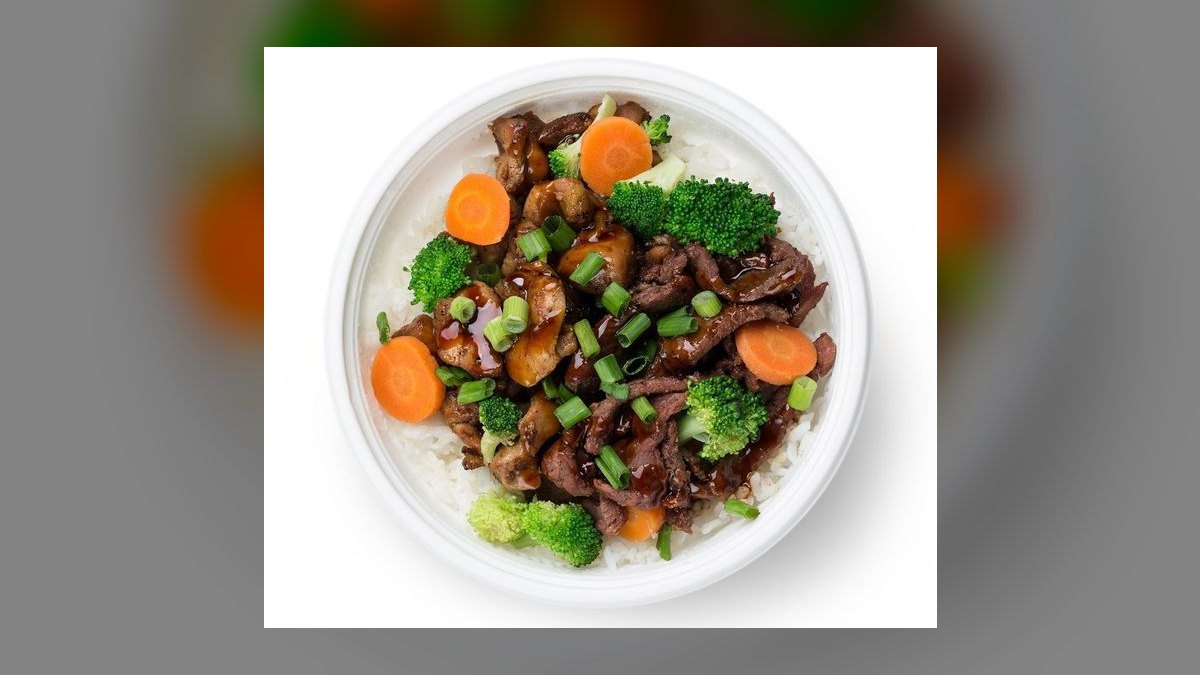
Food cost. Target is about 33% of gross. On $750,000 that is $247,500. The menu helps here: a short, grilled-bowl lineup — chicken, beef, tofu over rice — means fewer SKUs, less spoilage, and simpler par levels than a concept juggling forty ingredients. A two-point miss on food cost is $15,000. Protein pricing is the swing factor; a chicken market that moves 15% will move your food cost by roughly 1.5–2 points on its own.
Labor — where the published assumption breaks. Franchisor guidance around 25% of sales is achievable in states with lower wage floors. In California, Washington, or New York at $18–$22 an hour, real-world labor lands closer to 28%–32% of gross. On $750,000 that gap is $22,500–$52,500 straight off the bottom line. Staffing a unit means eight to twelve full-time equivalents — a manager at $50,000–$65,000 plus a $5,000–$15,000 bonus opportunity, two to three cooks, four to six cashiers and runners — which totals roughly $250,000–$350,000 all-in once you load payroll taxes, workers' comp, and overtime.

Turnover, the line item nobody underwrites. Quick-service turnover commonly runs near 150% annually. On a ten-person crew that is fifteen hires a year. At $500–$1,500 per hire in recruiting, training, and the productivity drag of a new employee running 20%–30% slower for two to four weeks, you are looking at $30,000–$50,000 a year in turnover cost that appears nowhere in a disclosure document. The short menu makes training fast but the role repetitive and low-skill, with no path beyond shift lead — so your best people leave for employers paying $18–$20-plus with tuition or benefits inside twelve to eighteen months.
Equipment reserves. The gas-fired broiler at the heart of the concept is a specialized, purpose-built piece of equipment, not a commodity charbroiler you replace off the shelf. Initial cost sits in the $35,000–$55,000 band inside the buildout, with a service life in the five-to-seven-year range under heavy volume, $2,000–$4,000 a year in cleaning, burner, and belt maintenance, and a replacement cost in 2027 dollars closer to $45,000–$65,000 once fabrication, freight, and installation are counted. Budget roughly $10,000 a year into reserves starting in year five if you build new.
Stacking it up on $750,000. Fees $60,000. Food $247,500. Labor $250,000–$350,000. Occupancy on a compact 1,200–1,800 sq ft box in a decent Western retail center will commonly run $60,000–$110,000 a year once you include CAM and taxes. Add utilities, insurance, delivery-platform commissions on third-party orders, credit card fees, repairs, and supplies. The residual is what produces the widely cited $70,000–$190,000 owner earnings band — and in a high-wage state with a labor line at 31%, that band compresses to something closer to $40,000–$140,000 before you pay yourself a salary.
Resale-specific math. Price the broiler explicitly. Ask for its serial number and installation date. If it is four-plus years old, that is a $45,000–$65,000 capital event landing in your years two or three, and it justifies negotiating $20,000–$30,000 off the asking price. Do the same for HVAC, walk-in compressor, and POS. Then verify the seller's SDE against three years of tax returns and sales-tax filings, not a spreadsheet. Add the franchisor's transfer fee, the cost of any mandated remodel triggered by transfer, and the cost of retraining a crew that may walk when the owner does.
Sequencing the first 140 days
Whichever path you take, the calendar looks similar and the order matters. Skipping ahead is how people end up signing a fifteen-year lease on a site they never counted cars at.
Days 1–20: read the actual documents. Get the current Franchise Disclosure Document and read Item 19 line by line, plus Items 5, 6, 7, 11, 12, and 17. Item 19 tells you what units actually do; Item 7 tells you what getting there costs; Item 12 tells you what territory protection you actually have, which on a compact fast-casual format is often narrower than buyers assume. Have a franchise attorney read Item 17 for transfer, renewal, and termination terms before you fall in love with the concept.
Days 21–40: call ten to fifteen operators. Item 20 gives you the contact list, including franchisees who left the system in the past year — call those people first. Ask three questions: What is your actual net after paying yourself? What support did you get in your first year that you would have paid for? Would you do it again? Hesitation is data. So is a franchisee who volunteers the AUV number without being asked twice.

Days 41–60: validate the site. Traffic counts, daytime population, competing bowl and fast-casual concepts within a mile, delivery-radius density, parking, and lunch-hour observation on multiple weekdays. If you are buying a resale, this step becomes a diligence step instead: verify why the current owner is selling and whether the trade area is improving or hollowing out. Do not sign a lease or an asset purchase agreement before this is done.
Days 61–110: build and staff. New build: permits, buildout at $160,000–$380,000, equipment at $90,000–$190,000, hiring and training. Resale: transfer approval, escrow, lease assignment, and a retention plan for the existing crew — a signing bonus for key staff to stay ninety days past close is cheap insurance against opening week with a skeleton team.
Days 111–140: open and drive volume. Your first ninety days set the traffic pattern the unit will live with. Local marketing, catering outreach to nearby offices, and third-party delivery setup all belong here, not later.
Why multi-unit is the only version of this that builds real wealth
The compact footprint — roughly 1,200 to 1,800 square feet — and the relatively low per-unit capital are the strategic advantage, and they only pay off at scale. One unit at $70,000–$190,000 in owner earnings is a job with equity attached. Three to five units is a business.

The economics of the second and third unit are materially better than the first. You already own the operating knowledge, the vendor relationships, and the hiring pipeline. You can afford a regional or area manager at $70,000–$90,000 whose cost is split across units instead of crushing one P&L. You gain purchasing leverage on the few SKUs the menu requires. You can move a strong shift lead from a mature store to open a new one, which cuts the single biggest new-unit risk — an untrained crew in week one.
The discipline: do not open unit two until unit one clears roughly $700,000 and you have proven you can hold food at 33% and labor under 30% for two consecutive quarters. Operators who scale on top of a shaky first unit simply multiply the shaky. Operators who scale on top of a proven one multiply the proven.
Capital sequencing matters too. Fund unit two from a combination of unit-one cash flow and an SBA 7(a) loan rather than draining reserves. Keep six months of fixed costs liquid across the portfolio at all times. A three-unit operator with no cash reserve is more fragile than a one-unit operator with $80,000 in the bank.

Who this actually works for, and who should walk
It works for the cost-disciplined, hands-on operator inside California or the broader Western stronghold who intends to build three to five units over five to seven years, who is genuinely comfortable running lean operations, and who is fine earning $70,000–$190,000 per unit while the portfolio compounds. It works for someone who reads a P&L weekly, prices protein contracts, watches labor by daypart, and treats a two-point food-cost miss as an emergency rather than a rounding error.
It does not work for the passive investor. A single unit at these volumes cannot support both an absentee owner and a general manager. It does not work for anyone expecting a $9 bowl to produce high AUVs. It does not work outside the footprint without a three-year brand-building budget and the patience to spend it. And it does not work for someone who believes a franchise agreement substitutes for volume and cost discipline — the agreement gives you a system and a name; it does not give you traffic.
The concept's genuine strengths are real: a health-forward, no-fryer-oil-rotation positioning built on grilled proteins over rice, a short menu that keeps waste and training costs low, a small box that keeps rent and capital modest, and a loyal Western customer base built over two decades. Those are advantages, not crutches. They lower your cost of entry; they do not lower your requirement to run the place well.
Validate Item 19 against operator phone calls. Count cars yourself. Price the broiler's remaining life. Underwrite labor at your state's real wage, not the franchisor's model. If the deal still works at $600,000 in sales and 30% labor, you have something. If it only works at $900,000 and 25%, you are betting on a best case, and best cases are not a business plan.
Related questions
How much liquid cash do I need before applying?
Plan on $120,000–$180,000 in liquid, unencumbered funds, separate from borrowed capital. That is the practical screen for a total investment falling in the $300,000–$700,000 range, and it leaves a cushion for the slow months that follow almost every opening.
Is a resale always cheaper than building new?
No. Resales priced at 2x–3x seller's discretionary earnings can land near new-build cost, and you inherit lease term, equipment age, and any deferred maintenance. The advantage is immediate cash flow and real financials, not a lower sticker price.
Can I run this while keeping my day job?
Not for a single unit. Expect 50–60 hours a week on the floor for the first two to three years. Absentee ownership only becomes plausible across three to five units where a regional manager's salary is spread across multiple P&Ls.
What breaks the model fastest?
Labor cost in a high-wage state. At 31%–32% of gross instead of 25%, a $750,000 unit loses roughly $45,000–$52,000 of owner earnings. Underwrite your state's actual wage floor before you sign anything.
Does the franchisor protect my territory?
Read Item 12 rather than assuming. Compact fast-casual formats often carry narrower protected radii than buyers expect, and delivery-platform overlap can put another unit's marketing inside your trade area regardless of the map.
FAQ
What does it actually cost to open a Flame Broiler franchise?
The disclosed total Item 7 investment range is $300,000 to $700,000, which includes a $30,000 franchise fee. Within that, leasehold improvements typically account for $160,000–$380,000 and equipment for $90,000–$190,000, with the balance covering deposits, signage, initial inventory, training, and opening marketing. Your actual number depends heavily on the condition of the space you take — a second-generation restaurant space with usable infrastructure can land near the bottom of the range, while a raw shell pushes you toward the top.
What are the ongoing fees?
Royalty runs 5%–6% of gross sales and the advertising fee runs 2%–3%. On a unit grossing $800,000 that combination totals roughly $64,000 annually, taken off the top before rent, food, or labor. The rates are unremarkable for the category, but on the modest average unit volumes this concept produces, they represent a substantial share of what would otherwise be owner earnings — which is precisely why volume and cost control matter more here than in a higher-AUV concept.
How much do owners actually make?
Mature units gross $500,000 to $1.1M, with owner earnings commonly falling between $70,000 and $190,000. That range assumes food cost near 33% and labor near 25%. In a state with an $18–$22 wage floor where labor realistically runs 28%–32%, expect the same unit to land closer to $40,000–$140,000 before you pay yourself a salary. Where you sit in the band is driven almost entirely by trade area and cost discipline, not effort.
Should I buy an existing unit instead of opening a new one?
Buy if you find a unit above roughly $700,000 in sales with at least five years of lease term including options, verifiable tax returns, and a specific fixable reason for any underperformance. Open new if the available resales are all sub-$550,000 units, if their leases expire inside three years, or if you control a site the franchisor also wants. The resale's core advantage is cash flow from week one and real numbers instead of projections.
How long until I break even?
Owners commonly report two to four years to recover the initial investment, driven by sales volume, occupancy cost, and expense control. In-footprint units in high-traffic Western trade areas recover faster; units in expansion or cold-start markets that spend their first two years building awareness sit at the long end or beyond it. A resale that is already cash-flowing shortens the clock, but you paid for that head start in the purchase price.
What is the biggest risk nobody underwrites?
Two things. Labor turnover — roughly 150% annually in quick service, costing $30,000–$50,000 a year in recruiting, training, and productivity drag that appears in no disclosure document. And the broiler's replacement cycle: a specialized, purpose-built gas-fired unit with a five-to-seven-year service life and a $45,000–$65,000 replacement cost. Reserve about $10,000 a year starting in year five, and discount any resale with a four-plus-year-old unit accordingly.
Sources
- https://www.ftc.gov/business-guidance/resources/franchise-rule-compliance-guide — FTC Franchise Rule and required FDD disclosures
- https://www.ftc.gov/business-guidance/resources/consumers-guide-buying-franchise — FTC guidance on evaluating a franchise purchase
- https://www.sba.gov/funding-programs/loans/7a-loans — SBA 7(a) loan program used for franchise financing
- https://www.franchise.org/ — International Franchise Association, industry standards and franchisee resources
- https://www.bls.gov/oes/current/oes_nat.htm — BLS Occupational Employment and Wage Statistics for restaurant wage benchmarks
- https://www.bls.gov/news.release/jolts.nr0.htm — BLS Job Openings and Labor Turnover Survey, accommodation and food services turnover
- https://www.restaurant.org/research-and-media/research/ — National Restaurant Association industry research and cost benchmarks
- https://www.franchisebusinessreview.com/ — Independent franchisee satisfaction and performance surveys
- https://www.entrepreneur.com/franchises — Franchise cost comparisons and category rankings
Related on PULSE
- Should I open or buy a The Junkluggers franchise in 2027?
- Should I open or buy a Pak Mail franchise in 2027?
- Should I open or buy a PostNet franchise in 2027?
- Should I open or buy a Fish Window Cleaning franchise in 2027?
- Should I open or buy a Shine Window Care franchise in 2027?
- Should I open or buy an Image360 franchise in 2027?
This page will be disappearing soon. Save it to your device for $1 — or read it free while it is here.
@Kory-White- · if Venmo asks, the last 4 of my number are 2012
This page is gone.
This one is off the shelf now. $1 keeps it on your phone for good — the whole page, pictures and diagrams included.
 pulse-qWhat Add-On Fees Should I Be Charging That I'm Not in 2026?
 pulse-qHow Do I Make a Service Fee Tangible So It Adds Real Value in 2026?
 pulse-qShould I open or buy a Concrete Craft franchise in 2027?
 pulse-qShould I open or buy a FirstLight Home Care franchise in 2027?
 pulse-qShould I open or buy a Bath Planet franchise in 2027?
 pulse-qShould I open or buy a Bloomin' Blinds franchise in 2027?
 pulse-qWhat Service Fees Should a Photography Business Charge in 2026?
 pulse-qHow Many Sales Reps Do I Need to Hire for My Window Blinds Company in 2027?
 pulse-qHow Many Sales Reps Do I Need to Hire for My Dental Equipment Company in 2026?
 pulse-qHow Many Stylists Should I Schedule Each Day at My Hair Salon in 2026?