
How Do I Set Up a Points-Based Sales Incentive System in 2026?
 Curated byKory White · Fractional CRO · Maryland
 PULSEKNOWLEDGE LIBRARY
Quality
Certified
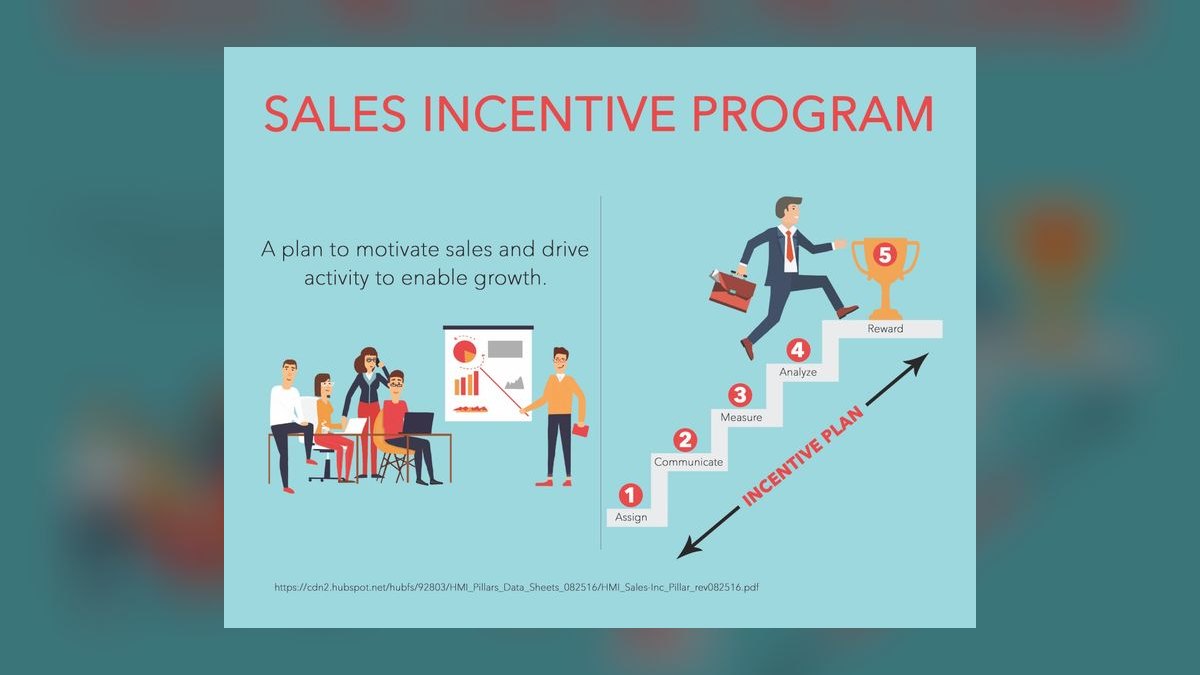
Define three to five behaviors that matter, assign each a weight reflecting margin and strategic priority, score every rep on those lines, and pay from the composite total rather than any single metric. Publish the weights, update balances in real time, and redeem points against a tiered catalog on a fixed calendar.
The outcome you should expect
A well-built points-based incentive system does one thing a commission plan cannot: it steers the *shape* of a rep's book, not just its size. Under a flat commission, a rep who closes $400,000 of core product and nothing else looks identical on the report to a rep who closes $400,000 spread across core, add-ons, service plans, and two saved accounts. Under a weighted points system, those two reps are separated by a wide, visible gap — and the second rep is the one the business actually needs.
The concrete outcome, in the first two quarters, usually looks like this. Attach and add-on activity moves first, because those are the behaviors reps were already capable of and simply weren't being paid to prioritize. Retention and renewal work moves second, because it requires reps to change their calendar, not just their pitch. Core volume typically holds flat or dips slightly in month one — that dip is not a failure signal, it is the system working. Reps are reallocating time away from the easiest point on the board toward the ones that pay more. If core volume *doesn't* move at all and everything else jumps, your weights were probably too aggressive and you're paying a premium for behavior reps would have produced anyway.
The second outcome is diagnostic, and it's the one most leaders underrate. A scored matrix tells you exactly where each rep is weak, in a format neither of you can argue with. "You're strong on new logo, you're a 2 on service attach, and that gap is worth roughly 180 points a quarter" is a coaching conversation with a number attached. Compare that to "you need to sell more service plans," which every rep has heard and nobody has ever acted on. The points become the shared vocabulary of the one-on-one.
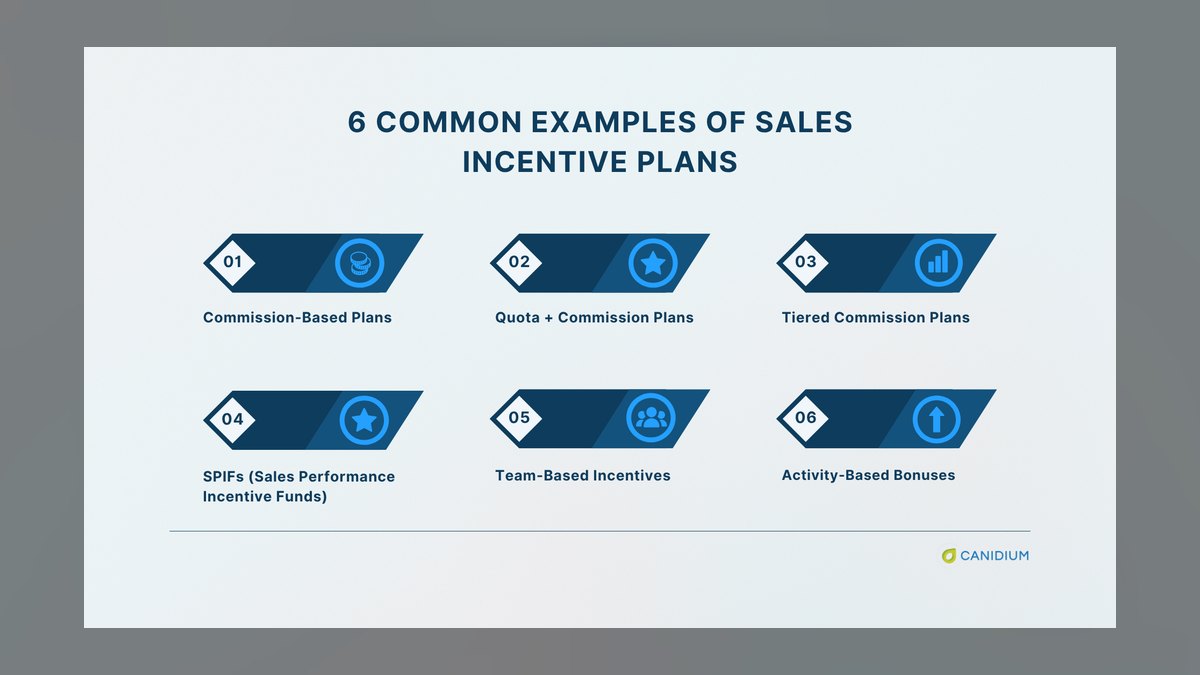
The third outcome is speed of redirection. When strategy shifts — a new product launch, a partner change, a margin compression in one line — you change the weights and the entire team re-aims within a single pay period. No plan rewrite, no legal review of comp documents, no all-hands explaining a new philosophy. You publish new weights on Monday and the behavior changes by Friday. That agility is the strongest argument for running points *alongside* commission rather than instead of it: commission handles the contractual base, points handle the steering.
What you should not expect is a system that runs itself in year one. Points systems have a failure curve — engagement peaks around week six, sags around month three when the novelty wears off and the first redemption cycle either lands or disappoints, then stabilizes. Budget attention for that month-three trough. Most abandoned points programs died there, not at launch.
What drives that outcome
The engine is the weighted composite. Every behavior worth rewarding gets a line on a matrix, each line gets a weight, and each rep gets a level on each line. Composite points equal the sum of weight × level across all lines. That single formula does the work, and it's worth understanding why.

Consider a five-line matrix with weights of 3 for core product, 5 for a hard-to-sell add-on, 4 for service plan attach, 5 for retention of an at-risk account, and 2 for pipeline activity. Score each rep 1–5 on each line. A rep who is a 5 on core and a 1 on everything else scores (3×5) + (5×1) + (4×1) + (5×1) + (2×1) = 31. A rep who is a 3 across the board scores (3×3)+(5×3)+(4×3)+(5×3)+(2×3) = 57. The balanced rep wins by a wide margin without being the best at anything. That is the entire design intent made arithmetic.
The weights themselves should come from somewhere defensible. The cleanest approach is to anchor them to gross margin contribution, then apply a strategic multiplier: roughly (gross margin percentage × strategic multiplier), normalized to a small integer scale. A mature product line at 30% margin with a 1.0 multiplier lands low. A new launch at 30% margin with a 2.0 multiplier lands double. A high-margin service plan at 70% with a 1.0 multiplier lands high on margin alone. You are not looking for precision here — you are looking for a rationale you can say out loud when a rep asks why the add-on is worth more than the core.
Three constraints keep the engine honest. First, cap the number of lines. Three to five is ideal; above seven, reps stop calculating and start guessing, and a system reps can't do arithmetic on stops steering behavior. Second, backtest before launch — run three to six months of historical results through the proposed weights and see who rises and who falls. If your acknowledged top performers land mid-pack, either your weights are wrong or your definition of "top performer" was. Both are worth knowing before you publish. Third, publish the weights. The most common complaint about points is that they feel arbitrary, and that complaint is almost always accurate when weights are hidden. A visible weight table converts the system from a black box into a map.

Real-time attribution is the fourth driver, and it's the one that gets skipped. A rep who closes a deal Friday afternoon should see the point balance move before they go home. Delayed attribution — a batch that runs overnight, or worse, a spreadsheet updated Monday by an ops analyst — severs the connection between the behavior and the reward, which is the entire mechanism you're paying for. If your stack can't do real-time, do daily, and never let it slip to weekly.
Benchmarks and realistic ranges
Start with budget, because every other number derives from it. Incentive budgets for a points program typically live in the low single digits as a percentage of the revenue the program influences — commonly framed as somewhere in the 1–5% range depending on margin structure and whether points sit on top of commission or partly replace it. If points are additive to an existing commission plan, stay at the low end; you are buying behavioral steering, not compensation. If points are replacing a spiff or contest budget you were already spending, you can reuse that envelope directly and the program costs you nothing net.
Point-to-value ratios are entirely a design choice, and the choice matters more than the number. A common construction is somewhere between $0.50 and $2.00 of reward value per point, but pick a ratio that makes the arithmetic ugly on purpose. If one point equals exactly one dollar, you have built a commission plan with a translation layer, and you lose the psychological separation that makes non-cash rewards work. Ratios like 1 point = $0.75 keep reps thinking in points rather than mentally converting to cash on every transaction.

Tier your catalog on three levels and set the thresholds so each tier is reachable on a different rhythm:
- Tier 1, roughly 50–200 points. Instant, low-friction rewards — modest gift cards, a half-day off, branded gear. Redeemable weekly. These exist purely to maintain momentum between the bigger milestones.
- Tier 2, roughly 500–1,000 points. Experiences with a story attached — a dinner, an event ticket, a spa or activity voucher. Monthly cadence. This is the tier most reps actually target.
- Tier 3, 2,000+ points. Travel, a significant piece of equipment, or a charitable donation in the rep's name. Quarterly or annual. This tier does the aspirational work and should be genuinely hard to reach.
Cadence benchmarks: award points daily or on deal close, publish standings weekly, allow redemption at the tier cadences above, and review weights quarterly. Do not review weights more often than quarterly unless something structural changed — reps need a full cycle to adapt, and a system whose rules move monthly teaches reps to wait rather than act.

Tooling costs scale with team size and you should not overbuy. Under about twenty reps, your CRM plus a shared sheet or an Airtable base genuinely works — CRM automation assigns points on stage change, the sheet renders the leaderboard, and total additional spend is zero. Between twenty and a hundred reps, dedicated incentive-compensation platforms become worth their per-seat cost, largely because they eliminate the manual reconciliation errors that erode trust faster than any design flaw. Above a hundred reps, gamification layers that sit on top of the CRM add team competitions, badges, and push notifications; the value there is distribution and visibility rather than calculation. Established vendors in this space include Xactly, Spiff, Performio, CaptivateIQ, QuotaPath, Ambition, Spinify, and LevelEleven — evaluate on two questions: does it support genuinely multi-line weighted scoring, and does it update balances in near-real-time? Anything that only stacks points on a single number is a leaderboard, not a points system.
Set a point expiration policy, typically twelve months, with a thirty-day warning before any balance lapses. Expiration prevents hoarding and keeps the pool of outstanding liability bounded, which your finance team will care about. The warning prevents the single most demoralizing experience a points program can produce.
One benchmark that is not a number: the fraction of reps who can state their current point balance without looking it up. If it's under half your team, your visibility layer is broken regardless of what the platform cost.

Risks, edge cases, and failure modes
Gaming the heaviest line. The moment you weight one line at 5 and another at 2, some rep will find the cheapest possible action that trips the 5. Usually this is a technically-qualifying add-on sold at a discount that destroys the margin the weight was supposed to protect. Two defenses: cap points per category per period, and gate the top tier behind a minimum level on *every* line. A rep who is a 1 on any line doesn't qualify for Tier 3, full stop. That converts the composite from a sum you can max on one axis into a hurdle you must clear on all of them.
Sandbagging across period boundaries. If points reset quarterly and a rep is already at the top of their tier in week ten, deals get held for the next quarter. Rolling windows mitigate this — score on a trailing twelve weeks rather than a hard quarter — but rolling windows are harder to explain. A simpler fix is a carryover allowance: let a capped number of points roll forward so there is no cliff worth gaming.
The month-three trough. Engagement predictably sags after the novelty fades and the first real redemption cycle completes. If the first redemption disappoints — the catalog was thin, the fulfillment was slow, the reward arrived six weeks later — the program is effectively dead and you'll be told so only in exit interviews. Overinvest in the first redemption cycle specifically. Fast fulfillment on the first Tier 1 rewards buys more credibility than a bigger Tier 3 prize.

Tax and payroll treatment. Non-cash rewards are generally taxable compensation, and the responsibility for reporting sits with the employer. Gift cards and cash equivalents are treated differently from certain de minimis items. This is not a place to improvise — loop in payroll and, if the program is material, your tax advisor before launch, not after the first redemption. A program that surprises reps with a tax bill loses trust permanently.
Team-based lines in a mixed comp environment. If some reps are on commission and some on salary, an identical points program lands very differently. Salaried support or service staff often respond more strongly to points than quota-carrying reps, because points may be the only variable upside they have. That's an opportunity — extending the system to sales engineers, CS, and inside support frequently produces better cross-functional behavior than any amount of process documentation — but weight those matrices separately. A CSM's lines are renewal, expansion, and health score, not new logo.
Small-team distortion. Below about six reps, a leaderboard is a social event, not a scoreboard. Rankings become personal, the bottom rep is publicly identifiable every week, and morale costs can exceed motivation gains. On small teams, run the matrix privately in one-on-ones and publish only aggregate progress toward a team goal. The scoring math is identical; the display is not.

Weight drift and neglect. The most common quiet failure is that nobody touches the weights for eighteen months while the product mix, margins, and strategy all move. The program keeps paying for behavior the business stopped needing. Put the quarterly weight review on a calendar with a named owner, and treat a skipped review as a defect.
Manual reconciliation errors. Every disputed point balance costs more trust than the points were worth. If two reps have caught errors in the same quarter, stop tuning weights and fix the data pipeline first — accuracy is a precondition, not a feature.
A practical rollout plan
Run the rollout over roughly eight weeks. Compressing it below four rarely works, because the backtest and the communication both need real time.

Weeks one and two — define and backtest. Get leadership in a room and list every product and behavior a complete rep should produce. Cut the list to three to five lines. Assign weights using the margin-times-multiplier rationale, then pull six months of historical data and run it through the proposed weights. Look at two things: does the ranking match your intuition about who is actually good, and what would the program have cost? If the historical cost exceeds your budget envelope, scale the point-to-value ratio down rather than cutting lines — cutting lines changes the behavior you're buying, the ratio only changes the price.
Week three — design the catalog and the plumbing. Build the three tiers, source the actual rewards, and confirm fulfillment timelines with whoever supplies them. Decide expiration and carryover rules. In parallel, wire the point attribution: CRM automation on stage change, a scoring view, and a leaderboard surface reps will actually see — Slack, a wall display, or the CRM home page. Test the attribution against ten historical deals and confirm the arithmetic matches your backtest by hand.
Week four — communicate. Publish the full weight table, the formula, the tiers, and the calendar. Walk the team through a worked example of one rep's composite so the math is not mysterious. Take questions about fairness seriously and answer them with the margin rationale; every unanswered fairness question becomes a story that undermines the program. Confirm the tax treatment in writing so nobody is surprised later.

Weeks five and six — pilot. Run live with real points but a soft floor: nobody loses anything relative to their prior comp during the pilot. Watch for gaming immediately — check whether the heavy lines are being tripped by low-quality transactions. Fix that with caps, not by lowering the weight, or you'll undo the steering you built.
Weeks seven and eight — full launch and first redemption. Open Tier 1 redemption early and fulfill fast. That first delivered reward is the proof the system is real. Then set the quarterly review on the calendar with an owner, and start collecting the two metrics that tell you whether it's working: movement in the previously-neglected lines, and the share of reps who know their balance without checking.
Adjacent extension, once the sales matrix is stable: the same weighted-composite structure ports cleanly to service, support, and delivery teams. Field service techs scoring on first-time fix rate, attach, and callback rate. Support reps on resolution time, escalation avoidance, and expansion referrals. The mechanics are identical and the cross-functional effect compounds — when service and sales are both scored on attach, the handoff between them stops being a negotiation.
Related questions
Should points replace commission or sit on top of it?
Sit on top, in almost every case. Commission handles contractual base compensation and is hard to change; points handle steering and can be re-weighted overnight. Replacing commission with points invites legal and retention risk for a benefit you can get additively at a fraction of the budget.
How many KPI lines is too many?
Above seven, reps stop calculating their own composite and start guessing, which kills the steering effect. Three to five is the working range. If you have more priorities than that, you have too many priorities — rank them and weight the top five.
What if a rep disputes their score?
Show the weight table and the underlying transactions. A disputable score usually means the attribution pipeline is wrong, not the rep. Fix the data, restore the points, and treat the dispute as a defect report on the system rather than a negotiation with the individual.
Do points work for non-sales teams?
Often better than for sales, because support, service, and CS staff frequently have no other variable upside. Use the same weighted-composite math with role-appropriate lines — resolution quality, renewal, attach — and score those matrices separately from the sales one.
How do I keep the program alive past month three?
Plan for the engagement trough. Refresh the Tier 1 catalog, run a short themed sprint on one weighted line, and make sure the first redemption cycle was fast. Programs die at month three from silence, not from bad design.
FAQ
What is a points-based sales incentive system?
It's a structure where reps earn points for specific results and behaviors rather than revenue alone. Each line — new accounts, add-ons, service attach, retention, activity — carries a weight, and the weighted sum becomes the rep's composite score. Points convert to rewards from a tiered catalog. The purpose is to steer effort across multiple priorities at once instead of concentrating it on whichever metric is easiest to move.
How do I choose which activities to reward?
List the three to five business objectives sales can directly influence, then weight each by margin contribution and strategic importance. Heavier weights go to harder or more valuable actions. Deliberately avoid rewarding a single easy metric — that's the failure mode the whole design exists to prevent. If a behavior isn't on the matrix, reps won't pursue it, so make sure the matrix reflects a complete book.
What's a reasonable point-to-reward ratio?
There's no universal number; it follows your budget and payout cadence. A common working band is roughly $0.50 to $2.00 of reward value per point. Choose a ratio that doesn't map cleanly to whole dollars, so reps think in points rather than mentally converting everything to cash — that separation is where non-cash rewards get their motivational advantage.
How often should points be awarded and redeemed?
Award on deal close or daily, publish standings weekly, and allow redemption on a tiered cadence — small rewards weekly, mid-tier monthly, top-tier quarterly. Real-time or same-day attribution matters more than the redemption schedule, because the connection between the behavior and the point balance is the mechanism you're paying for.
Can this work for a small sales team?
Yes, and it's often simpler to run — a spreadsheet handles the math for six reps fine. The adjustment is display, not design: on small teams a public leaderboard identifies the bottom performer every week, which costs more morale than it buys motivation. Keep the matrix in one-on-ones and publish only team-level progress.
How do I stop reps from gaming the weights?
Use the weighted composite so no single line dominates, cap points per category per period, and gate the top reward tier behind a minimum level on every line — a rep scoring a 1 anywhere doesn't qualify. Then audit periodically. If a heavy line is being tripped by low-margin transactions, add a quality condition rather than lowering the weight.
Sources
- https://hbr.org/2015/04/motivating-salespeople-what-really-works
- https://www.shrm.org/topics-tools/tools/toolkits/designing-managing-incentive-compensation-programs
- https://www.worldatwork.org/resources/publications/journal-of-total-rewards
- https://theirf.org/research/
- https://www.irs.gov/publications/p15b
- https://www.mckinsey.com/capabilities/growth-marketing-and-sales/our-insights/the-secret-to-making-sales-incentives-work
- https://help.salesforce.com/s/articleView?id=sf.analytics_dashboard_overview.htm
- https://www.gartner.com/en/sales/topics/sales-performance-management
Related on PULSE
- How Do I Set Sales KPIs That Reflect the Whole Business?
- How Do I Set Attach Rates for My Service Fees?
- How Do I Get My Bank Staff to Cross-Sell the Full Product Set?
- How Do I Set Service Fees for a Membership or Subscription Business?
- Should I Hire a Fractional CRO If My Franchise System Is Standardizing Unit Sales?
This page will be disappearing soon. Save it to your device for $1 — or read it free while it is here.
@Kory-White- · if Venmo asks, the last 4 of my number are 2012
This page is gone.
This one is off the shelf now. $1 keeps it on your phone for good — the whole page, pictures and diagrams included.
 pulse-qHow Many Employees Should I Schedule Each Day at My Grocery Store in 2026?
 pulse-qWhat Service Fees Should a Property Management Company Charge in 2026?
 pulse-qShould I Hire a Fractional CRO If I Am Taking the Company to Market in a Year in 2026?
 pulse-qHow Many Stylists Should I Schedule Each Day at My Hair Salon in 2026?
 pulse-qWhat Service Fees Should a Pool Service Company Charge in 2026?
 pulse-qHow Do I Get My Jewelry Staff to Offer Financing on Every Sale in 2026?
 pulse-qHow Many Sales Reps Do I Need to Hire for My Pharmaceutical Company in 2026?
 pulse-qWhat Service Fees Should a Mobile Mechanic Charge in 2026?
 pulse-qHow Many Employees Should I Schedule Each Day at My Bookstore in 2026?
 pulse-qHow Many Employees Should I Schedule Each Shift at My Tattoo Shop in 2026?