
How do I break the habit of checking my phone first thing in the morning
 Curated byKory White · Fractional CRO · Maryland
 PULSEKNOWLEDGE LIBRARY
Move the phone out of the bedroom overnight and use a cheap alarm clock instead. The habit survives on proximity, not weakness — remove the cue and the craving has nothing to fire at. Then replace the first ten minutes with a fixed ritual, so waking up leads somewhere other than a screen.
The outcome you should expect
People imagine the payoff here is spiritual — calmer mornings, a clearer mind, some vague sense of being present. That's not the outcome worth planning around, because it's unmeasurable and you'll talk yourself out of believing it by day four. The outcome that actually holds up is narrower and more mechanical: you stop entering the day in reaction mode, and you get back a block of time you did not know you were spending.
Start with the time. Most people who track their own behavior for a week discover that the "quick glance" on waking is not quick. You unlock to dismiss the alarm, see a badge, open the app, and surface somewhere between eight and thirty minutes later, still in bed, having read nothing you chose to read. That's not a moral failing — it's what infinite-scroll interfaces are engineered to produce. The realistic recovery, once the phone is out of the room, is fifteen to thirty minutes of morning time you can point at. Over a five-day work week that's roughly one to two and a half hours. That number is worth writing down before you start, because it's the thing you'll feel on day ten when the novelty has worn off and you need a reason to keep going.
The second outcome is about ordering, not duration. When your first input of the day is someone else's request — an email, a Slack thread, a text from your boss — you have effectively let another person choose what your brain works on before you were awake enough to object. The practical consequence is that the thing *you* intended to do that morning gets deferred, and the deferral compounds. When you delay the first check until after a short ritual, you get to load your own priority first. People describe this as "feeling like the driver instead of the passenger," and while that's a metaphor rather than a metric, it maps onto something concrete: the first task you touch is one you selected.
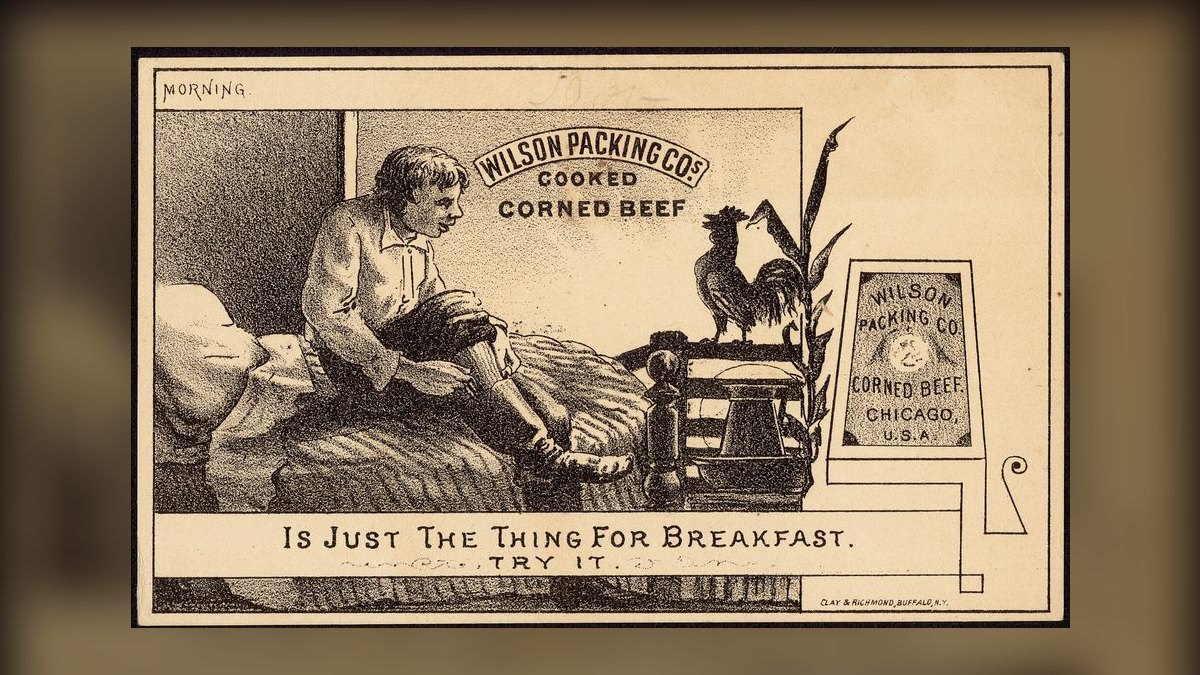
The third outcome is a reduction in the low-grade morning dread that a lot of people don't recognize as being phone-shaped until it's gone. If your inbox contains bad news, you will find that bad news eventually. Reading it at 6:12 a.m. while horizontal and half-conscious doesn't make you deal with it any sooner — you can't reply, you can't call anyone, you can't do anything except marinate. Delaying that same message by forty minutes until you're upright, caffeinated, and at a desk changes nothing about the message and a great deal about your capacity to handle it.
What you should *not* expect: a personality transplant. Breaking this habit does not make you a morning person, does not fix your sleep if you're going to bed at 1 a.m., and does not reduce your total daily screen time much on its own. It fixes the first thirty to sixty minutes. That's a real, bounded win — and setting the expectation that narrowly is part of why it sticks, because you're not measuring yourself against an outcome you were never going to hit.
What drives that outcome
The mechanism is a loop with four parts: cue, craving, response, reward. It's the standard habit model, and morning phone checking is close to a textbook example of it, which is good news — it means the intervention points are known rather than mysterious.
The cue is proximity plus a transition moment. Waking up is one of the strongest habit triggers that exists, because it's a hard boundary between two states and your brain reaches for a script to fill it. If the phone is eighteen inches from your face and doubling as your alarm, the script writes itself: your hand is already on the device, the screen is already lit, and the decision to check has been made before you're conscious enough to make a decision.

The craving is anticipation, not pleasure. This is the part most people get backwards. You're not reaching for the phone because checking it feels good — it usually doesn't. You're reaching because you don't know what's on it. Variable, unpredictable rewards drive compulsive checking far more effectively than reliable ones do; it's the same structure that makes slot machines work. An inbox that's empty 80% of the time and contains something urgent 20% of the time is a stronger hook than one that's always interesting.
The response is the unlock. Note how small it is. The gap between "urge" and "acting on urge" for a phone in your hand is under a second. Almost every successful intervention works by widening that gap — not by strengthening your resistance, but by adding steps between the impulse and the screen.
The reward is resolution of uncertainty, and it arrives instantly. That immediacy is why the loop is so hard to compete with. A morning walk is a better reward on every dimension except speed, and speed is the dimension that matters at 6 a.m. when your prefrontal cortex — the part of your brain doing the deliberate, forward-looking reasoning — is still coming online after sleep inertia. Sleep inertia typically runs fifteen to thirty minutes, sometimes longer if you were woken from deep sleep. You are, quite literally, at your least capable of deliberate choice at exactly the moment the habit fires.

This is why willpower-based approaches underperform. Willpower is being asked to operate at the exact moment it has the least to work with, against a reward that arrives in under a second, on a cue that fires every single day without fail. You are not going to win that fight repeatedly. You win by not having it — by moving the cue, adding friction to the response, and giving the craving something else to land on.
The corollary is that every effective tactic in this article is really the same tactic wearing different clothes: increase the number of seconds between waking and screen. Distance does it. A different alarm does it. Grayscale does it weakly. A ritual does it strongly, because it doesn't just add delay — it occupies the slot the habit wants.
Benchmarks and realistic ranges
Vague goals ("check my phone less") fail because you can't tell whether you're succeeding. Here are the numbers worth targeting and what's actually achievable.

Delay before first check. Don't start at sixty minutes. The common failure is setting a heroic target, missing it on day two, and abandoning the whole project. A workable ladder: week one, aim for ten minutes. Week two, twenty. Week three, thirty. Week four onward, forty-five to sixty if you want it. Most people find their stable point somewhere between twenty and forty-five minutes — long enough to complete a ritual and get vertical, short enough that it doesn't feel like deprivation. If your job genuinely requires early responsiveness, ten to fifteen minutes is still a meaningful win. The gain is not linear with duration; the largest single jump is between zero and ten.
Success rate, not streak. Track mornings-per-week, targeting five out of seven, not a perfect streak. Streak-based tracking is fragile — one miss and the counter resets, which for a lot of people means the whole effort collapses. A weekly percentage absorbs a bad morning without erasing three weeks of progress. Five out of seven for a month is a genuinely changed habit.
How long until it's automatic. The "21 days" figure is folklore with no real support behind it. The honest answer from habit research is that it varies enormously by person and by how complex the behavior is — some simple habits settle in a couple of weeks, others take several months, and the spread is wide. Plan for six to ten weeks before the new pattern feels default rather than effortful. Expect the first four to eight mornings to be genuinely uncomfortable and the next two weeks to feel merely odd. If you're still white-knuckling it at week six, your environment isn't set up right — that's an environment problem, not a discipline problem.
Cost. A basic alarm clock runs roughly $10–25. That's the entire required budget. Sunrise-simulation alarm clocks run higher, in the $30–150 range depending on brand, and are worth considering if you wake in darkness for part of the year, but they are an optimization, not a prerequisite. Do not let shopping for the perfect clock become the reason you haven't started — buy the cheap one this week.

Time recovered. Fifteen to thirty minutes per morning is the realistic band, as covered above. If you were previously spending forty-five minutes in bed scrolling, you may recover more, but be honest about the baseline rather than assuming the flattering number.
What to measure and how. Two data points are enough: the clock time of your first unlock, and a yes/no for whether the ritual happened. A paper index card on the nightstand with seven boxes works better than an app, for the obvious reason that logging in an app requires opening the phone. Screen Time on iOS and Digital Wellbeing on Android will both show you a first-pickup time automatically if you'd rather not write anything down — check it weekly, not daily, because daily checking turns the measurement itself into a reason to open the phone.
A benchmark for the check itself. When you do finally pick it up, a deliberate check runs about two to five minutes: scan the calendar, scan for anything genuinely urgent, close it. If your first check routinely runs past fifteen minutes, the delay isn't your real problem — the scroll is, and that's a different intervention (app timers, home-screen removal, logging out of the worst offender).

Risks, edge cases, and failure modes
"I need my phone for the alarm." This is the most common objection and it's solved for $15. But there's a subtler version: some people use the phone alarm because they genuinely fear oversleeping and don't trust a separate device. Fair — run both for the first week. Phone alarm in the hallway or kitchen, clock alarm on the nightstand. The phone alarm becomes a backup you have to walk to, which is exactly the friction you wanted anyway.
On-call and genuine emergencies. If you're on-call, or you have an elderly parent, a kid away from home, or a job where a 5 a.m. page is real, do not follow blanket advice to exile the phone. Instead, configure it: iOS Focus modes and Android's priority settings both let specific contacts break through Do Not Disturb, and both support "repeated calls ring through" — a second call from the same number within three minutes gets through even if the first was silenced. That covers the actual emergency case. Keep the phone in the room if you must, but face-down, across the room, on a charger, with everything except those exceptions silenced. The point was never the physical distance for its own sake; it was the seconds of friction.
Cold-turkey collapse. Announcing "no phone for the first hour, starting tomorrow" produces a predictable arc: two good days, one hard day, one miss, and then abandonment framed as "I guess I just can't do this." Ladder up instead. Ten minutes that you hit every day beats sixty minutes that you hit twice.
The partner problem. If you share a bed, your intervention affects someone else. Their alarm going off on their phone re-introduces your cue. Negotiate it rather than imposing it — either both of you move to clocks, or the person keeping the phone agrees to charge it across the room. This is genuinely a common failure point and it's worth an actual conversation rather than silent resentment at 6 a.m.

Substitution failure. You move the phone to the kitchen. You wake up, walk to the kitchen to turn off the alarm, and check it there. Nothing has changed except your walking route. The distance only works if something else occupies the slot — which is why the ritual isn't optional decoration on top of the environmental change. Removing the phone without replacing the behavior leaves a vacuum that the phone will fill.
Turning off all notifications. Counterintuitively, this can backfire. If you have no idea what's arriving, some people check *more* often to compensate for the uncertainty — and uncertainty was the engine driving the loop in the first place. Selective is better than silent: keep calendar alerts and specific human contacts, kill everything from apps that want your attention for their own reasons.
Grayscale expectations. Grayscale (iOS: Settings → Accessibility → Display & Text Size → Color Filters; Android: under Digital Wellbeing or Accessibility depending on version) does reduce the pull of visually engineered apps, and it's free to try. But treat it as a modest assist, not the intervention. Its main practical weakness is that people turn it off to look at a photo and never turn it back on. Bind it to the accessibility shortcut (triple-click side button on iOS) so toggling is trivial and re-enabling is a reflex.

Self-punishment spirals. You will miss mornings. Treating a miss as evidence of a character flaw makes the next miss more likely, because now the habit is carrying shame in addition to inertia. The functional response to a miss is diagnostic: what was different? Late night? Stressful thing pending? Traveled and no clock? Fix the input, not your self-image.
Travel and disruption. Hotels usually have a clock but you won't trust it. Pack the cheap one, or accept that travel weeks are a suspension rather than a failure and resume when you're home. Habits survive gaps better than they survive being redefined as broken.
The displaced check. Watch for the habit migrating rather than disappearing — you don't check in bed anymore, you check in the bathroom, or at breakfast, or in the car before you start it. That's progress, not defeat, but name it, because otherwise you'll conclude the intervention "didn't work" when it partially did. Apply the same friction one step later: phone stays in the bedroom while you make coffee.

Smartwatches. A watch on your wrist reproduces the entire loop with none of the friction. If you wear one to sleep for sleep tracking, either disable notification delivery overnight and through the morning window, or take it off. Otherwise you've moved the phone and kept the phone.
A practical rollout plan
Do this over four weeks. Each week adds one change, and you don't advance until the previous one is holding.
This week — buy the clock and set the perimeter. Order a basic alarm clock today; anything in the $10–25 range is fine, and one with a dimmable display is worth the extra few dollars if you're light-sensitive. Pick the charging spot: kitchen counter, hallway, living room — somewhere that requires standing up and leaving the bedroom. Move the charger there tonight, not "once the clock arrives," so the phone has nowhere convenient to sit. Configure Do Not Disturb with your genuine exceptions before the first night, so you're not lying awake wondering whether your kid could reach you. Expect the first three mornings to feel strange and slightly anxious. That's withdrawal from an anticipation loop, and it fades.
Week two — install the ritual. Environmental change alone leaves a hole; fill it with a fixed, short sequence you do in the same order every morning. Something like: glass of water, open the blinds for daylight, two minutes of stretching, write one sentence about what matters today. Keep it under ten minutes. The exact contents matter less than the fixedness — a sequence that's the same every day becomes its own cue chain, where finishing one step triggers the next without any decision. Put the journal and the pen where the phone used to be, physically occupying the nightstand slot.

Week three — govern the check itself. By now you're reaching the phone later. Now make the first check deliberate. Before unlocking, name what you're looking for out loud or in your head: "calendar, and anything from the team." Open that. Close it. Set a two-minute timer if you need external help. Move the highest-pull apps off the home screen entirely so getting to them requires a search rather than a glance — the goal is that any app capable of eating twenty minutes should take four deliberate actions to reach.
Week four — extend, measure, and hold. Push the delay toward your target if it's still comfortable, and start tracking mornings-per-week rather than mornings-in-a-row. Review the card on Sunday. Five out of seven is a win. Below three means something in your setup is wrong — most often the phone crept back to the bedroom, or the ritual is too long and you've started skipping it.
A note on sequencing: people who try to do all four weeks at once have a worse hit rate than people who do them in order, and the reason is that each change has its own failure mode to debug. If you change five things and mornings get worse, you don't know which one to fix. One change per week keeps the diagnosis clean.
Related questions
Does putting the phone on the other side of the bedroom work as well as removing it entirely?
Partially. It adds the friction of standing up, which is the main active ingredient, but you're still in reach of the cue and many people simply carry it back to bed. Another room is meaningfully stronger. Across the room is a reasonable fallback if you're on-call.
Will this improve my sleep too?
Possibly, but that's a separate intervention. Removing the phone from the bedroom addresses evening scrolling as well as morning checking, and less late-night screen time in bed generally helps. But if you're going to bed at 1 a.m., moving your charger won't fix that.
What if I use my phone for meditation or a workout app in the morning?
Then the phone is a tool, not a trigger — but open only that app, and open it after the ritual has started. The risk is that unlocking for a legitimate reason becomes the doorway to the inbox. Consider a dedicated device or printed routine instead.
Do app blockers and screen-time limits actually help?
They help with the scroll, not with the first check. Blockers stop you at minute two of a session you already started; environmental changes stop the session from starting. Use them as a second layer after the phone is out of the bedroom, not as a substitute.
Is it worth telling someone I'm doing this?
Yes, if that person shares your home or your schedule — mostly for coordination rather than accountability. A partner whose 6 a.m. alarm goes off on a phone will undo your setup without meaning to. Broader public accountability is optional and helps some people more than others.
FAQ
What if my phone is my only alarm?
Buy a standalone alarm clock — a basic one costs about $10–25 and it's the single highest-leverage purchase for this habit. For the first week, run both: the clock beside the bed and the phone alarm as a backup in the hallway or kitchen. You'll trust the clock within a few days, and having to walk to silence the phone builds in exactly the friction you're after.
How long before this stops feeling hard?
Plan on six to ten weeks before it feels automatic, with the roughest stretch in the first week or so. The popular "21 days" figure has no real evidence behind it — actual habit formation times vary widely by person and by behavior. If you're still fighting it hard at week six, treat that as a signal your environment needs adjusting rather than proof you lack discipline.
I'm on-call for work. Does this apply to me?
Yes, with modifications. Use Focus modes on iOS or priority notification settings on Android to let specific people and repeated calls through while silencing everything else, and keep the phone across the room rather than in another building. You're buying seconds of friction, not total isolation. The goal is that a genuine page reaches you and a marketing email doesn't.
Does switching to grayscale really make a difference?
It helps modestly by removing the color and badge design that make apps visually compelling, and it costs nothing to try — iOS puts it under Accessibility → Display & Text Size → Color Filters. Treat it as a supporting tactic. On its own it won't beat a phone sitting on your nightstand, and people commonly disable it to view a photo and forget to re-enable it, so bind it to a shortcut.
What should I do after a morning where I fail completely?
Diagnose rather than punish. Ask what was different — a late night, a stressful thing pending, travel, a partner's alarm, a smartwatch still delivering notifications — and fix that specific input. Track weekly success rate rather than consecutive-day streaks, so one bad morning doesn't erase three good weeks and give you a reason to quit.
Do I need an app to help me break this habit?
No. The core intervention is physical: a clock, a charger in another room, and a short repeatable ritual. Focus modes, screen-time limits, and app blockers are useful second-layer tools once the environment is right, but reaching for an app to solve a phone habit has an obvious circularity problem. Start with the cheap hardware.
Sources
- https://www.sleepfoundation.org/bedroom-environment/electronics-in-the-bedroom
- https://www.apa.org/news/press/releases/stress/2017/technology-social-media
- https://www.ncbi.nlm.nih.gov/pmc/articles/PMC3505409/
- https://jamesclear.com/new-habit
- https://support.apple.com/en-us/HT204396
- https://support.google.com/android/answer/9069335
- https://www.cdc.gov/sleep/about_sleep/sleep_hygiene.html
- https://www.nih.gov/news-events/nih-research-matters/sleep-deprivation-brain
Related on PULSE
- [How do I stop feeling invisible in group conversations with extroverts](/knowledge/ed1098)
- [How do I say no to a promotion without looking unmotivated](/knowledge/ed1096)
- [Top 10 hiking gear upgrades that are worth the money in 2027](/knowledge/ed1097)
- [Best upright vacuums for stairs and small apartments in 2027](/knowledge/ed1095)
@Kory-White- · if Venmo asks, the last 4 of my number are 2012
 edBest running shoes for flat feet and knee pain in 2027
 edWhat are the top 10 cities for remote workers in Latin America for 2027
 edHow do I stop comparing my career progress to my friends
 edWhat are the top 10 family-friendly vacation spots in the U.S. for 2027
 edBest credit cards for travel rewards in 2027
 edBest noise-cancelling headphones for open offices in 2027
 edBest ways to make passive income with a full-time job in 2027
 edBest smartphones for battery life and camera quality in 2027
 edBest electric bikes for commuting under $2,000 in 2027
 edHow to give constructive feedback to a peer who's senior to you