
Best car camping gear for beginners on a budget in 2027
 Curated byKory White · Fractional CRO · Maryland
 PULSEKNOWLEDGE LIBRARY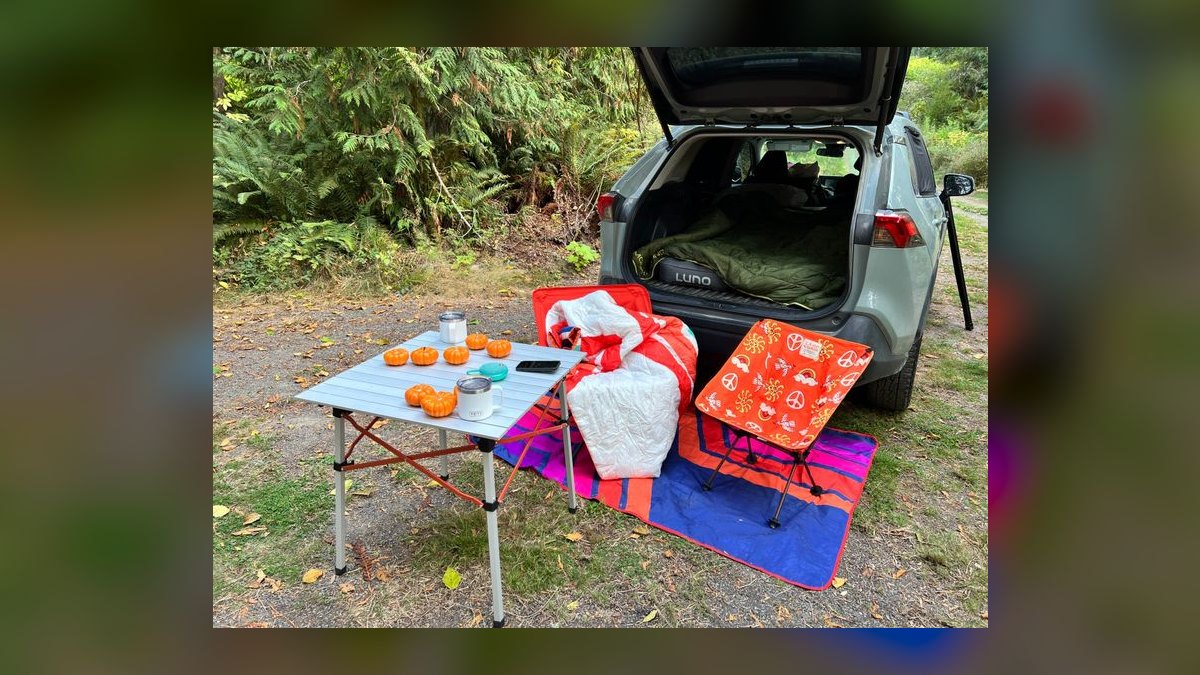
The best beginner car camping kit on a budget in 2027 covers four systems — shelter, sleep, cooking, and light — for roughly $400 to $600 total. Buy a full-fly tent, a thick insulated pad, a synthetic bag, a two-burner propane stove, and a headlamp. Skip rooftop tents, rotomolded coolers, and ultralight gear entirely.
What a car camping kit actually is, and why the budget version works
Car camping is a specific discipline, and understanding that is the single fastest way to cut your spending in half. You drive to a numbered site, park a few feet from where you sleep, and unload. You never carry your gear more than about thirty steps. That one fact invalidates most of the price premium built into modern outdoor equipment, because the overwhelming majority of what you pay for in high-end gear is weight reduction and packed volume — the two variables that matter enormously to a backpacker walking twelve miles and matter not at all to someone lifting a bin out of a trunk.
Consider what that premium actually buys. A premium backpacking tent might use DAC Featherlite poles instead of standard 7000-series aluminum, saving a few ounces per pole. It might use 15-denier silnylon instead of 68-denier polyester, saving most of a pound. Neither change makes the tent drier. In many cases the heavier, thicker fabric is more abrasion-resistant and more forgiving of a pitch on gravel. For a beginner car camping, the budget tent is not a compromise — it is arguably the correct tool, and the ultralight one is the wrong tool bought at four times the price.
The four systems that actually determine whether you have a good weekend are, in strict order of importance: staying dry, staying warm at night, eating hot food, and being able to see after dark. Everything else — chairs, tables, lanterns strung on a line, a hatchet, a cast iron skillet, a French press — is comfort layered on top of a working base. Beginners routinely invert this. They buy the chair, the folding table, and the enamel mug set, then discover on night one that a thin foam pad on cold October ground makes sleep impossible. Comfort at camp is decided almost entirely by the pad and the bag, and almost not at all by the accessories that photograph well.
The market has also shifted in the buyer's favor over the last several years. Direct-to-consumer outdoor brands sell competent equipment without the traditional retail markup, and legacy budget lines like Coleman's and the house brands at large retailers have kept improving because the competition forced it. Meanwhile the used market for outdoor gear has become genuinely deep: people buy a full kit, use it twice, and list it at a heavy discount within eighteen months. A patient beginner shopping used can assemble a better kit for $300 than an impatient one buys new for $700.
There is one caveat worth stating plainly. Budget gear tends to fail at the interfaces — zippers, seams, valves, buckles, and hinges — rather than at the structural or safety level. A cheap tent is unlikely to collapse on you; its door zipper is likely to snag and eventually separate. A cheap pad rarely bursts; its valve gasket wears and it starts losing air slowly overnight. Knowing where the failure will come from tells you what spare parts to carry: a zipper lubricant, a roll of Tenacious Tape, a valve repair kit, and a few feet of cord solve the large majority of in-field problems for under twenty dollars.
The step-by-step process for assembling your first kit
Work in the order below. The sequencing matters because each step constrains the next, and buying out of order is how people end up with a four-person tent and no way to stay warm inside it.
Step one: pin down your actual conditions. Write down the three or four places you realistically expect to camp in your first year and look up their elevation and typical overnight lows for the months you can actually take time off. This is a five-minute exercise that determines nearly every purchase downstream. A summer trip to a coastal campground at sea level and a September trip to a mountain campground at 7,000 feet are different problems with different gear answers. Beginners who skip this step buy for an imagined trip rather than a real one and almost always overbuy on warmth while underbuying on rain protection.

Step two: choose the tent, sized one person up. For two people, buy a three-person tent. Manufacturer capacity ratings assume adults lying shoulder to shoulder with zero gear inside, which is a fine assumption for backpackers counting grams and a terrible one for car campers who want boots, a duffel, and a dog inside. Look for three specific things: a rainfly that reaches the ground or close to it rather than a partial cap; a bathtub floor where the waterproof material runs several inches up the walls before the seam; and at least one vestibule for wet boots. Freestanding dome designs are the most forgiving for a first pitch because they stand up before you stake them, which means you can move the whole tent after you discover the rock.
Step three: build the sleep system as a pair, not a single item. The bag and the pad are one system and neither works without the other. Buy an insulated pad rated to at least R-3 for three-season use, and a synthetic bag rated somewhat below the coldest night you expect. Then treat the manufacturer's temperature number with suspicion — most bag ratings represent a survival threshold rather than a comfort threshold, and the temperature at which an average person actually sleeps comfortably is typically well above the number printed on the tag.
Step four: cooking, kept deliberately boring. A two-burner propane stove and a small nesting pot set is the whole answer. Add a lighter, a spatula, a knife, a cutting board, and a way to wash dishes. Resist the specialized items until you have cooked at camp four or five times and know what you actually reach for.
Step five: light, water, and the repair pouch. A headlamp per person, one lantern for the table, one large water container, and a small pouch with tape, cord, and a valve kit.

Step six: pitch it in the yard before you drive anywhere. This is the step people skip and the one that pays for itself immediately.
Costs, timelines, and what the ranges really look like
Treat the following as planning ranges rather than quotes. Outdoor pricing swings hard with season, and the same item can differ by a large margin between a spring sale and a July weekend.
Shelter, roughly $80 to $200 new. The bottom of this band buys a serviceable three-season dome from a big-box or direct-to-consumer brand. The middle buys better poles, a fuller fly, and a door that will still zip in year three. Above $250 you are generally paying for weight savings you will never notice from a car. Add $20 to $40 for a tarp and cord, which is the single highest-leverage accessory in the entire kit — it becomes a rain porch, a sun shade, a groundsheet, and a wind break, and it turns a miserable rainy afternoon into a tolerable one.
Sleep system, roughly $110 to $250 for the pair. Expect $50 to $130 for a genuinely insulated pad and $60 to $120 for a synthetic bag in a moderate rating. If your budget forces a choice between the two, spend it on the pad. Cold transfers into your body far faster through compressed insulation against the ground than it does through the air around you, and a warm bag on an uninsulated pad still produces a cold night.
Cooking, roughly $70 to $140. A classic two-burner propane stove sits near the bottom of that band and has been the default beginner answer for decades because it is wind-resistant, stable on a picnic table, and simmers well enough for real food. Nesting aluminum pot sets run $30 to $60. Propane canisters are a few dollars each; one 16-ounce canister typically covers a weekend of coffee and two cooked meals a day for two people, though cold weather and long boils shorten that considerably.
Cooling, roughly $40 to $90. A conventional hard-sided cooler in the 45- to 55-quart range is correct for weekend trips. Ice retention is dominated by technique, not price: pre-chill the cooler overnight with a sacrificial bag of ice, use block ice or frozen jugs rather than cubes, pack it full because air is the enemy, keep it in shade, and open it as little as possible. A well-managed budget cooler beats a poorly managed expensive one on any two-night trip.
Light, water, and repair, roughly $50 to $90. Headlamps at $20 to $40 each, a lantern at $15 to $30, a 5- to 7-gallon water container at $15 to $25, and a repair pouch under $20.

That totals roughly $400 on the low end and roughly $700 at the higher end of every band. The genuinely useful number, though, is the marginal cost per night. A $500 kit used ten nights in its first year costs $50 a night; used forty nights over four years it costs about $3 a night. This is why the used market and the rental path make so much sense at the start — REI and many local outfitters rent tents, pads, bags, and stoves for a modest daily fee, and two rental weekends cost less than a bad tent while teaching you exactly which features you care about.
On timeline: give yourself two to four weeks between deciding to camp and your first trip. That window lets you catch a sale cycle, order and return anything that does not fit, and run a backyard shakedown. Rushing the purchase into a single weekend is the most reliable way to overspend.
Where beginners consistently get it wrong
Buying the tent to the number on the box. A "four-person" tent holds four sleeping pads edge to edge and nothing else. Two adults in a four-person tent is comfortable; four adults in it is a bad night for everyone.
Chasing an aggressive temperature rating instead of a warm pad. This is the most expensive mistake in the beginner budget. People spend an extra $80 upgrading from a 20-degree bag to a 0-degree bag while sleeping on an uninsulated pad, then wake up cold and conclude the bag was defective. Ground conduction is the dominant heat loss path in a tent. Fix the pad first, every time.

Confusing cheap with light, and buying backpacking gear for car camping. A tiny canister stove is a marvel on a trail and a nuisance at a picnic table — it tips, it struggles in wind, it simmers poorly, and it cannot hold a full pan. Match the tool to the use case.
Skipping the shakedown. Setting up an unfamiliar tent for the first time in the dark, in the rain, at a site you have never seen, with tired kids in the car, is a genuinely bad experience and entirely avoidable. Pitch it in the yard once. You will find the missing stake, the poles you cannot decode, and the fly you had backwards, all while standing ten feet from your own kitchen.
Ignoring site selection, then blaming the tent. Water flows downhill and pools in depressions. Pitching in the low, flat, appealingly soft spot is how a waterproof tent ends up with a puddle inside. Look for a slight rise, avoid the base of slopes, orient the low end of the tent away from the prevailing wind, and never dig a trench around your tent — most campgrounds prohibit it and it damages the site.

Treating condensation as a leak. Two people breathing overnight release a substantial amount of water vapor. In a sealed tent it condenses on the inside of the fly and drips. This is not a manufacturing defect and no amount of money fixes it — ventilation does. Crack the vestibule, open the vents, and do not seal yourself in.
Overpacking food and fuel. Beginners routinely bring three days of food for a two-night trip and two spare propane canisters. It costs money, fills the cooler with air pockets that melt ice faster, and produces waste to haul out.
Neglecting the safety basics that are actually free. Check the forecast the morning you leave and again before bed. Tell someone your itinerary. Never run any stove, grill, or fuel-burning heater inside a tent, vehicle, or any enclosed space — carbon monoxide is odorless and this specific mistake causes real deaths every year. Check current fire restrictions before you plan a campfire, because bans change week to week during dry seasons.
Adjacent scenarios: sleeping in the vehicle, extending seasons, and traveling with others
The core question has a set of neighbors worth understanding, because the answer shifts once you change one variable.

Sleeping in the vehicle instead of a tent. If you drive an SUV, wagon, minivan, or hatchback with fold-flat seats, you can skip the tent entirely for a large fraction of trips. The cost is close to zero: a piece of plywood or a few storage bins to level the floor, the same pad you already bought, and window covers cut from reflective sun shades. The advantages are real — setup takes ninety seconds, you are dry in any storm, and you can pull into a legal overnight spot and sleep without pitching anything. The trade-offs are equally real: condensation is worse in a sealed metal box, so you must crack windows; you cannot cook inside under any circumstances; and headroom is limited enough that a multi-day trip in bad weather gets claustrophobic. Most experienced car campers end up owning both options and choosing by forecast.
Extending into shoulder season. The gap between summer camping and three-season camping is smaller than people expect, and it is almost entirely about insulation and moisture management. Add a closed-cell foam pad underneath your inflatable — this stacks R-values, adds puncture protection, and costs very little. Add a fleece or synthetic liner to the bag, which adds meaningful warmth for a modest price and keeps the bag cleaner. Bring a dedicated set of dry sleep clothes that never leave the tent, including socks and a hat, since a surprising amount of overnight cold comes from sleeping in clothes that absorbed sweat during the day. None of this requires replacing your summer kit.
Camping with kids or a group. Group camping changes the shape of the kit more than the price. Two smaller tents beat one large tent for most families — they pitch faster, they let people go to bed at different times, and if one leaks you have a backup. A second stove burner or a small tabletop grill stops the dinner bottleneck. A wash station of two collapsible tubs and a jug of water prevents the sink line that ruins an evening. And a spare headlamp lives in the glovebox, because someone will always forget theirs.
Camping with a dog. Bring a foam pad or old blanket for the dog so it does not puncture yours, a long tether and a stake, and be honest that dogs generate a large amount of tent condensation. Check the campground's leash rules ahead of time; many national park campgrounds allow dogs at the site but prohibit them on trails.

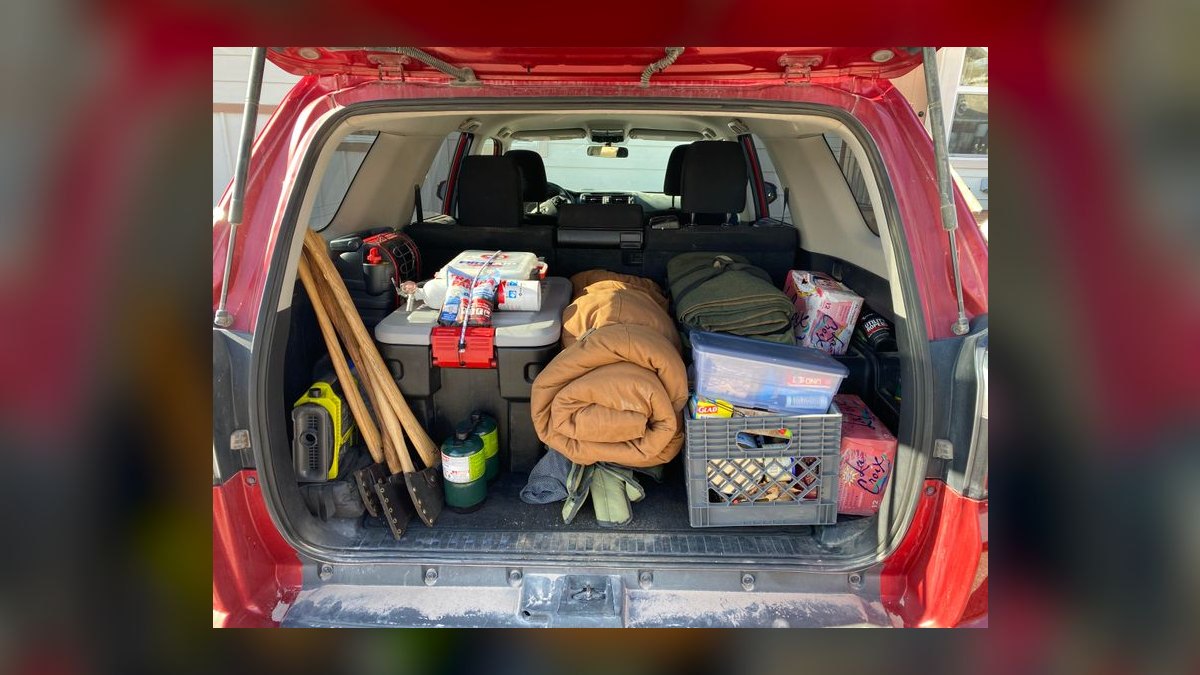
The storage and maintenance side, which nobody plans for. Gear dies in the garage more often than in the field. Store bags and synthetic quilts uncompressed — hung in a closet or in the large mesh sack they shipped with — because months of compression permanently flattens the loft that keeps you warm. Dry the tent completely before it goes in the bag; a tent packed damp grows mildew that degrades the coating and produces a smell you will not remove. Run the stove briefly before each season and wipe the burner ports. Keep the whole kit in two or three labeled bins so packing takes fifteen minutes rather than an evening, and store the bins where they are easy to reach or you will find reasons not to go.
A decision framework for when to spend and when to save
The useful mental model is to sort every purchase along two axes: does failure of this item threaten safety or the trip itself, and how often will you use it. That gives four quadrants, and each quadrant has a different correct answer.
Items that are both safety-relevant and used constantly — the tent, the sleeping pad, the stove, your primary headlamp — justify buying from a brand with a real warranty and available spare parts. That does not mean buying the most expensive option; it means buying the mid-tier item from a company that will still exist and still sell you a replacement pole section in three years.
Items that are safety-relevant but rarely used — a first aid kit, a fire extinguisher, a spare fuel canister — should simply be bought correctly once and then forgotten. The cost is small relative to the consequence.
Items that are neither safety-critical nor heavily used — a second lantern, a folding table, a camp shower — are exactly where to buy the cheapest acceptable version, or to skip entirely for the first year and see whether you actually miss them.
Items that are not safety-critical but see constant use — chairs, cookware, the cooler, water containers — are where the used market shines. These get discarded by other campers in excellent condition, and a chair that has been sat in for two seasons tells you honestly whether the frame is sound.
Layered on top of that framework, three timing rules save real money. Buy last season's colorway rather than this year's, since the design usually carries over unchanged. Buy at the end of a season rather than the start, when retailers are clearing inventory. And buy nothing to solve a problem you have not personally experienced yet — the upgrade you actually need after five trips is almost never the one you would have guessed before the first.
Related questions
Should I rent gear before buying anything?
If you are unsure you will camp more than once, yes. REI and many local outfitters rent tents, pads, bags, and stoves by the day. Two rental weekends usually cost less than one mediocre tent and tell you exactly which features you care about before committing.
Is a rooftop tent worth it for a beginner?
No. Rooftop tents cost many multiples of a ground tent, hurt fuel economy, require roof-rack capacity you may not have, and lock you into sleeping wherever you park. They solve problems experienced overlanders have. Start on the ground.
What is the single best upgrade after the first season?
Almost always the sleeping pad, either to a higher R-value or a thicker one. Sleep quality determines how the whole trip feels, and pad comfort is the variable beginners underestimate most consistently.
Can I use household bedding instead of a sleeping bag?
For warm-weather car camping, yes — comforters and blankets work fine and cost nothing since you already own them. They are bulky and useless when wet, so they suit fair-forecast trips only. You still need an insulated pad underneath.
How do I keep food safe from animals on a budget?
Store everything scented in your locked vehicle or the campground's provided food locker, never in the tent. In designated bear country, follow the posted regulations exactly — some areas legally require an approved hard-sided container, and a hanging bag will not satisfy the rule.
FAQ
Can I run a stove or heater inside my tent to stay warm?
Never. Any fuel-burning device — propane stove, charcoal grill, catalytic heater, lantern — produces carbon monoxide, which is colorless, odorless, and lethal in an enclosed space. This applies to tents, vehicles, campers, and vestibules alike. Cook outside in open air, and warm yourself with insulation instead: a better pad, a liner, dry sleep clothes, and a hat.
How much does a complete beginner car camping setup really cost?
Plan on roughly $400 to $700 new for the four core systems plus accessories, and considerably less if you buy used or borrow. Spread across the nights you actually use it, a $500 kit that lasts four seasons costs only a few dollars per night — which is why renting first and buying deliberately beats panic-buying a full kit in one weekend.
Why am I cold at night even in a warm sleeping bag?
Almost always the pad. Your body compresses the insulation underneath you to nearly nothing, so the ground pulls heat directly out of you regardless of the bag's rating. Use a pad with an R-value of at least 3 for three-season use, and stack a closed-cell foam pad beneath an inflatable one when temperatures drop toward freezing.
Do budget tents actually leak?
Rarely from the fabric. Most reported leaks are either condensation from breathing in an unventilated tent, or water pooling because the tent was pitched in a low spot. Genuine leaks usually come from unsealed seams or an old, worn coating. A cheap tarp pitched above the tent handles heavy rain and costs a fraction of a premium tent.
Is used camping gear a good idea, or too risky?
It is one of the best values available, with a few checks. Inspect fabric for sun damage — faded, stiff, or crackly material has degraded and will tear. Test every zipper. Inflate any pad fully and leave it thirty minutes to check for slow leaks. Avoid used items where you cannot verify condition, and skip used bags that have been stored compressed.
How should I store everything so it lasts?
Dry the tent completely before packing it, always — a damp tent grows mildew that destroys the waterproof coating. Store sleeping bags uncompressed, hung or in a large breathable sack, so the insulation keeps its loft. Keep the kit in labeled bins somewhere accessible, and give the stove a quick clean and test run before each season.
Sources
- https://www.rei.com/learn/expert-advice/family-camping-checklist.html
- https://www.rei.com/learn/expert-advice/sleeping-pads.html
- https://www.nps.gov/subjects/camping/index.htm
- https://www.cpsc.gov/Safety-Education/Safety-Education-Centers/Carbon-Monoxide-Information-Center
- https://www.fs.usda.gov/visit/camping
- https://www.cdc.gov/carbon-monoxide/about/index.html
- https://www.recreation.gov/
- https://lnt.org/why/7-principles/
- https://www.outdoorgearlab.com/topics/camping-and-hiking
- https://www.nps.gov/subjects/bears/food-storage.htm
Related on PULSE
- [Top 10 hiking gear upgrades that are worth the money in 2027](/knowledge/ed1097)
- [Best upright vacuums for stairs and small apartments in 2027](/knowledge/ed1095)
- [How do I say no to a promotion without looking unmotivated](/knowledge/ed1096)
- [How do I stop feeling invisible in group conversations with extroverts](/knowledge/ed1098)
@Kory-White- · if Venmo asks, the last 4 of my number are 2012
 edBest running shoes for flat feet and knee pain in 2027
 edWhat are the top 10 cities for remote workers in Latin America for 2027
 edHow do I stop comparing my career progress to my friends
 edWhat are the top 10 family-friendly vacation spots in the U.S. for 2027
 edBest credit cards for travel rewards in 2027
 edBest noise-cancelling headphones for open offices in 2027
 edBest ways to make passive income with a full-time job in 2027
 edBest smartphones for battery life and camera quality in 2027
 edBest electric bikes for commuting under $2,000 in 2027
 edHow to give constructive feedback to a peer who's senior to you