
Should I open or buy a Cooper's Hawk Winery & Restaurants franchise in 2027?
 Curated byKory White · Fractional CRO · Maryland
 PULSEKNOWLEDGE LIBRARY
Cooper's Hawk Winery & Restaurants does not franchise. Every location is company-owned under private-equity ownership, and no franchise disclosure document exists in any state registry. You cannot buy one in 2027. Anyone offering you a unit is misinformed or defrauding you. The real choice is building an independent wine-and-restaurant concept or signing with a franchise that actually files.
The phone call that starts most of these searches
A restaurant operator in Nashville with two successful upscale-casual locations sits down to dinner at a Cooper's Hawk in Franklin, watches the wine-club pickup counter move faster than the host stand, and does the math on the way home. Roughly 400 covers, an average check north of $40, plus what looks like a hundred members walking out with two bottles apiece at membership pricing. That operator gets home, types "Cooper's Hawk franchise cost" into a search bar, and lands on a page that promises an investment range, a royalty percentage, and a "request information" form.
That form is the problem. There is no franchise program behind it. The pages returning those numbers are aggregator sites that scrape restaurant-industry directories and auto-generate franchise-style profiles for any brand with enough locations to look franchisable. They populate the "initial investment" field with a category average and the "franchise fee" field with a guess. None of it traces back to a filed document, because no such document exists.
Here is what the Nashville operator will actually find if they keep digging. Cooper's Hawk was founded by Tim McEnery, who opened the first location in Orland Park, Illinois in 2005, combining a full-service upscale-casual restaurant with an on-site tasting room and a wine club that ships or holds a monthly bottle for members. The concept grew to dozens of locations across the Midwest, Southeast, Mid-Atlantic, and Texas. In 2019, Ares Management acquired a controlling stake in the company. Every unit remained corporate. There was no conversion to franchising, no area-development program, no licensing arm spun out.
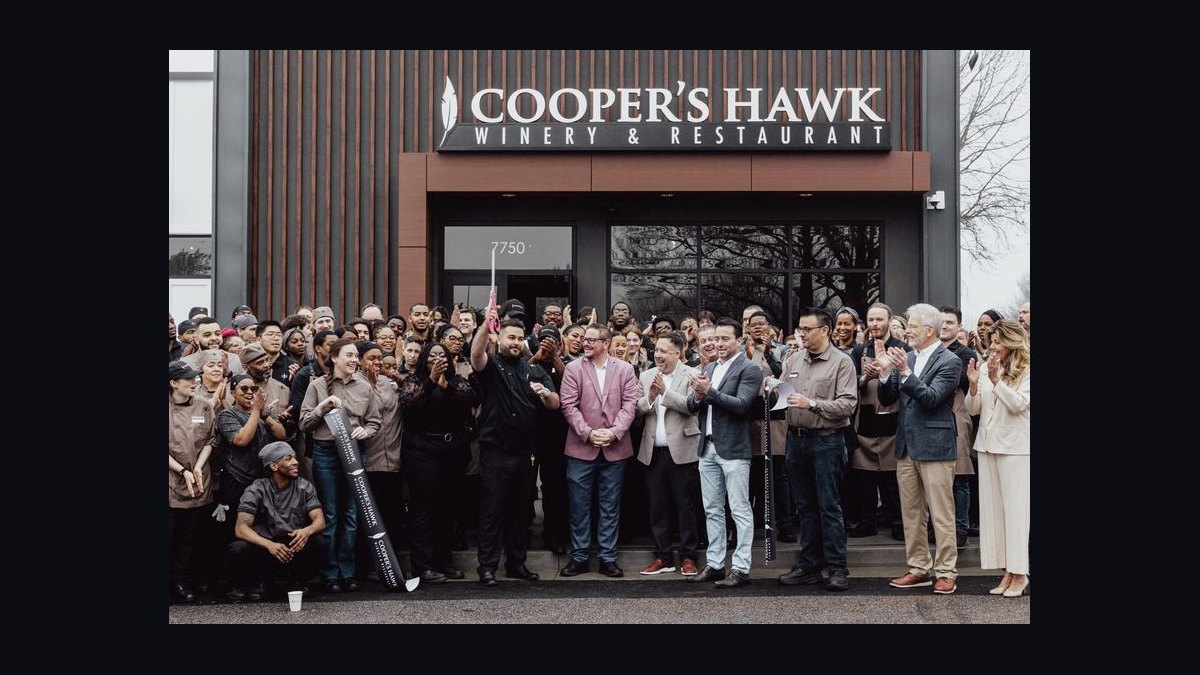
The distinction matters legally, not just semantically. Under the FTC Franchise Rule (16 CFR Part 436), anyone offering a franchise in the United States must furnish a disclosure document at least 14 days before any payment or signature. That document has 23 numbered items, and Item 7 is the initial investment table — the low-to-high range for every category of startup cost. Item 19 is the optional financial performance representation. Fourteen states additionally require registration before an offer can even be made: California, Hawaii, Illinois, Indiana, Maryland, Michigan, Minnesota, New York, North Dakota, Rhode Island, South Dakota, Virginia, Washington, and Wisconsin. Several of those states publish searchable registries. Cooper's Hawk does not appear in them as a franchisor, because it has never offered a franchise.
So the honest framing of the question is not "should I buy one." It's "I want the economics I think I saw — what is the closest thing I can actually buy, and does it work?" That reframe is where the rest of this page lives, and it applies far beyond this one brand. Founder-led, private-equity-owned, company-operated restaurant groups are a whole category that looks franchisable from the dining room and isn't: think of any chain where every general manager is a W-2 employee and the growth capital comes from a fund rather than from franchisee fees.
How the ownership structure actually blocks you
Understanding *why* a concept stays corporate tells you whether it will ever change, and that's worth more than a cost table.
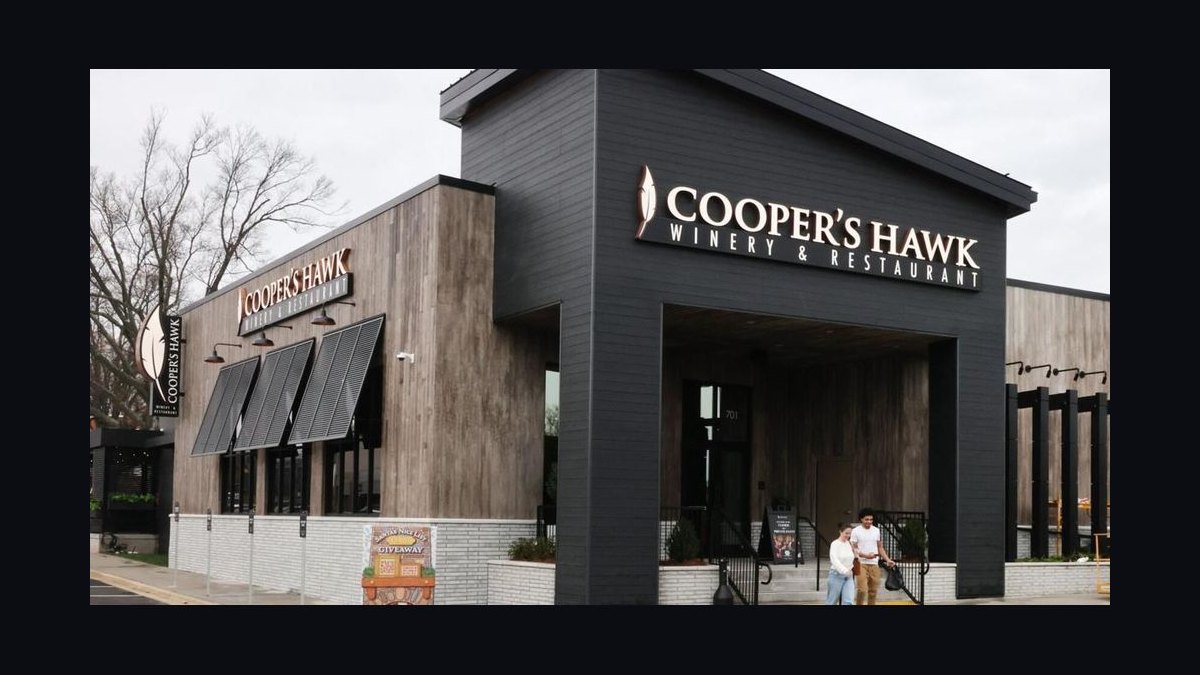
A company-owned model concentrates two things a franchisor gives away: unit-level cash flow and brand control. A franchisor typically collects a 5-6% royalty on gross sales plus a 2-4% national marketing contribution, and in exchange hands the operator the entire remaining margin and all the operating risk. A company-owned operator keeps the full restaurant-level margin — commonly in the high teens to low twenties as a percentage of revenue for a well-run upscale-casual unit — but funds every build itself. At an eight-figure build-and-ramp cost per unit, that model only works with deep capital behind it. Private equity supplies exactly that.
Now layer in the wine. Cooper's Hawk produces its own labels, which means the entity holds federal Alcohol and Tobacco Tax and Trade Bureau (TTB) permits as a bonded winery, plus state-level manufacturer, wholesaler, and retailer credentials in each market it operates. In most of the country, the three-tier system — a Prohibition-repeal structure that legally separates producers, distributors, and retailers — makes it difficult or impossible for one company to occupy all three tiers. States that permit vertically integrated winery-restaurants do so through specific carve-outs, and those carve-outs are almost always granted to the licensed entity itself, not sublicensable to a third party.
That's the real lock. Even if the parent decided tomorrow to franchise the restaurant, the wine-production-plus-retail-plus-on-premise stack does not travel cleanly into a franchisee's hands. A franchisee would need its own alcohol licensing in its own name, and the interlocking permissions that let a corporate entity make wine in Illinois and sell it at member pricing in a Virginia dining room do not automatically extend to an independent operator using the same trade name. Restructuring that is a multi-year regulatory project, not a business-development decision.
One more structural note worth internalizing: private-equity ownership has a clock on it. Funds typically hold portfolio companies for roughly five to seven years before pursuing a sale, recapitalization, or public offering. That means ownership of a concept like this can change hands, and a future owner could in principle decide franchising is the faster growth path — some restaurant groups have done exactly that after a sale, converting company units to franchised ones or launching an area-development program. But "a future owner might someday file an FDD" is not a plan you can capitalize, sign a lease against, or take to a lender. If it ever happens, the announcement will be public and the disclosure document will appear in the state registries. Until a document exists, there is nothing to evaluate.
Real numbers for the concept you'd actually build
Since there is no Item 7 to read, the useful exercise is pricing the independent build — a full-service upscale-casual restaurant of roughly 8,000 to 11,000 square feet with a bar program, a retail wine component, and a membership club. These are category ranges drawn from how restaurant projects of this size and format typically price out; your market, your landlord, and your state's alcohol regime will move every line.
Leasehold improvements and construction. For a second-generation restaurant space you're often in the $150 to $300 per square foot range for a full gut and rebuild at this quality level; a cold shell or ground-up build runs higher, and a landlord tenant-improvement allowance can offset a meaningful slice. On 9,000 square feet, that's roughly $1.35M to $2.7M before allowance. Second-gen restaurant space with usable grease interceptor, hood, and utility service is the single biggest cost lever available to you — it can cut six figures off the project.

Kitchen and bar equipment. A full-service kitchen with a display component, plus a bar capable of running a serious by-the-glass program, generally lands in the mid-six figures. Used and refurbished equipment through restaurant auction channels can reduce this substantially, at the cost of warranty coverage and lead-time certainty.
Retail and tasting-room build-out. A tasting bar, retail shelving, temperature-controlled storage, and point-of-sale integration for member pricing is a distinct budget line most first-time operators forget entirely. Treat it as its own project with its own contractor scope.
Alcohol licensing. This is the widest-variance line in the entire model, and it is where geography decides your fate. In license-quota states, an on-premise liquor license trades on a secondary market and can cost a multiple of everything else in your build. New Jersey's plenary retail consumption licenses have historically traded well into six figures and beyond in dense municipalities. Pennsylvania's county-level quota system produces similar dynamics. Utah restricts license counts by population formula. Meanwhile, in states that issue licenses administratively for a modest fee, the same line item is a rounding error. Price your license before you price your lease. Operators routinely sign an LOI, then discover the license math kills the pro forma.

Winery permitting, if you actually make wine. A TTB bonded winery permit involves federal application, premises approval, bond or exemption qualification, and label approval through the Certificate of Label Approval process for anything you package. Application-to-approval timelines are commonly measured in months, not weeks, and state manufacturer licensing runs in parallel. Most operators building a wine-forward restaurant skip production entirely and instead build a private-label program with an existing bonded producer — you get a proprietary label and better margin than a distributed brand without the permit burden.
Pre-opening payroll and training. Six to ten weeks of management salary, a full staff hiring and training cycle, and two or three friends-and-family services. Six figures at this scale.
Working capital. Carry six months of operating expenses in cash beyond your opening budget. This is the line under-capitalized operators shave, and it is the reason so many restaurants that open to good reviews close in month eight — the honeymoon traffic recedes, the ramp is slower than the model, and there's no cushion to bridge to stabilization.
On the revenue side: underwrite conservatively. Assume the mature average unit volumes you read about in trade coverage of large chains are the product of years of brand equity, a national loyalty base, and site selection backed by real estate analytics teams. A strong independent upscale-casual restaurant in a good trade area does real volume, but a first-year independent should be modeled well below any mature chain benchmark, with a ramp to stabilization over 24 to 36 months. Restaurant-level margin for a new independent is typically thinner than a mature chain's — you lack purchasing scale, your labor is still learning, and your waste is higher for the first two quarters.

The industry cost backdrop matters too. Labor as a percentage of revenue has climbed materially across full-service dining over the past several years, driven by wage floors and staffing competition, and food cost inflation has been uneven and hard to forecast. The National Restaurant Association's annual State of the Restaurant Industry report is the standard free reference for those trends; read the current edition before you finalize a pro forma rather than using a number you remember from a prior year.
Trade-offs, and the alternatives that actually exist
Four paths lead out of this question. Each has a different capital profile, a different risk shape, and a different answer to "what am I actually buying?"
Path one: build it independently. You keep 100% of the economics and owe nobody a royalty. You also *are* the franchisor — you write the operations manual, negotiate every vendor agreement, design the training program, build the loyalty technology, and absorb every mistake with no system support. The membership club, which is the piece most people are actually trying to replicate, is the hardest part. A wine club is a subscription business bolted onto a restaurant, and subscription businesses live or die on churn management, billing infrastructure, and fulfillment logistics — competencies that have nothing to do with running a dining room. If you go this way, staff the club as its own department with its own P&L from day one, and pre-sell founding memberships before you open so month one has committed recurring revenue rather than hope.

Path two: sign with a franchisor that actually files. The full-service and upscale-casual segments do have franchised concepts with current disclosure documents, and the enormous advantage is that Item 7 gives you a real investment range and Item 19, when a brand includes one, gives you actual unit performance data with a defined sample. You also get Item 20, which lists outlet counts, transfers, terminations, and — critically — contact information for current and former franchisees. Call fifteen of them. Ask former franchisees why they left. That single exercise is worth more than any consultant's report. The cost is the royalty and marketing fund, plus territorial and operational constraints you cannot override.
Path three: buy an existing independent restaurant and add the wine layer. An operating restaurant with established cash flow, a trained staff, and an existing liquor license removes the two riskiest variables in the whole equation: the ramp and the license. You can layer a curated wine program and a membership tier onto a business that already covers its own rent. Business-brokerage listings and the SBA's 7(a) program — which is commonly used for restaurant acquisition — make this the most financeable of the four paths. The trade-off is that you inherit whatever is wrong with the business, and you're paying for goodwill that may not survive an ownership change.
Path four: build the wine-club economics without the restaurant. If what attracted you was the recurring revenue rather than the dining room, a direct-to-consumer wine club, a wine bar with a small-plates kitchen, or a retail shop with a membership tier reaches similar subscription mechanics at a fraction of the capital requirement. Direct-to-consumer wine shipping is governed by a patchwork of state rules, and compliance platforms exist specifically to manage permits, tax remittance, and volume limits across states. This is the lowest-capital, fastest-payback route, and it is genuinely underrated by people fixated on opening a restaurant.

A note on comparables that operators overlook: the franchised segment adjacent to this one includes brewpub and taproom concepts, which face nearly identical vertical-integration questions on the production side. Studying how those brands structured their franchise agreements around manufacturing licenses is genuinely instructive, because they solved — or explicitly declined to solve — the same three-tier problem that keeps a winery-restaurant corporate.
Pitfalls, scams, and the diligence that prevents both
The nonexistent-franchise scam. When a well-known brand doesn't franchise, that vacuum attracts fraud. The pattern is consistent: a "development representative" contacts you or answers an inquiry form, describes an exclusive territory, and asks for a deposit to "hold" it while paperwork is prepared. Sometimes there's a plausible-looking agreement. Sometimes there's a fabricated disclosure document. The defense is simple and absolute: under the FTC Franchise Rule, you must receive a disclosure document at least 14 calendar days before you pay anything or sign anything. No document, no money — no exceptions, no "the deposit is refundable," no "we're finalizing the FDD now." If a document does arrive, verify it independently against the state registry rather than trusting the copy you were sent. Report suspected fraud to the FTC at ReportFraud.ftc.gov and to your state attorney general.
Trusting franchise aggregator sites. Directory sites that publish "franchise cost" profiles for brands that don't franchise are a persistent source of confusion. They rank well, they look authoritative, and their numbers are frequently synthesized rather than sourced. The only authoritative investment figures for any franchise are in the Item 7 table of the current disclosure document, obtained from the franchisor or a state registry. Treat everything else as marketing.
Paying a broker to find something that isn't for sale. Franchise brokers and "consultants" are typically compensated by the franchisors in their portfolio, which means their recommendations are structurally biased toward brands that pay them. A broker cannot produce a franchise that doesn't exist. If you're paying for advice, pay a franchise attorney by the hour to review real documents instead — that's a few thousand dollars that can save you a career.
Signing the lease before pricing the license. Repeating this because it's the most expensive ordinary mistake in the category. In quota states, the license market sets your project cost. Get a written quote from a license broker and confirm the transfer timeline with the state agency before you're contractually committed to rent.
Underestimating the ramp. New restaurants open to curiosity traffic that fades. The model must survive month seven, not month one. Build your working-capital reserve against a stabilization curve, not against opening week.
Copying the club without the infrastructure. A membership program that bills monthly is a recurring-revenue business subject to chargebacks, failed cards, involuntary churn, and fulfillment errors. Restaurants routinely launch one on a spreadsheet and a POS workaround, then discover at 800 members that they have no dunning process and no way to reconcile inventory against member holds. Pick a subscription platform before you sell membership number one.
Ignoring the demographic headwind. Alcohol consumption patterns among younger adults have been shifting, and the non-alcoholic beverage category has grown into a real segment rather than a novelty. Any wine-forward concept underwritten in 2027 should model a serious zero-proof program — not as a hedge, but as a margin opportunity, since well-executed non-alcoholic cocktails carry attractive pour costs and expand your addressable table.
Skipping franchisee reference calls when you do choose a real franchise. Item 20 gives you names and numbers. Operators who skip this step and rely on the franchisor's hand-picked references are the ones who write the angry forum posts three years later.
Related questions
Could Cooper's Hawk start franchising later?
It's possible — private-equity ownership eventually turns over, and new owners sometimes adopt franchising to accelerate growth. But a filed disclosure document is the only evidence that matters. Watch state franchise registries, not press speculation, and don't commit capital to a concept that doesn't yet exist as an offering.
How do I confirm whether any brand franchises?
Search the franchise registration databases maintained by registration states such as California, Minnesota, Wisconsin, and Washington, and check the brand's official corporate site for a franchising section. If no disclosure document is on file and the company doesn't publish a franchising page, it does not franchise.
What's the fastest path to owning a wine-forward business?
Acquiring an existing wine bar or small restaurant with a transferable liquor license. You skip permitting delays and the revenue ramp, inherit trained staff, and can add a membership program to existing traffic. SBA 7(a) financing is commonly used for this kind of acquisition.
Is a restaurant wine club actually profitable?
It can be, because it converts one-time diners into recurring revenue and drives repeat visits when members collect. But it requires subscription billing infrastructure, churn management, and inventory allocation. Treat it as a separate business unit with its own P&L, not a marketing add-on to the dining room.
Should I build my own wine or private-label it?
Private-label with an existing bonded producer, almost always. You get a proprietary product and improved margin without federal winery permitting, premises approval, label approval, or production risk. Build your own bonded winery only if production itself — not the label — is central to your concept.
FAQ
Does Cooper's Hawk Winery & Restaurants franchise in 2027?
No. The company operates all of its restaurants directly and has not offered franchises. There is no franchise disclosure document on file in any state franchise registry, which means there is no legal offering to buy into. Any claim otherwise should be verified against the official corporate website and state registries before you respond to it.
Can I buy a single existing Cooper's Hawk location?
No. Individual locations are company assets within a private-equity-backed corporate structure and are not sold to outside owners. Acquiring the brand would mean acquiring the parent company — a control transaction in the hundreds of millions of dollars, negotiated between institutional parties, not a franchise purchase.
Someone emailed me offering an exclusive Cooper's Hawk territory. What do I do?
Don't send money and don't sign anything. Under the FTC Franchise Rule you're entitled to a disclosure document at least 14 days before any payment or signature. If the offer can't produce one that you can independently verify in a state registry, treat it as fraud and report it to the FTC and your state attorney general.
What does it cost to build a comparable independent restaurant with a wine program?
Expect a multi-million-dollar project for a full-service upscale-casual restaurant of 8,000 to 11,000 square feet with a bar, retail wine component, and club. Construction, equipment, licensing, pre-opening payroll, and six months of working capital all carry real weight, and alcohol licensing alone varies from a modest administrative fee to a six-figure secondary-market purchase depending entirely on your state.
Which franchised restaurant brands should I look at instead?
Look at full-service and upscale-casual concepts that file current disclosure documents, and evaluate them on Item 7 investment range, Item 19 performance data, and Item 20 franchisee contacts. Rather than starting from a brand list, start from the registries and the International Franchise Association's directory, then call current and former franchisees directly.
Do I need a winery license to run a wine club at my restaurant?
Usually not. Most restaurant wine clubs sell bottles the establishment already holds under its retail or on-premise license, and many use private-label wine produced by a bonded partner. You need a federal TTB permit only if you're producing wine yourself. Direct-to-consumer shipping adds a separate layer of state-by-state permitting.
Sources
- FTC Franchise Rule, 16 CFR Part 436 — https://www.ftc.gov/legal-library/browse/rules/franchise-rule
- FTC consumer guidance on buying a franchise — https://consumer.ftc.gov/articles/buying-franchise-consumer-guide
- FTC fraud reporting portal — https://reportfraud.ftc.gov
- Alcohol and Tobacco Tax and Trade Bureau, winery permits and applications — https://www.ttb.gov/wine
- California Department of Financial Protection and Innovation franchise registry search — https://dfpi.ca.gov/franchise-investment-law/
- Minnesota Department of Commerce franchise registration — https://mn.gov/commerce/industries/franchises/
- Washington State Department of Financial Institutions franchise resources — https://dfi.wa.gov/securities/franchises
- U.S. Small Business Administration 7(a) loan program — https://www.sba.gov/funding-programs/loans/7a-loans
- National Restaurant Association, State of the Restaurant Industry — https://restaurant.org/research-and-media/research/industry-statistics/
- International Franchise Association — https://www.franchise.org
Related on PULSE
- [Should I open or buy a PDQ Restaurants franchise in 2027?](/knowledge/fr0403)
- [How long does it take to open a franchise and break even in 2027?](/knowledge/fr1104)
- [Should I open or buy a Tommy Gun's Original Barbershop franchise in 2027?](/knowledge/fr1095)
- [What does an FDD Item 19 actually tell you about franchise earnings?](/knowledge/fr1104)
- [Which restaurant franchises have the lowest total investment?](/knowledge/fr0403)
Read it free — or make it yours for $1.
@Kory-White- · if Venmo asks, the last 4 of my number are 2012
 franchiseShould I open or buy a Panera Bread franchise in 2027?
 franchiseShould I open or buy an L&L Hawaiian Barbecue franchise in 2027?
 franchiseShould I open or buy a Maaco (re-do) franchise in 2027?
 franchiseShould I open or buy a Pizza Inn franchise in 2027?
 franchiseShould I open or buy a Bio-One franchise in 2027?
 franchiseShould I open or buy a Gracie Barra Brazilian Jiu-Jitsu franchise in 2027?
 franchiseShould I open or buy a Wienerschnitzel franchise in 2027?
 franchiseShould I open or buy a Little Caesars franchise in 2027?
 franchiseShould I open or buy a Krispy Krunchy Chicken franchise in 2027?
 franchiseShould I open or buy a Mountain Mike's Pizza franchise in 2027?