

Should I open or buy a Bonchon Chicken (re-do) franchise in 2027?
 Curated byKory White · Fractional CRO · Maryland
Quality
Certified

Only if you are an experienced multi-unit restaurant operator with roughly $400K–$600K liquid, SBA access above $700K, and a trade area with real Korean-fried-chicken demand. Bonchon's disclosed investment runs about $591,000–$1,313,000 against a mature dine-in AUV near $1,595,000. First-timers and absentee investors should pass.
The outcome you should expect
Strip away the brochure language and a Bonchon deal in 2027 resolves into a fairly narrow band of outcomes. You put roughly $591,000 to $1,313,000 into the ground — the range disclosed in the 2026 Franchise Disclosure Document, Item 7 — and you get a restaurant that, once mature, does something in the neighborhood of $1,595,000 in annual sales per the Item 19 financial performance representation. Top-quartile units in that same disclosure run near $2,462,634. That spread between the average and the top quartile is the whole story: this is not a brand where every unit lands in the same place. Site quality, trade-area composition, and operator involvement produce a genuinely wide distribution.
On the cost side, restaurant-level EBITDA in the eight to fourteen percent band is a reasonable planning assumption for a fried-chicken concept carrying a five percent royalty plus a brand fund of roughly 1.5–2.5 percent and a local marketing minimum of 2.5–5 percent. Add those up and you are handing 8.5 to 12.5 percent of gross revenue to the system and to advertising before you have paid a single cook. That is not unusual for the category, but it means your prime cost — food plus labor — has to hold near or below the low sixties as a percentage of sales, and your occupancy has to stay under roughly 8.5 percent of sales, or the four-wall margin simply does not survive contact with the fee load.
Run that through a mid-case build. Say $850,000 all-in, $250,000 of it your own cash and $600,000–$700,000 borrowed. At SBA 7(a) pricing in the prime-plus-2.25-to-2.75-percent range, debt service on $700,000 lands somewhere around $8,000–$8,500 a month. A Year-1 unit doing $1.2M–$1.4M at a ten percent restaurant margin throws off $120,000–$140,000 before debt, which leaves you roughly $20,000–$40,000 of actual cash after the note — plus whatever salary you pay yourself for working the fifty hours a week the concept requires. The $80,000–$140,000 Year-1 owner cash flow figure that gets quoted around this brand assumes you count your own labor as return, you hit the upper end of the sales range, and you did not overpay for build-out. Payback at the midpoint realistically sits at 36 to 60 months, and the honest planning number is 48.
The upside case is real, though. An operator who lands a high-density trade area, negotiates a landlord into covering meaningful build-out, and runs the kitchen tightly can reach $120,000–$180,000 of owner cash flow by Year 3 and — more valuably — earn the right to a second unit. In multi-unit restaurant franchising, the second and third units are where the money actually is: you amortize your area supervision, your bookkeeping, your recruiting pipeline, and your negotiating leverage with vendors across more revenue. The first unit is tuition. Anyone modeling a single Bonchon as a standalone wealth event is modeling the wrong thing.
What drives that outcome
Four variables move the needle far more than anything else, and three of them are locked in before you ever open the doors.
Build-out cost is the biggest single swing. The Item 7 range spans more than $700,000, and the majority of that variance lives in leasehold improvements — roughly $180,000 at the low end to $620,000 at the high end. A second-generation restaurant space with usable hood, grease interceptor, and three-phase power can save you $200,000 outright versus a vanilla shell. A landlord tenant-improvement allowance of $80–$120 per square foot moves the payback period by a full year. This is why experienced operators spend months on site selection and first-timers sign in six weeks: the experienced ones know the lease is the deal.
Trade-area composition determines your ceiling. Korean fried chicken over-indexes hard in metros with dense Asian-American populations and in college-adjacent or young-professional corridors. Places like Annandale, Flushing, Buena Park, and Carrollton have supported unusually strong volumes for the category because the product needs no explanation there and group dining plus catering lift the average check. A suburban inline space with none of those characteristics does not get the same top line, and no amount of operating skill fixes a trade area.
Prime cost discipline decides whether the top line matters. Bonchon's product is labor-intensive by design — twice-fried, sauced to order, with a cook time that runs several minutes longer than a single-fry operation. That protects the product quality but it also means you cannot staff the kitchen thin at peak without destroying ticket times. Blended QSR wages nationally are in the high-$16 range per BLS data, and California's fast-food minimum wage law sets a $20 floor for covered chains, which is why California units run measurably lower restaurant-level margins than the system average.
Operator presence is the fourth variable and the one people lie to themselves about. A hired general manager at $75,000–$90,000 plus payroll taxes consumes most of the Year-1 owner draw on a single unit. That is fine if you own four units and the GM is part of a system. It is fatal if you own one and were planning to keep your day job.
Benchmarks and realistic ranges
Use these as planning anchors, then verify every one of them against the live FDD you are actually handed — franchisors amend disclosures annually, and state registration amendments in California, New York, Illinois, Virginia, Maryland, Wisconsin, Minnesota, Rhode Island, Hawaii, North Dakota, South Dakota, and Washington can change fee and financing terms.
| Line item | Low | High |
|---|---|---|
| Initial franchise fee | $40,000 | $40,000 |
| Leasehold improvements | $180,000 | $620,000 |
| Equipment and smallwares | $110,000 | $260,000 |
| Signage, POS, technology | $25,000 | $55,000 |
| Opening inventory | $18,000 | $35,000 |
| Training and travel | $8,000 | $20,000 |
| Working capital (3 months) | $90,000 | $210,000 |
| Insurance, legal, permits | $15,000 | $40,000 |
| Total investment | $591,000 | $1,313,000 |
| Royalty (% of gross) | 5.0% | 5.0% |
| Brand fund (% of gross) | 1.5% | 2.5% |
| Local marketing minimum | 2.5% | 5.0% |
| Mature dine-in AUV | $1,595,000 | $1,595,000 |
| Top-quartile AUV | $2,462,634 | $2,462,634 |
| Restaurant-level EBITDA | 8% | 14% |
| Payback (modeled, midpoint) | 36 months | 60 months |
A few reads on this table. First, the fee stack is mid-market for the category — five percent royalty is standard, and the combined ad load of four to 7.5 percent is on the higher side but not an outlier. Second, working capital of $90,000–$210,000 is the line prospects most often underfund. Three months is the disclosed assumption; six months is the number an experienced operator carries, because a restaurant that opens soft and runs out of cash in month four has no recovery path. If your total budget is $850,000 and you have not reserved $150,000 of genuinely untouchable operating cash on top of it, you are underfunded regardless of what the disclosure says.
Third, the AUV figures describe *mature* units. New openings do not do mature volume. Plan Year 1 at roughly seventy-five to eighty-five percent of the system average, ramping toward it across eighteen to twenty-four months. Franchise buyers who model Year 1 at the disclosed AUV are the ones who blow through working capital.
For comparison across the adjacent chicken category: Wingstop runs a lower investment envelope with a six percent royalty and a delivery-first model that strips out most dine-in complexity — meaningfully easier for a first-time operator. Dave's Hot Chicken carries a higher investment and a seven percent royalty but has been growing aggressively, with territory in desirable markets going quickly. bb.q Chicken is the closest direct Korean-fried-chicken comparison, generally at a lower entry cost with correspondingly lower volumes. And an independent Korean fried chicken concept with a chef-partner avoids the 8.5–12.5 percent fee load entirely — at the cost of brand pull, supply-chain contracts, and the SBA-friendliness that a registered franchise brand carries with lenders. That last point is underrated: SBA lenders underwrite a franchise on the SBA Franchise Directory far more comfortably than they underwrite your independent concept, which changes both your rate and your approval odds.
Risks, edge cases, and failure modes
Ownership transition risk is live for this brand. Bonchon has been under private-equity ownership, and a sale process changes things for franchisees in predictable ways: new development incentives, revised royalty or marketing structures, supply-chain renegotiation, and turnover in the field-support team you were counting on. None of that is inherently bad — new capital often means better tech and better marketing — but signing a twenty-year agreement in the middle of a transition means you are underwriting a system whose direction you cannot yet see. If you can wait two quarters and sign into clarity, wait.
Category competition is intensifying. Korean fried chicken has moved from novelty to established segment in the US, with multiple Korean brands expanding stateside simultaneously. That is genuinely good for a franchisee in one way — you no longer have to explain the product to your market, which used to be a real customer-acquisition cost. It is bad in another: in tier-one metros, three competing Korean fried chicken concepts within two miles is now a plausible scenario, and it was not five years ago. The strategic implication is that the best remaining opportunity is often in tier-two cities with real demand but no incumbent, rather than in the dense coastal markets where the brand originally proved itself.
Territory protection is the clause to read three times. Restaurant franchise agreements vary enormously in how much exclusivity they grant, and many grant far less than prospects assume. Get the territory definition in writing, get it measured in a way you can verify on a map, and get clarity on whether delivery-only or ghost-kitchen units count as encroachment. In a delivery-heavy category this matters more than it used to — a competing unit four miles away that delivers into your zone is competition regardless of what the radius clause says.
Occupancy cost is the silent killer. A prime cost near sixty-two percent plus a fee load near ten percent leaves very little room. Rent above 8.5 percent of sales pushes a marginal unit into a structurally unprofitable one, and the damage is not recoverable through operations. High-rent urban corridors that look prestigious — dense downtown retail, premium mall inline — are frequently the worst deals in the system for exactly this reason.
Format mismatch. A legacy full-service dine-in Bonchon needs scale to absorb its fee and labor load. A smaller footprint without a corresponding fast-casual operating model has the costs of the big format and the revenue of the small one. If the brand is piloting a fast-casual prototype, the right question at Discovery Day is not "does it exist" but "how many units have run it for a full year, and what did their P&Ls look like." Being the operator who proves out a new prototype is a real service to the franchisor and a real risk to you.
Cold-weather dine-in dependency. If dine-in carries a majority of sales in the format you are buying, seasonality in northern metros is a genuine cash-flow issue. Build your working capital reserve around the trough quarter, not the average quarter.
The absentee trap deserves its own line. The single most common way people lose money in restaurant franchising is buying a unit as an investment and staffing it as though it were one. Bonchon's cook process has a quality standard that erodes fast without an owner enforcing it, and the customer feedback loop in this category is unforgiving. If you cannot commit forty to sixty hours a week for the first year, either partner with someone who will and give them real equity, or buy something else.
A practical rollout plan
Ninety days, structured as a series of gates. The point of a gate structure is that each stage is cheap enough to abandon — you should be walking away from most deals, and walking away early is the skill.
Days 1–10 — capital and credit gate. Confirm genuinely liquid cash (not retirement accounts, not a home equity line you have not drawn), personal credit in the 720+ range, and net worth comfortably above seven figures. Pull an SBA 7(a) pre-qualification letter from a lender that actively does restaurant deals so you know your real debt envelope rather than your hoped-for one. If you cannot clear the franchisor's published financial minimums, stop here — everything downstream is wasted motion.
Days 11–25 — get the FDD and read Item 20 first. Most prospects read Item 7 and Item 19 and skim Item 20. Reverse that. Item 20 lists outlet counts, openings, closures, terminations, non-renewals, and transfers over the past three fiscal years, plus contact information for current and former franchisees. Closures and transfers running high year over year tell you more about system health than any AUV number. Also request any Item 19 supplements — franchisors often break out performance by format or by cohort, and the breakout is where the truth lives.
Days 26–40 — validation calls. Call at least ten franchisees from the Item 20 list, split between operators with three-plus years and units open under eighteen months. Ask five questions every time: what did you actually do in revenue last year, what is your prime cost, what percentage of sales is your rent, would you sign again, and how would you rate corporate support one to ten. Then call two former franchisees. Former franchisees are the highest-signal calls you will make and the ones prospects skip.
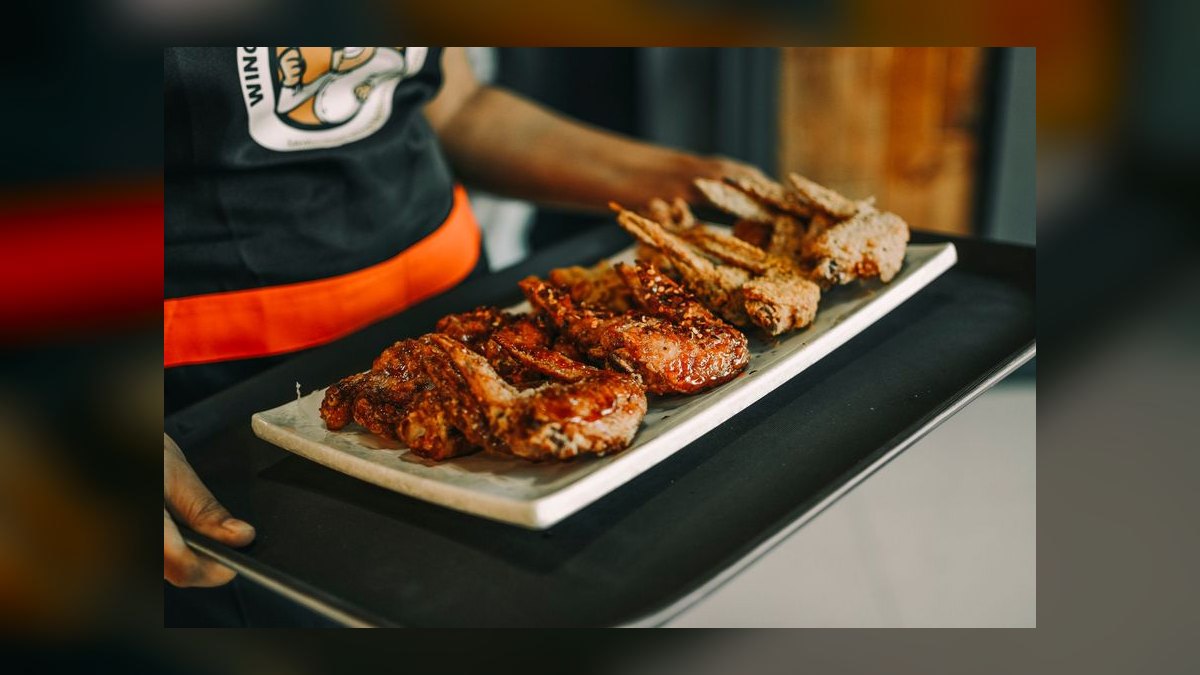
Days 41–55 — Discovery Day and supply chain. Meet the development, training, and supply-chain leads in person. Ask about distribution: single-source or approved-vendor, what the freight cost per case looks like in your region, and whether there are rebates that flow to the franchisor. Ask specifically what happens to development incentives if ownership of the brand changes.
Days 56–70 — trade-area analysis. Use real demographic tooling rather than intuition. Screen for population density within a three-mile ring, daytime population, median household income, presence of the target demographic, delivery-radius overlap with existing units, and the competitive set — including every other Korean and non-Korean fried chicken concept within three miles. Drive the site at Friday 7pm and Tuesday 2pm. Count cars.
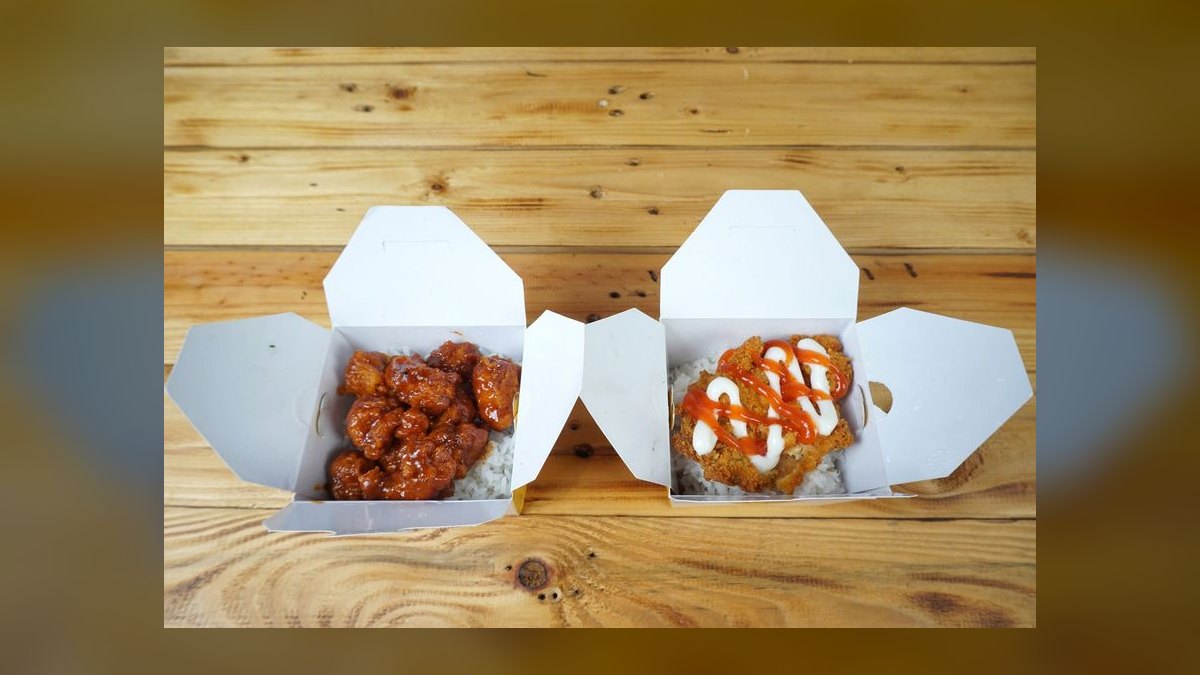
Days 71–80 — lease negotiation. This is where the deal is won or lost. Push for a substantial tenant-improvement allowance, several months of free rent during build-out, a five-plus-five-plus-five term structure, a personal guaranty with a defined burn-off rather than an open-ended one, and co-tenancy protection if you are in a center anchored by a tenant whose departure would gut your traffic. Walk if total occupancy exceeds roughly 8.5 percent of your conservative Year-2 revenue projection.
Days 81–88 — attorney review. Use a franchise-specialist attorney, not a general commercial lawyer. The review is a few thousand dollars and it is the cheapest insurance in the entire transaction. Focus on renewal terms and renewal fees, transfer provisions and what happens if you want to sell in year six, the territory definition, post-term non-compete radius and duration, and the dispute-resolution venue.
Days 89–90 — sign or walk. Pre-commit to your disqualifiers before you get emotionally invested: elevated closure or transfer rates in Item 20, franchisee support scores below a threshold you set in advance, rent above your occupancy ceiling, or a build-out budget that pushes total investment past your funded capacity. If any fire, walk. The brand will still exist next year. Your capital is a single shot.
Related questions
Is buying an existing Bonchon location safer than opening a new one?
Usually yes, if the books are clean. An operating unit has real revenue history, a seasoned staff, and no construction risk — you are buying a known P&L rather than a projection. Pay for a quality-of-earnings review, verify the remaining lease term, and confirm the franchisor will approve the transfer before you deposit anything.
How much can I really pay myself in Year 1?
Plan on modest. After debt service on a typical SBA structure, a Year-1 unit at 75–85 percent of mature volume leaves a small residual. Most first-year owners take a working manager's salary and reinvest the rest. Treat any Year-1 distribution above that as upside, not budget.
Does a fast-casual format change the math meaningfully?
It can, by lowering build-out and labor against a smaller footprint. But a newer format has fewer seasoned units to validate against, so the disclosed performance data is thinner. Ask how many prototype units have a full year of operating history before you agree to be one of them.
What single number should I stress-test hardest?
Occupancy as a percentage of sales. Food and labor you can manage weekly; rent is fixed for a decade. If a conservative revenue case pushes occupancy past roughly 8.5 percent, the unit is structurally fragile no matter how well you operate it.
FAQ
What is the total investment range to open a Bonchon Chicken franchise?
The 2026 Franchise Disclosure Document reports an Item 7 total investment range of roughly $591,000 to $1,313,000. That spans the franchise fee, leasehold improvements, equipment, signage and technology, opening inventory, training, three months of working capital, and insurance and permits. Where you land inside that range depends overwhelmingly on the condition of the space you lease and the tenant-improvement allowance you negotiate.
How much liquid cash do I need before a lender will talk to me?
Budget $400,000 to $600,000 in genuinely liquid capital, with SBA 7(a) capacity above $700,000 on top of it. Lenders want to see that your cash is unencumbered and that you have reserves beyond the project budget. Retirement accounts and undrawn home equity lines generally do not count toward the franchisor's liquidity test.
What do the ongoing fees actually total?
A five percent royalty on gross sales, a brand fund contribution of roughly 1.5 to 2.5 percent, and a local marketing minimum of 2.5 to 5 percent — 8.5 to 12.5 percent of top-line revenue combined. Model at the high end. Local marketing minimums are floors, and a new unit typically spends above the floor during its opening year.
How long until I break even?
Modeled at the midpoint of the investment range, payback lands in the 36-to-60-month band, with roughly 48 months as the honest planning assumption. High-traffic sites with generous landlord contributions and experienced operators compress that. Overbuilt sites in weak trade areas extend past it, sometimes indefinitely.
Can I run this as a passive investment?
Realistically, no. A single-unit Bonchon needs owner presence in the forty-to-sixty-hour range through the first year to hold cook standards and control prime cost. A hired general manager absorbs most of a single unit's owner earnings. Passive economics only start to work at three or more units, where supervision costs spread across enough volume to carry themselves.
How should I compare Bonchon against other chicken franchises?
Compare on four axes rather than on brand feel: total investment, combined fee load, disclosed unit volumes, and operational complexity. Delivery-first wing concepts carry lower build-out and simpler kitchens. Bonchon's differentiation is a distinctive product with genuine pull in the right trade area — which means its advantage is real but geographically concentrated. Match the concept to your market, not the other way around.
Sources
- https://www.ftc.gov/business-guidance/industry/franchises-business-opportunities
- https://www.sba.gov/partners/lenders/7a-loan-program
- https://www.sba.gov/document/support-sba-franchise-directory
- https://www.bls.gov/iag/tgs/iag722.htm
- https://www.nationalchickencouncil.org/about-the-industry/statistics/
- https://www.bonchon.com/franchise
- https://www.restaurantdive.com/
- https://www.nrn.com/
- https://www.franchise.org/franchise-information
- https://en.wikipedia.org/wiki/Bonchon_Chicken
Related on PULSE
- Should I open or buy a Bonchon franchise in 2027?
- Best chicken and wings franchises to buy in 2027
- Should I open or buy a Dave's Hot Chicken franchise in 2027?
- Should I open or buy a Champs Chicken franchise in 2027?
- Should I open or buy a Hot Chicken Takeover franchise in 2027?
- Should I open or buy a Big Chicken franchise in 2027?
This page will be disappearing soon. Save it to your device for $1 — or read it free while it is here.
@Kory-White- · if Venmo asks, the last 4 of my number are 2012
This page is gone.
This one is off the shelf now. $1 keeps it on your phone for good — the whole page, pictures and diagrams included.
 franchiseShould I open or buy a 9Round Kickbox Fitness franchise in 2027?
 franchiseShould I open or buy a Tutti Frutti franchise in 2027?
 franchiseShould I open or buy a Poke Bros franchise in 2027?
 franchiseShould I open or buy a You’ve Got Maids franchise in 2027?
 franchiseShould I open or buy a Creamistry franchise in 2027?
 franchiseShould I open or buy a Smallcakes Cupcakery franchise in 2027?
 franchiseShould I open or buy a Del Taco franchise in 2027?
 franchiseShould I open or buy a Kilwins franchise in 2027?
 franchiseShould I open or buy Domino's franchise or open an independent sandwich shop in 2027?
 franchiseShould I open or buy a California Closets franchise in 2027?