
Should I open or buy a The Cleaning Authority franchise in 2027?
 Curated byKory White · Fractional CRO · Maryland
 PULSEKNOWLEDGE LIBRARY
Quality
Certified
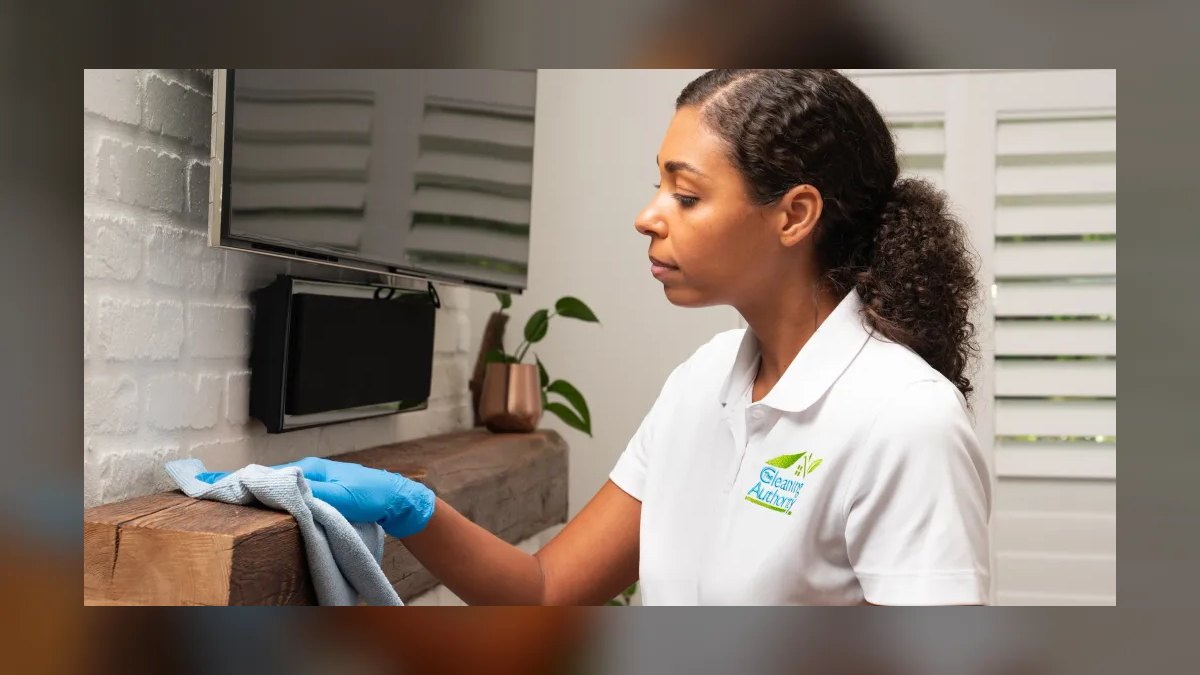
The Cleaning Authority is a reasonable 2027 buy if you are a recruiter-manager, not a cleaner. Expect roughly $140,000–$260,000 total investment per the 2026 FDD, a ~$33,000 franchise fee, and ~6% royalty. Mature territories can gross $600,000–$1,600,000, with owners clearing $90,000–$250,000. Labor retention decides everything.
What the business actually is and why the model matters
Strip away the brand language and The Cleaning Authority is a recurring-revenue labor brokerage with a quality-control system bolted on. You do not clean. You recruit cleaners, route them, and defend a subscription base of homes that pay every week or every other week for the rest of their lives — or until service slips twice in a row.
The differentiator is the Detail-Clean Rotation System. Instead of cleaning the whole house lightly every visit, teams deep-clean a rotating subset of the home each time — kitchens and one set of rooms this visit, bathrooms and another set next visit — while maintaining the rest. Two things follow from that. First, quality drifts less, because every surface gets a deep pass on a fixed cadence rather than whenever a cleaner feels ambitious. Second, the work is teachable. A checklist-driven rotation converts an inherently subjective service into something a new hire can execute at 80% of veteran quality in week two. That matters more than it sounds, because in a business with 60–80% annual industry turnover, your operating system has to survive constant staff replacement.
The financial shape is worth naming plainly. There is no retail buildout, no lease negotiation, no grease trap, no evening rush. You run from a home office or a small suite, typically Monday through Friday during business hours. Capital goes into people, vehicles, supplies, and customer acquisition — not into drywall. That makes this one of the more capital-efficient franchise categories, and it also means your failure modes are almost entirely human: you cannot blame a bad corner lot.
Recurring revenue is the second structural advantage. A residential cleaning client on a biweekly plan at $160 per visit is worth roughly $4,160 a year, and good territories keep clients 2–4 years. Compare that to a one-and-done home service — a roof, a driveway seal — where every month you rebuild the pipeline from zero. Here, month 18 starts with most of month 17's revenue already booked. The flip side: churn compounds against you just as quietly. Losing four clients a month in a 200-client book is a 24% annual bleed you must outrun with new sales before you can grow at all.
Where this sits versus adjacent plays is instructive. Commercial janitorial franchises (Jan-Pro, Anago-style master/unit models) offer stickier contracts but nights-and-weekends labor and slower payment cycles from business customers. Single-service home franchises — window cleaning, gutter work, carpet, pest — carry higher ticket sizes but seasonal demand curves and route density problems. Residential recurring cleaning splits the difference: modest tickets, high frequency, daytime hours, and demand that holds up better than most discretionary home spend because dual-income households treat it as a time purchase, not a luxury.
The step-by-step process from inquiry to a stable book
The sequence below is the one that separates owners who are cash-flow positive by month eight from those still funding payroll out of savings in month fourteen.
Weeks 1–3: read the FDD like an underwriter. Item 5 gives you the initial fee. Item 6 gives you royalty and marketing fee — around 6% and a marketing contribution on gross. Item 7 gives the investment range. Item 19 is the financial performance representation, and it is the only place the franchisor makes claims you can hold them to; read exactly which subset of franchises the numbers describe. Item 20 gives you unit counts and, critically, the list of franchisees who left the system in the last fiscal year. Call some of them.
Weeks 3–5: validate with owners, not with the franchise development rep. Interview at least eight current owners, weighted toward units in their third to fifth year. Ask four questions specifically: what is your cleaner turnover rate, what percentage of your clients are biweekly versus weekly, what did you actually take home last year after paying yourself, and what would you do differently in your first 90 days. A development rep sells the system; owners tell you what the system costs to run.
Weeks 5–7: validate the territory against the demographic tests in the next-but-one section. Do not accept a territory map on faith — drive it.
Weeks 7–9: sign, train, and set up the back office. Owner training is typically at the franchisor's facility. While you are there, build your hiring funnel: job postings drafted, background check vendor selected, payroll and workers' comp in place, and scheduling software configured. Workers' comp for cleaning classifications is not cheap and is frequently the line item first-time owners underestimate.
Weeks 9–12: hire ahead of demand. This is the counterintuitive move. Most new owners sell first and then scramble for staff, which guarantees a quality collapse in the first month. Instead, hire two teams before you have work for two teams, and pay them to train on model homes, friends' houses, and discounted introductory cleans. You are buying reliability at the exact moment you cannot afford to lose a founding client.

Weeks 10–14: acquire the founding base. Google Local Services Ads, targeted paid search on high-intent local terms, and direct neighborhood saturation in the two or three subdivisions you have identified as ideal. Introductory-offer pricing is fine; deep discounting is not, because a client acquired at 40% off churns the moment full price lands.
Months 4–12: convert to density. Revenue per truck-hour, not revenue, is the number to manage. Two clients on the same cul-de-sac are worth more than three scattered across the territory.
Costs, timelines, and the ranges you should budget against
The 2026 FDD frames total Item 7 investment at roughly $140,000 to $260,000. A workable internal breakdown looks like this: a franchise fee near $33,000; office setup of $8,000–$30,000 depending on whether you go home-based or lease a small suite; equipment, supplies, and vehicles at $8,000–$25,000; technology and scheduling software at $3,000–$10,000; initial marketing at $25,000–$70,000; insurance, bonding, and licensing at $3,000–$12,000; training and travel at $5,000–$15,000; and working capital of $30,000–$70,000. Liquidity requirements typically land in the $60,000–$110,000 range.
Two of those lines deserve more attention than they usually get. Initial marketing at the high end — $70,000 — is not a worst case; it is what a competitive suburban market actually costs to enter when fifteen other cleaning services already show up in the local map pack. And working capital is not a buffer, it is payroll float. You pay cleaners weekly or biweekly from day one, while your client base is still ramping. Owners who underfund this line end up personally cleaning houses in month five, which is the exact outcome the model is supposed to prevent.
On the revenue side, mature territories gross $600,000–$1,600,000. The cost structure is dominated by labor: cleaning wages plus payroll taxes and workers' comp typically consume 45–55% of gross. Supplies and vehicles run roughly 8%. Royalty near 6% and a marketing fee on top. What remains after admin, insurance, and local advertising leaves owner margins in the 13–25% band — $90,000 to $250,000 depending on scale and discipline.
Timelines are worth setting honestly. Expect three to five months from signing to first paying client. Expect month eight to twelve for breakeven in a well-run launch, later if you underhire or overspend on discounted acquisition. Expect year three before the business runs at 30–35 owner hours per week rather than 50+. Anyone promising passive income in year one is describing a different business.
Buying an existing unit changes the math meaningfully. Established franchises with three-plus years of profitability and $600,000+ in gross revenue tend to trade at 2.5x–3.5x annual net profit — so a unit clearing $120,000 prices somewhere around $300,000–$420,000, plus a transfer fee to the franchisor generally in the $10,000–$15,000 range. You pay more upfront and skip the eighteen-month ramp, the hiring cold start, and the marketing burn. For a first-time owner with capital, that trade is often correct. Diligence shifts accordingly: pull the client list and check what share is weekly versus biweekly versus monthly, pull two years of payroll records to measure real turnover, and read the Google reviews from the last eighteen months for quality complaints the seller will not volunteer.
Where owners get it wrong
Treating labor as a cost line instead of the product. Most independent cleaners in a given metro earn $12–$18 an hour. Owners who anchor at the bottom of that band staff the business with whoever is available, and quality follows. Budgeting $17–$22 an hour plus mileage between jobs for the top tier of candidates looks expensive on a spreadsheet and is cheaper in practice, because a cleaner who lasts two years costs nothing to replace. A tiered structure works well: base rate at hire, a $1–$2 raise at 90 days contingent on passing quality audits. You control early labor cost and you make retention the thing that pays.

Failing to sell the schedule. The single biggest recruiting advantage this model has over restaurant work, retail, and commercial janitorial is that it runs Monday through Friday in daylight. Evenings and weekends free, every week. Owners who bury that in a job posting are throwing away their best asset. The rotation system is the second pitch — task variety genuinely reduces the monotony that drives cleaning turnover, and it should be in the ad copy, not just the training manual.
Under-guaranteeing hours. Cleaners leave for schedule instability more often than for wages. Committing to a floor — 32 hours a week for full-time staff within 60 days of hire — converts a gig into a job. Maintaining a bench of three to five part-timers at 20–25 hours covers spring peaks, holiday surges, and sick days without breaking that promise.
Ignoring referral hiring. Your current cleaners know other cleaners. A $300–$500 bonus paid when a referred hire reaches 90 days is dramatically better economics than job-board spend, and it self-selects for people who will fit the crew. Some owners add a small bonus at the referred hire's first-week mark to keep the referrer engaged.
Choosing a territory by map rather than by drive. The best territories have a deep base of owner-occupied single-family homes — roughly 40,000 or more within a 20-minute drive of your base — in neighborhoods built recently enough to be straightforward to clean and large enough to justify a real ticket. Median household income above $75,000 and a homeowner-heavy mix matter, because renters sign recurring contracts far less often. Count competitors within a 15-mile radius: five to ten and word-of-mouth plus Local Services Ads can carry you; fifteen to twenty and you need $2,000–$4,000 a month in sustained local advertising to be visible at all. Check county unemployment too — 3.5% to 5% is the sweet spot, healthy enough for demand and loose enough to actually hire. And keep the territory inside a 30-minute drive of your house. Owners commuting 45 minutes to handle a quality complaint burn out first.
Deviating from the system too early. New owners frequently decide the rotation is inefficient and invent their own checklist. The rotation exists to make quality survive turnover. Customizing it in month four means retraining from scratch in month nine when half the staff has changed.
Building a business that cannot be sold. Buyers in this category want four things: staff with average tenure above two years, a recurring base of at least 150 active clients, a 4.5+ star public reputation, and remaining growth runway — under roughly 60% market penetration. The value killers are the mirror image: turnover above 80%, an owner who personally cleans or personally schedules every job, and a territory already saturated. Document your hiring, training, scheduling, and QC procedures from year one, keep clean books, and promote one assistant manager. If you sell, talk to a CPA about installment structures before you sign anything — capital gains treatment on a franchise sale is not a DIY exercise.

Decision framework: when to open, when to buy, when to walk
The choice is rarely "cleaning franchise versus no business." It is usually open-new versus buy-existing versus a different service model entirely, and each maps to a different profile.
Open a new unit if you have $140,000–$260,000 available with genuine cushion, you are in or can move to a growing suburban market with weak competitive density, and you have run people before — a shift, a crew, a store, a platoon. New units let you pick the territory and build the culture, at the price of an 8–14 month ramp funded out of your own pocket.

Buy an existing unit if you have more capital than patience, or if you are a first-time owner who would rather inherit a working system than build one. You are buying a payroll history you can audit and a client list you can call. Price it against net profit, not gross, and discount hard for owner dependence.
Walk away if your capital is thin enough that a slow first year would break you, if you find yourself hoping to do the cleaning personally to save labor cost, or if the territory on offer is renter-heavy, income-light, or already carved up by a dozen incumbents. Also walk if the honest answer to "do I want to spend my week on recruiting, scheduling, and quality complaints" is no — that is the job, and no amount of system quality changes it.
Consider an adjacent model if the fit is off but the category appeals. Commercial janitorial trades daytime hours for stickier multi-year contracts. Single-service home franchises — window, gutter, carpet, pool — carry higher tickets and lower headcount, which suits owners who would rather manage two technicians than twelve cleaners, at the cost of seasonality. An independent cleaning company keeps the 6% royalty and the marketing fee in your pocket but hands you the burden of building the rotation system, the brand, and the recruiting playbook yourself — real money, real work, and the reason franchising exists.
Related questions
How long until a new unit reaches breakeven?
A well-executed launch typically reaches breakeven between months eight and twelve. Underhiring, discount-heavy client acquisition, or a thin working-capital line pushes that later. Budget as if breakeven arrives in month fourteen and be pleasantly surprised.
Is this a semi-absentee business?
Not in years one and two. Expect 45–55 hours a week early, dropping toward 30–35 by year three once an assistant manager and tenured teams are in place. Owners who plan for absentee ownership from day one usually get turnover instead.
What kills margin fastest?
Cleaner turnover. Every replacement costs recruiting spend, unpaid training hours, and — the expensive part — the client cancellations that follow inconsistent service. Turnover above 80% annually reliably drags owner margin toward the bottom of the 13–25% band.
Does buying an existing unit avoid the labor problem?
No, but it lets you measure it before you pay. Pull two years of payroll records and calculate real tenure. A seller with average staff tenure over two years is selling you a functioning recruiting system, which is most of the value.
How does this compare to commercial janitorial?
Commercial contracts are stickier and often multi-year, but the work runs nights and weekends and business customers pay on 30–60 day terms. Residential recurring cleaning pays immediately and runs business hours, at the cost of easier client churn.
FAQ
What is the total investment to open a The Cleaning Authority franchise in 2027?
Roughly $140,000 to $260,000 per the 2026 FDD, including a franchise fee near $33,000, equipment and vehicles, initial marketing, insurance, and working capital. Actual cost varies with territory size, whether you go home-based or lease space, and local advertising rates. Confirm current figures in the latest FDD.
How much can an owner realistically earn?
Mature territories gross $600,000 to $1,600,000, with owner earnings generally in the $90,000 to $250,000 range. The spread is driven mostly by scale and by labor retention — the same revenue produces very different take-home depending on turnover, route density, and how much local advertising the market demands.
What makes The Cleaning Authority different from other cleaning franchises?
The Detail-Clean Rotation System, which deep-cleans a rotating subset of the home each visit rather than surface-cleaning everything. It makes quality reproducible across changing staff and gives cleaners task variety, which helps retention. Combined with a home-based, business-hours structure, it keeps overhead low and the operating model teachable.
What is the single biggest challenge?
Recruiting and retaining reliable cleaners. Industry turnover runs high, and every departure costs recruiting spend, training time, and the client cancellations that follow inconsistent service. Owners who solve staffing solve the business; owners who do not will grind against the same problem every quarter regardless of demand.
Do I need cleaning or business experience to buy in?
Cleaning experience is not required — the franchisor trains the system. People management experience matters far more. If you have run a crew, a shift, or a store, you have the relevant skill. If you have never hired, scheduled, or fired anyone, plan for that to be the steepest part of the learning curve.
Should I open a new territory or buy an existing unit?
Buy existing if you want auditable payroll history, an established client base, and faster cash flow, typically at 2.5x–3.5x annual net profit plus a transfer fee. Open new if you want to choose the territory and build the staff culture yourself, and can fund eight to fourteen months of ramp.
Sources
- https://www.thecleaningauthority.com/franchise/
- https://www.entrepreneur.com/franchises/directory
- https://www.ftc.gov/business-guidance/resources/consumers-guide-buying-franchise
- https://www.franchise.org/
- https://www.bls.gov/oes/current/oes372012.htm
- https://www.bls.gov/lau/
- https://www.census.gov/quickfacts/
- https://www.sba.gov/business-guide/plan-your-business/calculate-your-startup-costs
- https://www.franchisebusinessreview.com/
- https://www.ibisworld.com/united-states/market-research-reports/janitorial-services-industry/
Related on PULSE
- Should I open or buy a Mosquito Authority franchise in 2027?
- Best cleaning and janitorial franchises to start in 2027
- Should I open or buy an Oxi Fresh Carpet Cleaning franchise in 2027?
- Should I open or buy a Ned Stevens Gutter Cleaning franchise in 2027?
- Should I open or buy a Fish Window Cleaning franchise in 2027?
- Should I open a pool cleaning business in 2027?
This page will be disappearing soon. Save it to your device for $1 — or read it free while it is here.
@Kory-White- · if Venmo asks, the last 4 of my number are 2012
This page is gone.
This one is off the shelf now. $1 keeps it on your phone for good — the whole page, pictures and diagrams included.
 franchiseShould I open or buy a BrightStar Care franchise in 2027?
 franchiseShould I open or buy an Expedia Cruises franchise in 2027?
 franchiseShould I open or buy a Drama Kids franchise in 2027?
 franchiseShould I open or buy a Duck Donuts franchise in 2027?
 franchiseShould I open or buy a Garage Living franchise in 2027?
 franchiseShould I open or buy a Red Lobster franchise in 2027?
 franchiseShould I open or buy a Premier Martial Arts franchise in 2027?
 franchiseShould I open or buy a Senske Services franchise in 2027?
 franchiseShould I open a HVAC repair business in 2027?
 franchiseShould I open or buy a Cottman Transmission franchise in 2027?