
Should I open or buy a Hunt Brothers Pizza franchise in 2027?
 Curated byKory White · Fractional CRO · Maryland
 PULSEKNOWLEDGE LIBRARY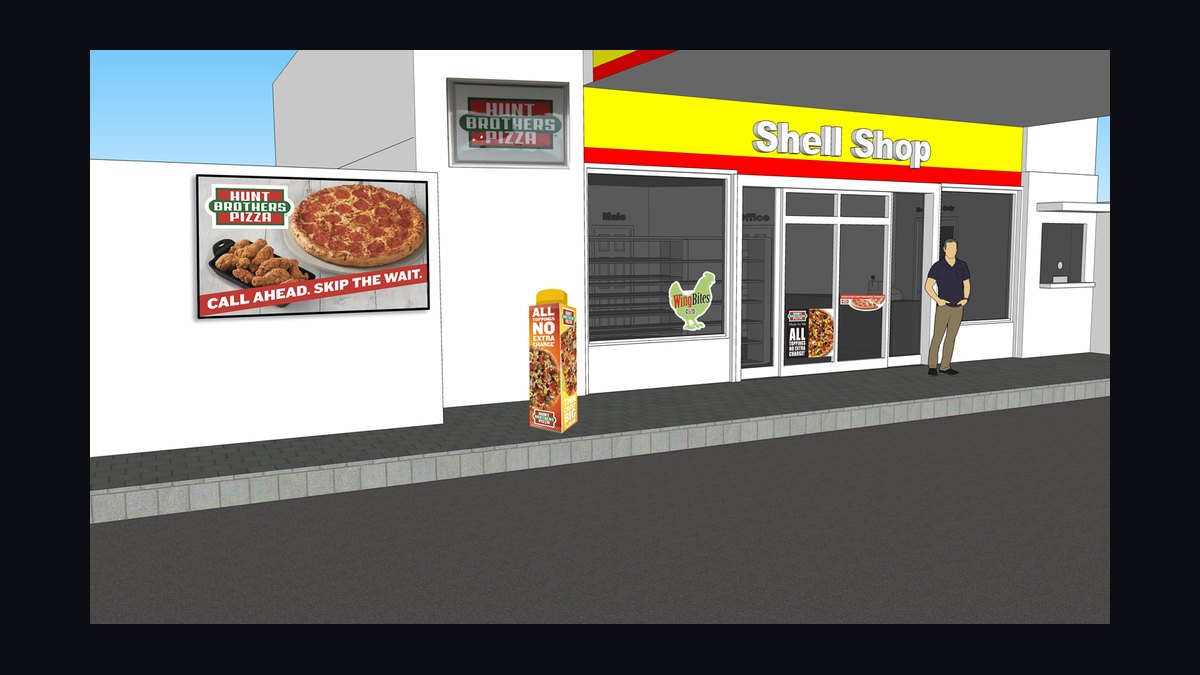
Yes, if you already operate — or plan to acquire — a high-traffic convenience store, truck stop, or travel center: a Hunt Brothers Pizza license is a low-capital, no-royalty way to open a branded hot-food profit center inside your existing footprint. It is not a standalone restaurant franchise, so skip it if you want a freestanding pizzeria with brand exclusivity and real estate control.
What it is and why it matters
Hunt Brothers Pizza, founded in 1991 in Nashville, Tennessee, is one of the largest in-store pizza programs serving American convenience retail. Rather than licensing a standalone restaurant the way Domino's or Marco's does, Hunt Brothers licenses a made-to-order pizza counter — dough, sauce, cheese, toppings, breadsticks, and wings — that gets installed inside a store you already run. This distinction matters enormously for anyone comparing it to a traditional franchise: there is no territory map, no dedicated real estate search, and no freestanding building to permit and construct. Instead, the unit of analysis is your existing store's foot traffic and available counter space.
The structural quirk that sets Hunt Brothers apart from nearly every other franchise-like system is its revenue model. Most franchises charge an upfront franchise fee plus an ongoing royalty (commonly 4%–8% of gross sales). Hunt Brothers charges neither. Instead, the company earns money exclusively through the food and packaging you're contractually required to purchase from it — dough, sauce, cheese blends, toppings, and boxes. This "supply-chain-as-royalty" model changes your incentive structure: Hunt Brothers succeeds only when you sell more pizza, so its field support is genuinely aligned with driving your volume rather than simply collecting a fee regardless of your performance. For an operator deciding whether to open this kind of program versus a conventional franchise, that alignment is one of the more attractive underappreciated details.
Why does this matter for a 2027 buying decision specifically? Convenience-store foodservice has been the fastest-growing profit category in the channel for several years running, as fuel margins compress and stores lean harder on food and beverage to protect same-store profit. Hot, made-to-order food — especially pizza — carries materially better margins than packaged snacks or even fountain drinks. Adding a Hunt Brothers program is, in effect, a bolt-on foodservice upgrade to a business you already understand, rather than a leap into an entirely new operating model. That's fundamentally different from evaluating a Subway or a Jimmy John's, where you're building an entire new business from the ground up.
The step-by-step process
Opening a Hunt Brothers Pizza program follows a compressed, retail-focused version of a franchise launch. Because you're not searching for real estate or negotiating a lease, the timeline from first contact to first sale is typically 60–120 days, far shorter than the 9–18 months common for a ground-up restaurant franchise build.

The practical sequence matters because skipping steps is where operators lose money later. Assessing traffic and space comes first because Hunt Brothers' equipment footprint — typically a six- to twelve-foot run for the oven, prep station, and warmer — needs real counter or back-of-house room, plus ventilation capacity your store may or may not already have. Many operators discover mid-process that their existing hood system needs upgrading, which can add $5,000–$15,000 and several weeks to the timeline. Training happens at Hunt Brothers' Nashville headquarters over three days and covers dough handling, topping ratios, food-safety protocols, and point-of-sale integration; a field representative typically visits during your first two to four weeks of operation to correct technique in real time. Skipping the field visit — some operators try to save time by declining it — is consistently associated with lower initial pizza quality scores and slower ramp to target volume.
Costs, timelines, and typical ranges
Total investment to open a Hunt Brothers program typically runs $20,000 to $150,000, a wide range driven almost entirely by how much existing infrastructure your store already has. A store with adequate ventilation, available counter space, and updated electrical service sits at the low end; a store requiring a new hood system, structural counter modifications, and expanded signage sits at the high end.

Breaking down the typical build: equipment (conveyor oven, prep table, warmers) runs $12,000–$90,000 depending on new versus refurbished units and oven capacity; counter buildout runs $3,000–$45,000; signage and branding run $2,000–$15,000; initial inventory (dough, toppings, packaging) runs $2,000–$8,000; and working capital to cover the first few months of ramp runs $3,000–$18,000. Training itself is typically free or low-cost, though travel to Nashville is on the operator's dime. Because there's no franchise fee, that $20K–$150K figure represents essentially all of your upfront capital exposure — there's no six-figure fee sitting on top of equipment costs the way there would be with a traditional QSR franchise.
Ongoing costs are where the model diverges most sharply from a royalty-based franchise. You pay Hunt Brothers for food and packaging at wholesale-plus pricing, but nothing else — no monthly royalty percentage, no national ad fund contribution deducted from gross sales. For a moderate-volume store selling 50–100 pizzas per week, weekly food cost typically runs $800–$1,800, with realized pizza margins in the 50%–65% range after labor and supply costs. A high-traffic store can generate $50,000–$120,000 in annual net profit from the pizza program alone; a lower-traffic location might see $15,000–$30,000. Break-even on the initial equipment investment typically lands at 6–12 months for a store with reasonable existing traffic. Labor is a real ongoing cost most first-time operators underestimate: budget for 1–2 dedicated staff per shift at $14–$18 per hour depending on region, since made-to-order pizza — unlike packaged goods — cannot run unattended.
Where teams get it wrong
The single most common mistake is treating store traffic as a formality rather than the actual gating variable. Hunt Brothers' own guidance suggests candidate stores should see roughly 200–600 or more customers per day, but operators sometimes open the program in a lower-traffic location because the buildout is cheap, then discover the program can't generate enough volume to justify the labor cost of a dedicated pizza-maker on every shift. Because the model has no royalty to remind you that ROI is being tracked externally, it's easy to under-diagnose a slow location until months of thin margins have passed.
A second recurring error is underestimating labor as a genuinely new operational discipline, not an extension of existing convenience-store staffing. Ringing up packaged snacks and pumping gas require very different skills than proofing dough, portioning toppings consistently, and running a conveyor oven on schedule. Operators who assign the pizza station to whoever's on shift, without dedicated training reinforcement beyond the initial three days, tend to see inconsistent pizza quality — and inconsistent quality directly suppresses repeat purchase, which is what actually drives the profit numbers described above.
A third mistake is ignoring food-safety and health-code readiness before signing on. Because you're adding hot, made-to-order food to a retail environment that may have been licensed only for packaged goods and fountain drinks, local health departments may require new permits, additional hand-washing stations, or updated pest-control documentation. Operators who order equipment before confirming permitting requirements sometimes face delayed launches while they retrofit compliance items — an avoidable cost if the permitting conversation happens in step one rather than step five.
A fourth error is treating the program as a "set it and forget it" addition rather than a P&L line with its own inputs. The operators who see the strongest returns run pizza as its own mini-business inside the store: tracking weekly food cost against sales, watching waste from unsold dough or toppings, and adjusting staffing to actual pizza-hour demand patterns rather than blanket coverage. Skipping that discipline is a major reason some stores land at the $15,000–$30,000 profit end of the range instead of the $50,000–$120,000 end, despite similar traffic.
Decision framework: when to choose what
Not every operator considering "should I open a pizza concept in 2027" belongs in the Hunt Brothers lane. The right choice depends heavily on whether you already control a retail location with traffic, or whether you're starting from zero.
If you already own or operate a qualifying retail site, the decision tree collapses to a single question: does the incremental pizza profit clear your hurdle rate against the $20,000–$150,000 investment within a reasonable window, generally under 12 months? If yes, Hunt Brothers' no-royalty structure makes it one of the more capital-efficient foodservice add-ons available in convenience retail. If your traffic is marginal, it's worth modeling a smaller equipment package or a lower-cost c-store program like Champs Chicken or Chester's before committing to the full pizza build-out. If you don't have an existing retail site and actually want to open a standalone restaurant with brand identity and territory protection, a Hunt Brothers license is the wrong tool entirely — a standalone pizza franchise such as Marco's Pizza, Hungry Howie's, or a fast-casual concept like Uncle Maddio's fits that goal far better, even though those come with traditional franchise fees and royalties that Hunt Brothers avoids.
Related questions
Is Hunt Brothers Pizza considered a real franchise?
Not in the traditional sense. It's an in-store licensed foodservice program with no franchise fee or royalty, designed to add to an existing convenience store rather than operate as a standalone restaurant brand with its own real estate and territory.
Can I open a Hunt Brothers Pizza program without owning a convenience store?
Generally no. The model is built around installing equipment inside an existing qualifying retail location — a c-store, travel center, or similar high-traffic site — not opening a freestanding restaurant.
How does Hunt Brothers make money without charging royalties?
Through required purchases of dough, sauce, cheese, toppings, and packaging supplied directly by the company, priced to cover its margin instead of collecting a percentage of your gross sales.
What's the biggest competitor to Hunt Brothers Pizza in c-stores?
Regional and national chains increasingly run proprietary in-house pizza programs, alongside other branded c-store foodservice concepts like Champs Chicken and Chester's, which compete for the same counter space and labor hours.
How long does it take to become profitable after opening?
Most operators with solid existing traffic reach break-even on equipment within 6–12 months, though lower-traffic stores can take considerably longer or may never fully justify the labor cost.
FAQ
What exactly is a Hunt Brothers Pizza franchise? It isn't a traditional franchise — it's a licensed in-store pizza program built for convenience stores, travel centers, and similar retailers. You install their equipment and sell their pizza, wings, and breadsticks as an add-on foodservice profit center rather than opening a standalone restaurant.
How much does it cost to open a Hunt Brothers Pizza program? Total investment typically runs $20,000 to $150,000 depending on equipment needs and buildout scope. There's no franchise fee or ongoing royalty — Hunt Brothers earns money through the food and supplies it sells you.
Do I need to already own a convenience store to get a license? Generally yes. The program is designed for existing retail locations such as c-stores, truck stops, or campus retail — it isn't meant for someone trying to open a standalone pizzeria from scratch.
What are the ongoing costs after the initial buildout? You purchase food, packaging, and supplies from Hunt Brothers at wholesale-plus pricing. There's no royalty or ad-fund deduction, but you cover your own labor, utilities, and any local marketing.
How much profit can a Hunt Brothers Pizza program realistically generate? It varies widely by traffic and execution. High-volume stores report $50,000–$120,000 in annual net profit from pizza alone, while lower-traffic locations may see closer to $15,000–$30,000.
Is this a good option for someone completely new to foodservice? It can be, especially if you already run a c-store, since training and field support are included. But success still depends on managing food prep, staffing, and quality control inside your existing operation.
Sources
- https://www.huntbrotherspizza.com
- https://www.convenience.org
- https://www.csnews.com
- https://www.cspdailynews.com
- https://www.technomic.com
- https://www.ibisworld.com
- https://www.franchise.org
- https://www.statista.com
- https://www.qsrmagazine.com
- https://www.nrn.com
Related on PULSE
- [Should I open or buy a Champs Chicken franchise in 2027?](/knowledge/fr0830)
- [Should I open or buy a Gatti's Pizza franchise in 2027?](/knowledge/fr0868)
- [Should I open or buy an East of Chicago Pizza franchise in 2027?](/knowledge/fr0870)
- [Best pizza franchises to buy in 2027](/knowledge/fr1110)
- [Should I open or buy an Uncle Maddio's franchise in 2027?](/knowledge/fr0869)
- [Should I open or buy a Dunn Brothers Coffee franchise in 2027?](/knowledge/fr0711)
Read it free — or make it yours for $1.
@Kory-White- · if Venmo asks, the last 4 of my number are 2012
 franchiseShould I open or buy a Rita's Italian Ice franchise in 2027?
 franchiseShould I open or buy a One Hour Heating & Air Conditioning franchise in 2027?
 franchiseShould I open or buy an L&L Hawaiian Barbecue franchise in 2027?
 franchiseShould I open or buy a Huntington Learning Center franchise in 2027?
 franchiseShould I open or buy a Bubbakoo's Burritos franchise in 2027?
 franchiseShould I open or buy a Pizza Inn franchise in 2027?
 franchiseShould I open or buy a Stratus Building Solutions franchise in 2027?
 franchiseShould I open or buy a Cooper's Hawk Winery & Restaurants franchise in 2027?
 franchiseShould I open or buy a Pollo Tropical franchise in 2027?
 franchiseShould I open or buy a Johnny Rockets franchise in 2027?