

Best laundry and dry cleaning franchises to buy in 2027
The best laundry and dry cleaning franchises to buy in 2027 are card-operated laundromat conversions and wash-dry-fold delivery brands, not traditional garment dry cleaning. Established systems like WaveMAX, Clean Juice-style route models, and Tide Cleaners lead, but unit economics beat brand name: target $700K–$1.5M all-in, 15–25% EBITDA, real estate control.
The outcome you should expect
Buy a laundry franchise expecting a real estate and utility arbitrage business that happens to have a logo on the door. That is the single most useful reframe, and most first-time buyers get it wrong because franchise marketing sells "recession-resistant recurring revenue" while the actual driver is water heating cost per pound and how many households live within a seven-minute drive.
A well-sited, well-equipped laundromat conversion in a dense trade area typically stabilizes somewhere in the range of $350,000 to $900,000 in annual gross revenue, with self-service vend accounting for roughly 55–70% of that, wash-dry-fold 15–30%, and commercial route or delivery work the remainder. Mature stores that have built a real commercial book — restaurants, salons, gyms, short-term rental cleaners, small clinics — push the commercial share toward 35% and enjoy far steadier cash flow because that revenue is contracted rather than walk-in.
Margins are where the reframe matters. Gross margin looks spectacular on paper because there is no cost of goods beyond utilities and supplies. Utilities alone typically consume 15–25% of revenue in a laundromat, labor another 15–25% depending on whether you staff attended hours and run wash-dry-fold, rent 10–18%, and franchise royalties 4–7% plus a 1–3% brand fund. What is left is an owner-operator EBITDA that commonly lands between 15% and 30% for a healthy store, and closer to 8–12% for one carrying too much rent or aging machines.

Cash-on-cash return depends almost entirely on how the equipment is financed. Commercial laundry equipment is highly financeable — distributors and equipment lenders will often structure five-to-seven-year terms with modest down payments because the machines are collateral with a real secondary market. A buyer who puts $250,000 of equity into a $1.1 million project and finances the rest can see meaningful cash flow in year two and a genuinely attractive return by year three, assuming the site was chosen correctly.
Expect a ramp, not a switch. A brand-new build in an unproven trade area usually takes 12–24 months to reach stabilized volume because laundromat customers are creatures of habit and switching costs are emotional as much as economic. An acquisition of an existing store that you re-equip and re-brand can hit stabilized numbers in 3–9 months because the traffic already exists; you are simply giving it a reason to stay. That is why so many of the strongest 2027 opportunities are conversions rather than greenfield builds.
The dry cleaning side of the question deserves a blunt answer. Traditional garment dry cleaning has been in structural decline for over two decades, accelerated by casualization of office dress and then permanently reset by remote and hybrid work. Suits, dress shirts, and blouses were the volume engine, and that engine shrank. Buying a franchise whose core economics depend on hanging garment counts is buying into a shrinking pool. The dry cleaning brands that still make sense are the ones that repositioned around convenience infrastructure — 24-hour pickup lockers, retail-partner drop points, app-based routes — and treat actual solvent cleaning as one service line inside a broader garment-care and household-textile business.

What drives that outcome
Site selection drives more of the outcome than the franchise brand, the equipment package, or your operating skill. This is not a soft claim. In laundry, the addressable customer is defined by renter density, household income band, vehicle ownership, and drive time. The core customer for self-service laundry is a renting household without in-unit machines. That population is geographically concentrated and does not travel far — most self-service customers come from within a one-to-two mile radius or a seven-minute drive.
The second driver is utility infrastructure, and it is the one that kills more deals than any other after the lease is signed. A laundromat is an industrial water and gas load dropped into a retail shell. You need a gas line sized for the dryer bank and the water heating system, water service typically at 2 inches or larger, sewer capacity and often a grease-free floor drain configuration the municipality approves, and three-phase electrical in many equipment configurations. Retrofitting any of these into a strip-center bay can add $75,000 to $250,000 to a build, and in some jurisdictions the utility upgrade timeline runs six to nine months. Every experienced operator will tell you the same thing: get a mechanical engineer to walk the site before you sign, not after.
The third driver is equipment mix. Modern high-capacity front-load washers in the 60-to-80-pound range are the profit engine because large-load customers — comforters, bedding, families doing a week at once — pay the highest vend price and occupy the machine for the same cycle time as a small load. A store weighted too heavily toward 20-pound top-loaders leaves money on the table and turns over floor space slowly. Water extraction speed matters just as much as wash capacity: high G-force extraction pulls more water out mechanically, which cuts dry time, which cuts gas consumption, which directly improves the utility line on your P&L. That mechanical detail is worth more to your margin than almost any marketing decision.
The fourth driver is payment and control systems. Card and app-based payment systems raise average ticket relative to coin, allow surgical price changes by machine size and time of day, eliminate coin-handling labor and theft exposure, and generate the transaction data that makes a store financeable and salable. They also enable loyalty mechanics and remote diagnostics. The trade-off is real: card systems add capital cost and create a hard dependency on the vendor's platform, so read the contract terms on data ownership and processing rates carefully before committing.
The fifth driver, and the one that separates a good store from a great one, is the wash-dry-fold and commercial layer. Self-service revenue is capped by machine count and hours. Wash-dry-fold converts idle machine time and existing labor into higher-margin revenue, typically priced per pound. Commercial accounts convert that further into predictable, contracted volume that arrives on a schedule you control — which lets you run heavy commercial loads during the slow morning window and keep the machines free for retail customers at peak. Operators who build the commercial book aggressively end up with a business that survives a competitor opening across the street.
Benchmarks and realistic ranges
Total investment ranges vary widely, and franchise disclosure documents are the only honest source for a specific brand. Broadly, a laundromat franchise build in a leased retail space runs $700,000 to $1,600,000 all-in for a 3,000-to-5,000 square foot store, with equipment representing $350,000 to $700,000 of that, buildout and utility infrastructure $200,000 to $600,000, and the remainder covering franchise fee, working capital, signage, and soft costs. A conversion or acquisition of an existing laundromat that you re-equip can be meaningfully less, often $400,000 to $900,000, because the utility infrastructure already exists — which is precisely why conversions are attractive.
Franchise fees in this category typically land between $30,000 and $50,000 for a single unit, with multi-unit development agreements discounting per-unit fees. Royalties commonly run 4–7% of gross revenue, with a brand fund contribution of 1–3% on top. Compare that royalty load carefully against what the brand actually delivers. In food franchising, the brand drives traffic. In laundry, the brand rarely does — customers pick the nearest clean, safe, well-lit store with working machines. So the royalty needs to be justified by site selection support, equipment purchasing power, operating systems, and marketing infrastructure, not by the sign.
Pickup-and-delivery-only models deserve separate consideration because their capital profile is completely different. A route-based laundry business that uses a commercial processing plant or partners with existing stores can start for $75,000 to $250,000 — vehicles, software, marketing, working capital — with no retail buildout at all. Margins are thinner per pound because you are paying for processing, but the capital efficiency is dramatically better and the business is genuinely scalable across a metro. For a buyer with limited capital who is comfortable with logistics and customer acquisition rather than construction, this is often the better 2027 entry point.
Utility benchmarks to hold operators against: gas is usually the single largest utility line because it heats both water and dryer air. A store with modern high-extraction washers and properly maintained dryers should run total utilities in the 15–20% of revenue band. If a seller's books show utilities at 28% of revenue, you are looking at old equipment, a broken heating system, leaking machines, or bad vend pricing — and each of those is a negotiating lever, not necessarily a dealbreaker.
Labor benchmarks: an unattended coin-and-card store can run on 20–40 hours of weekly cleaning and maintenance labor. Adding attended hours and wash-dry-fold pushes that to 60–120 weekly hours depending on volume. The decision is not just cost. Attended stores report lower vandalism, better machine care, higher wash-dry-fold conversion, and better customer retention — but the labor line has to be earned back by the incremental revenue, and in a low-volume store it often is not.
Valuation benchmarks matter enormously if you are buying an existing store rather than building. Laundromats commonly trade on a multiple of seller's discretionary earnings, typically in the 3x to 4.5x range, with the higher end reserved for stores with newer equipment, long lease terms with options, card systems producing verifiable transaction data, and a real commercial book. Coin-only stores with paper records and short leases sit at the bottom of that band precisely because the revenue is hard to verify. That verification problem is one of the strongest arguments for card systems in a store you intend to sell someday.
One more benchmark that buyers routinely underweight: lease term. Your equipment has a 10-to-15-year useful life and your build has a 15-year payback horizon in the worst case. A five-year lease with one option is not enough runway. Push for a term plus options that comfortably exceeds your equipment depreciation schedule, and negotiate assignment rights so you can actually sell the business later. A great store on a bad lease is a depreciating asset with a fixed expiration date.
Risks, edge cases, and failure modes
The most common failure mode is buying revenue that does not exist. Coin-operated stores are notoriously difficult to verify because the revenue is literally cash in a bucket. Sellers can inflate collections, and buyers can talk themselves into believing the numbers. The defenses are mechanical: pull utility bills for 24–36 months and back into implied volume, since water and gas consumption is a physical proxy for machine cycles that cannot be faked. Pull machine cycle counters where available. Sit in the parking lot and count customers across several days including a weekend. If the utility trend and the claimed revenue trend disagree, believe the utilities.
The second failure mode is the utility upgrade surprise. A buyer signs a lease on an attractive rent in a shell that has never held a laundromat, then discovers the gas service cannot support a dryer bank, or the water main is undersized, or the municipality requires a sand-and-oil interceptor, or the landlord will not permit roof penetrations for venting. Each of these is solvable with money and time, and the money and time were not in the pro forma. Make the lease contingent on a mechanical feasibility study and on utility service confirmations in writing from the providers.
The third is competitive obsolescence. Laundromats compete on machine reliability, cleanliness, safety, and hours far more than on price. A newly re-equipped competitor opening within a mile can take 20–30% of your volume within a year if your machines are older and your store is dimmer. This is why deferred capital expenditure is so dangerous in this category — an operator harvesting cash and not replacing machines is quietly setting up the store's decline, and buyers of such stores inherit both the decline and the capital bill.
The fourth risk is the dry cleaning specific one, and it has two parts. First, demand: garment dry cleaning volumes contracted sharply with the shift to casual and hybrid work, and there is no credible scenario where suit-and-dress-shirt volume returns to its former level. Second, environmental liability: perchloroethylene, the traditional dry cleaning solvent, is a regulated chemical with a long history of soil and groundwater contamination, and contaminated dry cleaning sites have generated serious remediation liabilities for property owners and operators. Regulatory pressure on perc has been tightening for years, and the industry has been shifting toward hydrocarbon, silicone-based, and professional wet-cleaning alternatives.
The practical consequence: never acquire a dry cleaning plant site — or lease one — without a Phase I environmental site assessment, and take the Phase II seriously if the Phase I flags historical solvent use. Environmental liability can attach to a property in ways that dwarf the value of the business operating on it. Any franchise opportunity that involves you owning or leasing a site with historical perc use requires environmental counsel, not just a franchise attorney. This is the single most asymmetric risk in the entire category, and it is the reason many sophisticated buyers restrict themselves to laundry and drop-store models with no on-site solvent operation.
The fifth failure mode is franchise agreement terms that do not fit the asset life. Watch for term length shorter than your equipment payback, renewal conditions that require costly remodels on the franchisor's schedule, transfer fees and approval rights that constrain your exit, mandatory equipment purchasing from approved vendors at prices you cannot benchmark, and territory definitions that are too small to protect you or too vague to enforce. In a capital-heavy, long-payback business, agreement terms are not boilerplate — they are the deal.
The sixth is labor and management drift in wash-dry-fold. Per-pound services look wonderfully profitable in a spreadsheet and get eaten alive by sorting errors, lost garments, damage claims, and slow processing. Operators who scale wash-dry-fold successfully do it with rigid intake procedures, per-order tracking, photo documentation of intake condition, weight verification at both ends, and a written damage policy customers agree to. Without those, the service line generates revenue and destroys goodwill simultaneously.
The seventh, and easiest to miss: crime and safety. Stores that are unattended overnight in the wrong location accumulate vandalism, vending theft, loitering, and safety incidents that drive away exactly the customers you want. Camera systems, bright lighting, door-lock timers on card systems, and attended peak hours are the standard mitigations, and they cost real money that belongs in the pro forma.
A practical rollout plan
Treat the first ninety days as diligence and the following twelve months as a build-then-ramp sequence. Do not compress the diligence to chase a deal; laundry deals rarely go away as fast as brokers suggest, and the cost of a bad site is measured in years.
Start by defining your capital and your role honestly. An owner who intends to work in the store daily should evaluate different models than a passive investor hiring a manager. Semi-absentee ownership is genuinely possible in unattended laundry — it is one of the few franchise categories where it works — but it requires a store designed for it: reliable modern equipment, card systems with remote monitoring, camera coverage, and a maintenance contract. Semi-absentee in a wash-dry-fold-heavy or dry cleaning operation is far harder because those are labor and service businesses.
Request franchise disclosure documents from three to five brands and read them properly. Item 19 contains financial performance representations, and its absence is itself informative — a brand that will not publish unit-level performance is telling you something. Item 20 lists outlet counts, openings, closures, terminations, and transfers over three years, and the closure and transfer rows are the most honest data in the whole document. A brand with steady closures or heavy transfer activity has a unit economics problem regardless of what the sales materials say.
Then call franchisees — not the reference list the franchisor hands you, but names pulled from Item 20's contact roster. Ask specific questions: what did the build actually cost versus the estimate, how long to break even, what did the utility bills run, how responsive is franchisor support when a machine bank goes down, would you buy another unit, and what do you wish you had known. Ten calls will teach you more than any amount of research. Include at least two former franchisees if you can reach them.
Run trade area analysis before falling in love with a specific space. Map renter-occupied housing density, median household income between roughly the 25th and 60th percentile bands where self-service demand concentrates, existing laundromat locations and their apparent age, and drive-time isochrones. A site that looks great on rent and visibility but sits in a homeowner-dominated area with in-unit machines will never produce volume, and no amount of operating skill fixes that.
Make the lease contingent on mechanical feasibility and utility confirmation, and negotiate the term, options, assignment rights, and any exclusivity you can get within the center. Get the tenant improvement allowance in writing and understand who owns the improvements at term end. If the space has any history of solvent-based cleaning, commission the Phase I before you spend money on design.
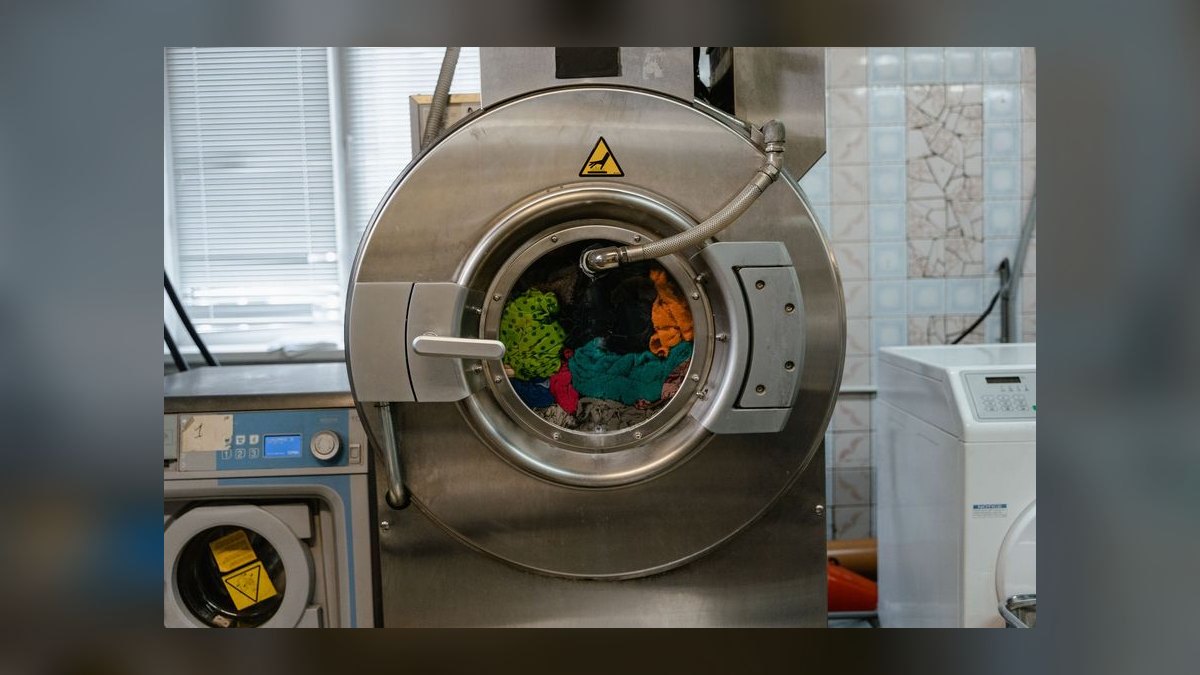
On equipment, get competitive bids across at least two distributors even inside a franchise system, and push on financing structure as hard as on price — the payment terms affect your cash-on-cash return more than a five percent difference in machine cost. Specify high-extraction washers, a capacity mix weighted toward large loads, and a card or app payment platform whose data you can export.
Open soft, then tune. Vend pricing is a live experiment: start at market, watch machine turns by size and daypart, and adjust. Underpriced large machines fill up and cap your revenue; overpriced ones sit idle. Once self-service is stable — typically three to six months — layer in wash-dry-fold with tight intake procedures. Only after that is running cleanly should you chase commercial accounts, because a commercial account you cannot service on time is worse than no commercial account.
Finally, treat unit two as a decision you earn rather than a goal you assume. The operators who compound in this category are the ones whose first store is genuinely stabilized, whose systems are documented, and whose manager can run the floor without them. Multi-unit laundry ownership is a real wealth-building path — the assets are financeable, the cash flow is steady, and the real estate optionality is meaningful if you can eventually buy the building. But a second store built on an unstable first store simply doubles the problem.
Related questions
Is a laundromat better bought as a franchise or independently?
Independent ownership avoids 5–10% of revenue in royalties and brand fees and gives you full control over equipment and pricing. Franchises buy you site-selection support, purchasing power, operating systems, and financing credibility. For a first-time owner without laundry experience, the franchise often earns its fee; for an experienced operator, rarely.
Are dry cleaning businesses still profitable in 2027?
Some are, but the profitable ones have repositioned. Pure garment dry cleaning faces structurally declining volume from casual and hybrid work. Operators succeeding today combine wash-dry-fold, household textiles, delivery routes, and convenience infrastructure like 24-hour lockers, treating solvent cleaning as one line among several.
How much does a laundromat franchise cost to open?
Broadly $700,000 to $1,600,000 all-in for a leased retail build, with equipment $350,000–$700,000 and buildout plus utility infrastructure $200,000–$600,000. Conversions of existing stores run less because infrastructure exists. Delivery-only route models can start under $250,000. Confirm specifics in each brand's Item 7.
What kills laundromat deals most often?
Utility infrastructure. Gas service too small for the dryer bank, undersized water main, sewer or interceptor requirements, or a landlord refusing roof venting. These surface after the lease is signed and add $75,000–$250,000 plus months of delay. A mechanical feasibility study before signing prevents nearly all of it.
Can a laundromat be run semi-absentee?
Yes, more credibly than most franchise categories. Unattended card-operated stores with remote monitoring, camera coverage, and a maintenance contract can run on part-time cleaning labor and periodic owner oversight. Wash-dry-fold and dry cleaning operations are far harder to run absentee because they are service and labor businesses.
FAQ
What is the single most important factor in choosing a laundry franchise?
The trade area, not the brand. Self-service laundry demand is driven by renter-occupied household density within a short drive time, in a specific income band. A mediocre brand on an excellent site outperforms an excellent brand on a mediocre site every time, because customers choose the nearest clean, safe, well-equipped store rather than a logo.
Why do experienced buyers avoid traditional dry cleaning plants?
Two reasons. Demand for garment dry cleaning has been structurally declining for years, accelerated by casual and hybrid work. And perchloroethylene, the traditional solvent, is a regulated chemical with a documented history of soil and groundwater contamination — meaning environmental liability that can exceed the value of the operating business. Always commission a Phase I assessment.
How do I verify a seller's revenue on an existing laundromat?
Use physical proxies. Pull 24–36 months of water, gas, and electric bills and back into implied machine cycles, since utility consumption cannot be faked. Check machine cycle counters. Observe customer counts across multiple days including a weekend. If utility trends contradict claimed revenue trends, trust the utilities.
What margin should a healthy laundromat produce?
Owner-operator EBITDA commonly lands between 15% and 30% of revenue for a well-run store. Utilities typically consume 15–25%, labor 15–25% depending on attended hours and wash-dry-fold, rent 10–18%, and royalties plus brand fund 5–10% in a franchise. Stores below roughly 12% usually carry excess rent or aging equipment.
Is a delivery-only laundry model a serious alternative to a physical store?
Yes, and for capital-constrained buyers it is often the better entry. Route models using partner processing capacity can start for $75,000–$250,000 covering vehicles, software, and customer acquisition, with no buildout or utility risk. Per-pound margins are thinner, but capital efficiency and metro-wide scalability are substantially better.
How long until a new laundromat reaches stabilized revenue?
A greenfield build in an unproven trade area typically takes 12–24 months because laundry customers change habits slowly. A re-equipped conversion of an existing store with established traffic often stabilizes in 3–9 months. This gap is the main reason conversions and acquisitions dominate the strongest opportunities heading into 2027.
Sources
- https://www.sba.gov/funding-programs/loans
- https://www.ftc.gov/business-guidance/industry/franchising
- https://www.epa.gov/dry-cleaning-sector
- https://www.epa.gov/hwgenerators
- https://www.bls.gov/ooh/personal-care-and-service/home.htm
- https://www.census.gov/programs-surveys/ahs.html
- https://www.eia.gov/consumption/commercial/
- https://www.franchise.org/
- https://www.irs.gov/businesses/small-businesses-self-employed/depreciation
Related on PULSE
- Best car wash franchises to buy in 2027
- How to evaluate a franchise disclosure document before you sign
- What semi-absentee franchise ownership actually requires
- Best cleaning and janitorial franchises to buy in 2027
- How to value a small service business before you buy it
- What utility infrastructure costs to add to a retail build
 franchiseBest retail franchises to buy in 2027
 franchiseBest technology franchises to buy in 2027
 franchiseBest vending machine franchises to buy in 2027
 franchiseBest entertainment franchises to buy in 2027
 franchiseBest pet grooming franchises to buy in 2027
 franchiseBest franchise opportunities for veterans in 2027
 franchiseShould I open or buy a Public Storage franchise in 2027?
 franchiseShould I choose an independent self-storage business or a franchise model in 2027?
 franchiseShould I open or buy a Zoom Room dog training franchise in 2027?
 franchiseShould I open or buy an Urban Air Adventure Park franchise in 2027?