

Best entertainment franchises to buy in 2027
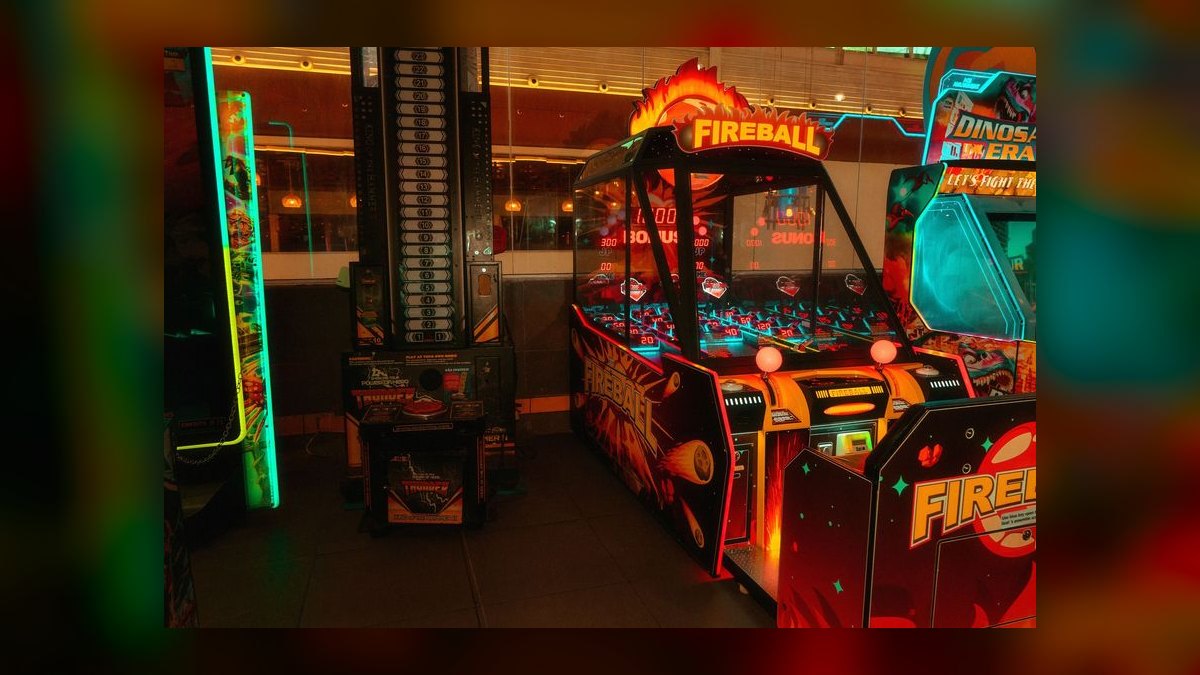
The best entertainment franchises to buy in 2027 are location-based experience concepts with recurring revenue: family entertainment centers, axe-throwing and social-competition bars, kids' enrichment and party programs, and boutique fitness-adjacent play. Prioritize systems with proven multi-unit unit economics, real estate flexibility, membership or league revenue, and a franchisor that supplies pricing, staffing, and event playbooks.
What "entertainment franchise" actually covers, and why the category behaves differently than food or services
The phrase "entertainment franchise" gets used loosely, and that looseness is the first thing to fix before you spend a dollar on a Franchise Disclosure Document review. In the franchising world it spans at least five structurally different business models, and they do not share economics, staffing profiles, or real estate needs. Lumping them together is how buyers end up with a lease that does not fit the concept they actually bought.
The first cluster is large-format family entertainment centers (FECs): trampoline parks, indoor adventure parks, bowling-plus-arcade hybrids, indoor go-kart and karting facilities, and the "eatertainment" concepts that pair a full kitchen with attractions. These are big-box businesses. They typically want somewhere in the range of 20,000 to 60,000 square feet, high clear ceiling heights (a trampoline park generally needs 20+ feet, karting more), heavy build-out, and capital budgets that commonly run well into seven figures once you include attractions, FF&E, and pre-opening. They are the most capital-intensive thing in the category and the least forgiving of a bad site.
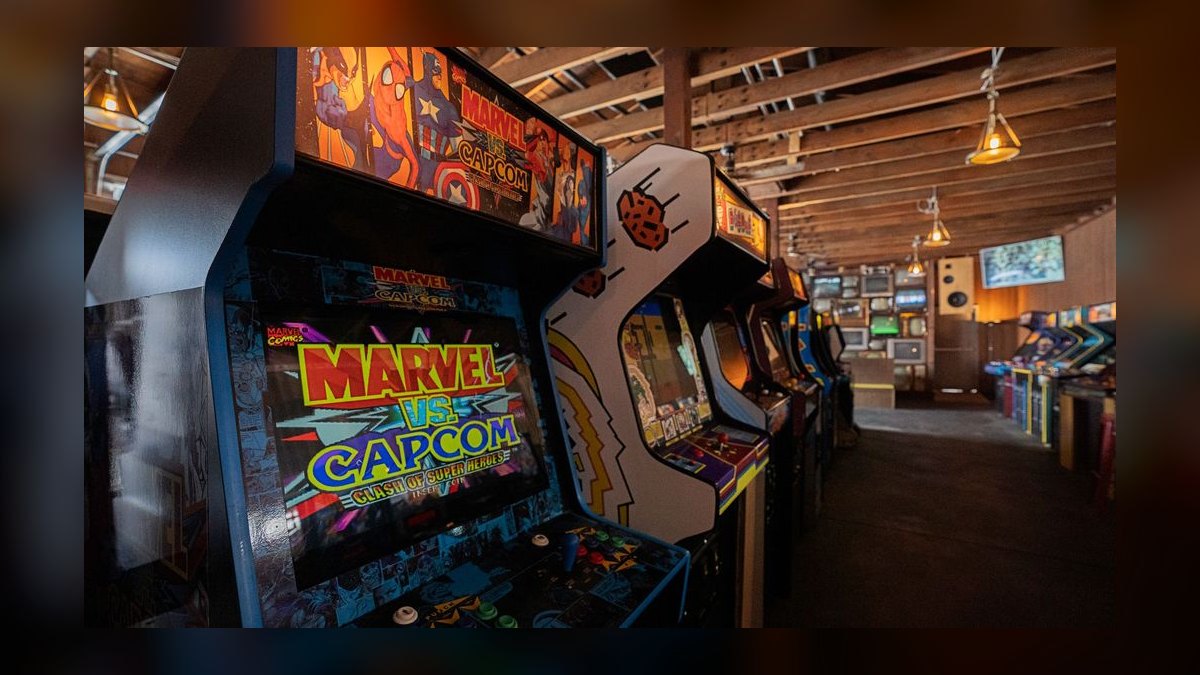
The second cluster is social-competition and adult entertainment venues: axe throwing, indoor golf simulators, pickleball and racquet clubs, competitive darts, escape rooms, and the general "bar with a game attached" format. Footprints are usually smaller, in the 3,000 to 15,000 square foot band. Build-out is lighter. Many of these run on a booking-and-league model, which is important because leagues are recurring revenue in a category that is otherwise heavily transactional.
The third cluster is children's enrichment, play, and party concepts: indoor playgrounds, kids' gyms and tumbling programs, music and art classes for young children, STEM and robotics programs, swim schools, and birthday-party-first play cafés. These are enrollment businesses wearing an entertainment costume. Revenue is tuition or membership plus party bookings. Many operate out of 2,000 to 8,000 square feet, and some of the class-based ones are semi-mobile — running out of schools, community centers, and rented gym time with almost no fixed footprint.

The fourth cluster is mobile and event-service entertainment: party rentals, mobile game trucks, event DJ and photo-booth systems, mobile escape experiences, character entertainment, and youth sports programming that travels to fields it does not own. Capital requirements are dramatically lower — often a vehicle, equipment, insurance, and marketing — and the trade-off is that you are selling your calendar rather than building an asset that runs without you.
The fifth cluster is the media and IP-adjacent side: production services, content studios, screen-printing and merchandise shops feeding fandom, comic and collectible retail, and ticketing or event promotion. These behave more like retail or B2B services than like attractions, and they generally do not carry the attraction category's real estate risk.
Why does this taxonomy matter so much? Because the failure mode in entertainment franchising is almost always a mismatch between the concept's revenue rhythm and the fixed cost you signed for. A trampoline park with a 15-year lease at big-box rent needs volume every weekend of the year, in every season, with a party pipeline that never goes quiet. A kids' music program with 40 enrolled families and a shared-space rental agreement can survive a slow quarter without existential risk. Same category on paper, completely different risk surface.

The other thing to internalize is that entertainment demand is structurally lumpy. Weekend afternoons, school breaks, summer, and holiday weeks carry a disproportionate share of the year. Many attraction concepts do a meaningful share of annual revenue in a handful of peak weeks. That means your staffing model has to flex hard, your marketing has to front-run the peaks by weeks not days, and your cash planning has to survive a dead February. Buyers who model a flat monthly average and staff to it are the ones who get surprised in the shoulder seasons.
Finally, the category has a real tailwind worth naming honestly: consumer spending has been shifting toward experiences and away from goods for well over a decade, and that shift accelerated after 2021 as people re-prioritized in-person social activity. That is a genuine reason to like the category. It is not, however, a reason to overpay for a specific unit, ignore a weak site, or skip the item-19 analysis. A rising category floats good operators and drowns bad locations at the same time.
The step-by-step process for evaluating and buying one
The buying process for an entertainment franchise is not meaningfully different from any other franchise purchase in its legal mechanics — it is the diligence emphasis that changes. You spend proportionally more time on site, seasonality, and attraction capacity than you would buying a service brand.
Step one: decide what role you are actually buying. Owner-operator, semi-absentee with a general manager, or investor across multiple units. This single decision eliminates most of the field. Large FECs are usually multi-manager operations that can be run semi-absentee once stabilized, but the stabilization period demands a genuine full-time presence. Mobile and event concepts are frequently owner-operated at the start and only scale when you have crews and a booking system that runs without you. Be honest here, because franchisors will happily sell "semi-absentee" as a feature and it is not always true in year one.

Step two: get the FDD and read the specific items that matter for this category. Item 5 and Item 6 give you initial and ongoing fees. Item 7 is the estimated initial investment range — read the footnotes, not just the numbers, because that is where the range explains what is and is not included (attractions? working capital? franchise fee? real estate deposits?). Item 11 tells you what marketing, training, and technology support you actually receive. Item 19 is the Financial Performance Representation, and Item 20 is the outlet table showing openings, closures, transfers, and terminations over three years. Item 20 is the honest one. A brand that opened 40 units and closed 25 is telling you something no glossy deck will.
Step three: validate with franchisees, and pick the calls deliberately. Ten is a reasonable floor. Deliberately include units that opened in the last 18 months, units in markets demographically similar to yours, and — this is the part people skip — at least two units that closed or transferred if you can reach those owners through the Item 20 list. The questions that actually matter: what were your real total costs versus the Item 7 range, how long until you were cash-flow positive, what does a slow month look like, how much of your revenue is parties or leagues versus walk-in, and would you buy this again.
Step four: site selection, which in this category is roughly half the outcome. Attraction concepts live on drive-time radius, household density with the right age skew, co-tenancy, parking, and visibility. A kids' concept wants young families within a 10 to 15 minute drive. A social-competition bar wants evening traffic, adjacent food and beverage, and ideally a nearby office or entertainment district that generates corporate group bookings. Retail brokers who specialize in your format are worth their fee because they know which second-generation spaces — a former big-box, a dead grocery, an old bowling alley — can be converted without a punishing structural spend.
Step five: model the unit against your actual market, not the franchisor's composite. Take the Item 19 revenue figures if provided, then rebuild the cost side from local reality: your quoted rent per square foot plus NNN, your state's wage floor and realistic hourly rates for part-time weekend staff, your insurance quotes (which in attraction businesses are meaningfully higher than in retail), and your utilities on a building running HVAC over a large open volume. Then layer royalties and the national marketing fund on top. If the model only works at the franchisor's best-case revenue, it does not work.
Step six: finance it in the right structure. SBA 7(a) loans are common in franchising and many brands appear on the SBA franchise registry, which streamlines eligibility review. Expect a meaningful equity injection, a personal guarantee, and a lien on personal assets in most cases. Equipment financing can cover attractions separately in some deals. Landlord tenant-improvement allowances are negotiable and materially change your cash need — in second-generation space with a motivated landlord, a TI allowance can be one of the largest single swings in your opening budget.
Step seven: build-out and pre-opening. Permitting timelines for assembly-occupancy spaces with attractions are longer than for retail. Fire marshal review, occupancy classification, and inspection of ride-type equipment all add weeks. Budget pre-opening marketing to start 6 to 10 weeks before doors open, and pre-sell memberships, party slots, and league spots during that window. The single strongest predictor of a good first quarter is a booked calendar on opening day, not an opening-day crowd.
Costs, timelines, and typical ranges you should plan around
Ranges in franchising vary enormously by brand, market, and whether you are building new or converting existing space, so treat what follows as planning bands to pressure-test against a specific FDD rather than as quotes.

Initial franchise fee. Across franchising broadly, initial fees commonly sit in the tens of thousands of dollars, and multi-unit development agreements typically discount per-unit fees in exchange for a commitment schedule. Entertainment brands are not unusual on this axis. The fee is rarely the number that decides a deal.
Total initial investment. This is where the sub-categories diverge violently. Mobile and event-service concepts can start in the low tens of thousands to low hundreds of thousands, dominated by vehicle, equipment, and initial marketing. Small-footprint kids' enrichment and class-based programs often land in the low-to-mid six figures. Social-competition venues with a bar, build-out, and 4,000 to 10,000 square feet commonly run mid-six to low-seven figures. Large-format FECs — trampoline, adventure, karting, eatertainment — routinely run into the multiple millions once you include attraction packages, kitchen, and FF&E. Read Item 7 for the specific brand and then add contingency, because attraction build-outs have a habit of finding surprises in older buildings.
Royalties and marketing funds. Ongoing royalties in franchising commonly run in the mid-single-digit percentage of gross revenue, with an additional national or regional marketing contribution on top, often 1 to 3 percent. Some entertainment brands also charge technology or booking-platform fees per location. Add all of them together before you model, because a headline royalty that sounds modest can become a materially larger number once platform and marketing fees stack.
Working capital and the ramp. Plan for the business to be unprofitable for a period after opening. Many attraction concepts see a strong opening bump from novelty and local press, then a trough at month three to six as the novelty fades and before the repeat and party pipeline matures. Carrying enough working capital to survive that trough without panicking into discount pricing is one of the clearest differences between operators who make it and those who do not. Six to twelve months of fixed costs in reserve is a defensible planning target for capital-intensive formats.
Timeline from signature to open. Site search alone frequently takes three to nine months for attraction formats, because the qualifying inventory is thin. Lease negotiation adds one to three months. Permitting and build-out for a large-format venue commonly runs six to twelve months, sometimes longer in jurisdictions with slow assembly-occupancy review. Smaller-footprint and mobile concepts can compress this dramatically — some class-based and mobile formats open within a few months of signing. Budget twelve to eighteen months end-to-end for a big-box entertainment venue and be pleasantly surprised if you beat it.
The recurring-revenue overlay. The single most valuable financial characteristic in this category is any revenue that renews without a new sale. Memberships, season passes, class enrollment, league fees, and corporate contracts all qualify. Concepts that generate 25 to 40 percent of revenue from recurring or pre-booked sources are structurally more stable than pure walk-in attractions, because they smooth the seasonal curve and give you a predictable base to staff against. When comparing two otherwise similar brands, the one with a functioning membership or league program is usually the better buy even at a higher initial investment.
Labor. Entertainment venues run on part-time, often young, high-turnover staff. Model realistic turnover — replacing and retraining staff is a real recurring cost, not an exception. Also model supervisory density honestly: attractions with safety requirements need trained attendants at fixed ratios, and those ratios are not optional when the fire marshal or your insurer shows up.
Where buyers get it wrong
Buying the concept instead of the site. This is the number one killer. People fall in love with a brand at a franchise expo and then accept whatever space the market offers. In attraction businesses, the site drives traffic more than the brand does for most local consumers, who are choosing "somewhere to take the kids Saturday," not choosing your logo. If the right site is not available in your target market, the right answer is to wait or change markets — not to compromise.
Underestimating seasonality and staffing to an average. A concept doing a large share of annual revenue in summer and holiday weeks cannot be staffed as if every month is the same. Build a seasonal staffing plan with a core year-round team and a trained flex pool you reactivate for peaks. Losing your trained peak staff every off-season and rehiring cold is an expensive, quality-destroying cycle.
Treating parties and groups as a nice-to-have. For most family-oriented entertainment concepts, birthday parties, school groups, camps, corporate events, and team outings are not incremental — they are the margin. They are pre-booked, higher-spend, and less weather-dependent than walk-in. If you do not hire or assign someone whose actual job is booking groups, you will underperform your peers with identical equipment. This is a sales function, and it should be treated like one, with a pipeline, follow-up cadence, and a defined close rate.
Ignoring insurance and safety compliance until late. Attraction businesses carry higher liability exposure. Insurance costs, waiver systems, attendant training documentation, inspection schedules, and incident reporting are operational requirements, not paperwork. A brand with weak safety systems is a brand with an eventual claims problem, and claims history follows you into renewal pricing.
Assuming semi-absentee works from day one. Even in formats that genuinely support it later, the first six to twelve months need an owner in the building. Systems, hiring, local marketing relationships, and the group-sales pipeline all get established by someone who cares, and a first-time general manager rarely builds them from scratch.
Skipping the closed-franchisee calls. The Item 20 table lists terminations, non-renewals, and transfers. Those owners will tell you things current franchisees will not, either because current owners are optimistic by selection or because they are wary of franchisor relations. It is uncomfortable to make those calls. Make them anyway.
Over-indexing on national brand recognition. In entertainment, local reputation, reviews, and word-of-mouth among parents and league organizers do more work than national awareness for a category where consumers decide locally and repeatedly. A smaller, well-run system with strong operational support and honest unit economics can be a better purchase than a famous logo with thin margins and heavy fees.
Neglecting the adjacent revenue lines. Food and beverage attach, arcade and redemption revenue, merchandise, and paid add-ons often carry better margins than the core admission. Concepts that let you build a real F&B or retail attach rate give you a second lever when admission pricing hits its ceiling. Conversely, adding a kitchen adds labor complexity, health-code exposure, and waste — so understand which trade you are making before you sign.
Decision framework: which entertainment franchise fits which buyer
There is no single "best" concept, only a best fit between capital, risk tolerance, time commitment, and market. The framework below is how to narrow the field fast.
If your capital is limited and you want to start earning quickly, the mobile and event-service side of entertainment is the rational entry point. Party rentals, mobile game and experience trucks, and traveling youth-activity programs have low fixed costs and can be validated in a market without a lease. The ceiling is lower and the work is more personally demanding, but you learn the local demand patterns cheaply. Several operators use this as a stepping stone: run mobile for two or three years, build a customer list and a reputation, then convert that demand into a fixed location.
If you want the most stable revenue profile for the capital, look hard at enrollment-based kids' concepts — swim schools, tumbling and gym programs, music and art classes, STEM and robotics. These have tuition or membership at their core, which means predictable monthly revenue and a churn number you can manage. They are also the formats most compatible with genuine semi-absentee ownership after stabilization, because the operating rhythm is a schedule rather than a crowd.
If you want adult evening demand and a corporate pipeline, social-competition venues are the strongest current fit. Axe throwing, golf simulators, indoor pickleball and racquet clubs, and darts all combine recreation with food and beverage, and — critically — they support leagues. A league is a subscription in disguise: it fills weeknights that would otherwise be dead, it locks in a cohort for a season at a time, and it builds a social community that resists competitive substitution. Corporate team events are the same revenue in a different wrapper, and they book at higher per-head spend.
If you have real capital, operating experience, and access to an A-grade site, large-format FECs have the highest ceiling in the category. They also have the least margin for error. Only pursue this if you can answer yes to all of: the site is genuinely excellent, you have working capital well beyond the build-out, you have or can hire experienced attraction management, and the FDD's Item 20 shows a system that opens units and keeps them open.
Cross-cutting filters apply regardless of which lane you pick. Prefer systems where Item 19 gives you real revenue and, ideally, cost data rather than a single vague top-line figure. Prefer systems with multi-unit franchisees who have bought again — repeat buying by existing owners is one of the most honest signals in franchising, because those people have full information. Prefer systems where territory rights are clearly defined and protected. And prefer systems where the franchisor's support includes group-sales training, not just operations, because group sales is the revenue lever most owners underuse.
A note on adjacent paths. Buying a franchise is not the only route into this category. Acquiring an existing independent operator — a local bowling center, a family fun park, an established party venue — can deliver immediate cash flow and existing customer relationships at a lower multiple than the cost of building new, at the price of inheriting deferred maintenance and a reputation you did not create. Some buyers do both: acquire an independent for cash flow, then convert it into a franchise system for brand and operating support. Resale of an existing franchised unit is another underused path, and often the best risk-adjusted entry, because you get real historicals to underwrite rather than projections.
Related questions
How much does a family entertainment center franchise cost to open?
Large-format FECs typically require multiple millions in total initial investment once attractions, build-out, kitchen, and FF&E are included. Smaller entertainment formats run far less. Always read Item 7 of the specific brand's FDD and add a contingency for older-building surprises.
Are entertainment franchises a good investment in 2027?
The category benefits from a sustained consumer shift toward experiences, which is a real tailwind. But returns depend far more on site quality, group-sales execution, and working capital depth than on category-level trends. A good concept on a bad site loses money.
What is the lowest-cost entertainment franchise to start?
Mobile and event-service concepts — party rentals, mobile game and experience units, traveling kids' programs, photo-booth and event systems — carry the lowest entry cost because they avoid a lease. The trade-off is a lower ceiling and heavy owner involvement early on.
Can an entertainment franchise be run semi-absentee?
Enrollment and class-based concepts adapt best to semi-absentee ownership because they run on schedules rather than crowds. Attraction venues can reach it after stabilization with a strong general manager, but the first six to twelve months realistically require an owner present.
What drives profitability most in entertainment venues?
Group and party bookings, membership or league recurring revenue, and food-and-beverage or retail attach rate. These carry better margins and smoother seasonality than walk-in admissions, and they are the levers most owners underinvest in during the first year.
FAQ
How do I verify a franchisor's claims before signing?
Use the Franchise Disclosure Document as your primary source, not marketing material. Item 19 contains any financial performance representations the franchisor is willing to stand behind legally, and if a brand makes no Item 19 disclosure at all, that absence is information. Item 20 lists outlet counts, openings, closures, terminations, and transfers over three years — compute the closure rate yourself. Then call franchisees from the Item 20 contact list, including former owners. In the United States, the FTC Franchise Rule requires the FDD be delivered at least 14 days before you sign or pay, so you have time to have a franchise attorney review it.
How seasonal is entertainment revenue, really?
Very, for most attraction formats. Weekends, school breaks, summer, and holiday periods carry a disproportionate share of the year, and weather can swing a weekend materially for indoor concepts in either direction. Ask franchisees for a month-by-month revenue distribution, not an annual total. Then build your staffing, marketing, and cash plan around that shape. The businesses that handle seasonality well are the ones that layer in recurring revenue — memberships, leagues, class enrollment, corporate contracts — to raise the floor in slow months.
Is it better to buy a new unit or an existing franchise resale?
Resales frequently offer the better risk-adjusted entry because you underwrite real historical financials instead of projections, you inherit an existing customer base, and you skip the build-out timeline and its overruns. The trade-offs are paying for goodwill you did not build, inheriting equipment that may need capital, and potentially fixing a reputation the prior owner damaged. Diligence a resale like an acquisition: verify revenue against bank deposits and point-of-sale data, inspect equipment condition, and understand exactly why the seller is selling.
How important is the franchisor's technology stack?
More important than buyers expect. Booking and reservation systems, waiver capture, membership billing, party scheduling, point-of-sale, and CRM together determine how efficiently you convert interest into booked revenue. A franchisor that provides an integrated booking-to-waiver-to-payment flow saves you both software cost and operational friction. Ask specifically whether the system handles recurring membership billing and group-event pipelines, because those are the two revenue lines most likely to be managed in spreadsheets otherwise.
What should I ask a franchisor that most buyers do not?
Ask for the distribution of unit performance, not the average — the spread between top and bottom quartile tells you how much of the outcome is system versus operator. Ask what percentage of system revenue comes from groups, parties, memberships, and leagues. Ask what support exists for group sales specifically. Ask how many existing franchisees have opened a second unit in the last two years. And ask what the most common reason for underperformance has been in their system, then verify that answer against franchisee calls.
Do I need industry experience to buy an entertainment franchise?
Not necessarily for smaller formats, where franchisor training plus general management ability is usually sufficient. For large-format venues with attractions, food and beverage, and 40-plus part-time staff, prior operations experience — hospitality, retail management, or multi-unit foodservice — measurably improves the odds. If you lack it, the mitigation is hiring an experienced general manager early and budgeting for that salary from pre-opening, not from first profits.
Sources
- https://www.ftc.gov/business-guidance/industry/franchises
- https://www.franchise.org/
- https://www.sba.gov/funding-programs/loans/7a-loans
- https://www.iaapa.org/
- https://www.sba.gov/
- https://www.ftc.gov/business-guidance/resources/consumers-guide-buying-franchise
- https://www.bls.gov/iag/tgs/iag71.htm
- https://www.census.gov/programs-surveys/economic-census.html
Related on PULSE
- How to read Item 19 in a Franchise Disclosure Document
- Franchise resale vs. new unit: which entry has better risk-adjusted returns
- Building a group and party sales pipeline for a local venue
- Membership and league pricing models for recreation businesses
- Site selection fundamentals for high-traffic retail and attraction concepts
- SBA 7(a) financing for first-time franchise buyers
 franchiseBest retail franchises to buy in 2027
 franchiseBest technology franchises to buy in 2027
 franchiseBest laundry and dry cleaning franchises to buy in 2027
 franchiseBest vending machine franchises to buy in 2027
 franchiseBest pet grooming franchises to buy in 2027
 franchiseBest franchise opportunities for veterans in 2027
 franchiseShould I open or buy a Public Storage franchise in 2027?
 franchiseShould I choose an independent self-storage business or a franchise model in 2027?
 franchiseShould I open or buy a Zoom Room dog training franchise in 2027?
 franchiseShould I open or buy an Urban Air Adventure Park franchise in 2027?