
GTM Playbook for Travel and Hospitality — The Complete Operator Guide in 2027
 Curated byKory White · Fractional CRO · Maryland
 PULSEKNOWLEDGE LIBRARY
Quality
Certified
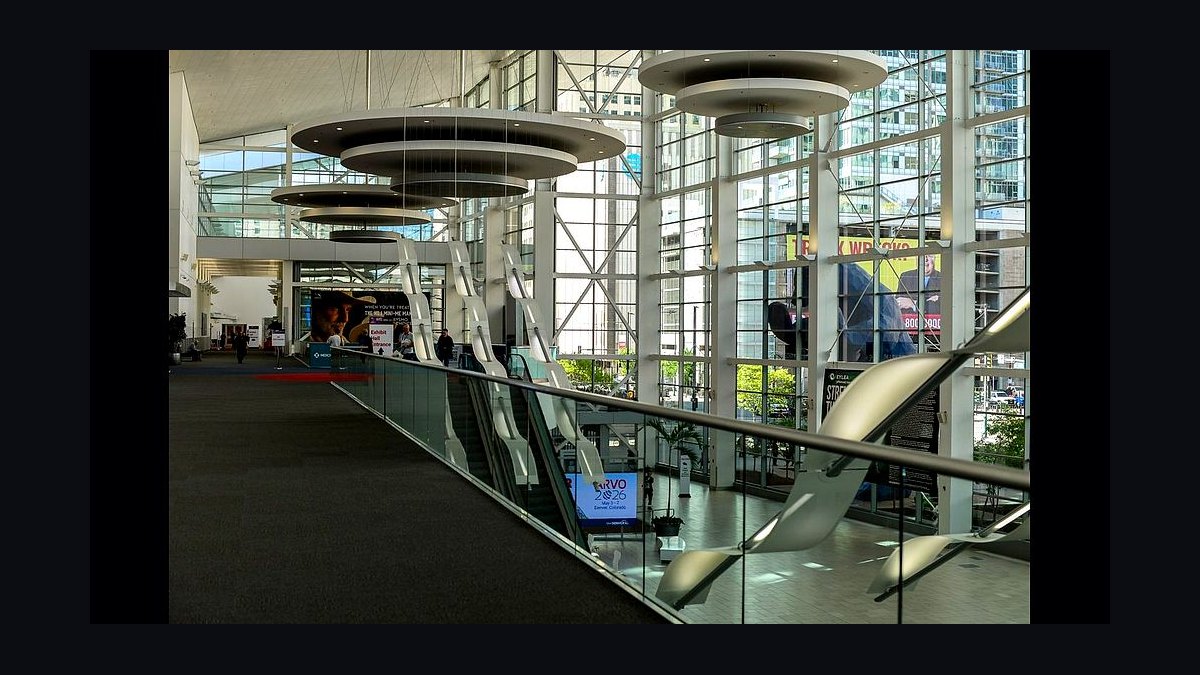
The 2027 GTM playbook for travel and hospitality runs a tri-ICP motion — hotel brands, independent operators, and distribution players — anchored on events and PMS/GDS partnerships, priced per-room, per-property, or per-booking rather than per-user. The Complete Operator playbook sequences hiring from a hospitality co-founder through a Head of Distribution Partnerships as revenue scales past $10M ARR.
The go-to-market motion in one picture
Hospitality technology is unusual among vertical SaaS categories because the buyer fractures into three genuinely different motions running in parallel, not sequentially. A vendor that tries to serve all three with one sales script stalls out low; Phocuswright's tracking of the category found single-segment travel-tech vendors plateauing well below the multi-segment operators. The first motion sells into hotel brands and chains — Marriott, Hilton, IHG, Hyatt, Accor, Choice, Wyndham, and large independents running 50+ properties — where the buying committee is a VP Revenue Management, a CIO, and a Chief Commercial Officer working an RFP-driven, 9-to-18-month enterprise cycle worth $200K to $2.5M. The second motion sells into independent hotels, B&Bs, vacation rentals, and small chains of 1-20 properties, where a GM or Director of Operations makes a fast, unilateral call in 3-9 months for $5K to $50K per property. The third motion sells into airlines, OTAs, tour operators, cruise lines, and destination marketing organizations, where a VP Distribution or Head of Revenue evaluates GDS connectivity and NDC compliance over 6-12 months.
What ties the three together is the channel mix that funds pipeline before any of them close. The 2027 default splits spend 30% events, 25% partner, 20% inbound, 15% outbound, and 10% advocacy — a heavier events weighting than most B2B SaaS categories carry, because hospitality buyers still do the bulk of their vendor discovery on a trade-show floor. HITEC is the anchor US event for hospitality technology; Phocuswright Conference pulls the travel-tech investment community; ITB Berlin and World Travel Market London carry the global buyer; Skift Megatrends and Skift Forum carry media and thought leadership. Partner channel rides on PMS platforms — Oracle Hospitality OPERA Cloud, Amadeus Hospitality, and Sabre Hospitality at enterprise, Cloudbeds and Mews at independent — plus GDS relationships with Amadeus, Sabre, and Travelport that gate access to airline and global-distribution budgets. The diagram below shows how identification of the right ICP, the channel mix that reaches it, and the pricing model that closes it all flow into one motion rather than three disconnected playbooks.

The adjacent angle worth flagging here is corporate travel platforms — Navan, Concur Travel, Egencia — which technically sit outside the hotel-and-distribution core but share the same GDS dependency and per-trip pricing logic, and often get evaluated in the same RFP cycle as a hotel brand's direct-booking stack when a chain is negotiating a corporate-rate program.
Who owns what across the revenue org
On the buyer side, the three ICPs map to three distinct owners, and conflating them is the single most common early-stage mistake. At a hotel brand, the VP Revenue Management owns RevPAR and rate strategy and is the economic sponsor for anything touching pricing or channel mix; the CIO owns the PMS and integration surface and can veto on security or architecture grounds regardless of what Revenue Management wants; the Chief Commercial Officer or Chief Digital Officer owns the guest-experience and brand-distribution roadmap and typically chairs the RFP. A deal that skips the CIO conversation dies in procurement even after Revenue Management has verbally committed. At an independent property, ownership collapses into one person — the GM or owner — which is why independent cycles compress to 3-9 months; there's no committee to route around. At a distribution player, a VP Distribution or Head of Revenue owns the GDS and NDC roadmap and evaluates almost entirely on integration depth and settlement mechanics rather than on guest-facing features.

On the vendor side, ownership should mirror that buyer structure rather than a generic SaaS org chart. The hiring sequence that works starts with a technical or product founder paired with a hospitality co-founder carrying 10-25 years inside a hotel brand, an OTA, a hotel-management company, or a hospitality-tech vendor — Phocuswright's founder research found that pairing correlates strongly with faster Series A closes, because hospitality buyers can tell within one call whether the person across the table has run a property. The first sales hire is a Property AE, usually pulled from Cloudbeds, Mews, SiteMinder, or Hotelogix, carrying the independent and small-chain motion at an OTE of $180K-$280K. The second hire is a Solutions Engineer with hospitality-tech background at $200K-$300K, because PMS and channel-manager integrations are technical enough that AEs alone can't carry a demo. The third hire is a Brand/Enterprise AE pulled from Oracle Hospitality, Amadeus, Sabre, IDeaS, or Duetto at $260K-$400K, who owns the enterprise RFP motion. A BDR at $80K-$110K and a Customer Success Manager with hospitality operations background at $170K-$240K round out the first five. The role that doesn't exist in most B2B categories but is mandatory here is the Head of Distribution Partnerships, hired at $10M-$20M ARR on a $260K-$420K OTE, who owns OTA relationships with Booking.com, Expedia, Agoda, and Trip.com, GDS partnerships with Amadeus, Sabre, and Travelport, and the brand-distribution-team relationships at the majors. Without that role, distribution relationships fragment across whoever happens to answer the phone, and enterprise growth stalls regardless of product quality.
Metrics, targets, and realistic ranges
The governance metrics that actually predict renewal and expansion in this category are operational, not the generic SaaS dashboard. Net revenue retention for multi-property hospitality platforms runs 115-125%, driven by additional properties, additional modules, and additional brands added to an existing contract — a vendor sitting below 105% has a broken expansion motion, full stop, because the category's economics depend on land-and-expand across a property portfolio rather than seat expansion. CAC payback runs 18-30 months at enterprise, reflecting the 9-to-18-month sales cycle stacked on top of a multi-month implementation before revenue recognition starts. Win rate on qualified pipeline runs 24-32%, tighter than generic B2B SaaS because hospitality RFPs are heavily pre-qualified by PMS compatibility before a vendor even gets invited to bid.

Trial economics are where the category diverges most sharply from software norms. The standard hospitality-tech trial runs 30-90 days across 1-5 properties with an explicit, numeric ROI hypothesis attached up front — RevPAR up 3-8%, direct-booking share up 10-25%, guest satisfaction score up 5-10 points, operating-expense reduction of 8-15%, or measurable staff time savings. Trials that document that impact convert to multi-property deployment at roughly 52%; trials that don't convert at roughly 20% — meaning the single highest-leverage motion a hospitality-tech vendor can run is instrumenting the trial to produce a clean before-and-after number, not adding more trial features. On the cost side, PMS migrations bundled into enterprise deals run 6-18 months per property cluster and cost $25K-$500K per property; vendors that bundle migration services and a brand-conversion playbook into the deal close at roughly double the rate of vendors that leave migration to the customer. Contract terms follow the same enterprise-versus-independent split as everything else: 3-5 year terms with 3-5% annual escalators and 15-25% multi-year prepay discounts at brands and chains, annual terms at independents. And the channel-commission reality sits underneath every renewal conversation — Booking.com runs 15-25% commission and Expedia 15-30%, so a platform that shifts booking mix toward direct can deliver a 5-15% gross-margin uplift to the property even after paying the SaaS subscription, which is the single strongest ROI argument in the entire category and the one every QBR should lead with.
Where the motion breaks down
The most common and most expensive failure mode is pricing per-user in a category where every buyer thinks in per-room, per-property, per-booking, or per-trip terms. A revenue manager overseeing 400 rooms with a lean three-person team will not evaluate a per-seat quote seriously — it reads as a vendor that has never sold into hospitality, and it kills credibility before the demo even starts. The fix isn't just relabeling the price sheet; it means rebuilding the packaging logic around room count or transaction volume from the start, because retrofitting pricing after enterprise conversations have already begun signals the same inexperience it was meant to fix.

The second failure mode is skipping integration with Oracle OPERA Cloud, Amadeus, or Sabre. More than 70% of enterprise branded hotels run one of those three as their core PMS, and a vendor without certified integration is disqualified from most enterprise RFPs before evaluation even starts — this caps growth at roughly $8M ARR regardless of product quality, because the addressable enterprise market simply isn't reachable through the front door. The integration-certification process itself runs $25K-$150K and takes months, which is why vendors that treat it as a Series-A-stage investment rather than a later scaling problem come out ahead.
The third failure mode is underestimating distribution-channel complexity. Every hospitality-tech sale into a brand eventually touches GDS connectivity (Amadeus, Sabre, Travelport), OTA channels (Booking.com, Expedia, Agoda), wholesalers (Hotelbeds, GTA), and the brand's own direct booking engine — and brand distribution policy compliance plus channel-parity-rate enforcement routinely add 30-60 days to enterprise procurement that never shows up in the original sales-cycle estimate. Adjacent categories run into a lighter version of the same trap: a short-term-rental analytics tool selling on AirDNA-style market data can get away with a simpler integration footprint, and a DMO-facing personalization tool evaluating NDC rollout timing faces its own distribution complexity that looks different from a hotel brand's but is no less real. The lesson generalizes past hotels specifically — anywhere a booking touches more than one distribution surface, budget the integration timeline as its own workstream, not as a line item inside the main implementation.

How to sequence the build
Beachhead selection in this category works best along three axes at once: one property type, one geography, one functional domain. "Channel management for independent boutique hotels of 50-200 rooms in Europe" became SiteMinder's beachhead; "revenue management for mid-tier branded hotels of 250-500 rooms in North America" became the opening for IDeaS and Duetto. Mews beachheaded on modern PMS for boutique European independents before expanding upmarket; Cloudbeds took the opposite path, going broad on an all-in-one PMS-plus-channel-manager for independents globally rather than narrow on one region. Neither approach is inherently correct — the choice depends on whether the founding team's hospitality experience is regionally concentrated or product-concentrated — but trying to serve all three ICPs and all functional domains simultaneously before beachhead saturation is the reliable way to plateau at single-digit ARR.
After the beachhead holds, expansion should sequence adjacent property type first — independent to boutique chain to mid-tier chain to enterprise brand — because each step reuses the sales motion of the last one with incremental complexity, rather than jumping straight to enterprise brands where the RFP process and CIO veto power require an entirely different sales skill set. Adjacent functional domain comes second: PMS expands into revenue management, revenue management expands into distribution, distribution expands into guest experience. Adjacent geography comes last, because geography multiplies event and partner costs without changing the underlying sales motion, so it should only be added once the product and pricing model are already proven in one region. The governance rhythm that keeps this sequencing honest runs three cadences: a weekly RevPAR-and-direct-booking review every Monday with the CRO, VP Customer Success, Implementation Lead, and Head of Distribution Partnerships tracking at-risk implementations and migration milestones; a monthly channel-mix and distribution-cost review on the first Tuesday tracking direct-versus-OTA-versus-GDS mix and OTA commission savings, since those numbers are the renewal case itself; and a quarterly brand-and-loyalty-program review with the top 20 enterprise accounts' VP Brand and VP Loyalty counterparts, walking loyalty-member booking penetration and expansion opportunities across additional brands, regions, and functional domains.

A Complete Operator playbook treats this sequencing as the actual product roadmap, not a side process — the hiring order, the beachhead order, and the expansion order all have to move in lockstep with revenue, because hiring a Head of Distribution Partnerships before $10M ARR wastes a $260K+ hire on relationships the company isn't yet big enough to leverage, while waiting past $20M leaves OTA and GDS relationships fragmented during the exact window when enterprise brand deals need them most.
Related questions
How does vacation-rental sales differ from traditional hotel sales?
Vacation-rental platforms sell to owner-operators or small property-management companies, closer to the independent-hotel motion than the enterprise-brand motion — fast GM-led decisions, per-property pricing, and heavy reliance on AirDNA-style market data rather than GDS connectivity.
What role does STR data play in hospitality outbound?
STR (Smith Travel Research) supplies RevPAR and performance benchmarking used to filter and prioritize outbound targets by property type, chain affiliation, and geography — the hospitality equivalent of firmographic data in generic B2B outbound.
Why do corporate travel platforms get evaluated alongside hotel-distribution tools?
Corporate travel platforms like Navan and Concur Travel share GDS dependency and per-trip pricing logic with hotel-distribution vendors, so hotel brands negotiating corporate-rate programs often bundle both evaluations into one procurement cycle.
How does DMO (destination marketing organization) buying differ from airline buying?
DMOs buy for regional visibility and personalization rather than transaction volume, so their cycles hinge more on NDC-adjacent personalization initiatives than on GDS contract renewals, even though both fall under the same distribution ICP.
FAQ
How important is Oracle OPERA Cloud or Amadeus integration for hospitality tech? Mandatory above roughly $3M ARR. More than 70% of enterprise branded hotels run Oracle OPERA Cloud, Amadeus, or Sabre as their core PMS, and a vendor without certified integration is disqualified from most enterprise RFPs regardless of product quality.
What's the median sales cycle for selling to a top-10 hotel brand in 2027? Enterprise brand deals run 9-18 months, driven by RFP process and CIO-level architecture review. Mid-market chains compress to 6-12 months, and independent properties close in 3-9 months with a single GM-level decision-maker.
What's the right pricing model for revenue management software? Per-room, per-month or per-year. Revenue managers oversee large room counts independently of headcount, so per-user pricing consistently reads as a mismatch and signals the vendor lacks hospitality fluency before the conversation even gets to features.
How important are OTA and GDS partnerships? Mandatory for any distribution-facing vendor. Booking.com and Expedia together handle roughly half to two-thirds of online hotel bookings globally, so a vendor without OTA integration effectively caps its addressable growth around $5M ARR.
When should a hospitality-tech vendor hire a Head of Distribution Partnerships? At $10M-$20M ARR, on a $260K-$420K OTE band. Hiring earlier wastes the role on relationships the company can't yet leverage; waiting later leaves OTA, GDS, and brand-distribution relationships fragmented during the enterprise-growth window.
How does selling to enterprise brands differ from independent properties? Enterprise brands run 9-18 month cycles, $200K-$2.5M ACV, RFP-heavy and brand-distribution-policy-bound. Independents run 3-9 month cycles, $5K-$50K ACV per property, with a GM making a fast, largely unilateral decision.
Sources
- https://str.com
- https://www.phocuswright.com
- https://skift.com
- https://www.hsmai.org
- https://www.ahla.com
- https://www.hftp.org
- https://www.oracle.com/hospitality/
- https://amadeus.com/en/industries/hospitality
- https://www.iata.org
- https://www.mckinsey.com/industries/travel-logistics-and-infrastructure
Related on PULSE
- Mattress DTC GTM Playbook 2027 — Hospitality B2B, Hybrid Retail, and the $5.6B Tempur Sealy Operator Path
- GTM Playbook for IoT Hardware in 2027 — The Complete Operator Guide
- GTM Playbook for Aviation and Aerospace in 2027 — The Complete Operator Guide
- GTM Playbook for Automotive and Auto Tech in 2027 — The Complete Operator Guide
- GTM Playbook for Pharma and Life Sciences in 2027 — The Complete Operator Guide
- GTM Playbook for AgTech in 2027 — The Complete Operator Guide
This page will be disappearing soon. Save it to your device for $1 — or read it free while it is here.
@Kory-White- · if Venmo asks, the last 4 of my number are 2012
This page is gone.
This one is off the shelf now. $1 keeps it on your phone for good — the whole page, pictures and diagrams included.
 gtm-playbookHow do you build the GTM playbook for a pet sitting and dog walking marketplace in 2027?
 gtm-playbookGTM Playbook for Healthcare Tech — The Complete Operator Guide in 2027
 gtm-playbookHow do you build a vertical SaaS for auto dealers (Reynolds / CDK) go-to-market motion in 2027?
 gtm-playbookGTM Playbook for Title Insurance Companies in 2027
 gtm-playbookGTM Playbook for Acupuncture Clinics in 2027
 gtm-playbookHow do you build a forestry management software go-to-market motion in 2027?
 gtm-playbookGTM Playbook for DJ Services in 2027
 gtm-playbookHow do you build an HR Tech and HRIS go-to-market motion in 2027?
 gtm-playbookGTM Playbook for Liquor Stores in 2027
 gtm-playbookGTM Playbook for AgTech — The Complete Operator Guide in 2027