
What does NIL cost a university athletic department in 2027?
 Curated byKory White · Fractional CRO · Maryland
 PULSEKNOWLEDGE LIBRARY
Quality
Certified
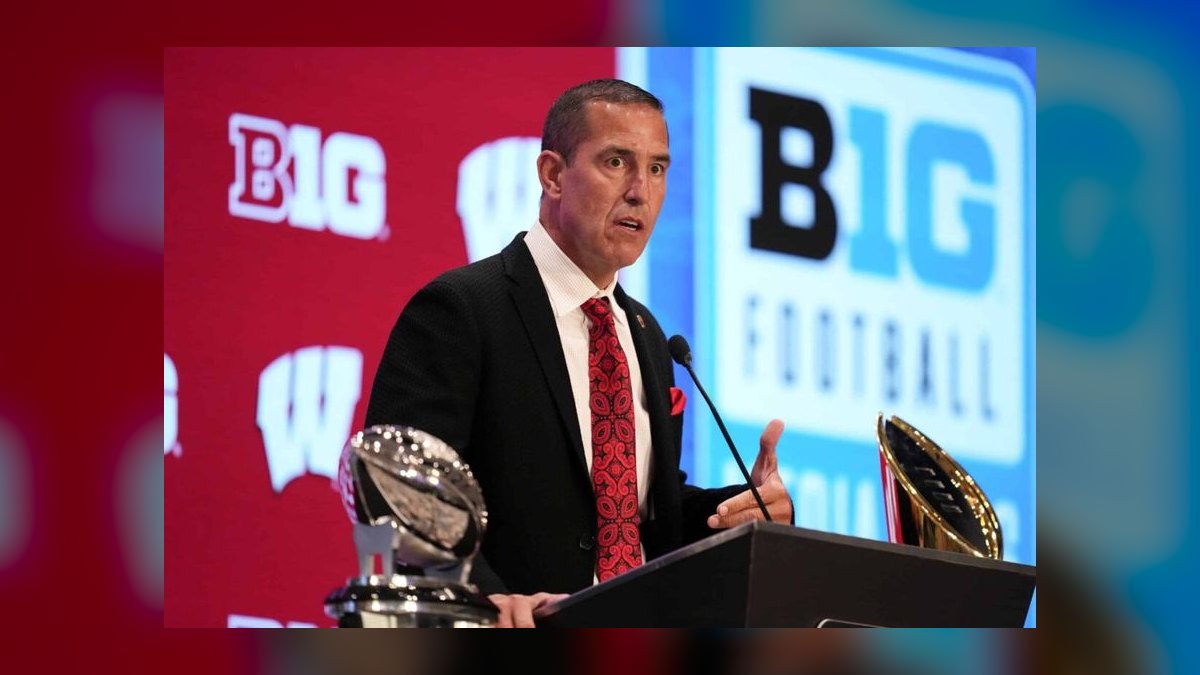
A university athletic department in 2027 spends roughly $500,000 to $12 million a year on NIL, depending on conference tier and sport mix. Direct athlete compensation drives most of it; staffing, valuation software, legal review, insurance, and tax education add another 10% to 20% on top of the payment pool.
What it is and why it matters
NIL — Name, Image, and Likeness — is a college athlete's right to earn money from their own personal brand: endorsements, autograph sessions, appearances, social posts, camps, group licensing, and merchandise. The NCAA's interim NIL policy took effect July 1, 2021, after the Supreme Court's unanimous decision in *NCAA v. Alston*, and a patchwork of state statutes followed. What began as a permissions question became a budgeting question almost immediately. By 2027, no athletic department at the Division I level treats NIL as a discretionary experiment. It is a recurring line item that competes for the same dollars as assistant coaching salaries, charter travel, and facility debt service.
The word "cost" here is doing a lot of work, and it is worth unpacking before any number gets quoted. There are at least five distinct cost buckets, and departments that only count the first one badly underestimate their exposure.
The first bucket is athlete compensation itself. Historically this flowed through collectives — donor-funded third-party entities that pay athletes for promotional and charitable work — because NCAA rules barred schools from paying athletes directly for NIL. The House v. NCAA settlement, approved in 2025, changed the architecture significantly by permitting schools to share revenue directly with athletes under an annual per-school cap, with the first-year cap set at roughly $20.5 million across all sports. That did not eliminate collectives; it added a second channel alongside them and created a new compliance surface, since third-party deals above a dollar threshold now route through a clearinghouse that evaluates whether the deal reflects a valid business purpose and fair market range. A department in 2027 is therefore budgeting two parallel streams — the capped revenue-share pool and the uncapped-but-scrutinized third-party NIL market — and the sum of the two is the number that actually determines whether it can hold a roster together.

The second bucket is staffing. A Power Four department typically now carries a general manager or NIL director, a compliance analyst assigned specifically to disclosure and clearinghouse submissions, and a student-athlete brand development role. These are real salaries with real benefits loads, and they did not exist on the org chart in 2019.
The third bucket is technology. Deal-tracking platforms, valuation tools, disclosure workflow software, and cap-management systems for revenue share all carry annual licensing costs. The fourth is professional services: outside counsel for contract review and state-law questions, tax advisors, and in some cases external auditors reviewing collective independence.
The fifth bucket is the one nobody budgets and everybody eventually pays — volatility. The transfer portal creates in-year cost shocks that a static annual budget cannot absorb. Losing a starting quarterback in December means replacing him within weeks, at market price, from money that was already allocated elsewhere.
Why this matters operationally: NIL spending is now a leading indicator of competitive outcomes in football and men's basketball. A department that underfunds relative to conference peers does not lose slowly. It loses in a single portal window, and the recovery cost is higher than the amount it saved.

The step-by-step process
Standing up and running an NIL operation for a full academic year follows a repeatable sequence. Departments that treat it as an annual cycle rather than a series of emergencies control cost far better.
Step one: set the total envelope, 12 to 18 months out. Before any athlete conversation happens, the athletic director and CFO agree on a ceiling. This number is built from three inputs — committed revenue-share dollars available under the cap, projected collective fundraising based on prior-year donor retention, and a contingency reserve, typically 10% to 15% of the pool, held specifically for portal windows. Departments that skip the reserve step end up cannibalizing Olympic sport allocations in January.
Step two: allocate by sport, not by fairness. The envelope is divided across sports according to revenue contribution and competitive necessity, then checked against Title IX and donor expectations. A department that allocates evenly across 18 sports will be uncompetitive in the two that pay for the other sixteen.

Step three: formalize the collective relationship. Even post-settlement, most departments maintain a collective for third-party deals. The relationship needs a written agreement covering scope, data sharing, disclosure obligations, and the boundary that keeps university staff out of prohibited involvement in payment decisions. Get counsel to draft this once rather than improvising it per deal.
Step four: staff and tool up. Hire or assign the general manager, compliance analyst, and education lead. Select the tracking platform. Configure disclosure workflows so an athlete can report a deal in minutes rather than days — friction in disclosure is the single largest driver of compliance failures.
Step five: educate before the first deal. Run mandatory sessions on contract basics, quarterly estimated taxes, 1099 handling, agent representation rules, and social media obligations under FTC endorsement disclosure guidelines. This is cheap insurance. An athlete who mishandles taxes creates a problem the department pays to solve.

Step six: review, submit, and monitor every deal. Contracts get read for actual deliverables. Third-party deals over the reporting threshold go to the clearinghouse. Payments get tracked against the revenue-share cap in real time, because exceeding it is not a rounding error.
Step seven: reconcile and report. Quarterly reporting to leadership and trustees; annual reporting to donors. Track spend per sport, athletes participating, retention rate, and portal losses. This is what feeds the next envelope.
Costs, timelines, and typical ranges
Ranges below reflect the practical spread across Division I in 2027. Any single department's number depends on conference, football relevance, and donor depth — treat these as planning brackets, not quotes.

Total annual NIL and athlete-compensation spend by tier. A Power Four department with a football program chasing playoff contention lands in the $8 million to $12 million range or higher once the revenue-share pool and collective-funded third-party deals are combined; the largest programs push past that. A mid-tier Power Four department without playoff ambitions typically runs $4 million to $8 million. A Group of Five department runs roughly $1.5 million to $4 million. A non-football or low-resource Division I department may spend well under $1 million on athlete compensation and still carry six figures of fixed administrative cost, because compliance obligations do not scale down with budget.
Direct compensation, by sport. Football consistently absorbs the largest share — commonly 60% to 75% of a department's athlete-compensation pool at football-playing schools. Within football, the distribution is steep: a starting quarterback at a contending Power Four program can command seven figures, offensive line and premium-position starters land in the low-to-mid six figures, and depth players receive $25,000 to $100,000. Men's basketball at the same tier typically runs $1.5 million to $3 million for a full roster, with a high-usage starter in the mid six figures. Women's basketball has climbed sharply on the back of record viewership and now supports six-figure deals for marquee players at top programs, with program-level spend commonly in the $300,000 to $1 million band. Baseball, softball, volleyball, and the Olympic sports typically receive $50,000 to $250,000 per program, but across 14 to 18 sponsored sports that aggregate is not trivial.
Administrative and operating cost. Plan on 10% to 20% of the compensation pool. A general manager or NIL director at a Power Four school falls in the $120,000 to $200,000 range, higher where the role is structured as a true personnel executive. A dedicated compliance analyst runs $60,000 to $95,000. Education and student-athlete development support adds $50,000 to $120,000. Deal-tracking and valuation software runs roughly $40,000 to $150,000 annually depending on athlete count and module selection. Outside counsel is highly variable — $75,000 to $300,000 a year is a reasonable planning band once contract review, state-law questions, and the occasional dispute are included. NIL-related insurance and dispute coverage adds $20,000 to $75,000. For a department paying $8 million in compensation, expect $1.2 million to $1.6 million in wrapper cost.
The calendar. Donor commitments are secured in spring for the following academic year. Collective fundraising targets are set over the summer. Football's initial signing period in December and the spring signing window drive the first commitment wave. The transfer portal windows — a December window following the regular season and a spring window — are the volatility events. A department can lose two starters and need $600,000 to $1 million of unplanned commitment inside a three-week span. This is precisely why the reserve exists, and why departments that fund the reserve out of a dedicated donor tier sleep better than those that raid Olympic allocations.

State-law overhead. State NIL statutes differ on disclosure timing, whether institutions may facilitate deals, agent registration, and high school athlete eligibility. Operating across a conference footprint spanning multiple states means multiple compliance postures. Departments in states with ambiguous or frequently amended statutes carry higher legal spend for no competitive return — it is pure friction cost.
Trajectory. Assume year-over-year growth. The revenue-share cap is designed to escalate annually, and third-party market prices track competitive pressure rather than inflation. A department budgeting $5 million in 2027 should plan for meaningfully more in 2028 and build that escalation into donor conversations now rather than asking for an emergency increase later.
Where teams get it wrong
Counting only the payment pool. The most common budgeting error is treating NIL as one number — what athletes receive — and discovering the wrapper cost midyear. Staff, software, counsel, insurance, and tax support are not optional and not small. A department that budgets $6 million and staffs for zero of it will spend the difference anyway, unbudgeted, in legal fees and remediation.

Spreading the budget evenly. Equal allocation across all sports feels defensible in a room and fails in the market. Athletes and families compare offers across schools with real precision. A department that funds football at 40% instead of 65% does not get a modestly worse football team — it gets outbid on every contested recruit and then pays more to replace the players it loses. Allocate to competitive necessity, then address equity through education access, brand-building support, and marketing exposure that is genuinely available to every athlete.
Underinvesting in disclosure workflow. Compliance failures rarely come from bad intent. They come from an athlete who did a $3,000 deal in March and reported it in June because the form was tedious. Every missed disclosure is a potential eligibility and clearinghouse problem. The fix is unglamorous: make reporting take two minutes on a phone, send automated reminders, and audit quarterly.
Blurring the line between the university and the collective. Rules constrain how institutional staff may participate in third-party payment decisions, and the post-settlement clearinghouse adds scrutiny of whether deals reflect a genuine business purpose. Departments where coaches functionally direct collective spending are creating an enforcement file. Document the boundary, train to it, and have counsel review the operating agreement annually.

Treating tax education as the athlete's problem. NIL income is taxable, generally reported on a 1099, and typically subject to quarterly estimated payments. An athlete who owes five figures in April and did not withhold creates a crisis that lands on the department's desk regardless of whose legal responsibility it was. Budget for the workshops and the advisor. It costs less than the alternative.
Ignoring roster-limit interaction. The settlement framework replaced traditional scholarship caps with roster limits in many sports, which changes the arithmetic of who gets funded and how a walk-on program works. Departments that planned compensation without modeling the new roster math ended up with committed dollars and no eligible slot.
Budgeting once. NIL is not a set-and-forget line. Departments that build the envelope in June and never revisit it are the ones raiding other budgets in January.

Decision framework: when to choose what
The right allocation depends on where a department actually sits, not where it wishes it sat. Work through it in order.
Start with the honest competitive assessment. If football is realistically competing for a conference title or playoff berth, football gets 60% to 70% of the compensation envelope and the reserve is sized for portal defense at premium positions. If football is competitive within its league but not nationally, the calculus shifts toward retention over acquisition — it is materially cheaper to keep a developed junior than to buy an equivalent transfer, and departments that fund retention early spend less overall.
If football is not the lever, basketball is. For departments without football or without a competitive football program, men's basketball becomes the primary investment, often 30% to 45% of the envelope, because tournament access converts directly into exposure and donor energy. Women's basketball warrants serious investment at programs with real history and attendance — the audience growth is not a fad, and the cost per unit of visibility is currently favorable compared to football.
Then test donor depth. A department with a broad, committed donor base can sustain coverage across all sponsored sports. A department with a thin base must concentrate, and should say so internally rather than promising breadth it cannot fund. Overpromising across sports and then quietly underdelivering damages donor trust more than an explicit, defended concentration strategy.
Decide build versus lean. Above roughly $5 million in annual compensation, in-house capability pays for itself: a general manager who knows the market negotiates better than an outsourced intermediary, and a dedicated compliance analyst prevents problems that cost multiples of the salary. Below that, leaning on collective staff, conference shared services, and a lighter software tier is the rational choice. The mistake is a department at $1.5 million hiring a $180,000 general manager, or a department at $9 million running compliance as one person's third job.
Size the reserve to your volatility, not a formula. A program with high portal exposure — young starters, a coaching change, a strong season that attracts poaching — needs 15% or more held back. A stable veteran roster can run 8% to 10%. Fund the reserve from a named donor tier so drawing on it does not require reopening the entire budget.
Re-forecast quarterly. Check actual spend against envelope, portal losses against reserve, and market prices at your positions of need against what you budgeted. Adjust before the December window, not during it.
Related questions
How do collectives fit into the cost structure after the House settlement?
Collectives still handle third-party deals alongside the school's capped revenue-share pool. They raise donor money, contract with athletes, and carry their own operating overhead. The department's cost is the compliance and coordination work — disclosure review, clearinghouse submissions, and maintaining the documented boundary between institutional staff and collective payment decisions.
Does NIL spending create Title IX exposure?
Third-party NIL payments are not institutional financial aid, but direct revenue-share distributions from the school are a different question and remain legally contested. Departments in 2027 generally document their allocation rationale, ensure brand-development support and marketing exposure are genuinely available across sports, and take counsel's guidance on distribution splits.
What does a department spend if it cannot compete on payments?
Fixed cost does not disappear. Even a department paying little in compensation still carries disclosure compliance, education, some software, and legal review — realistically $150,000 to $400,000 a year. The competitive response is usually development, culture, playing time, and degree value, plus concentrating scarce dollars in one or two sports.
Are NIL payments taxable, and who bears that cost?
Athletes owe the tax; the department bears the education and remediation cost. NIL income is generally reported on a 1099, is not withheld at source, and typically requires quarterly estimated payments. Departments that fund workshops and an advisor spend far less than those that handle April surprises case by case.
How does NIL spend compare to other athletic department line items?
At a Power Four school, combined athlete compensation now rivals or exceeds total football coaching staff salaries and can approach annual facility debt service. It has moved from a novelty line to one of the two or three largest controllable expenses on the budget.
FAQ
What does NIL cost a university athletic department in 2027?
Combined athlete compensation plus administrative overhead runs from under $1 million at low-resource Division I schools to $12 million or more at Power Four programs competing nationally in football. The largest driver is football compensation. Administrative wrapper cost — staff, software, counsel, insurance — adds another 10% to 20% on top of whatever the payment pool is.
What is the single largest cost component?
Direct athlete compensation, typically 80% to 90% of the total. Football alone commonly accounts for 60% to 75% of that compensation pool at football-playing schools, with quarterback and premium-position starters carrying the highest individual figures.
Can universities pay athletes directly now?
Under the House settlement framework approved in 2025, schools may share revenue directly with athletes up to an annual per-school cap that started around $20.5 million across all sports. Third-party NIL deals continue separately, with deals above a reporting threshold reviewed for legitimate business purpose and reasonable compensation range.
What are the costs departments forget to budget?
Outside counsel for contract and state-law work, tax education and advisory support for athletes, NIL liability and dispute insurance, and the portal reserve. Add the opportunity cost of senior staff time pulled from fundraising and scheduling into deal review — that one never appears on a budget line but is real.
How much should be held in reserve for the transfer portal?
Between 8% and 15% of the compensation envelope, sized to actual exposure. A program with young starters, a recent coaching change, or a breakout season should sit at the high end. Losing two starters in a December window can require $600,000 to $1 million in new commitments inside three weeks.
Can a department reduce its NIL cost without losing ground?
Partly. Funding retention earlier is cheaper than buying replacements later. Sharing compliance technology at the conference level, concentrating spend in one or two sports rather than spreading thin, and outsourcing administration to the collective below roughly $5 million all lower cost. Eliminating the cost entirely is not available to any department that intends to compete.
Sources
- https://www.ncaa.org/sports/2021/6/28/name-image-likeness-policy-question-and-answer.aspx
- https://www.supremecourt.gov/opinions/20pdf/20-512_gfbh.pdf
- https://www.irs.gov/newsroom/name-image-and-likeness-nil-payments
- https://www.knightcommission.org/
- https://www.espn.com/college-sports/story/_/id/40483500/house-settlement-explained-ncaa-revenue-sharing
- https://www.ftc.gov/business-guidance/resources/ftcs-endorsement-guides-what-people-are-asking
- https://www.ncsasports.org/name-image-likeness
- https://www.cbssports.com/college-football/news/house-settlement-approved-what-it-means-for-college-sports/
Related on PULSE
- Revenue sharing vs. collectives: how the two channels actually interact
- Budgeting for transfer portal volatility in a college athletic department
- Building the NIL compliance and disclosure workflow athletes will actually use
- Title IX and athlete compensation: what athletic directors should document
- Women's basketball NIL: where the spend is going and why
- Evaluating NIL deal-tracking and valuation software
This page will be disappearing soon. Save it to your device for $1 — or read it free while it is here.
@Kory-White- · if Venmo asks, the last 4 of my number are 2012
 pulse-recentHow much can a school directly pay athletes under the House settlement revenue-sharing cap in 2027?
 pulse-recentWhat are the top 10 NIL collectives by fundraising total in 2027?
 pulse-recentWhat changes to NCAA NIL rules took effect for the 2027 academic year in 2027?
 pulse-recentWhat are the top 10 NIL deals signed by college track and field athletes in 2027?
 pulse-recentWhat are the top 10 NIL deals signed by high school football recruits in 2027?
 pulse-recentHow do NIL collectives structure payments to comply with IRS guidelines in 2027?
 pulse-recentHow do state laws on NIL differ across the country in 2027?
 pulse-recentHow much should a Group of 5 school budget annually for its NIL fund to stay competitive in 2027?
 pulse-recentWhat are the top 10 NIL deals signed by college cross country runners in 2027?
 pulse-recentHow do NIL deals for sneaker endorsements differ from traditional apparel sponsorships in 2027?