


What are the top 10 NIL deals signed by high school football recruits in 2027?
Quality
Certified
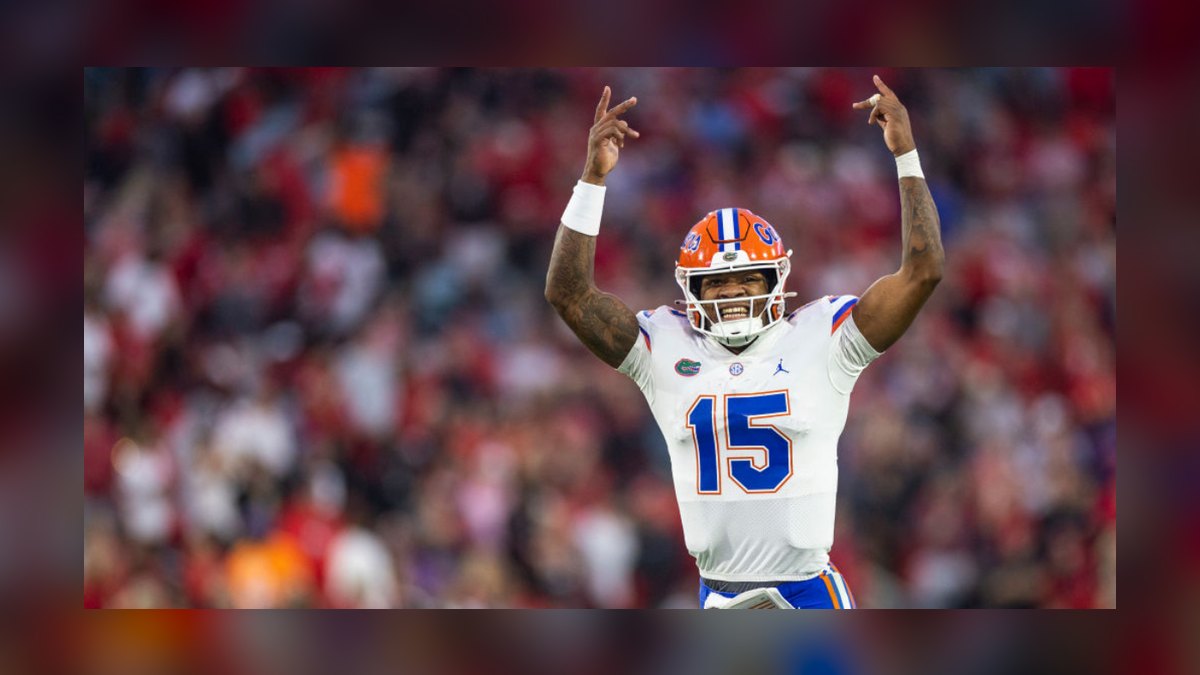
No verified public top-10 exists. High school football recruits and their families rarely disclose signed NIL contracts, so the 2027 lists circulating are On3-style valuation estimates, not filed deals. The real money splits into two pools: third-party brand deals signable while still enrolled in high school, and school-tied collective or revenue-share money payable only after enrollment.
The two money pools behind every "top 10" list
Every headline number attached to a prep prospect comes from one of two structurally different pools, and conflating them is why published rankings disagree with each other by an order of magnitude.
The first pool is true third-party NIL: a company pays the athlete for name, image, and likeness in commerce. Trading-card and memorabilia companies, apparel and cleat brands, energy-drink and supplement labels, regional car dealerships, local gyms, barbershops, restaurants, orthodontists, and creator-economy platforms all buy this. The deliverables are concrete — a signing session for 500 cards, three Instagram posts and one Reel, a two-hour autograph appearance, a camp guest spot, a jersey-and-hoodie capsule with a revenue split. This pool is legally available to a minor in most states right now, before any college is chosen, and it survives regardless of where the athlete eventually signs. It is also the only pool where a signed contract genuinely exists during high school, with a counterparty, a term, and a payment schedule.
The second pool is school-tied money: collective agreements and, since the House v. NCAA settlement took effect, direct institutional revenue sharing. This is the pool that generates eight-figure rumors. Its defining characteristic is that it does not pay a high school student. It is conditioned on enrollment, on remaining academically eligible, on staying on the roster, and increasingly on not entering the transfer portal for a defined window. A recruit may verbally agree to terms in the fall, sign a National Letter of Intent in December, and still not receive a dollar until he reports to campus the following summer. Some collectives use a memorandum of understanding or a term sheet during the recruiting window and convert it to an enforceable services agreement at matriculation — which is precisely why the "deal" and the "signing" happen months apart and get reported as a single event.
The distinction has practical consequences beyond bookkeeping. Third-party deals are governed by the state high school association's NIL rules and by ordinary contract law for minors. School-tied money is governed by NCAA rules, the settlement's cap structure, and a clearinghouse review process for outside deals above a dollar threshold. A family that treats them as one negotiation usually mismanages both: they let a collective's promise crowd out real, bankable brand income during the senior year, or they sign a brand exclusivity clause that blocks a much larger category deal at the college level.
There is also a third quasi-pool worth naming so it does not contaminate the analysis: valuation estimates. On3 and similar outlets publish a per-athlete NIL valuation for football recruits. That figure is a model output — a projection of what an athlete's market could be, driven heavily by recruiting ranking, social following, and position scarcity. It is not a contract, no money changes hands because of it, and no one has signed anything. When a "top 10 NIL deals" list is assembled, it is almost always a ranking of these valuations with the word "deal" swapped in. Treat any list that does not name a counterparty and a term as an estimate.
Finally, eligibility to participate in the first pool is not universal. State high school associations, not the NFHS, set NIL policy, and the map is uneven. Most associations have adopted some permissive framework since 2021; a handful have not, and Texas has been the most consequential holdout because of the sheer volume of high-major football talent in the state. That prohibition has already changed behavior in documented ways — Quinn Ewers reclassified and enrolled early at Ohio State in 2021 rather than play a senior season under a rule that barred him from monetizing his name. When a state closes pool one, elite prospects either wait, reclassify, or route value into pool two.
Choosing which pool a recruit signs from first

The decision is not "which is bigger." It is "which one, signed now, costs me the least optionality later." Work it in this order.
Check the state rule before anything else. If the athlete's association prohibits NIL for high school participants, there is no pool-one decision to make while he is on a roster — only the reclassify-or-wait question. If the association permits it, pull the actual bylaw language rather than a news summary. You are looking for four things: whether school marks, uniforms, and facilities may appear (almost never), whether the school or coaching staff may facilitate or broker (almost never), which product categories are banned, and whether professional representation is allowed for NIL purposes.
Then check the calendar against the deliverables. A senior in the class of 2027 has a compressed window: the season, the December early signing period, and a spring semester. A brand deal that requires eight content deliverables during a playoff run is a deal that gets breached. Match deliverable density to the athletic calendar, not to the payment size.

Then check exclusivity. This is the single most expensive clause in a high school football contract. A regional beverage sponsor paying four figures for a year of exclusivity in the entire beverage category can foreclose a national deal worth ten times that eighteen months later. Narrow the category by hand — "carbonated energy drinks sold in convenience retail," not "beverages" — and cap the term at the high school window.
Then test the collective conversation for substance. A serious pool-two conversation has a number, a term length, a payment cadence, a services description, and a named entity that will sign. A conversation that has only a number is a recruiting pitch. Ask three questions: who is the contracting entity, what happens to the money if the head coach leaves, and what happens if the athlete is injured in his senior season of high school. The answers separate real offers from vapor faster than any ranking does.
The concrete numbers behind each pool
Precision matters here, so the honest framing is: publicly reported figures, clearly labeled as reported, plus the mechanics that are actually verifiable.
Pool one, realistic bands. Local and regional deals for a well-followed high school football player cluster in the low hundreds to low thousands of dollars per engagement — a few hundred for a single social post, several hundred to a couple thousand for an appearance or a card-signing session, and low four figures for a season-long local sponsorship. National brand deals reach elite prep athletes but they are rare and concentrated at the very top of the rankings and the very top of social following; reported values there have run into the five and six figures, and the best-documented examples in the high school space have come from apparel and trading-card companies rather than football-specific brands. Merchandise and revenue-share arrangements pay less up front and more on volume; a 15–25% royalty on a jersey capsule is common in the creator economy and is a reasonable benchmark to negotiate toward.

Pool two, reported figures and their caveats. The seven- and eight-figure numbers that dominate coverage are collective packages, and none of the largest ones have been confirmed on the record by both parties. The widely reported Nico Iamaleava collective agreement — described in reporting as roughly $8 million across multiple years, agreed while he was still a high school recruit — became public through leaked documents, not disclosure. The reported eight-figure package that accompanied Bryce Underwood's 2025 flip was never confirmed with contract terms. Both illustrate the pattern: quarterbacks command the extreme tail, the money is spread across three or four college years, and the reported total is a ceiling that assumes full performance of the contract.
The settlement layer changes the arithmetic. Following the House v. NCAA settlement, participating schools may share revenue directly with athletes up to a per-school annual cap in the neighborhood of $20.5 million for the 2025–26 year, with scheduled annual escalation. Football consumes the large majority of that pool at most power-conference programs. Practically, that means a top recruit's college compensation is increasingly a two-part figure — an institutional revenue-share allocation plus any remaining third-party deals — and third-party deals above a modest threshold (reported at $600) are routed through a clearinghouse review intended to test whether they reflect fair market value for real services rather than disguised pay-for-play. A number quoted to a high school recruit that assumes unlimited outside collective money is quoting a market that no longer exists in the same form.

Tax mechanics, which almost no list mentions. NIL income is self-employment income, not a scholarship. A payer issues a 1099-NEC once the reporting threshold is met, and the athlete owes self-employment tax of 15.3% on net earnings — 12.4% Social Security plus 2.9% Medicare — on top of ordinary income tax. Quarterly estimated payments are due, and a family that spends 100% of a $20,000 year discovers a five-figure liability the following April. Because NIL is earned income, it is taxed at the athlete's own rate rather than swept into the unearned-income rules that apply to investment income, but it does count as income for financial-aid calculations. Legitimate deductions exist — training, travel to appearances, equipment, agent fees, a portion of phone and internet — and require contemporaneous records, not reconstruction.
Minor-contract mechanics. A contract with a minor is generally voidable by the minor, which cuts both ways: it protects the athlete from a predatory term and it makes sophisticated counterparties insist on a parent or guardian co-signature and, sometimes, court approval or a trust arrangement depending on state law. Expect the brand's counsel to require the co-signature. Read what the co-signing parent is personally guaranteeing.
Sequencing the paperwork so nothing voids eligibility
Order of operations is where families actually lose money and eligibility, not in the negotiation. The sequence below is the one that survives an association audit.
Start with a written eligibility check. Email the state association's compliance contact with the specific facts — the brand, the product category, the deliverables, whether any school property or imagery appears — and keep the reply. A generic "NIL is allowed here" is worthless six months later; a fact-specific written response is a defense.
Second, form the payee structure before the first invoice. For a modest deal volume, the athlete operating as a sole proprietor with a W-9 in his own name and a dedicated bank account is sufficient. Once annual income reaches the point where liability and deductions matter, a single-member LLC with its own EIN, its own account, and clean separation from family money is the standard step. Do not commingle. The dedicated account is what makes the April tax filing a thirty-minute exercise instead of a forensic project.
Third, paper every deal, even the $250 ones. The minimum viable agreement names the parties, describes the deliverables with counts and deadlines, states the fee and payment timing, defines the license grant and its term, addresses exclusivity explicitly, includes a morals clause both directions, and states that no school marks or facilities are involved. A one-page agreement that does these seven things beats a fifteen-page template that grants a perpetual worldwide license to the athlete's likeness — a clause that appears far more often than families expect.
Fourth, run disclosure on every piece of content. The FTC requires clear and conspicuous disclosure of a material connection in endorsements. #ad or #sponsored placed where a viewer sees it without tapping "more" is the working standard. Buried disclosures are the most common compliance failure among young athletes, and the brand — not the athlete — usually bears the enforcement risk, which is exactly why brands write indemnity clauses that push it back.

Fifth, build the transition file for enrollment. When a recruit signs and matriculates, compliance will ask for existing NIL agreements. A family with a single folder — executed contracts, invoices, 1099s, the state association correspondence — clears that review in days. A family reconstructing from text messages does not. Deals that continue past enrollment need to be reviewed against the clearinghouse threshold and the school's own disclosure policy, and any clause granting the brand rights to school-affiliated imagery must be amended before the athlete steps on campus.
Sixth, calendar the renewals and the tax dates. Most disputes in this space are not fraud; they are auto-renewal clauses nobody diaried and estimated payments nobody made.
How to verify a 2027 "top 10" before you repeat it
Apply four tests to any published ranking of deals attributed to high school football recruits, and most lists collapse.
Is a counterparty named? A real deal has a company on the other side. "Reported to have a deal worth X" with no brand and no collective named is a valuation, a rumor, or a negotiating leak. Discard it or label it clearly.
Is the total annualized or aggregate? A reported $4 million package is usually four years at roughly a million, contingent on staying on the roster. Publishing the aggregate next to another athlete's annual figure ranks them incorrectly. Normalize everything to annual value before ordering a list.
Is the money conditional on enrollment? If it is, the athlete has not been paid as a high school player, and describing it as a deal signed by a recruit is only true in the narrow sense that a term sheet exists. Separate signed-and-paid from signed-and-contingent.

Who benefits from the number being public? Collectives leak to recruit other players. Agents leak to establish comparables. Programs leak to signal resources to rivals. The athlete's family almost never benefits from disclosure, which is why the most reliable figures in this market are the ones that surfaced through litigation or leaked documents rather than press releases.
A defensible version of this list is therefore not ten names with ten numbers. It is a short set of confirmed brand agreements — the ones with a named counterparty and a public announcement, typically trading-card, apparel, or regional sponsors — presented separately from a set of reported collective commitments, each labeled with its source, its term, and whether the money is enrollment-conditioned. That version is less clickable and far more useful to the next family negotiating.
Related questions
Can a high school athlete lose eligibility over an NIL deal?
Yes. The common triggers are using school marks, uniforms, or facilities in promotional content, accepting a deal in a banned category such as gambling or alcohol, having a coach or school employee broker the arrangement, or accepting payment tied to athletic performance rather than promotional services.
Do collectives pay recruits before they enroll?
Generally no. Collective compensation is structured as enrollment-conditioned and typically converts from a term sheet to an enforceable services agreement at matriculation. Payments tied to a recruit's decision rather than to services performed raise pay-for-play and inducement problems under both association and NCAA frameworks.
Does an On3 NIL valuation mean an athlete signed something?

No. It is an algorithmic projection built from recruiting ranking, social following, position, and market factors. No counterparty exists and no money moves. It is useful as a relative market signal and misleading when reported as contract value.
Which states still restrict high school NIL?
Most state associations now permit some form of it, with rules varying on categories, agents, and school-property use. A small number still restrict or prohibit it, with Texas historically the most significant given its recruiting volume. Always confirm the current bylaw directly with the association.
What happens to a high school deal when the athlete enrolls in college?
It must be disclosed to the school's compliance office. Deals above the settlement-era reporting threshold are routed to clearinghouse review for fair-market-value assessment, and any term granting rights to school-affiliated imagery needs amendment before it can continue.
FAQ
Is there an official published list of the top 10 NIL deals signed by high school football recruits in 2027?
No. There is no disclosure regime that would produce one. High school athletes are not required to publish contract terms, brands treat compensation as confidential, and collectives are private entities. Any list presented as authoritative is assembling estimates, media reports, and leaks, and should say so.
What is the largest verifiable category of deal a high school football player can actually sign?
Trading-card and memorabilia agreements, apparel and equipment sponsorships, and content-creator arrangements are the categories where real, announced deals with named counterparties most often appear at the prep level, because they buy something a high school athlete genuinely has: signatures, likeness rights, and an audience.

Do parents have to sign?
In practice, yes. Contracts with minors are generally voidable by the minor, so sophisticated counterparties require a parent or guardian co-signature, and some states impose additional protections for minors' earnings. Parents should read what they are personally guaranteeing, since co-signing can create their own obligations.
How much of an NIL payment should be set aside for taxes?
A common working rule is 30–40% of net earnings, because self-employment tax alone is 15.3% before any federal or state income tax. Quarterly estimated payments are required once liability crosses the threshold. A CPA who handles self-employed clients is worth the fee at the first four-figure deal.
Does signing a brand deal in high school hurt a recruit's leverage with collectives?
Not inherently, and it often helps by demonstrating real market demand. The risk is contractual, not reputational: broad category exclusivity or a long term can block larger college-level opportunities. Negotiate narrow categories and terms that expire at the end of the high school window.
Can an agent represent a high school football player for NIL?
It depends on the state association. Many permit professional representation limited to NIL activity while prohibiting representation for playing contracts; others restrict it further. Confirm in writing before engaging anyone, and scrutinize commission rates and termination terms, which vary widely in this market.
Sources
- https://www.nfhs.org/
- https://www.uiltexas.org/
- https://www.cifstate.org/
- https://www.ncaa.org/
- https://www.on3.com/nil/
- https://www.opendorse.com/
- https://www.ftc.gov/business-guidance/resources/disclosures-101-social-media-influencers
- https://www.irs.gov/businesses/small-businesses-self-employed
- https://apnews.com/hub/college-football
- https://www.espn.com/college-football/recruiting/
Related on PULSE
This page will be disappearing soon. Save it to your device for $1 — or read it free while it is here.
@Kory-White- · if Venmo asks, the last 4 of my number are 2012
This page is gone.
This one is off the shelf now. $1 keeps it on your phone for good — the whole page, pictures and diagrams included.
 pulse-recentHow do NIL deals impact a student-athlete's eligibility for need-based financial aid in 2027?
 pulse-recentCan international student-athletes on F-1 visas legally accept NIL payments in 2027?
 pulse-recentWhat are the top 10 NIL deals in college football for the 2027 season in 2027?
 pulse-recentHow do universities prevent NIL deals from violating Title IX in 2027?
 pulse-recentWhat are the top 10 NIL deals signed by college basketball players in 2027?
 pulse-recentHow many NIL deals does the average Division I athlete sign per year in 2027?
 pulse-recentHow do NIL deals affect a student-athlete's scholarship status if the deal violates school policy in 2027?
 pulse-recentWhat are the top 10 NIL deals signed by college cross country runners in 2027?
 pulse-recentHow do NIL deals affect a student-athlete's Pell Grant eligibility in 2027?
 pulse-recentHow do student-athletes report NIL income on their federal tax returns in 2027?