

How'd you fix McKesson's revenue issues in 2026?
 Curated byKory White · Fractional CRO · Maryland
Quality
Certified

McKesson's 2026 revenue problem is actually a margin quality issue: US Pharmaceutical revenue grew 18% to $327.7B, but GLP-1 volume dilutes unit economics. The fix requires capturing higher-margin oncology specialty revenue, fixing Medical-Surgical Solutions' flat 1% growth, and accelerating the MSS spinoff to unlock pure-play pharma valuation.
The Margin Trap Behind Revenue Growth
McKesson's fiscal 2025 10-K reveals a paradox: top-line revenue is surging, but profitability per unit is shrinking. The US Pharmaceutical segment delivered $327.7B in revenue, up 18% year-over-year, driven almost entirely by GLP-1 drug distribution. Drugs like Ozempic, Wegovy, and Zepbound now represent a massive volume tailwind—Morningstar estimated GLP-1s added $14B in Q3 2026 alone. However, these are branded, high-volume, lower-margin products. McKesson distributes commodity generics at 1–2% gross margin, and GLP-1s land at roughly 3–5% margin but at 10x the unit volume. The net effect is gross margin compression as the revenue mix shifts toward thinner-margin products.
The Medical-Surgical Solutions segment tells a different story: $11.4B in revenue, up only 1% year-over-year. This post-COVID cliff is real—vaccine distribution and kitting businesses that boomed during the pandemic have normalized. Primary care growth has been insufficient to offset the decline. Meanwhile, Prescription Technology Solutions grew 9% to $5.22B, but this segment remains dwarfed by the pharma scale and cannot single-handedly fix the margin story.
Competitive pressure compounds the problem. Cencora holds 34.56% market share and is aggressively moving into oncology via acquisitions like Retina Consultants of America. Cardinal Health holds 24.24% and has spent $3.9B on specialty acquisitions targeting the same oncology-diabetes space. McKesson holds 41.21%—the largest share—but has zero pricing power on high-volume GLP-1s because prices are set by PBMs and pharmaceutical manufacturers. The oligopoly structure provides stability but not margin expansion.
Oncology Channel Capture as the Primary Margin Lever
The highest-leverage move for McKesson in 2026 is capturing oncology specialty revenue at scale. Oncology drugs carry 4–6% margins compared to 2–3% on traditional generics, and the market is growing as cancer treatment shifts toward community-based care. McKesson already owns Florida Cancer Specialists, integrated in 2025, but has not fully monetized this asset.

The Pavilion sales management playbook provides a proven framework. Pavilion trains sales teams on specialty pharma dynamics, prior authorization workflows, and P&T committee tactics. Applying this to McKesson means building an "Oncology Command Center"—a dedicated distribution, staffing, and reporting hub for cancer practices. The first step is recruiting oncology-specialized account executives who understand the clinical and financial nuances of checkpoint inhibitors, targeted therapies, and supportive care drugs. These AEs need to be trained on a 1-page "oncology rep card" for each major drug class, summarizing formulary status, reimbursement dynamics, and competitive positioning.
Salesforce Health Cloud deployment is critical here. The platform tracks practice P&T preferences, reorder cadence, and compliance metrics in real time. When a community oncology practice orders a specific immunotherapy regimen, the system flags whether the practice is using McKesson's preferred distribution channel or leaking to a competitor. The switching cost for oncology practices is high—changing distributors requires new IT setup, new contracting, and staff retraining—which creates a natural moat once practices are locked in.
The target is converting 1,000+ community oncology practices into locked-in McKesson accounts over 12–18 months. Each practice represents $2–5M in annual specialty pharma volume. At 5% margin, that translates to $100K–250K in gross profit per practice annually. The revenue upside is $2–3B in incremental specialty pharma volume, with margin expansion from 2–3% on generics to 4–6% on specialty. The cost to execute is roughly $15M for recruiting, training, and technology deployment.
Medical-Surgical Solutions Turnaround Through Consultative Selling
Medical-Surgical Solutions grew only 1% to $11.4B, and the sales team has devolved into order-taking rather than value creation. The fix requires converting MSS from a transactional distribution business into a consultative services business using Force Management's COMMAND playbook.
Force Management's methodology centers on the Situation/Complication → Implication → Need Payoff framework. For McKesson's 200+ MSS field reps, this means shifting from selling surgical supply SKUs to selling value bundles: surgical packs plus delivery logistics plus inventory management plus compliance reporting. The rep's job becomes understanding the hospital's surgical volume, identifying supply chain inefficiencies, and proposing bundles that reduce the hospital's total cost while increasing McKesson's margin.
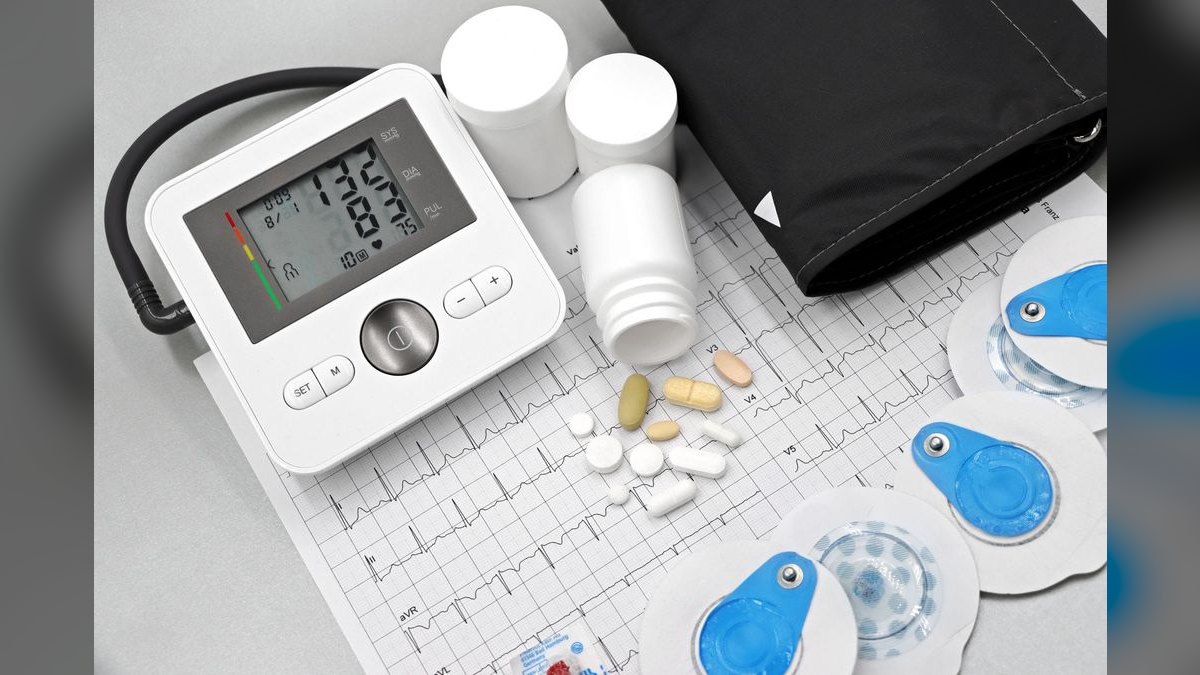
Salesforce Health Cloud integration enables real-time surgical volume forecasting and a bundle recommendation engine. When a hospital system's Q2 hip replacement volume is trending 15% above forecast, the system automatically recommends a Q3 pack mix that optimizes for that procedure mix. The rep presents this recommendation during quarterly business reviews with surgeons and OR managers, showing supply cost percentage, compliance risk scores, and competitor benchmarks.
The target is increasing MSS attach rates by 15%—cross-selling logistics services, compliance tools, and inventory management to existing surgical customers. This offsets the volume softness from the post-COVID cliff. Revenue upside is $500M–$1B annually from higher-margin services and bundle lock-in. The cost is $25M for training, technology, and additional support staff.
GLP-1 Mix Optimization Through AI and Competitive Intelligence
The GLP-1 margin problem is structural but addressable. McKesson distributes massive GLP-1 volume but loses leverage to Amazon Pharmacy, direct-to-consumer players, and PBM-owned entities. The fix uses Klue for competitive intelligence and Veeva CRM for execution.
Klue tracks PBM formulary changes, pharmacy switching patterns, and DTC player moves in real time. When a PBM adds a new GLP-1 to its formulary or changes prior authorization requirements, McKesson's system flags the impact on dispensing patterns within 24 hours. Veeva CRM then maps every pharmacy's GLP-1 dispensing mix—Novo Nordisk vs. Eli Lilly vs. upcoming generics—and identifies pharmacies vulnerable to DTC leakage. A pharmacy with low Ozempic fill rates relative to its market is likely losing volume to Ro or GoodRx.

Targeted outreach recaptures this volume through rebate analytics and compliance programs. McKesson can offer pharmacies compliance data and dispensing technology in exchange for exclusivity or preferential pricing. API integration with pharmacy POS systems flags margin-eroding moves in real time—when a pharmacy switches a patient from a higher-margin GLP-1 to a lower-margin alternative, the system alerts the sales team to intervene.
The target is recapturing $1–2B in GLP-1 volume from DTC leakage and negotiating a 25-basis-point margin uplift through value-add services. The cost is $8M for data, technology, and operations. This is the fastest payback move—3–4 months to implement, with immediate margin impact.
Enterprise Sales Consolidation for Hospital Systems
McKesson's enterprise channel—hospital systems and large pharmacy chains—is fragmented. A single hospital network might buy pharmaceuticals from McKesson, medical-surgical supplies from Cencora, and specialty drugs from Cardinal. This fragmentation reduces McKesson's leverage and increases its cost to serve.
Bridge Group's "Demand Gen Inside Sales" playbook addresses this by deploying 50 inside sales reps focused on consolidating fragmented buying across hospital networks. These reps are not field sellers; they work from a central hub using Veeva CRM to track hospital formulary and supply chain initiatives. When a hospital system issues an RFP for pharmaceutical distribution, the inside sales team coordinates the response across McKesson's pharma, specialty, and MSS divisions.
The sales motion ties to value: cost reduction, OR efficiency, and staff retention. A consolidated master agreement with a hospital system reduces McKesson's selling cost, improves forecasting accuracy, and increases switching costs for the customer. The target is $5–10B in consolidated enterprise agreements at 10–25 basis points margin uplift. The annual cost is $12–15M for salaries, technology, and enablement.

Medical-Surgical Spinoff Acceleration
McKesson announced intent to separate Medical-Surgical Solutions in 2027, but the market is already pricing in the drag. Pre-spinoff, MSS depresses McKesson's enterprise value because investors apply a lower multiple to the slower-growth, lower-margin business.
Definitive Healthcare provides the data layer needed to accelerate the spinoff. Their platform maps every MSS customer—hospital systems, GPOs, ambulatory surgery centers—and builds customer health scoring. Which customers are at risk of switching? Which are defensible due to high switching costs or strategic partnerships? The scoring system identifies the 20% of customers generating 80% of MSS profit and flags the 10% at highest churn risk.
Building an "MSS Separation Readiness" scorecard requires assessing IT systems, compliance, customer concentration, and margin profile. A clean separation requires clean data: which customers buy MSS only, which buy both MSS and pharma, and how revenue and cost are allocated. Definitive Healthcare provides the customer-level data needed for this analysis.
The endgame is handing MSS to a private equity or strategic buyer with crystal-clear unit economics. A well-prepared spinoff can command a $2–3B valuation premium compared to a rushed separation. The proceeds fund the oncology pivot, MSS transformation, GLP-1 defense, and enterprise sales consolidation. The cost is $20M for consulting and technology stack separation.

Week 1 CHRO Partnership Plan
Day one begins with a deep listening session. Pull actual customer churn data by segment from Klue and Salesforce. Analyze sales productivity by motion—enterprise deals versus transactional versus specialty. Identify which MSS customers are at risk and understand McKesson's current GLP-1 margin floor compared to Cencora and Cardinal benchmarks. Map the org structure: how many field reps by segment, sales management span, and current tech stack.
Day two builds the Wall of Truth with sales ops and finance. Review sales compensation plans by motion—are commissions incentivizing margin, volume, or both? Compare AE productivity by segment: oncology AEs should earn 1.5x more if their margin contribution is 5x higher. Check MSS sales team churn rates: if above 20%, the sales motion is broken, not the product. Assess Veeva CRM and Salesforce readiness; McKesson may have legacy systems requiring $40–80M in technology investment.
Day three launches pilots. For oncology, select one metro market—Charlotte, Phoenix, or Dallas—and recruit 2–3 Pavilion-trained AEs. Target 20 community cancer practices for Salesforce Health Cloud deployment and preferred ordering. Goal: $50M incremental volume in 90 days with documented margin improvement. For MSS, select one hospital system like HCA or Ascension and run a Force Management half-day with C-suite, three VPs, and five field reps. Test the consultative sales model on 10 surgical suites to identify 2–3 high-margin service bundles. For GLP-1 defense, run Klue competitive analysis and Veeva pharmacy mix mapping to identify which pharmacies are losing GLP-1 fill share and where DTC leakage risk is highest by geography.
Day four addresses org readiness. If MSS margin fix requires 50 new inside-sales reps, the recruiting timeline is 4–6 months—start immediately. If oncology pivot requires 30 specialized AEs, target recruiting from pharma sales, specialty distributors, and Cencora/Cardinal incumbents. Offer structure: base $120–150K, ramp-up bonus, override on margin not just volume. Assess whether VP-level hires are needed—CMO for oncology, SVP for enterprise sales—or whether talent can be backfilled internally.

Day five builds the board narrative and separation timeline. Definitive Healthcare data reveals MSS unit economics: if margins are 6%, the business is separable now; if 3%, 18 months of margin recovery is needed first. Acquiring Definitive Healthcare data and running the separations playbook immediately could accelerate the spinoff to 2026H2, providing an early exit for activist investors.
Financial Impact Summary
The five moves require approximately $80–90M in year-one investment across recruiting, training, technology, and consulting. The revenue upside is $10–16B over 18 months, with 2–5% margin expansion. Oncology channel capture delivers $2–3B at 5% margin. MSS consultative selling delivers $500M–1B at 8% margin. GLP-1 defense recaptures $1–2B at 25bps margin improvement. Enterprise consolidation delivers $5–10B at 10–25bps margin uplift. The MSS spinoff acceleration generates $2–3B in acquisition premium.
The net result is $500M–1B in annual EBITDA uplift. Post-spinoff, McKesson becomes a pure-play pharmaceutical distribution and specialty services company, commanding a higher valuation multiple. The 2027 bridge shows $360B+ revenue with 3–5% overall margin expansion.
Related questions
What specific GLP-1 margin percentage does McKesson currently achieve?
McKesson distributes GLP-1s at approximately 3–5% gross margin, compared to 1–2% on commodity generics. The issue is volume scale: GLP-1 unit volume is 10x higher, so total dollar margin per unit is lower despite higher percentage.
How does McKesson's oncology strategy compare to Cencora's?
McKesson owns Florida Cancer Specialists and uses Pavilion sales methodology for community practice capture. Cencora acquired Retina Consultants of America and focuses on retina specialty. Both target 4–6% margin specialty drugs, but McKesson has larger existing market share at 41.21%.
What is the timeline for Medical-Surgical Solutions spinoff?
McKesson announced the spinoff intent in May 2025 with a 2027 target. Accelerating to 2026H2 is possible if Definitive Healthcare data provides clean unit economics and a private equity buyer is identified early.
How much does Salesforce Health Cloud cost for a deployment of this scale?
Enterprise Salesforce Health Cloud deployments for healthcare distribution companies typically run $5–15M annually for licensing, implementation, and customization. McKesson's total tech stack investment across all five moves is estimated at $40–80M.
What is the expected EBITDA impact of the full playbook?
The five moves together generate $500M–1B in annual EBITDA uplift, driven by margin expansion from 2–3% to 5–6% on specialty volume, 25bps improvement on GLP-1 volume, and 10–25bps improvement on enterprise agreements.
FAQ
Is McKesson's revenue actually declining? No, McKesson's revenue is growing—US Pharmaceutical segment revenue rose 18% year-over-year to $327.7B in fiscal 2025. The real issue is that this growth is driven by low-margin GLP-1 volume, which dilutes overall profitability. Revenue is not the problem; margin quality is.
Why do GLP-1 drugs hurt McKesson's margins? GLP-1s carry lower distribution margins compared to traditional pharmaceuticals. As these drugs scale, they increase McKesson's top-line revenue but compress net margins because the cost of goods sold rises faster than gross profit. This mix shift is the core margin challenge.
What is the Medical-Surgical Solutions problem? This segment grew only 1% to $11.4B, essentially flat. It is a lower-growth, lower-margin business that ties up capital. A CRO would consider accelerating a spinoff or selling it to private equity to unlock value and refocus on higher-return specialty and oncology channels.
How can McKesson improve margins without losing revenue? By shifting toward higher-margin specialty and oncology distribution and deploying AI-driven automation in pharmacy operations to reduce labor costs. These moves improve unit economics without sacrificing volume.
What role does technology play in fixing margins? Automation via Salesforce Health Cloud and Veeva CRM can reduce friction in Medical-Surgical and pharmaceutical supply chains. Value engineering and command center approaches can recover 2–5% in surgical distribution margins by optimizing inventory and logistics.
Is a spinoff or sale of Medical-Surgical realistic? Yes, it is a common strategy for conglomerates with stagnant divisions. Private equity buyers often pay a premium for stable cash-flow businesses with room for operational improvement. A spinoff could raise $2–4 billion for reinvestment.
Sources
- McKesson Corporation Investor Relations — official financial reports and earnings calls
- U.S. Securities and Exchange Commission (SEC) — 10-K and 10-Q filings for McKesson
- Morningstar — equity research reports on McKesson and pharmaceutical distribution industry
- Finterra Capital — February 2026 analysis of GLP-1 margin headwinds for distributors
- Modern Healthcare — news and analysis on healthcare company financial performance
- Gartner — healthcare supply chain and revenue optimization research
- Definitive Healthcare — healthcare provider data and analytics platform
- Bridge Group — B2B demand generation and inside sales methodology
- Force Management — sales methodology and COMMAND playbook framework
- Pavilion — sales management playbook for specialty pharma and healthcare
Related on PULSE
- How'd you fix Illinois's NIL & athletic revenue issues in 2026?
- How'd you fix Aston Carter's revenue issues in 2026?
- How'd you fix CyberCoders's revenue issues in 2026?
- How'd you fix Creative Financial Staffing's revenue issues in 2026?
- How'd you fix LanceSoft's revenue issues in 2026?
- How'd you fix Goodwin Recruiting's revenue issues in 2026?
This page will be disappearing soon. Save it to your device for $1 — or read it free while it is here.
@Kory-White- · if Venmo asks, the last 4 of my number are 2012
This page is gone.
This one is off the shelf now. $1 keeps it on your phone for good — the whole page, pictures and diagrams included.
 precision-medicine-groupHow'd you fix Precision Medicine Group's revenue issues in 2026?
 henry-ford-healthHow'd you fix Henry Ford Health's revenue issues in 2026?
 surgery-partnersHow'd you fix Surgery Partners' revenue issues in 2026?
 chiefHow'd you fix Chief's revenue issues in 2026?
 highwireHow'd you fix Highwire's revenue issues in 2026?
 the-new-networkHow'd you fix The New Network's revenue issues in 2026?
 focus-financial-partnersHow'd you fix Focus Financial Partners' revenue issues in 2026?
 scs-financialHow'd you fix SCS Financial's revenue issues in 2026?
 opswatHow'd you fix OPSWAT's revenue issues in 2026?
 world-resources-instituteHow'd you fix World Resources Institute's revenue issues in 2026?