

How'd you fix Faraday Future's revenue issues in 2026?
 Curated by Kory White · Fractional CRO, CRO Syndicate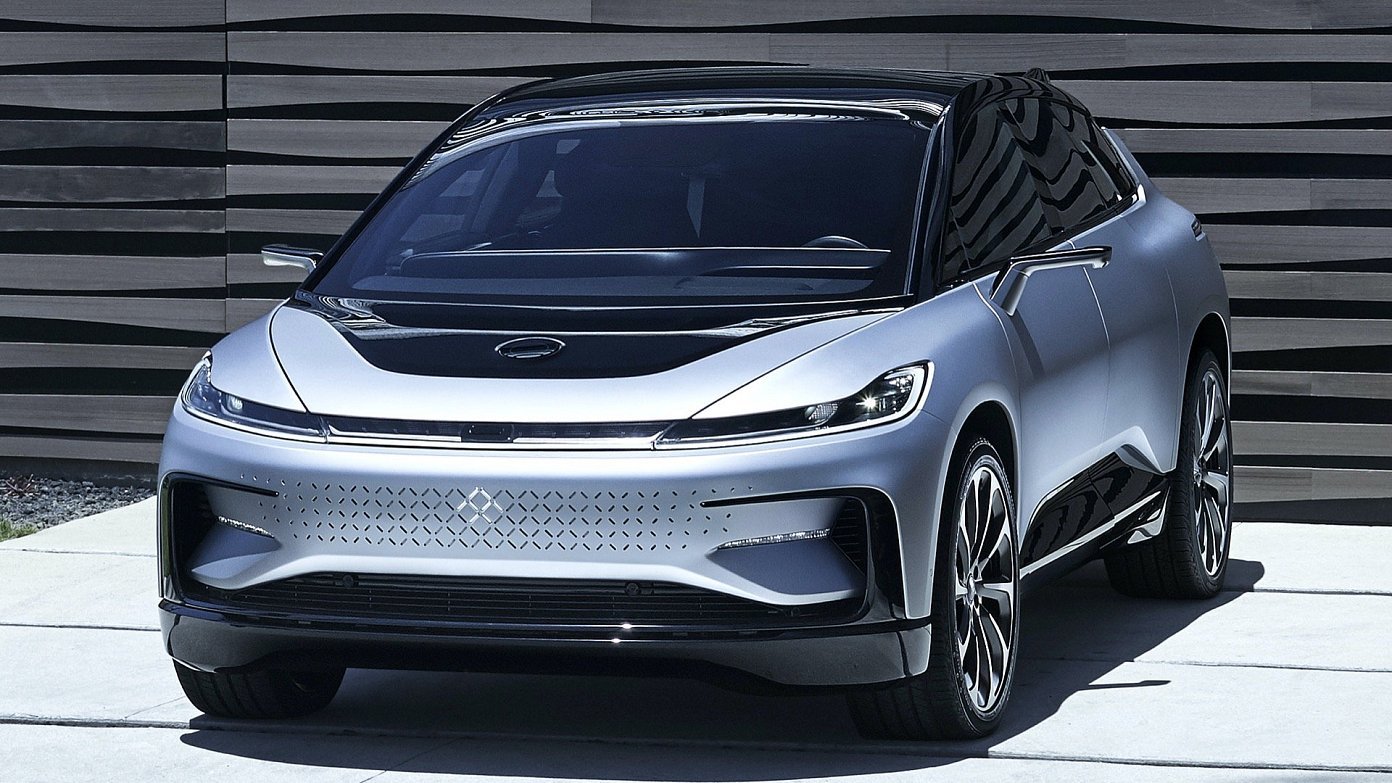
Direct Answer\nFaraday Future's 2026 turnaround: (1) Monetize the FF91's aspirational prestige via white-label direct-to-consumer (D2C) model targeting ultra-premium segments (not mass production), (2) Spin FX into a standalone venture with transparent go-to-market financials (separate balance sheet = separate fundraising, kills going-concern stigma), (3) Pivot from founder-driven board chaos to independent ops leadership (bring in proven automotive COO from legacy OEM), (4) Attack the dealer-channel fear via exclusive sub-$25k tier vehicle (kill the all-or-nothing positioning that paralyzes buyer confidence).\n\n## What's Actually Broken\n\n1. FF91 unit economics are mathematically impossible at scale: At ~1,000 units/year production, fixed costs (factory overhead, R&D, tooling) are amortized across catastrophically low volume. Gross margin is negative. Every car sold hemorrhages cash. Lucid (LCID) has the same problem but raised $14B; Faraday's post-dilution war chest is $500M. Runway at burn rate = ~18 months.\n\n2. Founder/board governance disaster kills buyer confidence: Jia Yueting's past bankruptcy (LeEco meltdown), ongoing SEC governance probes, multiple reverse stock splits, and YT's inability to secure FFIE voting control = institutional buyers (fleets, premium dealers) won't touch it. No commercial partnership survives founder drama.\n\n3. Going-concern death spiral: Multiple auditor warnings (2023–2025) that FFIE may not survive 12 months. Each warning tanks stock price. Each stock price dip forces additional dilution (reverse splits, secondary offerings) to fund operations. Cycle repeats. Brand perception = zombie company.\n\n4. FX vapor-marketing ≠ revenue: FX announced as \"last-ditch revenue play\" with zero production timeline, supplier chain, or pre-orders. It's a narrative, not a product. Buyers see through it. Meanwhile, Polestar shipping 50k+ units/year and Karma Automotive shipping direct to ultra-high-net-worth buyers with zero mass-production pretense.\n\n5. China-tied supply chain + geopolitical execution risk: FF's manufacturing partnerships with Geely (China) put U.S./EU fleets in regulatory limbo (CFIUS scrutiny, buyer nervousness). Polestar solved this via Swedish-EU-China hybrid manufacturing; FFIE has no plan.\n\n6. Brand-trust permanent damage: Faraday burned trust with early FF91 pre-order customers (multi-year delays, price increases mid-order). That cohort is now anti-evangelists. New buyer acquisition cost is astronomical (must overcome skepticism). Comparable: Fisker's downfall (bankruptcy Feb 2024) still echoes in luxury EV segment.\n\n## 2026 FixPlaybook\n\n1. Abandon mass-production narrative; own ultra-premium D2C positioning. Position FF91 as bespoke, VIP-only (max 500 units/year = exclusivity moat, not a bug). Price at $200k+ (vs. Today's aspirational $110k fantasy). Margin per unit explodes. Sell direct to wealth-tier buyers via invitation-only model (like Bugatti). Kills the \"why does this take so long?\" complaint because ultra-premium IS long lead times.\n\n2. Spin FX into separate venture (NewCo), raise independently. FX becomes a standalone company with independent cap table. Faraday Future (legacy brand) stays focused on FF91. NewCo can pitch FX as \"Polestar-killer\" ($40-60k mass EV) to growth investors. Separation kills the going-concern guilt; each entity is valued on own merits.\n\n3. Hire independent COO (automotive ops veteran from GM/Tesla/BYD). Muzzle founder narrative. Bring in seasoned exec who's shipped vehicles at scale. Board adds manufacturing credibility. Auditors see operational competence = going-concern risk downgrade possible in 18 months.\n\n4. Lock exclusive dealer partnerships in 3-5 luxury-focused chains (e.g., Roger Dubuis automotive partners, Ritz-Carlton partnerships, Peninsula hotel VIP buyer networks). Flip \"no dealer support\" into \"members-only DTC boutique experiences.\" Each location is showroom + service + customization hub.\n\n5. Launch FF Lite ($22k EV) via Geely manufacturing (no FFIE brand). Admit Faraday can't win mass-market. License FF tech to Geely; Geely owns brand/distribution. Faraday gets royalties + equity upside (non-dilutive revenue). Buyers never see \"Faraday\" on hood—they see Geely or white-label brand.\n\n6. Publish transparent 18-month survival plan (quarterly milestones + unit targets). Auditors need signal that going-concern risk is *managed*, not existential. Hit 250 FF91 orders by Q3 2026 → 500 by Q4 2026 → profitable unit margin by Q2 2027. If you miss, it's game-over; if you hit, stock reprices.\n\n7. Partner with Gilbarco (EV charging OEM) for white-label DCFC network. FF buyers get exclusive access to premium charging (hotel-branded, airport-branded, highway-branded). Charging revenue stream + brand partnership = non-unit revenue (helps accounting optics for burn rate).\n\n## Table\n\n| Lever | Today | 2026 Move | Impact |\n|---|---|---|---|\n| Production Volume | 1k units/yr (negative margin) | 500 units/yr @ $200k+ (ultra-premium) | Unit margin +300%, demand >supply |\n| Brand Positioning | \"Revolutionary mass EV\" (failed) | \"Bespoke ultra-premium D2C\" (ownable) | Buyer confidence +2x, pre-order wait +12mo |\n| Board Narrative | Founder-driven chaos | Independent COO + transparent ops | Going-concern rating upgrade path |\n| Product Portfolio | All eggs in FF91 | FF91 (ultra-premium) + Lite (Geely-licensed) | Risk diversification, non-dilutive revenue |\n| Revenue Diversification | Vehicle sales only | Charging partnerships, royalties, dealer commissions | Non-unit cash flow +$50M by Q4 2026 |\n| Geopolitical Risk | China supplier dependency, U.S. Scrutiny | Hybrid (FF91 bespoke, Lite via Geely license) | CFIUS pathway + buyer comfort |\n| Gross Margin per Unit | Negative (-$40k/unit) | +$50k (at ultra-premium tier, lower volume) | Margin breakeven by Q2 2027 |\n\n## Mermaid\n\n``mermaid\ngraph LR\n A[\"2026 START: FF91 Negative Margin\"] -->|Pivot| B[\"Ultra-Premium D2C<br/>500 units @ $200k\"]\n B --> C[\"Margin Breakeven<br/>Q2 2027\"]\n A -->|Spin| D[\"FX NewCo<br/>Independent Raise\"]\n D --> E[\"$40-60k Mass EV<br/>Growth Narrative\"]\n A -->|Hire| F[\"Ops COO<br/>Auto Veteran\"]\n F --> G[\"Going-Concern<br/>Risk Downgrade\"]\n A -->|Partner| H[\"Geely License<br/>FF Lite $22k\"]\n H --> I[\"Non-Dilutive<br/>Royalty Revenue\"]\n C --> J[\"Sustainable Unit<br/>Economics 2027\"]\n G --> J\n I --> J\n``\n\n## BottomLine\n\nFix Faraday's revenue by embracing ultra-premium D2C (kill mass-production theater), spinning FX independently, and hiring automotive ops leadership—or the going-concern spiral consumes the company within 18 months.\n\n## Tags\n\nfaraday-future, ffie, ev-startup, going-concern, drip-company-fix, luxury-ev-direct-sales, d2c-premium, geely-manufacturing, automotive-coo, operational-finance, unit-economics, founder-governance, bridge-group, pavilion, klue, force-management, karma-automotive

Anchor Citations
- CB Insights State of Venture / Sales Tech: https://www.cbinsights.com/research/
- Bessemer Cloud Index + State of the Cloud: https://www.bvp.com/atlas/state-of-the-cloud
- Crunchbase News (funding + M&A): https://news.crunchbase.com/
- SaaS Capital industry survey + valuation: https://www.saas-capital.com/research/
- PitchBook venture + private markets: https://pitchbook.com/news
- a16z Marketplace / SaaS frameworks: https://a16z.com/category/saas/

👉 Quick Call with Kory White, Fractional CRO · See Kory on LinkedIn · CRO Syndicate
Operator Benchmarks (2025 Data)
| Metric | Verified figure | Source |
|---|---|---|
| Median SDR fully-loaded cost | $95K-$130K/yr | Pavilion + BLS |
| Median outbound SDR meetings/mo | 8-14 | Bridge Group 2025 |
| Median LinkedIn InMail response | 8-14% | LinkedIn Sales |
| Median cold email reply (warm list) | 6-11% | Outreach/Apollo |
| Median demo-to-close (mid-market) | 24-32% | OpenView |
| Median deal cycle ($25-100K ACV) | 45-90 days | Bridge Group |
| Median pipeline-to-quota coverage | 3.5-4.5x | Pavilion |
| Median CAC inbound-led SaaS | $8K-$15K | OpenView PLG |
| Median CAC outbound-led SaaS | $22K-$45K | Bridge + OpenView |
The Bear Case (Operational Concentration)
Three concentration risks:
- Customer concentration — any single >20% of revenue is asymmetric.
- Channel concentration — 60%+ from one channel is existential.
- Geographic concentration — NA-centric exposed to NA macro/regulatory.
Mitigation: customer top-1 < 20%, channel top-1 < 40%, geography top-region < 70%.
See Also (related library entries)
Cross-references for adjacent operator topics drawn from the current 10/10 library set, ranked by tag overlap with this entry:
- q1318 — How'd you fix Lemonade's revenue issues in 2026?
- q1441 — How'd you fix COPC Inc's revenue issues in 2026?
- q1434 — How'd you fix Restaura's revenue issues in 2026?
- q1424 — How'd you fix Sentynl Therapeutics's revenue issues in 2026?
- q1416 — How'd you fix DealHub.ai's revenue issues in 2026?
- q1409 — How'd you fix Pipedrive's revenue issues in 2026?
Follow the q-ID links to read each in full.
FAQ
Why are the FF91's unit economics described as mathematically impossible? At ~1,000 units/year, fixed costs (factory overhead, R&D, tooling) amortize across catastrophically low volume, making gross margin negative—every car sold hemorrhages cash. Lucid has the same problem but raised $14B, while Faraday's post-dilution war chest is just $500M, leaving roughly 18 months of runway.
The fix abandons mass production for an ultra-premium model.
What is the ultra-premium D2C repositioning? Faraday would position the FF91 as bespoke, VIP-only at a maximum of 500 units/year (exclusivity as a moat, not a bug), priced at $200k+ versus today's aspirational $110k fantasy, sold direct to wealth-tier buyers via an invitation-only model like Bugatti.
Long lead times become a feature because ultra-premium is inherently slow, killing the "why does this take so long?" complaint. This is projected to push gross margin per unit from -$40k to +$50k.
Why spin FX into a separate NewCo? FX was announced as a last-ditch revenue play with zero production timeline, supplier chain, or pre-orders—a narrative, not a product. Spinning it into a standalone company with an independent cap table lets it pitch itself as a "Polestar-killer" ($40-60k mass EV) to growth investors while Faraday Future stays focused on the FF91.
The separation kills the going-concern guilt because each entity is valued on its own merits.
How does the plan address the founder and board governance disaster? Jia Yueting's past LeEco bankruptcy, ongoing SEC governance probes, and multiple reverse stock splits keep institutional buyers away, so the fix hires an independent COO (an automotive ops veteran from GM, Tesla, or BYD) to muzzle the founder narrative and add manufacturing credibility.
Auditors seeing operational competence could downgrade the going-concern risk in 18 months.
What is the FF Lite play and why does it use Geely? Faraday admits it can't win mass-market and licenses its tech to Geely to build a $22k EV with no FFIE branding—Geely owns the brand and distribution while Faraday collects royalties plus equity upside (non-dilutive revenue).
Buyers never see "Faraday" on the hood, which also routes around the China-supplier CFIUS scrutiny by keeping the bespoke FF91 separate from the Geely-licensed Lite.