
How Do I Do a Sale-Leaseback Without Getting Burned?
 Curated byKory White · Fractional CRO · Maryland
 PULSEKNOWLEDGE LIBRARY
Quality
Certified

Negotiate the lease before the price. In a sale-leaseback the buyer purchases your rent stream, so rent, term, escalators, and renewal rights set the value — not the bricks. Cap escalators near 2%, secure renewal options with rent collars, demand an SNDA, and model the after-tax proceeds before signing any letter of intent.
The scenario that sends owners into a leaseback
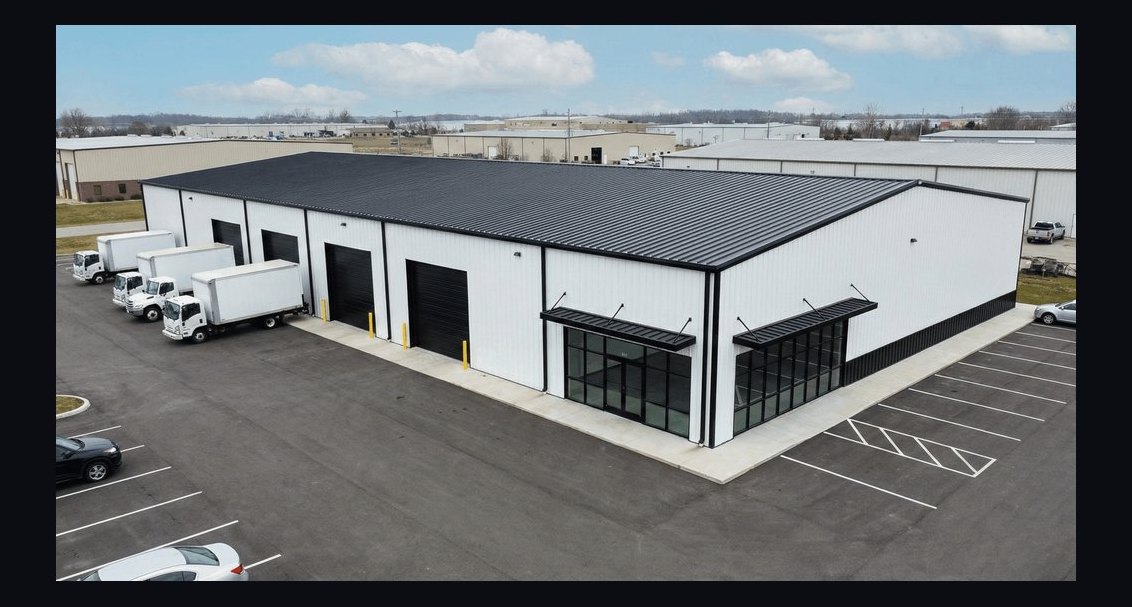
Picture a regional HVAC and mechanical services company — thirty trucks, ninety employees, a 62,000-square-foot shop-and-warehouse building the founder bought in 2009 for $2.9 million. The mortgage is nearly paid off. The building now appraises somewhere in the $8 million range. The company wants to acquire two competitors in adjacent metros, and each acquisition needs roughly $2.5 million of cash at close plus working capital to carry the acquired crews through the first slow season.
The bank offers a commercial refinance at 65% loan-to-value: about $5.2 million gross, minus the small remaining balance, minus closing costs, and with a debt-service-coverage covenant that constrains the very acquisitions the money is meant to fund. A sale-leaseback investor offers something structurally different — the full value of the asset, roughly $7.5 to $8 million depending on the rent, in exchange for the deed and a long lease. No covenant. No amortization schedule. No personal guarantee on a note.
That gap is the entire appeal. A mortgage lender advances a fraction of the value because the lender wants a cushion if you default. A leaseback buyer advances effectively all of it because the buyer is not lending against the building — the buyer is buying the building outright and underwriting your rent check as the return. The cushion is your credit and your lease, not a loan-to-value haircut.
Here is where the founder in this scenario nearly gets burned. The buyer's broker floats an idea that sounds like a gift: set rent at $560,000 a year instead of the $420,000 that market comps support. At a 7% cap rate, that difference lifts the sale price from about $6 million to $8 million. Two million extra dollars, today, for a "paper" change in a number the founder is paying to himself right now anyway.

It is not a paper change. It is $140,000 a year of additional occupancy cost, escalating, for twenty years — more than $3.5 million of extra rent over the term to collect $2 million today. Worse, the inflated rent quietly wrecks the balance sheet's operating story. Occupancy cost jumps from roughly 4% of revenue to 5.5%. Every future buyer of the operating business, every lender, every private equity firm running a quality-of-earnings analysis will normalize that rent back to market and dock EBITDA accordingly. At a 6x multiple, $140,000 of excess annual rent removes about $840,000 of enterprise value from the operating company — the very company the founder is trying to grow with the proceeds.
The same trap shows up in adjacent transactions, and recognizing the pattern helps. It is the identical mechanic as a build-to-suit developer offering "free" tenant improvements amortized into rent at 9%, or a franchisor offering a below-market equipment package that comes bundled with a fifteen-year supply agreement. In each case a lump sum today is financed by a stream tomorrow, and the implied interest rate is buried in the terms rather than disclosed on a rate sheet. A disciplined operator prices the stream and compares it to the alternatives. Doing sale-leaseback without getting burned starts with refusing to treat the rent number as free money.
The founder in this scenario should also ask a question most sellers skip: does the operating business actually deserve this capital? Freeing $8 million of trapped equity is only smart if the redeployment earns more than the all-in cost of the leaseback. If the two acquisitions pencil at a 22% return on invested capital and the leaseback costs an effective 7.5%, the arbitrage is real and large. If the money is going to pay down a line of credit at 8.5%, the transaction is roughly a wash after taxes and closing costs, and the founder has permanently surrendered a hard asset for a rounding error.
How a leaseback is actually priced
Every sale-leaseback reduces to one equation the buyer runs before anything else:

Purchase price = annual base rent ÷ cap rate.
That is it. The appraised value of the real estate matters as a sanity check and as a bank's collateral test, but the price you receive is a function of the income you promise. This is why leaseback pricing behaves unlike an ordinary building sale — you are not selling square footage, you are issuing a private bond and collateralizing it with the property you happen to occupy.
Work an example. Rent of $420,000 at a 7.0% cap prices at $6,000,000. Hold rent constant and move the cap rate to 6.25% and the price is $6,720,000 — $720,000 more from nothing but investor demand and perceived credit quality. Move it to 8.0% and the price falls to $5,250,000. A 175-basis-point swing in cap rate moves the proceeds by roughly 28%. Sellers obsess over rent because they control it directly; the cap rate is where the larger dollars actually move, and it is influenced by things you can prepare for months ahead of the deal.
What compresses the cap rate in your favor:

Credit quality of the tenant entity. The buyer is underwriting the specific legal entity signing the lease, not the brand on the truck. If the operating company signs but the guarantor is a thinly capitalized holding company, expect a wider cap rate. Clean, audited or reviewed financials for three years, a demonstrated fixed-charge coverage ratio comfortably above 2.0x, and a corporate guarantee from the entity with the actual assets will do more for pricing than any rent gymnastics.
Lease term. Ten years prices materially wider than twenty. The buyer's exit assumption depends on remaining term at sale; a property with four years left is a leasing risk, while one with twelve is still a bond. Each incremental five years of primary term is typically worth somewhere in the range of 25 to 75 basis points of cap-rate compression, more at the short end of the curve than the long end.
Property type and fungibility. Industrial, warehouse, distribution, and essential-service retail price tightest because a replacement tenant is plausible. Single-purpose manufacturing with heavy process infrastructure, specialty medical build-outs, and suburban office price wider — sometimes dramatically — because if you leave, the buyer owns a problem. If your building has 30-foot clear heights, dock doors, and heavy power, say so early and loudly; those are the attributes that make a generalist net-lease fund comfortable.
Rent-to-market ratio. A sophisticated buyer will test your proposed rent against submarket comps. Rent meaningfully above market gets discounted — the buyer applies a wider cap rate to the above-market portion, or underwrites the reversion at market rent and prices accordingly. This is the mechanism that punishes the inflated-rent trap even before you feel it in your P&L: you often do not capture the full theoretical price bump anyway.

Geography and market depth. Primary and strong secondary markets with active industrial demand price better than rural locations an hour from an interstate. A building's location relative to labor pools and freight corridors is part of the underwriting.
There is a second-order point worth internalizing. Because price and rent are joined at the hip, every lease concession you win has a price. A hard 10% collar on renewal rent, a landlord-funded roof reserve, broad assignment rights, an early termination option — each transfers risk to the buyer, and the buyer will either widen the cap rate or claw the value back somewhere else. That is not a reason to skip the protections. It is a reason to decide, deliberately and in advance, which three or four protections actually matter to your business and to spend your negotiating capital there instead of scattering it across twenty low-value asks.
The numbers that decide whether this was smart
Run four calculations before the letter of intent, not after.
Effective cost of capital. Compare the leaseback to the financing alternatives on an after-tax basis. Rent is fully deductible. Mortgage interest is deductible but principal is not, and you retain depreciation, which is a real shield. A rough framework: divide first-year rent by net proceeds to get a gross cost — $420,000 on $6,000,000 net is 7.0% — then adjust upward for the escalator, because a 2% annual bump means your true multi-year cost is meaningfully higher than the year-one figure. Against a mortgage, compare the interest rate but also account for the fact that the mortgage only advanced 65% of value. The leaseback's higher rate on a much larger advance frequently beats the loan's lower rate on a smaller one when the incremental capital earns a strong return.

The escalator's compounding drag. This is the single most underestimated number in the entire transaction. Take $420,000 of base rent:
- At 1.5% annual escalation, year-15 rent is about $519,000 and year-20 is about $559,000.
- At 2.0%, year-15 is about $558,000 and year-20 is about $616,000.
- At 2.5%, year-15 is about $600,000 and year-20 is about $679,000.
- At 3.0%, year-15 is about $645,000 and year-20 is about $748,000.
The gap between a 2% and a 3% escalator on this deal is roughly $132,000 in year 20 alone and well over $900,000 in cumulative rent across the term. Buyers frequently open at 2.5% or 3% and treat it as boilerplate. It is not boilerplate. On a twenty-year term, one hundred basis points of escalation is worth more than most of the other line items you will argue about, and it is often winnable because the buyer's underwriting model is more sensitive to the going-in cap rate than to the growth rate.
Cap-rate benchmarking. Net-lease cap rates move with interest rates and vary sharply by asset class and credit. Rather than fixating on a single number, get current comparable transactions from a broker who has actually closed leasebacks in your asset class in the last twelve months, and ask for the three closest trades with rent, term, escalator, and tenant credit disclosed. If a broker cannot produce comps, that broker is not the right broker. Generally, investment-grade credit on long-term industrial prices tightest; non-rated middle-market operators price notably wider; and single-purpose or short-term deals price wider still.
The tax bill. This is where owners get genuinely blindsided. Gain equals sale price minus adjusted basis, and adjusted basis is original cost plus capital improvements minus all accumulated depreciation. If the founder in the scenario bought at $2.9 million in 2009, allocated $2.3 million to the depreciable building, and has taken roughly fifteen years of 39-year straight-line depreciation — call it $880,000 — the adjusted basis is closer to $2.02 million than $2.9 million. On an $8 million sale, that is roughly $6 million of gain. Depreciation recapture is taxed at a higher rate than long-term capital gain on the recapture portion; the rest is capital gain, plus potential net investment income tax and state tax. Depending on the state, the total bill can plausibly land in the 25% to 33% range of the gain.

Translation: an $8 million headline is maybe $5.5 to $6 million of spendable cash. If you built an acquisition model assuming $8 million, the model is wrong by an amount larger than most of the deals it was meant to fund. If a cost-segregation study was done years ago and accelerated depreciation into shorter-life components, recapture on the personal-property portion is taxed as ordinary income and the bill is larger still. Bring the CPA in before the LOI, when structure is still negotiable.
Two mitigation paths exist, both with real trade-offs. A 1031 exchange defers the gain, but you must reinvest the proceeds into like-kind real estate — which defeats the purpose if the goal is deploying cash into the operating business. It works when the goal is asset repositioning rather than liquidity. An installment structure spreads recognition across years, but leaseback buyers are typically all-cash institutional capital and will resist seller financing, and it does not defer recapture. Neither is a magic wand. The honest answer is usually to model the after-tax number, accept it, and confirm the redeployment return still clears the bar.
One more number: the residual. You are giving up appreciation. If the building compounds at 3% annually for twenty years, an $8 million asset becomes roughly $14.5 million. That forgone upside is a genuine cost of the transaction, and it is the strongest argument for negotiating a repurchase option or at least a right of first refusal. It is also the strongest argument against doing a leaseback purely because cash is available — the transaction should be driven by a redeployment opportunity that beats real estate appreciation, not by the presence of a willing buyer.
What you give up, and what else you could do instead
A sale-leaseback is not the only way to get money out of a building, and framing it against the alternatives sharpens the negotiation.

Commercial mortgage or refinance. Advances 60% to 75% of value. You keep the deed, the depreciation, and the appreciation. You accept amortization, covenants, often a personal guarantee, and a rate that resets at maturity. Best when you need a moderate amount of capital, your balance sheet supports the covenants, and you believe the asset will appreciate.
SBA 504 refinance. For owner-occupied property meeting eligibility rules, this can produce long-term fixed-rate debt at attractive terms with limited cash-out. Slower, paperwork-heavy, and capped — but cheap.
Partial sale-leaseback. Sell a majority interest and retain a minority stake in the property-owning entity, keeping some appreciation and some influence. Less common in the middle market, but institutional buyers will sometimes entertain it, and it softens the "gave away the residual" problem.
Ground lease structure. Sell only the land and lease it back, retaining ownership of the improvements. Produces less cash than a full leaseback but preserves depreciation on the building and leaves you with an asset. Useful when land is a large share of total value.

Do nothing. Genuinely on the list. If the redeployment return does not clearly beat the all-in cost, keeping the building and running the business is the right answer.
The trade-off that decides it is usually control, not arithmetic. Owning your facility means you can knock out a wall, add a mezzanine, put a paint booth in bay four, or expand into the adjacent parcel without asking permission. As a tenant, every one of those becomes a landlord consent item, and institutional landlords are structurally slow. If your business is capital-intensive and physically evolving, negotiate broad alteration rights up front — a defined dollar threshold below which you may alter freely, and a consent-not-to-be-unreasonably-withheld standard with a response deadline above it. Silence-equals-consent language after thirty days is worth asking for and is sometimes granted.
There is a RevOps parallel worth noting for anyone who runs a numbers-driven operation. The discipline is the same one applied to any long-horizon commitment: model total cost of ownership across the full term, not the headline at signing; identify which contractual terms compound; and negotiate the compounding terms hardest. The escalator in a twenty-year lease behaves exactly like an annual uplift clause in a multi-year software contract or an automatic price increase in a supply agreement — small at signing, dominant by the end. Operators who have been burned by an auto-renewing contract with a 7% annual uplift already have the right instinct; they just need to apply it to a building.
The pitfalls that actually cause damage
Signing an LOI before the lease is negotiated. The most common and most expensive error. The letter of intent typically fixes price, rent, and term, then leaves "lease documentation to be negotiated in good faith." Once the LOI is signed and the seller has mentally spent the money, leverage collapses. Every subsequent ask — the escalator cap, the renewal collar, the roof carve-out, assignment rights — is now a request rather than a term. Negotiate a detailed lease term sheet in parallel with price, and make the LOI explicitly conditioned on it.

Accepting an uncapped CPI escalator. CPI-linked rent looks fair and behaves badly. Insist on a cap, and negotiate a floor only if you must; a 0% floor with a 3% cap is a reasonable target, and the cap is worth far more than the floor costs.
Absolute-net obligations you did not price. "Triple net" is a spectrum. In an absolute-net lease you own the roof, structure, foundation, parking lot, and HVAC replacement for twenty years. If the roof has eight years of life left, that is a six-figure capital event landing on your P&L, not the landlord's. Get a property-condition assessment before signing, and use its findings to negotiate either a landlord-funded reserve, a capital-expenditure cap in the early years, or a purchase-price credit sized to the deferred maintenance. Never accept absolute-net terms on a building you have not had inspected by a third party.
No SNDA. If the buyer finances the acquisition and later defaults, a foreclosing lender can, in some circumstances, terminate a subordinate lease. A Subordination, Non-Disturbance and Attornment agreement from the buyer's lender says your lease survives foreclosure as long as you are not in default. Make it a closing condition, not a post-closing to-do. A leaseback without an SNDA has a hole in the middle of it.
Renewal options with no rent mechanism. An option to renew "at fair market rent to be determined" is nearly worthless when you are immovable — the landlord knows relocating a mechanical shop with a paint booth and heavy power costs seven figures and a year of disruption. Specify either a fixed schedule or fair market value with a collar (for example, not less than the prior year's rent and not more than 110% of it) plus a binding three-appraiser arbitration process with defined timelines and a clear definition of what "market" means for a building of that type.

Losing assignment and sublease rights. Businesses get sold, merged, and restructured. If the lease prohibits assignment without landlord consent and defines a change of control as an assignment, you have handed a future acquirer of your company a veto held by your landlord. Carve out permitted transfers: affiliates, successors by merger, and the buyer of substantially all assets, each without consent, subject only to a net-worth test.
Guarantee creep. Watch for a personal guarantee or a guarantee from an entity holding assets unrelated to the operating business. If a guarantee is required, negotiate a burn-off after a defined number of years of clean payment history and covenant compliance, or a cap at a fixed number of months of rent.
Skipping representation. The buyer's broker is paid by the buyer, on the buyer's outcome. A tenant-rep broker with closed leaseback comps and a real estate attorney who reads leases for a living are not overhead; on a $6 to $8 million transaction with a twenty-year tail, they are the highest-return line items in the budget. Run a competitive process with at least three or four qualified buyers rather than negotiating with the one who called you — competitive tension is what actually compresses the cap rate.
Forgetting the operating company's story. Whatever rent you sign becomes a permanent line in the financial statements a future acquirer will read. Above-market rent depresses EBITDA and therefore enterprise value; at-market rent is neutral and defensible. If exiting the business is anywhere in the plan, the leaseback and the eventual sale of the company are the same transaction viewed from two angles.
Related questions
Should I run a competitive process or negotiate with one buyer?
Run a process. Contacting four to six qualified net-lease buyers through a tenant-rep broker typically compresses the cap rate and improves lease terms simultaneously, because concessions cost the winner less than losing the deal. Single-buyer negotiations almost always price wider.
Does my business need to be profitable to do a leaseback?
Not strictly, but profitability drives pricing. Buyers underwrite rent coverage — typically wanting EBITDAR comfortably above the rent obligation. Weak or volatile earnings widen the cap rate, shorten the term buyers will accept, and may trigger demands for a security deposit or a letter of credit.
What happens if I sell my company during the lease?
The lease transfers with the business if your assignment provisions permit it. Negotiate permitted-transfer language covering successors by merger and buyers of substantially all assets, subject only to a net-worth test. Without it, your landlord effectively holds approval rights over your exit.
Can I do a partial sale-leaseback on just one of several buildings?
Yes, and it is often smart. Selling your most fungible, highest-value asset — usually a modern distribution or warehouse facility — while keeping single-purpose properties captures the best pricing and preserves flexibility where a buyer would have discounted you anyway.
How long does a sale-leaseback take to close?
Plan for 60 to 120 days from executed LOI, driven by lease negotiation, title, survey, environmental review, property condition assessment, and the buyer's financing. Rushing the lease to hit a closing date is precisely how sellers end up with terms they regret.
FAQ
What is the single most important term to negotiate?
The escalator, closely followed by renewal rights. The escalator compounds silently across the entire term and is worth hundreds of thousands of dollars on a typical middle-market deal, yet it is often presented as standard boilerplate. Renewal rights matter because they determine whether you have leverage at the moment you have the least — when the primary term expires and your operation is physically rooted in the building.
Should I take the highest offer?
Not automatically. The highest price frequently comes attached to the highest rent, the steepest escalator, or the weakest lease protections. Compare offers on total occupancy cost across the full term plus the value of the protections included — not on the headline number. An offer $400,000 lower with a 1.75% escalator instead of 3% is usually the better deal by a wide margin.
Is a triple-net lease bad for me as the seller-tenant?
Not inherently. You already pay taxes, insurance, and maintenance as an owner, so NNN often changes little operationally and keeps base rent lower. The danger is absolute-net terms that push roof, structure, and major HVAC replacement onto you without a property-condition assessment or a capital-expenditure cap. Know exactly which obligations you are accepting and what they will cost.
How do I verify the buyer can actually close?
Ask for proof of funds or a committed financing letter, the buyer's recent closed-transaction history in your asset class, and references from prior seller-tenants. Institutional net-lease funds and REITs close reliably; a newly formed entity with an equity commitment letter from an undisclosed source is a retrade risk. Build a meaningful deposit and a tight outside date into the LOI.
What is a retrade and how do I prevent it?
A retrade is a buyer reducing the price late in diligence, citing findings from inspection, environmental review, or appraisal. Prevent it by doing your own property-condition and Phase I environmental work before going to market, disclosing everything up front, and running a competitive process so a retrading buyer can be replaced rather than accommodated.
Does a sale-leaseback hurt my ability to borrow later?
It changes the picture rather than simply hurting it. You lose real estate collateral, which constrains asset-based borrowing, but you also remove mortgage debt and add cash. Some lenders capitalize long-term lease obligations when assessing leverage, so a large rent obligation can affect covenant calculations. Discuss the structure with your existing lender before closing — many leaseback deals require lender consent anyway.
Sources
- https://www.cbre.com/insights
- https://www.jll.com/en-us/insights
- https://www.cushmanwakefield.com/en/insights
- https://www.irs.gov/publications/p544
- https://www.irs.gov/publications/p946
- https://www.sba.gov/funding-programs/loans/504-loans
- https://www.naiop.org/research-and-publications/
- https://www.boma.org/
- https://www.bls.gov/cpi/
Related on PULSE
- [How Do I Avoid Getting Screwed on a Ground-Up Build-to-Suit?](/knowledge/q13705)
- [How Do I Avoid Getting Overcharged on Utilities in a Lease?](/knowledge/q13712)
- [How Do I Negotiate a Cannabis Dispensary Lease Without Getting Gouged?](/knowledge/q13733)
- [How do you value a small business before buying it?](/knowledge/q13740)
- [How do I read a commercial lease before I sign it?](/knowledge/q13718)
This page will be disappearing soon. Save it to your device for $1 — or read it free while it is here.
@Kory-White- · if Venmo asks, the last 4 of my number are 2012
This page is gone.
This one is off the shelf now. $1 keeps it on your phone for good — the whole page, pictures and diagrams included.
 pulse-qShould I Buy My Commercial Building Through a Separate LLC?
 pulse-qShould I open or buy a Bojangles franchise in 2027?
 pulse-qShould I open or buy a 7 Brew Coffee franchise in 2027?
 pulse-qShould I open or buy a Sugared + Bronzed franchise in 2027?
 pulse-qShould I Hire a Fractional CFO Before Renewing My Commercial Insurance Policy in 2027?
 pulse-qShould I open or buy a Bob Evans franchise in 2027?
 pulse-qShould I open or buy a Minuteman Press franchise in 2027?
 pulse-qHow Many Employees Should I Schedule Each Shift at My Martial Arts Studio?
 pulse-qShould I open or buy a Krispy Kreme franchise in 2027?
 pulse-qShould I open or buy a LaMar's Donuts franchise in 2027?