
Should I Buy My Commercial Building Through a Separate LLC in 2026?
 Curated byKory White · Fractional CRO · Maryland
 PULSEKNOWLEDGE LIBRARY
Quality
Certified
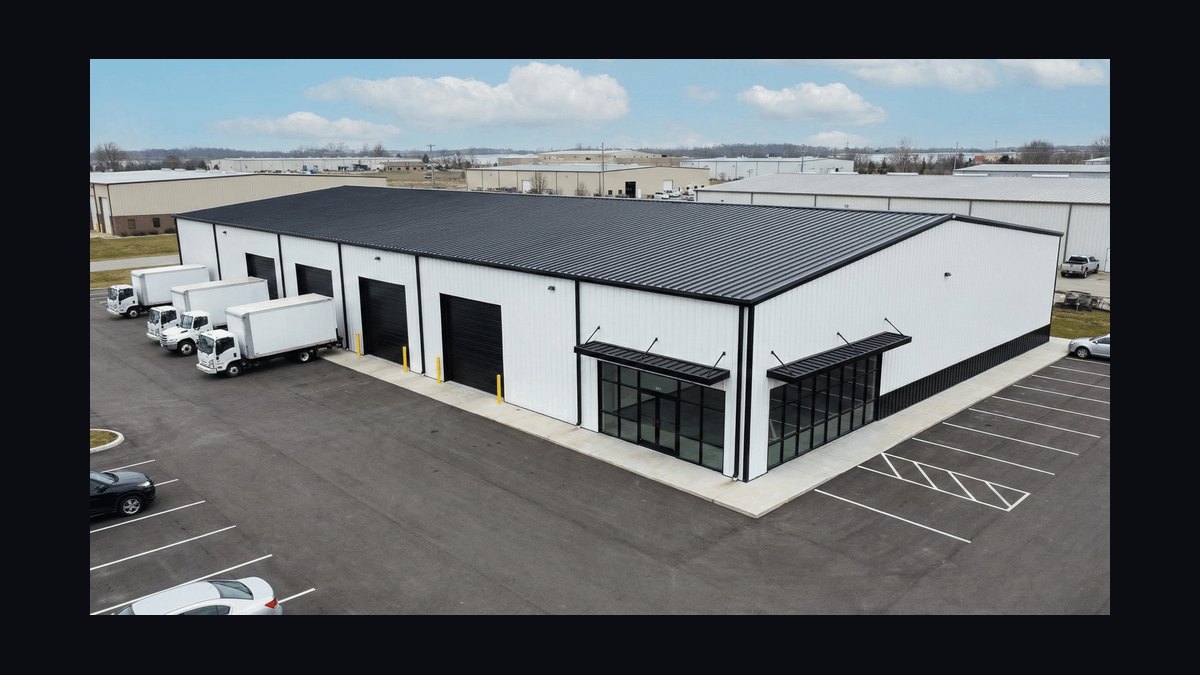
For most owner-occupants, yes: hold the commercial building in a separate LLC and lease it to your operating company at market rent. That split walls the property off from operating lawsuits, keeps rent deductible for the operator, preserves depreciation, and lets you sell the business later while keeping the real estate.
The outcome you should expect
Set this up correctly and three specific things change about your balance sheet, your tax return, and your exit — and they change in ways you can measure rather than just feel.
The first outcome is a hard legal boundary. Once the deed sits in a real-estate LLC and your operating company is a tenant under a written lease, a judgment against the operating company reaches the operating company's assets: its cash, receivables, equipment, and inventory. It does not automatically reach the building, because the building is owned by a different legal person. That matters most in high-exposure businesses — restaurants, gyms, urgent-care clinics, machine shops, contractors, anything with customers or heavy equipment on site. The reverse protection matters too: if a delivery driver is injured in your parking lot and sues the property owner, the claim lands on the property LLC and its landlord policy, not on the operating company's payroll and receivables.
The second outcome is a cleaner tax picture. The operating company pays rent, and rent is an ordinary and necessary business expense — a deduction that reduces the operating company's taxable income. That rent becomes rental income to the property LLC, where it is offset by mortgage interest, property taxes, insurance, repairs, and depreciation. Because most single-member and multi-member LLCs are pass-through entities by default, the net result flows once to your personal return rather than being taxed at an entity level and again on distribution. In practice, many owner-occupants find the property LLC shows a small taxable profit or even a paper loss in the early years, precisely because depreciation is large relative to net rent.
The third outcome is exit optionality, and it is the one owners underestimate until they are in a deal. If the building lives inside the operating company, a buyer who wants the business must also buy the real estate, or you must carve the property out mid-transaction — a maneuver that costs legal fees, can trigger transfer taxes, and sometimes triggers a lender's due-on-sale clause. With the split already in place, you can sell 100% of the operating company and keep the building as a rent-producing asset with a new tenant already installed. Many buyers actively prefer this: they get the business without a real-estate mortgage, and you get a long-term lease with a creditworthy tenant. You can also run the opposite play — sell the building to an investor and lease it back — without touching the operating entity at all.

The outcome you should *not* expect is invisibility. This structure is completely conventional and openly disclosed. It does not hide income, it does not eliminate tax, and it does not protect you from anything you personally guaranteed. Nearly every commercial lender will still ask you, the individual, to guarantee a loan on an owner-occupied building. The LLC keeps the asset separate from the *operating business's* creditors; it does not keep it separate from a lender you signed for personally.
What drives that outcome
Three mechanisms do the work, and each one fails independently if you get sloppy — which is why the structure is best understood as a machine with three moving parts rather than a single filing.
Separate legal personality. An LLC is a distinct legal entity. Creditors of one entity generally reach only that entity's assets. This is the entire basis of the liability wall, and it survives only as long as the two entities actually behave like two entities. Courts apply veil-piercing doctrine when a subsidiary or affiliate is a mere instrumentality of another — commingled funds, no separate books, no capitalization, no formalities. The doctrine varies by state, but the factor list is remarkably consistent nationwide.
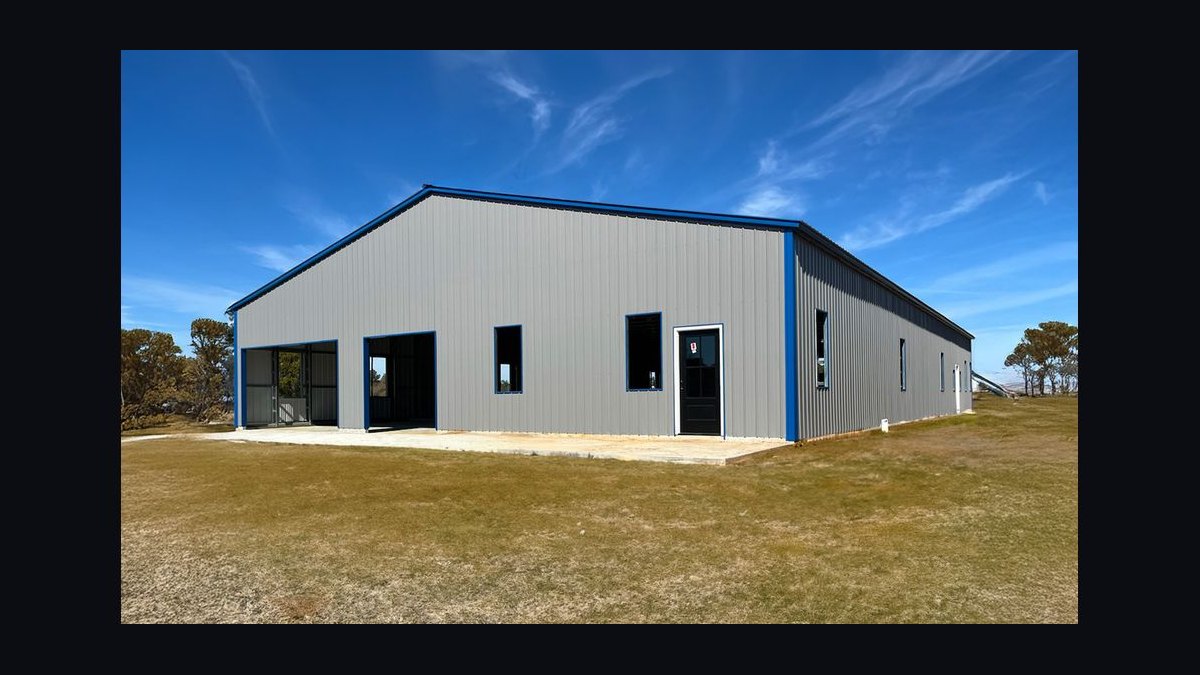
The lease as the transfer mechanism. The lease is what converts an ownership arrangement into a deductible expense and an income stream. No lease, no defensible rent. A rent number that is not supported by comparable market rates invites recharacterization — the IRS can treat above-market rent as a disguised distribution and disallow the excess deduction, or treat below-market rent as an unreasonably low charge that undercuts the property LLC's economic substance. Get a broker's opinion of value or pull three to five comparable lease comps for the same submarket, building class, and square footage, and keep that documentation in the file. Redo it at each renewal.
Depreciation and expense allocation. The property LLC owns depreciable real property; the operating company does not. Under the IRS rules for nonresidential real property, the building is depreciated straight-line over 39 years (land is never depreciable, so the purchase price must be allocated between land and improvements — the county assessor's ratio is the common starting point, though an appraisal is stronger). A cost-segregation study, performed by an engineering-based firm, reclassifies specific components — carpet, cabinetry, dedicated electrical for equipment, site paving, landscaping, signage — into 5-, 7-, and 15-year lives, which front-loads deductions substantially. Bonus depreciation rules on short-life property have changed repeatedly over the past decade and are scheduled to keep changing, so confirm the applicable percentage for your placed-in-service year with your CPA rather than assuming last year's number.
There is a fourth mechanism that most articles skip and that actually bites owner-occupants: the self-rental rule. When you materially participate in the operating company and rent property to it, net rental *income* from that arrangement is generally recharacterized as non-passive, meaning it cannot be sheltered by unrelated passive losses. A net *loss* from the same arrangement generally stays passive and is suspended. This asymmetry is deliberate, and it is the single most common surprise in the first year. It does not make the structure a bad idea — the liability wall and exit flexibility stand on their own — but it does mean you should not build a plan around using building losses to offset other passive income without running it past your CPA first. Grouping elections can sometimes change the answer; that is a conversation to have before you file, not after.
Benchmarks and realistic ranges
Numbers make the decision concrete, so here are the ranges practitioners actually see. Treat them as planning figures to verify locally, not quotes.
Formation. State filing fees for an LLC commonly run from roughly $50 to $500 depending on the state, with a handful of outliers higher. A lawyer-drafted operating agreement plus a properly papered lease typically lands in the $1,000–$3,000 range for a straightforward single-property setup; a templated do-it-yourself formation costs almost nothing but produces exactly the thin paper trail a plaintiff's attorney wants to find.
Annual carrying cost. Budget for a separate federal (and often state) return for the property LLC — commonly $800–$2,500 a year for a single-property entity, less if it is a disregarded single-member LLC reporting on Schedule E of your personal return. Add state franchise or annual report fees, which range from nominal to several hundred dollars, plus a landlord/property policy. Registered-agent service, if you use one, is typically $100–$300 a year. All in, a single-property structure usually costs low single-digit thousands annually to maintain.
Depreciation math. Suppose you buy for $2,000,000 and the land is assessed at 20% of value. Roughly $1,600,000 is depreciable. At 39-year straight line that is about $41,000 per year of deduction — a paper expense against rent, every year, with no cash outlay. On a $1,000,000 purchase with $750,000 allocated to improvements, straight-line depreciation runs roughly $19,000 annually. The percentage is the same regardless of size: about 2.56% of the depreciable basis per year.
Cost segregation. Studies for small-to-midsize commercial properties commonly run $5,000–$15,000, with larger or more complex properties costing more. The share of basis that reclassifies into shorter lives varies enormously by property type — a warehouse shell with minimal fit-out might reclassify well under 10%, while a restaurant, medical suite, or car wash with heavy specialized systems and site improvements can reclassify a much larger fraction. The honest answer is that the reclassified percentage is property-specific and the study itself tells you; anyone quoting you a universal percentage before looking at the building is guessing. Most reputable firms will run a free feasibility estimate first, and the study only pencils out if the accelerated deductions are worth more than the fee after considering depreciation recapture on a future sale.
Lease terms. Owner-occupant intercompany leases commonly run 5–10 years with one or two renewal options, structured as triple-net so the operating company pays taxes, insurance, and maintenance directly — which mirrors what a third-party landlord would demand and strengthens the argument that the arrangement is at arm's length. Rent escalators of roughly 2–3% a year, or a CPI-linked bump, are the market norm and are worth including precisely because a flat 10-year rent looks artificial.
Financing. Owner-occupied commercial loans through conventional bank programs typically ask for 20–30% down; SBA 504 financing for owner-occupied property can go substantially lower on the down payment but carries occupancy requirements — the operating company must occupy a majority of the space — and specific eligibility rules worth reviewing early. Expect a personal guarantee on essentially any owner-occupied commercial loan regardless of entity structure; genuine non-recourse pricing is a large-loan, institutional-quality-asset product, not a $900,000 flex-space product.
RevOps parallel worth noting. If you run a revenue organization, you already understand this pattern: you separate systems of record so a failure in one does not corrupt the other, and you define the interface between them explicitly. The property LLC and the operating company are the same design. The lease is the API contract, the rent is the metered transfer, and the documentation is the audit log. Structures fail for the same reason integrations fail — nobody maintained the contract after go-live.
Risks, edge cases, and failure modes
The structure is not fragile, but it has specific ways of going wrong, and every one of them is a discipline problem rather than a legal-theory problem.
Veil piercing through sloppiness. The most common failure is behavioral. Paying the building's insurance from the operating account, running personal expenses through the property LLC, skipping the annual report, never opening a second bank account, or leaving the LLC with zero assets and no insurance all become exhibits in the argument that the entities are one. Fix: separate bank accounts, separate books, separate returns, a signed lease, real insurance on both entities, timely state filings, and rent that actually moves between accounts on a schedule. Transfer the rent monthly by ACH so there is a bank record, rather than booking a year-end journal entry.
Rent that is not market rent. Setting rent to whatever makes the operating company's P&L look good is the fastest way to lose the deduction. Above-market rent risks disallowance of the excess; below-market rent undercuts the property LLC's economic substance and can distort a future sale of the business, because a buyer will normalize the rent to market and reprice the deal accordingly. Document the number and revisit it at renewal.
The self-rental trap, again. Owners frequently plan around using property-LLC losses to offset passive income from other investments, then discover the recharacterization rule works one way. Model your tax outcome before closing, not in March.
Due-on-sale on a later transfer. If you already own the building personally or inside the operating company and want to move it into a new LLC, check the mortgage first. Most commercial notes contain a due-on-sale or transfer restriction, and a title transfer without lender consent can technically trigger acceleration. Lenders routinely consent to a transfer into a wholly owned single-purpose entity when asked — the failure mode is not asking.
Property-tax reassessment. Several states reassess on a change of ownership, and the definition of change of ownership can capture entity transfers, including transfers of controlling membership interests. In a high-rate jurisdiction this can dwarf the annual savings from the structure. Check the specific state rule before you move title.
Transfer and recording taxes. Deed transfers can carry state or county transfer taxes measured against value or against outstanding debt. Some states exempt transfers between commonly controlled entities; some do not. This is a one-line question for a local real-estate attorney and it can be a five-figure answer.
Depreciation recapture on exit. Accelerated depreciation is a timing benefit, not a permanent one. On sale, depreciation taken on real property is generally recaptured at a maximum 25% rate for the unrecaptured Section 1250 portion, and personal-property components reclassified in a cost-seg study can recapture as ordinary income. If you plan to sell in three years, aggressive front-loading may simply move income around at an unfavorable rate. If you plan to hold for fifteen years or intend a 1031 exchange, the calculus improves considerably.
Lender cross-collateralization. Some banks will lend against the building only if the operating company also pledges its assets, or vice versa, effectively re-tangling the two entities. Push back and ask for the guarantee to be limited to a personal guarantee rather than a cross-pledge of operating assets. If the bank will not move, weigh whether a different lender is worth the rate difference — a cross-pledge partially defeats the wall you are paying to build.
When one entity is genuinely fine. If the building is small — call it under roughly $300,000 — the liability exposure is minimal, there are no employees or public foot traffic, and you have no plausible exit that separates business from property, the incremental filing, return, and insurance cost may exceed the benefit. Even then the split is usually still worth it, because the cost is a few thousand a year and the downside it prevents is total. But it is a real judgment call rather than an automatic yes.

Multiple properties. The standard practice is one LLC per property so a problem at one building cannot reach the others. That multiplies annual cost. Owners with several small properties sometimes use a single holding LLC with strong insurance, or a series LLC in the states that recognize them — a structure whose interstate treatment is still not fully settled, so get local counsel before relying on it.
A practical rollout plan
Sequence matters more than speed. Doing these steps out of order is how people trigger due-on-sale clauses and reassessments.
Step one — decide before you close, if you can. Buying directly into the new LLC from the outset avoids a later transfer entirely: no second deed, no transfer tax, no lender consent, no reassessment question. If you are still in due diligence, form the entity now and put it on the purchase contract as buyer.
Step two — form the entity properly. File in the state where the property sits, not where it is cheapest, unless counsel tells you otherwise; a foreign-LLC registration in the property's state is required anyway. Get an EIN, adopt a written operating agreement, and name a registered agent. Single-purpose is the goal: this LLC owns one building and does nothing else.

Step three — capitalize it. Fund the entity with the down payment and a working reserve — enough to cover several months of debt service, taxes, and insurance. An LLC with a $100 balance is the classic undercapitalization exhibit.
Step four — open dedicated banking. One operating account and, ideally, one reserve account in the LLC's name and EIN. No shared cards, no shared accounts, no exceptions.
Step five — allocate purchase price. Work with your CPA at closing to allocate between land and improvements, and decide then whether a cost-segregation study is worth commissioning. Doing the study in the placed-in-service year is cleaner than filing a change-of-accounting-method catch-up later, though that catch-up is available.

Step six — paper the lease. Market rent supported by comps, a 5–10 year term with renewal options, triple-net expense treatment, an escalator, an insurance-and-indemnity section, and signatures from both entities. Have counsel draft it; this is the document a court and a buyer will read.
Step seven — insure both sides. Property and general liability on the LLC as landlord, general liability on the operating company as tenant, with each named as additional insured on the other's policy where appropriate. Confirm the operating company's policy actually covers a leased premises rather than an owned one.
Step eight — set the recurring calendar. Monthly rent ACH on a fixed date. Quarterly bookkeeping review. Annual state report and franchise filing. Annual insurance review. Rent review at each renewal against fresh comps. Put every one of these on a calendar with an owner's name attached, because the structure degrades quietly and nobody notices until it is tested.
Step nine — if the building is already owned. Order a title review, request lender consent in writing, confirm the transfer-tax and reassessment treatment in your state, then execute the deed and immediately update insurance, utilities, and the lease. Do not deed first and ask later.
Related questions
What if I already bought the building in my operating company's name?
You can usually transfer it, but check the mortgage for a due-on-sale clause and get written lender consent first. Then confirm your state's transfer-tax and property-tax reassessment treatment of entity transfers before recording the deed.
Do I need a separate LLC for every commercial building I own?
One entity per property is the standard because a claim at one building cannot reach the others. Weigh it against the added filing, return, and insurance cost per entity — with several small properties, some owners consolidate and lean harder on insurance.
Should the property LLC be taxed as an S corporation?
Usually no. Holding appreciating real estate in an S corporation makes it difficult to distribute the property later without triggering gain, and it complicates step-up planning. Default pass-through partnership or disregarded treatment is the common recommendation — confirm with your CPA.
Can my spouse or children own part of the property LLC?
Yes, and it is a common estate-planning move, since real-estate LLC interests can be gifted incrementally and may qualify for valuation discounts. It also complicates control and financing. Coordinate with an estate attorney before issuing membership interests.
Does the separate LLC help if I want an SBA 504 loan?
SBA 504 financing for owner-occupied property commonly contemplates an eligible passive company holding the real estate and leasing it to the operating company. Occupancy thresholds and lease-term requirements apply, so review eligibility with the lender early.
FAQ
Does a separate LLC protect my personal assets if someone is injured at the building?
It separates the property from your operating company's creditors and puts premises claims against the LLC rather than the business. It does not replace insurance, and it does not protect you from anything you personally guaranteed or from your own negligent acts. Carry a landlord policy with adequate limits and consider an umbrella policy on top.
Can I really deduct rent paid to an LLC I own?
Yes, when there is a genuine landlord-tenant relationship: a written lease, rent at a defensible market rate, and money actually moving between separate bank accounts. The operating company deducts the rent; the property LLC reports it as income and offsets it with interest, taxes, insurance, repairs, and depreciation.
Will lenders charge me more for holding the building through an LLC?
Entity ownership is completely normal in commercial lending and is often what the lender prefers, since a single-purpose entity simplifies their collateral. Pricing is driven far more by the property, your credit, occupancy, and debt-service coverage than by whether the borrower is an LLC or an individual. Expect a personal guarantee either way.
How do I know what rent to charge myself?
Pull three to five comparable leases in the same submarket for similar size and building class, or get a broker's opinion of value in writing. Set rent within that range, add a 2–3% annual escalator or CPI adjustment, and re-document at each renewal so the file always shows a current market basis.
Is a cost-segregation study worth it on a smaller building?
It depends on the property type and your holding period. Buildings with heavy fit-out, specialized systems, and significant site improvements reclassify more than a bare shell. Most firms will run a free feasibility estimate; compare the projected acceleration against the fee and against depreciation recapture if you expect to sell within a few years.
What is the single most common way this structure fails?
Neglect. The lease expires and is never renewed, rent stops moving between accounts, the state annual report lapses, and building expenses start running through the operating account. Every one of those is an argument that the two entities are really one — set a recurring calendar and treat the formalities as non-negotiable.
Sources
- https://www.irs.gov/publications/p946 — IRS Publication 946, How to Depreciate Property
- https://www.irs.gov/publications/p527 — IRS Publication 527, Residential and commercial rental activity rules
- https://www.irs.gov/publications/p925 — IRS Publication 925, Passive Activity and At-Risk Rules
- https://www.irs.gov/businesses/small-businesses-self-employed/cost-segregation-audit-techniques-guide — IRS Cost Segregation Audit Techniques Guide
- https://www.sba.gov/funding-programs/loans/504-loans — U.S. Small Business Administration, 504 loan program
- https://www.irs.gov/businesses/small-businesses-self-employed/limited-liability-company-llc — IRS overview of LLC tax classification
- https://www.americanbar.org/groups/business_law/ — American Bar Association Business Law Section, entity and veil-piercing resources
- https://www.nolo.com/legal-encyclopedia/piercing-the-corporate-veil-33006.html — Nolo, piercing the corporate veil overview
Related on PULSE
- How do 2027 building purchasing committees weigh AI tool recommendations vs human referrals?
- Should I open or buy a Stratus Building Solutions franchise in 2027?
- How Many Sales Reps Do I Need to Hire for My Modular Building Manufacturer?
- Should I Hire a Fractional CRO If My Nonprofit Is Building an Earned-Revenue Arm?
- How Many Sales Reps Do I Need to Hire for My Steel Building Construction Company?
This page will be disappearing soon. Save it to your device for $1 — or read it free while it is here.
@Kory-White- · if Venmo asks, the last 4 of my number are 2012
This page is gone.
This one is off the shelf now. $1 keeps it on your phone for good — the whole page, pictures and diagrams included.
 pulse-qHow Many Employees Should I Schedule Each Shift at My Phone Repair Shop in 2026?
 pulse-qHow do you coach a rep who blames marketing for bad leads in 2026?
 pulse-qAs-Is vs Warm Shell vs Turnkey: Which Delivery Saves Me the Most?
 pulse-qShould I open or buy an Aire Serv HVAC franchise in 2027?
 pulse-qShould I open a yoga teaching business in 2027?
 pulse-qShould I open or buy a Snap Fitness franchise in 2027?
 pulse-qHow Do I Tie Commission to More Than One Product in 2026?
 pulse-qShould I open or buy a Buca di Beppo franchise in 2027?
 pulse-qShould I open or buy an It's A Grind Coffee franchise in 2027?
 pulse-qShould I open or buy a Woof Gang Bakery franchise in 2027?