
Should I open or buy a Blo Blow Dry Bar franchise in 2027?
 Curated byKory White · Fractional CRO · Maryland
 PULSEKNOWLEDGE LIBRARY
Quality
Certified
Yes, if you can staff licensed stylists and you're targeting an affluent, high-traffic market — opening a Blo Blow Dry Bar franchise in 2027 is a sound, moderate-capital play in the resilient beauty-services category. Total investment runs $200,000–$450,000, mature bars gross $300,000–$650,000, and owners typically clear $50,000–$160,000. The model succeeds on recurring memberships and stylist retention; skip it if you can't solve staffing or lack an affluent, convenient site.
A Concrete Scenario: The First-Time Buyer Weighing Blo Against a Full-Service Salon
Picture a prospective franchisee — call her Maria, a former retail regional manager with $150,000 in liquid capital and a $400,000 net worth — sitting across from a Blo franchise development rep in early 2027. She's comparing two paths: buy an independent hair salon in her suburb, or open a Blo Blow Dry Bar in the town center two miles away. The salon requires her to manage a full menu of services — cuts, color, chemical treatments — each with its own licensing complexity, product inventory, and liability exposure. Blo, by contrast, offers a single, repeatable service: the blowout, typically completed in 30–45 minutes, sold primarily through a membership subscription rather than one-off transactions.
This is the scenario every serious Blo buyer eventually faces, whether they articulate it or not: do you want to operate a complex, multi-service beauty business, or a focused, membership-driven bar with one core deliverable executed extremely well? Maria's calculus changes the moment she looks at her local demographics. Her town center sits within a mile of three office parks and a university, has median household income above $95,000, and already supports a Drybar location doing steady business. That combination — dense daytime population, disposable income, and proven category demand — is exactly the profile Blo's own site-selection criteria target.
But Maria also has to think past opening day. She needs 4–6 licensed stylists on staff within her first 90 days, each capable of hitting the brand's speed and quality standard. In her metro, cosmetology-school graduates are being recruited aggressively by salon suites offering booth rental and full commission — no franchise royalty overhead, more schedule freedom. If Maria can't out-compete that offer with pay, tips, and career-path clarity (lead stylist, assistant manager, general manager), her membership base will grow faster than her capacity to service it, and cancellations will follow. This is the single scenario that determines whether a Blo franchise open in 2027 becomes a $150,000-profit bar or a churn-plagued location bleeding memberships within eighteen months.
The scenario also illustrates why the decision to open isn't just a capital question — it's a labor-market and demographic question layered on top of a capital question. Two operators can write the same $250,000 check and land in radically different outcomes depending on whether their local stylist labor pool is deep enough and whether their site draws the affluent, styling-conscious clientele the membership model depends on.
How the Membership Mechanism Actually Works
Blo's entire unit economics run through one mechanism: convert one-time or occasional blowout customers into recurring monthly members, because membership revenue is predictable, smooths cash flow, and reduces the marginal cost of filling a chair. Understanding this mechanism — not just the sticker price of a franchise — is what separates buyers who evaluate Blo correctly from those who only look at the Item 7 investment table.
Here's how it flows in practice. A new customer walks in for a first blowout, typically paying a walk-in rate. During checkout, front-desk staff pitch a membership — commonly structured around a monthly fee that includes a set number of blowouts, with member pricing on additional visits and add-ons (special-occasion styling, makeup application, deep conditioning treatments). Mature bars derive roughly 55–65% of revenue from these memberships, 20–30% from walk-ins, and the remainder from retail product sales. Retention on the membership base runs 70–80% annually — meaning roughly a fifth to a third of the membership pool needs to be replaced or re-recruited each year just to hold steady, let alone grow.
This is the mechanism that determines whether the "no cuts, no color" simplified model actually pays off. Because Blo doesn't chase the higher ticket prices of color and chemical services, its per-visit revenue is lower than a full-service salon's — which is precisely why the membership subscription matters so much. A single $65 walk-in blowout is a thin transaction once you net out stylist labor and product cost; a member paying $50–$90 monthly for unlimited or multiple visits, arriving reliably every 10–14 days, is what turns thin per-visit margins into a viable annual unit economics story.
The downstream consequence of this mechanism is that Blo franchisees are, in effect, running a subscription business wrapped around a beauty-services delivery engine. That reframes several operating decisions. Marketing spend should weight toward membership conversion rather than one-time promotions. Staffing should be sized against the membership base's visit cadence, not against unpredictable walk-in traffic. And the franchisor's Item 19 disclosures on membership ramp — how quickly a new bar builds from zero to a mature membership count — are the single most important number in the entire FDD for a buyer to interrogate, because everything else (revenue, staffing needs, profit) cascades from that ramp curve.
Real Numbers, Ranges, and Benchmarks for 2027
The 2026 FDD sets the initial investment (Item 7) at roughly $200,000 to $450,000 total, with a franchise fee of $40,000 to $50,000. That total breaks down roughly as follows: buildout and leasehold improvements of $80,000–$200,000 for a 1,000–1,600 square foot styling bar; equipment and styling stations at $40,000–$100,000; signage and decor at $12,000–$35,000; initial inventory of $8,000–$20,000; initial marketing (largely membership pre-sale campaigns) at $12,000–$32,000; training and travel at $8,000–$25,000; and working capital of $25,000–$60,000 to cover the first three to six months before the bar reaches breakeven visit volume.
On top of the initial build, ongoing fees run a royalty near 6% of gross sales plus a marketing fee typically in the 2–3% range — together roughly 8–9% off the top of every dollar the bar collects, before any operating costs are paid.
Revenue and profitability benchmarks: mature bars gross $300,000–$650,000 annually. A bar at the lower end, around $450,000 gross, might net an owner $45,000–$81,000 before debt service; a top-performing bar at $650,000 gross could produce $65,000–$117,000. Expense structure typically runs: rent 12–18% of revenue, labor (stylists plus front desk, including payroll taxes and benefits) 40–50%, product cost 8–12%, royalty and marketing fee combined 8–9%, and insurance/utilities/miscellaneous 5–8% — leaving 10–18% of revenue as net cash flow to the owner before debt service. That labor line is the largest single expense category by a wide margin, which is why staffing execution, not marketing or site selection alone, is the primary swing factor between a bar clearing $50,000 and one clearing $150,000.
Financial qualification benchmarks published for prospective franchisees generally call for $80,000–$150,000 in liquid capital and a net worth of $300,000–$500,000 — broadly consistent with the working-capital and buildout ranges above. Break-even timing runs 12–18 months for most franchisees, stretching to 24 months in slower markets or where membership ramp lags.
On the labor-cost side specifically: stylists in major metro areas typically command $18–$28 per hour plus tips averaging $5–$15 per service, and franchisees report annual stylist turnover of 30–50% — meaning a single-bar owner may need to recruit and train three to five stylists in a given year just to maintain headcount. Ongoing training and certification investment runs $5,000–$10,000 annually per bar. Performance bonus structures, where used, commonly run 10–15% of the service revenue a stylist generates, layered on top of hourly pay and tips to improve retention.
Trade-Offs and Alternatives Worth Weighing Before You Open
Every franchise decision is a trade-off between control, capital, and category risk, and Blo's trade-off profile is distinct from both the full-service salon model and the pure-independent path. The core trade-off: Blo gives you brand recognition, a proven membership playbook, training systems, and negotiated supplier relationships, in exchange for the royalty and marketing fee load and strict adherence to the "no cuts, no color" service menu — meaning you forfeit the higher-ticket revenue streams (color services routinely run $100–$300+ at full-service salons) that could otherwise diversify your revenue mix.
Compare that against running an independent blow-dry bar: you keep 100% of gross revenue with no royalty, and you can adjust the service menu freely, but you give up the pre-built membership-marketing playbook, the training curriculum, the buying power on products and equipment, and the immediate brand trust that helps a new location pre-sell memberships before opening day. For a first-time beauty-services operator, that franchisor infrastructure is often worth more than the 8–9% it costs, particularly during the first 12–18 months when membership ramp determines whether the bar survives.
Other adjacent plays worth comparing: Drybar, now under Ulta Beauty ownership, operates largely corporate-owned locations with limited franchise availability, so it's rarely a live alternative for someone actively trying to open a unit in 2027. Salon-suite concepts (Sola Salon Studios and similar) represent a fundamentally different business model — you're leasing booth space to independent stylists rather than operating a service-delivery business yourself, which trades operational complexity for a real-estate-style income stream with lower margin per square foot but far less staffing risk. Sugaring and hair-removal franchise concepts (Sugared + Bronzed, Sugaring NYC) and lash-extension franchises (Amazing Lash and peers) sit in the same "focused beauty-services membership" category as Blo, and are worth a side-by-side Item 19 comparison if your primary goal is a recurring-revenue beauty franchise rather than a blowout bar specifically — the underlying staffing and membership-retention dynamics are similar across all of them.
The trade-off math shifts further if you're already weighing a multi-unit build-out. A single bar absorbs most of an owner's operating attention — 40–50 hours weekly on-site handling scheduling, complaints, and staff management is typical, and this is explicitly not a passive investment. But the systems that make one Blo bar work (membership sales scripts, staffing playbooks, marketing calendars) scale reasonably well to a second and third unit once proven, which is why experienced multi-unit beauty-franchise operators frequently gravitate toward this category once they've validated the model with one location.
Common Pitfalls and How to Avoid Them
The pitfalls that sink Blo franchisees cluster around three failure modes: understaffing, over-optimistic membership assumptions, and weak site selection — and each has a fairly specific, addressable fix.
Understaffing relative to membership growth. The most common operational failure is pre-selling memberships aggressively during the opening marketing push, then discovering the bar doesn't have enough trained stylists to service the resulting booking volume. The fix is to sequence hiring ahead of the membership pre-sale campaign, not behind it — have your core stylist team trained and certified before your grand-opening marketing goes live, and build a standing pipeline (partnerships with local cosmetology schools, referral bonuses from current staff) so replacement hiring doesn't stall when turnover hits.
Underestimating labor cost as a share of revenue. Buyers who model Blo's economics off the franchise fee and buildout cost alone, without stress-testing the 40–50% labor line against local wage rates, routinely overestimate owner take-home. In markets with $18/hour-plus minimums and competitive tip expectations, labor cost can push toward the high end of that range, compressing the 10–18% net-cash-flow band toward its floor. Run your own market's wage data against the benchmark ranges before signing, rather than relying on system-wide averages that may not reflect your specific metro.
Choosing a site on rent cost rather than demographic fit. A cheaper lease in a lower-traffic or less-affluent area routinely undercuts the entire membership mechanism described above — the model depends on a customer base with disposable income and styling-conscious habits (dense daytime population, women aged 25–45 with above-median income are the target profile), and a bar in the wrong location will simply never build a membership base large enough to hit the revenue benchmarks. Validate the site against foot traffic counts, nearby office/university density, and existing beauty-services competition (a Drybar or established independent bar nearby can be either a validating signal of category demand or a direct competitive threat — talk to current operators in comparable sites before committing).
Treating Item 19 numbers as guaranteed rather than as a range to interrogate. Every FDD's Item 19 earnings claim is a historical disclosure, not a promise. Franchisees who skip calling existing operators — asking specifically about membership ramp timing, actual stylist turnover experienced, and net profit after debt service — are the ones most likely to be surprised by the gap between system-wide averages and their specific market's results. This single step, a real conversation with five to ten current franchisees before signing, is the cheapest risk-reduction move available and is consistently the one skipped by buyers in a hurry to open.
Underestimating the owner-operator time commitment. Some buyers approach this as a semi-passive investment because the service menu is simplified relative to a full salon. It isn't passive. The 40–50 hours weekly on-site expectation during ramp and steady-state operation should be treated as a hard requirement for anyone evaluating whether to open a Blo franchise, not an optional intensity level — RevOps-style operational discipline around scheduling, staffing pipelines, and membership-retention tracking is what separates the bars clearing $150,000 from the ones stalled at breakeven.
Related questions
How long does it take a new Blo bar to build a full membership base?
Most franchisees target 12–18 months to reach mature membership levels, though ramp speed depends heavily on pre-opening marketing execution and local demand. Ask current operators about their specific ramp curve during due diligence — it's the single most important Item 19 detail.
Can I run a Blo Blow Dry Bar as a passive, absentee investment?
No. Successful franchisees work 40–50 hours weekly on-site managing scheduling, staffing, and customer service. If you need a passive investment, this is not the right franchise model.
How does Blo's staffing challenge compare to a full-service salon?
Both compete for licensed stylists, but Blo's fast-paced, single-technique model (30–45 minute blowouts) requires a narrower but highly repeatable skill set, while salons need broader-skilled staff across cutting, color, and chemical services — each with its own retention pressures.
Is now a good time to open a beauty-services franchise given economic uncertainty in 2027?
The membership subscription model provides some recession buffer since members pre-commit to recurring visits, but discretionary services like blowouts can still see reduced frequency in a downturn. Validate local demand and membership retention data before committing capital.
What's the difference between Blo and Drybar for a prospective franchise buyer?
Drybar is largely corporate-owned with limited franchise availability following its Ulta Beauty acquisition, making it a poor fit for someone specifically trying to open a new unit; Blo remains actively franchising, which makes it the more realistic option for a 2027 buyer.
FAQ
What is the total investment needed to open a Blo Blow Dry Bar franchise? Total investment typically ranges from $200,000 to $450,000, including a franchise fee of $40,000 to $50,000. This covers buildout, equipment, signage, initial inventory, training, and working capital, though exact costs vary by market and lease terms.
How much can I expect to earn as a Blo Blow Dry Bar franchise owner? Mature locations generally generate annual gross revenue between $300,000 and $650,000. Owner earnings after royalties, marketing fees, and operating expenses typically fall between $50,000 and $160,000 per year, depending on location, staffing execution, and management quality.
What ongoing fees does the franchisor charge? The royalty fee runs approximately 6% of gross sales, with a marketing fee typically around 2–3%. Some markets also carry local advertising cooperative contributions or technology fees, all detailed in the current FDD's fee tables.
Is the blow-dry bar industry still growing heading into 2027? The beauty-services sector remains resilient overall, with steady demand for affordable, fast styling and special-occasion services. Membership models help stabilize revenue, though growth varies significantly by local market and competitive density.
What are the biggest challenges of owning a Blo Blow Dry Bar franchise? Recruiting and retaining licensed stylists is consistently the top challenge, compounded by competition from other blow-dry bars and full-service salons. Site selection is equally critical since foot traffic and local demographics directly drive membership growth and revenue.
Do I need prior salon or beauty-industry experience to open a franchise? No prior salon experience is required, but strong business management and people-management skills are essential. The franchisor provides training and operational support, but day-to-day success depends heavily on your ability to hire, train, and retain stylists.
Sources
- Entrepreneur Franchise Directory — https://www.entrepreneur.com/franchises
- IBISWorld Hair & Beauty Salons Industry Report — https://www.ibisworld.com
- Statista U.S. Hair Styling and Beauty Services Market — https://www.statista.com
- Franchise Business Review — https://www.franchisebusinessreview.com
- International Franchise Association — https://www.ifa.com
- U.S. Census Bureau — https://www.census.gov
- Blo Blow Dry Bar Official Site — https://www.blomedry.com
- Drybar Official Site — https://www.drybar.com
- Professional Beauty Association — https://www.probeauty.org
Related on PULSE
- Should I open or buy a Nekter Juice Bar franchise in 2027?
- Should I open or buy an I Love Juice Bar franchise in 2027?
- How Many Employees Should I Schedule Each Shift at My Dry Cleaner?
- How Do I Budget a Dry Cleaner Buildout?
- How do you onboard a new CRO so they don't blow up the existing comp plan in their first 30 days?
This page will be disappearing soon. Save it to your device for $1 — or read it free while it is here.
@Kory-White- · if Venmo asks, the last 4 of my number are 2012
This page is gone.
This one is off the shelf now. $1 keeps it on your phone for good — the whole page, pictures and diagrams included.
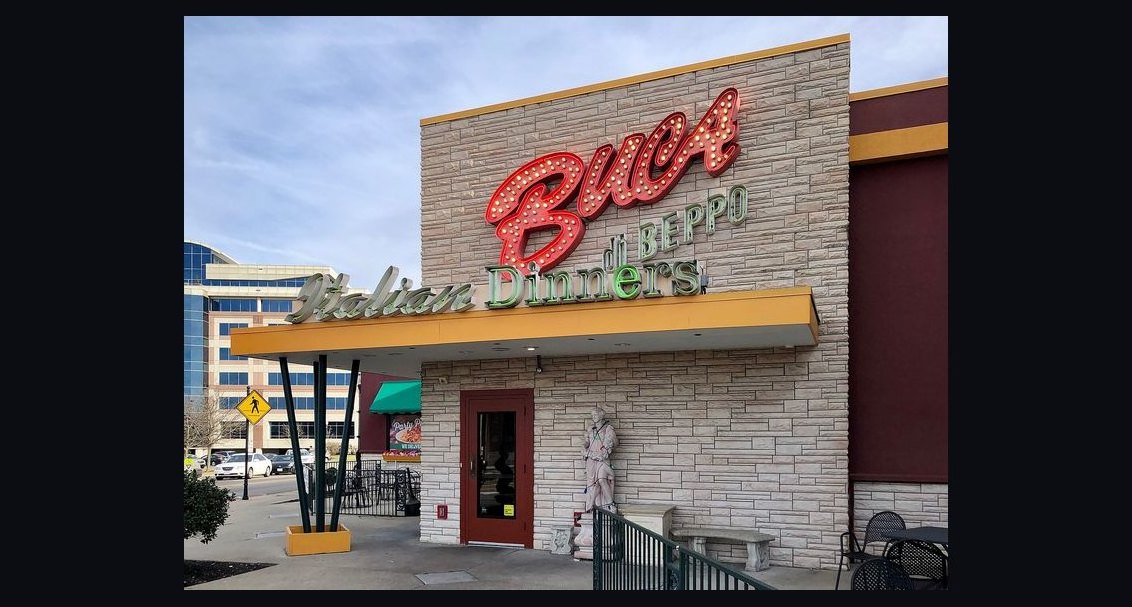 pulse-qShould I open or buy a Buca di Beppo franchise in 2027?
 pulse-qShould I open or buy a Cookies Crumbl alternative — Insomnia Cookies — franchise in 2027?
 pulse-qShould I open or buy a Duck Donuts franchise in 2027?
 pulse-qHow Many Employees Should I Schedule Each Shift at My Phone Repair Shop in 2026?
 pulse-qHow do you coach a rep who blames marketing for bad leads in 2026?
 pulse-qShould I Repair or Replace My Delivery Fleet Vehicles as My Landscaping Business Scales in 2027?
 pulse-qWho Pays for the Demising Wall Between Tenant Spaces in 2026?
 pulse-qHow do you rebuild a sales team's trust in the forecast after a mid-year CRM migration corrupts historical pipeline data in 2027?
 pulse-qShould I open or buy a Bojangles franchise in 2027?
 pulse-qShould I open or buy a Bob Evans franchise in 2027?