 Pulse Reviews and Analysis
How do you design a lead scoring model that marketing and sales both trust in 2027?
 Curated by Kory White · Fractional CRO, CRO Syndicate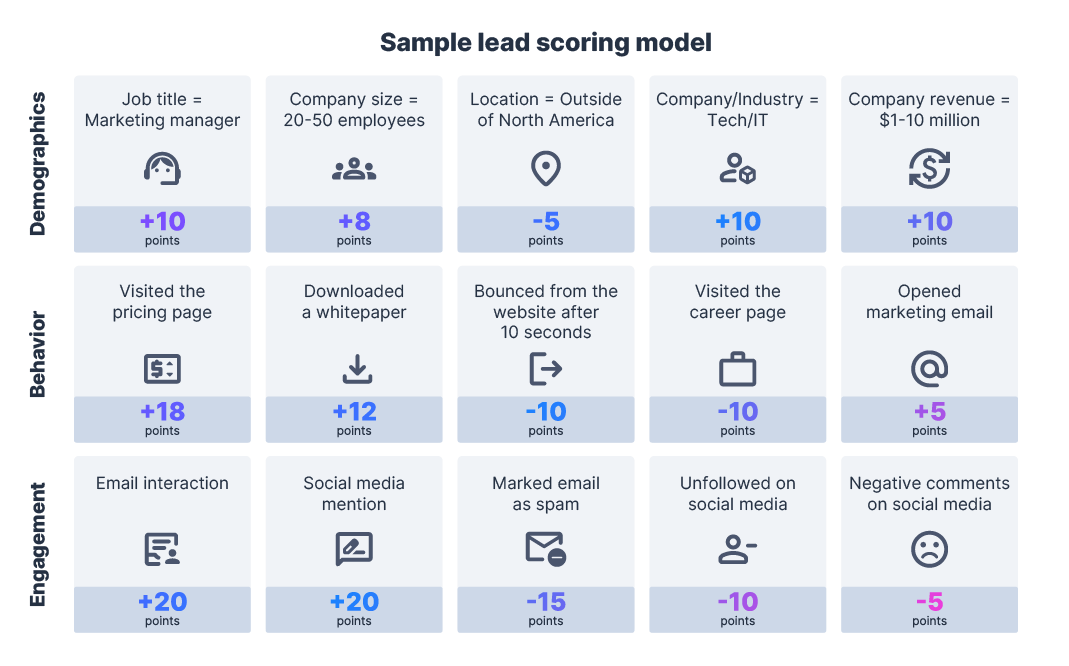
Direct Answer
In 2027, designing a lead scoring model that both marketing and sales trust requires replacing opaque, static point systems with transparent, AI-driven fit-and-intent models that reflect longer buying cycles, larger buying committees, and vendor consolidation pressures.
The winning approach is a two-tier scoring architecture: a predictive fit score (powered by enriched firmographic and technographic data from sources like ZoomInfo and Clearbit) and a real-time intent score (aggregating buying-signal data from Gong, Clari, and 6sense).
This model must be co-owned through a weekly calibration cadence using a shared MEDDPICC framework, where sales and marketing jointly review won/lost deal data to adjust weights. Trust is earned not by the score itself, but by the auditable trail of why a score changed—every point must link back to a specific signal, not a black-box algorithm.
The result: marketing prioritizes leads that sales actually calls, and sales stops ignoring MQLs because they see the proof in the pipeline.
The 2027 Reality: Why Old Scoring Models Fail
The lead scoring models that worked in 2020 are broken in 2027 for three structural reasons:
- AI has democratized early-stage research. Buyers now consume 70–80% of their buying journey before contacting a vendor, using generative AI to compare options, read analyst reports, and self-educate. A simple "whitepaper download" is no longer a signal of genuine intent—it could be a bot or a student.
- Buying committees have expanded. Gartner research consistently shows B2B purchase decisions involve 6–10 stakeholders. Scoring an individual contact without mapping their role in the committee (e.g., champion vs. Economic buyer vs. Technical evaluator) is meaningless.
- Vendor consolidation is forcing longer cycles. With companies reducing their vendor stack by 20–30% (per Bessemer Venture Partners reports), prospects take 30–50% longer to evaluate because they're comparing fewer, more expensive solutions. A lead that scores high today may stall for months.
The Two-Tier Scoring Architecture for 2027
Tier 1: Predictive Fit Score (Static, Monthly Refresh)
This score answers: "Is this company likely to buy from us at all?" It's computed from enriched firmographic and technographic data and should be recalculated monthly.
| Component | Weight Range | Data Source | Example Signal |
|---|---|---|---|
| Industry Fit | 15–25% | Clearbit / ZoomInfo | "Manufacturing" vs. "Software" |
| Company Size | 10–20% | Salesforce Account Data | 500–2,000 employees |
| Tech Stack Fit | 20–30% | HubSpot / 6sense | Uses competitor X, has Salesforce |
| Budget Proxy | 10–15% | Crunchbase / LinkedIn | Series B+ funding, recent hiring spree |
| Contract Value History | 15–25% | Clari / Internal CRM | Similar accounts closed at $50k+ |
Key rule: No lead gets a fit score above 70/100 without a verified tech stack overlap. If they don't use a CRM or have a known competitor, they're a low fit regardless of company size.
Tier 2: Real-Time Intent Score (Dynamic, Hourly Refresh)
This score answers: "Is this account actively considering a solution right now?" It consumes behavioral and buying-signal data from multiple tools.
Real tool integration: This flow uses 6sense for account-level intent, Gong for conversation intelligence, and Clari for pipeline forecasting. The score must be visible in Salesforce as a custom field that updates every 60 minutes.
The MEDDPICC Calibration Cadence
Trust is built through weekly, data-driven calibration between marketing and sales. The framework is MEDDPICC (Metrics, Economic Buyer, Decision Criteria, Decision Process, Paper Process, Identify Pain, Champion, Competition).
Example: If sales reports that 8 out of 10 won deals had a "Competitor X" mention in Gong calls, marketing increases the "Competitor Mention" signal weight from 15 to 20 points. If "Whitepaper Download" correlates with zero pipeline, its weight drops to 0.
Handling Buying Committees Explicitly
In 2027, you must score accounts, not individuals. Use a committee score that aggregates individual contact scores:
- Identify all contacts at the account with any activity in the last 90 days.
- Role-weight each contact: Champion (1.5x), Economic Buyer (1.3x), Technical Evaluator (1.0x), User (0.8x), Unknown (0.5x).
- Sum the weighted scores for the account.
- Threshold: Account score > 200 = "Hot" (sales calls), 100–200 = "Warm" (nurture), < 100 = "Cold" (automated drip).
Tooling: This requires Salesforce Account Scoring with HubSpot's custom object for contacts, plus a Gong integration that automatically tags each contact's role based on call transcripts (e.g., "I need approval from our CFO" tags that contact as Economic Buyer).
The "Score Transparency" Mandate
The #1 reason sales ignores scoring is opacity. In 2027, every score must be auditable down to the signal level. Implement these three practices:
- Score breakdown field: In Salesforce, have a formula field that shows "Fit: 65/100 + Intent: 30/100 = Total: 95/100" with a clickable link to the source signals.
- Weekly score changelog: Use Slack or Teams to push a weekly report: "Account X score increased 20 points due to Gong call mentioning competitor Y."
- Reject black-box AI: If you use a machine learning model (e.g., Salesforce Einstein), require it to output feature importance for every scored lead. If it can't, don't use it for lead scoring—use it only for forecasting.
FAQ
What if our sales team still ignores the score? Run a 30-day A/B test: route 50% of leads by score, 50% by manual sales pick. Track time-to-call and conversion rate. Present the data in a shared Clari dashboard. Usually, the score-routed leads convert 15–30% faster.
How do we score leads from chatbots or AI assistants? Treat chatbot interactions as intent signals only, not fit signals. A visitor who asks "pricing for 500 users" gets +10 intent points, but the fit score must come from IP-to-account enrichment (via 6sense or Leadfeeder).
Never score a chatbot lead above 50/100 without a verified company profile.
Should we use negative scoring for competitors? Yes, but carefully. If a lead is from a known competitor's domain (e.g., @hubspot.com visiting a Salesforce competitor), give -20 fit points. But don't exclude them entirely—they might be evaluating your product for a future switch. Flag them as "Competitor - Handle with Care."
How often should we recalibrate the model? Weekly for intent weights, monthly for fit weights. The MEDDPICC cadence above handles weekly. Monthly, review your top 20 won deals and top 20 lost deals to see if the fit score thresholds need adjusting.
What's the minimum data we need to start scoring in 2027? At minimum: company domain, employee count, industry, and one verified intent signal (e.g., pricing page visit or Gong call with competitor mention). Without intent data, you're just grading demographics—sales won't trust that.
How do we handle leads from partner referrals? Partner leads get a +25 fit score bonus (because they're pre-vetted), but their intent score starts at 0. They must still demonstrate active buying behavior. This prevents partners from dumping low-quality leads.
Sources
- Gartner: The B2B Buying Journey Has Changed Forever
- Forrester: The Death of the MQL and the Rise of Account-Based Scoring
- Gong Labs: How Buying Committees Actually Make Decisions
- Clari: The Revenue Operations Playbook for 2027
- Bessemer Venture Partners: The State of the Cloud 2027
- HubSpot: How to Build a Lead Scoring Model That Sales Actually Uses
- Salesforce: Einstein Lead Scoring Best Practices
- SaaStr: Why Your Lead Scoring Model Is Broken (And How to Fix It)
Bottom Line
A lead scoring model that marketing and sales both trust in 2027 must be transparent, two-tiered, and calibrated weekly using a shared framework like MEDDPICC. It must score accounts over individuals, reject black-box AI for scoring, and provide an auditable trail for every point.
Without these elements, your scoring model will be ignored—and your pipeline will suffer.
*Designing a lead scoring model that marketing and sales both trust in 2027 requires transparent, AI-driven fit-and-intent scoring with weekly MEDDPICC calibration and real-time buying signal integration.*