

How does the 2027 sales cycle lengthen by 8 weeks when buying committees use AI to run RFx against 20 vendors simultaneously?
 Curated byKory White · Fractional CRO · Maryland
Quality
Certified

The 2027 sales cycle lengthens roughly 8 weeks because AI lets buying committees run RFx against 20 vendors simultaneously, which compresses vendor discovery but multiplies downstream work: reconciling conflicting AI-generated rankings across 10+ stakeholders, running parallel security reviews, and negotiating with several finalists at once instead of one. The front half shrinks by 3-4 weeks while consensus, security, and legal review expand by 10-12 weeks, netting an 8-week increase.
What it is and why it matters
Running RFx against 20 vendors simultaneously used to be operationally impossible for a mid-size buying team — nobody had the hours to read 20 sets of responses, build 20 comparison matrices, and score them consistently. AI removed that constraint. A procurement or ops lead can now feed 20 vendor RFx responses into a tool built on Salesforce Data Cloud, HubSpot's AI tooling, or a purpose-built RFx platform, and get a normalized comparison matrix back in hours instead of weeks. That's the part that speeds up.
What lengthens the cycle is what happens after the matrix exists. In 2027, the typical enterprise buying committee runs 9-14 stakeholders, up from the 6-8 that was common a decade earlier. Each stakeholder increasingly runs their own AI assistant against the same RFx data, and those assistants don't converge on the same answer. A CFO's tool weights total cost of ownership; a security lead's tool weights certification recency; an end-user champion's tool weights integration friction. When 20 vendors are being scored in parallel, small weighting differences produce meaningfully different "top 3" lists across stakeholders, and someone has to reconcile them by hand. That reconciliation — not the scoring — is where the 8 weeks accumulates.

This matters for RevOps because the instinct is to treat AI-run RFx as a pure efficiency win and staff the funnel accordingly. Teams that only shorten their own response time to the RFx, without also building for a longer consensus and security phase downstream, end up caught flat-footed: their pipeline shows deals sitting in "evaluation" or "legal review" far longer than historical benchmarks, and forecasts built on old-stage-duration assumptions start missing badly. Committees are not moving slower out of caution; they are moving slower because AI gave them the capacity to be thorough with 20 vendors instead of 5, and thoroughness against that many options takes real calendar time to resolve into one decision.
The step-by-step process
The mechanics of an AI-run, 20-vendor RFx cycle follow a fairly consistent sequence, and the stage durations below are typical ranges for a mid-market-to-enterprise deal, not fixed figures.

- Trigger and vendor sourcing (2-4 days). The buying committee identifies a need and an AI research tool compiles a longlist of 15-20 vendors by scraping review sites, pricing pages, and category reports. This step alone used to take 1-2 weeks manually.
- RFx distribution and response (1-2 weeks). All 20 vendors receive the same structured RFx simultaneously. Vendors that have pre-built, AI-searchable answer libraries respond in days; vendors answering from scratch take the full window.
- AI scoring against a shared rubric (2-5 days). Responses are scored against buyer-defined criteria — often mapped loosely to MEDDPICC categories: Metrics, Economic Buyer, Decision Criteria, Decision Process, Paper Process, Identify Pain, Champion, and Competition. This produces a ranked shortlist, typically the top 5-7 of the original 20.
- Stakeholder alignment meetings (3-5 meetings over 3-6 weeks). Because each stakeholder's own AI tool may rank the shortlist differently, the committee holds a series of alignment sessions to reconcile rankings into one agreed shortlist of 2-3 finalists. This is usually the single longest stage in the entire cycle.
- Parallel security and legal review of finalists (3-5 weeks). The 2-3 finalists undergo security questionnaires and contract redlining at the same time rather than sequentially, since the committee hasn't yet picked a winner.
- Final negotiation and signature (1-3 weeks). Once one vendor is chosen, remaining terms are finalized.
The step that most surprises RevOps teams the first time they map this out is step 4: it is not a single meeting but a repeating loop, because reconciling 9-14 individually AI-informed opinions rarely converges on the first pass.

Costs, timelines, and typical ranges
Breaking the 8-week delta down by stage gives RevOps something they can actually plan against, rather than treating "cycle got longer" as an undifferentiated problem.
- Vendor discovery and RFx response: shrinks from roughly 4-6 weeks to 1-2 weeks. This is the only stage that reliably gets faster, and it's the stage most vendors optimize for — which is exactly why it stops being a competitive differentiator.
- Stakeholder alignment and consensus: grows from roughly 1-2 weeks to 4-6 weeks. With 9-14 stakeholders each carrying an AI-generated opinion, the buying team typically needs 3-5 discrete alignment meetings, and each meeting that doesn't resolve fully re-opens the loop.
- Security and compliance review: adds roughly 2-3 weeks when the committee runs it against multiple finalists in parallel rather than after selecting a single winner. A typical automated questionnaire in this environment runs 150-400 questions pulling from frameworks like SOC 2, ISO 27001, and increasingly an AI-governance framework such as the NIST AI Risk Management Framework; a mid-market vendor's engineering and security team commonly spends 15-25 hours assembling evidence per questionnaire.
- Legal and procurement: adds roughly 2-3 weeks. AI contract-review tools such as Ironclad or Evisort can redline a single MSA in 1-2 days, but when a buyer's legal team is comparing redlines across 2-3 finalists at once, and procurement is running price benchmarking through tools like Coupa or SAP Ariba, the negotiation becomes iterative — typically 2-4 rounds of counteroffers, each taking 2-3 business days to turn around.
- Net change: a deal that closed in roughly 10-12 weeks in the early 2020s now typically runs 18-20 weeks, an increase of about 8 weeks concentrated almost entirely in the back half of the funnel.

For RevOps forecasting purposes, the practical rule is: don't expect the front-half time savings to offset the back-half growth in your overall cycle-length metric. They net to a longer cycle even though each individual stakeholder experiences a "faster" process during discovery.
Where teams get it wrong
The most common mistake is sales and RevOps leaders responding to a longer cycle by pushing harder on activities that only affect the front half — more demos earlier, faster RFx turnaround, quicker proposal delivery — when the bottleneck has moved downstream. Speeding up a stage that's already fast doesn't shorten the overall cycle; it just means the deal sits longer in stakeholder alignment or security review before the calendar time evens out.

A second common error is failing to track stakeholder count as a leading indicator. If a deal enters evaluation with 10 or more identified stakeholders, RevOps teams that don't flag it for a longer expected cycle end up with forecast dates that are systematically wrong, because deals with double-digit stakeholder counts against parallel RFx processes take meaningfully longer to reach consensus than smaller-committee deals.
Third, teams often treat the security questionnaire as something to handle reactively per deal instead of building a maintained, pre-answered library. When 2-3 finalists are all being security-reviewed at once, a vendor without pre-built answers to the 150-400 most common questions is at a structural disadvantage against a competitor who can respond same-day.

Fourth, sales reps sometimes try to minimize how many stakeholders they engage with, hoping to keep the process simple. This tends to backfire: a stakeholder who feels bypassed — particularly a CISO or CFO whose AI tool is already scoring the deal — can become a blocker later in the alignment phase specifically because they weren't engaged earlier. Engaging every stakeholder, even briefly, is generally safer than trying to route around the committee.
Fifth, procurement negotiation is often left until legal review is nearly finished, when it should run in parallel. Because AI-assisted procurement tools now initiate benchmarking and counteroffers automatically and quickly, vendors who wait for legal to fully close out before engaging procurement lose the parallel-processing time savings that would otherwise offset part of the 8-week increase.

Decision framework: when to choose what
Not every deal needs the same response to a lengthened cycle. The right RevOps move depends on where a given deal sits relative to two variables: the number of stakeholders on the buying committee and whether the buyer is running a formal parallel RFx against multiple vendors.
In practice this means: small-committee deals can still be forecast against historical baselines. Any deal with 10+ stakeholders should automatically get an extended forecast window and a named internal owner responsible for tracking alignment-meeting outcomes. Any deal confirmed to be part of a formal multi-vendor RFx should trigger immediate parallel engagement of security and legal resources rather than waiting for a "we've selected finalists" signal, since that signal now often arrives only 2-3 weeks before contracts need to be ready.

Related questions
Does a shorter RFx response time still matter competitively in 2027?
Yes, but less than it used to. A fast, well-organized RFx response gets a vendor into the shortlist, but it no longer differentiates against equally fast competitors — the deal's total length is now determined by stages after the shortlist, not by RFx turnaround.
How many stakeholders should trigger a change in sales approach?
Most RevOps teams use 10 as the threshold. At 10 or more stakeholders, alignment meetings become a distinct, trackable pipeline stage rather than an informal step inside evaluation.
Can pre-built security documentation actually shorten the cycle?
Yes, meaningfully. A vendor with pre-answered responses to the 150-400 most common questionnaire items can compress a 2-3 week security review into days, which is often enough to win a deal decided partly on responsiveness.
Should sales try to reduce the number of vendors in a buyer's RFx?
Generally no — buyers running a formal 20-vendor process are not persuadable to shrink that list mid-process. Effort is better spent making it easy for the buyer's AI to fairly represent your strengths in comparison.
FAQ
Is the 8-week increase specific to enterprise deals, or does it affect mid-market too? It's most pronounced in enterprise deals with double-digit stakeholder counts, but mid-market deals with formal procurement processes see a smaller version of the same effect — typically a 3-5 week increase rather than 8, since fewer stakeholders means fewer alignment meetings.
Which stage of the funnel should RevOps instrument first to catch this? The evaluation-to-negotiation window. Tracking days spent in that window, broken out by stakeholder count, surfaces the lengthening pattern faster than looking at total cycle length alone.
Does running RFx against more vendors actually produce a better outcome for the buyer? Often yes in terms of price and fit, but the tradeoff is calendar time — the buyer trades a faster decision for a more thoroughly validated one, which is a rational choice when the purchase is large enough to justify the extra weeks.
What's the single highest-leverage fix for a vendor trying to offset the 8-week increase? Parallelizing security and legal engagement with the top-3 stage rather than waiting for a single finalist to be named. Vendors who wait lose 1-2 of the 8 weeks unnecessarily.
Are the AI tools scoring vendors reliable, or do they introduce their own errors? They're reliable at aggregating stated facts (pricing, feature lists, certification dates) but inconsistent at weighting subjective fit criteria, which is exactly why human alignment meetings remain necessary and add time rather than being eliminated.
How does this affect sales compensation and quota timing? RevOps teams generally need to adjust quota-attainment timing assumptions for reps carrying enterprise deals, since a rep's deals may now spend 4-6 additional weeks in stages the rep has limited ability to accelerate directly.
Sources
- Gartner — Sales
- Forrester
- Gong
- McKinsey — Growth, Marketing & Sales
- SaaStr
- HubSpot Blog
- Salesforce Resources
- Vanta
- Ironclad
Related on PULSE
- How does the growing use of AI for procurement compliance checks lengthen the legal review stage in 2027?
- Can forcing headcount consolidation in RevOps actually lengthen sales cycles by reducing specialist input?
- What's the revenue forecasting methodology when cycles vary 6+ weeks between regions?
- What's the right way to handle "we need to think about it" when the buyer ghosts you for 2 weeks after?
- How do I recover a mid-stage deal that's gone dark for 3 weeks?
- What specific objections from buying committees are most common against vendors using AI for dynamic pricing in 2027?
This page will be disappearing soon. Save it to your device for $1 — or read it free while it is here.
@Kory-White- · if Venmo asks, the last 4 of my number are 2012
This page is gone.
This one is off the shelf now. $1 keeps it on your phone for good — the whole page, pictures and diagrams included.
 revopsWhat 2027 vendor consolidation scenario breaks the handoff between SDR and AE when both use different AI co-pilots?
 revopsHow does EA Sports College Football 26 pay players through NIL in 2027?
 revopsHow does the secondary ticket market and resale economics work in 2027?
 revopsHow can RevOps use AI to map influence dynamics inside buying committees in 2027?
 revopsHow do you rebuild a sales team's trust in the forecast after a mid-year quota reset in 2027?
 revopsHow can RevOps use AI in the funnel to identify stalled deals before the buying committee loses interest in 2027?
 revopsWhat is the cost of AI vendor lock-in for B2B sales teams in 2027?
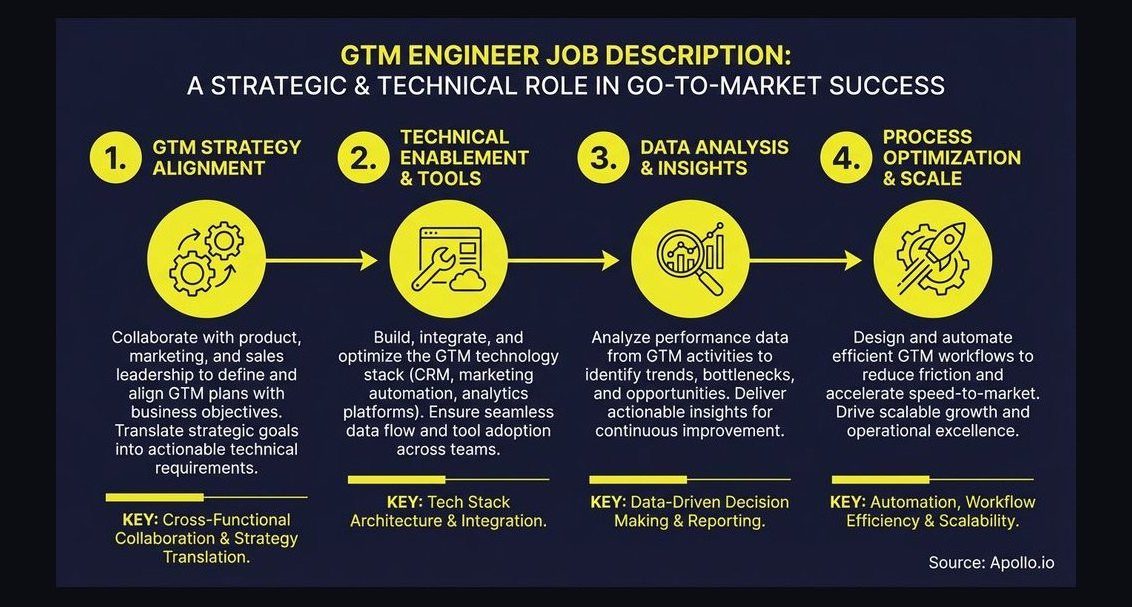 revopsWhat is a GTM engineer and why is the role exploding in 2027?
 revopsWhat triggers are early-stage RevOps teams using in 2027 to hand off AI-qualified leads to human sales reps without losing context?
 revopsBest fractional CRO firms in 2027