
How do you start a dryer vent cleaning business in 2027?
 Curated byKory White · Fractional CRO · Maryland
 PULSEKNOWLEDGE LIBRARY
Quality
Certified

Start a dryer vent cleaning business in 2027 by forming an LLC, buying general liability and commercial auto insurance, and acquiring a rotary brush kit, capture vacuum, borescope camera, and ladders for roughly $3,000–$8,000 lean. Then build a Google Business Profile, price at $100–$350 residential, and pursue recurring property-management contracts immediately.
What the work actually is, and why the demand does not evaporate
A dryer vent cleaning business removes lint, debris, and obstructions from the exhaust duct carrying hot, moist air from a clothes dryer to the outside of a building. That is the whole product. You arrive, access the duct at the dryer connection or the exterior termination, drive a rotary brush the full run to break loose the caked lint that a vacuum alone will never touch, capture the debris so it does not redistribute into the laundry room, clear the exterior hood and damper, inspect the transition duct behind the appliance, and verify the result with a camera. The customer gets a dryer that finishes a load in one cycle instead of three, runs cooler, and stops being a fire hazard sitting in a closet.
The demand underneath that is not manufactured, and this matters more than any marketing tactic because a service with no real underlying need fails no matter how well it is run. The National Fire Protection Association and the U.S. Fire Administration both consistently identify failure to clean as the leading contributing factor in home fires involving clothes dryers — roughly 13,000–15,000 structure fires a year in the United States, causing hundreds of injuries, a number of deaths, and property losses generally reported well north of $200 million annually. Lint is a physical certainty. Every dryer in use produces it, the trap catches most but never all of it, and the remainder accumulates in the duct at a rate that scales with household size, duct length, and the number of bends.
The second demand driver is economic rather than safety-driven, and it converts customers who do not think about fire at all. A restricted vent forces the dryer to run two or three cycles per load, which spikes the electric or gas bill and cooks the heating element and thermostat. A homeowner who does not care about fire statistics does care that their four-year-old dryer is dying and their power bill jumped. That framing closes jobs the fire framing never touches.
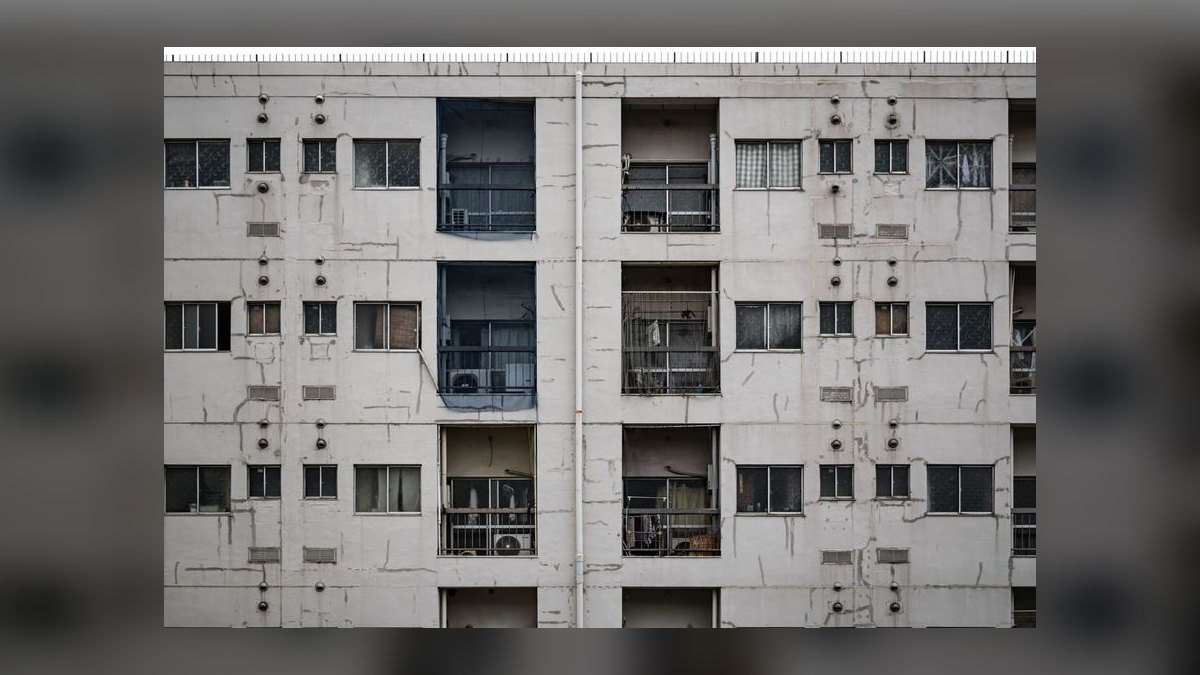
The third driver is institutional pressure, and it is the one that has strengthened most in recent years. Insurance carriers increasingly ask about vent maintenance and some give premium consideration for documented cleaning. Home warranty contracts reference maintenance obligations. Condo associations and apartment owners face genuine liability exposure on shared and stacked venting, especially in buildings where a dozen units share a common exhaust chase. Home inspectors flag dirty or improperly routed vents on a large share of pre-sale reports, which generates a steady stream of transaction-driven work that has nothing to do with seasonality.
The fourth is recurrence. Manufacturers and safety bodies broadly recommend annual cleaning, and a heavy-use household, a long roof-terminated run, or a duct with four bends needs it more often. A customer served well this year is due again in twelve to eighteen months — which is the entire foundation of the recurring-revenue strategy discussed further down, and the reason this business can compound rather than churn.
Where founders misread the market is in assuming rising awareness means rising ease. It does not. Awareness has pulled in a crowd of low-cost operators running $59–$79 "specials" who blow a leaf blower down the duct and leave. The demand is real and growing; so is the noise at the bottom of the price band. Your job as a 2027 entrant is not to find demand — it is to position above the noise.
The step-by-step launch sequence
The order of operations matters here because several steps gate others. Insurance gates commercial work. A Google Business Profile gates local search visibility and takes time to accumulate reviews. Referral partnerships take months to warm. Doing them in the wrong sequence means idle equipment.
Step one: entity and licensing. Form an LLC — most operators do, for liability separation and tax flexibility. The entity holds the insurance, the contracts, and the vehicle registration. Then check licensing, which varies enormously by jurisdiction. Some places require only a general business license for $50–$200. Others require a contractor's license or an HVAC-adjacent registration. Check the state licensing board and the municipal business office before you launch, not after a complaint. This costs $200–$1,500 all in and takes one to four weeks depending on your state's processing.

Step two: insurance. General liability is non-negotiable — you are working inside homes, on ladders, around gas appliances. Commercial auto on the work vehicle. Workers' compensation once you have employees. Budget $1,000–$4,000 for the first payments. Critically, this is also a sales prerequisite: no property-management company or commercial account will engage an operator who cannot produce a certificate of insurance, so skipping it does not just create risk, it locks you out of the highest-value customer segment entirely.
Step three: equipment. The core kit is a rotary brush system, a capture method, an inspection camera, and access equipment. Details and pricing in the costs section below. Buy the tier your capital supports, but do not skip the camera — it is the single item that separates your positioning from the leaf-blower operator.
Step four: the acquisition foundation. Claim and fully complete the Google Business Profile with service area, hours, photos, and service descriptions. Stand up a basic locally-optimized website. Get Google Local Services Ads running and pursue the Google Screened verification. Create a Nextdoor business presence. Build a review-request process into the job itself before the first job, not after the twentieth.
Step five: price and standard. Set your pricing deliberately (see below) and define the technical standard you will hold. Write it down as a checklist. This becomes your training document later.
Step six: routing and software. Adopt field-service software — Jobber and Housecall Pro are the common choices — at $50–$200 a month. It holds the schedule, the customer history, the recurring reminder automation, invoicing, and routing. Running the calendar off a notebook caps the business fast and makes the recurring-reminder strategy impossible.

Step seven: referral partners and contracts. Begin the in-person work of introducing yourself to HVAC companies, appliance repair techs, home inspectors, realtors, plumbers, and chimney sweeps. Simultaneously begin the slower outreach to property managers, HOAs, and commercial laundry operators.
Costs, tickets, and the margin structure that makes this work
The equipment package breaks down cleanly. A rotary brush cleaning system — flexible rods with a brush head driven by a cordless drill at the entry level, or a dedicated motorized or truck-mounted system for volume work — runs $300 for a basic kit up to $2,000–$4,000 for a professional setup. A high-CFM shop vacuum or a contractor-grade negative-air or compressed-air capture system runs $200–$1,500. A borescope inspection camera for before-and-after verification runs $150–$1,500. Ladders — an extension ladder for roof terminations plus a step ladder — run $200–$600. Hand tools, drills, spare batteries, brush heads, bags, foil tape, and consumables run $300–$900. PPE, meaning a respirator, eye protection, and gloves, is modest.
That is roughly $1,500–$10,000 of equipment depending on tier. Around it sits the vehicle, which is the largest variable — $0 if you already own a workable van, truck, or SUV, up to $30,000-plus for a dedicated wrapped van. Formation and licensing at $200–$1,500. Insurance first payments at $1,000–$4,000. Website, logo, and vehicle wrap or magnets at $500–$4,000. Software and payment processing at $50–$200 monthly. Initial marketing to prime the channels at $1,000–$5,000. A working capital cushion at $2,000–$8,000.
A genuinely lean launch using an existing vehicle and drill-driven equipment starts at $3,000–$8,000. A fuller professional launch with a wrapped van, motorized equipment, and a real ad budget runs $15,000–$45,000. That low capital bar means under-capitalization is rarely what kills these businesses. What kills them is failing to book and route enough work, which is a marketing and operations problem.

Now the pricing architecture, which is where most of the money is won or lost. A base residential single-dryer cleaning prices at $100–$200 depending on the local market. A harder residential job — second-floor laundry, long duct run, roof termination requiring ladder work, bird nest or major obstruction — prices at $200–$350, because the labor, the risk, and the equipment are genuinely different. Apartment and condo per-unit pricing runs $65–$130, lower per unit but volume and contract driven. Commercial laundromat and high-duty jobs run $300–$2,500-plus, scaled to machine count and exhaust complexity.
Add-ons lift the average ticket without a second trip: an HVAC or bathroom exhaust vent cleaned during the same visit at +$75–$300, a camera inspection report at +$50–$100, a vent cover or transition duct replacement at cost-plus, a bird guard installation. A maintenance plan at $80–$160 per year converts the one-and-done customer into a scheduled visit.
The margin structure is the reason this business is worth starting. Take a $150 residential job. Cost of goods is a replacement brush head amortized across many jobs, a vacuum bag, a trivial slice of fuel and equipment wear — call it $5–$15 of true variable cost. Job time is 45–90 minutes including amortized drive. Even fully loading a technician's wage, payroll taxes, fuel, and equipment depreciation onto that job, gross margin lands at 75–92%. Compare that to any adjacent trade: a plumber buys fixtures, an HVAC tech buys parts and refrigerant, a landscaper buys plants and mulch, a commercial cleaner buys chemicals and supplies. You consume a brush, a bag, and an hour.
The consequence is a specific operating discipline. The constraint on this business is not margin — margin is settled. The constraint is volume and route density: how many jobs you physically reach and complete in a day, and how tightly clustered they are. A solo operator doing four to seven jobs a day at a $150–$200 average grosses $600–$1,400 daily, and a large fraction drops to owner profit. Two operators with identical equipment and identical prices can earn wildly different incomes purely on routing discipline. Think in revenue per route-day, not price per job.

Year one, realistically: a disciplined solo operator completes 600–1,200 jobs for $70,000–$190,000 in revenue and $45,000–$120,000 in owner profit. The range is wide because it is driven almost entirely by how full and how well-routed the calendar is. Year two, with a first technician and a second van, revenue typically climbs to $180,000–$380,000 with owner profit around $80,000–$170,000. Year three, with two to four technicians and a real contract book, revenue lands around $320,000–$600,000 with owner profit roughly $120,000–$260,000. A mature multi-van operator at years four to five runs $450,000–$900,000-plus with $160,000–$350,000 in owner profit. These assume disciplined routing, held pricing, a deliberate recurring base, and a working referral network — the business scales in units of trained technician plus organized van plus full routed calendar, not magically.
The three customer wedges and why the second one changes everything
There are three distinct customer types, and the strategic error most founders make is treating them as one market.
Residential is single-family homeowners booking a one-off cleaning, usually triggered by a slow dryer, a news story, an insurance prompt, a home inspection, or a realtor recommendation. It is the easiest to acquire, the highest price per job, and the most visible — it drives the reviews and word-of-mouth that make every other channel cheaper. It is also one-and-done unless you build a reminder system, and it swings hard with season.
Multi-family is apartment complexes, condo associations, HOAs, senior-living communities, and property-management companies overseeing dozens or hundreds of dryer-equipped units. Per-unit price is lower, but the job is a contract rather than a transaction. One signed property manager can mean fifty to several hundred units cleaned on a route, repeated annually, on a single invoice. Forty units in one building is forty jobs with one drive and one setup — the densest, most profitable route a day can hold. This is the wedge that converts a hustle into a company, and it is why route density and contract sales are the same strategy viewed from two angles.

Commercial is laundromats, hotels and motels, gyms, salons and spas, care facilities, and any business running high-duty-cycle machines or rooftop exhaust. Tickets are larger and more technical, cycles are more frequent because of duty load, and the work rewards an operator comfortable with complex routing and tall buildings. It is also the least seasonal of the three.
The sequencing that works: residential funds the early months and builds the review wall and reputation. Multi-family and commercial are where the predictable, schedulable, defensible revenue lives. A founder who chases only residential stays on the treadmill forever, re-acquiring every customer with a fresh paid lead. A founder who lands five to ten property-management and apartment relationships in the first eighteen months has a base load that covers fixed costs and de-risks the seasonal swing.
The acquisition channels map onto these wedges differently. For residential: Google Local Services Ads is the highest-intent channel — someone searching "dryer vent cleaning near me" is ready to book, leads run roughly $15–$60, and a Google Guaranteed badge plus a review wall wins the click. Google Business Profile and local SEO capture the organic version of that same search at near-zero marginal cost once built. Nextdoor is unusually effective because it is hyper-local and neighbors recommend service providers constantly. The lead marketplaces — Thumbtack, Angi, HomeAdvisor — fill an early calendar but are price-competitive with mixed lead quality; useful to prime the pump, dangerous as a permanent foundation. Door hangers work precisely because of route density: when you finish a job, the whole street is a warm market.
For multi-family and commercial, none of that applies. Those are sold in person and by referral, over a sales cycle measured in months, and they are won on the certificate of insurance, the documented standard, and reliability rather than on price.

The durable asset across both is the referral network. Dozens of other service providers are inside the same buildings, see the vent problem, and have no interest in doing the cleaning themselves. HVAC companies are the prime partner — adjacent world, and many do not want low-ticket vent work. Appliance repair techs see clogged vents constantly, because a clogged vent is often what killed the dryer they were called to fix. Home inspectors flag vents and need somewhere to send the buyer. Realtors want a fast vendor to clear an inspection finding before closing. Chimney sweeps are an almost perfect adjacency — overlapping equipment, skills, and customer. Property managers are both customers and referrers. Building twenty solid referral relationships costs almost nothing, compounds, and cannot be bid away the way a paid lead can. The mechanics are simple: introduce yourself in person, make referring effortless, respond fast so the partner looks good, and be utterly reliable, because their reputation rides on every handoff.
Where operators get it wrong
The failure modes are remarkably consistent, and knowing them in advance is most of the defense.
Competing on price. This is the dominant killer. An operator sees the $69 special on a marketplace, matches it to win the booking, and has just given away the entire margin advantage the business is built on. The cheap customer was never going to be a good customer — they will not book a maintenance plan, will not refer, and will complain most. The price-war operator stays busy, earns a poor effective hourly rate, never amortizes marketing cost because every job requires a fresh paid lead, and quits around month ten convinced the economics do not work. The economics were fine; the positioning was not.
Staying one-and-done. No maintenance plans, no reminder automation, no contracts. Every job requires buying a new lead forever. The fix is unglamorous: a CRM that texts or emails customers at the twelve-month mark reactivates a meaningful fraction at near-zero acquisition cost, and it is the cheapest acquisition in the business because the customer is already sold.

Ignoring routing. Taking scattered jobs across a wide service radius destroys daily profit even though every individual job looks profitable on paper. Set trip minimums and service-area pricing so a far-flung single booking does not consume a half-day of drive time at full schedule cost.
Skipping the referral network. Relying entirely on paid leads forgoes the cheapest, most durable, most defensible source, and leaves the operator permanently exposed to ad cost inflation and platform policy changes.
Not asking for reviews. In a trust-and-safety service performed inside someone's home, the review wall lowers the cost of every channel simultaneously by raising conversion everywhere. Failing to systematically request reviews leaves the main marketing lever unpulled.
Doing the job poorly. The leaf-blower-down-the-duct version destroys premium positioning, generates complaints, and creates liability. A correct job means disconnecting or properly accessing the duct, running the rotary brush the full length to mechanically dislodge caked lint rather than surface lint, capturing debris so it does not blow into the home, clearing the exterior termination and damper where birds nest and lint packs hardest, inspecting the transition duct for the crushed or kinked foil runs that are themselves a hazard, camera-verifying the clear duct and showing the customer, confirming the dryer reconnects and runs, and documenting the job. Certification through bodies like the Chimney Safety Institute of America, which maintains a dryer exhaust technician credential, or training through the National Air Duct Cleaners Association is not universally required but is a real differentiator with property managers and insurers.
Thin or no insurance. Working on ladders around gas appliances inside homes without real coverage turns one incident into an existential event, and locks you out of every commercial account.

Treating it as passive. The calendar does not fill itself. This is a marketing-and-routing business wearing a technical-service costume.
Two more that get less attention. Misjudging seasonality: demand pulls strongly in fall and early winter — heating season, more indoor drying, holiday house-fire coverage — and softens in late spring and summer. Operators who treat a busy November as permanent, staff and spend accordingly, and get caught short in June are common. The recurring base is the fix: schedule multi-family contracts deliberately into slow months, time reminder reactivations into the soft season, and pursue transaction-driven inspection work which runs year-round. Neglecting the daily system: a routed, confirmed schedule set the night before, a reminder text to each customer, an efficient on-site process ending with on-the-spot payment and a review request, and a clean handoff to the next stop. Sloppy setup and teardown repeated across seven jobs is a real drain.
Decision framework: which path fits you
Before committing capital, run an honest self-assessment, because this model fits a specific operator and badly misfits others.
On capital, do you have $3,000–$8,000 for a lean launch or $15,000–$45,000 for a professional one? The bar is low enough that this is rarely the disqualifier. On temperament, are you willing to treat customer acquisition — ads, reviews, Nextdoor, door hangers, and especially the in-person work of building partnerships and selling contracts — as the central job? If you want to do technical work and have customers appear, this business will starve. On physical reality, are you willing to work on ladders, on roofs, in attics and crawl spaces, in dusty laundry rooms? Not heavy work, but real work, partly weather-exposed. On operational discipline, will you cluster routes, run the software, hold the standard, and generate reviews systematically? On contracts orientation, will you do the slower work of landing property-management and commercial relationships? On local market fit, is there enough housing density and multi-family inventory in your radius, with an underserved professional middle between the $59 operators and the established regional companies?

Answer yes across all six and this is a legitimate low-capital, high-margin, fast-payback path. Answer no specifically on temperament or contracts orientation and you will likely end up a price-competing solo operator who never builds anything durable.
Adjacent expansion and the exit question
Once the core is solid, adjacency is the natural growth path and it is high-margin because the customer acquisition is already paid for. Air duct and HVAC vent cleaning is the closest neighbor — overlapping equipment, overlapping skills, same customer, same building, larger ticket, and it pairs into a single visit. Many operators evolve into combined dryer-vent-and-air-duct businesses. Bathroom and kitchen exhaust cleaning is a trivial same-visit add-on. Chimney sweeping overlaps on equipment and skills and cross-sells to the identical homeowner. Bird-proofing and vent guard installation solves the exact problem you are already diagnosing at the exterior termination. Rerouting, repair, and transition duct replacement turns a diagnosis into a paid fix. Commercial kitchen exhaust cleaning is a larger, more regulated adjacency for operators who want that direction.
The sequencing discipline matters: build the vent base, the reviews, the contracts, and the routing first, then layer adjacencies. Launching as an unfocused everything-business dilutes the positioning that makes the premium price defensible.
The moat, worth naming explicitly, is not the equipment — anyone can buy a brush kit for $300. The moat is the review reputation, the referral partner network, the recurring contract book, the documented standard, and the route density. All of those take time and are genuinely hard for a new bargain operator to copy. They are also exactly what makes the business sellable: a documented standard, a contract book, clean books, and a trained crew are what a buyer is actually purchasing. Operators anywhere in RevOps or adjacent services will recognize the pattern — recurring contracted revenue trades at a premium to transactional revenue, every time.
Related questions
Do I need a certification to clean dryer vents?
Not in most jurisdictions. Licensing requirements vary by state and city, and some require only a general business license. Credentials from the Chimney Safety Institute of America or training through NADCA are optional but function as real differentiators with property managers and insurers.
How long does a typical residential job take?
Forty-five to ninety minutes for a standard single-dryer cleaning, including setup and camera verification. Harder configurations — second-floor laundry, long runs, roof terminations, bird nests — push toward the upper end or beyond, which is why they carry the $200–$350 price band.
Is winter or summer better for this business?
Fall and early winter are strongest: heating-season awareness rises, more laundry is dried indoors, and house-fire coverage spikes attention. Late spring and summer soften. Multi-family contracts and transaction-driven inspection work are the levers that put a floor under the slow months.
Can I run this part-time while employed?
Yes, initially. The equipment fits in an existing vehicle and evening or weekend residential jobs are workable. The constraint is that contract sales and referral partnership building happen during business hours, so a permanently part-time operator stays stuck in residential one-and-done work.
FAQ
How much does it really cost to start?
A lean launch using a vehicle you already own and drill-driven equipment runs $3,000–$8,000 all in, covering the brush kit, capture vacuum, camera, ladders, insurance first payments, licensing, and a modest marketing budget. A fuller professional launch with a wrapped van, motorized equipment, and real ad spend runs $15,000–$45,000. The capital bar is low enough that under-capitalization is rarely the cause of failure.
What can I realistically earn in year one?
A disciplined solo operator completing 600–1,200 jobs generates $70,000–$190,000 in revenue and $45,000–$120,000 in owner profit. The range is driven almost entirely by how full and how tightly routed the calendar is, not by pricing differences. You are trading your own labor for that profit in year one.
Are the margins actually as high as people claim?
Gross margins genuinely run 75–92%, because there is almost no cost of goods — a brush head, a vacuum bag, some fuel, and equipment wear. That is unusual among trades and it is the real structural advantage. The constraint is not margin, it is volume and route density: how many tightly-clustered jobs you can complete in a day.
Do I need insurance before the first job?
Yes. General liability and commercial auto are the minimum, at roughly $1,000–$4,000 for first payments, with workers' compensation added once you have employees. Beyond risk management, a certificate of insurance is a hard prerequisite for property-management and commercial accounts, so operating without it also caps your ceiling.
How do I compete against the $59 specials?
You do not compete on their terms. Position on the documented standard — full-length rotary brushing, proper debris capture, exterior termination clearing, transition duct inspection, and camera-verified before-and-after the customer can hand to their insurer. The customers who book the $59 special were never going to be good customers. The ones who value verified, documented work are the base of a real business.
What single thing most determines whether this works?
Recurring revenue. Maintenance plans, twelve-month reminder automation, and — above all — five to ten property-management, apartment, HOA, or commercial contracts. Those create a base load that covers fixed costs, so marketing-driven residential work becomes profit on top rather than survival, and the calendar stops being at the mercy of ad spend and season.
Sources
- NFPA — Home Fires Involving Clothes Dryers and Washing Machines
- U.S. Fire Administration — Clothes Dryer Fire Safety
- Consumer Product Safety Commission — Home Safety
- Chimney Safety Institute of America
- National Air Duct Cleaners Association (NADCA)
- U.S. Small Business Administration — Launch Your Business
- IRS — Business Structures
- Google — Local Services Ads
- ENERGY STAR — Clothes Dryers
Related on PULSE
This page will be disappearing soon. Save it to your device for $1 — or read it free while it is here.
@Kory-White- · if Venmo asks, the last 4 of my number are 2012
This page is gone.
This one is off the shelf now. $1 keeps it on your phone for good — the whole page, pictures and diagrams included.
 window-cleaningHow do you start a window cleaning business in 2027?
 pool-serviceHow do you start a pool service business in 2027?
 pool-serviceHow do you start a residential pool service business in 2027?
 aquarium-maintenanceHow do you start an aquarium maintenance business in 2027?
 pest-controlHow do you start a pest control business in 2027?
 carpet-cleaningHow do you start a carpet cleaning business in 2027?
 dog-walking-businessHow do you start a dog walking business in 2027?
 dog-poop-scoopingHow do you start a dog poop scooping business in 2027?
 hvacHow do you start a HVAC service business in 2027?
 holiday-lightingHow do you start a holiday lighting installation business in 2027?