

How do you start a laundromat business in 2027?
 Curated byKory White · Fractional CRO · Maryland
Quality
Certified
Starting a laundromat in 2027 means buying an existing turnkey store for $200K-$1.5M (75-85% of new-operator deals) or building new for $750K-$1.5M, financed mainly through an SBA 7(a) loan plus seller financing, in a location chosen for renter density, $35K-$75K household income, and no competing store within a mile. A disciplined operator runs 25-45 machines at 25-35% net margin and layers wash-and-fold, pickup-delivery, and commercial accounts on top of coin/card self-service to grow revenue 30-60%.
What it is and why it matters
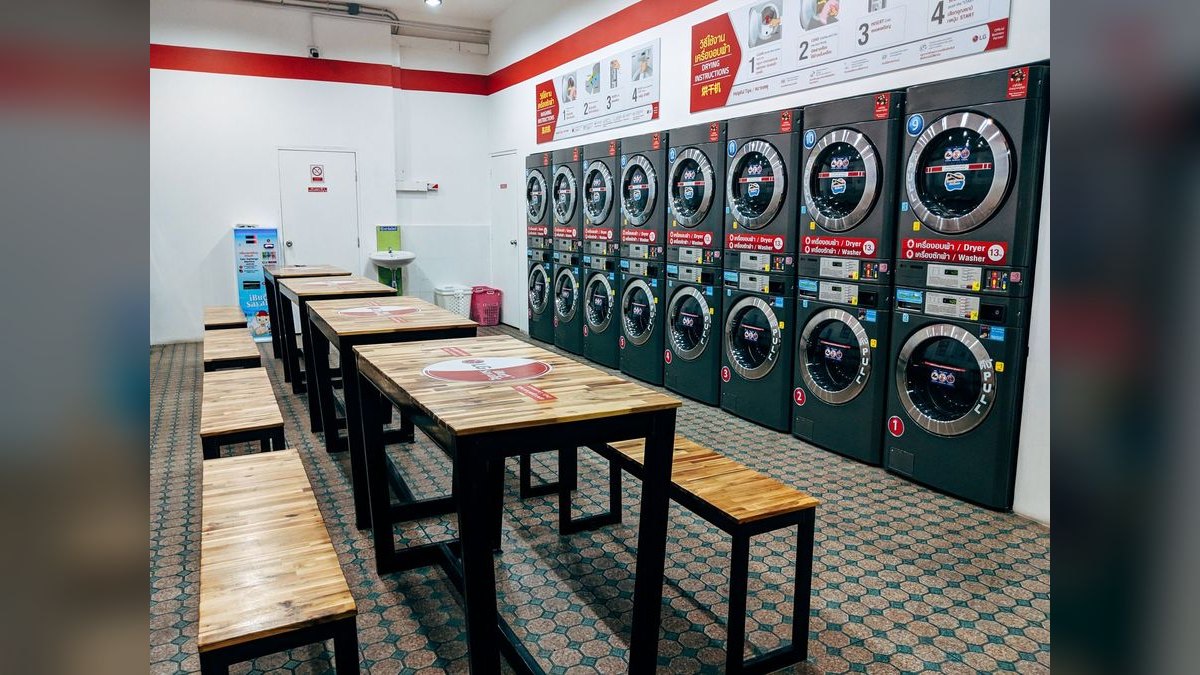
A laundromat business is a brick-and-mortar, self-service laundry operation — typically 1,500-3,500 square feet fitted with 20-60 commercial washers and dryers — that earns revenue from per-load coin, card, and app payments, and increasingly from wash-and-fold (WDF) drop-off, app-driven pickup-and-delivery, and contracted commercial accounts serving gyms, salons, and short-term-rental hosts. The Coin Laundry Association puts the US category at roughly 29,500 stores generating about $5B in annual revenue on roughly $3.6B of underlying real estate value, with a typical mature store producing $200K-$1M a year at 25-35% net margins under disciplined ownership.
The business matters to a new operator because it is one of the last genuinely semi-absentee, recurring-revenue, brick-and-mortar businesses that still works at small-operator scale. The structural demand floor is renters without in-unit washer/dryer hookups — still 35-40% of US renters per the Census American Community Survey — plus tip-economy workers, students, immigrants, RV travelers, and Airbnb hosts who need turnover laundry handled fast. That demand base does not evaporate in a downturn; if anything, a recession that pushes households out of homeownership and into rental housing expands the customer pool, while inflation-driven utility cost increases can be passed through instantly on card-and-app pricing. That combination — non-discretionary demand plus real pricing power — is why laundromats hold value through cycles that crush discretionary retail, and it is the entire case for treating this as a serious small-business investment rather than a passive coin-counting hobby.
The honest 2027 picture is bifurcated, though. Single-family suburban demand is shrinking as new construction defaults to in-unit W/D and middle-income renters buy homes with hookups. Urban and dense-renter demand is stable to growing, because multi-family construction still does not guarantee in-unit laundry in every unit. The fastest-growing layer by far is WDF plus pickup-delivery, driven by apps such as 2ULaundry, Rinse, Hampr, Mulberrys, and SudShare, which has pulled the convenience segment from near zero to a multibillion-dollar adjacent market in under a decade. An operator who wants to start a laundromat business in 2027 and actually beat the category average has to plan for that convenience layer from day one, not bolt it on after the coin machines are already installed.
Structurally, a laundromat behaves like a fixed-cost business with a variable-cost overlay riding on top. Rent, insurance, the base attendant schedule, and equipment debt service are largely locked in once the doors open; water, gas, electric, supplies, and incremental WDF labor scale with volume. That produces a real breakeven — typically $110K-$210K of annual revenue for a small single-store operation — below which the store loses money every month, and strong operating leverage above it, where each incremental revenue dollar can drop 45-65% to the bottom line. Understanding that shape before signing a lease is the difference between an operator who prices a deal correctly and one who inherits a seller's optimistic projections and cannot service SBA debt in year one.
The step-by-step process
Opening a laundromat runs through a predictable sequence: demographic and competitive site screening, financing, lease or purchase negotiation, equipment and utility build-out, payment-system installation, staffing, and a local marketing launch — each gate largely determining how much room there is to recover from a mistake in the next one.
Site screening comes first because 70-85% of a laundromat's long-term profitability is set the day the lease or purchase closes. The disciplined operator runs demographic screens — renter occupancy above 40% within a mile, $35K-$75K household income, 3,000-15,000 population density per square mile — alongside physical screens confirming the space can carry commercial water (2-4 inch line, 80-110 PSI), gas, and 400-amp 3-phase electric without a ruinous utility upgrade. Tools like Esri Business Analyst, PlacerAI, and county GIS parcel data support this, but the highest-signal step is walking the neighborhood at multiple hours, buying loads at nearby competing stores, and interviewing their customers about what would make them switch.
Verifying a seller's claimed revenue is the hardest step in a purchase and belongs immediately after site screening, before capital commits. Coin and card revenue at a turnkey store is easy to inflate and leaves no clean third-party trail, so the buyer triangulates independently: back-calculating revenue from 12-24 months of water-bill gallons divided by gallons-per-load times price per load, checking utility-bill seasonality for gaps, and running a multi-week mystery-shop count of actual customer traffic. A seller whose claimed revenue sits 40% above what the water bill can support is either running undisclosed side volume or padding the number, and the deal should be repriced or walked away from.
Financing, lease negotiation, equipment selection, utility build-out, and payment-system installation then proceed largely in parallel once the site is locked, with the lease term — ideally 15-25 years including renewal options — negotiated to protect the six-figure build-out investment the operator is about to sink into the space. Staffing and marketing launch last, timed to the equipment and utility completion date, because an attendant hired too early has nothing to operate and a Google Business Profile posted too early collects no reviews.
Costs, timelines, and typical ranges
The buy-versus-build decision drives most of the capital math. Buying an existing turnkey laundromat is the dominant path for new operators — an estimated 75-85% of deals — running $200K-$1.5M for a single store, priced at 3-5x seller's discretionary earnings (SDE) for stores under $80K SDE, 5-7x SDE for mid-market stores at $80K-$200K SDE, and 5-8x EBITDA for multi-unit portfolios. Building new runs $750K-$1.5M and takes 6-18 months from permitting through ramp, against immediate revenue on a turnkey buy. The typical first-time-operator conclusion: buy existing with an SBA 7(a) loan plus seller financing, and reserve build-new for demographic gap markets once the operator has multi-store experience.
Financing leans heavily on the SBA 7(a) program because laundromats are SBA-friendly collateral: real estate or equipment security, demonstrated cash flow, and a brick-and-mortar structure lenders understand. Active laundromat lenders include Live Oak Bank, Newtek, Celtic Bank, Byline Bank, ReadyCap Lending, and Pursuit Lending, with terms of 10-25 years on real estate, 7-10 years on equipment and working capital, SBA-prime plus roughly 2.75-3.0%, and 10-20% down payment. Seller financing appears in an estimated 40-60% of small-store deals, typically 15-30% of purchase price at 7-9% interest behind the SBA primary loan.
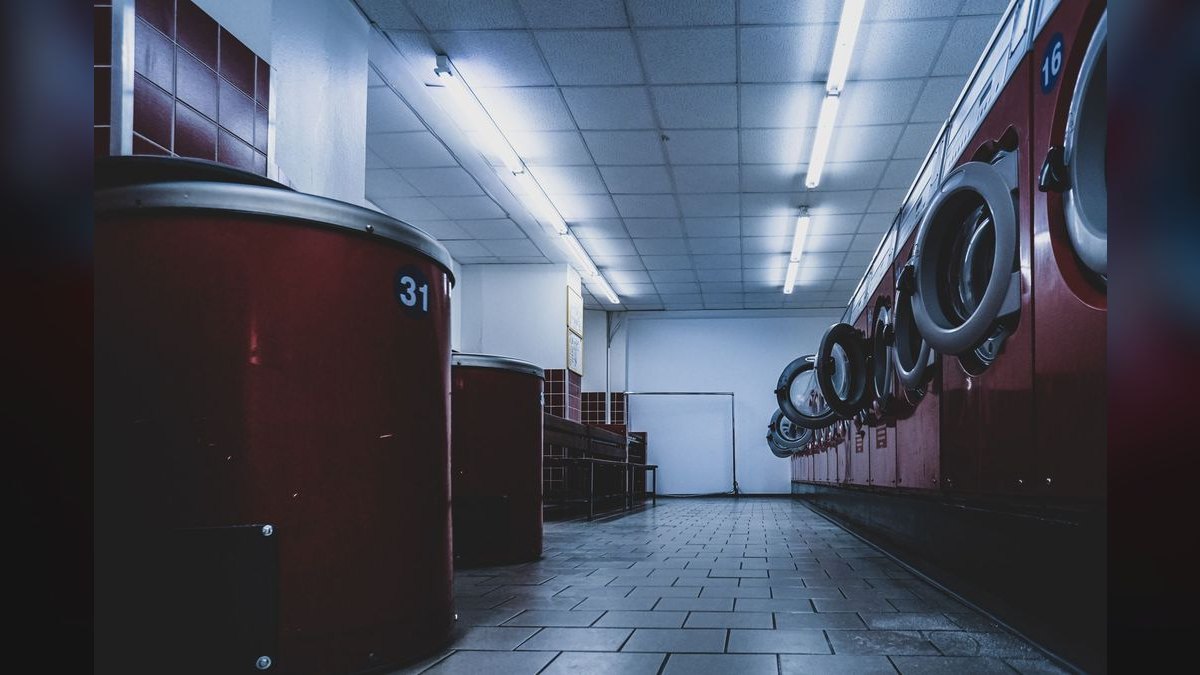
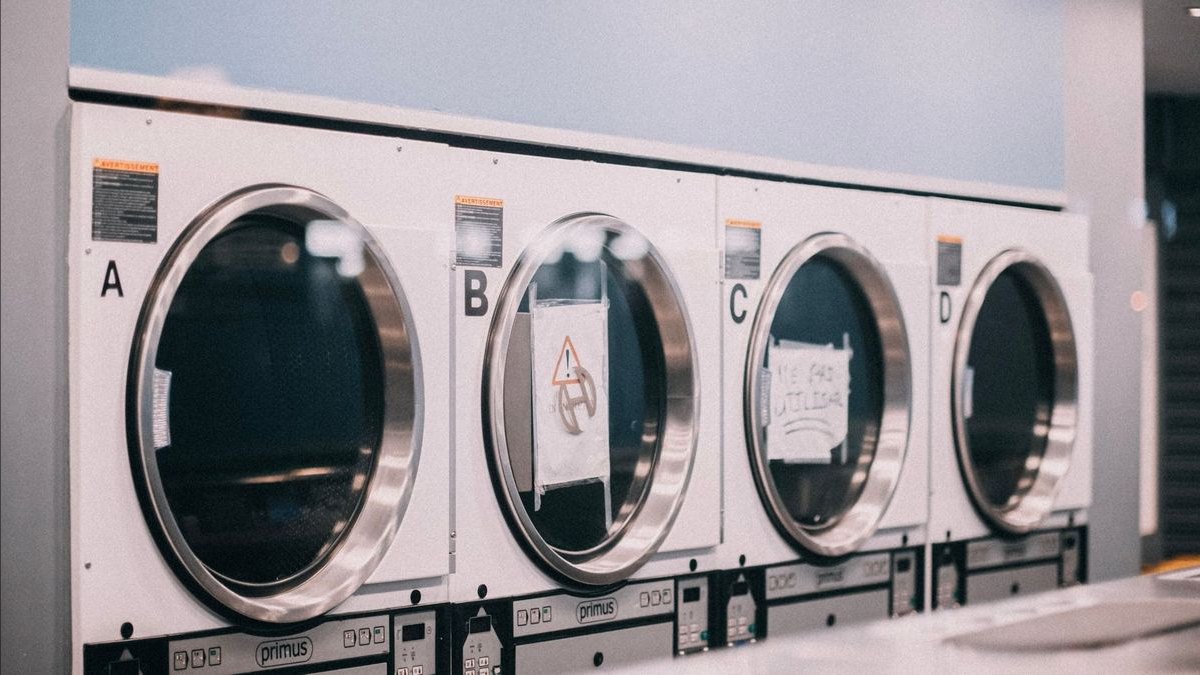
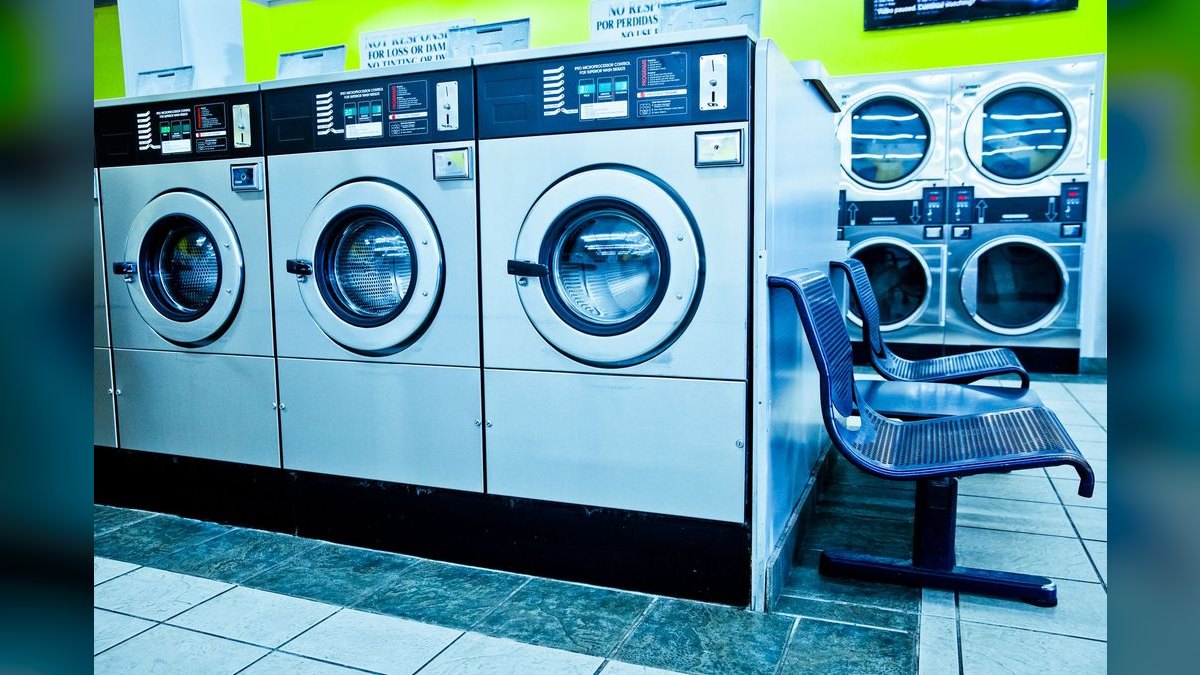
Equipment is the next major line item, running $185K-$485K for a 25-45 machine starter store and up to $685K for a premium 35-55 machine build. Front-load washers dominate new installs because they use 30-50% less water per load than top-load and extract more moisture, cutting dryer gas use. Gas dryers cover 85-95% of new builds on operating-cost grounds. A 25-45 machine store also needs a 120-300 gallon commercial water heater ($8,500-$25,500 installed) and a water softener ($2,500-$8,500).
Utility hookup upgrades for a build-new site can add $55K-$215K before a single washer runs: $15K-$85K to upgrade water service to a commercial 2-4 inch line, $15K-$45K for commercial-grade gas, and $25K-$85K for 400-amp 3-phase electric with a transformer upgrade. Ongoing, water and sewer is the single largest variable expense after rent, typically $1,500-$8,500 a month depending on volume and municipal rate structure, with gas running $800-$3,500 a month and electric $500-$2,500.
Total Year 1 insurance for a single store runs $22,500-$85,500, covering general liability, property, equipment, a water-damage/sewer-backup rider (frequently the missing coverage that turns a burst hose into a six-figure loss), business interruption, workers' compensation, and cyber/EPLI coverage. Marketing spend, by contrast, is modest for a laundromat business relative to most local service businesses — typically $500-$1,500 a month — because the self-service side is won almost entirely through Google Business Profile visibility and reviews rather than paid acquisition.
On the revenue side, self-service coin/card/app typically holds 60-75% of revenue at 30-40% margin; walk-in WDF runs $1.25-$2.95 a pound at 20-40% margin and 15-25% of revenue; pickup-delivery WDF runs $1.75-$3.25 a pound plus a delivery fee at 15-30% margin; and commercial accounts run $0.85-$1.85 a pound at 18-32% margin on 3-12 month contracts. A store that layers all four channels can move from a $180K coin-only ceiling to $480K-$1.2M on the same physical footprint.
Where teams get it wrong
The most common failure is treating site selection as a box to check rather than the single decision that caps everything downstream. Because 70-85% of profitability is set at lease signing, a store opened in a neighborhood with falling renter density, rising in-unit-W/D penetration in new construction, or a strong competitor within 0.75 miles cannot be operated into profitability no matter how well it is run afterward. Operators repeatedly buy a cheap store in a weak location and assume hustle will make up the gap; it doesn't, because the customer base simply is not there.
A second recurring mistake is underestimating the water bill. A store running legacy top-load equipment in a municipality with a sewer-impact surcharge can see a projected 30% net margin collapse into single digits, and buyers who skip a 12-24 month utility-bill review during due diligence routinely inherit this problem sight-unseen. The fix is the same rigor a RevOps team would apply to any recurring cost line: pull the actual bills, model the trend, and don't underwrite off a seller's summary number.

Equipment reliability is a customer-retention issue that gets budgeted like a maintenance afterthought. Replacing a single 60lb washer costs $8K-$15K, and an operator who buys an aging store with no replacement reserve faces a wave of failures that drive customers to the next-nearest competitor permanently — not just for one visit. The disciplined fix is a funded machine-replacement reserve and a fast-response technician relationship set up before the first breakdown, not after.
Over-leverage is another repeat pattern: stacking an SBA 7(a) loan, seller financing, and equipment financing on top of each other can push debt service above what a $200K-revenue store can actually carry, especially during a ramp period or after a new competitor opens nearby. A deal that only pencils at the seller's optimistic projected revenue, rather than at a stress-tested 15-20% haircut, is a deal that does not truly work — and operators who skip that stress test are the ones who get squeezed first.
Finally, operators consistently mismatch their attendance model to their revenue strategy. A store built around WDF, pickup-delivery, and commercial accounts cannot run unattended, because those channels require a person to receive, process, fold, and stage every order; choosing the unattended model for its labor savings quietly forecloses the biggest available revenue lever. The attendance decision and the revenue-mix decision have to be made together, not sequentially.
Decision framework: when to choose what
The first fork is buy versus build. Buy existing when a demographically qualified market already has turnkey inventory for sale — the SDE is verifiable through water-bill back-calculation and utility seasonality, and the operator gets revenue on day one instead of absorbing 6-18 months of rent and debt service against zero income. Build new only when the target market has a genuine demographic gap with no acceptable existing store to buy, and the operator has enough working capital reserve — typically $45K-$185K — to survive permitting delays and a slow ramp.

The second fork is the attendance model, and it should follow directly from the intended revenue mix rather than from labor-cost preference alone. An operator planning to run WDF, pickup-delivery, and commercial accounts needs full or semi-attended staffing because those channels require a person on-site to process orders; an operator content with a lean coin-and-card self-service store, in a location where labor cost matters more than channel diversity, can reasonably choose the unattended model and accept its lower revenue ceiling in exchange for a higher margin per revenue dollar.
The third fork is the competition check, and it should be run last, after the financial structure is otherwise sound, because it is the one variable that can override everything else. A weak, dirty, cash-only competitor within a mile is barely competition — a well-run modern store will pull its customers within 6-12 months. A strong, clean, WDF-equipped competitor with modern equipment is a genuine moat, and the correct decision framework output at that point is to walk away from the site regardless of how attractive the underlying real estate or price looks.
Related questions
How much does it cost to start a laundromat business?
A turnkey acquisition runs $200K-$1.5M; a new build runs $750K-$1.5M. Financing is typically an SBA 7(a) loan (10-20% down) plus 15-30% seller financing on acquisitions, with equipment alone costing $185K-$685K depending on store size and machine mix.
Is a laundromat business profitable in 2027?
Yes, when disciplined: a mature single store nets 25-35% margin on $200K-$1M revenue. Profitability depends almost entirely on site selection, utility cost control, and layering WDF and pickup-delivery on top of self-service.
How many machines does a laundromat need to start?
A typical starter store runs 25-45 washers and dryers in 1,500-2,500 square feet, with dryer capacity sized at roughly 1.2-to-1 against washers so customers never wait for a dryer.
Can you run a laundromat with no employees?
Yes, as an unattended/vended store, but it caps revenue to coin-and-card self-service only — WDF, pickup-delivery, and commercial accounts all require staff to process orders.
What is the biggest ongoing cost in running a laundromat?
Water and sewer, typically $1,500-$8,500 a month depending on volume and municipal rate structure — the largest variable expense after rent and the single biggest lever on net margin.
FAQ
Do I need SBA financing to start a laundromat business? Not strictly, but SBA 7(a) is the dominant path because laundromats offer collateralizable equipment and real estate plus demonstrated cash flow that SBA underwriters favor. Cash buyers and those using seller financing alone exist but are the minority of deals.
What size laundromat is ideal for a first-time operator? Most first-time operators target 1,500-2,500 square feet with 25-45 machines — large enough to support a meaningful WDF and delivery channel later, small enough to keep the initial capital outlay and lease commitment manageable.
How long does it take to open a laundromat from scratch? A turnkey acquisition can close and reopen under new ownership in 60-120 days including SBA underwriting. A ground-up build typically takes 6-18 months from lease signing through permitting, utility upgrades, equipment install, and ramp.
Should a new laundromat owner offer wash-and-fold from day one? Only if the attendance model and staffing are built for it. Launching WDF without trained labor and adequate large-capacity machine capacity produces thin or negative margins; it is usually added once self-service is stabilized and staffing is solid.
What is the biggest risk in buying an existing laundromat? Inflated seller-reported revenue and deferred equipment maintenance. Both are why due diligence should include a water-bill back-calculation, 12-24 months of utility bills, and a certified technician's machine-by-machine condition assessment before closing.
Does location matter more than operations for a laundromat business? Yes — an estimated 70-85% of long-term profitability is set at lease signing. A great location run adequately outperforms a mediocre location run excellently, which is why site screening comes before every other decision in this guide.
Sources
- https://www.coinlaundry.org
- https://www.census.gov/programs-surveys/acs
- https://www.sba.gov/funding-programs/loans/7a-loans
- https://www.bizbuysell.com
- https://www.loopnet.com
- https://www.ada.gov/law-and-regs/design-standards/2010-stand ards
- https://www.osha.gov/laws-regs/regulations/standardnumber/1910
- https://www.nfpa.org/codes-and-standards/nfpa-96-standard-development
- https://www.irs.gov/businesses/small-businesses-self-employed/s-corporations
Related on PULSE
- How do you start a self-storage facility business?
- How do you start a vending machine route business?
- How do you start a thrift store business?
- What does it cost to start an Airbnb management business?
- How do you start a home cleaning service business?
- How do you start a pressure washing business?
This page will be disappearing soon. Save it to your device for $1 — or read it free while it is here.
@Kory-White- · if Venmo asks, the last 4 of my number are 2012
This page is gone.
This one is off the shelf now. $1 keeps it on your phone for good — the whole page, pictures and diagrams included.
 property-managementHow do you start a property management business in 2027?
 padelHow do you start a padel club business in 2027?
 vacation-rentalHow do you start a vacation rental business in 2027?
 home-stagingHow do you start a home staging business in 2027?
 bookkeepingHow do you start a rental property bookkeeping business in 2027?
 airbnb-arbitrageHow do you start an Airbnb arbitrage business in 2027?
 short-term-rentalHow do you start a short-term rental management business in 2027?
 self-storageHow do you start a self-storage business in 2027?
 pilates-studioHow do you start a pilates studio business in 2027?
 commercial-cleaningHow do you start a commercial office cleaning business in 2027?